Date: 14 Feb 2026
🍭 From Vine to Bean: A Practical Guide

How to Grow Vanilla: quick how-to
Vanilla is not complicated, but it does have preferences. Start with a pot and regular, well-draining mix. It does not need anything exotic. Give it:
- Bright, indirect light
- Warm temperatures
- Good humidity
- Air movement
Most importantly, give it something solid to climb. A wooden trellis, a log, or a burlap-covered board works well. The surface should be porous so the aerial roots can grip.
As it grows, guide the vine gently. You can prune it to control size. Vanilla is slow to mature. That is normal.
The Bloom Secret
Vanilla does not bloom just because it looks healthy. It blooms when it feels secure.
This is a climbing orchid. It must attach firmly to a solid, porous support such as a wood log, trellis, or burlap-covered board. When the aerial roots grip and the plant reaches maturity, flowering becomes possible.
Once the flowers appear, they usually need to be hand pollinated to produce pods. Each flower stays open for only a short time, so timing matters.
How to pollinate vanilla: In this video, we show you exactly how to pollinate vanilla step by step
❓Vanilla care: quick FAQ
- Does Vanilla planifolia really produce vanilla
beans?
Yes. Vanilla planifolia is the commercial source of vanilla. After flowering, it can form long green pods (vanilla beans). The aroma develops later during curing. - What is the secret to getting vanilla to bloom?
Let it climb. Vanilla is a climbing orchid and usually will not bloom until its aerial roots attach firmly to a solid, porous support like a wood log, trellis, or burlap-covered board. - Do I need to pollinate vanilla flowers?
Yes. In most home growing conditions, vanilla flowers must be hand pollinated to produce pods. Each flower is open for only a short time, so timing matters. - Can I grow vanilla indoors?
Yes, if you can provide bright, indirect light, warmth, humidity, and a support to climb. A sunny room with filtered light and a trellis or log can work well. - What should I use for support?
Use a sturdy trellis, a wood log, or a burlap-covered board. The key is a porous surface that aerial roots can grip. Avoid chemically treated wood. Check out this very unusual way to grow Vanilla Orchid over a wall. - What potting mix should I use for Vanilla plant?
Start in a pot with a regular, well-draining potting mix such as Sunshine Abundance. As the plant matures, it relies more on its support and aerial roots than the soil. - What fertilizer should I use?
Sunshine Boosters Orchidasm is formulated specifically for orchids and will work perfecty for Vanilla orchid as well. - How big will it get?
As big as you let it. Train it and prune it. Vanilla grows according to the structure and space you provide. - How long until it flowers?
Typically a few years. Vanilla is a long-term project, but it is very rewarding once established.
For Collectors and Enthusiasts:
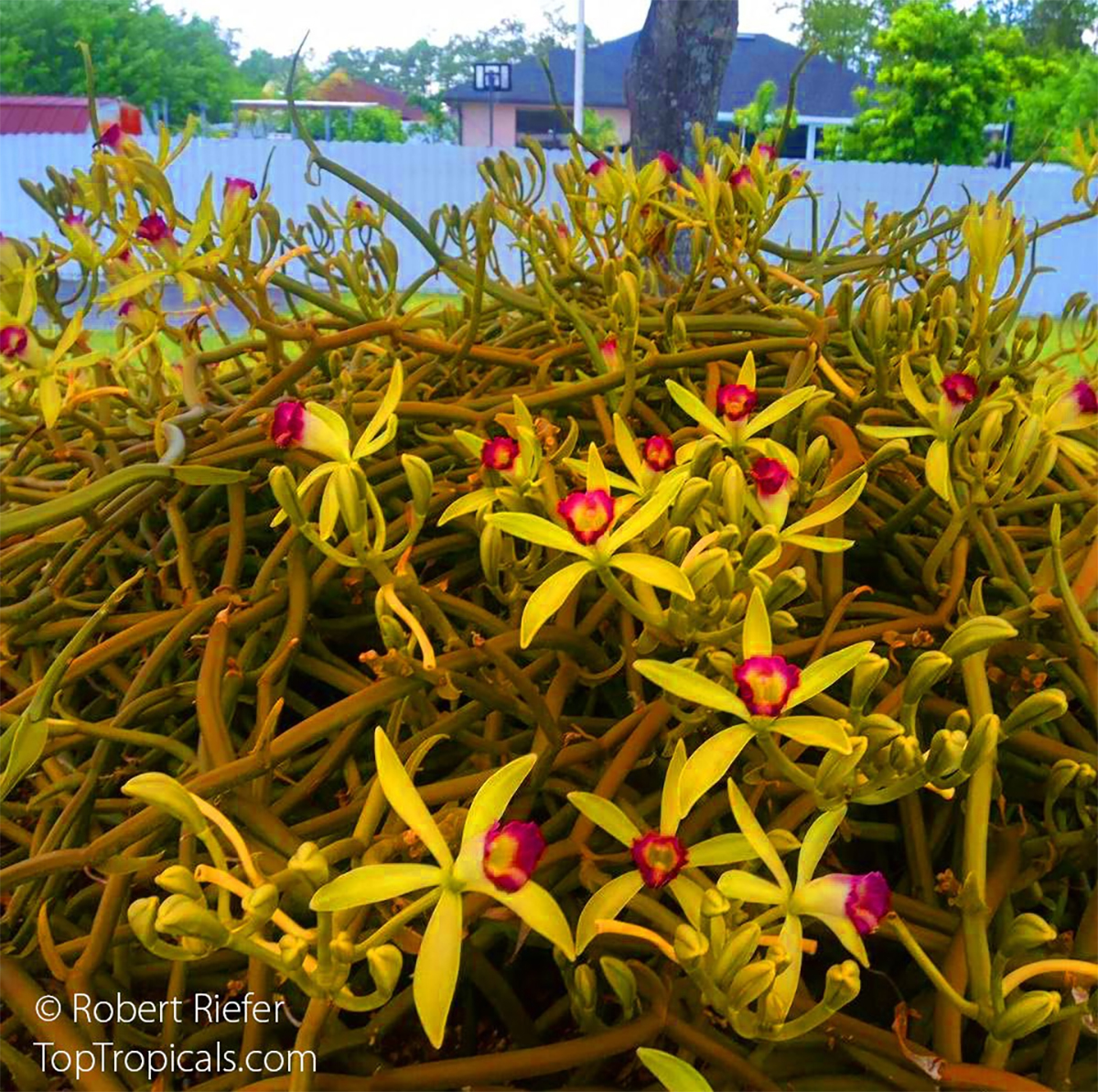
We also offer Vanilla dilloniana, a rare Florida native species with distinctive flowers.
One remarkable specimen of this species, grown by our friend Robert Riefer, became so vigorous over many years that it outgrew a 100 gallon container and was eventually moved into a 250 gallon pool on wheels.
The plants we offer are propagated from that very specimen:
That kind of growth reflects deliberate cultivation and ideal conditions - not something that happens unintentionally.
Vanilla grows according to the space and structure you provide.
For gardeners focused on producing real vanilla beans for the kitchen, Vanilla planifolia remains the right place to start.
Date: 18 Feb 2026
🔥 Blazing into the 2026 with hot jasmines

Smokey: It's jasmine, Tiger. A shrub. Not Wembley. Calm down.
💮 2026 Year of the Horse - and the Plant I Trust Most
By Tatiana Anderson, Horticulture Expert at Top Tropicals
Every new year carries its own energy.
2026 is the Year of the Horse - a year of movement, fire, momentum, and bold decisions. It is not a quiet year. It pushes us forward.
When fellow gardeners ask me what to grow in a year like this, my answer
is simple:
Grow something that balances strength with grace.
For me, that plant is Jasmine Sambac.
In many cultures, Sambac represents devotion, purity, and deep affection. In the Philippines it is the national flower - Sampaguita - woven into garlands for weddings and sacred ceremonies. In Hawaii, it becomes leis - a symbol of welcome and connection - Pikake. In India, it perfumes temples and homes.
This is not just a fragrant shrub.
It is a plant tied to love, loyalty, and continuity.
The Horse runs forward.
Jasmine anchors the heart.
In a fiery year like 2026, I believe we need both.
And that is why I always return to Jasminum sambac.
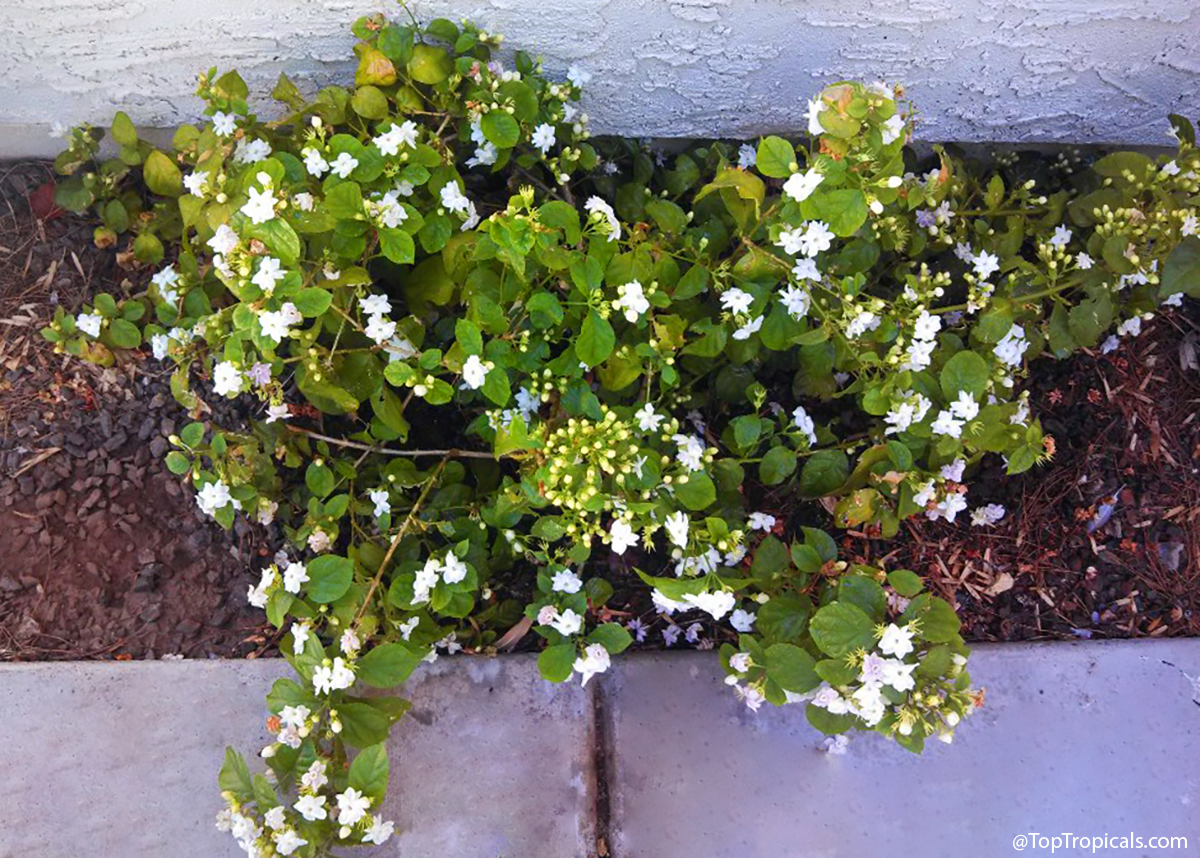
✅ Why Jasmine Sambac?
Over the years I have grown thousands of plants, but very few have the staying power of Jasmine Sambac.
It is not just fragrant. It is intensely, unmistakably fragrant. One open flower can perfume an entire patio. In the evening, the scent becomes deeper and richer.
But what makes Sambac truly special is its adaptability.
It can grow as a compact patio shrub, a flowering hedge, or a climbing vine. It performs beautifully in containers. It tolerates both full sun and partial shade. The more light you give it, the more flowers it rewards you with.
And unlike many tropicals, Sambac does not bloom just once. With proper care, it flowers in cycles throughout the warm season.
For gardeners, that combination is rare: beauty, perfume, flexibility, and repeat bloom.
That is why it has remained one of the most wanted fragrant plants in cultivation.
Date: 5 Feb 2026
How to get three colors on the same plant: Yesterday, Today, and Tomorrow
Brunfelsia grandiflora - Yesterday, Today, and Tomorrow
🌸 How to get three colors on the same plant: Yesterday, Today, and Tomorrow
- 💜 Brunfelsia is one of those plants that makes people stop mid-sentence. It blooms in shade, smells incredible at night, and then does something unexpected - the flowers change color over just three days.
- 💜 Purple. Lavender. White. All at the same time, on one plant.
- 💜 It is easy to grow, loves warm weather and part shade, and turns any garden path or patio into an instant conversation starter. Once it starts blooming, it just keeps going.
- 💜 These are the most interesting varieties known as Yesterday-Today-Tomorrow for their magical color transformation from purple to lavender to white over three days: B. grandiflora, B. paucifolia, B. australis.
🛒 Explore Brunfelsias - the ultmate shade flowers
📚 Learn more:


#Perfume_Plants #Hedges_with_benefits #Container_Garden #Shade_Garden
🟢 Join 👉 TopTropicals
Date: 1 Mar 2026
Skip the lemon - 5 better fruits for a cough
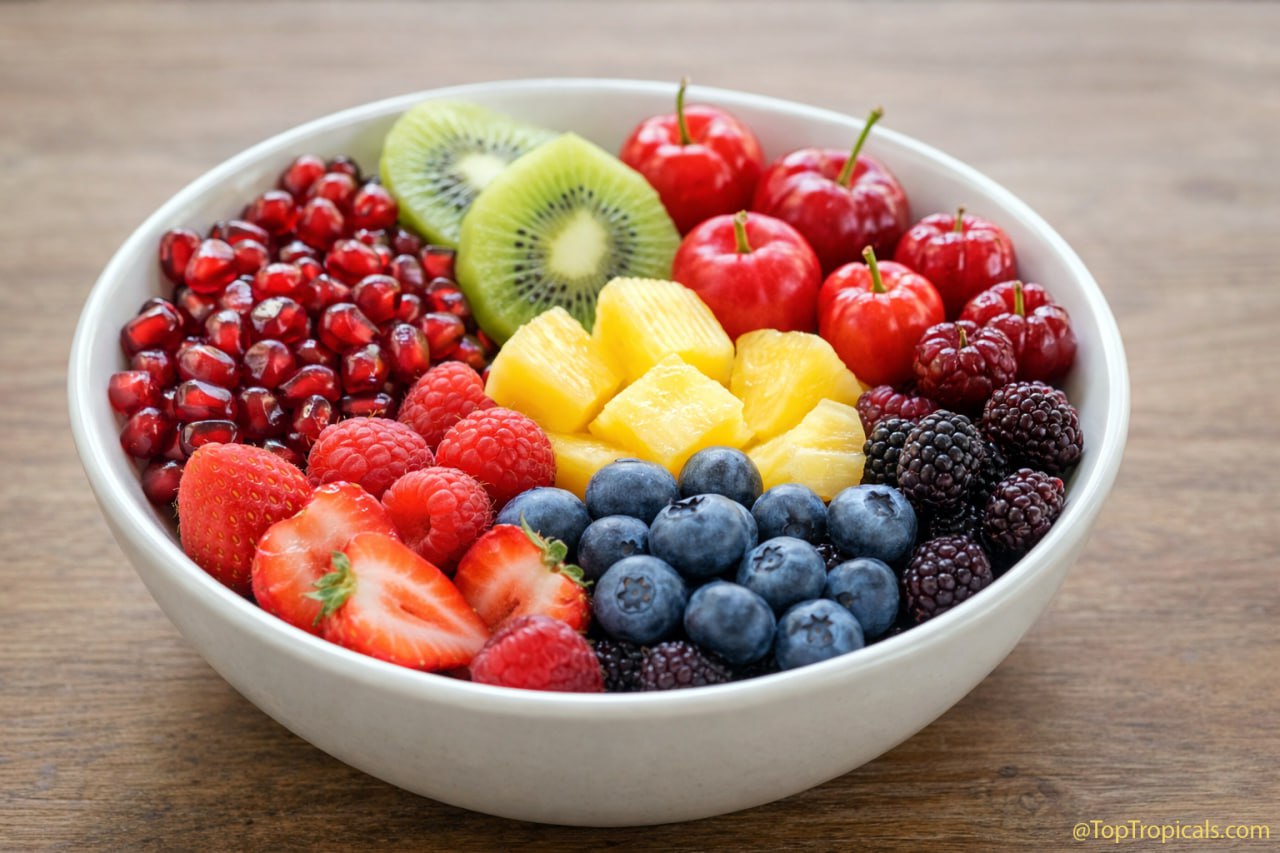
Best fruits for a cough
5 fruits to eat when you have a cough or cold - backed by research
When you are fighting a cough or cold, your immune system works overtime. While no fruit can cure a viral infection, certain fruits contain nutrients and bioactive compounds that may help reduce inflammation, support immune defenses, and ease respiratory discomfort.
Here are five fruits supported by nutrition research that may help during cold season.
1. Pomegranate 🍅
Pomegranate is rich in polyphenols, especially punicalagin, known for antiviral activity.
According to a study published in PubMed, pomegranate polyphenol extract suppressed replication of influenza A virus in cultured cells and showed direct virucidal effects. Researchers identified punicalagin as a key compound involved in blocking viral RNA replication. These findings suggest pomegranate extracts may help reduce viral load during respiratory infections.
2. Kiwi
Kiwi is exceptionally high in vitamin C, a nutrient closely linked to immune function and respiratory health.
A study published in Antioxidants (MDPI) found that consuming two SunGold kiwifruit daily for six weeks restored adequate plasma vitamin C levels in adults with a history of severe respiratory infections. Researchers concluded that kiwi consumption can directly support antioxidant defenses during respiratory illness.
3. Tropical cherries 🍒
Instead of traditional lemon, consider tropical cherries such as Malpighia (acerola cherry) and Eugenia (Surinam cherry).
Acerola (Malpighia glabra - Barbados Cherry) is one of the richest natural sources of vitamin C. Clinical research shows that adequate vitamin C intake is associated with reduced duration and severity of common cold symptoms. Vitamin C supports immune cell function and helps maintain the respiratory tract's protective barrier.
Eugenia species (Tropical Cherries) contain anthocyanins and phenolic compounds with antioxidant and anti-inflammatory properties, which may help reduce oxidative stress during illness.
4. Pineapple🍍
Pineapple contains bromelain, a group of proteolytic enzymes known for anti-inflammatory effects.
According to a study published in PubMed, bromelain significantly reduced inflammatory cell infiltration in the lungs in a mouse model of airway inflammation. These findings suggest bromelain may help ease airway inflammation and congestion.
5. Berries and including mulberries
Strawberries, blueberries, raspberries, blackberries and mulberries are rich in flavonoids and vitamin C.
Although direct clinical trials on berries for colds are limited, nutrition reviews highlight their immunomodulatory potential. Flavonoids such as quercetin, anthocyanins, and catechins have demonstrated antioxidant effects and possible antiviral activity in laboratory studies.
Mulberries provide additional anthocyanins and resveratrol-like compounds, offering strong antioxidant support during illness.
Practical tips when you are unwell ❤️�
- 🔻Choose room-temperature or lightly warmed fruit to avoid throat irritation.
- 🔻Prefer whole fruit over juice to retain fiber and stabilize blood sugar.
- 🔻Pair fruit with warm herbal tea or honey if appropriate.
- 🔻Rotate fruits to benefit from diverse phytonutrients.
- 🔻If symptoms persist, worsen, or include high fever or breathing difficulty, seek medical care.
🛒 Grow your own vitamin-rich fruit
📚 Learn more:
- One bite, your whole day of vitamin C: Barbados Cherry that outdoes oranges!
- What fruit can help with health issues and VITAMIN deficiencies
- Top 10 fruit you'll ever need for your health benefits: Lolita (Surinam) Cherry
#Food_Forest #Remedies #Discover
🟢 Join 👉 TopTropicals
Date: 21 Aug 2025
🍒 Tropical Cherries – Eugenias

Tropical Tea Time with Grumichama
Eugenias have earned a spot in many Southern gardens because they’re easy, dependable, and surprisingly versatile. These small trees and shrubs grow well in the ground or in containers, and they don’t waste time before setting fruit.
15% Off Eugenias – Limited Time
Use code EUGENIA15 at checkout.
Excluding S/H. Offer expires 08/28/2025
👍 Popular Choices:
What Makes Eugenia Cherries Stand Out
- Start producing fruit in just a couple of years
- Compact size — easy to keep 6–12 ft tall, smaller in pots
- Low-care — tolerant of most soils and resistant to common pests
- Strong in hot weather, yet can handle a light frost down to the mid-20s °F
- Plenty of fruit for people and birds alike
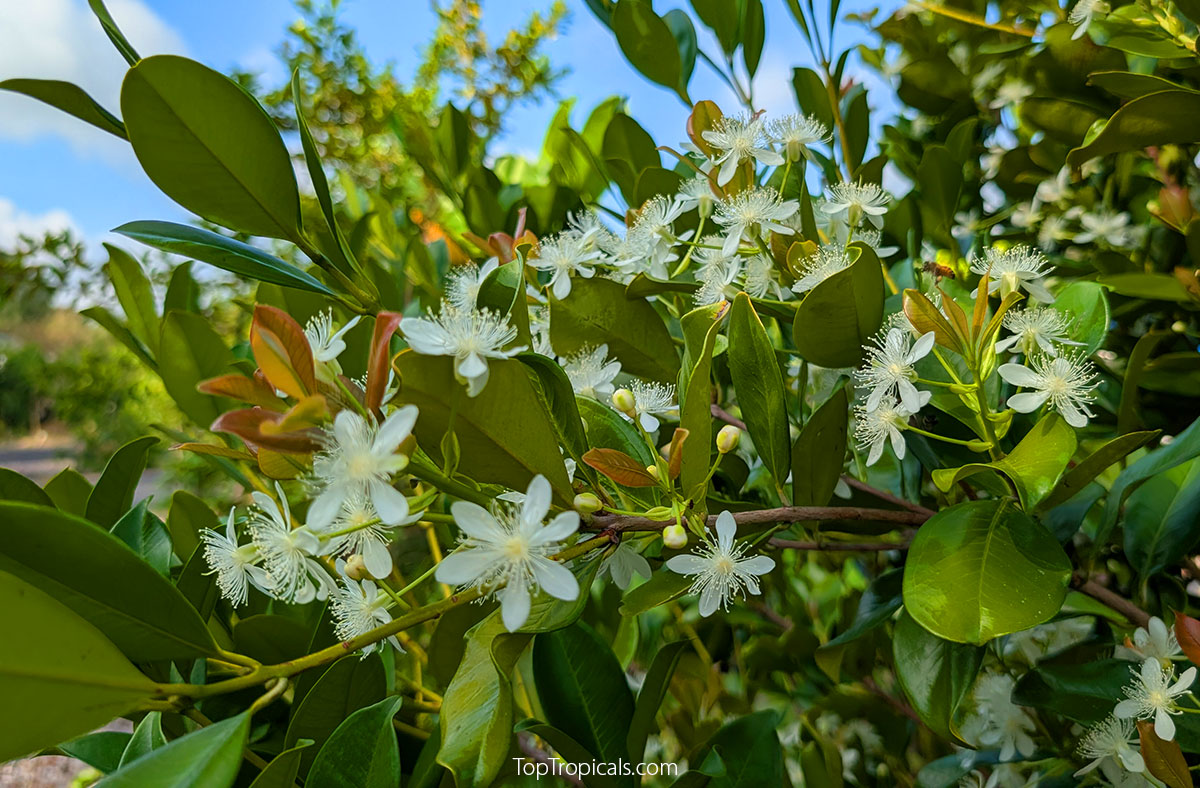 Grumichama Tree in Bloom – Eugenia brasiliensis
 Growing & Care
Outdoors
- Best in USDA Zones 9–11
- Sun or partial shade; more sun usually means sweeter fruit
- Plant in well-drained soil; avoid heavy, wet spots
- Withstands summer heat and humidity, and can take a light freeze
Container / Indoor
- Do well in 5–10 gallon pots on patios or balconies
- Need bright light indoors — a sunny window or grow lights
- Can flower and fruit in containers if kept warm and well lit
- In cooler zones, bring plants indoors for winter and back out in spring
General Care
- Water: Keep soil evenly moist; drought-tolerant once established but best yields with regular watering
- Soil: Use good potting mix - LINK TO SOIL
- Fertilizer: Balanced slow-release LINKL TO FERTILIZER Sunshine Boosters
- Pruning: Light trimming keeps plants bushy and productive
- Pollination: Self-fertile; one plant will fruit on its own
Read Garden Blog about Tropical Cherries