Garden Blog - Top Tropicals

Date: 6 Sep 2025

What is Neem and why do millions use it daily? The tree that makes toothpaste and bug spray
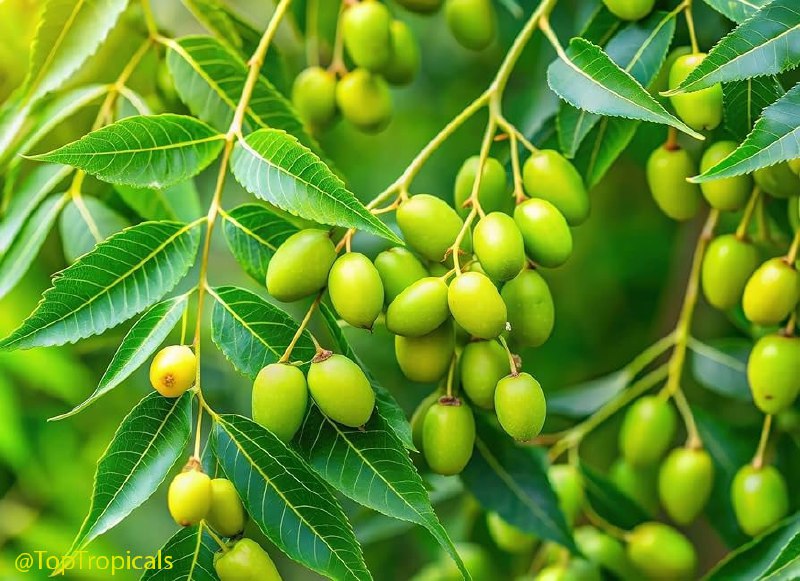
Neem Tree - Azadirachta indica

Neem Tree - Azadirachta indica

🌿 What is Neem and why do millions use it daily? The tree that makes toothpaste and bug spray.

  • 💚 Ever notice Neem listed in toothpaste or skin cream? Or even in natural insecticides and garden treatments? What is this tree and why is it everywhere? Neem products come from the Neem Tree - Azadirachta indica, native to India. It's been used for thousands of years in medicine, farming, and daily life.
  • 💚 How can you use Neem?


    Almost every part of the tree has a purpose.

The leaves are brewed as tea, applied to skin for soothing, and used in villages to ward off mosquitoes or protect stored clothes from insects. They are bitter but medicinal, valued for treating malaria and even for lowering blood sugar in diabetics.
  • Dental cure. Neem twigs, thin and pencil-sized, are chewed and used as toothbrushes to strengthen gums and fight bacteria. Today, toothpicks and dental sticks are still made from them.
  • Neem oil for your Garden. The seeds produce neem oil, a natural insect repellent and fungicide for the garden that doesn’t harm bees or butterflies.
  • Bark extracts are used in medicine
  • Ripe fruits are eaten fresh and considered beneficial too.


💚 Why do people plant Neem?


It’s more than a medicine chest. In India, Neem is planted along streets and in villages as a source of shade, air purifier, and natural pest control. One tree supports health, provides garden protection, and even supplies food.

💚 Is it easy to grow?


Yes. Neem tree thrives in hot, dry conditions and needs little care. Once established, it only needs low to medium water and grows well even without irrigation. It can be grown as a street tree, in the yard for shade, or in poor soils where other trees struggle. Hardy, fast-growing, and evergreen, Neem is one of the most practical trees you can add to a tropical or subtropical garden.

🛒 Plant a Neem Tree and Explore Neem benefits

#Food_Forest #Remedies #Discover

🟢 Join 👉 TopTropicals
Date: 17 Oct 2024

Five Extraordinary, Show-Stopping Flowering Shrubs

Q: I'm looking for something fresh and exciting - something my neighbors won't have! I have both sunny and shady spots in my garden. What unique flowering shrubs would you recommend?

A: Why settle for ordinary when your garden can be extraordinary? Here are five fabulous flowering shrubs that will set your landscape apart. Whether you're dealing with sizzling sun or cool shade, these beauties will add color, character, and charm year-round. Let's dive in!

1. Lobster Claw - Simply Spectacular!

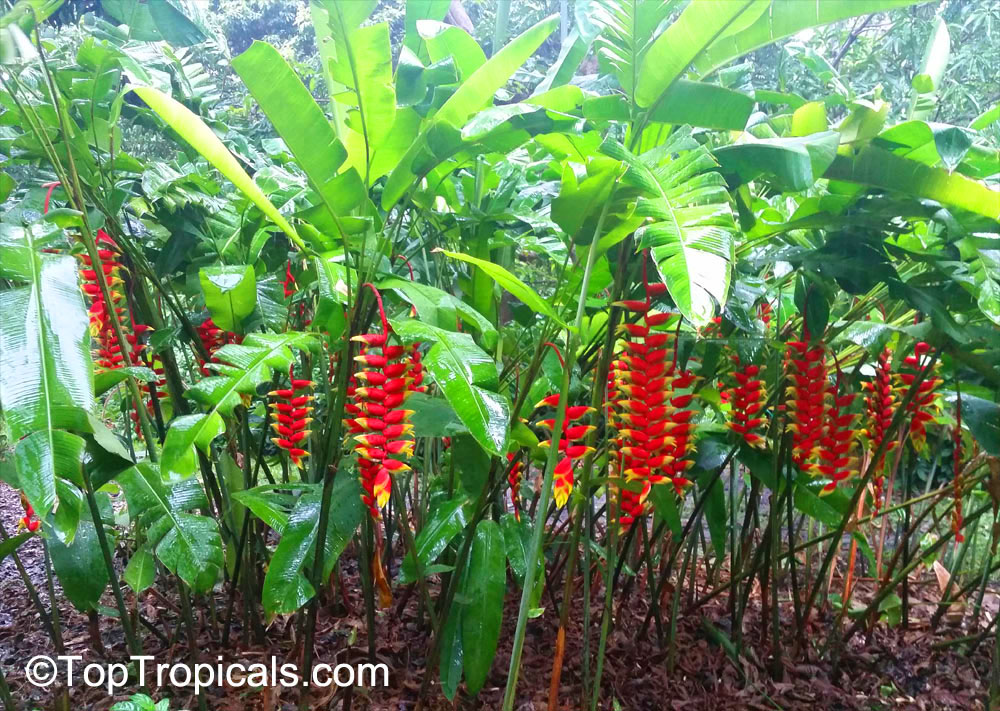
Heliconia  rostrata  -  Lobster  Claw

Heliconia rostrata - Lobster Claw. This exotic plant makes a bold statement with its parrot-like blooms. The colorful, dangling flowers last long and are perfect for bouquets. Growing up to 7 feet tall, it thrives in large pots or tropical landscapes, handling temperatures in the high 20s. Just give it room to stretch those stalks!

2. Bat Head Lily - Perfect for Shade

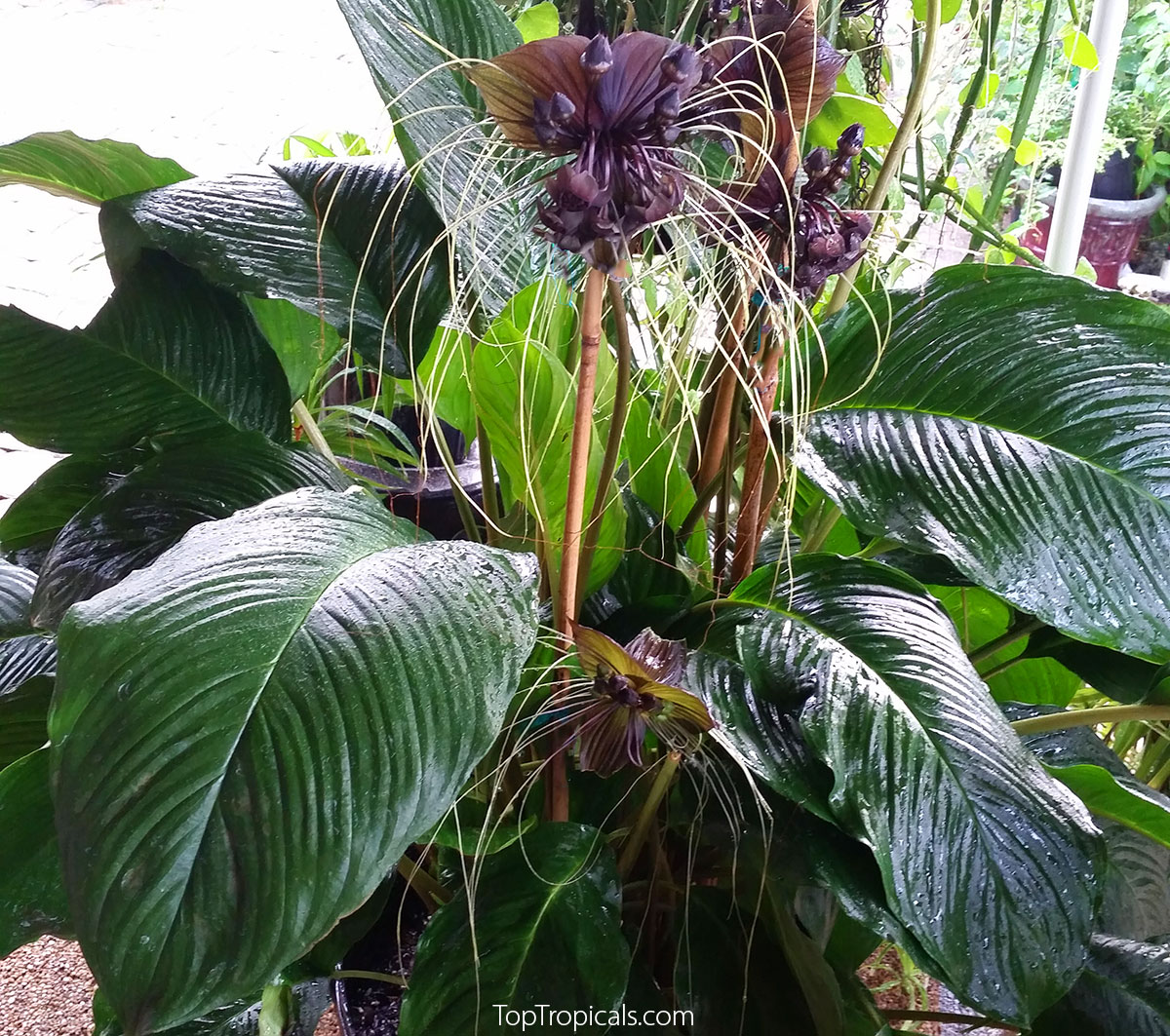
Tacca  chantrieri  -  Bat  Head  Lily

Tacca chantrieri - Bat Head Lily, Black Tacca. Looking for something mysterious? This plant's dark, bat-shaped flowers and trailing "whiskers" will intrigue everyone. It prefers filtered light and high humidity, making it a great pick for shaded areas or a greenhouse. Available in striking colors like black, white, and green, it's a conversation starter in any garden.

3. Ball of Fire - Made for the Sun

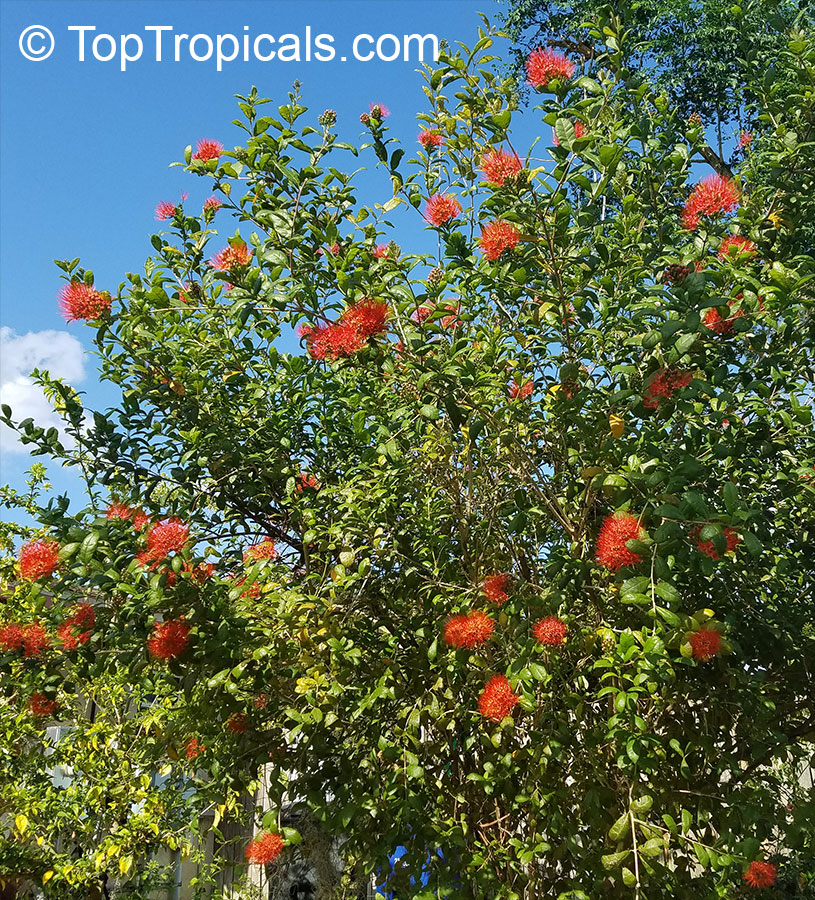
Combretum  constrictum  Thailand,  Ball  of  Fire

Combretum constrictum from Thailand, called Ball of Fire - is one of our favorite tropical flowering shrubs that is constantly in bloom and is so much different from anythings else. With constant blooms and fiery red flowers, this tropical shrub shines bright. Though it might fool you from a distance as a Powderpuff plant, it's a whole different species! It can be shaped into a small tree, handles pruning well, and attracts butterflies and hummingbirds. Easy to grow, it only needs regular water to get established.

4. Blue Sage - the Bluest in the Tropics

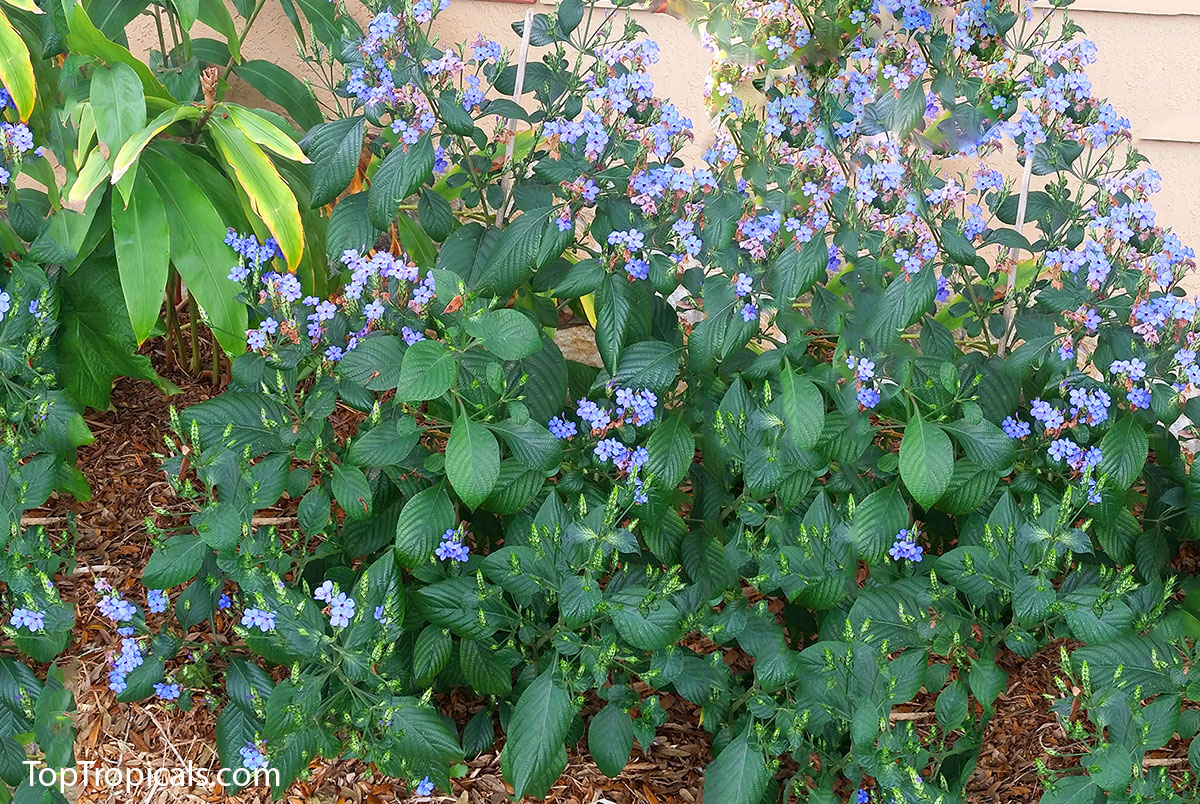
Combretum  constrictum  Thailand,  Ball  of  Fire

Eranthemum pulchellum - Blue Sage, or Lead Flower. This winter heavy bloomer thrives in shady spots with its vibrant gentian-blue flowers, a rare color in the tropics. It's compact, easygoing, and the more you prune it, the bushier it gets. When other plants are napping, Blue Sage adds a splash of cool blue, making it perfect for carefree gardeners who want a touch of magic.

5. Candelabra Plant - Massive Gold

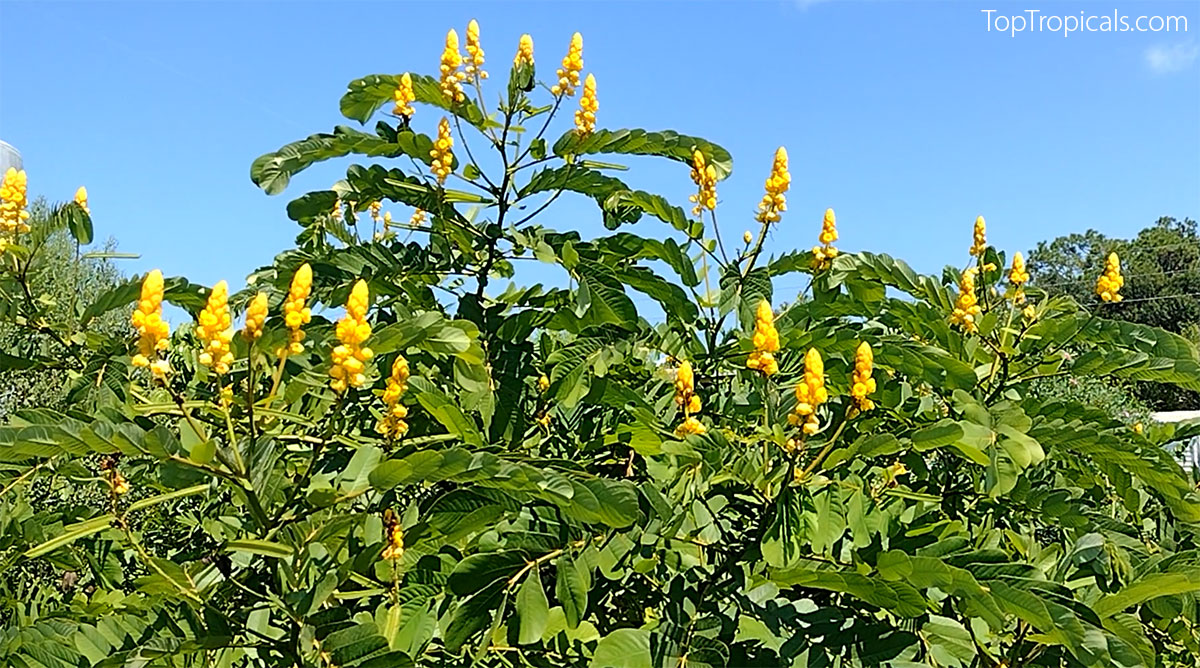
Senna  alata  -  Empress  Candle,  Candelabra  Plant

Senna alata - Empress Candle, Candelabra Plant - is a fast-growing shrub that brings sunny, candle-like flowers and massive leaves to your garden. It's a weed-fighting hero, shading out invaders with its wide canopy. Butterflies and bees love its golden blooms, and the plant can grow 10 feet wide in just one season! If you want beauty and function, the Candelabra Plant is your golden ticket. Watch the .

Date: 22 Oct 2025

Detailed Cassia and Bauhinia Care Guide
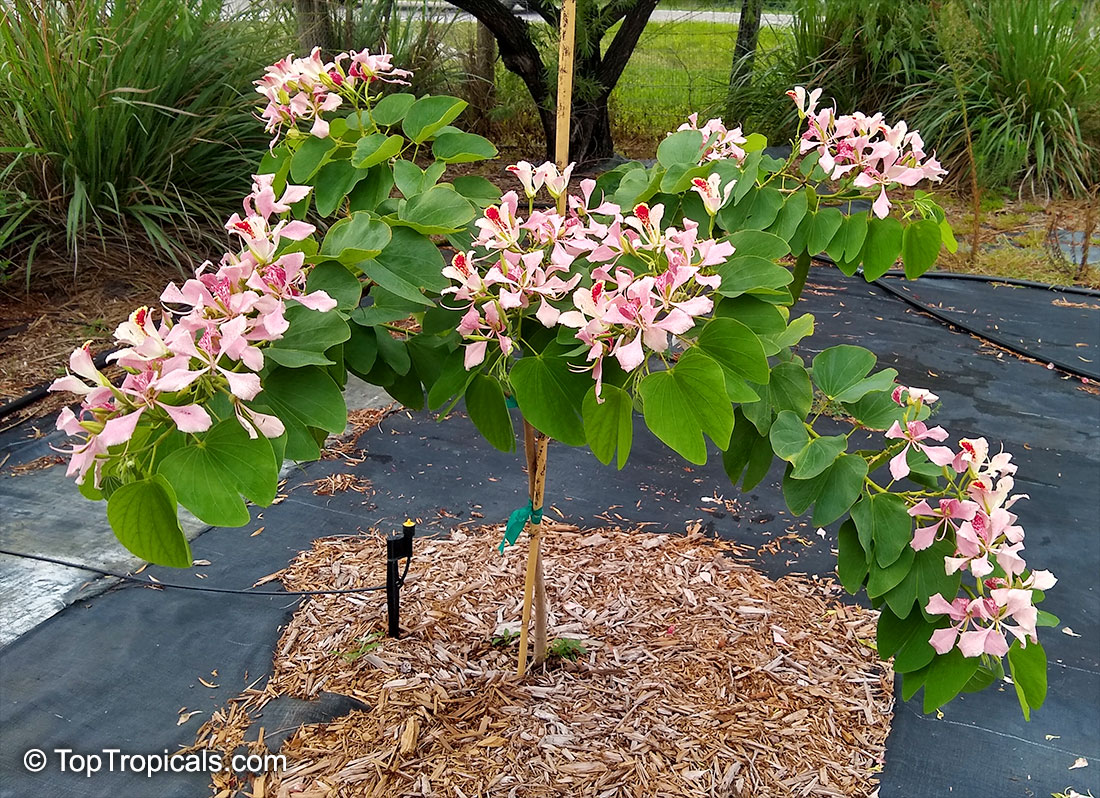

Young  Bauhinia  monandra  tree  blooming  with  clusters  of  pink  and  white 


orchid-like  flowers,  growing  at  Top  Tropicals  nursery  with  fresh  mulch  and 


drip  irrigation 


setup

Outdoor Cassia and Bauhinia Care

  • Light: Both Cassia and Bauhinia need at least 6 hours of direct sunlight daily. Cassias handle intense heat; Bauhinias can take light afternoon shade.
  • Soil: Use loose, fast-draining soil. Mix equal parts garden soil, coarse sand, and compost.
  • Watering: Keep evenly moist but never soggy. Cassias tolerate dry spells once established; Bauhinias prefer steady moisture. Water when the top inch feels dry.
  • Feeding: For profuse flowering, feed with liquid Sunshine Boosters Megaflor that is safe to use with every watering, year around. You may also apply Green Magic controlled release fertilizer every 6 months. Bauhinias and Cassias respond quickly to feeding.
  • Pruning: After flowering, prune lightly to shape and remove dead tips. Cassias can be trimmed to shrub form; Bauhinias stay bushy with pinching.
  • Mulch: Add a 2-inch mulch layer around the base to conserve moisture and prevent weeds, but keep mulch off the trunk.
  • Cold protection: Most Cassias handle brief frost; some Bauhinias like B. acuminata and B. monandra must be sheltered below freezing. For cold nights, cover with frost cloth or move containers into shelter.
  • Dormancy: Outside of tropics, most Bauhinias drop leaves in winter for a short period of time, right before flowering and are called "semi-deciduous". Cassias stay evergreen.

Indoor or Porch Care (cool-climate growers)

  • Container: Choose a sturdy pot with several drainage holes, one size larger than the root ball. Unglazed clay or thick plastic pots work best for heat regulation. Use a light, well-drained mix such as professional soilless mix Abundance. Both Cassias and Bauhinias dislike soggy roots. Add a thin layer of coarse gravel at the bottom to improve drainage. Repot every 1–2 years in spring
  • Light: Brightest spot possible - south-facing window or heated sunroom. Supplement with a grow light if sunlight is weak.
  • Temperature: Keep potted trees in warm environment for best results. The optimum temperature for Cassias and Bauhinias is between 60–85 F, although many species can tolerate cooler temperatures. Avoid cold drafts and sudden drops.
  • Humidity: Average indoor humidity is fine; occasional misting keeps foliage glossy.
  • Watering: Water sparingly in winter when growth slows; allow the top inch to dry between waterings. Do not let roots sit in water.
  • Fertilizing: Feed with Sunshine Boosters Megaflor that is safe to use with every watering, year around, to maintain flowering indoors. You may also apply Green Magic controlled release fertilizer every 6 months.
  • Pest watch: Check undersides of leaves for aphids or whitefly. A light spray of neem oil or insecticidal soap clears them fast.

"Whether you crave golden summer fireworks or soft orchid blooms that last nearly all year, both Cassia and Bauhinia bring pure joy to the garden. 💖 Bring color that never quits."

Did you know: Fall is the best planting season — roots grow faster and you’ll have flowers by spring!

✔️ Fall Planting Guide

🛒 Shop Tropical Flowering trees

Date: 30 Apr 2025

How to enhance your garden with hardy tropical: Fast Growing White Orchid Tree

Bauhinia alba (candida) - White Orchid Tree

How to enhance your garden with hardy tropical: Fast Growing White Orchid Tree

  • 💮 Bauhinia alba (candida) - White Orchid Tree - is the most cold hardy of all bauhinias. It is a medium-sized, fast-growing tree with short trunk and spreading branches that provide excellent shade.
  • 💮 Abundant, fragrant white flowers adorned with subtle lemon-green markings, blooming from winter through spring and intermittently in summer.
  • 💮 Cold Hardy: Among the most frost-tolerant Bauhinias, thriving in temperatures as low as 26F. ​
  • 💮 Rapid Growth: Grows quickly, reaching heights of 15 to 30 feet, ideal for creating a lush, shaded area. ​
  • 💮 Attracts Pollinators: The large, showy flowers attract hummingbirds, bees, and butterflies, enhancing your garden's ecosystem.​
  • 💮 Low Maintenance: Drought-tolerant once established and thrives in well-drained soil with full sun exposure. ​


📚 Orchid trees from previous posts:

🛒 Enhance your garden with White Orchid Tree

#Hedges_with_benefits #Trees #Butterfly_Plants

🔴 Join 👉 TopTropicals

Date: 10 Aug 2025

Tuxedo  cat  planting  tropical  tree  with  Sunshine  Boosters  bag,  orange  cat  waving  to  kitten  with  backpack  by  school  bus  in  sunny  garden 


scene.

🌺 Back to School and Back to Planting – Cats in the Garden

Back to School, Back to Planting – Why August Works for Tropicals

Planting Season Isn't Over Yet

August is still a good month for planting tropicals in warm climates. The soil stays warm enough to push root growth, and late-summer weather gives plants time to settle in before winter. In drier areas, regular watering will keep them moving along just fine.

Tropicals in warm climates aren't usually harmed by cooler Winter weather, but as days get shorter, growth may slow down. This is why planting in late Summer-Fall lets roots grow during this last warm stretch, so the plant enters winter already established.

By spring, those roots are ready to drive new shoots, flowers, and fruit. There's no lost time to transplant shock - plants can get straight to blooming and fruiting earlier in the season.

August Planting FAQ

How can heat be prevented from harming new tropicals?

Water in the morning so plants start the day hydrated. Warm soil is good for root growth, but don't let it dry out.

How should new plants be protected from strong sun?

For the first couple of weeks, use a shade cloth or even a white bed sheet to soften midday sun and prevent leaf scorch.

What fertilizer works best for planting in summer heat?

Controlled-release types are best. We use professional grade Green Magic. You may pair it with Sunshine Boosters for steady, gentle feeding through the warm months.

Which tropicals grow best when planted in August?

Most tropical plants do well when planted in warm end-of-summer conditions, including Mango, Avocado, Guava, Jackfruit, Annona, Bananas, Orchid Trees, Jasmines, Allamanda and most of flowering trees, shrubs and vines.

Can tropical trees planted in August produce fruit next year?

Many can, especially fast growers, since they have established roots by the time spring growth begins.

How can tropicals be kept healthy when planting in August?

Mulch around the base to help prevent soil from drying out too quickly. Water deeply in the morning to help plants handle the heat.

Shop Flowering trees

Shop Fruit trees and edibles