Date: 14 Jul 2018
How to grow a Dragon Fruit
Q: I want to grow a Dragon Fruit. Should I use cuttings or seed? What varieties do you recommend? How difficult it is to grow? How soon does it start flowering and fruiting?
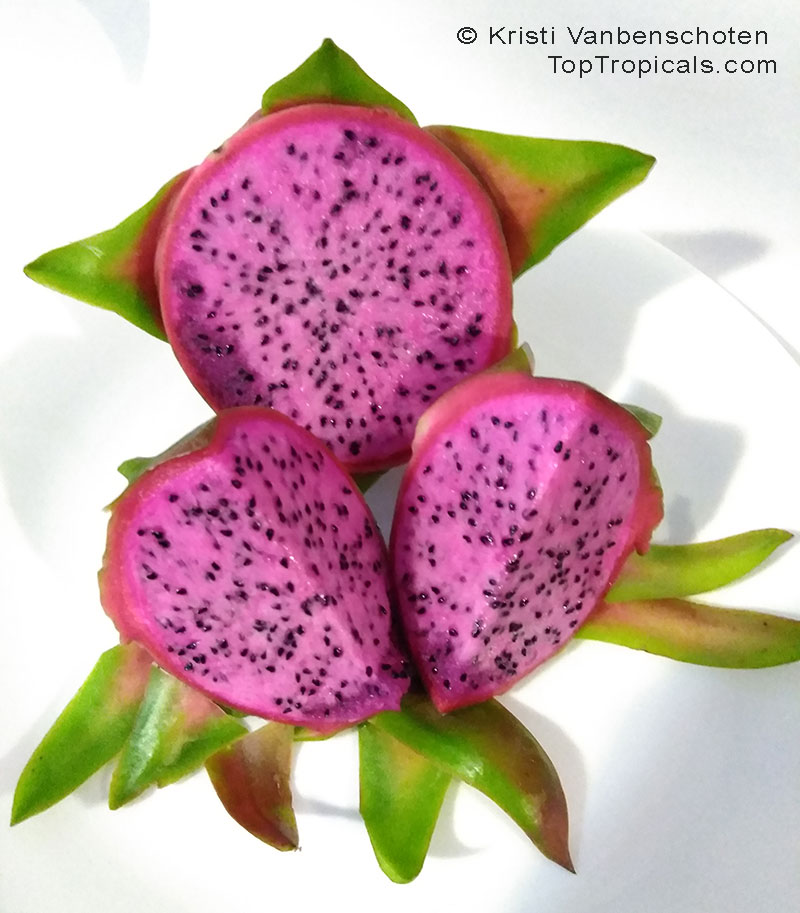
A: Dragon Fruit, or Pitaya is a highly prized, vining, fruit bearing
cactus, extremely unusual terrestrial/epiphytic plant. It has magnificent flowers,
stunningly beautiful fruit with an intense color, curious shape, and a
delicious taste. The night blooming white flowers can be up to 14 inches in
length. The fruit is most often eaten chilled and cut in half so the flesh may be
spooned out. The juice is used in frozen drinks and it is in a new Tropicana
Twister flavor. It is a must have for any collector or gardener with the flair
for the unusual.
It takes 2-3 years for seedlings to fruit, besides the variety pay not
come true to seed. We grow our plants from cuttings that are easy to root.
We offer many selected varieties, most of them self-pollinating. The plants are
ready to flower and fruit this year, or the next year.
Dragon Fruit Cactus is easy to grow, doesn't need much other than strong
support, full sun, well-drained soil - adenium soil mix works great - and fertilizer during hot months, and SUNSHINE-Honey applications for growing sweeter fruit. For larger fruit
bud thinning is recommended.
Check out Dragon Fruit varieties

Date: 24 Jun 2018
Tropical Planting Breaks the Rules. Should I plant in the ground before Winter?
Q: Winter is coming and I still have a few plants I want to plant in the ground. Should I keep them in pots and wait till spring?
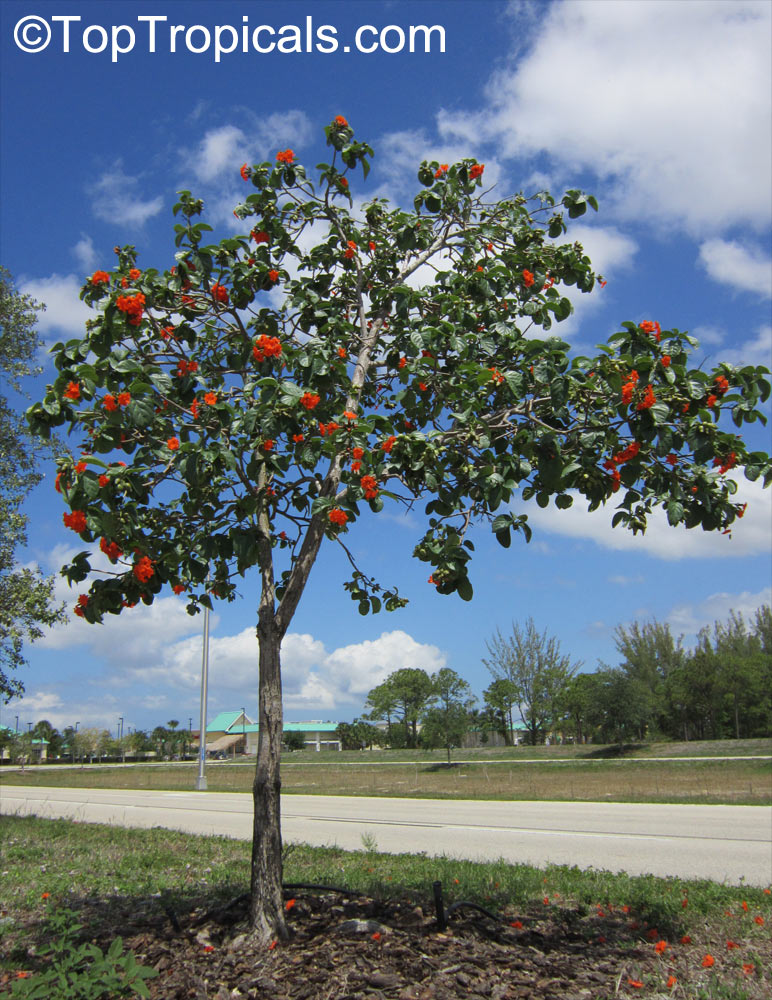
A: In subtropical areas, if temperatures don't drop below freezing, you can continue planting in the ground. In fact winter planting has some unique advantages - less heat stress on a plant and root system, mild environment - help the plant to establish better. Besides, no-sweat garden work is much more enjoyable, and you can get done a lot!
To learn more about winter planting, see article Tropical Planting Breaks the Rules by Murray Corman (Garden Of Delights
Date: 24 Jun 2018
Grafted Gardenias: what is the trick?
Q: I am thinking about buying a Gardenia as a present for my mother's garden in Florida. What is the difference between grafted and non-grafted gardenias?
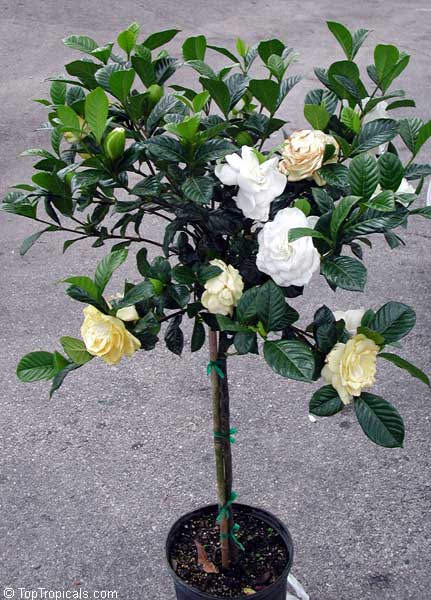
A: Gardenias are one of our finest shrubs, growing to a height of about six feet in warmer areas of the United States. They have very attractive, shiny evergreen leaves that are about four inches long and, each spring-summer, produce the loveliest of white flowers that are delightfully scented. In areas with alkaline soils, like Florida, only grafted gardenias can be planted in the ground: graft provides nematode resistance, tolerance to poor, sandy and alkaline soils, and healthy, dark green foliage. Grafted varieties have rootstock of Gardenia thunbergia - the most resistant species of all gardenias.
Check out our Gardenia varieties
Date: 24 Jun 2018
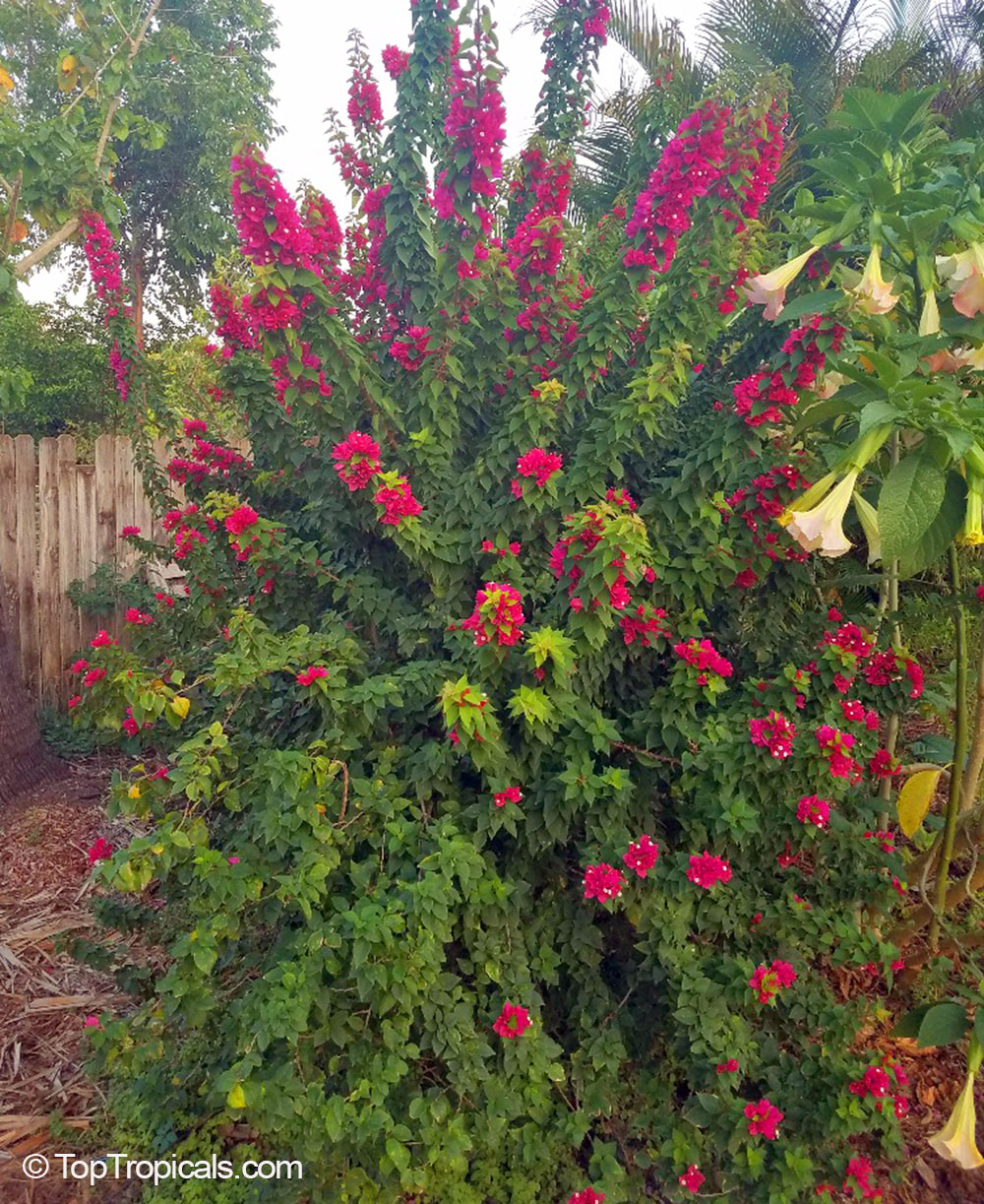
Growing Bougainvillea and Plumeria in Florida
Q: I have recently moved from New Jersey to Florida (Orlando area) and I am so excited to start my own Tropical Paradise Garden! A few years ago I visited Hawaii and saw many beautiful colorful Bougainvilleas as well as fragrant Frangipani. Do they grow well in Florida? These are flowers of my dream!
A:
Both Bougainvillea and Plumeria grow well in most
parts of Florida, especially South and Southwest.
Bougainvillea can tolerate some light freeze and can be
seen in the streets of Central Florida (young plants
require some cold protection for the first year), so it is
a very good candidate for your new garden. Keep in mind
that unlike in Hawaii, where they bloom year around,
Bougainvilleas tend to have a distinctive flowering season
which in Florida is winter time - these plants enjoy dry
weather that triggers their bloom. To enjoy Bright
bougainvillea flowers for a long time, apply balanced fertilizer, prune
regularly (this promotes flowering on new growth) and keep
established plants on a dry side. Dwarf cultivar Pixie is super compact and
can be grown in pots or in a small garden without any
pruning! See photo of Pixie on the left.
Plumerias, all-time perfume
favorites and symbols of Hawaii, are also residents of
many gardens and collections throughout state of Florida.
Their cold hardiness is close to the one of Bougainvillea,
however keep young plants protected from frost. There are
also many new exciting cultivars including multiple
"rainbow" colors, and several dwarf varieties, some of
them are evergreen - Plumeria obtusa
Date: 19 Jul 2022
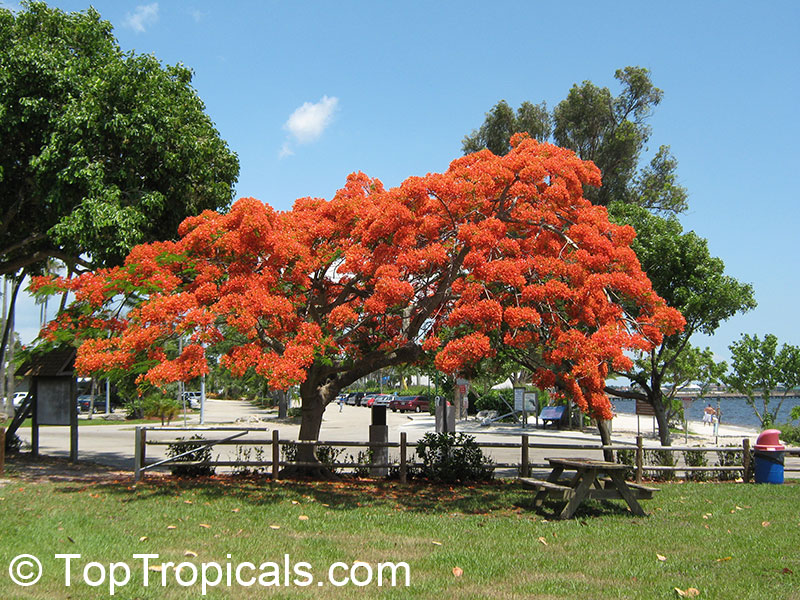
New video: Royal Poinciana
The most beautiful tropical shade tree
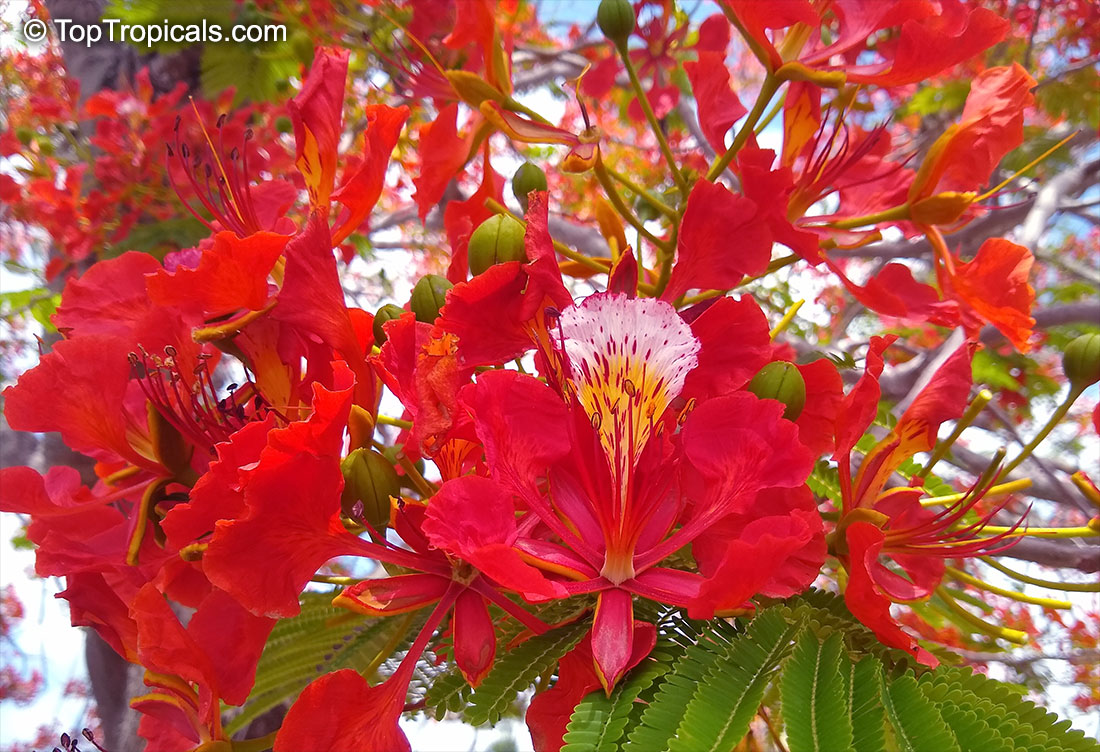
"The Royal Poinciana is one of the most spectacular flowering trees
in the USA, and probably among the top 10 on this planet. In full bloom, it is
like a regal elephant caparisoned in red and yellow brilliance." (Larry
M. Schokman, The Kampong, National Tropical Botanic Garden)
One of the most conspicuous flowering trees seen in the tropics, Royal poinciana (Delonix regia) has bright fiery red/orange
blossoms cover its mimosa type leaves which close up and go to sleep for the
night.
This large tree, which naturally assumes a spreading umbrella shape, is now
found in gardens, parks, and planted along streets throughout the tropics.
In late spring, as the new leaves appear, the tree is covered with masses of
five-petalled red flowers resembling orchid flowers. Blooming is followed by
long, flattened, leathery dark brown or black seed pods. Delonix requires full
sun and adequate space to take its characteristic form....
Read Article about this tree.
Subscribe to our Channel:
Stay updated with TopTropicals Videos by subscribing to our channel at YouTube.com/TopTropicals and get our latest video news of what is fruiting and blooming!