Zero Sugar fruit: forget lemonade - new perfect summer drink discovered!
Costa Rican Guava, Cas Guava - Psidium friedrichsthalianum
Zero Sugar fruit: forget lemonade - new perfect summer drink discovered!
🍋 Costa Rican Guava, or Cas Guava (Psidium friedrichsthalianum) is the boldest fruit you can grow for refreshing drinks. Its flavor is sharp, tangy, and unforgettable - perfect for anyone who loves acidic fruit. Cas Guava has sugar at all, unless you decide to add some.
🍋 The trees are super prolific - even young ones fruit heavily, and we make gallons of juice at Top Tropicals.
🍋 The best part? You can freeze the fruit or boil it into a concentrate with a bit of sugar. That drink lasts in the fridge for months without going bad, thanks to Cas Guava’s natural antibacterial punch.
🍋 Cas Guava juice is Costa Rica’s traditional Agua de Cas - tart, refreshing, and perfect for summer heat. And if you save enough, you’ll still be sipping it through the winter.
♨️ Agua de Cas Quick Recipe
We boiled this fruit and the drink lasted for months!
Boil halved fruits in water with sugar to taste Simmer 5-10 minutes, let sit, then mash the softened fruit to release all the flavor Strain through a colander, bottle, and refrigerate - just dilute with water when serving
✔️ Why choose Cas Guava?
• Packed with vitamin C - four times more than lemons - for a powerful immune boost. • Rich in antioxidants to combat stress and inflammation. • Hardy and low-maintenance, thriving in poor soils and resisting pests.
The secret Brain Food growing in my backyard (and it tastes like green peas!)
Tropical Asparagus (Sauropus androgynus)
🏆 The secret Brain Food growing in my backyard (and it tastes like green peas!)
🌿 Katuk, or Tropical Asparagus (Sauropus androgynus), is one of the most underrated edible plants you can grow. This leafy tropical shrub is a superfood in disguise. It grows fast, looks lush, and its tender young shoots taste just like green peas.
🌿 Native to Southeast Asia, Katuk is a kitchen staple in places like Vietnam, Malaysia, and Thailand. The leaves and shoots are used in soups, stews, and stir-fries with egg or seafood. It’s not only delicious but also incredibly nutritious - rich in nutrients linked to improved memory and reduced cognitive aging: folate, lutein, and especially vitamin K, which is rare in plants.
🌿 Katuk thrives in sun or partial shade, needs little care, and grows into a dense, bushy plant that gives you edible greens all year round. If you want something that feeds both your garden and your health, this one’s a winner!
Happy Easter to all who celebrate today - especially across Eastern Europe and Orthodox communities around the world.
Smokey and Sunshine are taking a well-earned break with coffee, sweet Easter bread, and a table full of spring color. Wishing you a day filled with peace, renewal, and quiet joy. And of course - the perfect time to plant flowers and fruit and bring new life into your garden.
EXCLUSIVE INTERVIEW: Behind the scenes with Smokey Sunshine - after years of rumors they speak out!
Interview with Smokey and Sunshine
EXCLUSIVE INTERVIEW: Behind the scenes with Smokey and Sunshine - after years of rumors they speak out!
Many people loved our mascots - Smokey and Sunshine - and kept asking the same questions over and over. So we finally decided to sit them down for an interview and ask everything at once.
Smokey is the tuxedo "engineering cat" with professor glasses, serious plant advice, and strong opinions about fertilizer and soil pH.
Sunshine is the fluffy orange Aloha guy of the group - chubby, relaxed, permanently snack-oriented, and somehow never in a hurry about anything. He approaches life with the confidence of a cat who believes coffee breaks, warm sunshine, and donuts are all basic human rights. He is also the one asking the questions normal people are actually thinking.
Together, they somehow turned gardening into conversations about plants, coffee, cats, donuts, and the meaning of life in a greenhouse.
In this interview, you will find out:
Are Smokey's glasses fake?
Are Sunshine's donuts real?
Are these cats based on real rescued Top Tropicals cats?
How many cats have been adopted by Top Tropicals over the years and how many are currently living in the gardens?
Why does Smokey take gardening so seriously?
Why does Sunshine think every problem can be solved with snacks?
Some answers may surprise you.
Some may explain a lot.
Which jaboticaba to grow: a quick guide to the most popular varieties
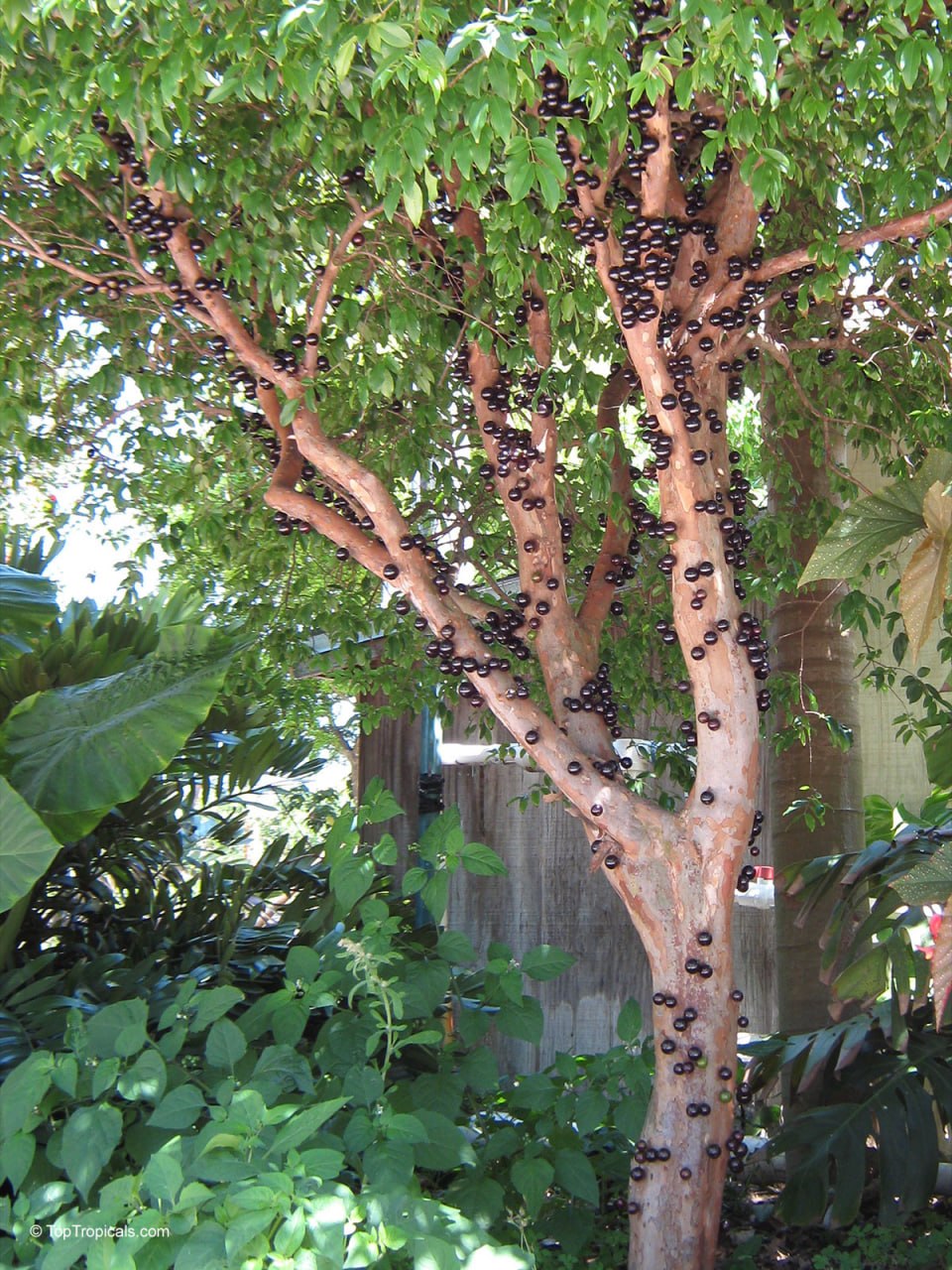
Myrciaria cauliflora Jaboticaba tree
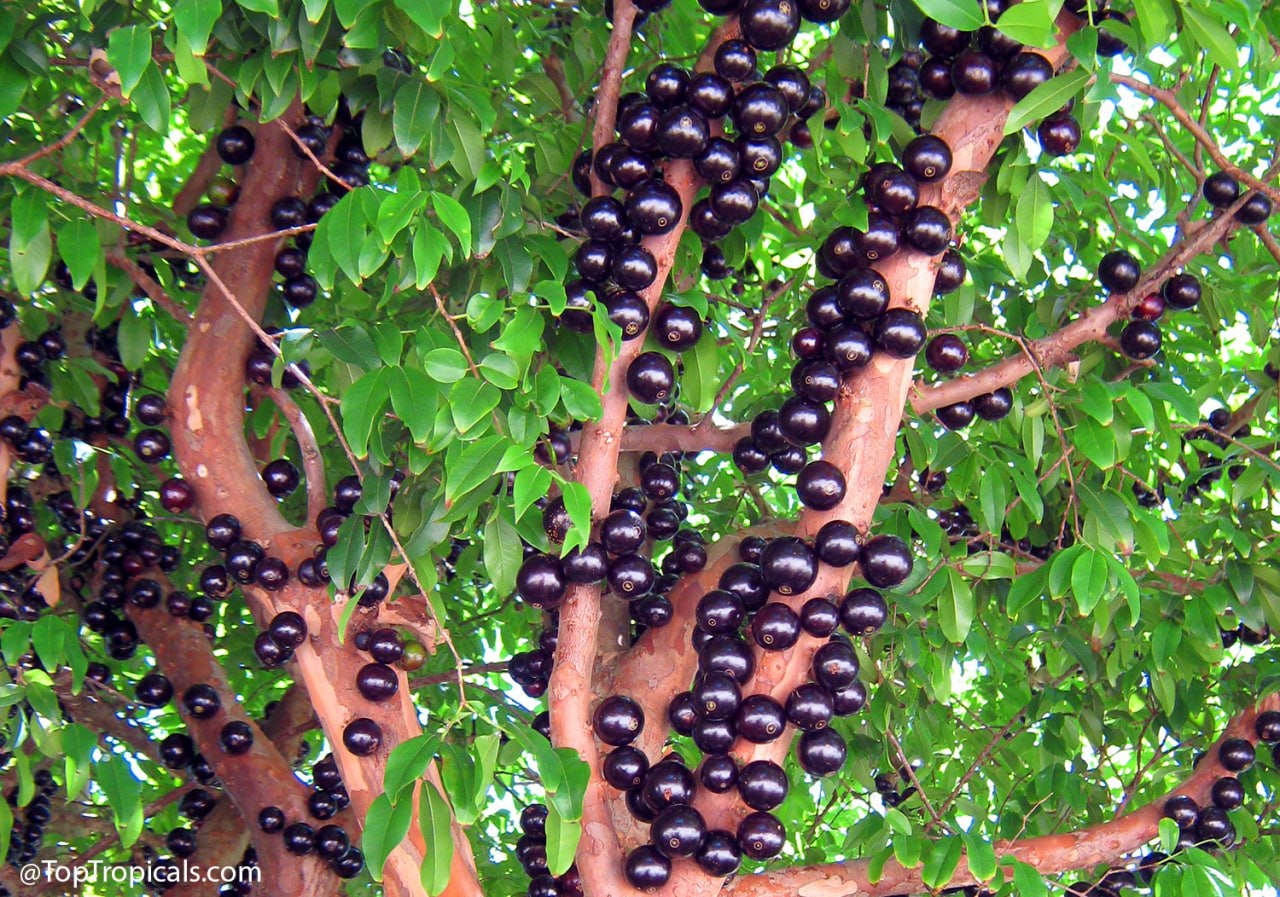
Myrciaria cauliflora Jaboticaba fruit
Myrciaria cauliflora Jaboticaba fruit
🍇Which jaboticaba to grow: a quick guide to the most popular varieties
Jaboticabas are among the most unusual fruit trees in the world. Native to Brazil, they produce grape-like fruit directly on the trunk and branches. Most varieties have sweet pulp, can fruit multiple times per year, and grow well in containers.
Despite their tropical appearance, jaboticabas are surprisingly cold hardy. During our historic Florida freeze, established trees handled 25F for two nights and nearly two weeks of unusual cold without protection. Many varieties can tolerate temperatures into the 20s, making them one of the more cold-hardy tropical fruit trees for Florida.
From fast-fruiting dwarfs to giant-fruited collectors' varieties, each jaboticaba offers something a little different. Here's a practical guide to some of the most popular selections.
For beginners: Precoce Dwarf (Red Scarlet)
One of the fastest-fruiting jaboticabas, often producing in 3-5 years. Compact, container-friendly, ideal for gardeners who want fruit sooner.
• Fruits young • Naturally compact • Excellent container plant • Good for cooler climates where winter protection is needed
The classic choice: Sabara
The classic Brazilian jaboticaba and still the most widely grown variety. Small, exceptionally sweet fruit with thin skin and juicy pulp. Can produce several crops per year.
• Traditional jaboticaba flavor • Thin-skinned fruit • Sweet and juicy • Excellent for bonsai and containers • One of Brazil's most popular wine varieties
For large fruit: Grimal
Often called Giant Jaboticaba, with much larger fruit than most varieties. Thick juicy pulp, small seeds, heavy production.
• Larger fruit • Thick pulp • Heavy producer • Excellent fresh eating quality
For exceptional flavor: ESALQ
Known for large, exceptionally sweet fruit and relatively early production.
• Outstanding sweetness • Large fruit • Fruits in about 4-5 years • Collector favorite
For beauty and productivity: Branca Vinho
One of the most ornamental jaboticabas, with attractive foliage, upright growth, and excellent white-fleshed fruit. Fruits young and often several times per year.
• Beautiful foliage and trunk • White-fleshed fruit • Excellent flavor • Multiple crops per year • Good cold tolerance
For collectors: Blue Jaboticaba
A close jaboticaba relative (Myrciaria vexator) producing blue-purple fruit with a sweet grape-like flavor. Often grown as much for its beauty as its fruit.
• Unique blue fruit • Sweet grape-like flavor • Ornamental tree • Rare and unusual
For faster growth: Volcano Red (La Vinotinto)
More vigorous and faster growing than traditional jaboticabas. Famous in Hawaii for Volcano Red wine.
• Faster growth • More vigorous tree • Good adaptability • Tolerates occasional waterlogging • Source of Hawaiian Volcano Red wine
👉 All jaboticabas share the same magical trait - flowers and fruit appearing directly on the trunk. The differences are in fruit size, growth rate, and how quickly you'll enjoy your first harvest. Jaboticabas are notoriously slow growing, and large fruiting-size trees can take many years to develop. Established specimens are hard to find and can save years of waiting. If you've been thinking about adding one to your garden, remember: the best time to plant a jaboticaba was years ago - the second-best time is today.