Garden Blog - Top Tropicals

Date: 31 Jan 2026

Pitomba pop cups: quick-n-fun exotic recipes
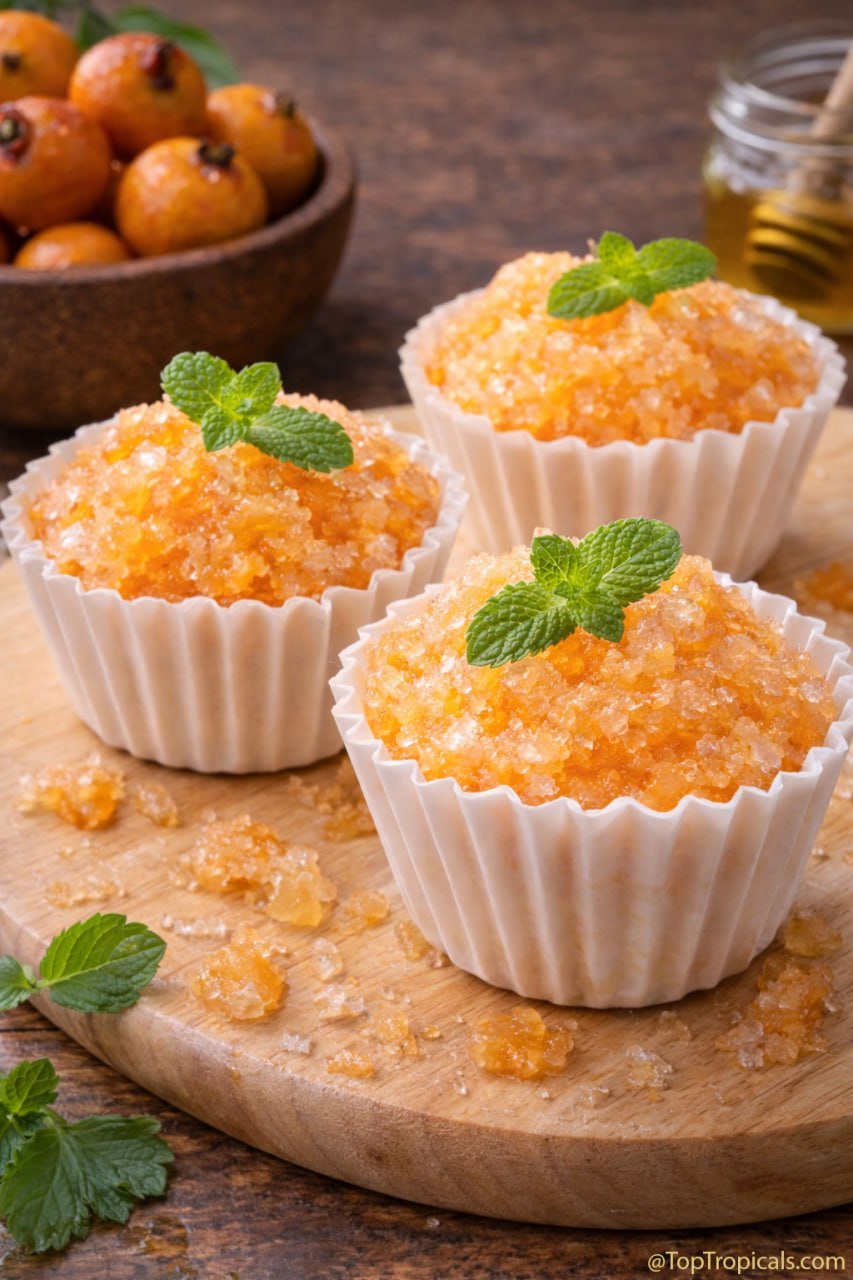
Frozen pitomba pops with mint
Frozen pitomba pops with mint

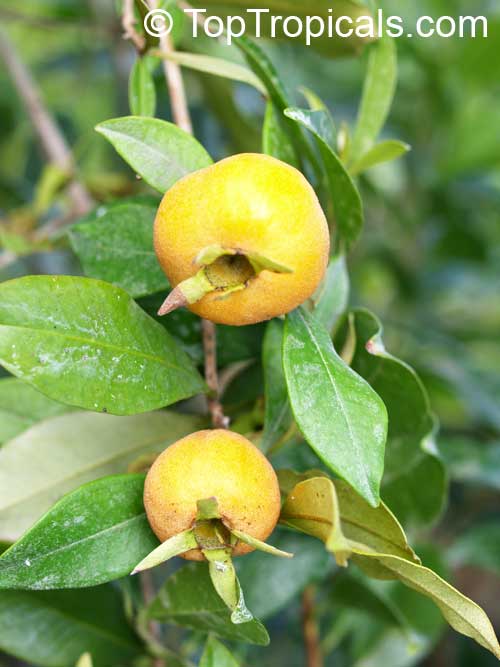
Eugenia luschnathiana - Pitomba

Eugenia luschnathiana - Pitomba

🍴 Pitomba pop cups: quick-n-fun exotic recipes


Pitomba Pop Cups

Ingredients

  • 1 cup pitomba pulp
  • 1 teaspoon honey
  • 1 tablespoon water
  • Fresh mint leaves (optional)

Instructions

  1. Scoop pitomba pulp into a small bowl.
  2. Mix with honey and a little water to soften the texture.
  3. Spoon the mixture into small cups or molds.
  4. Freeze until icy-soft.
  5. Serve topped with fresh mint for a refreshing tropical snack.


🌿 About the plant:


Pitomba (Eugenia luschnathiana) is a tropical fruit native to Brazil, prized for its bright, citrusy pulp with a sweet-sour kick. The flavor is often compared to a mix of apricot, citrus, and mild resin, making it refreshing and snack-worthy straight from the fruit.

Pitomba Plant Facts

Botanical name: Eugenia luschnathiana, Phyllocalyx luschnathianus
Also known as: Pitomba
USDA Zone: 9 - 11
Highligths Small tree 10-20 ftFull sunWatering: Moderate. Water when top soil feels dryWatering: Regular. Let topsoil dry slightlyWhite, off-white flowersEdible plant
Get personalized tips for your region


🌱 In the garden:


Pitomba grows as a small to medium-sized slow growing tree with glossy evergreen leaves. It thrives in warm climates, prefers full sun to light shade, suitable for USDA zones 10-11, it can also be grown in large containers and responds well to pruning, making it manageable for home gardens.

🛒 Plant exotic Pitomba cherry in your garden

📚 Learn more:


Eugenia luschnathiana - Pitomba - in Plant Encyclopedia

#Food_Forest #Recipes

🟢 Join 👉 TopTropicals

Date: 19 Jan 2026

You dont need to buy Gin any more!

Gin Berry, Glycosmis pentaphylla, Orangeberry, Limonia

🍸 You don't need to buy Gin any more!

🍸Guess what is this fruit that tastes like Gin - it's Gin Berry, Glycosmis pentaphylla. It's also called Orangeberry, or Limonia, and is one of those plants that surprises people the moment they touch it. Crush a leaf or rub one of the ripe berries, and the scent is unmistakable - fresh, citrusy, pure gin! Just add tonic.

Ash sheora Plant Facts

Botanical name: Glycosmis pentaphylla, Limonia pentaphylla
Also known as: Ash sheora, Orangeberry, Rum Berry, Gin Berry
USDA Zone: 9 - 10
Highligths Small tree 10-20 ftFull sunWatering: Moderate. Water when top soil feels dryWatering: Regular. Let topsoil dry slightlyWhite, off-white flowersEthnomedical plant.
Plants marked as ethnomedical and/or described as medicinal, are not offered as medicine but rather as ornamentals or plant collectibles.
Ethnomedical statements / products have not been evaluated by the FDA and are not intended to diagnose, treat, cure, or prevent any disease. We urge all customers to consult a physician before using any supplements, herbals or medicines advertised here or elsewhere.
Get personalized tips for your region


🍸 Why the berries smell like gin?


The leaves and berries are packed with aromatic oils rich in citrus terpenes, similar to compounds found in juniper and citrus peel. That shared chemistry is what creates the gin-like fragrance. It smells clean, sharp, and refreshing - more aroma than sweetness.

🍸 A lesser-known citrus cousin


Gin Berry belongs to the Rutaceae family, the same plant family as oranges, lemons, limes, and Curry leaf. You can see it in the glossy leaves and smell it in the oils, but the growth habit is different. Instead of becoming a tree, Gin Berry stays a compact, evergreen shrub.

🍸 Edible, but fragrance-forward


The small berries are edible and lightly sweet-tart, though most people notice the aroma before the flavor. In parts of South and Southeast Asia, the fruit is eaten fresh, added to chutneys, or used to scent drinks and infusions. It is subtle and aromatic rather than juicy.

🍸 Traditional uses and health benefits


🔸Gin Berry has a long history in folk medicine, especially in in Hindu medicine.
🔸Leaves used in teas for digestion and fevers
🔸Roots traditionally used for inflammation and pain
🔸Modern studies note antimicrobial and antioxidant activity

🍸 Easy garden and container plant


🔸Evergreen shrub with shiny leaves
🔸Naturally compact and easy to prune
🔸Small white flowers with a light fragrance
🔸Clusters of decorative berries
🔸Excellent for pots, patios, and warm climates
🔸Attracts pollinators, and birds enjoy the berries.

🍸 Why Gin Berry stands out


Gin Berry sits right between ornamental and edible. It has the citrus-family fragrance people love, stays manageable in size, and offers a unique sensory experience that most gardeners have never seen - or smelled - before.

🛒 Add Gin Berry to your rare fruit collection

#Food_Forest #Fun_facts #Remedies

🟢 Join 👉 TopTropicals

Date: 18 May 2026

Want Massive Mulberry Harvests? Do These 5 Things Before May Ends

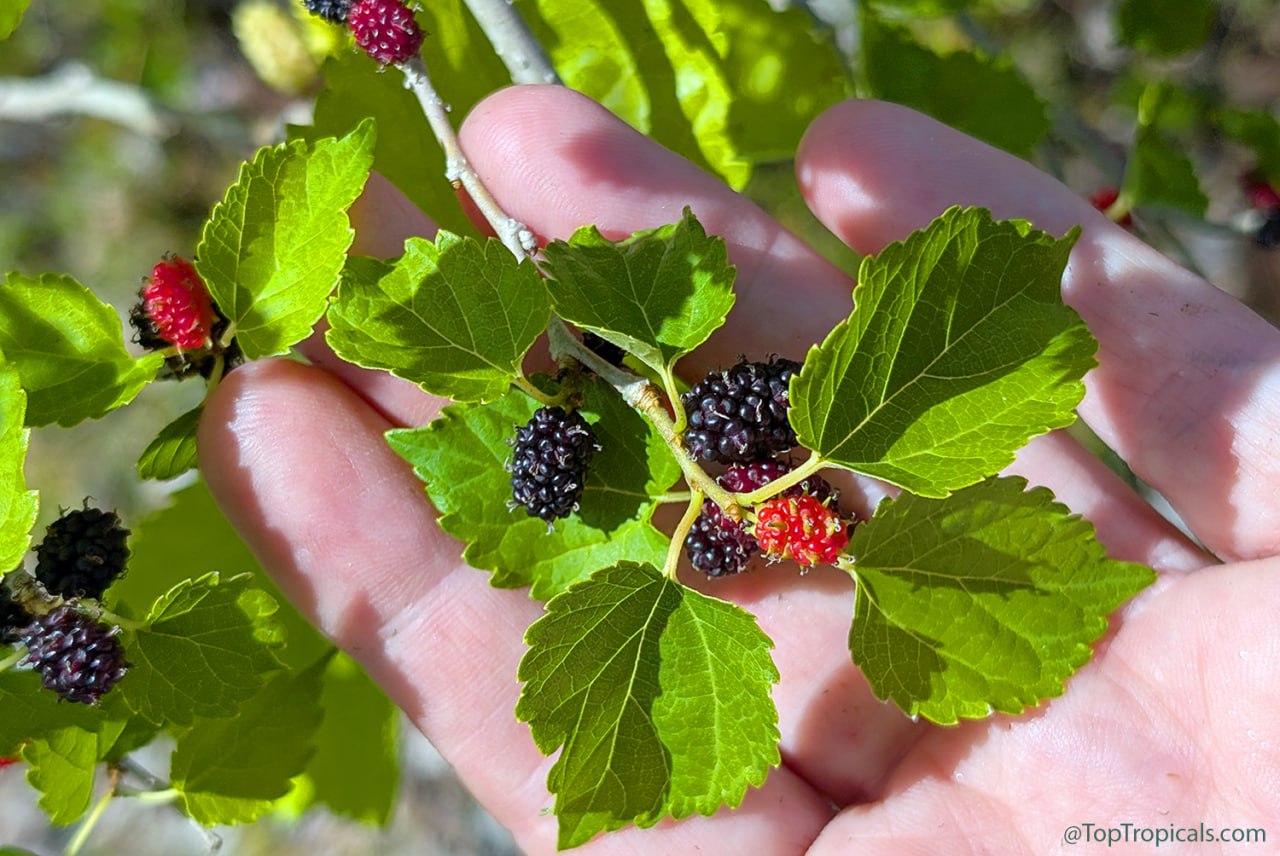
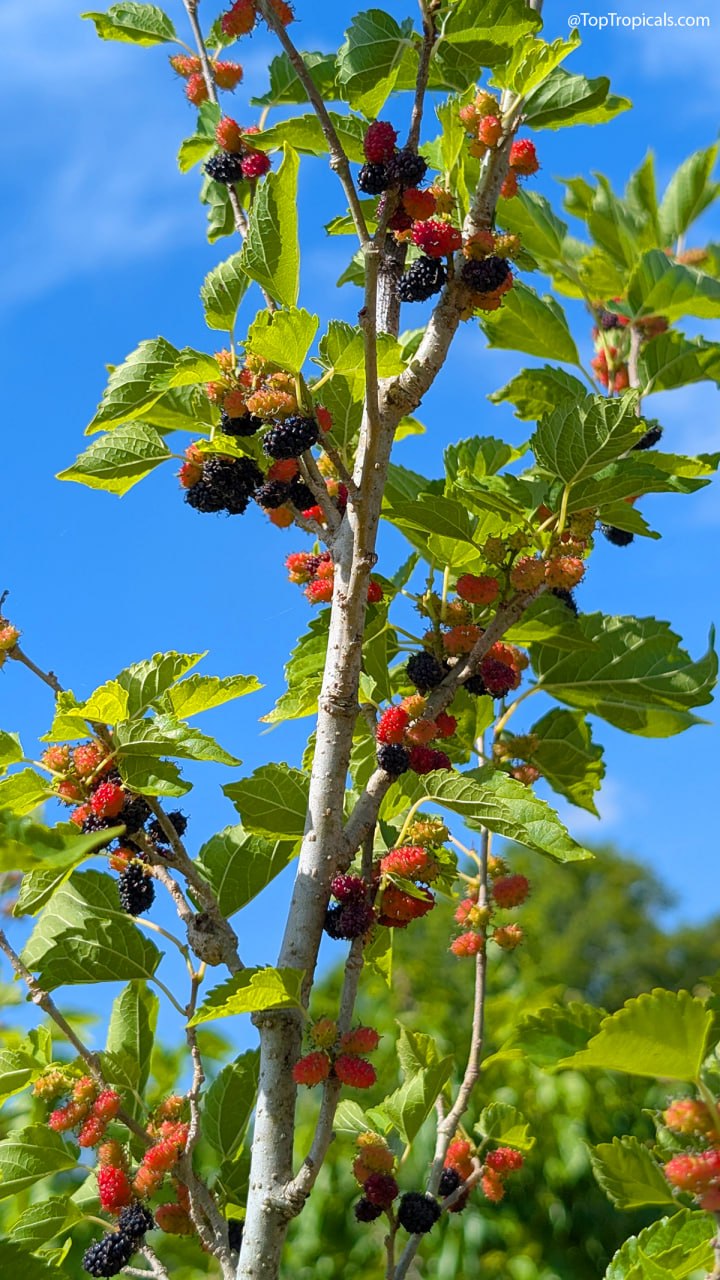
Mulberry Dwarf Everbearing, on a tree

Mulberry Dwarf Everbearing, on a tree

Mulberry Dwarf Everbearing

Mulberry Dwarf Everbearing

🍇 Want Massive Mulberry Harvests? Do These 5 Things Before May Ends


Don’t let your mulberry tree fool you. While they are incredibly low-maintenance, what you do in May dictates your summer harvest. Avoid these common mistakes for a bumper crop of juicy berries.

Mulberry trees are famously bulletproof, handling intense heat and pumping out massive crops with little care. But May is the month that decides it all. Right now, they are pouring energy into fruit development. A few simple mistakes this month can quietly sabotage your harvest.

Fortunately, maximizing your crop is easy if you follow these five simple rules:

1. The Deep Soak Rule


While established mulberries tolerate drought, moisture stress causes them to drop young berries early. Drop the sprinkler—frequent, shallow watering only wets the surface. Instead, give the tree a slow, deep soak that penetrates the root zone. Check the soil two inches down; if it’s dry, water thoroughly.

2. Lock it in with Mulch


Late spring heat evaporates soil moisture fast. Apply a 2-to-4-inch layer of pine bark or compost to keep roots cool and suppress weeds. Crucial rule: Leave a 4-inch gap around the base of the trunk. Piling mulch against the bark traps moisture and invites devastating fungal rot.

3. Don't Over-Fertilize


Mulberries are naturally vigorous. If you feed them this month, use a balanced, slow-release organic plant food. Avoid high-nitrogen fertilizers. Excess nitrogen triggers a massive explosion of green leaves, causing the tree to completely forget to grow fruit.

4. Put the Pruning Shears Away


Heavy spring pruning clips off active fruiting wood and decimates your harvest. Mulberries are also notorious "bleeders" - cutting now causes them to lose significant sap, stressing the tree during fruit set. Only remove dead or damaged wood. Save major shaping for winter dormancy.

5. Exploit the Softwood Cuttings Window


Want more trees? May is prime time for softwood cuttings. Cut a few 6-inch flexible green stems, strip the lower leaves, dip in rooting hormone, and tuck into moist potting mix in partial shade. They root incredibly fast!

Mulberry Plant Facts

Botanical name: Morus sp.
Also known as: Mulberry
USDA Zone: 8 - 11
Highligths Large tree taller than 20 ftSmall tree 10-20 ftFull sunWatering: Regular. Let topsoil dry slightlyEdible plant
Get personalized tips for your region

🛒
Choose from Mulberry varieties

📚 Learn more:


Mulberry (Morus hybrids) in Plant Encyclopedia
Mulberry yogurt swirl: Quick-n-Fun exotic recipes
Why gardeners say this is the best Mulberry ever
What are the best Mulberry varieties

#Food_Forest #Discover #How_to

🟢 Join 👉 TopTropicals

Date: 16 May 2026

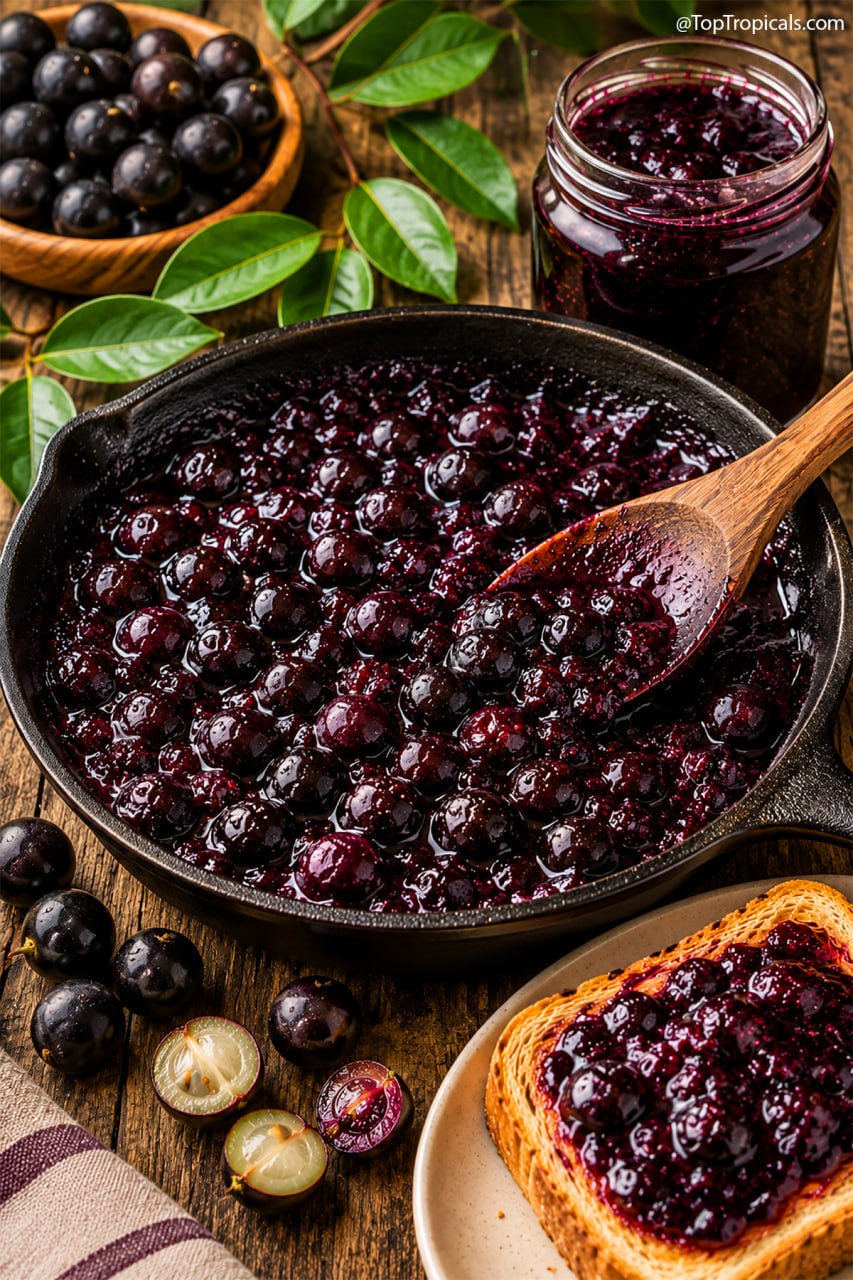
Jaboticaba skillet jam

Jaboticaba skillet jam

Jaboticaba skillet jam

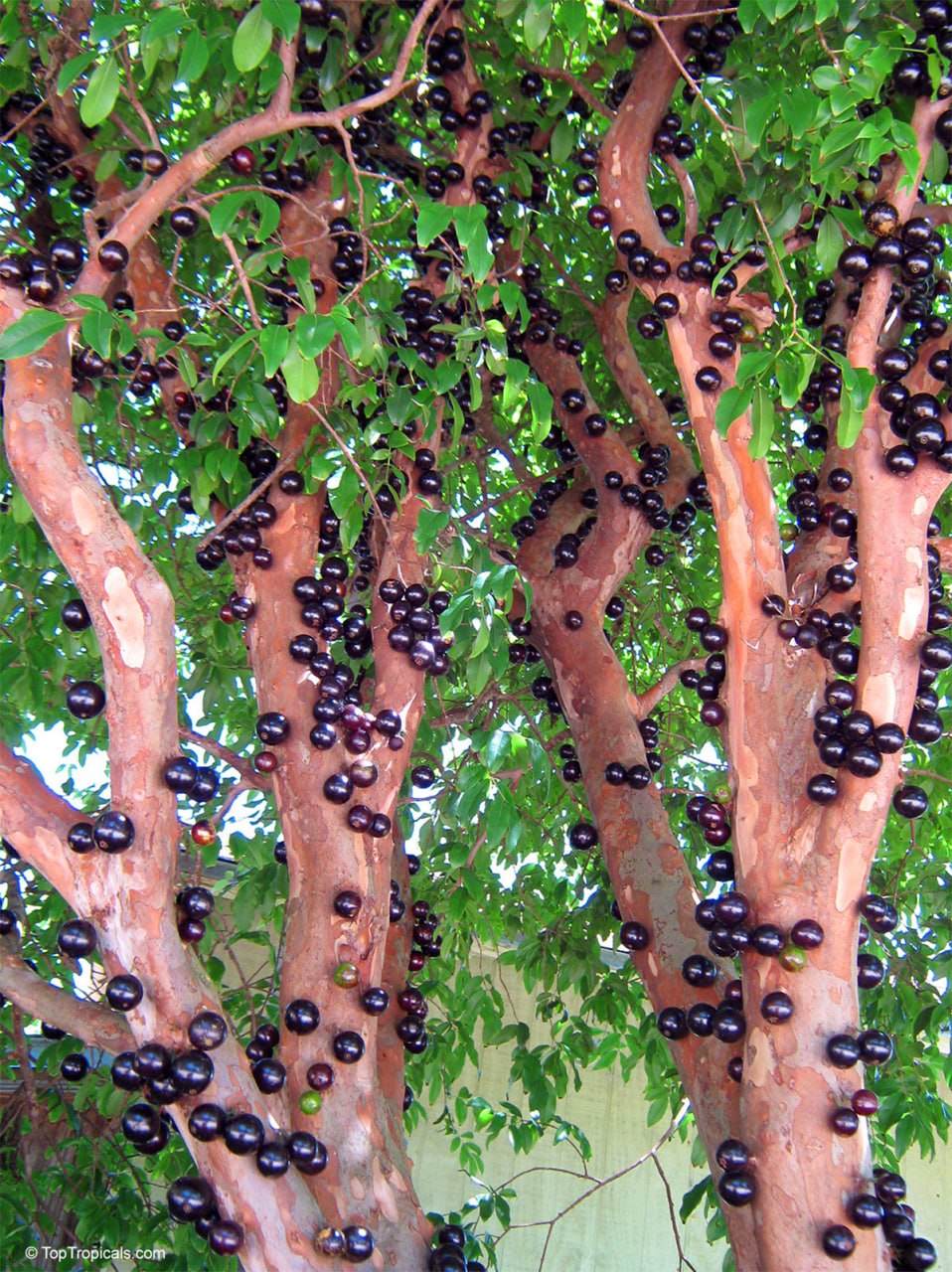
Myrciaria cauliflora - Jaboticaba

Myrciaria cauliflora - Jaboticaba

🍴 Jaboticaba skillet jam: quick-n-fun exotic recipes

🔵Add whole jaboticabas and a spoonful of sugar to a skillet over medium heat.
🔵Cook until the skins burst and the fruit releases its deep purple juice.
🔵Stir gently as the mixture thickens into a glossy jam.
🔵Spread warm over toast, biscuits, or even pancakes while still slightly syrupy.

🌿 About the plant:


Jaboticaba, Plinia cauliflora, is famous for its cauliflorous habit - fruit forming directly on the trunk and older branches. During heavy fruiting, the bark can look almost studded with dark purple beads.

🏡 In the garden:


It prefers slightly acidic soil and steady moisture. Mulching helps maintain humidity around the roots. Though slow growing, it can fruit while still relatively small.

🛒 Plant Jaboticaba tree - while we have large size plants

📚 Learn more:


Jaboticaba (Myrciaria cauliflora) in Plant Encyclopedia

Jaboticaba Plant Facts

Botanical name: Myrciaria cauliflora, Plinia cauliflora, Eugenia cauliflora
Also known as: Jaboticaba, Duhat
USDA Zone: 9 - 11
Highligths Plant used for bonsaiSmall tree 10-20 ftFull sunKeep soil moistEdible plantSubtropical plant. Mature plant cold hardy at least to 30s F for a short timeFlood tolerant plant
Get personalized tips for your region


#Food_Forest #Recipes

🟢 Join 👉 TopTropicals
Date: 13 May 2026

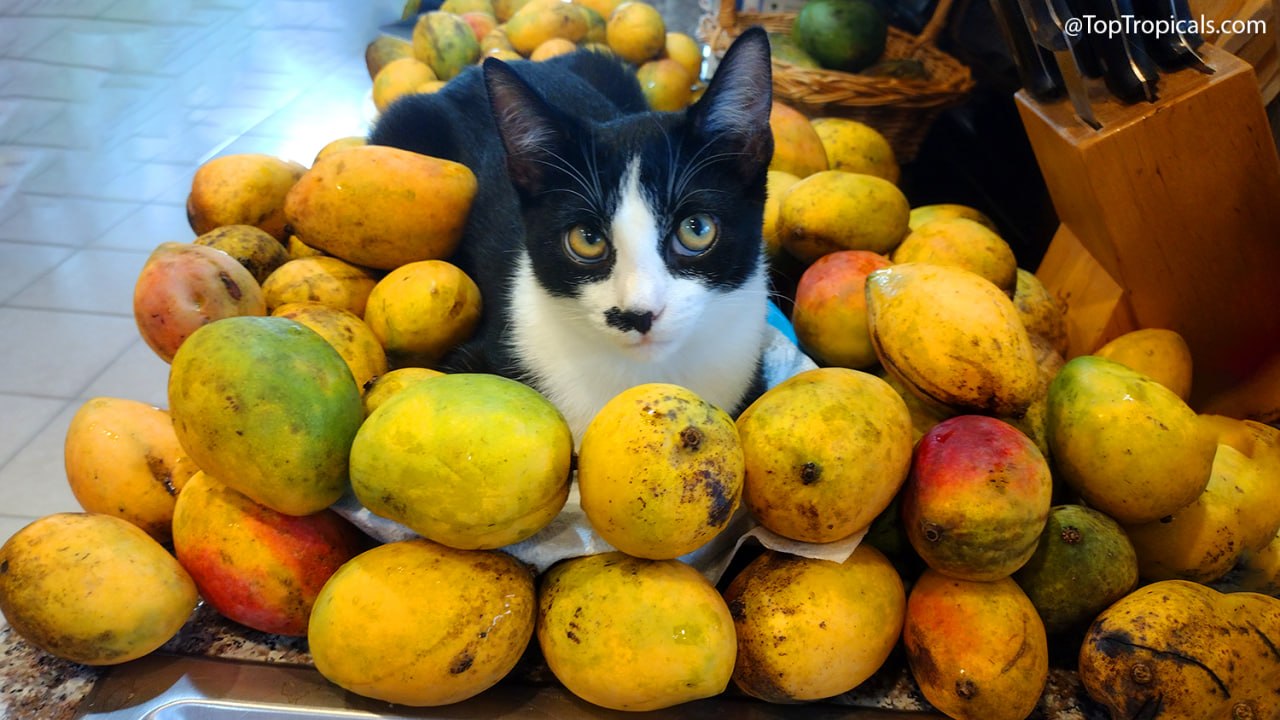
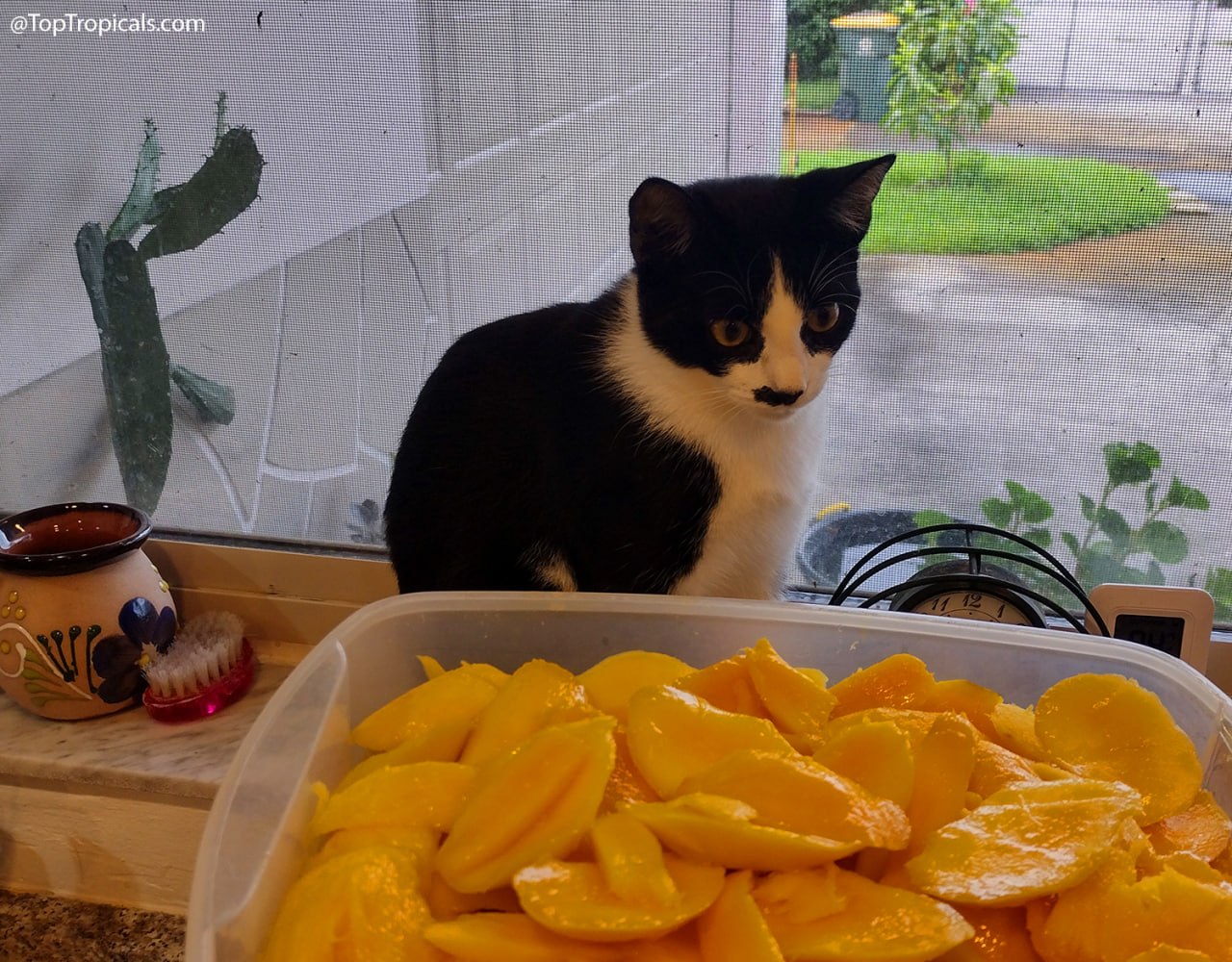
Mango Cat

Cat Philemon discovering Mango fruit at TopTropicals

Cat Philemon discovering Mango fruit at TopTropicals

Cat Philemon discovering Mango fruit at TopTropicals

Cat Philemon discovering Mango fruit at TopTropicals

🥭 Mango Cat

🐈📸 Cat Philemon discovering Mango fruit at TopTropicals PeopleCats.Garden.

Mango Plant Facts

Botanical name: Mangifera indica
Also known as: Mango
USDA Zone: 9 - 11
Highligths Large tree taller than 20 ftSmall tree 10-20 ftFull sunWatering: Moderate. Water when top soil feels dryYellow, orange flowersPink flowersEdible plantSeaside, salt tolerant plant
Get personalized tips for your region


🛒 Explore Mango varieties

#Food_Forest #Mango #PeopleCats #Mango_Rainbow

🟢 Join 👉 TopTropicals