Garden Blog - Top Tropicals

Date: 12 Feb 2026

Hoa Mai and the Year of the Horse - why yellow flower Ochna is the luckiest plant of 2026?

Ochna integerrima - Vietnamese Mickey Mouse plant, Hoa Mai - seeds

Ochna integerrima - Vietnamese Mickey Mouse plant, Hoa Mai - seeds

Ochna integerrima - Vietnamese Mickey Mouse plant, Hoa Mai tree

Ochna integerrima - Vietnamese Mickey Mouse plant, Hoa Mai tree

Ochna integerrima - Vietnamese Mickey Mouse plant, Hoa Mai flowers

Ochna integerrima - Vietnamese Mickey Mouse plant, Hoa Mai flowers

🔥 Hoa Mai and the Year of the Horse - why yellow flower Ochna is the luckiest plant of 2026?


Ochna integerrima - Vietnamese Mickey Mouse plant, Hoa Mai has seeds and sepals that resemble the face of Mickey Mouse, hence the common name.
  • 💖 On February 17, 2026, the Lunar New Year begins - welcoming the Year of the Fire Horse


    And if there is one plant that perfectly captures the bold, bright energy of a new zodiac cycle, it is Ochna integerrima, known in Vietnam as Hoa Mai. This cheerful yellow bloomer is not just decorative. In Vietnam, it is the flower of Tet - a living symbol of luck, prosperity, and fresh beginnings.
  • 💖 Does Vietnamese New Year start on a different date in 2026?


    No. In 2026, Tet - the Vietnamese Lunar New Year - begins on the same day as the Chinese Lunar New Year: February 17. Tet follows the lunar calendar, just like Chinese New Year, so both celebrations align this year.
    Tet, officially called Tet Nguyen Dan, marks the arrival of spring and is the most important holiday in Vietnam. And nothing represents Tet in southern Vietnam more than Hoa Mai in full bloom.
  • 💖 Why Hoa Mai is the flower of Tet


    Hoa Mai literally means "yellow blossoms". In southern Vietnam, these bright yellow flowers open right around Lunar New Year, often covering the entire plant.
    The color yellow symbolizes:

· Wealth
  • · Prosperity
  • · Happiness
  • · Good fortune

Families display flowering Hoa Mai trees in homes, courtyards, and businesses during Tet. The more blossoms, the more luck the coming year is believed to bring.
  • 💖 Why it is called the Mickey Mouse plant


    After flowering, Ochna integerrima produces glossy black berries that sit on bright red sepals. The combination looks surprisingly like a tiny cartoon face - two black "ears" and a round head - which is how it earned the nickname Vietnamese Mickey Mouse plant.

    It is playful, unusual, and a total conversation starter.
  • 💖 A perfect plant for Year of the Fire Horse energy


    The Fire Horse year is associated with:

· Passion
  • · Independence
  • · Bold action
  • · Fast movement
And honestly? A plant that explodes into golden blooms in the middle of winter feels exactly right for that kind of year!
If you have been waiting to start something new - planting a rare shrub, reshaping your garden, training a miniature tree - this zodiac cycle carries that "go for it" momentum.
  • 💖 Can you grow Hoa Mai outside Vietnam?


    Yes - and that is part of its appeal. Ochna integerrima - Hoa Mai - is:

· A slow-growing, medium shrub
  • · Trainable into a small tree or bonsai form
  • · Suitable for containers
  • · Relatively tolerant of light frost
It blooms in winter, when many tropical collections feel quiet. That alone makes it valuable in warm-climate gardens like Florida.

To encourage winter blooms, steady feeding before and during the cooler season helps stimulate bud formation. Consistent light, good drainage, and balanced fertilization are key.

💖 A living symbol of luck for 2026


Every Lunar New Year carries its own theme. The Year of the Fire Horse is about bold growth, forward motion, and courage.
Hoa Mai blooms exactly at the moment when people reset intentions, clean their homes, and welcome fresh energy. It is not just a plant - it is a seasonal signal that a new chapter has begun.

And if you want to invite a little more golden luck into your garden this February, few plants say "new year, new beginning" better than Hoa Mai in full bloom.

🛒 Plant your own lucky Mickey Mouse Plant

📚 Learn more:

Plant Facts

Ochna integerrima, Ochna thomasiana
Vietnamese Mickey Mouse Plant, Hoa Mai, Mai Vang, Hoang Mai
USDA Zone: 9-11
Large shrub 5-10 ft tallSemi-shadeFull sunModerate waterYellow, orange flowersWhite, off-white flowersPlant attracts butterflies, hummingbirdsEthnomedical plant.
Plants marked as ethnomedical and/or described as medicinal, are not offered as medicine but rather as ornamentals or plant collectibles.
Ethnomedical statements / products have not been evaluated by the FDA and are not intended to diagnose, treat, cure, or prevent any disease. We urge all customers to consult a physician before using any supplements, herbals or medicines advertised here or elsewhere.Fragrant plant
  • Ochna integerrima in Plant Encyclopedia
  • What is Mickey Mouse Plant?
  • 2026: Year of the Fire Horse - time to grow bold, live free, and plant lucky
  • Year of the Fire Horse - what should you grow in 2026?
  • More #Horoscope info for plants and cats

  • #Horoscope #Hedges_with_benefits #Nature_Wonders #Fun_Facts

    🟢 Join 👉 TopTropicals
    Date: 27 Feb 2026

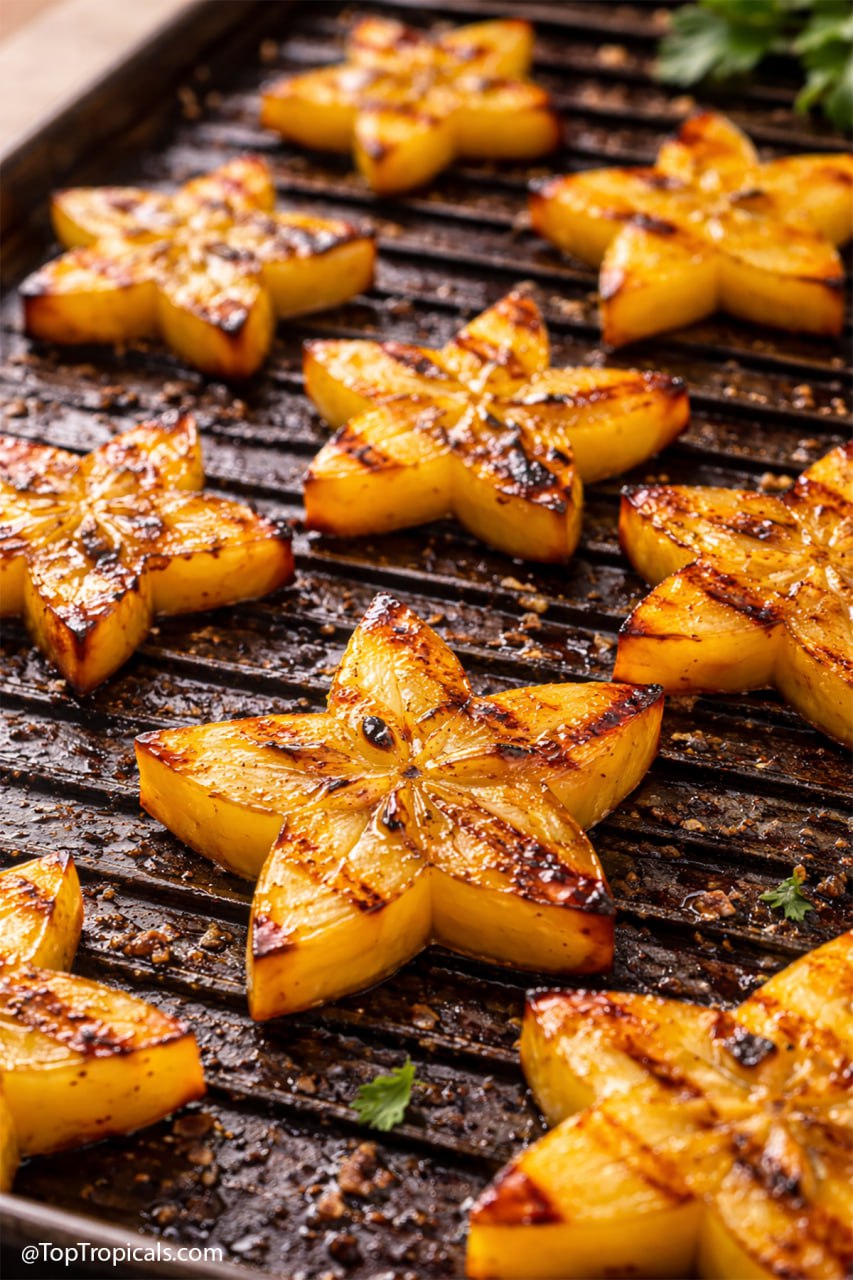
    Grilled star fruit slices: quick-n-fun exotic recipes

    Grilled star fruit slices on grill pan

    Grilled star fruit slices on grill pan

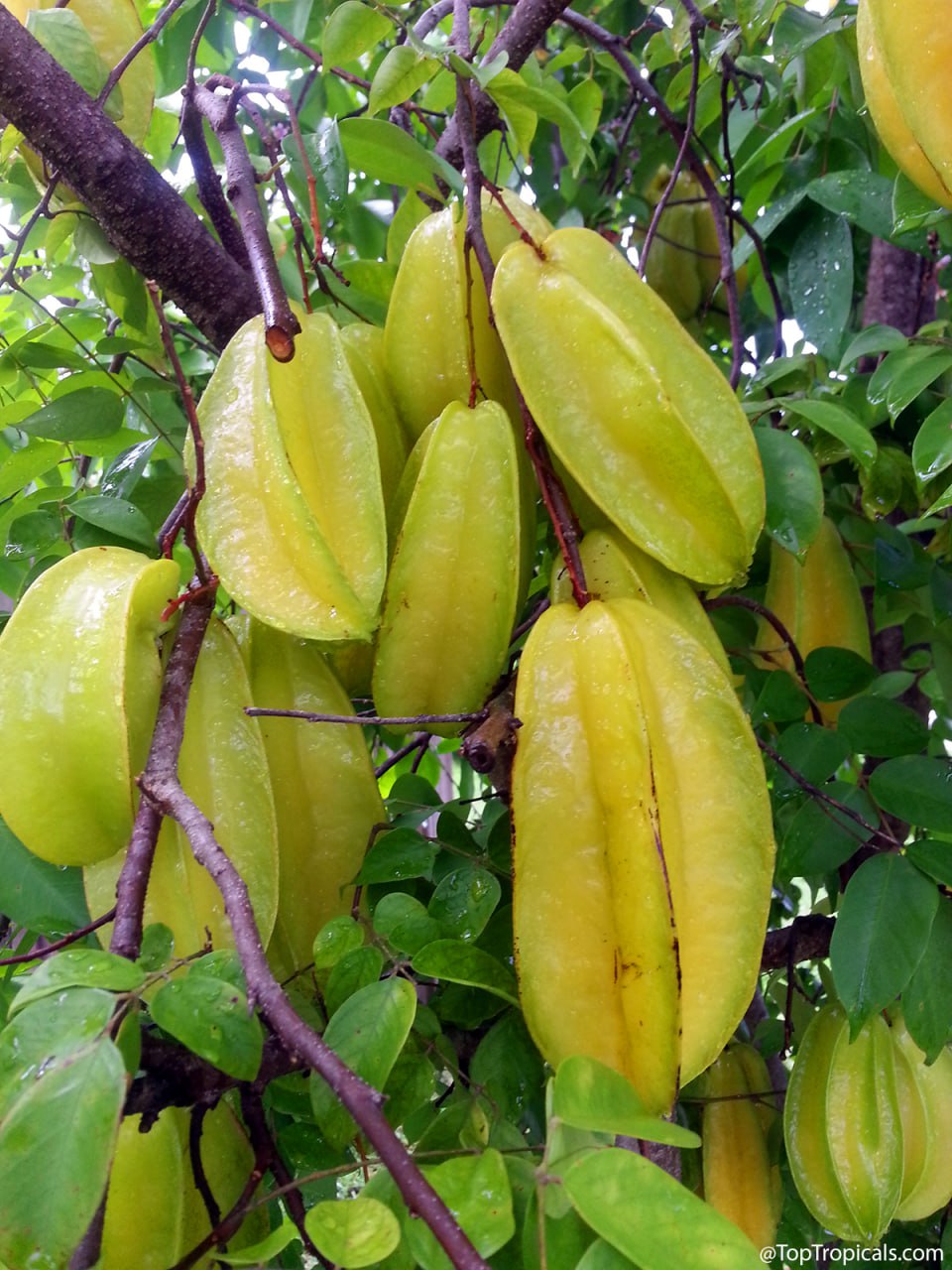
    Averrhoa carambola - Star Fruit Carambola Tree

    Averrhoa carambola - Star Fruit Carambola Tree

    🍴 Grilled star fruit slices: quick-n-fun exotic recipes


    Grilled Star Fruit Slices

    Ingredients

    • 1 ripe star fruit (carambola)
    • 1 teaspoon honey
    • 1 teaspoon butter or coconut oil

    Instructions

    1. Slice the star fruit crosswise into star-shaped pieces.
    2. Heat a grill pan or skillet and lightly grease with butter or coconut oil.
    3. Place the slices on the hot surface and grill briefly on each side.
    4. Drizzle lightly with honey as the edges begin to caramelize.
    5. Serve warm as a tropical side dish or dessert topping.


    🌿 About the plant:


    Carambola, or Star Fruit, is a small tropical tree with glossy leaves and crisp, juicy fruit that slices into perfect stars.

    🏡 In the garden:


    Thrives in zones 9-11. Likes sun, regular water, and protection from strong winds. Dwarf varieties do well in large containers.

    🛒 Plant Star Fruit Carambola Tree

    📚 Learn more:

    Plant Facts

    Averrhoa carambola
    Carambola, Starfruit, Five-finger, Balimbing
    USDA Zone: 9-11
    Small tree 10-20 ftSemi-shadeFull sunRegular waterEdible plantSubtropical plant. Mature plant cold hardy at least to 30s F for a short time
  • Averrhoa carambola in Plant Encyclopedia
  • How to gets lots of Star Fruit Carambola
  • Star Fruit from our garden
  • Grow your own Carambola
  • Top 10 fast-fruiting trees: #8. Carambola - Starfruit
  • Carambola Banana Whip
  • Carambola Jam recipe
  • When young Carambola trees are covered with fruit
  • Carambola tree is the Star of the orchard

  • #Food_Forest #Recipes

    🟢 Join 👉 TopTropicals

    Date: 13 Mar 2026

    Tamarind shrimp stir-fry: quick-n-fun exotic recipes

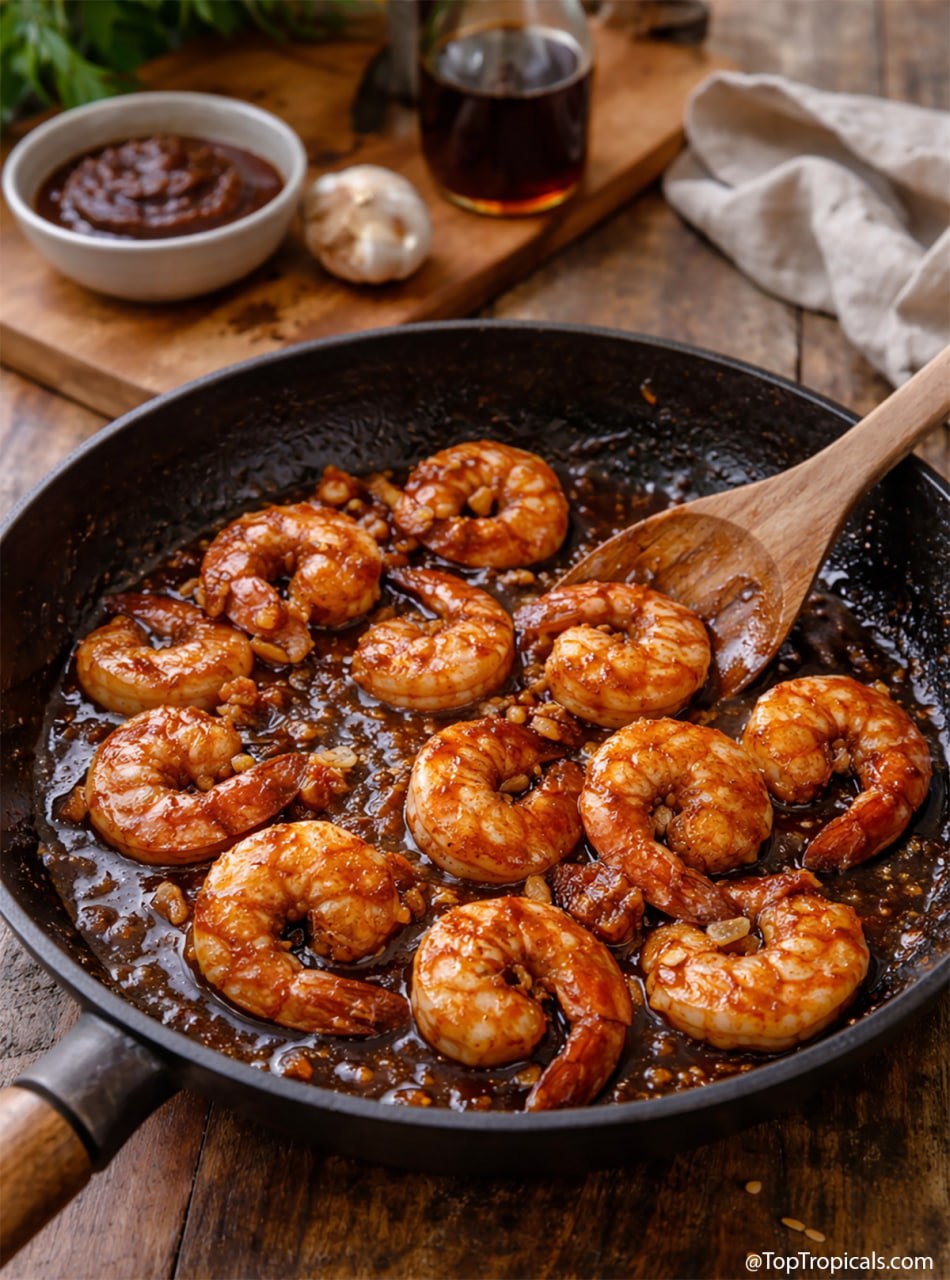
    Tamarind shrimp stir-fry in skillet

    Tamarind shrimp stir-fry in skillet

    🍴 Tamarind shrimp stir-fry: quick-n-fun exotic recipes


    Tamarind Shrimp Stir-Fry

    Ingredients

    • 1 lb shrimp, peeled and deveined
    • 2 tbsp tamarind pulp
    • 2 cloves garlic, minced
    • 1 tbsp fish sauce
    • 1 tbsp brown sugar
    • 1 tbsp vegetable oil
    • 1 tbsp water (to loosen tamarind pulp if needed)
    • Optional: sliced green onions or chili flakes for garnish

    Instructions

    1. In a small bowl mix tamarind pulp, garlic, fish sauce, brown sugar, and water until a smooth sauce forms.
    2. Heat oil in a very hot skillet or wok.
    3. Add shrimp and stir-fry for 3 to 4 minutes until they begin turning pink.
    4. Pour the tamarind sauce into the skillet and toss shrimp to coat evenly.
    5. Cook about 1 more minute until the sauce becomes glossy and slightly thick.
    6. Serve immediately. Garnish with green onions or chili flakes if desired.

    🌿 About the plant:


    The pulp of tamarind can be used fresh from the pod, pressed into blocks, or sold as concentrate. Its acidity works like citrus but with more complexity - slightly fruity, slightly caramel-like.

    🏡 In the garden:


    Tamarind trees - Tamarindus indica - are drought-tolerant once established and surprisingly hardy in brief cool snaps. They develop a beautiful spreading canopy and fine, fern-like leaves that close at night.

    🛒 Plant a Tamarind tree

    📚 Learn more:

    Plant Facts

    Tamarindus indica
    Tamarind, Sampalok
    USDA Zone: 9-11
    Large tree taller than 20 ftFull sunModerate waterEdible plantSubtropical plant. Mature plant cold hardy at least to 30s F for a short timeFlood tolerant plantSeaside, salt tolerant plant

    Tamarindus indica in Plant Encyclopedia

    #Food_Forest #Recipes

    🟢 Join 👉 TopTropicals

    Date: 24 Oct 2016

    Overwintering Adeniums outside of tropics

    Q: We bought several adenium plants from you. We are moving to the Denver area of Colorado. How can we make sure the plants survive? Should we use a green house?

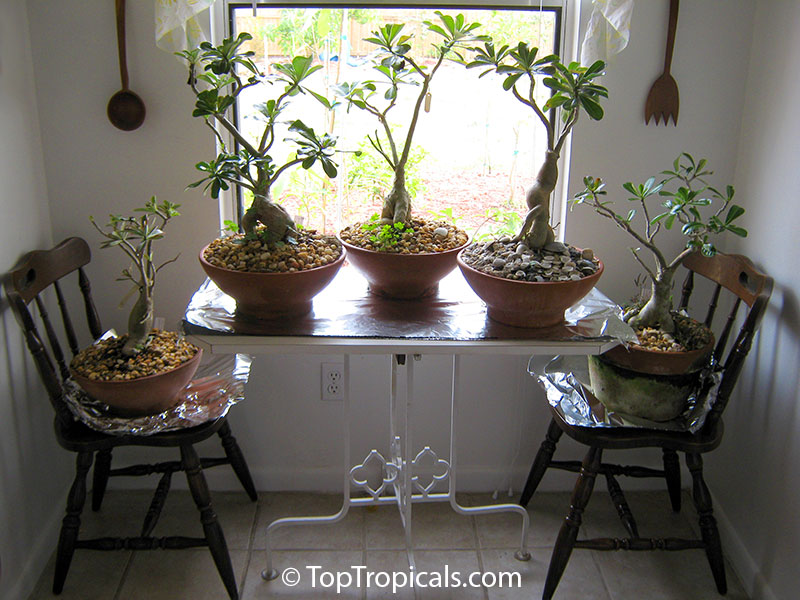
    A: Adeniums are perfect container plants, and house plants. They can be easily grown outside of tropical climate. During winter, Adeniums drop leaves and go into dormancy which makes it easy to keep these plants in a dormant stage in a warm location of your house, or possibly even in well-lit spot of garage (with a window), with temperatures above 50-60F.
    Here in South Florida, during time of cold, when chances of freeze are high, we move our own Adenium collection into lanai, with plastic sheet protection around lanai.

    In colder climates, Adeniums can be kept indoors as house plants during winter. There are some requirements/tips for you:

    • Temperature. Move Adeniums indoors when temperature starts dropping below 45F.
    • SUNSHINE. Use SUNSHINE boosters to improve cold resistance of Adeniums, and essure healthy plant throughout winter. SUNSHINE-BC formula is specifically designed for plants with caudex, and bonsai.
    • Water. Reduce watering to minimum, especially when plants drop leaves - this means they went into dormancy. Once a week light watering is enough. Water very carefully during cooler months. When it is hot (85-100F), excessive water usually won't harm adeniums: it will be partially used by a plant, and partially will evaporate. Especially be careful with water when temperatures drop below 65F - then tropical plants simply stop growing process and go dormant. Once adeniums start losing leaves, this is a sign to reduce watering to once a week to once a month, and in very small quantity (couple tablespoons per pot).
    • Light. Bright light is not necessary, but do not keep them in dark either, even if all leaves dropped. Good light is necessary to maintain healthy stems and caudex. Keep in mind, the less light, the less watering too. Ideal spot is a windowsill, however if your space is limited and all windows occupied by other "leafy" plants, location close to window will be enough as long as watering is reduced, to avoid rot. We keep our big collection specimens on a roofed porch during winter, where level of light is very low. Last winter we haven't lost a single plant due to low light. They take shade pretty well considering minimum or no water. However bright light is always better - it creates healthier environment for a plant. We all know about space limitations for our large collections, especially in winter. So if you can afford a bright spot for adenium during winter - the plant will be lucky!
    • Soil. Use only well drained mix with much higher content of perlite than you would use for most tropical plants. For adeniums, we use mix with 30-40% of perlite in it, while regular mix has 10-15%. Adeniums like alkaline soil, unlike most of tropical plants (hard to say what else likes alkaline... Ficus for sure!). This means, regular mix with high content of peat moss may cause root rot. To increase alkalinity, you may add dolomite. Here in Florida where we have natural supply of shell rock handy, it is easy to add some shell to a potting mix (shell sand, rather than quartz sand). We always add a few large shells on top of a pots with a big specimen. Besides increasing soil pH (making it more alkaline), shells look very decorative.
    • Fertilizer. No fertilizer until Spring when plants start showing new growth and new leaves.
    • Move your Adeniums outside in Spring, when chances of freeze are zero. More sunlight and air circulation is beneficial for breaking the dormancy and providing plants with a quick growth start.

    Date: 19 May 2016

    Care of mail-order plants during hot summer

    Q: I live in California and about a month ago ordered several plants from you, including fruit trees (Carambola, Mango, Avocado) and flowering trees (Xanthostemon, Adeniums, Champaca, Ylang Ylang). They were all doing well until I tried to move them into full sun, when they got leaf burn immediately. Ylang Ylang was doing great in a shade, but I repotted it from 1 gal into 3 gal and it is drooping leaves now. It has been very hot (over 100F) and dry (humidity is less than 25%). Any suggestions?

    A: Hot summer can be pretty challenging time for establishing new plants. These are some guidelines to make your summer gardening more successful and rewarding.

    1. You can order plants at any time, but keep your eye on your local weather forecast and try to chose cooler periods to schedule your plant shipments. Here at TopTropcals we monitor weather at destinations, and we can also delay shipment per your request until more favorable conditions.

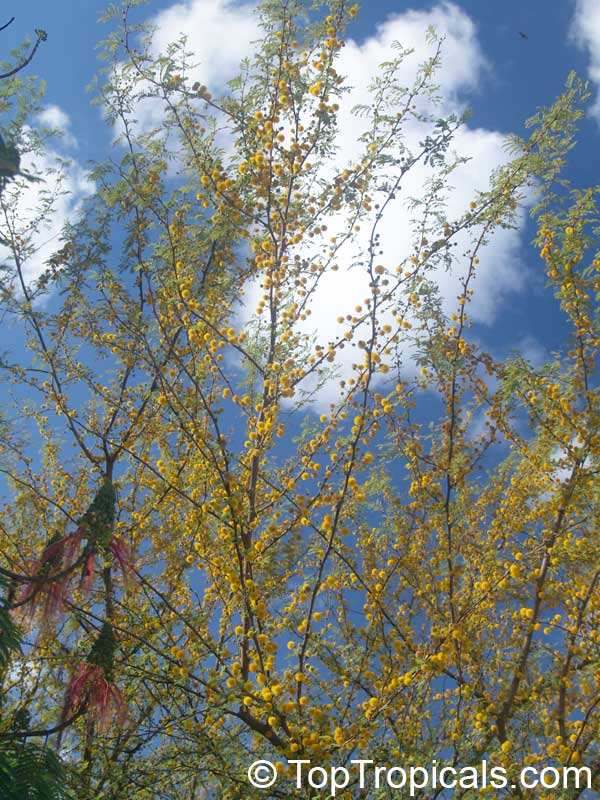
    2. During hot Summer months, many plants are still OK to ship, and to be planted, many species are heat tolerant. It's usually safe to ship most succulents, including Desert roses and Euphorbias. Some fruit trees are pretty easy too, like Loquats, Mango, Eugenias. Many flowering trees can take heat: Acacias, Clusias, Jatropha, Sausage Tree, Plumerias and many others. Check our full list of plants suitable for hot and dry conditions. Most jasmines, including Jasmine Sambac and Trachelospermum make also a safe choice for hot weather planting.

    3. Use shade cloth or simply white sheets to protect young plants and new plantings from hot sun.

    4. When establishing mail ordered plants during hot weather, keep them in shade for longer period of time than average recommended 1-2 weeks. Give them a chance to establish really well. In areas with low air humidity, try to create a simple mist system. It can be purchased in your local Home Depot for only $20 and set up takes only 10 minutes! It makes a big difference and can help you save many plants from hot weather stress.

    5. Although it may seem that during hot weather plants need more water due to high evaporation, be careful with watering, and check soil with your finger before watering - don't water if it is still wet. Combination of "hot and wet" can be as harmful for the root system as "cold and wet" during winter. Protect root systems from overheating: covering black pots with white cloth will work. Remember when temperature is above 90F, most of plants slow down their metabolism, which means roots slow down or even stop pumping water and become more vulnerable to overwatering. For the same reason, do not hurry to step up into bigger container if roots haven't filled yet the existing pot.