Garden Blog - Top Tropicals

Date: 24 May 2019

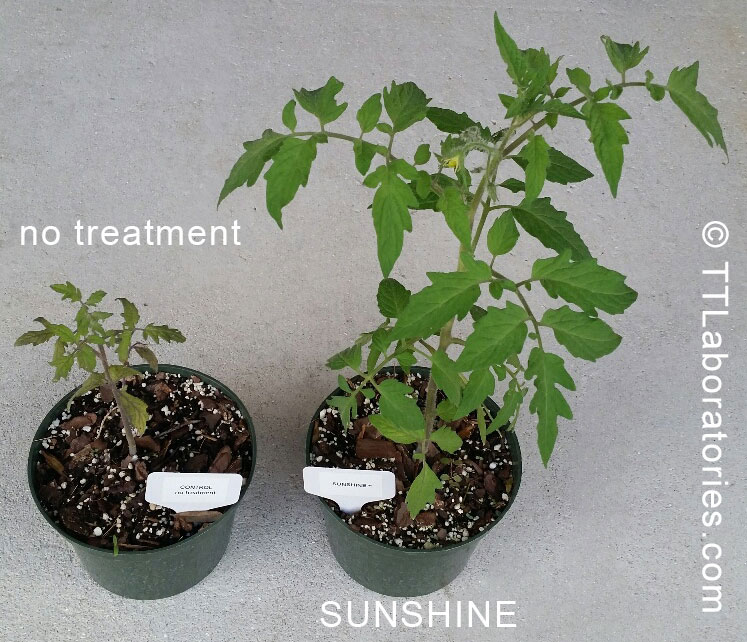
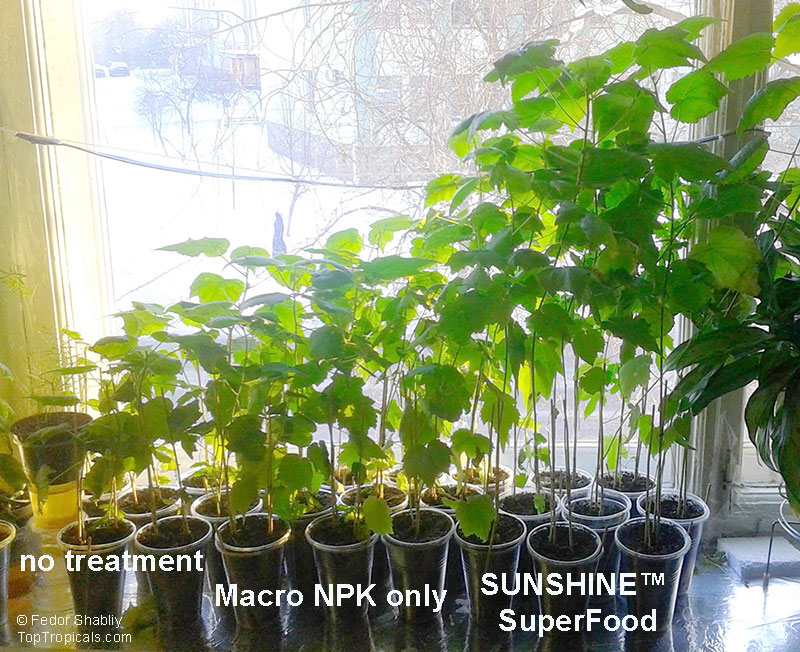
Synergy of SUNSHINE, biostimulants, and macro-micro
TopTropicals.com

Q: I've heard that plants grow better and bigger with SUNSHINE boosters and when using Myco-Mix instead of regular soil mix. Do they work like fertilizers? If I use a Myco-mix, do I still need a fertilizer?

A: SUNSHINE boosters are not fertilizers, they are natural plant hormones, or biostimulants, as well as Myco-Mix which is a naturally occurring compound or microbes. Biostimulants are becoming increasingly attractive to folks interested in sustainable agriculture, and very popular for plant growth or pest resistance. A plant biostimulant is not a fertilizer because it provides no nutritional value to the plants. But, it can promote greater nutrient and water use efficiency, increase resistance to pests and diseases, reduce abiotic stresses, and in turn, lead to plant growth and health.

To answer your question, you can not replace regular fertilizers (NPK) and micro-elements with plant boosters and stimulants. However, fertilizers and microelements will work more efficiently when used in combination with biostimulants. Together they create a synergy, so plants use the most of fertilizer's potential, and will grow a lot better, faster, and healthier.

4 components for the best growing results

1. SUNSHINE boosters. They are a must during the juvenile stage of plant development - seedlings and cuttings. They are especially important for recovery of weak or stressed plants (boosting their immune system).
2. SuperFood microelements
3. NPK fertilizers. Select from water-soluble and smart-release types and make sure do not exceed the recommended concentration. Lower dose and more frequent use is always better for a plant.
4. Specialized soilless mixes: Myco-Mix (with biostimulant Mycorrhiza) for exclusive growing projects and special/unique plants, Professional potting mix for potted plants, and Propagation mix for seeds and cuttings.

TopTropicals.com

Date: 14 Jul 2018

How to grow a Dragon Fruit

TopTropicals

Q: I want to grow a Dragon Fruit. Should I use cuttings or seed? What varieties do you recommend? How difficult it is to grow? How soon does it start flowering and fruiting?

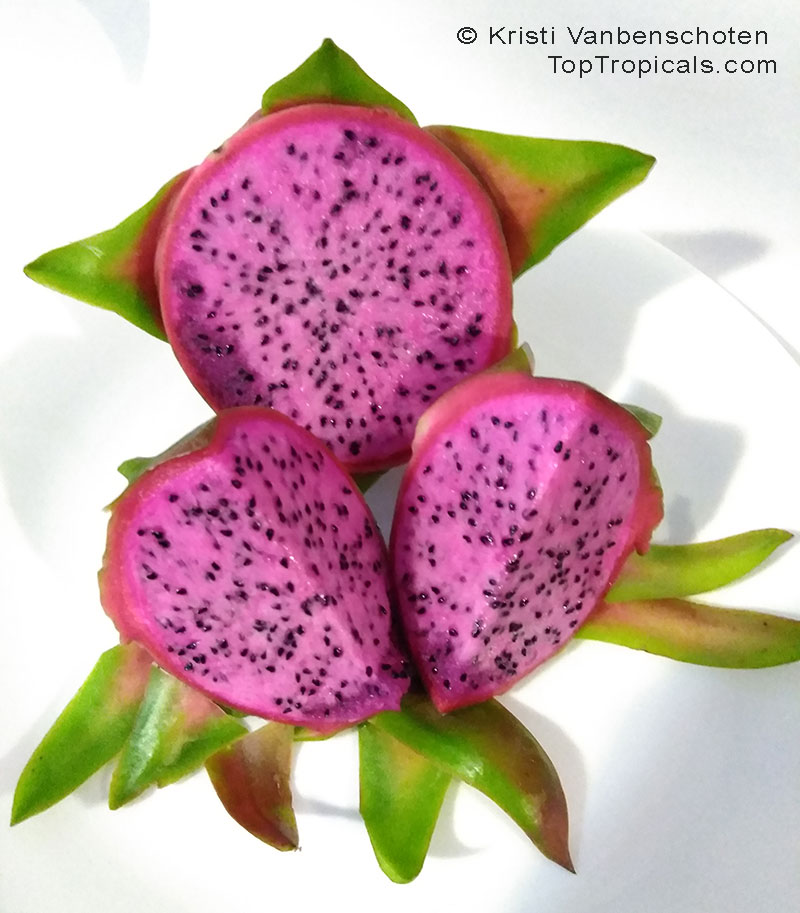
A: Dragon Fruit, or Pitaya is a highly prized, vining, fruit bearing cactus, extremely unusual terrestrial/epiphytic plant. It has magnificent flowers, stunningly beautiful fruit with an intense color, curious shape, and a delicious taste. The night blooming white flowers can be up to 14 inches in length. The fruit is most often eaten chilled and cut in half so the flesh may be spooned out. The juice is used in frozen drinks and it is in a new Tropicana Twister flavor. It is a must have for any collector or gardener with the flair for the unusual.
It takes 2-3 years for seedlings to fruit, besides the variety pay not come true to seed. We grow our plants from cuttings that are easy to root. We offer many selected varieties, most of them self-pollinating. The plants are ready to flower and fruit this year, or the next year.
Dragon Fruit Cactus is easy to grow, doesn't need much other than strong support, full sun, well-drained soil - adenium soil mix works great - and fertilizer during hot months, and SUNSHINE-Honey applications for growing sweeter fruit. For larger fruit bud thinning is recommended.

Check out Dragon Fruit varieties

Date: 24 Jun 2018

TopTropicals

Fruitful Fruit and SuperFood...

Q: I have a large fruit garden here in Florida with many mango trees, avocadoes, guavas, and other tropical fruit. Last year hurricane Irma and flooding killed a few avocado trees, but mangos and guavas survived OK, but the sad part is, very few flowers this year and almost no fruit setting. I noticed on your website your Superfood and Sunshine-Honey boosters that supposedly help fruiting? But I am afraid it is too late now as your instructions say first application must be in early Spring? I wish I discovered earlier that my trees wouldn't want to fruit this year...

A: First of all, it is never late to give the food! You may start applications of SUNSHINE products at any time of the year. The best results will be achieved once you treat your plants on regular basis throughout the whole year cycle of metabolism.
Couple weeks ago we started harvesting our 2 guava trees. These two are the same variety (Variegated Honeymoon), planted within 20 ft from each other and growing in the same conditions. The only difference was, one was treated with SUNSHINE-Honey and SUNSHINE-SuperFood, and another one didn't get any treats in order to have a control plant.
Results are very interesting, see the picture. Both trees were heavily covered with fruit. However the one with treatments developed fruit that is much larger, much sweeter and juicier, and the most interestingly - with less seeds, almost no seeds!
To answer your question: yes, you can start feeding your fruit trees right now. It is still a Springtime. Many mango varieties have late season; even early varieties may delay their fruiting if flowering triggered by miscro-elements. Guavas have very long season and most varieties can have multiple crops throughout Summer-Fall.
Here is a simple and affordable feeding schedule to help your fruit garden recover from last year hurricane stress, and establish reliable production:
1) SUNSHINE-E - for boosting metabolism - once a month
2) SUNSHINE-Honey - for bringing sugars to the heart of the tree and boosting fruit sweetness and quality - now and in 2 weeks
3) SUNSHINE-SuperFood - for overall health, recovering from hurricane and fixing root damage from flood - now and every 2 weeks throughout warm season.
4) You may apply regular balanced fertilizer NPK as usual (we apply once a month, a handful per in-ground tree)
It's that simple. Just try and watch your trees produce again!

Check out all SUNSHINE boosters... We offer FREE shipping on them, so you can make your plants happy!

Date: 23 May 2024

The Magic of 3 top tropical trees
from the legends of Caribbean

Yellow Poinciana, Jacaranda, and Royal Poinciana:
Three happy colors of the Tropics

paintings  of  3  top  tropical  trees  -  Royal  Poinciana,  Yellow  Poinciana,  and 


Jacaranda

While traveling through the vibrant and diverse Caribbean, we acquired three exquisite local paintings. Two of these are masterfully rendered on jacaranda wood plates, and the third is beautifully crafted on a calabash. These stunning pieces of art celebrate the three most spectacular and revered flowering trees of the Tropics: Yellow Poinciana, Jacaranda, and Royal Poinciana.

These trees are not only visually stunning but also deeply embedded in Caribbean culture, legends, and folk remedies.

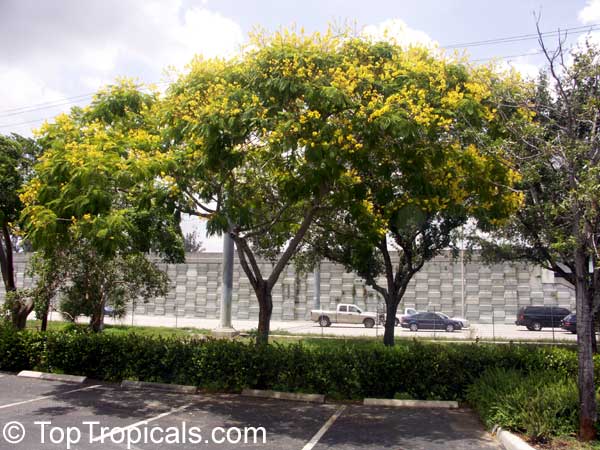
The Yellow Poinciana, with its bright golden blossoms, is often associated with joy and sunlight, symbolizing the warmth of the Caribbean spirit.
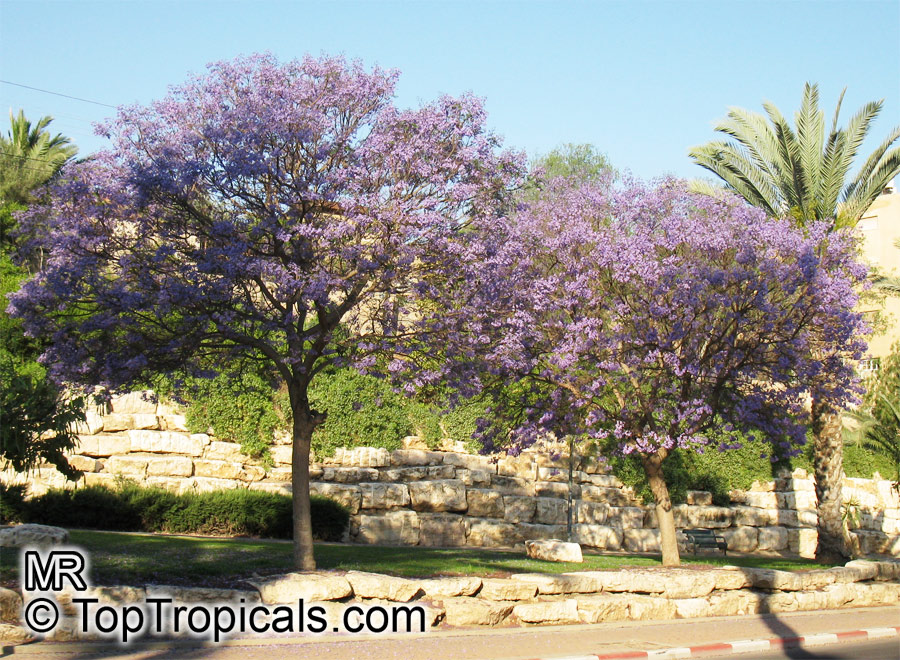
The Jacaranda, known for its striking lavender-blue flowers, is a symbol of wisdom and rebirth, often blooming in a breathtaking display that signals the change of seasons.
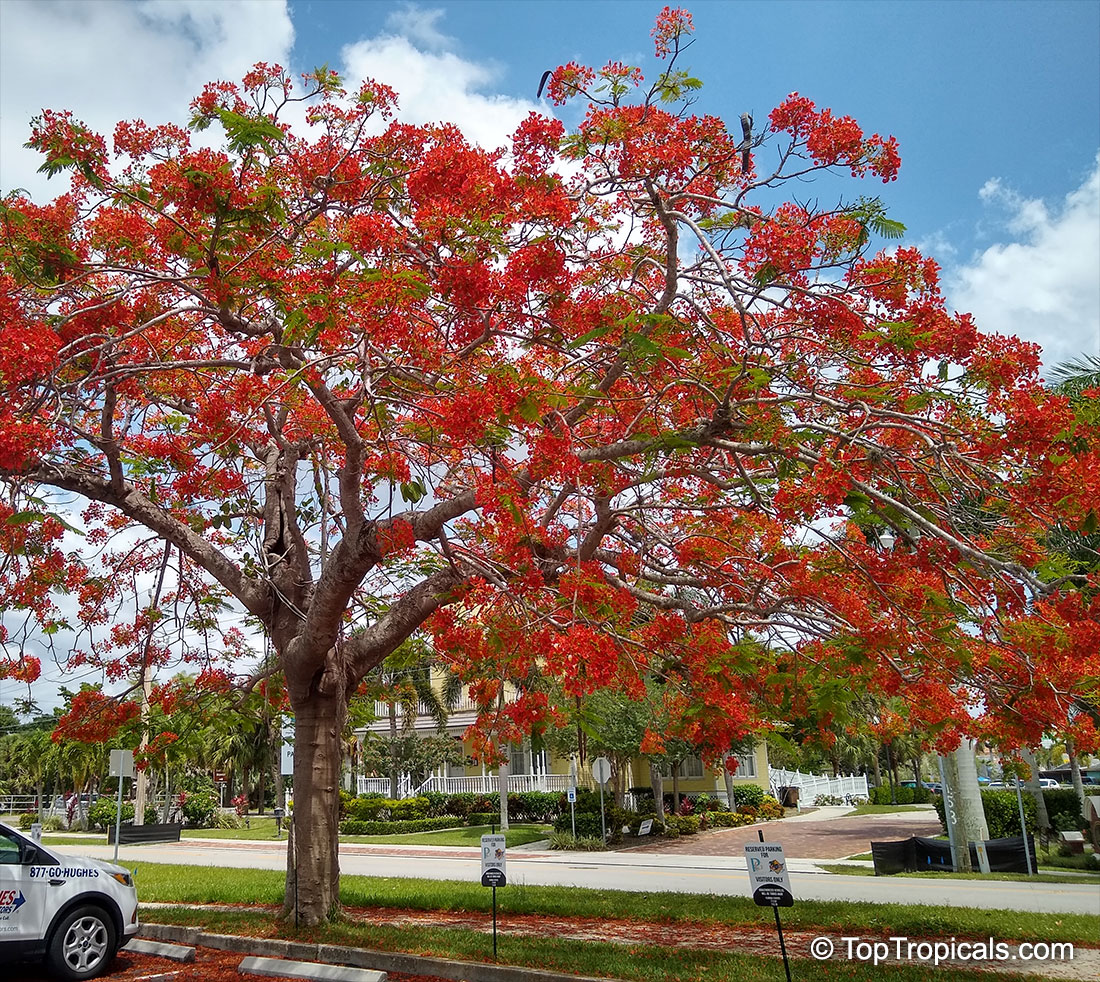
The Royal Poinciana, with its fiery red and orange flowers, is a symbol of passion and energy, often referred to as the "Flamboyant" tree due to its bold and dramatic appearance.

These trees hold a special place in the hearts of the Caribbean people. They are featured in numerous local stories and songs, and their flowers and leaves are used in traditional remedies and rituals. Owning these paintings feels like possessing a piece of the Caribbean's soul and its natural beauty.

Now, we are fortunate to have not only the paintings but also the actual trees. Watching them grow and bloom in our garden brings a piece of the Caribbean to our home, a constant reminder of our travels and the vibrant culture we experienced. These trees and their representations in art are a testament to the region's rich heritage and its enduring connection to nature.

Get them now while we have them. No need to go too far into Caribbean!

Peltophorum  africanum  -  Golden  Flamboyant,  Yellow  Poinciana

Peltophorum africanum - Golden Flamboyant, Yellow Poinciana. An excellent garden shade tree, beautiful in flower. This variety starts flowering at young age, in 3 gal pot.

Jacaranda  mimosifolia  (acutifolia)

Jacaranda mimosifolia - Hypnotizing bluish-purple, trumpet-like flowers create the magical image of the tree. Incredible, long-lasting purple blooms. When the trumpet-shaped blooms finally fall, they form a lilac carpet beneath the awe-inspiring Jacaranda for luxuriant curb appeal...

Royal  poinciana,  Flamboyant  tree,  Delonix  regia

Royal poinciana, Flamboyant tree, Delonix regia - "One of the most spectacular flowering trees in the USA, and probably among the top 10 on this planet. In full bloom, it is like a regal elephant caparisoned in red and yellow brilliance." (Larry M. Schokman, The Kampong, National Tropical Botanic Garden)

Date: 2 Jul 2024

What is the most useful tree in the world?

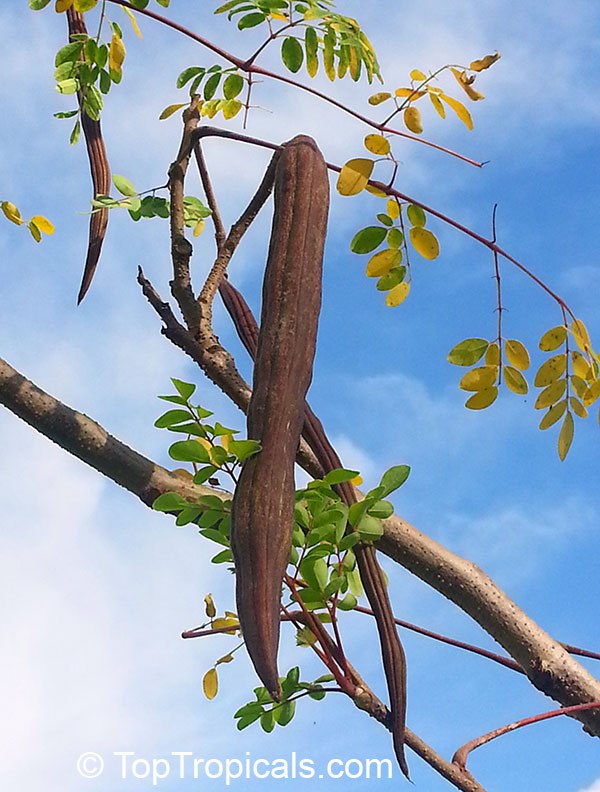
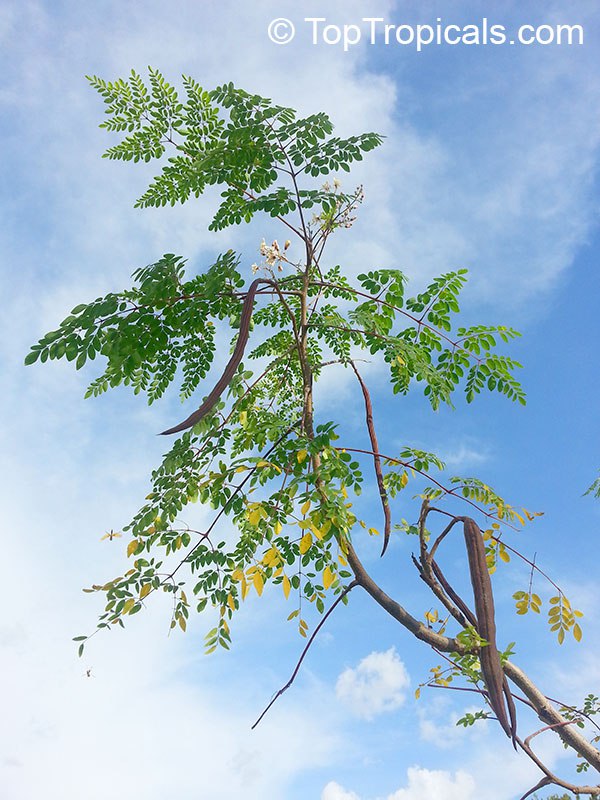
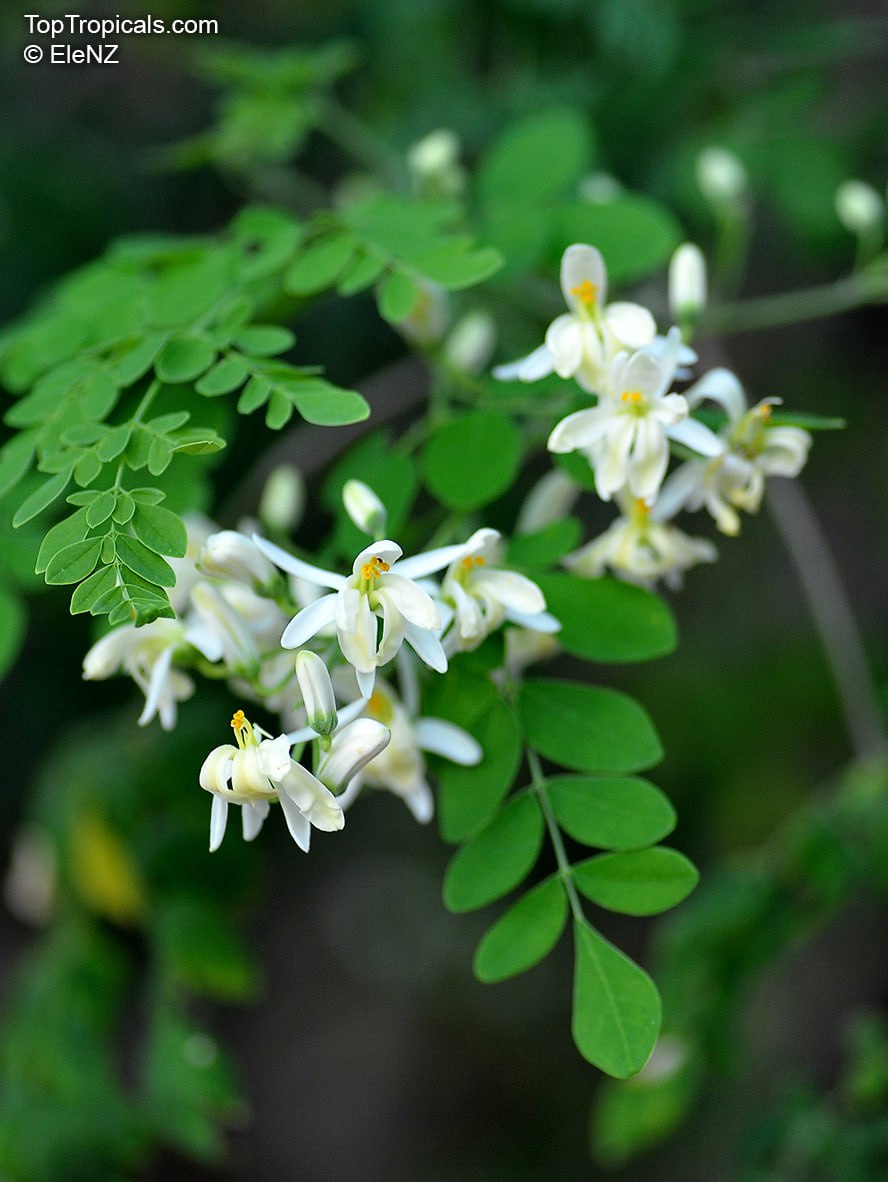
Moringa oleifera - Bridal veil, Horseradish tree, Drumstick Tree, Ben Oil Tree

Moringa oleifera - Bridal veil, Horseradish tree, Drumstick Tree, Ben Oil Tree

Moringa oleifera - Bridal veil, Horseradish tree, Drumstick Tree, Ben Oil Tree

Moringa oleifera - Bridal veil, Horseradish tree, Drumstick Tree, Ben Oil Tree

Moringa oleifera - Bridal veil, Horseradish tree, Drumstick Tree, Ben Oil Tree

Moringa oleifera - Bridal veil, Horseradish tree, Drumstick Tree, Ben Oil Tree

🌐 What is the most useful tree in the world?

  • 💚 One of the most versatile and valuable trees known to humanity is Moringa oleifera, also called: Horseradish tree, Bridal veil, Horseradish tree, Drumstick Tree, Ben Oil Tree. It is indeed considered one of the most useful trees in the world. This reputation stems from its wide range of nutritional, medicinal, and practical applications.
  • 💚 Moringa is a beautiful flowering tree with fragrant white flowers. It produces long green pods (looking like drumsticks!) and the seeds have been compared to a cross between peanuts and asparagus.
  • 💚 Moringa leaves are rich in vitamins (A, B, C, E), minerals (calcium, potassium, iron), and amino acids, and have strong antioxidant properties. they are used in traditional medicine to treat inflammation. Moringa can help lower blood sugar and cholesterol levels.
  • 💚 Almost every part of the tree is edible, including the leaves, pods, seeds, and flowers. Each part has its unique nutritional profile and culinary uses. Used in teas and cooking.
  • 💚 The roots are used as a substitute for horseradish and the edible leaves make a highly nutritious vegetable. The roots have also been used in many folk remedies.
  • 💚 Many Moringa products produced commercially: leaves, powder, oil. Moringa oil, extracted from the seeds, is used in cosmetics, skincare products. Seeds can be used to purify water, making it safer to drink.
  • 💚 The plant can be used as a natural fertilizer and pesticide. Leaves are used as a nutritious feed for livestock.


📚 Learn more: How to grow a happy Moringa Tree

🛒 Plant your own Moringa Tree and save the Planet

#Food_Forest #Remedies

🏵 TopTropicals