Garden Blog - Top Tropicals

Date: 20 Nov 2025

Feijoa coconut loaf: quick-n-fun exotic recipes

Pineapple Guava, Guavasteen, Fejoa (Feijoa sellowiana)

Pineapple Guava, Guavasteen, Fejoa (Feijoa sellowiana)

Feijoa coconut loaf

Feijoa coconut loaf

🍴 Feijoa coconut loaf: quick-n-fun exotic recipes

  • 🔴Mix Feijoa pulp into a coconut quick-bread batter.
  • 🔴Bakes into a fragrant tropical treat.

Feijoa Coconut Loaf

Ingredients

  • 1 cup feijoa pulp, finely chopped
  • 1 3/4 cups all-purpose flour
  • 1 cup sugar
  • 1 cup shredded coconut
  • 2 large eggs
  • 1/2 cup melted butter
  • 1/2 cup milk
  • 1 tsp baking powder
  • 1/2 tsp baking soda
  • 1 tsp vanilla extract
  • Pinch of salt

Instructions

  1. Preheat oven to 350F. Grease a loaf pan.
  2. Whisk flour, baking powder, baking soda, coconut, and salt.
  3. Mix eggs, sugar, melted butter, milk, and vanilla.
  4. Fold dry ingredients into wet, then stir in feijoa pulp.
  5. Pour batter into loaf pan and smooth the top.
  6. Bake 45 to 55 minutes or until golden and a toothpick tests clean.
  7. Cool before slicing.

🛒 Plant exotic fragrant Feijoa - Pineapple Guava

📚 Learn more:


#Food_Forest #Recipes

🟢 Join 👉 TopTropicals

Date: 14 Jul 2019

Dwarf and Condo mangoes - easy mangoes

Q: We leave in zone 6a, could you tell us what is the list of different types of mango plants that could be planted indoor and that they can bear fruits?

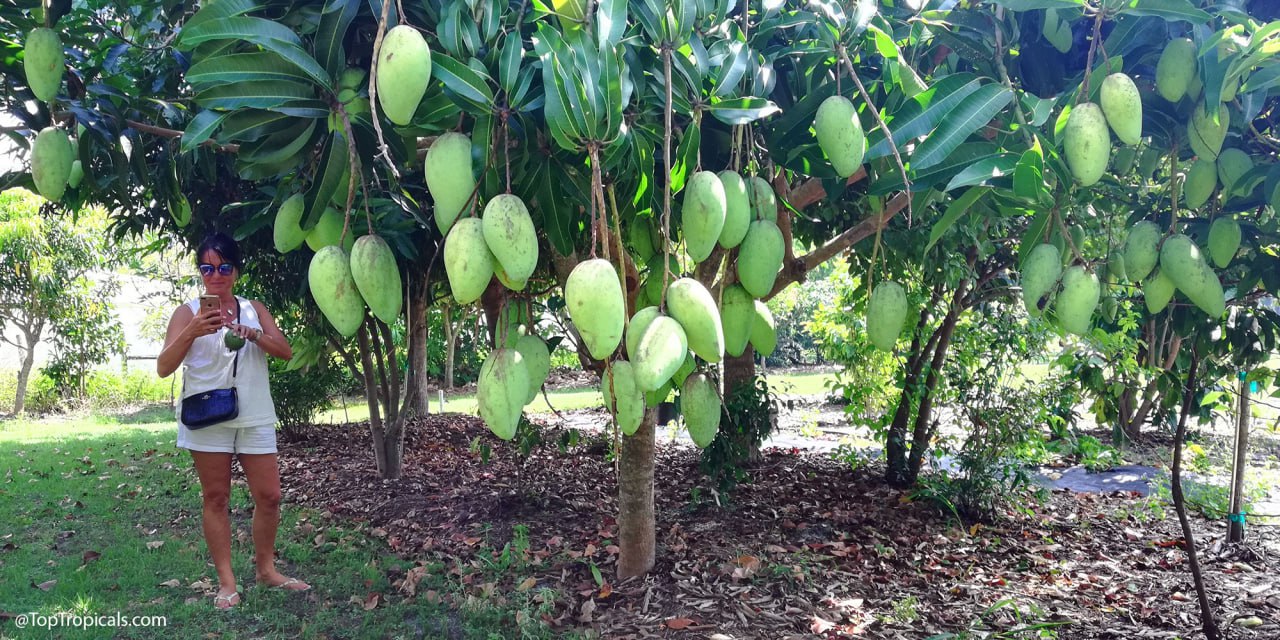
A:There is a large group of mangoes called "Condo Mango" - they literally can be grown in your apartment! Those are dwarf varieties that can remain compact in containers with minimal pruning and successfully bear fruit providing bright light and proper care, including plant food.

The best dwarf and semi-dwarf varieties are: Carrie, Cogshall, Cushman, Fairchild, Graham, Ice Cream, Julie, Mallika, Nam Doc Mai, Pickering, Irwin, Jahangir, Juliette, Lancetilla, Little Gem, Manilita, Sia Tong, Torbert, Pim Seng Mun, Super Julie.

They produce juicy, fiberless sweet fruit. Julie is also a very popular dwarf variety, however, it is very cold sensitive and not the easiest to grow. If you get a 3 gal size mango, step it up to 7 gal when the plant reaches 4 ft; you may use a bigger container as the root system grows, up to 15 gal or even 25 gal, space permitting. Trim the tree under 6-8 ft after production season is over (summer-fall).

See more information on growing condo mangoes

RECOMMENDED FERTILIZERS:

Mango-Food - Smart Release Fruit Tree Booster
Fruit Festival Plant Food - Super Crop Booster
For sweeter fruit, use SUNSHINE-Honey - sugar booster

Date: 25 Jun 2019

How soon will Guava tree fruit?

Q: Can you tell me how your Guava trees are propagated? Grown from seed vs. air grafted, etc.? I'm interested especially in the Barbie variety. In particular, I'd like to know how long it takes them to bear fruit - I live in Southern California zone 10b, with good sunlight.

A: Guavas can be propagated by seed, air layers, or grafting. Propagation method depends on the species.
Cattley guavas - Psidium littorale - are usually grown from seeds and start flowering and producing as early as in 2-3 years from seed. Tropical guavas, Psidium guajava - especially named varieties, are propagated usually by air layers, and the rarest varieties like Variegated Honey Moon are often grafted, although they will come true from seed (it's just takes them longer to fruit). Both air-layered and grafted plants start producing right away, usually on the same year of planting or next year, depending on growing conditions.
Barbie Pink is a superior variety, very popular among fruit lovers. It produces large aromatic fruit with a bright pink pulp and very few seeds. This variety is air-layered; in our nursery, these plants start flowering and setting fruit in 3 gal containers.
Plant this tree in full sun and provide regular watering, guavas don't like to dry out. Use fertile soil, with at least 50% of compost, and add some soil conditioning components for better drainage: bark, sand, perlite, etc. Mulch well, just make sure to keep mulch 2-3" away from the trunk. Follow our detailed planting instructions that come with every plant, and you are good to go!

Recommended fertilizers:

Fruit Festival Plant Food - Super Crop Booster
Mango-Food - Smart Release Fruit Tree Booster

Date: 25 Nov 2019

Flavor of Feijoa Superfood

by Onika Amell, tropical plant specialist

Q: What exactly is Feijoa - Pineapple Guava? Does the fruit really taste like pineapple? I am curious to know if it is easy to grow.

A: Feijoa is certainly one of the easiest fruit trees to grow as it does not require much care. It is an attractive, evergreen tree or large shrub with dark green, oval, leathery leaves. It has an abundance of uses in the garden and produces lovely edible flowers and fruit! The fruit is eaten fresh, added to smoothies or fruit salad and is also commonly used to make delicious jams and wicked chutneys. Feijoa fruit go a long way in flavor.
This plant is drought tolerant and will grow in almost any soil type. It loves full sun or partial shade and is wind resistant. A lot of gardeners like to grow it as a wind barrier for this reason. It can easily be shaped into a dense, informal hedge or screen that needs very little pruning. Because of this density, it provides excellent shelter for all kinds of wildlife. Butterflies, birds, and butterflies will all love you for growing Feijoa!
Space the plant five feet apart to create a wind barrier hedge. Heat does no not bother it at all and it will also withstand temperatures to 10 degrees F.
The plant gets its names from the delicious perfume it emits. Some folks seem the fruit taste like pineapple, with a slight minty undertone. Others feel the flavor reminds them of juicy fruit gum! The texture is described as smooth and slightly gritty - almost like a pear, but firmer.
If you prefer to grow this plant as a tree rather than a large shrub, simply remove the lower branches up to one-third of the tree's height over a period of time. The Pineapple Guava can grow up to 15 feet wide and tall. They also do really well as a container plant on patios where you can truly enjoy the lovely fragrance of the fruit. It prefers rich, organic, well-drained soil and will need light fertilization every other month in most soils.

We recommend:

Fruit Festival Plant Food - Super Crop Booster
Mango-Food - Smart Release Fruit Tree Booster
SUNSHINE-Honey - Sugar booster
SUNSHINE C-Cibus - Crop Nutrition Booster

Pretty, pink, edible flowers will wow you from May to June, followed in late summer or fall by the delicious and fragrant fruit. An interesting thing about this fruit is that you don't pick it. It falls to the ground when it is ripe. Or simply place something under your tree, like a tarp, and shake the tree. The ripe fruit will fall off. You can store the fruit in your refrigerator for up to a week. And remember! The fruit of the Feijoa is not only a very rich source of soluble dietary fiber, but also an excellent source of Vitamin C, and very rich in antioxidants. They are also low in calories. Each fruit only holds 55 calories.

Date: 6 Jan 2017

6 easiest fruit trees and 5 spices to grow in containers indoors

Q: This is why I want to move so that I can grow absolutely anything I want from your catalogue. Prefered Puerto Rico. Right now I live in New York and there is absolutely nothing I can grow there.

A: Of course living in Puerto Rico brings more opportunities to grow tropical species. However, you can create your unique tropical paradise even living in New York. We have many customers from up North who successfully grow tropical species (and get them to flower and fruit) in greenhouses, and even indoors.
Here are a few suggestions of tropical fruit trees that adapt well for container/indoor culture - for both beginners and advanced gardeners.

Top 6 fruit trees great for indoors / container culture / beginners
1. Mango (Mangifera indica). Select from one of smaller mango varieties
2. Sugar Apple (Annona squamosa)
3. Guanabana, Soursop (Annona muricata)
4. Miracle Fruit (Synsepalum dulcificum)
5. June Plum (Spondias cytherea)
6. Guava (Psidium guajava)

5 top spice plants (the spice will be with you right away, you don't have to wait for it to grow)
1. Allspice (Pimenta dioica)
2. Cinnamomon or Campor tree
3. Bay Leaf (Laurus nobilis)
4. Mint Tree (Satureja vimenea)
5. Vanilla orchid (Vanilla planifolia)

See a brief article of growing tropicals outside of tropics.

Don't forget to get some SUNSHINE boosters for your plant collection - for both successful indoor culture and cold protection!

See also our magazine Tropical Treasures) - Pushing the Limits of Tropical Gardening, with list of issues.