How to grow papaya from seed without killing it, Part 3: containers, sunlight, and 11 common mistakes
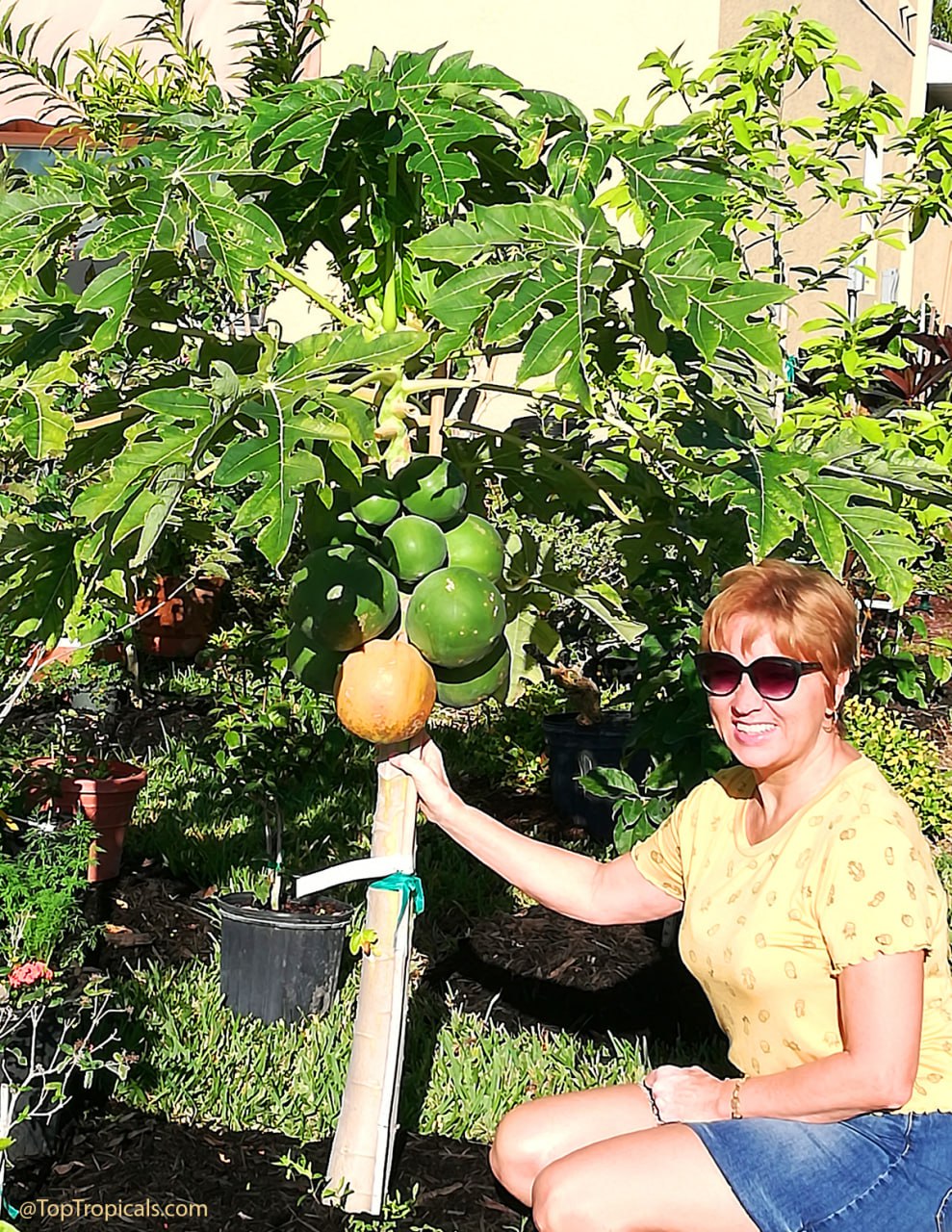
Dwarf Papaya tree
🍊 How to grow papaya from seed without killing it, Part 3: containers, sunlight, and 11 common mistakes
Getting papaya to sprout (see part 1 and part 2) is only half the battle. How you handle containers, sun, water, and root disturbance determines whether your plant reaches fruiting size or slowly declines. In this final part, we cover practical container growing, light requirements, and the mistakes that stop papaya from ever producing fruit.
🍊 Transplanting papaya - what most people get wrong
The one thing papaya roots hate (and most growers ignore)
Choosing the right container is critical.
Rule of thumb: papayas hate transplanting. Their roots do not like to be disturbed.
Because of this:
🟡Reduce transplanting as much as possible
🟡Choose a container that will last longer once seedlings leave starter pots
🟡Avoid stepping up pot sizes too frequently
Watering matters just as much:
🟡Larger pots stay wet longer
🟡Papaya roots dislike constant moisture
🟡Always reduce watering when moving into a bigger container
🍊 Container growing guide for papaya
Grow papaya anywhere - but only if you do this right
🟡Start seeds in small cells (1–2 seeds per cell) or small pots (4–8 seeds per pot, spaced far apart)
🟡Transplant carefully when seedlings reach about 2 inches
🟡Once a 4-inch pot is outgrown, move directly to 1-gallon or even 3-gallon containers
🟡Reduce watering when containers are much larger than the root system
🟡Protect young plants from heavy rain until roots fill the pot
🟡Stake plants with bamboo
🟡Papayas grow fast, and the stem often outpaces root development. Even light wind can knock them over
🍊 Sunlight requirements for papaya
Papaya grows fast, but one mistake stops it cold
Papayas need full sun and prefer to stay on the drier side once established.
In shade:
🟡Plants become leggy and overly tall
🟡Flowering may stop completely
🟡Fruit production may be reduced or zero
Shade also keeps soil wet longer:
🟡Soil dries slowly
🟡Excess moisture can kill roots, even on mature plants
🍊 11 most common mistakes when growing papaya from seed
From seed to fruit in under a year - if you avoid these papaya mistakes
· 1. Leaving pulp or slime on seeds - prevents germination and causes rot
· 2. Soil too wet during germination - keep damp, not soggy
· 3. Overwatering seedlings - young plants rot easily
· 4. Disturbing roots during transplanting - papayas hate it
· 5. Not enough sun - papaya hates shade and will not produce in low light
· 6. Too much water once established - prefers drier conditions
· 7. Planting in low spots in the ground - poor drainage leads to root rot
· 8. Using heavy soil - waterlogging kills roots
· 9. Giving up too early - seeds can take weeks to sprout
· 10. Not fertilizing - papaya is a heavy feeder. Poor soil means no fruit. Remember, it is a giant grass.
· 11. Do not trim papaya. Trimming may cause side shoots, but it ruins the natural tropical form. If you need a ladder to harvest fruit, the solution is not pruning - it is growing a dwarf variety.
Papaya rewards growers who understand its quirks. Treat it like the fast-growing, shallow-rooted plant it is, and it will produce quickly and generously. Ignore those basics, and it will struggle no matter how much care you give it.
If you found this helpful, bookmark all 3 parts - papaya grows fast, and timing matters:
9 tough trees for hot, dry spots that actually thrive
☀️ 9 tough trees for hot, dry spots that actually thrive
Why that one brutal spot in your yard never works? There’s always that one place - blazing sun, sandy or rocky soil, dries out fast, and everything you plant there struggles. In Florida, Arizona, and California, this isn’t rare - it’s the norm. The good news? Some trees don’t just tolerate it - they prefer it. Once established, these picks handle heat, drought, and neglect far better than typical landscape plants. What makes these trees different? These are survivors. Many store water, have deep root systems, or evolved in dry climates. Translation - less watering, fewer losses, and a lot less frustration.
🔥 9 best trees for hot, dry spots
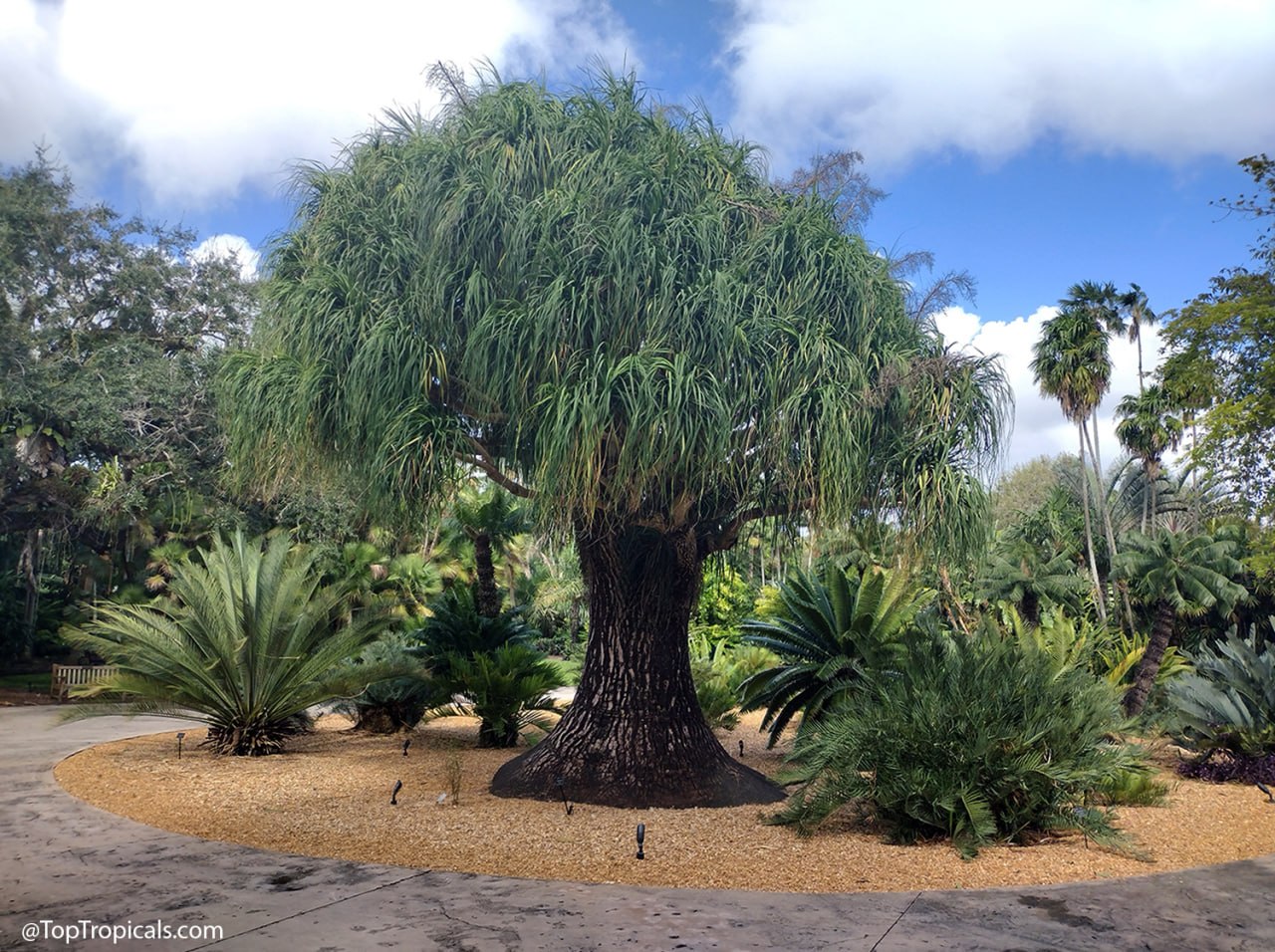
☀️ 1. Pony Tail Palm - Beaucarnea recurvata 📸
Not a true palm - it stores water in its showy, swollen trunk, making it incredibly drought tolerant and perfect for harsh, dry areas.
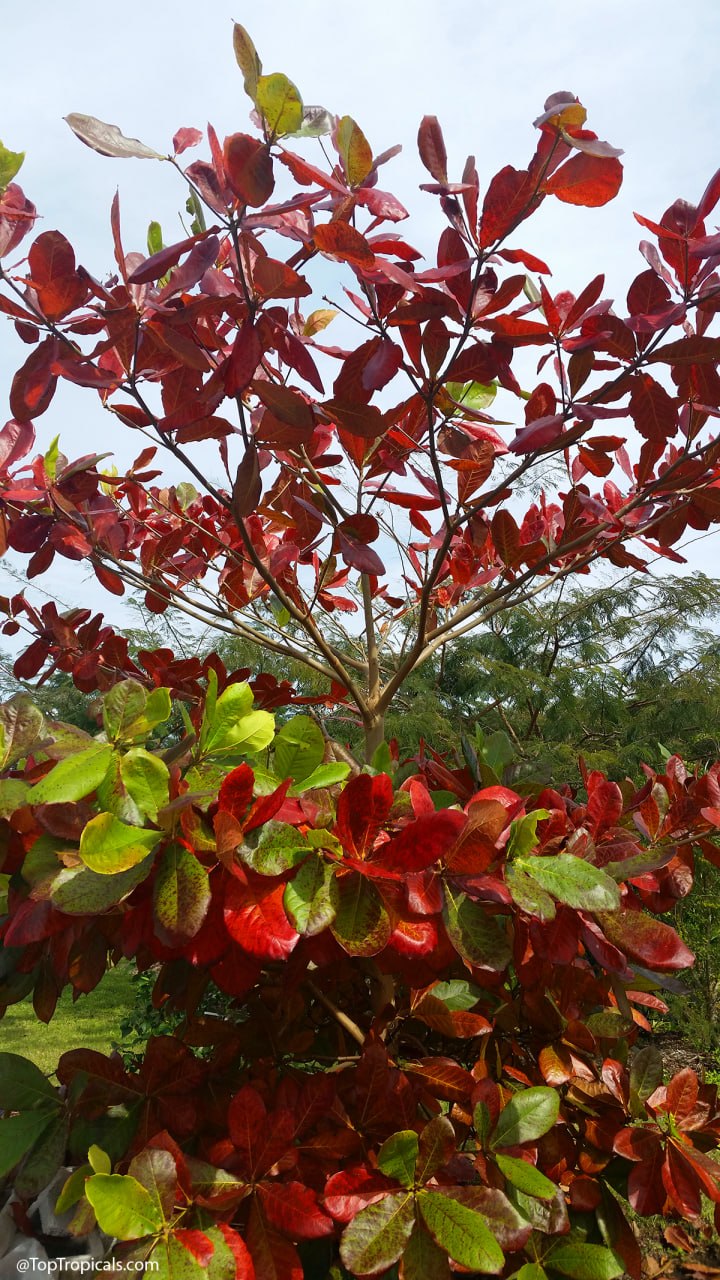
☀️ 9. Tropical Almond - Terminalia catappa 📸 A classic coastal shade tree that thrives in heat, wind, and dry sandy soil once established. Its broad, layered canopy provides excellent shade, and the large leaves turn striking shades of red and orange before dropping - a rare bonus color show for hot-climate landscapes. Plus almond nuts as extra bonus!
Tropical Almond Plant Facts
Terminalia catappa Tropical Almond, Badamier, Java Almond, Indian Almond, Malabar Almond, Singapore Almond, Ketapang, Huu Kwang, Pacific Almond
Q: We just moved to Florida and our yard is
currently just plain grass. I want to add some beautiful tropical plants, but I'm not sure
where to start. Can you suggest easy-to-care-for plants that look nice in winter, preferably with flowers? Considering it's Winter
time and some trees look dormant... But I can't wait to start my tropical garden!
A: Florida residents are blessed to have mild
winters, and many tropical and subtropical plants enjoy this climate year around. Just be mindful of your location's specific conditions (sun-shade, wet-dry, cold sensitive or hardy). Here
are some recommendations for easy-to-grow, evergreen plants that love
Florida and look great even in winter. They'll establish well during cooler months, add a splash of color to your garden with their flowers, and even treat you with fruit!
Q: I grow ginger for cooking, but I know that
some varieties have showy flowers. What gingers can you recommend as
ornamentals?
A: Ginger is famous for its culinary and
medicinal uses, and many species are also strikingly beautiful, making them perfect
centerpieces for tropical gardens or potted plant collections, especially in
shaded spots. Here are a few of our favorite cultivars.
1. Yellow Butterfly Ginger
Hedychium flavum
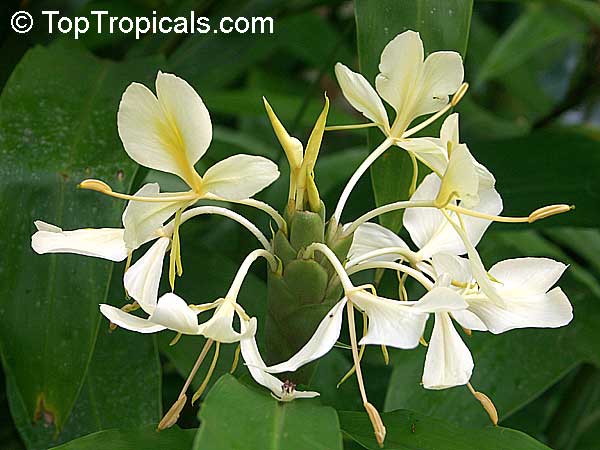
x coronarium - Yellow Butterfly Ginger, Nardo Ginger Lily - rare hybrid
of White Butterfly ginger we mentioned earlier
(https://t.me/TopTropicals/710), it is more vigorous and tall than its parent. With attractive long green
leaves with a slight fuzziness, this ginger has open long spikes of pastel
yellow flowers with a beautiful heady aroma. Exquisitely fragrant!
2. Variegated Spiral Ginger
Costus
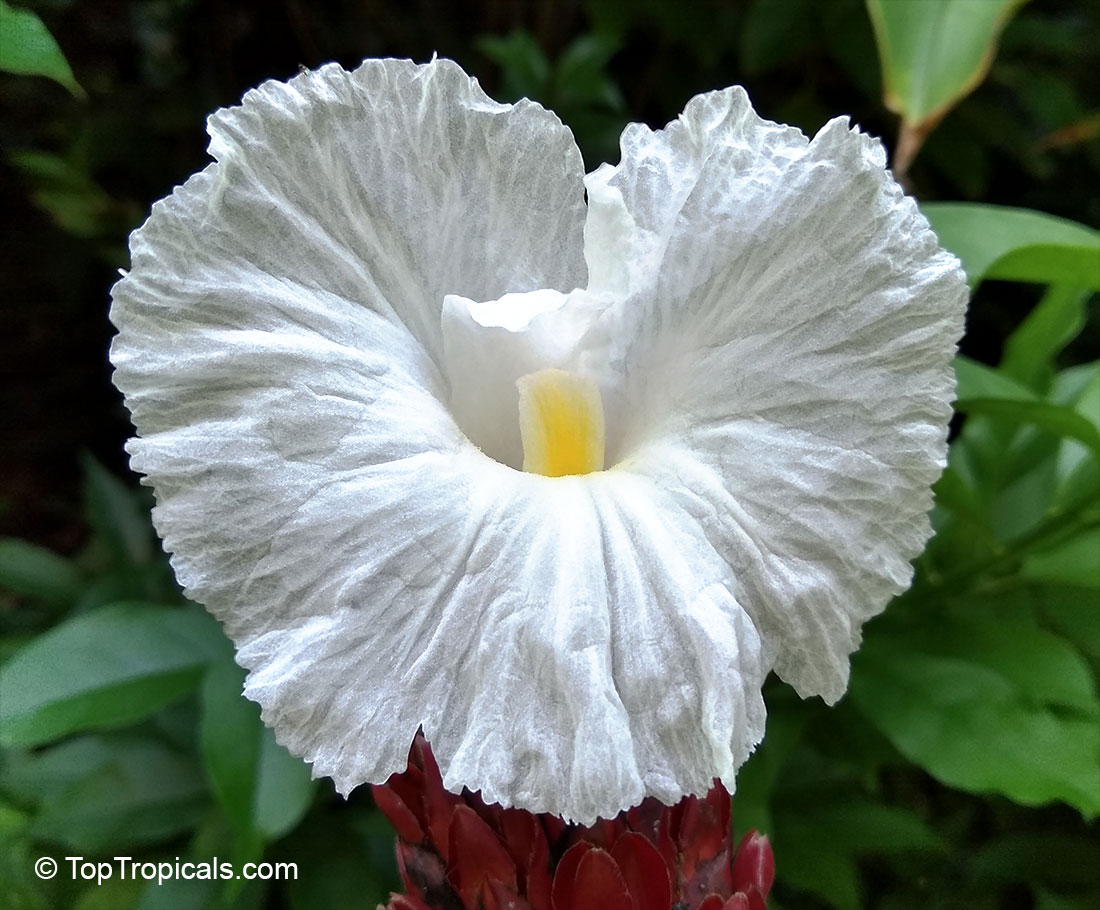
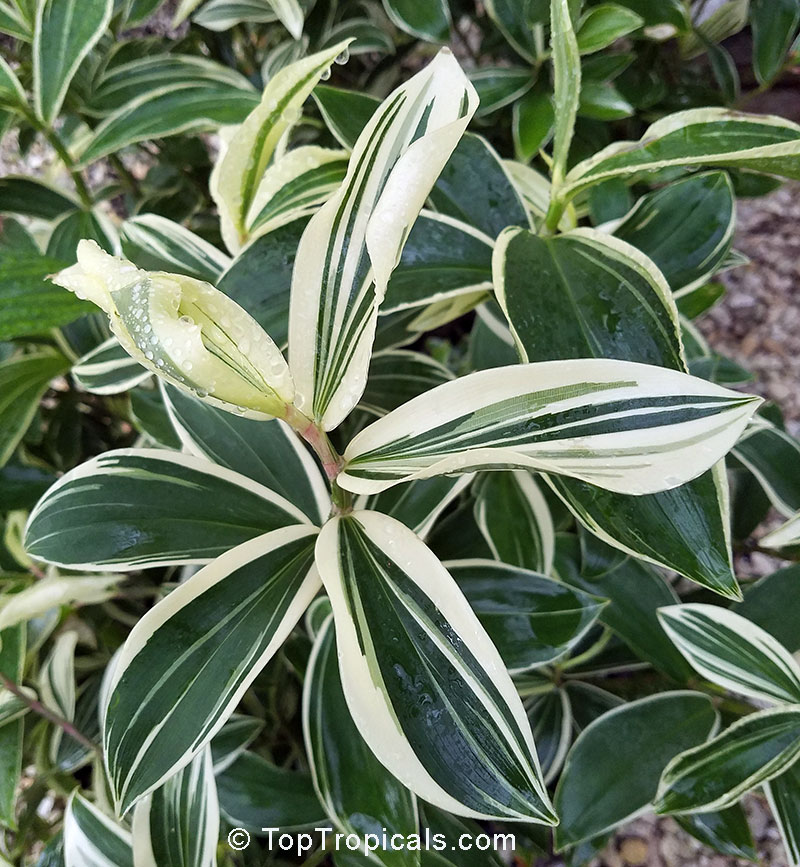
arabicus (amazonicus) variegata - Variegated Spiral Ginger - is a tropical stunner
originally from South America but adored in Hawaii and Florida. This ginger's
eye-catching, spiraling stems are streaked with striking white variegation,
topped with elegant pure white flowers with yellow centers. The pure white
blooms are truly a piece of art! Perfect for shade gardens, this plant thrives
in moist soil and loves plenty of water. If you're looking to add a bit of
drama and elegance to your garden, this beauty is a must-have!
3. Pine Cone (Shampoo) Ginger
Zingiber
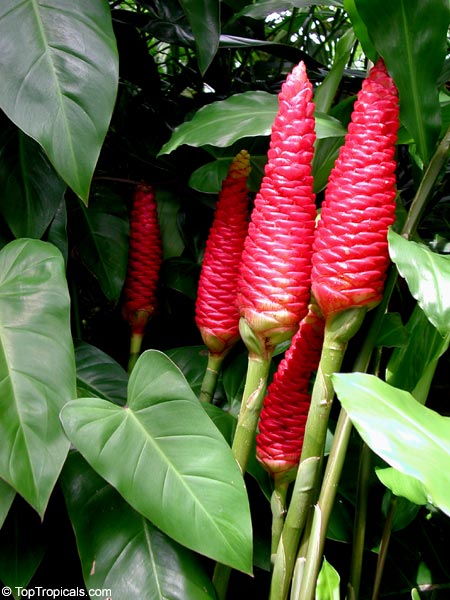
Zerumbet - Pine Cone Ginger, Shampoo Ginger - is probably the most popular one.
All parts of this ginger are spicy fragrant. The cone shaped flowers are long
lasting and useful for cut flower arrangements. It is in fact used as a
shampoo in Asia and Hawaii, and as an ingredient in several commercial shampoos!
Pinecone ginger is considered a "canoe plant", that is, a plant introduced
throughout the Pacific by the ancient Polynesian settlers.
4. Spiral Raspberry Ginger
Costus
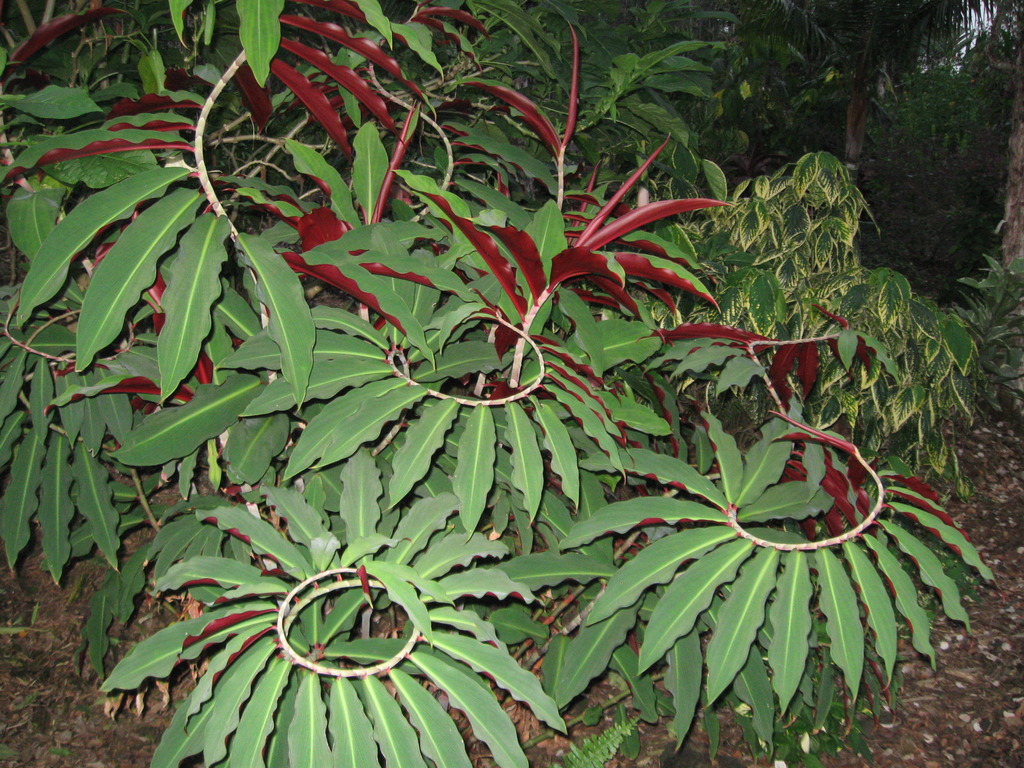
vargasii - Spiral Ginger Raspberry Yogurt - The name refers to the colorful
raspberry colored stem, but that's not the only colorful thing about it: the leaves
are dark green, long and glossy with velvety deep purple undersides. The
inflorescence is a vivid red with tight bracts and bold yellow flowers. The
butterflies love to drink the nectar from the flowers. Large vigorous ginger,
growing up to 5-6 ft tall.
5. Cameroon Costus African Princess
Costus
fissiligulatus - African Princess, Cameroon Costus - from Gabon in West Africa. It
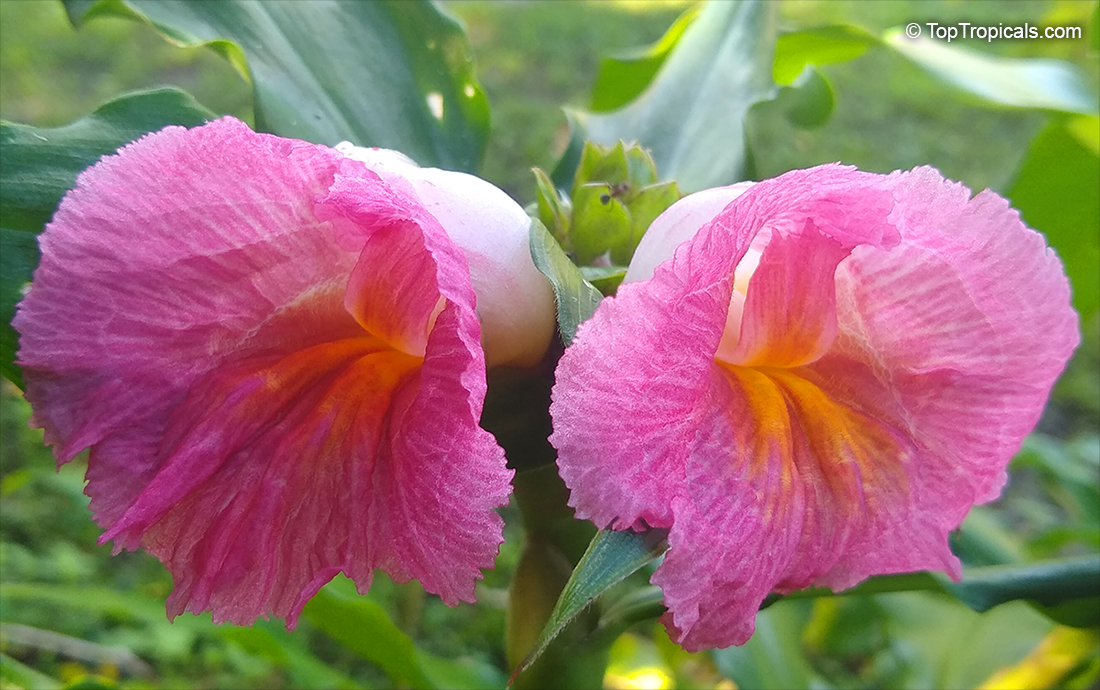
has a dazzling pink trumpet flower with a yellow throat. It is very
floriferous with an inflorescence of numerous flower buds on a shortish plant of 3-4
ft that stands very erect. It is an easy grower.
6. Red Button Ginger (French Kiss)
Costus spicatus x
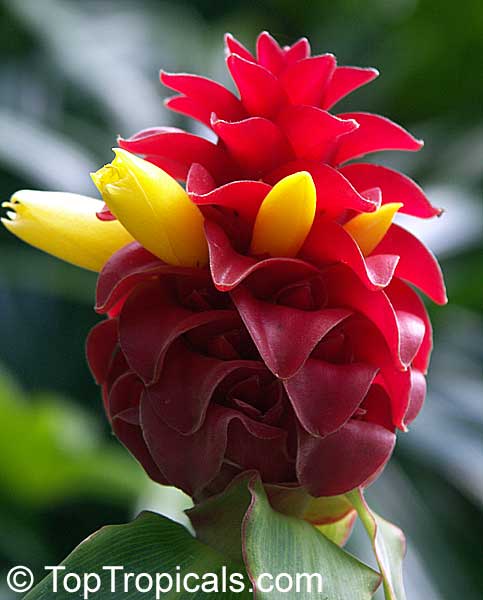
woodsonii - Red Button Ginger, French Kiss: this ginger's inflorescence
resembles a cluster of bright red buttons, making it a standout in tropical
gardens.
7. White Butterfly Ginger
Hedychium
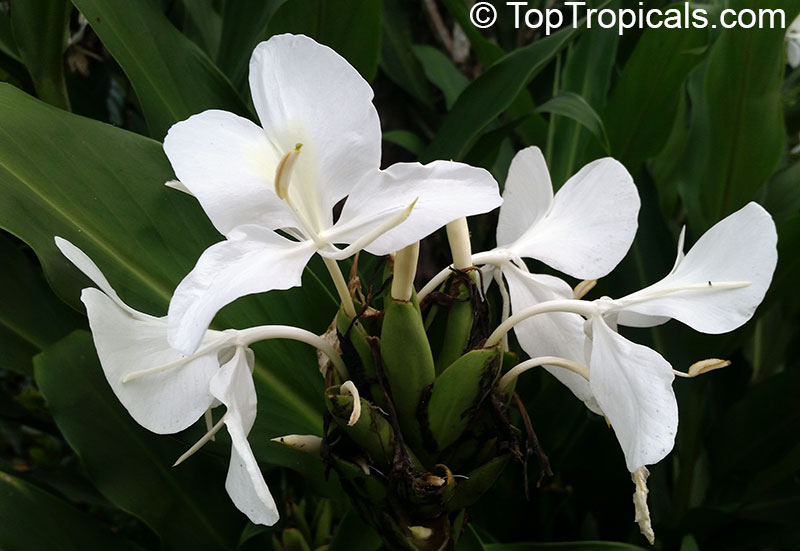
coronarium - White Butterfly Ginger is a must for every Southern garden. It is
famous for its intense, sweet scent. Symbol of Hawaiian Paradise along with
Plumeria and Jasmine. It is popular in Hawaii and the Pacific Islands for leis
and hair adornments and bears fragrant, butterfly-resembling flowers in
summer. It has long lasting cut flowers, ideal for scenting the home. Can survive
light freezes, with tops regrowing in the spring. Takes sun or shade.
8. Laos Silver Stripe Peacock Ginger
Kaempferia
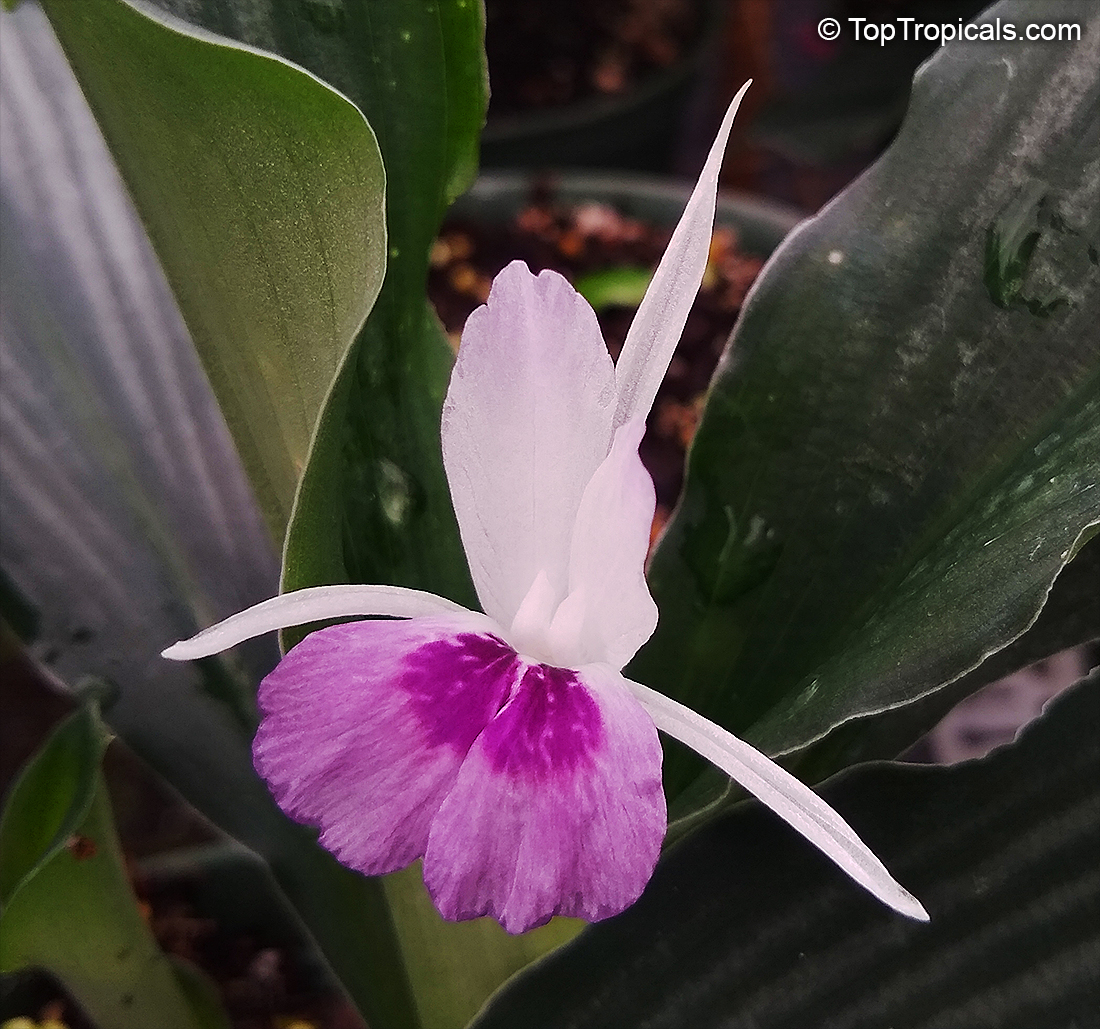
angustifolia - Laos Silver Stripe is one of the most beautiful of all the
Kaempferia Peacock Ginger cultivars. It is one of the large types. The plant has
boldly striped leaves of green and silver. The flowers are orchid shaped white
and purple. Small, compact perennial, great for container culture. This hard
to find variety is a must for every Ginger collector.
Photo above:
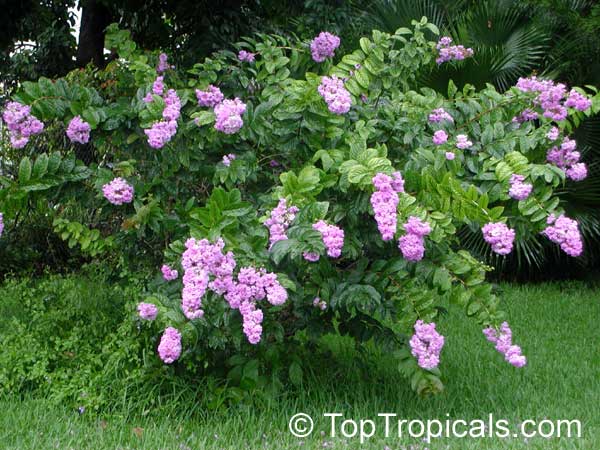
Lagerstroemia speciosa - Queen Crape Myrtle. Gorgeous flowering tree with
cascades of lilac flowers. One of the most popular trees in Southern
gardens.
Q: It's spring, finally! I can't wait to plant my
paradise garden with lots of tropical flowers. We moved into a nice new
house but the yard has nothing but grass. Where do I start?
A: When you start your garden from scratch, you
need to plant your trees first. It's a perfect timing!
Getting tropical
flowering trees now is really important for making your garden strong and
beautiful. Trees are like the bones of your garden, giving it shape and shade.
If you plant them in spring, they have enough time to grow strong roots
before winter. This helps them survive better.
Trees also give shade to other plants so they can grow well too. It's like
building a house - you need to start with the frame before adding other
parts. So, it's a good idea to get those trees now before moving on to shrubs and
vines.
Remember to provide regular fertilizing program which is the most important
during season of active growth. The more food your tree gets, the stronger
and faster it grows! For flowering trees, we recommend Sunshine Boosters Megaflor formula.
Photo above:
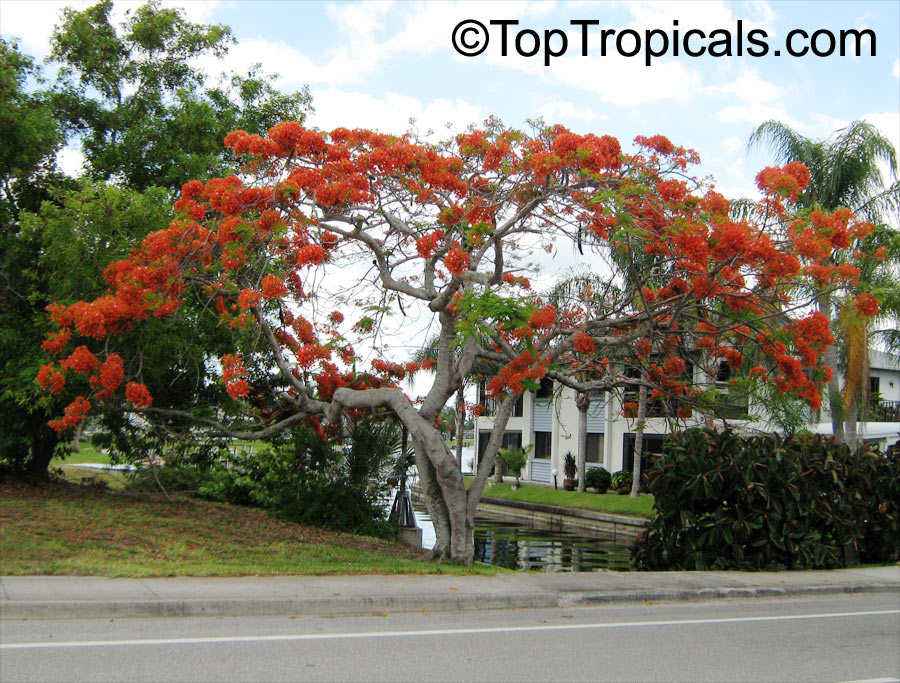
Royal poinciana, Flamboyant tree - Delonix regia."The Royal Poinciana
is one of the most spectacular flowering trees in the USA, and probably
among the top 10 on this planet. In full bloom, it is like a regal elephant
caparisoned in red and yellow brilliance."(Larry M. Schokman, The Kampong,
National Tropical Botanic Garden)