Date: 13 Apr 2021
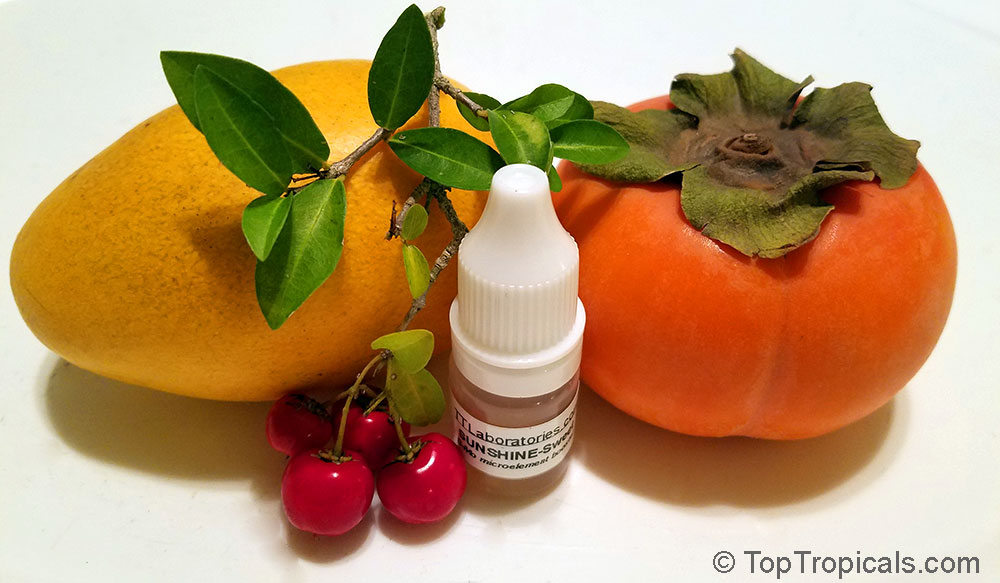
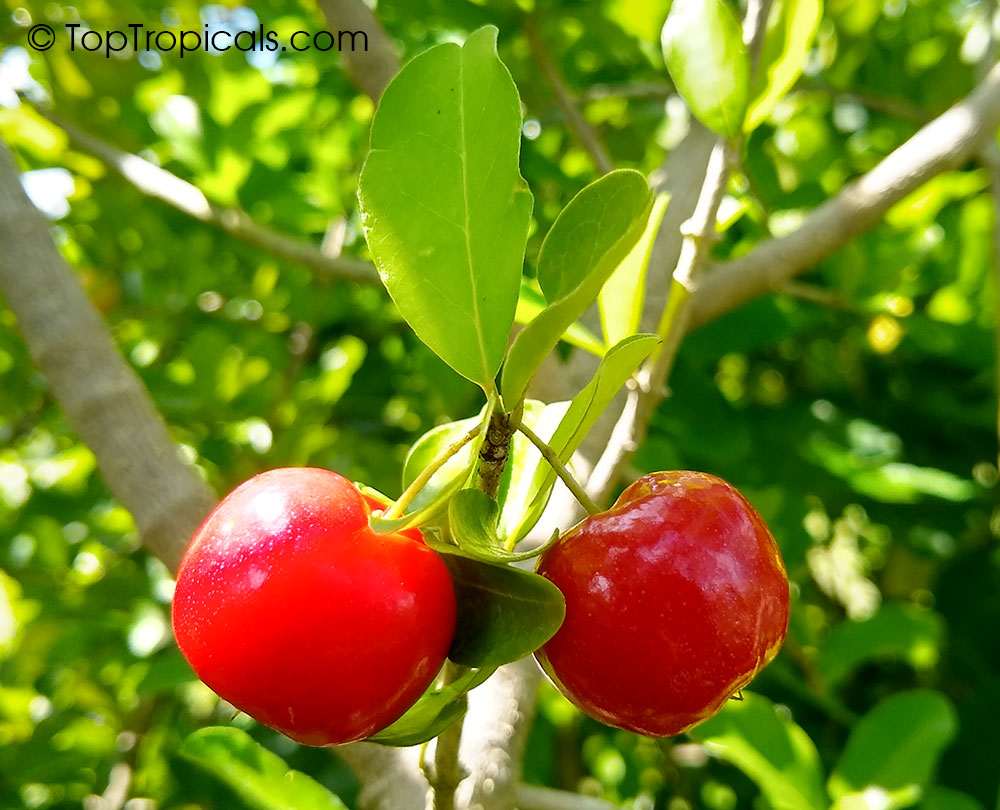
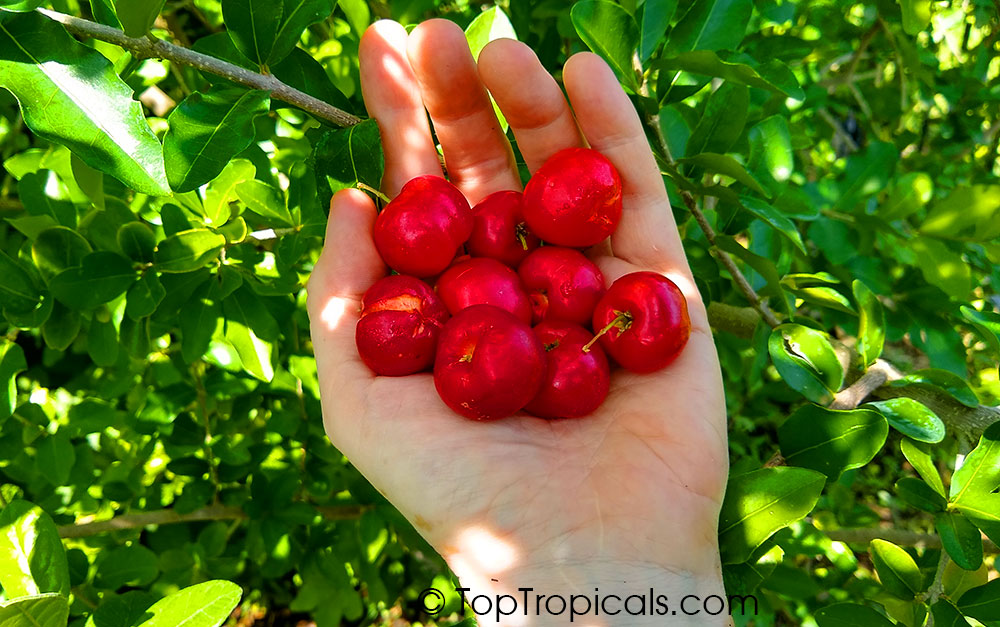
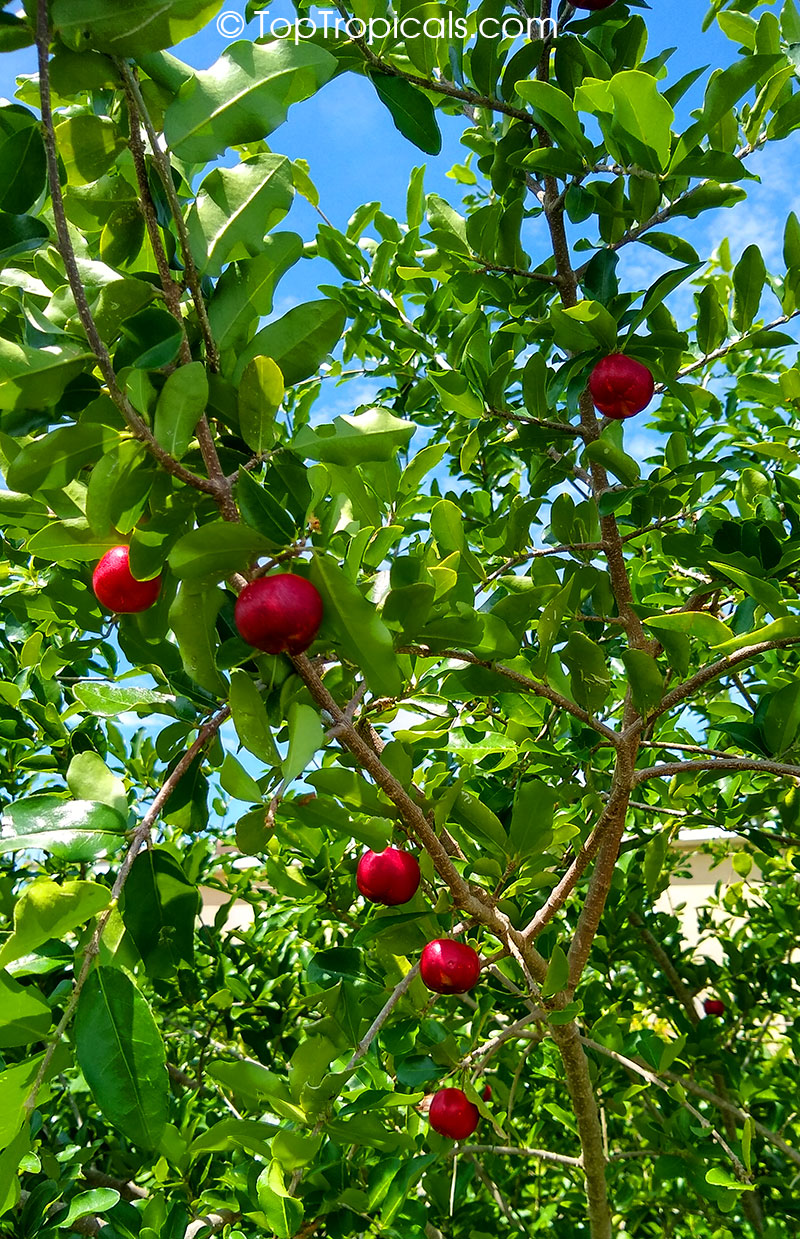
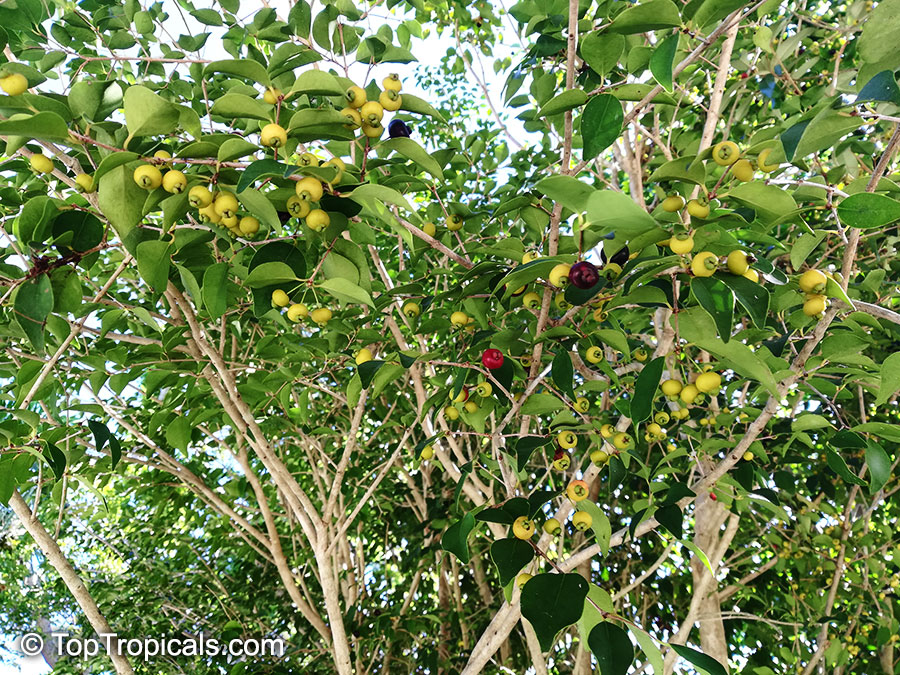
Barbados Cherry:
equal to 65 oranges!
by Alex Butova, the Witch of Herbs and Cats
...If you are looing for a low-growing tropical fruit tree that's quite
colorful in fruit and starts fruiting right away - plant Barbados Cherry...
...Small, bright red, berry-sized fruit has a vitamin C content up to 65
times that of an orange! A single fruit contains the minimum daily recommended
vitamin C requirements...
...Barbados Cherry is very easy to grow and is generally free of pests,
diseases, and any problems. It is drought tolerant and requires very little
care. And the best part is, it will fruit for you right away! As small as 2"tiny
plant can bear fruit!..
CONTINUE READING >>


Date: 4 Apr 2021
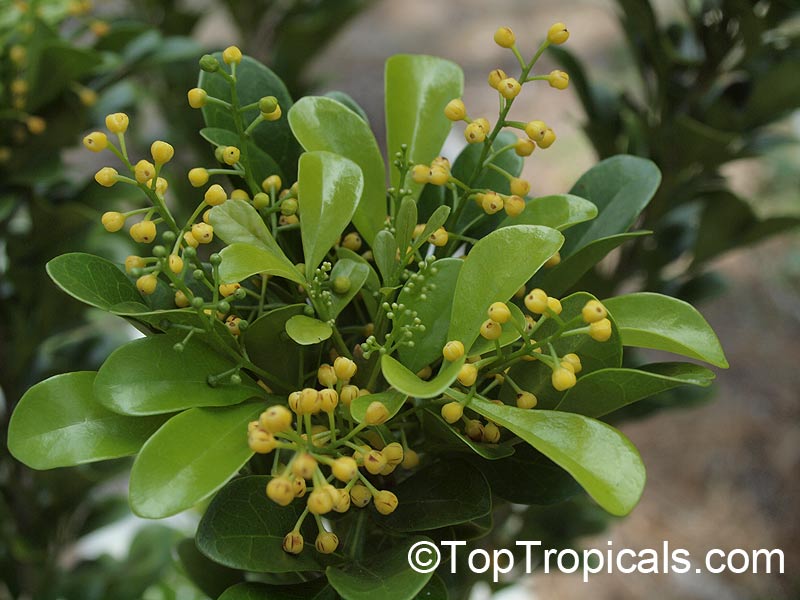
Aglaia odorata:
A present from the Greek Goddess
by Alex Butova, the Witch of Herbs and Cats
...The plant's genus name comes from Greek mythology. Aglaia was the name of one of the three Graces.
Aglaia is the Greek goddess of beauty, splendor, glory, magnificence, and adornment...
...Aglaia
odorata produces highly perfumed, tiny yellow flowers almost year round - each about the size and shape of a grain of rice. They
grow in panicles about 2-4"long and are shaped like tiny balls but do not open when the flowers bloom. The scent exuded by Chinese Perfume Tree flowers is sweet
and lemony, with spicy undertones... Aglaia is a must have for every fragrant plant lover!
CONTINUE READING >>
Date: 18 Feb 2021
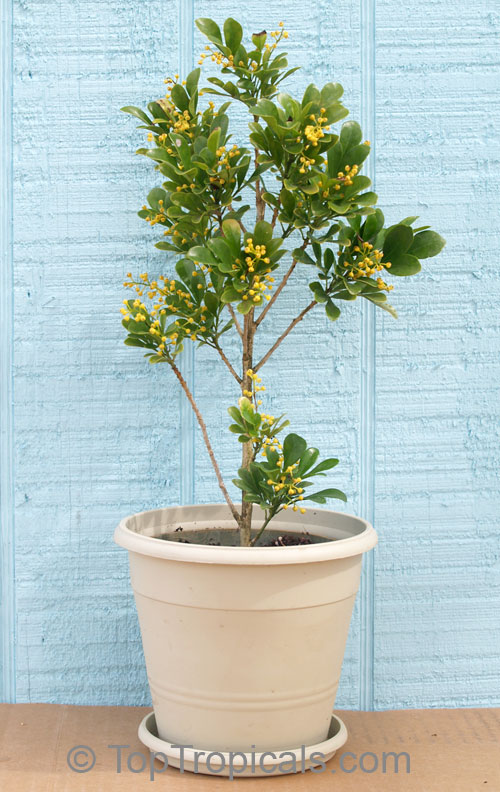
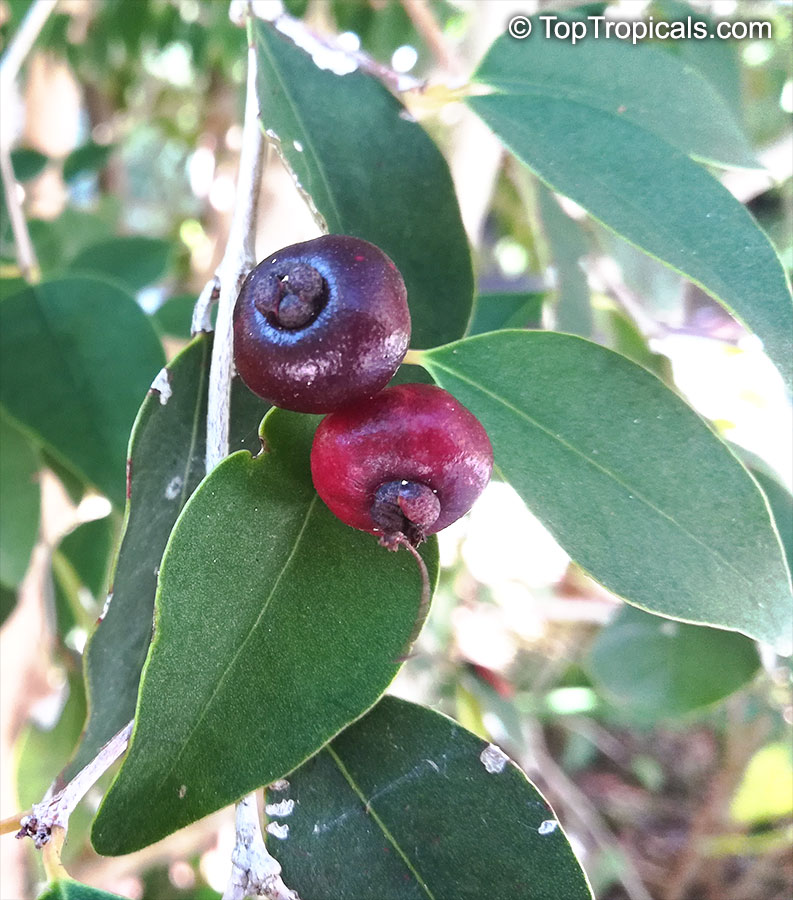
Red Stopper Cherry
Rare plant from Key West
by Mark Hooten, the Garden Doc
Eugenia rhombea, commonly known in Florida as "Red Stopper", is one of four
species of Eugenia native to North America. It is a beautiful small tree,
bearing small shiny deep green leaves which are pinkish-orange-red when young,
giving them the appearance of a flowering tree at a distance when flushing out
new growth a number of times a year.
Its native range includes Florida, Bahamas, Cuba, Hispaniola and part of
Eastern Central America. However, here in Florida, it is federally listed as an
endangered species, only known from the lowermost Everglades and Keys, where
even there it is rare.
These elegant little trees grow to perhaps 12 or so feet tall, developing
an elegant, umbrella shaped canopy. At a distance, they rather resemble Ficus
benjamina, yet with a more orderly and refined appearance. In addition, they
develop fluffy white flowers with a delightful fragrance, followed by
holly-like long lasting red berries which are relished by wonderful song birds.
Although appearing delicate, this tropical species is surprisingly hardy,
and would likely even make striking, a one-of-a-kind houseplant in the
North.
These very few plants were grown from seeds collected near Royal Palm
Hammock in the Everglades, and and may not be available again for some time...
Date: 4 Jun 2020
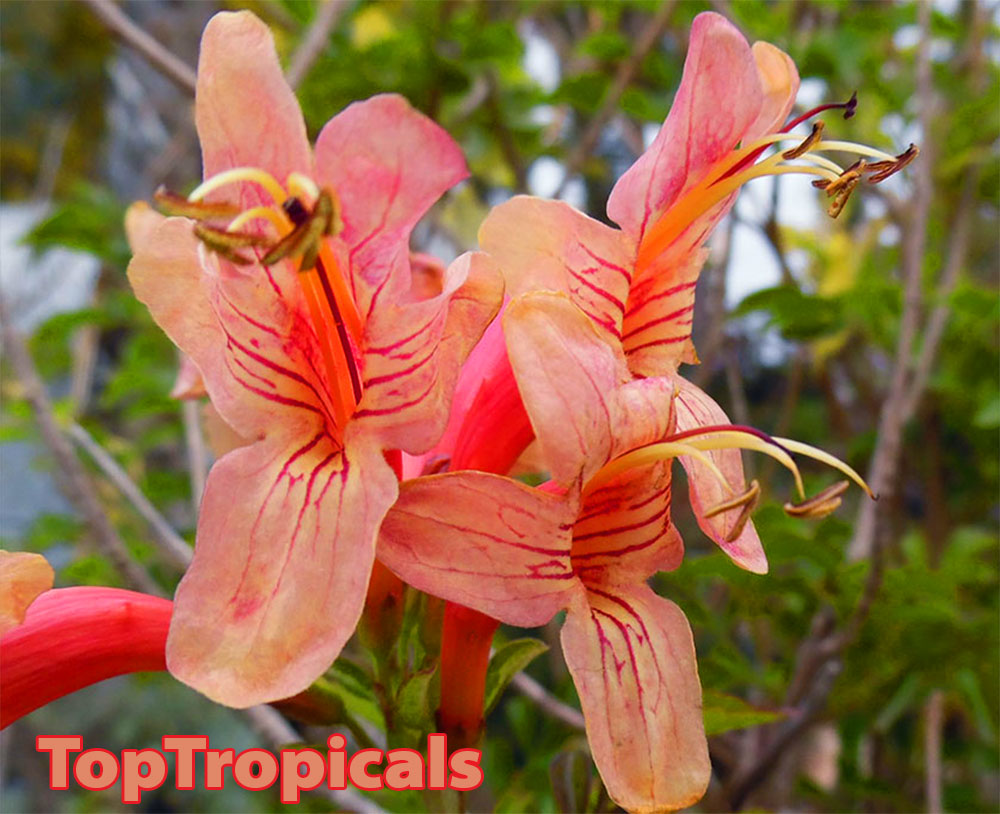
Plant of the Month: Tecomaria capensis Apricot
Stevie's Pick: what's in bloom?
Today we are starting a new column about the most spectacular specials that are in bloom or in fruit today. Our exotic plant grower Steven Gowdy will spotlight the most interesting plants he discovers and recommends today while working in TopTropicals greenhouses.
Summer is in full bloom and everyone is wanting dirt under there nails
after being quarantined for two months! Enjoy warm tropical breezes with
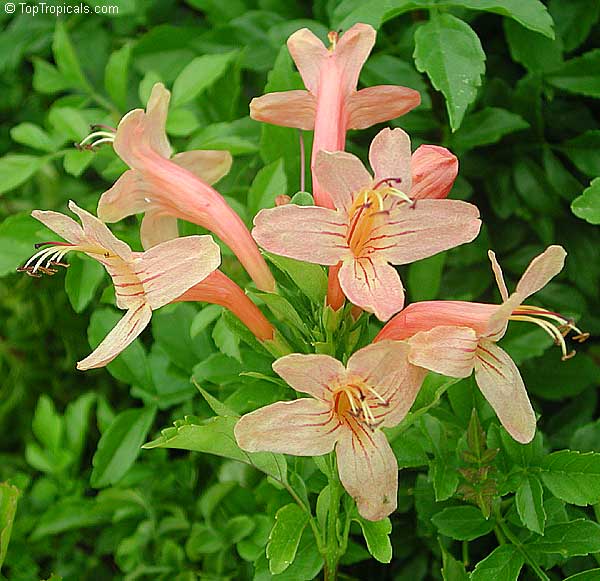
Apricot flowers of this showy African Tecomaria in your garden.
Tecomas and Tecomarias make a wonderful splash of color in any garden,
and apricot is no exception. Tecomaria Apricot has pretty unusual color of
flowers, ranging from bright apricot color to light-salmon. Ever blooming in
warmer climates, it can grow 3-4 feet high and a whopping 4-5 feet wide. In
addition to its beautiful flowers, this plant has many medicinal benefits. An
easy fast growing addition to any landscape, it is a great hummingbird and
butterfly attractor. It is pretty cold hardy and can tolerate light frost which
is a great benefit for gardeners living in subtropical climates with cooler
winters.
Date: 2 May 2020
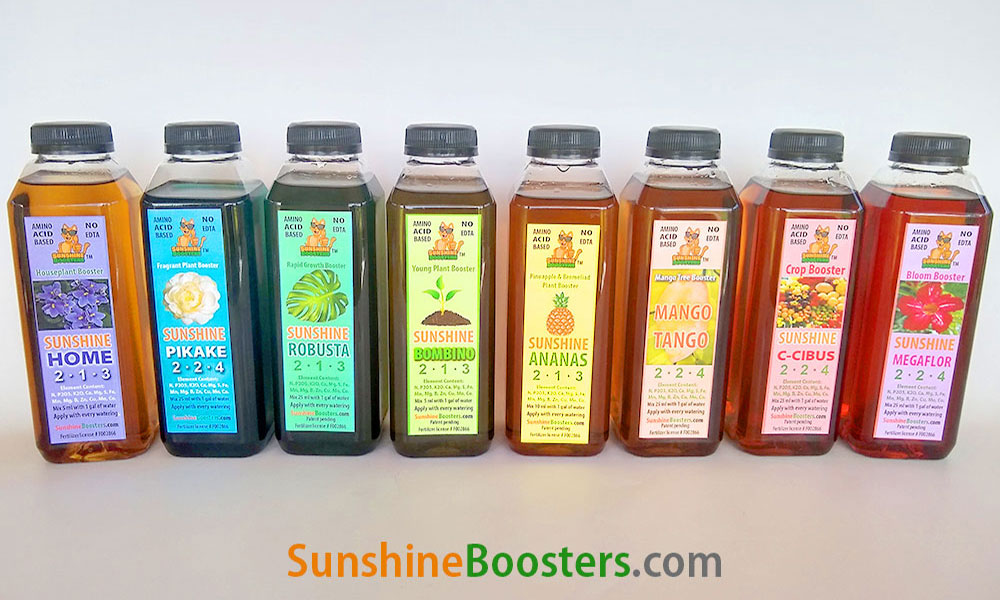
Which fertilizer is right?
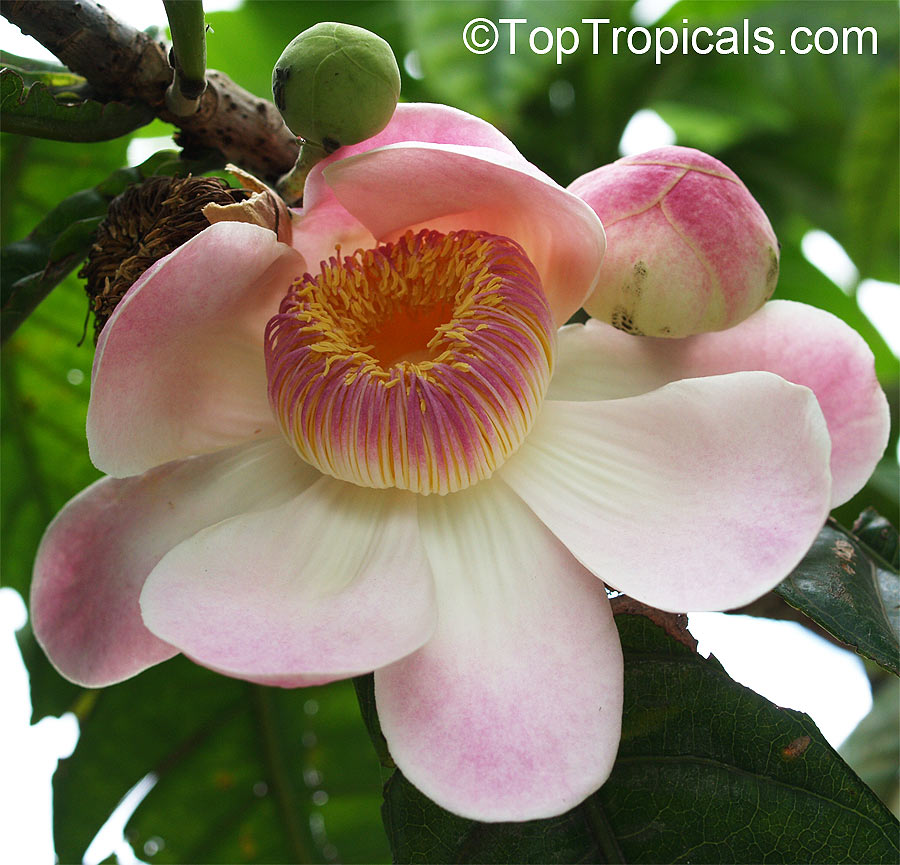
Q: I need some advice on which fertilizer(s) would be perfect for my C​annonball tree and its cousin Heaven's Lotus (Gustavia augusta). ​I also have fruit trees... soursops, mango, etc. and a collection of flowers including pua keni keni, plumeria, bougainvillea, etc. I am wondering if you can recommend a custom fertilizing regimen for my garden (especially the cannonball and the gustavia since they are young).
A: It is a perfect time now to fertilize your plants as they start active growth. We have suggestions on fertilizing programs for your trees. You will find here our recommendations for:
1. Young trees
2. Flowering trees
3. Fragrant plants
4. In-ground grown fruit trees... CONTINUE READING >>