Date: 10 Apr 2016
Growing by the sea
Q: Please recommend me some interesting plants that can grow on my waterfront property and can withstand some salt wind. All my neighbors have Sea Grape trees and bougainvilleas, and I want something different and special. I would love to have some colorful or fragrant flowers, or fruit around my paradise home.
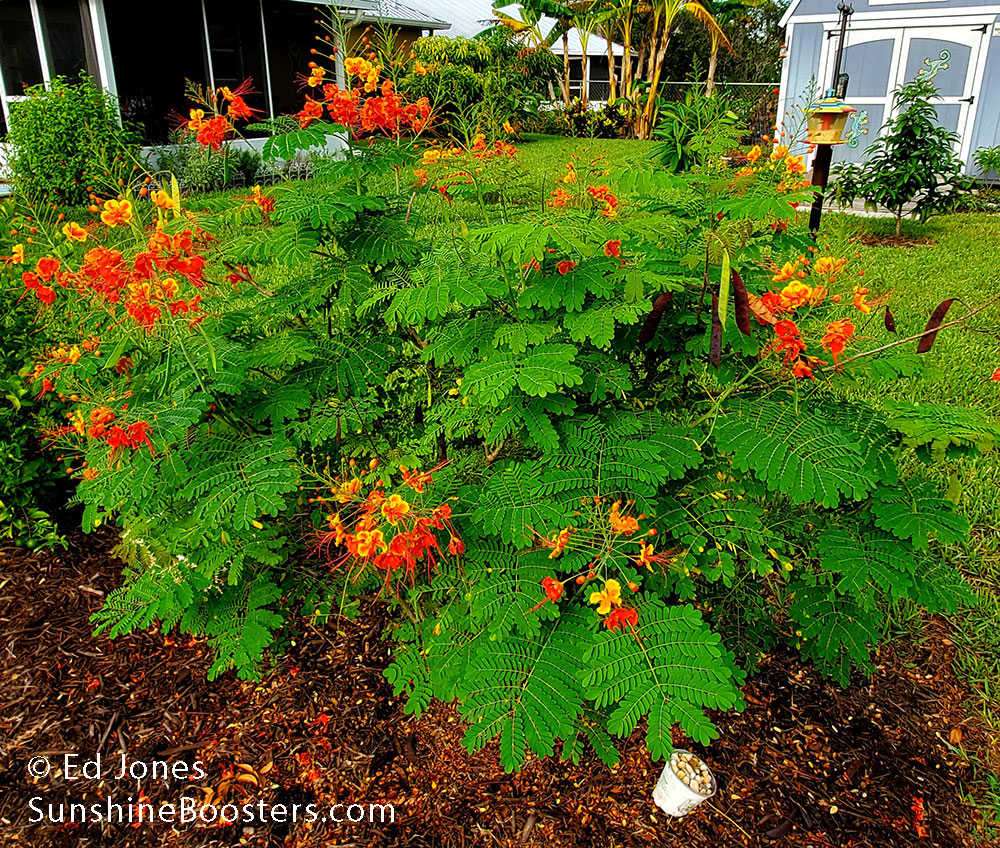
Q: Considering your neighbors successfully grow Sea Grape (Coccoloba), and Bougainvilleas, you have a mild, frost free climate. There is a number of spectacular and useful tropical plants that are salt tolerant. Orchid Trees - Bauhinias, Poincettia - Delonix, and Geiger trees - Cordias, are very showy flowering trees. For large size bushes, try Dwarf Poincianas - Caesalpinias, and Scarlet-Coral Erythrinas. Frangipani - Plumeria, come in different colors and bring you perfume fragrance from Hawaii. And of course, Desert Roses - Adeniums, can be grown and showy specimens anywhere in your yard, both in the ground or as potted bonsai.
Most palms, especially popular Coconut Palm, source of tasty fruit and drink, are highly tolerant to salt breeze. If you are looking for something that nobody has, Lipstick palm, or Sealing wax palm - Cyrtostachys lakka, is definitely the most spectacular palm you can find. It is a stunning feather palm that develops a brilliantly red trunk. Palm is originally from Malaysia, but has been introduced to Costa Rica and other tropical areas of the world. Sealing Wax Palm seeds are very slow to germinate, up to a year, and large specimens are very rare and hard to find even in rare tropical plant nurseries. This palm will require a good overhead light, and constant warmth (above temperature 55F). It is definitely worth an effort to grow this beauty.
You may add more tropical accents to your landscape by the sea with many varieties of showy heliconias.
Date: 28 Dec 2020
Healthy Plants: Q&A from Mr Booster
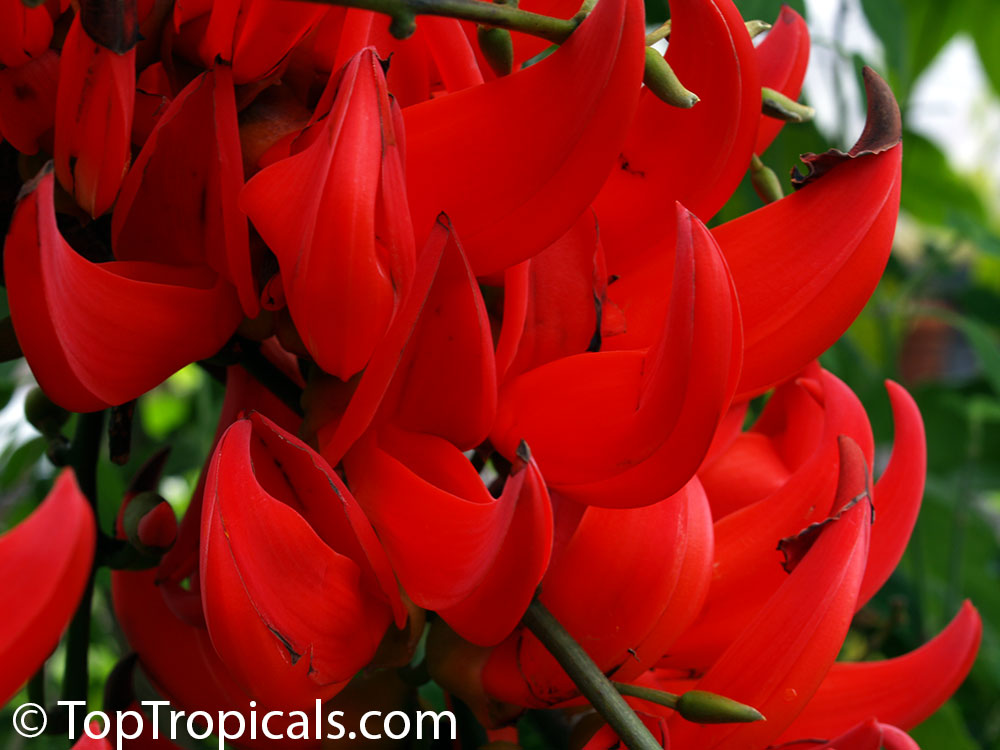
How to grow a happy Red Jade Vine?
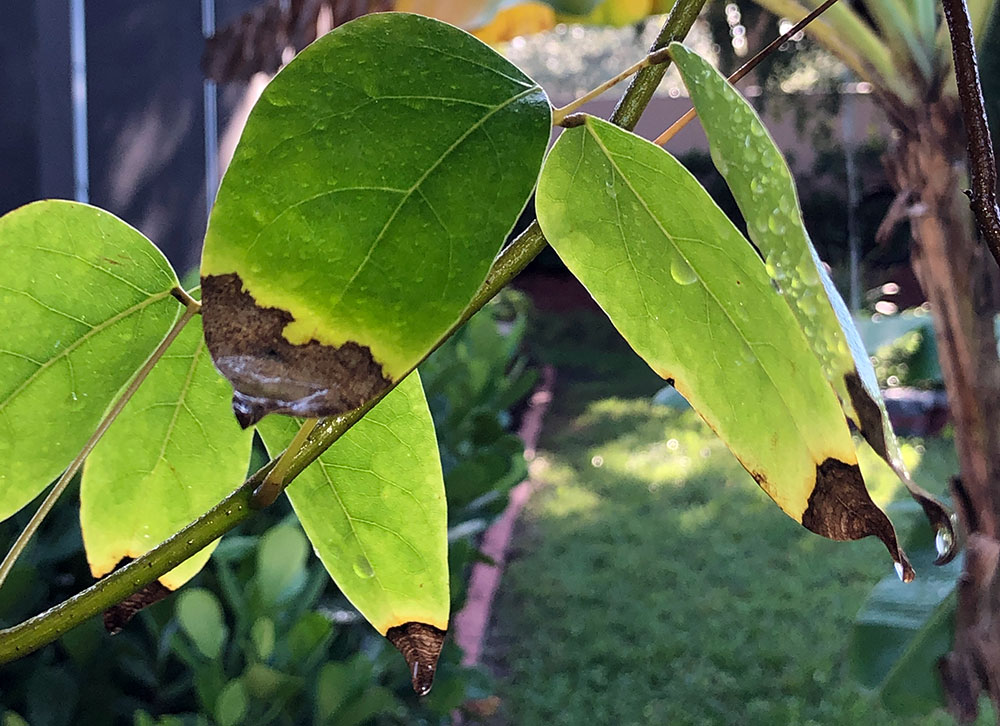
Q: My Red Jade Vine has the leaf tips turning brown. I water this plant four times a week and I am using a half a teaspoon of miracle grow bloom booster 15-30-15 per 2 gallons, every two weeks. In the beginning I had to water this plant off city water in South Fort Myers. Over the last two months I picked up a dechlorinator buggy plus threw that on my hose and I've been watering it with that but it didn't seem to make a difference. I put this plant in the ground last September. It has three shoots that run into the top of the tree, so it is growing but leaves seem to drop off down low at the base of the vine and the brown tipping running into the top of the plant. But not the newest shoot its leaves are solid green all the way at the top. Thanks for any advice.
A: Mucuna benettii - Red Jade vine - is not the easiest plant to grow, and
we are glad your vine is growing well. For those who love this plant but not
ready to face all challenges, we recommend its cousin - Camptosema grandiflora - Dwarf Red Jade Vine, which is much hardier and
easier plant.
We looked at the photos and these are our thoughts.
1) The top of the plant with green fresh leaves definitely indicates
that the plant is generally healthy and vigorous.
2) Dry tips of the old leaves may indicate excess salts in soil, in
combination with the summer heat that it went through. Based on your feeding program
description, that fertilizer may create a problem. Water soluble traditional
fertilizers are EDTA-chelated which often causes nutrients lock up in soil
and leaf drop. Try to stay away from that fertilizer for a month and let the
rains and/or irrigation water flush the soil for a couple of weeks.
3) Red Jade vine is a very sensitive species. Normally, during hot season
it is safe to use traditional fertilizers, especially slow-release granulated.
However, with this plant we recommend you to switch to more delicate formula
and use only liquid fertilizer.
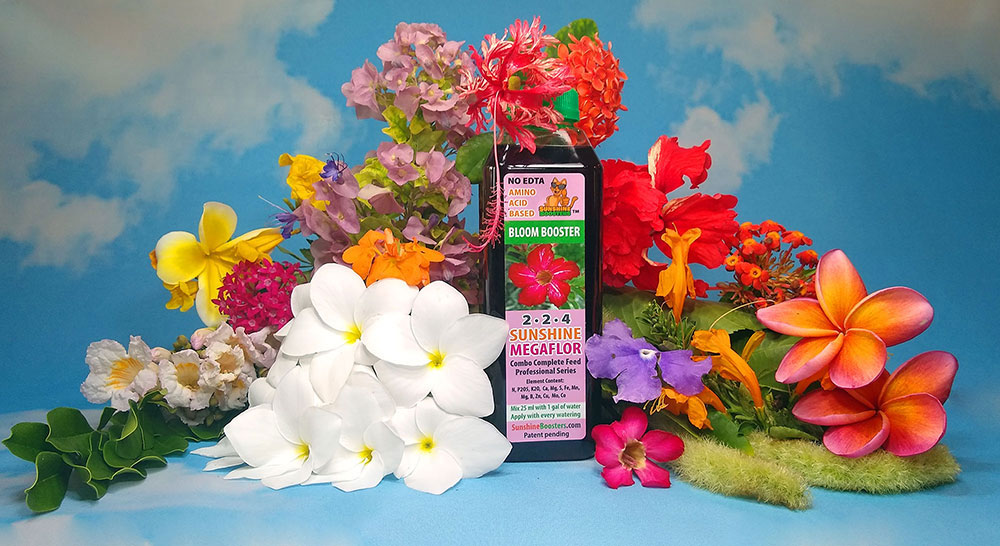
SUNSHINE Megaflor - Bloom Nutrition Booster will be the best. It is
safe to use it as frequent as with every watering! It is amino-acid
based, and will be totally consumed by the plant without nutrient lockup.
4) Another cause of dry leaf tips may be micro-element deficiency.
Megaflor booster already has all necessary micro-nutrients in it, plus you
may apply some extra: SUNSHINE Superfood.
5) You may continue using regular water for watering (including city water)
as long as you use amino-acid based plant food and supplements: they improve
soil acidity (what tropical plants like is acidic soil, and Florida soils
are alkaline). Additionally, to improve soil acidity which can be critical for
this Mucuna species, you may add 1"layer of pure peat moss on top of the
soil around the plant. Please keep us in loop how the plant is doing. It is
pretty rare species in cultivation and we will be happy to help you to keep it
thriving.
Date: 5 Jan 2021
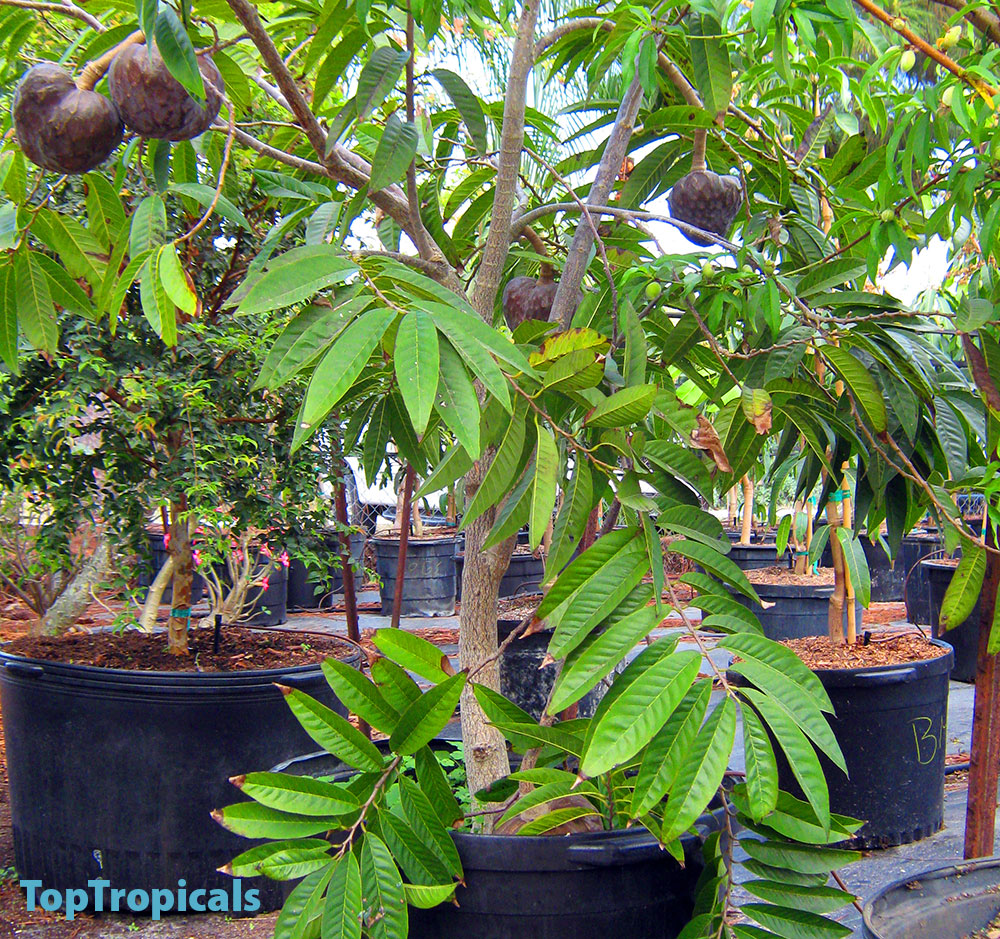
Growing Loquat in container
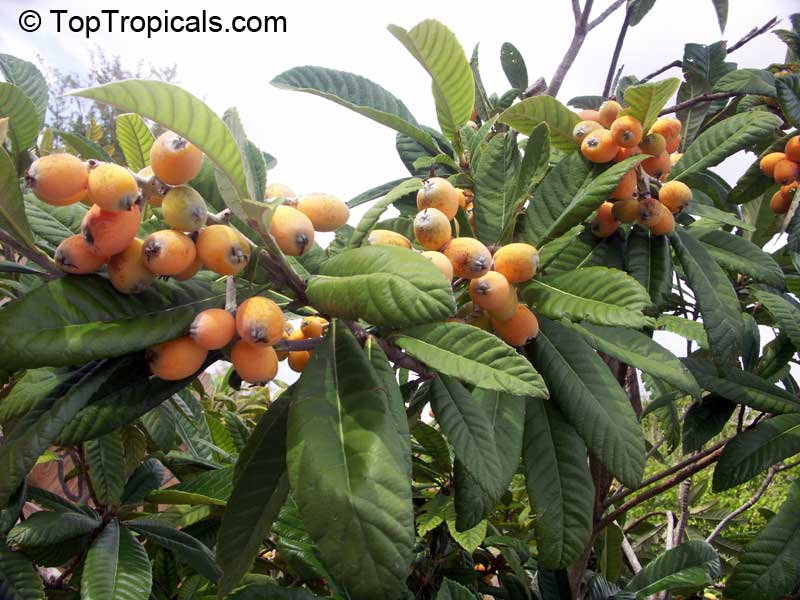
Q: I purchased a Sherry Loquat tree from you in April of 2020. It got off to a slow start initially, but now is five feet tall with healthy leaf growth! It is in a 15-gallon pot and was brought into the house by October 15th. I live in Zone 6 and kept the plant outside from end of May to October 15th. I have given the tree artificial lights in addition to slow release fertilizer. Can you please advise me on what steps I need to take to get the Sherry Loquat tree to fruit? E.g., lighting requirements, soil pH, soil type, etc.
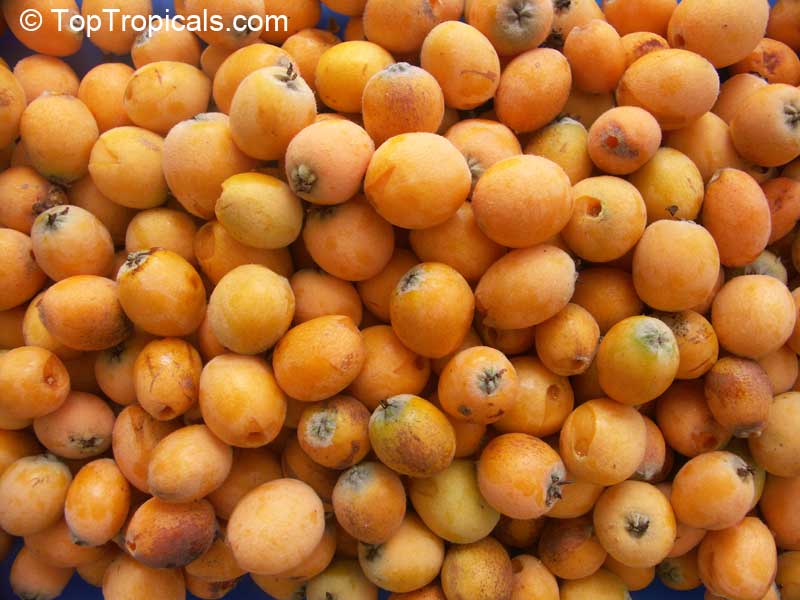
A: Loquat is normally winter flowering and spring fruiting tree, here in Florida it is usually heavily covered with fruit by April. With a proper care, you may see flowers throughout the winter and they may set some fruit for you. Considering that during this time you have to keep the plant indoors, here are some recommendations:
1. Soil. Well-drained, porous potting mix. Do not use any heavy garden soils. For our plants we use the following mix which is excellent for containers: Abundance
2. Light. The brighter the better. Sunroom would be great, or at least put the tree next to a large window. Extra lighting with grow lights is beneficial. Any type of light will work, you can even use a simple clip-on light, the brighter the better. 8-10 hours a day.
3. Water. Loquat is drought tolerant but for fruiting it will need regular watering; just don't keep soil soggy, let is slightly dry before waterings.
4. Fertilizer program. Use liquid fertilizer. We recommend Sunshine
Boosters that are safe to use with every watering and year around - SUNSHINE C-Cibus - Crop Nutrition Booster.
We recommend to switch plants from traditional"slow-release"fertilizer to the liquid one because it makes a huge difference in plant growth and flower/fruit quality and quantity.
Sunshine Boosters are scientifically balanced fertilizers that supply all necessary elements for daily plant
needs. They are natural and eco-safe, great for any edibles.
5. Micro-elements. These are essential for potted plants, because in containers roots can't reach out to elements that are usually present in soil when trees grown in the ground.
Apply micro-element remedies that are very effective for improving fruit production,
especially when flower or fruit drop occurs:
SUNSHINE Honey - promotes more efficient blossoming and pollination, makes flowers bigger and reduces bud
drop.
SUNSHINE SuperFood - improves plant vigor and quality and size of flowers
These are all natural, eco-friendly supplements that work great for fruit trees and other edibles.
Read more about Loquat trees: The best grafted Loquat varieties.
Date: 23 Dec 2023
Butterfly Bush: Fast, Pretty, Low Maintenance...
Five unbeatable reasons to plant Butterfly Cassia
Q: I am trying to find some easy flowering shrub to screen the ugly corner of my neighbor's yard, can you suggest something fast growing and pretty?
A: One of our favorite flowering shrubs in Florida is the Cassia bicapsularis, commonly known as Scrambled Egg Bush or Butterfly Bush. It is one of the most desirable plants for the southern landscape. It has all the benefits any gardener may dream of, whether a beginner or an expert:
1. Very fast growing, can screen unwanted views and create a beautiful flowering hedge. Cassia bicapsularis is known for its rapid growth, making it an excellent choice for quickly transforming an unsightly corner into a vibrant and lush area. Its dense foliage and attractive yellow blooms add both beauty and privacy to your outdoor space.
2. Easy to grow, not fussy about soil or water, drought and flood tolerant, cold tolerant. Butterfly Bush is incredibly adaptable and resilient. It thrives in a variety of soil types, is not demanding when it comes to water, and can withstand both drought and occasional flooding. Additionally, it is cold tolerant and can withstand occasional frosts once established.
3. Blooms for many months, featuring especially in winter flowers from Fall to spring. Very pretty, large "sunny" flowers resembling bright yellow butterflies, hence the name. It is a generous bloomer, gracing your garden with vibrant yellow flowers for an extended period, particularly from fall to spring. The large, sunny blooms not only add visual appeal but also attract pollinators, enhancing the ecological balance of your garden.
4. Attracts lots of butterflies. As the common name suggests, the Butterfly Bush is a magnet for butterflies. If you enjoy the presence of these beautiful winged creatures in your garden, planting Cassia bicapsularis is an excellent way to encourage and support butterfly populations.
5. Low maintenance. Butterfly Bush can be trimmed and controlled at the desired shape if needed, but if you have room for a big bush in a full sun area - just let it go and it will form a nice dense bush without any pruning: this shrub is a low-maintenance delight. While it can be pruned and shaped according to your preferences, it also flourishes when left to grow naturally. Its ability to form a dense and attractive bush without constant pruning makes it an ideal choice for those seeking a fuss-free gardening experience.
If you're looking for a fast-growing, low-maintenance, and aesthetically pleasing solution to screen an unsightly corner, Cassia bicapsularis is an unbeatable choice. It ticks all the boxes for a beautiful and resilient flowering shrub in the southern landscape.
"...Without a doubt, Butterfly Cassia became one of my favorite plants during my visit to Florida for Christmas a few years ago. I only wish I could have taken it back home with me to Latvia. If only my windowsill hadn't already reached its greenhouse capacity!.." - Alex Butova.
To see more options for flowering shrubs, check out the reference chart Hedges with Benefits Chart.
Date: 9 Jul 2019
Growing desert roses
Q: I purchased a Desert Rose and planted it in Adenium mix. I keep it in full sun with once a week watering assuming this is a desert plant that likes lots of sun. Some leaves turned yellow and now I am not sure should I move it into shade or need to water more? Or maybe fertilize with something?
A: Desert Rose - Adenium, unlike cacti and other succulents, prefers filtered light. It can grow in full sun but leaves look healthier in light shade. Watering must be very moderate, however don't let soil harden like a rock: water again right after the soil gets dry. We suggest to use special Adenium Mix. Cactus mix may work well, as well as regular potting mix, in which case it is recommended to add a bit of limestone (we simply put sea shells on top of the pot - it looks very pretty!) - because adeniums prefer slightly alkaline soil (while most of tropical plants like acidic soils). If leaves turn yellow, this may be a sign of underwatering. Use water soluable fertilizer with high phosphate as foliage spray, and only on healthy plants, according to label dosage. It helps both caudex growth and flowering. Make sure to avoid fertilizer contact with a caudex.
RECOMMENDED SUPPLIES:
Adenium Plant Food - Flower and Caudex Booster
SUNSHINE-BC - Caudex booster
Adenium Soilless Mix
Read more about growing Adeniums:
What you need for successful growing Adeniums
Growing Exotic Adeniums