Date: 24 Jun 2018
URBAN TROPICAL GARDENING:
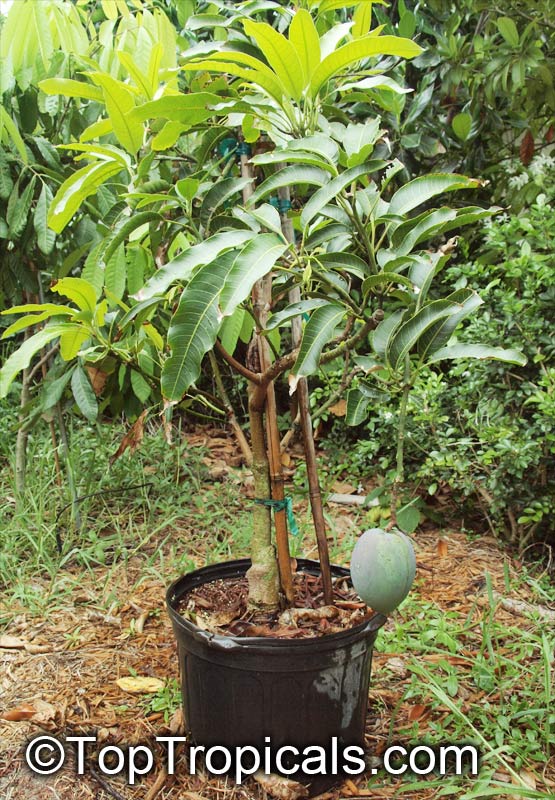
10 secrets of successful Container Mango growing on a
balcony.
Q: I live in Miami in apartment on a second floor, and I have a balcony with SE exposure. I wonder if I can grow a mango tree in a pot? Will it fruit for me? I recently moved to South Florida and I don't know much about tropical plants; but I tasted real fiberless mangos from someone's garden - it was so delicious and different from those in the grocery store. I wonder if I can have a fruiting tree on my balcony? And if yes, how do I plant and take care of it?
A:
Yes, you can! Here is what you need to do:
1) Temperature. You are lucky to live in Tropics,
keep it on a balcony year round.
2) Light. Position the pot in a spot with the most
sun exposure. Mango trees can take filtered light too, but
the less sun, the less fruit you will get.
3) Soil and Container. Use only
well drained potting mix. Step up the purchased
plant into next size container (3 gal into 7 gal, 7 gal
into 15 gal). When transplanting, make sure to keep growth
point (where roots meet the trunk) just at the top of the
soil. Covering base of the trunk with soil may kill the
plant.
4) Water. Water daily during hot season, but only
if top of soil gets dry. If it still moist, skip that day.
Mangoes (unlike
Avocados!) prefer to stay on a dry side.
5) Fertilizer. Use
balanced fertilizer once a month, 1 tsp per 1 gal of
soil. Do not fertilize during fruiting - this may cause
fruit cracks.
6) Microelements. Apply
SUNSHINE-Superfood once a month. This will help your
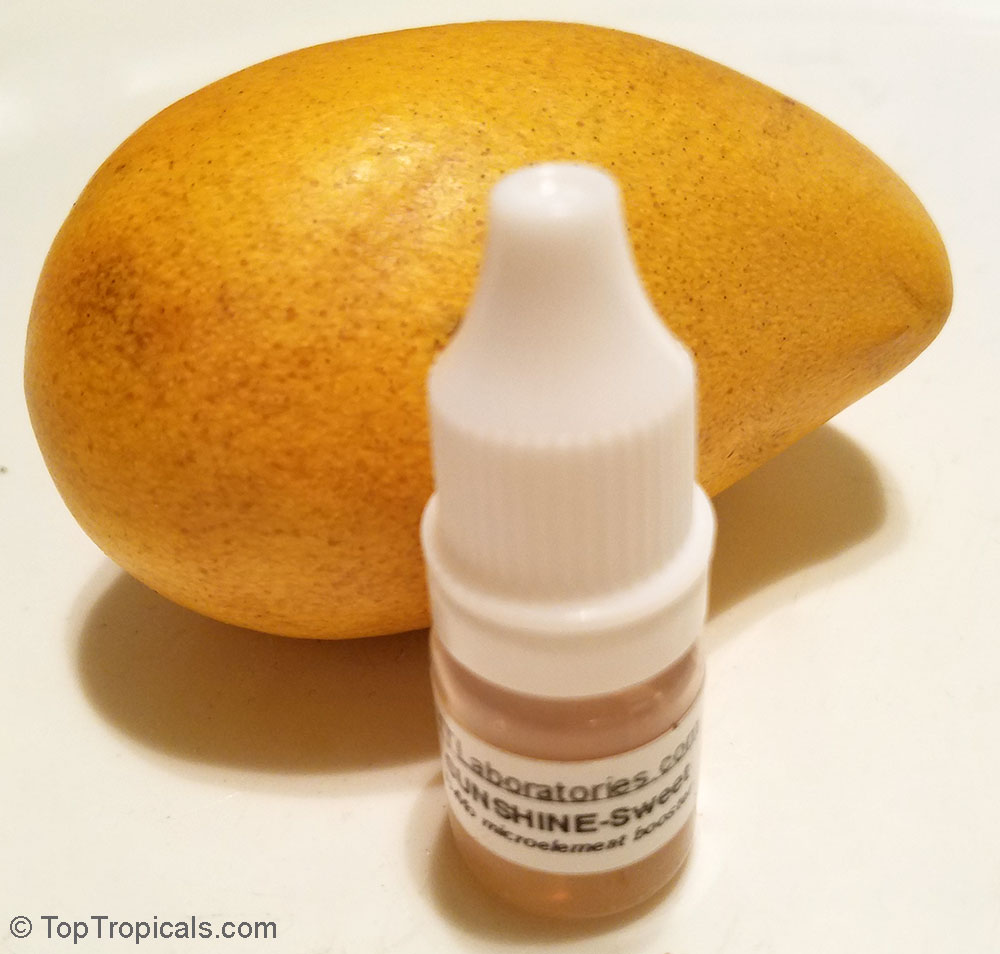
mango healthy, vigorous, and resistant to diseases. Use SUNSHINE-Honey to make your
fruit sweeter.
7) Insect control. Watch for scales and mealybugs,
clean with solution of soapy water + vegetable oil (may
need to repeat 2-3 times with 10 days interval), or with
systemic insecticide like imidacloprid only as needed (if
non-harsh treatment didn't help). Most Flea shampoo for
dogs contain that chemical, you may try that shampoo
solution.
8) Trimming. Once potted, do not remove leaves
that are discolored or have spots until new growth
appears. Dark dots on mango leaves, especially in humid
climate like Florida, may be signs of fungus. Treat with
fungicide according to label, and remove only badly
damaged leaves. Trim crown as needed after flowering and
fruiting (by Fall). Train into a small tree, and you may
remove some lower branches eventually.
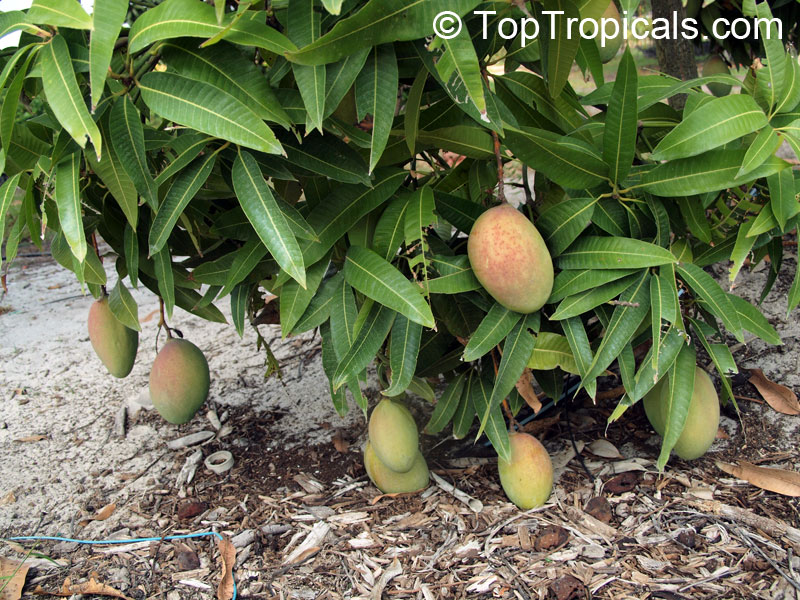
9) Flower and fruit. Mangoes are winter bloomers
with bunches of tiny flowers coming in thousands. Many of
them set fruit (if pollinating insects present). Keep in
mind that young trees can only bare a few fruit. Normally
a tree will drop excessive fruit and keep only a few that
it can manage. To save the young tree some energy, remove
fruit if too many and leave only 2-3 for the first year.
It will pay you next year with more abundant crop.
10) Variety. Last but not least: Choose the right
variety for container culture! Pick from "condo" dwarf
varieties such as Icecream, Nam Doc Mai, Carrie, Cogshall, Julie, Fairchild, Pickering, Graham, Mallika, and a few others -
check out Mango Chart pdf
and full list of our Mango varieties
Date: 30 Aug 2020
Healthy Plant Food
Q&A from Mr Booster
How to make Mango tree fruit
Q: Hello, I have a five-year-old Lemon Meringue tree that has only given me fruit one year. It put out about 50 mangoes and has done nothing for the past three years. Do you recommend any vitamins or any of the nutrients that you guys sell to help with this for next season?
A: We've had very similar problem with our Nam Doc Mai Mango tree, fruited once and no more next year. Usually the reason is nutrients deficiency, here in Florida we have poor soils.
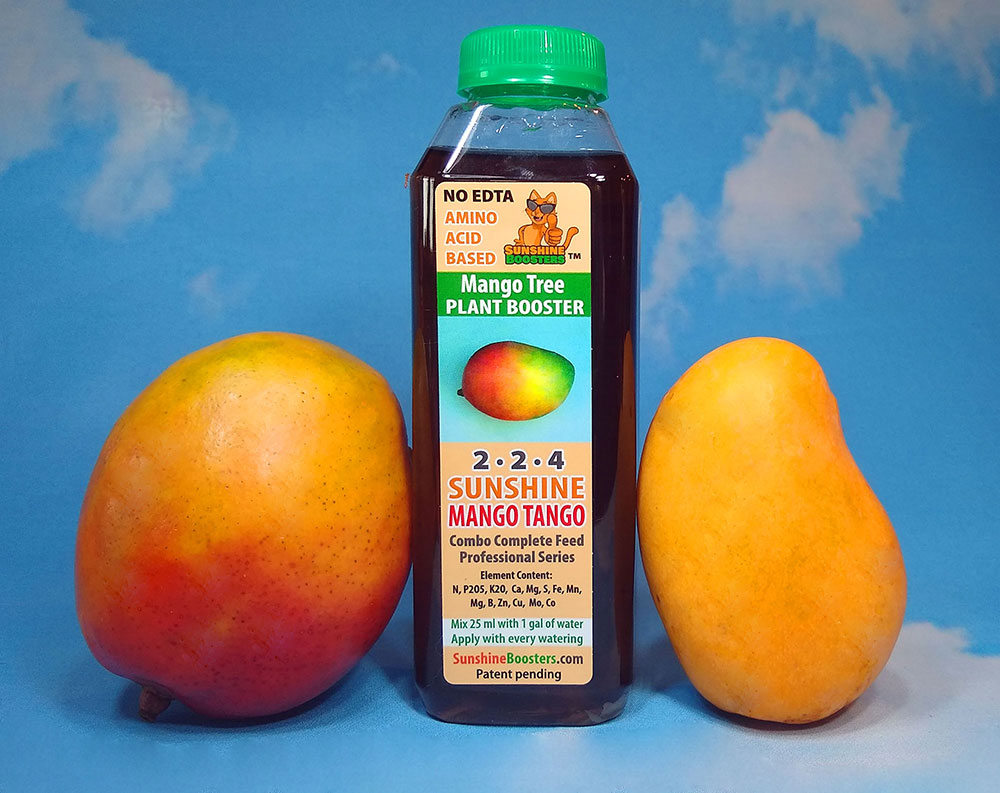
We applied Mango-Tango tree booster and it
started flowering within a couple of weeks.
Generally, Mango flowering season is over by now, however, we recommend to
feed the tree starting now, during active growth season. This way it will get
better established before winter and also will store away all elements
necessary for triggering flowering and fruiting. So by late Fall through Winter it
will be ready to flower.
Along with the fertilizer, additional micro-element supplements will be
beneficial. For improving fruit quality and increasing number of flowers, we
also recommend to use
SUNSHINE-Honey - sugar booster
SUNSHINE Mango Tango - Mango Tree Booster, for healthy mango trees and profuse fruit production.
SUNSHINE Honey - a natural supplements that makes fruit sweeter, and increases fruit quantity and quality.
Date: 20 Aug 2020
PeopleCats of TopTropicals. Cat of The Month: Greenhouse King
King continues being on top of the poll... thanks to his adventurous
nature. This Purrrson just loves to travel! He likes driving and biking. How many times we pulled him out of customer's car or delivery truck!
Sure thing, he just did it again, joining contractor's team. Luckily he was noticed hiding in the back of the truck before the driver hit the highway!
ATTENTION VISITORS!
We are reminding you, please check your vehicles for cats before you leave!
On a bright side, King has been very helpful, helping to plant newly
arrived plant shipment from Thailand.
For those of you who has been waiting for rare plants, after a long delay
due to airlines lockdown, we finally got lots of rare stuff and it will be
ready for shipping soon.
Please make sure to add to your wish-list these coming-soon rare plants, this is the only
way we can ensure you will get notified when they are available for sale, on
first come first serve basis.
These are limited quantities, high demand plants!
Don't miss your dream plant! Just click on "Notify me when available" and add your email to waiting list.
Limited quantities - will be ready soon
(planted with King's help)
-
Amherstia nobilis - Pride of Burma
-
Artabotrys siamensis - Climbing Ylang-Ylang
-
Barringtonia acutangula - Indian Putat
-
Barringtonia asiatica - Fish Poison Tree
-
Bauhinia aureifolia - Fragrant Gold Leaf Orchid Vine
-
Brownea ariza - Rose of Venezuela
-
Brownea grandiceps - Scarlet Flame Bean
-
Cananga fruticosa - Dwarf Ylang-Ylang
-
Couroupita guianensis - Cannonball Tree
-
Cyrtostachys lakka - Lipstick Palm, Red Sealing Wax
-
Desmos chinensis - Ylang Ylang Shrub
-
Dillenia philippinensis - Katmon, Philippines Elephant Apple
- Garcinia mangostana - Mangosteen
- Ixora congesta Thai Flame
-
Melodorum fruticosum - Hot Lips Ylang-Ylang
-
Monstera variegata Thai Constellation (available now for pick up only)
-
Gustavia augusta - Heaven Lotus
-
Posoqueria longiflora - Needle Flower Tree
-
Rauwenhoffia, Melodorum siamensis
-
Saraca declinata - Red Saraca
-
Terminalia catappa - Tropical Almond
-
Vallaris glabra - Bread Flower
-
Wrightia vietnamensis - Dwarf
TopTropicals PeopleCat Club and Zoo
Thank you for supporting us in helping PeopleCat Community!
Make
your kind donation today and receive a surprise gift from us! Every little
bit helps. Thank you and God bless you and your pets!
Date: 6 Dec 2018
Why starting tropicals from seed indoors is better than outside?
Q: I am in Texas, it is getting cold, but I bought these seeds the last two packs, as I didn't want to miss them, was looking for a long time and found you had them. Should I wait until spring to plant them?
A: You can
grow tropical plants from seed year round and don't have to wait until warm
weather outside. It is, in fact, beneficial to start tropicals indoors in a
controlled temperature, moisture and humidity. Seeds of some species are very
sensitive to excess water and/or require a certain range of temperature for
germination... Besides, it's so much fun!
First, read the basics: Happy Hobby: growing tropicals from seeds
Advantages of indoor growing from seed
It is easier to keep under control indoors:
1) Temperature and Light. Although many tropical seeds require
higher temperature and bright light for germination (hot sun may help), it may
be hard to avoid overheating and drying out when you put trays in full sun.
Using heat pads and additional lighting indoors makes germination smooth, even
may take a little longer than in hot sun.
2) Soil moisture. If you ever lost your seeds or tiny seedlings
to a heavy summer rain, you sure will appreciate your own moisture-controlled
environment! Just make sure to use the right soil mix.
3) Air humidity. Indoor air is drier than outside. It may not be
best for some tropical plants, but definitely perfect for seed health - they
will never get moldy considering you keep your eye on the plantings.
4) Pre-treatment. Some seeds require scarification (sanding down
hard shell), others stratification (cold treatment), but all seeds will
benefit from
SUNSHINE-S soak before planting. It is easier to do in your home lab.
Based on our experience, using Sunshine pre-treatment reduces the risk of
fungal damage and improves germination from 30 to 65%.
5) After germination culture. Watching seedlings closely in your
home environment and giving them all that is needed for healthy, fast growth
- miscroelements and first fertilizer - will help to establish young plants just in time before
planting them out in Spring-Summer.
Read more: From Kristi - how to grow tropicals from seed.
Date: 24 Jun 2018
Our honest advise on Holiday Gift Plants
Q: Any suggestions on gift plants? With Holidays around the corner, I've been thinking of getting a present for my grandma, she lives in FL and is an experienced gardener. I also have a friend that lives in CA, also warm climate, but she doesn't have a green thumb. Any "easy" plants I can try for her?
A:
Live plant is a perfect gift, as we all know. However when
ordering a plant online as a present, for a happy
experience, you should have three things to consider:
1) Gardener's experience. Planting instructions are
included with every order, and usually success is there if
you follow them. But all plants go through shipping stress
(some more, others less) and need time, patience and love
to recover. Also, a plant will need a new home after
shipping: a pot and a good soil mix. It would be wise if
you add potting mix with a gift
order; the plant should be planted in a permanent pot as
soon as possible, but normally can wait a day in a packing
bag until its new owner gets a pot, if it is not ready
yet.
2) How easy the plant is? If buying a plant for a
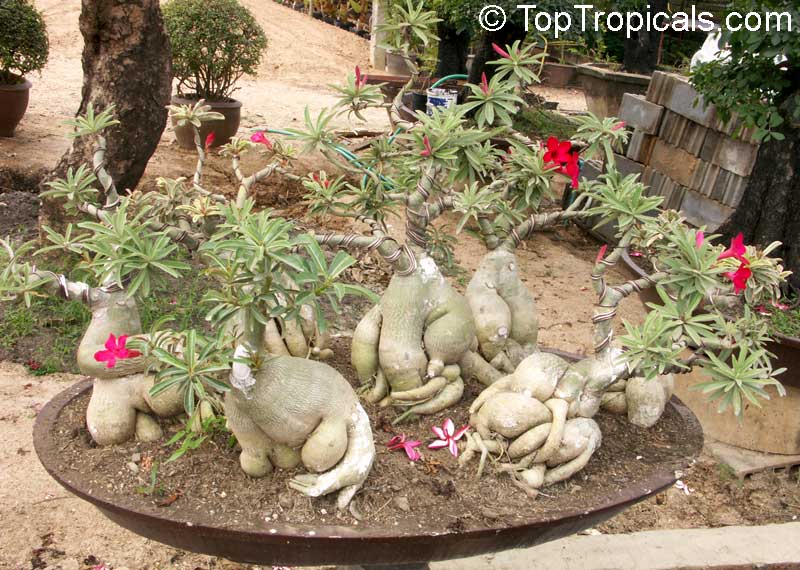
beginner, chose something easy, as well as showy. Adeniums - Desert Roses, Jasmines, Clerodendrums, Cordylines are always a good
choice. Calatheas, Gingers and
Heliconias are always showy, even when not in bloom.
Spice trees and herbs are
fun, easy to grow and one can enjoy their aroma right away
without waiting on them growing bigger. Miracle Fruit is an awesome
present, it comes with detailed instructions how to grow
the Miracle!
3) How easy the plant ships? Some plants can be
easy in cultivation, but they don't take shipping well.
After being in a dark box for a few days, most plants
usually recover well in experienced hands. When making a
present, you want something showy, not just a stick to
arrive. Besides Adeniums and Jasmines, many fruit trees
usually take shipping without a problem - such as Mango or Sapote trees. You may not
want to start with Avocado, Papaya, Carambola, or Cacao - unless they go to
an experienced grower - these may take some time and skill
to etanblish. Fig trees are super easy in
shipping, but figs may drop leaves in Winter - for this
same reason, you may think twice about deciduous plants
like Sugar Apples, Grapes, Mulberries or Persimmons to be sent as
gifts. On the other hand, if you are sending a deciduous
tree to a gardener who can appreciate the variety, this
may be a good choice - dormant plants take shipping with
less stress!
Holiday special: On the picture: Adenium Xmas Santa. A Holiday Special Desert Rose with Christmas-colored flowers - deep-red and white.
Still not sure which plant to choose? You may buy a Top Tropicals Gift Certificate