Garden Blog - Top Tropicals

Date: 16 Jun 2023

10 tips how to care of tropical garden
during hot Summer

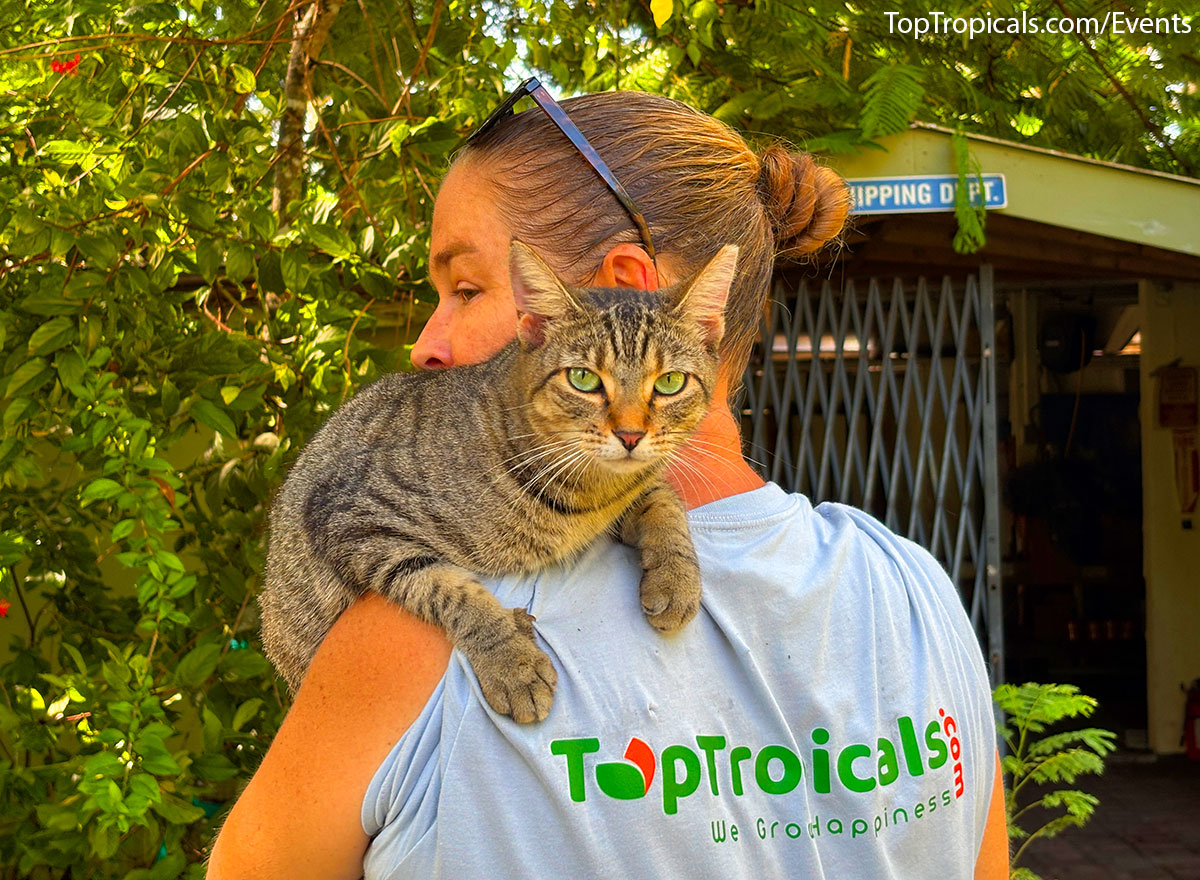
Cats  in  shade  of  tropical  plants

Q: Do you have any special recommendations how to take care of plants during hot season, to reduce heat strees?

A: Tropical plants prefer temperatures of 70-90F, except for heat-adapted desert plants. High temperatures above 90F can cause slowed metabolism and signs of stress like wilting, yellowing, and leaf drop. Hot and humid conditions attract pests and fungal diseases. To keep your plants stress-free and healthy, during Summer:

1. Monitor temperature and signs of stress.
2. Provide shade to regulate heat exposure: use shade cloth or simply a sheet of fabric as needed to protect lush foliage from burns.
3. Choose heat-tolerant plant varieties.
4. Plant in groups and levels, with trees protecting smaller shade loving plants (see companion planting).
5. Water deeply in the morning or evening to prevent evaporation.
6. Mulch to conserve moisture and regulate soil temperature.
7. Air: ensure good air circulation.
8. Trim damaged foliage and crowded branches.
9. Fertilize: use appropriate fertilization to improve plant heat tolerance. Remember, plants need lots of food during active growth period.
10. Remove weeds, pests, and diseases promptly.

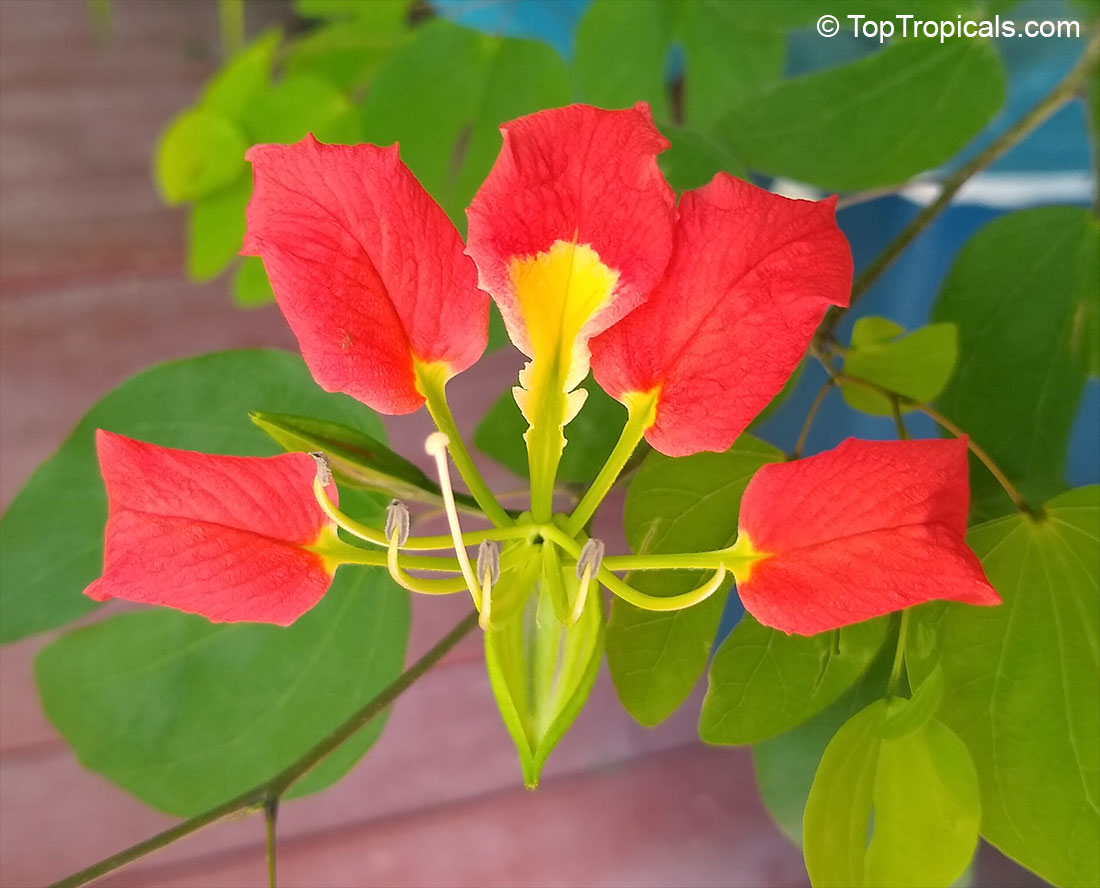
Tibouchina  multiflora  (grandifolia)  -  Glory  bush,  Quaresmeira

In the photo: Tibouchina multiflora

Date: 8 Sep 2021

Fertilizer and the Fall Garden

by Ed Jones, the Booster Guy

...Well Labor Day has come and gone. Summer is winding down and depending on where you live, thoughts are now turning to pumpkin spice, witches, fall decor and gardening. Wait, did I just say gardening? Yes, if you live in the deep south, and I do, it is time to think about fall gardening and fertilizer. Even those of you in the north can put in a few quick crops now for fall. Think onions, radishes, lettuce and other greens and of course, garlic...

Next month, we can start putting out our plants that do better in cooler weather. We will put out some beans and of course cabbage. We may do some potatoes too. What do you like to grow?
But what about fertilizer? Glad you asked. Now, most of us have our favorite brand of fertilizer. Some of us had some secret fertilzers that we used in the past. For me it was composted alpaca manure. Yes, we raised alpacas in the north, but that is another story for another day....

...Once the temperatures have begun to drop, it is better to use a good liquid fertilizer. The one I will be using this year is SUNSHINE Robusta. SUNSHINE Robusta is an organic amino acid based liquid fertilizer that is safe to use with every watering. It uses amino acids to chelate (bind) micro-nutrients and makes it easier for plants to take them up from the soil. Most fertilizers use EDTA to chelate their micro-nutrients and plants must use about 4 times more energy to break them down than they do with SUNSHINE Boosters. This means that your plants will have more energy to put into growth. And isn't that what we are after?
With Special Seasonal price for 16 oz bottle reduced to only $19 with FREE shipping, this is your best choice of organic, safe fertilizer for your vegetable garden!..

CONTINUE READING >>

Date: 28 Apr 2021

Cold hardy tropical fruit trees for Zone 9

Q: Can you suggest tropical fruit that can be grown (cold hardy) in Zone 9?

A: There are quite a few tropical/subtropical trees that will grow well in zone 9. Our favorites are: Figs - very cold hardy and drought tolerant.
Loquats - grafted trees that start fruiting right away, reliable producers.
Tropical Mulberry - very fast growing trees that can take freeze, heavy producers.
Macadamia - these trees are of a compact nature, very easy to grow and start producing nuts right away.
Many different varieties of Eugenias - tropical cherries - all-time favorites. Another tropical cherry - Malpighia, or Barbados cherry - starts fruiting in small size under one food tall! Great for containers.
Tropical (Low Chill) Peaches, Nectarines, and Plums. See full list of low-chill, relatively cold hardy fruit trees.
And of course - Bananas!

Don't forget to fertilize your fruit trees to improve their cold hardiness!

Date: 22 Mar 2021

The most rewarding hardy fruit trees

Q: Recently I started working remotely and I kinda like it, no need to commute, it saves me so much time so I can have life now! My friend got me involved into growing some small houseplants but I really want to take advantage of our Florida climate and sun. I want to plant some cool fruit trees since I have a decent size yard. But I live in Florida Panhandle and we do have some occasional freeze in winter, although not for too long. But it gets very hot in summer! Are there any tropical fruit trees that will be happy here? Or should I keep everything in pots? I am excited to have my own tropical plant collection!

A: There is a perfect plant for everyone, and a perfect tree for every climate. Many tropical and especially subtropical plants can be much hardier than they are believed to be, both flowering and fruiting trees among them. You may keep the most sensitive species in pots and bring them inside for winter, while there are so many trees that will be happy in your area. Start with these that are perfect for climates with hot summers and cool winters:

1. Peaches and Plums

Low-chill, Heat-tolerant Peaches, Nectarines, Plums are especially selected for Florida hot summers. They produce well and do not require many "chill" hours like temperate fruit trees. They only need 150 chill hours and grow well in even in Arizona, so you know they are taking the heat.

2. Figs

2) Fig trees - they are easy to grow, heat- and drought- resistant trees. They are prized for their delicious fruit, which can be one to three inches in length, violet, brown or black. There are even varieties with yellow fruit. Most fruits are borne from early summer to late fall on new growth, and the fruits generally mature very quickly. These trees are sensitive to frost only when actively growing, but can withstand 10F when dormant. Read more about Fig trees.

Date: 11 Jan 2021

Alstonia scolaris - Indian Devil Tree

A Scholar's Award with intoxicating fragrance

By Alex Butova, the Witch of Herbs and Cats

...This fascinating rare plant with white, strongly perfumed flowers is valued as a fast growing, impressive ornamental shade tree and is used to serve as an alternative to quinine...
Popularly known as Devil Tree, as plant is believed to the devil's abode - probably due to the intoxicating fragrance emitted by flowering trees, especially at night.
The tree is of great cultural significance in the intellectual circle, as traditionally its leaves were awarded to scholars and teachers during convocation ceremonies by the Visva Bharati University (can't think of a better name than Alstonia scholaris!). This tradition was started by Rabindranath Tagore...

CONTINUE READING >>