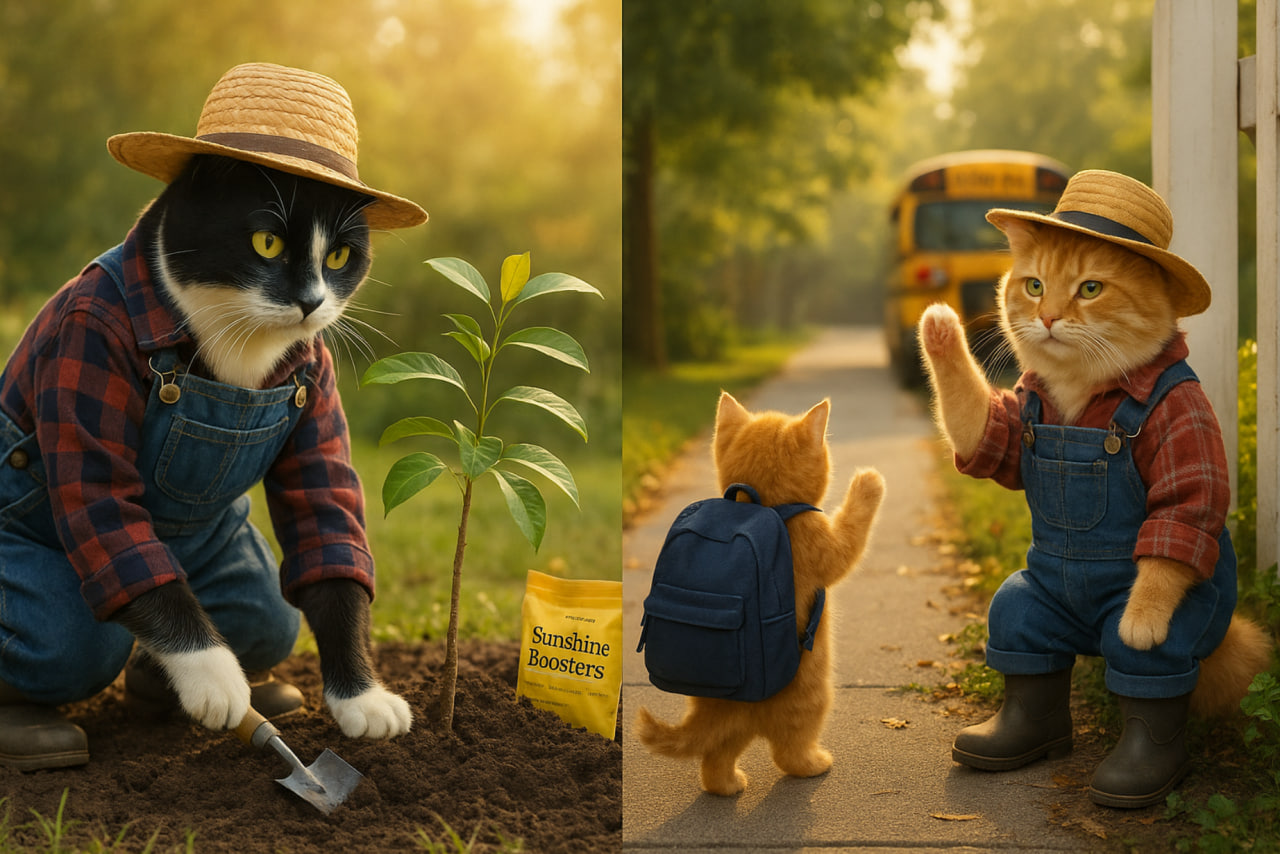
🎄 It is almost here! December 13, 2025 - Holiday Plant Market, proudly hosted by the #PeopleCats of TopTropicals. Our big end-of-season Plant Day. All year we grow the rare and unusual plants that will be featured at this event, and Saturday is the day they finally meet their new homes. The garden turns into a small holiday escape: fresh air, bright colors, music, snacks, and the PeopleCats greeting everyone like they have known you for years.
📱 Event discounts and specials valid at both locations:
Ordering plants in winter is often easier than people expect - and for
many plants, it is actually better. Lush foliage plants like philodendrons
and medinilla,
fine-leaved trees such as moringa, jacaranda,
and poinciana,
and even sensitive fruit trees like papaya, jackfruit
or starfruit
ship more safely in cool weather without
overheating stress.
Winter is also ideal for subtropical and cold-tolerant plants, dormant or
deciduous plants like plumeria and adenium, orchids - including ground
orchids and vanilla
orchids, and winter bloomers that flower their best right now. Winter
care is simple: water less, use gentle liquid amino-acid fertilizers like Sunshine
Boosters, and monitor insects.
In mild climates, many tropicals can be planted anytime, while
extra-tender plants can stay potted until spring. Winter is a
perfect time to bring tropical warmth indoors and enjoy greenery when you
need it most.
Sunshine: I'm blazing into the 2026 Year of the Horse! Call me
Mister Fahrenheit. Don't stop me now! 'Cause I'm having a good time —
I'm a shooting star, leaping through the sky like a tiger, defying
the laws of gravity! Smokey: It's jasmine, Tiger. A shrub. Not Wembley. Calm down.
💮
2026 Year of the Horse - and the Plant I Trust Most
By Tatiana Anderson, Horticulture Expert at Top
Tropicals
Every new year carries its own energy.
2026 is the Year of the Horse - a year of movement, fire, momentum, and
bold decisions. It is not a quiet year. It pushes us
forward.
When fellow gardeners ask me what to grow in a year like this, my answer
is simple:
Grow something that balances strength with grace.
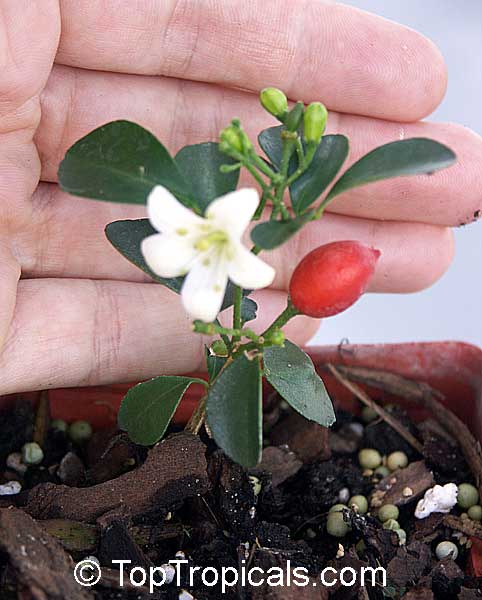
For me, that plant is Jasmine Sambac.
In many cultures, Sambac represents devotion, purity, and deep affection.
In the Philippines it is the national flower -
Sampaguita - woven into garlands for weddings and sacred ceremonies. In
Hawaii, it becomes leis - a symbol of welcome and connection -
Pikake. In India, it perfumes temples
and homes.
This is not just a fragrant shrub.
It is a plant tied to love, loyalty, and continuity.
The Horse runs forward.
Jasmine anchors the heart.
In a fiery year like 2026, I believe we need both.
And that is why I always return to Jasminum sambac.
Over the years I have grown thousands of plants, but very few have the
staying power of Jasmine Sambac.
It is not just fragrant. It is intensely, unmistakably fragrant. One open
flower can perfume an entire patio. In the evening, the scent becomes
deeper and richer.
But what makes Sambac truly special is its adaptability.
It can grow as a compact patio shrub, a flowering hedge, or a climbing
vine. It performs beautifully in containers. It tolerates both full sun and
partial shade. The more light you give it, the more flowers it rewards you
with.
And unlike many tropicals, Sambac does not bloom just once. With proper
care, it flowers in cycles throughout the warm season.
For gardeners, that combination is rare: beauty, perfume, flexibility,
and repeat bloom.
That is why it has remained one of the most wanted fragrant plants in
cultivation.
A Miracle in the Garden: Watching a Tiger Swallowtail Rebuild Itself on a Magnolia Champaka - Joy Perfume Tree
Tiger Swallowtail Butterfly
A Miracle in the Garden: Watching a Tiger Swallowtail Rebuild Itself on a Magnolia Champaka - Joy Perfume Tree 🐯
Tiger Swallowtail Metamorphosis: From Cocoon to Joy
🏼 Nature’s most mind-blowing magic trick happened right here on a branch of our Magnolia champaka - the Joy Perfume Tree. Did you know that when a caterpillar enters its chrysalis (cocoon), it literally dissolves its body and rebuilds it from scratch?
🏼 This Tiger Swallowtail chose the legendary Joy Perfume Tree as its nursery. It’s a match made in heaven—the "flying tiger" of North America born on a tree famous for the world’s most expensive perfume scent. While most people know the Champaka for its intensely fragrant flowers, few realize that even the leaves release a soft, sweet aroma when brushed against.
🏼 In this video, you’ll see the rare moment of eclosion - where the butterfly emerges with soft, wrinkled wings and begins the slow process of pumping life into them before its first flight.
🏼 It is a real gem in your garden - not just for fragrance lovers, but for wildlife that clearly loves it too.
Watch this Tiger Swallowtail butterfly being born on a Champaka - Joy Perfume tree!
Move Over, Paddy: Why March 17th is Actually the International Day of the Cat Lady
March 17th - International Day of the Cat Lady, Gertrude with cats
Move Over, Paddy: Why March 17th is Actually the "International Day of the Cat Lady" ☘️ 🐈
When you think of March 17th, you probably think of green beer, shamrocks, and parades. But while everyone else is toasted to St. Patrick, a subset of gardeners and feline enthusiasts are celebrating a different icon: St. Gertrude of Nivelles. She 's the 7th-century abbess who skipped the noble marriage proposals to become the unofficial Patron Saint of Cats, Gardeners, and anyone who really, really hates mice.
🐾 From Noblewoman to Monastery Boss
Born in 626 AD (modern-day Belgium), Gertrude wasn't your average medieval teenager. When her family tried to marry her off to a rich duke, she famously told them she’d rather be a bride of Christ than any man on Earth.
She eventually ran the Nivelles monastery like a pro, turning it into a 5-star medieval hub for travelers, scholars, and pilgrims. But it isn't her hospitality that made her an internet icon 1,300 years later - it’s her "pest control" skills.
🐾 The Mouse-Hater’s Hero
Look at any medieval painting of Gertrude, and you’ll notice something weird: mice are literally climbing up her staff. In the Middle Ages, mice weren't "cute Disney sidekicks." They were grain-destroying, plague-spreading menaces. Gertrude became the go-to saint for:
Protecting the harvest from rodents.
Keeping the pantry mouse-free.
Calming the nerves of people with a serious case of musophobia (fear of mice).
The Logic: If you’re the saint of mice, you’re naturally the BFF of the creature that eats them.
🐾 How She Became the "Cat Lady Saint"
Interestingly, Gertrude wasn't "officially" the saint of cats for most of history. That title actually went viral in the late 20th century.
A 1981 Metropolitan Museum of Art catalog highlighted her rodent-fighting reputation, and the world’s cat lovers basically said, "Hold my catnip". The association stuck instantly. Today, she’s the patron saint of the "Original Cat Lady" aesthetic, celebrated by anyone who knows that a home isn't a home without a feline supervisor.
🐾 A Big Day for Green Thumbs
If you’re a gardener, March 17th is your "Green Flag" day. In European folklore, St. Gertrude’s feast day is the traditional start of the planting season.
👉 Pro-Tip from the Middle Ages: If the sun is out on March 17th, it’s a sign that your garden will thrive all year. If it’s raining? Well, maybe stay inside and pet the cat.
🐾 The Perfect Trio: Cats, Gardens, and Gertrude
There’s a reason plant people and cat people are often the same people. Cats love a good garden patrol - they nap in the mulch, stalk the butterflies, and ensure no chipmunk dares to touch your tomatoes.
At TopTropicals, we take this tradition seriously. Our PeopleCats are more than just pets; they are the furry CEOs of the nursery, supervising every seed we plant and every leaf we prune.