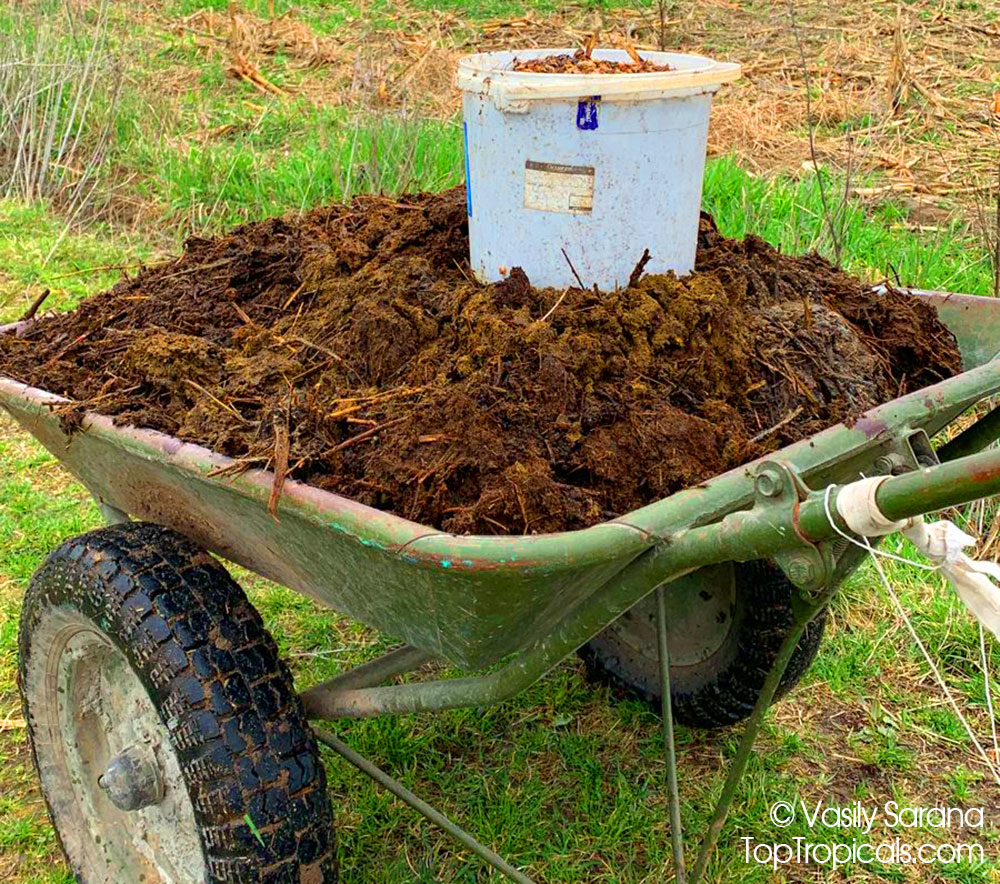
Q: I used horse manure for my veggies garden but
it caused mold and burned my plants. I've heard of Sunshine boosters as a
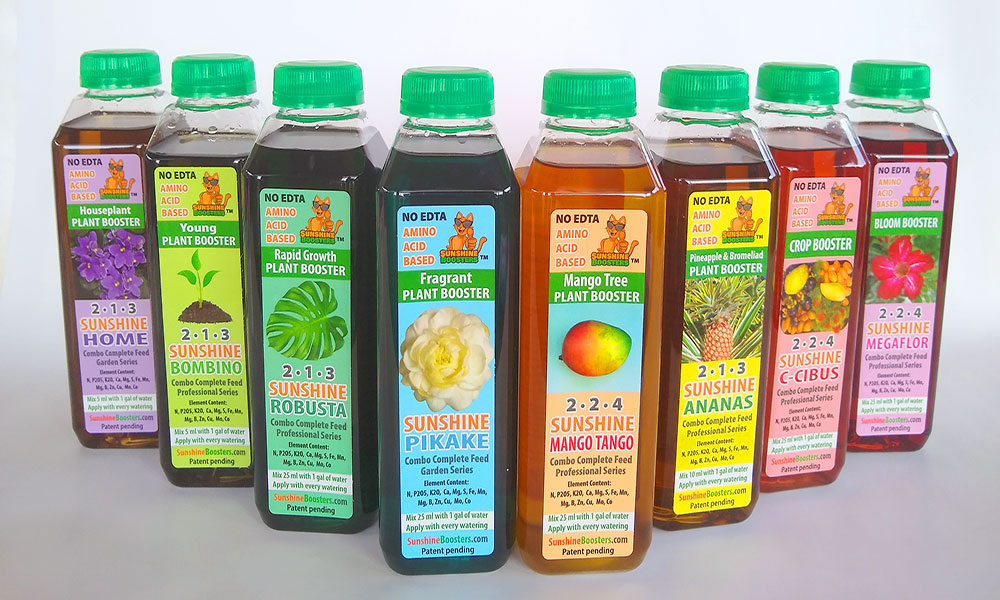
good organic alternative. What are the benefits of Sunshine Boosters
fertilizers?
A:Sunshine Boosters fertilizers can be a good choice for gardeners who
want to promote healthy plant growth, while also considering the environment.
The brand offers a wide range of formulations and high-quality ingredients to
meet the specific needs of different types of plants, making it easier for
gardeners to achieve the results they want.
Sunshine Boosters fertilizers are a good choice for several reasons:
1. Improved plant growth: Sunshine Boosters fertilizers contain
essential nutrients that plants need to grow healthy and strong, such as
nitrogen, phosphorus, and potassium. These nutrients can help improve plant growth
and increase crop yields.
2. Balanced nutrition: Sunshine Boosters fertilizers are
formulated to provide plants with a balanced ratio of nutrients. This means that the
nutrients are present in the right proportions to promote healthy growth and
development.
3. Environmentally friendly: Sunshine Boosters fertilizers are
made from natural and organic ingredients, which can be beneficial for the
environment. These fertilizers may also be safer for pets and children who may
come into contact with them.
4. High-quality ingredients: Sunshine Boosters fertilizers are
made with high-quality ingredients that are carefully selected to provide the
best possible nutrition for plants. The brand uses a variety of ingredients to
create a well-balanced fertilizer that is suitable for a range of plants.
5. Improved plant health: Sunshine Boosters fertilizers contain a
range of beneficial nutrients, such as micronutrients, amino acids, and
enzymes, which can help to improve overall plant health. This can lead to
stronger plants that are more resistant to pests and diseases.
6. Sustainable and eco-friendly: Sunshine Boosters' fertilizers
are made with natural and organic ingredients, which can be more
environmentally friendly than synthetic fertilizers.
7. Easy to use: Sunshine Boosters fertilizers are easy to use.
The brand also offers detailed instructions and resources on their website to
help gardeners use their fertilizers effectively.
Sunshine: You know, February 27 was International Polar Bear Day. I
just learned about it and got a brilliant marketing idea. Cherry of the Rio
Grande survived 25F. With wind. Real wind. That means we go north. Let them
taste this magic. I even have a donut recipe with the fruit. It’s a
bomb,
Smokey. We expand. Trust me. Finally you can afford that new watering
timer.
Smokey: Not so fast, genius. Twenty five degrees is not the North
Pole. And polar bears and penguins do not share zip codes.
Sunshine: You always pour cold water on my brilliance. Fine. Where
do we start?
Smokey: Well, first you go talk to Tatiana. She graduated from the
Geography Department. She can explain climate zones. Cherry of the Rio
Grande
can grow in North Florida, Texas, and similar climates. Let’s master
that before we conquer Arctic.
Sunshine: So… Phase One: Geography?
Smokey: Exactly.
Some stories are easier to tell with a little humor. Smokey and Sunshine
were never just mascots. They represent the two forces behind every decision
we make here: bold ideas and careful reality. One dreams big. The other
checks
the climate zone map. Together, they remind us that growing plants is part
science, part optimism, and always personal. If you have ever wondered why
they keep appearing in our newsletters, you can read their full story on the
Smokey and Sunshine page. They have been with us longer than most people
realize.
Freeze Testing of Grumichama and Cherry of Rio Grande
🍒❄️
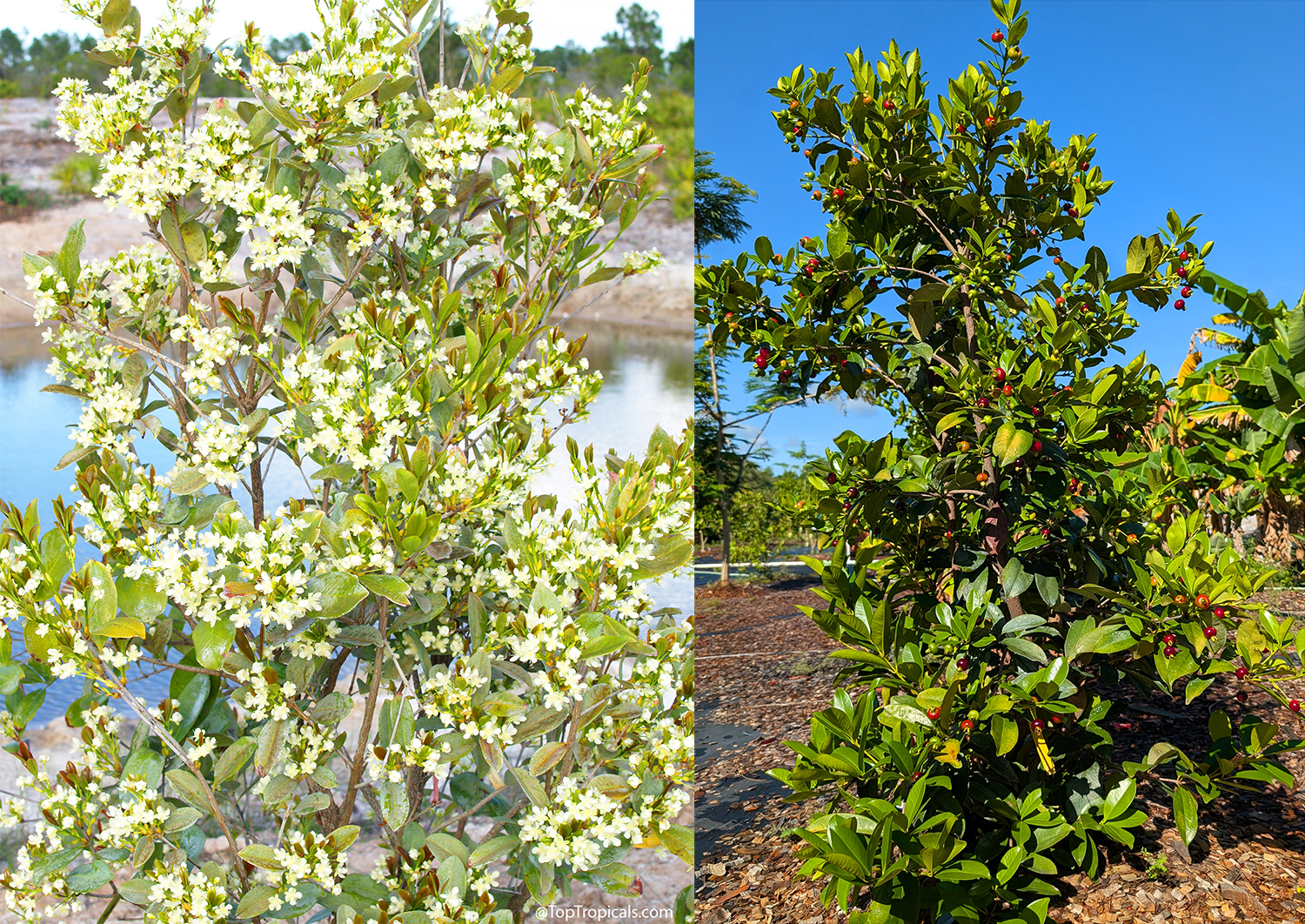
Eugenia brasiliensis - Grumichama tree flowering and fruiting
When temperatures dropped to 25F, with wind chill near 14F, winter made
it clear which tropical trees were truly resilient. Some plants burned back.
Tender growth collapsed. But our established Eugenia cherries stood
steady. Leaves held. Branches stayed flexible. The canopy remained intact.
Cherry of the Rio Grande (Eugenia aggregata) and Grumichama (Eugenia brasiliensis) are among the most cold-hardy tropical
cherries for Southern gardens. Both are native to Brazil and thrive in USDA
Zones 9b–11, and even protected 9a sites.
Cherry of the Rio Grande Plant Facts
Botanical name: Eugenia involucrata, Eugenia aggregata Also known as: Cherry of the Rio Grande, Cere Jodo Rio Grande
USDA Zone: 9 - 11
Highligths
Grumichama Plant Facts
Botanical name: Eugenia brasiliensis, Eugenia dombeyi Also known as: Grumichama, Brazilian Cherry
USDA Zone: 9 - 11
Highligths
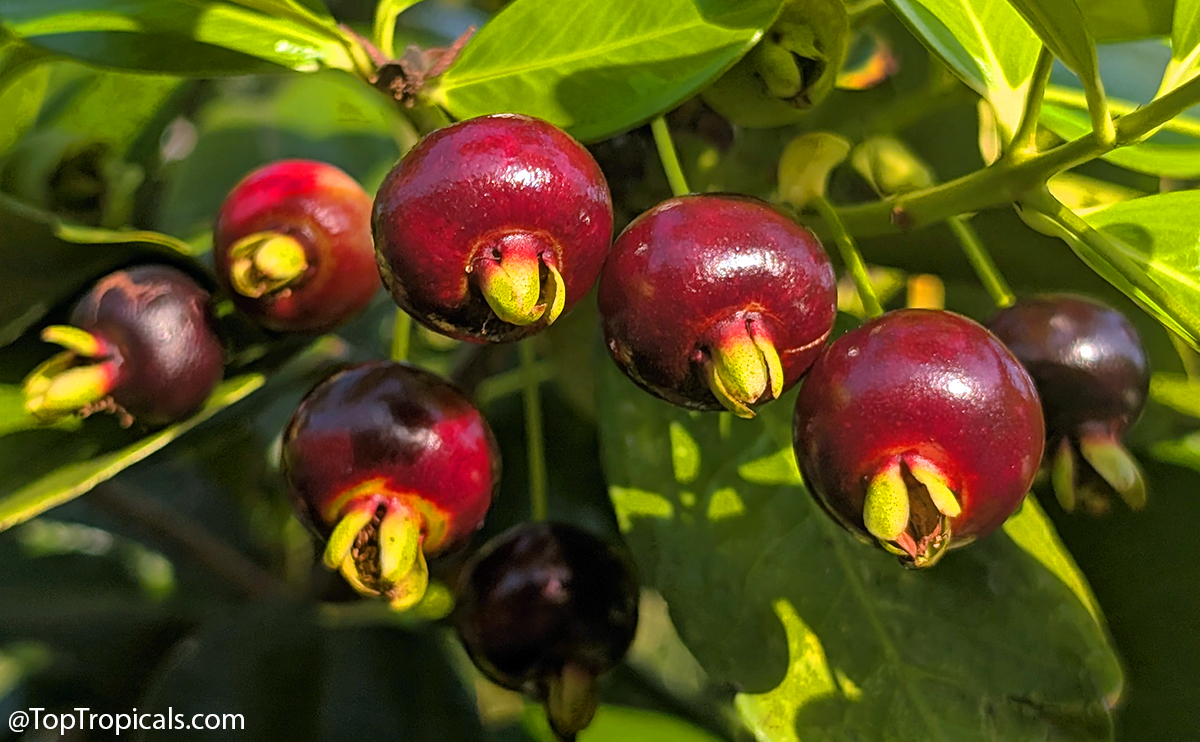
Cherry of the Rio Grande produces dark ruby fruit that ripens
almost black, with a rich, full cherry flavor. It flowers early in spring
and
can fruit well into summer. Mature trees can tolerate brief drops into the
low
20s once established. Trees typically grow 8 to 15 feet tall, remain
naturally compact, and often begin fruiting within 2 to 3 years.
Grumichama is an evergreen tree known for both beauty and
productivity. In spring, it covers itself in white starburst flowers that
attract
pollinators. Within about four weeks, glossy purple-black fruit develops.
Established trees tolerate temperatures into the upper 20s and grow well in
the
ground or in 5–10 gallon containers. Mature trees can produce hundreds
of
fruits per season.
Across the Eugenia group, strengths are consistent: early
bearing, compact growth, heat tolerance, light freeze endurance, and low
pest
pressure. They are adaptable to different soils, need modest water once
established, and perform in full sun or partial shade. Birds enjoy the
fruit, but there
is usually plenty to share.
Nutritionally, Eugenia cherries provide Vitamin C, fiber,
antioxidants, and notable Vitamin A that supports eye health. They offer
sweetness
with real dietary value.
In the kitchen, they are simple and rewarding. Cherry of the Rio Grande
makes an easy
compote. Simmer the fruit with a small amount of water until soft, mash
lightly, and spoon over pancakes or warm bread. Grumichama turns into a deep
red
jam with sugar and lime, or can be blended into a bright spoon drizzle over
vanilla ice cream.
Even when not fruiting, both trees remain attractive year-round with
glossy evergreen foliage and clean structure. They fit well into edible
landscapes, small yards, and container gardens.
Winter will return. The difference lies in planting fruit trees that can
handle heat, humidity, and the occasional cold snap. If you are building a
food forest for lasting harvests, cold-hardy tropical cherries like Cherry
of
the Rio Grande and Grumichama deserve a place in your garden.
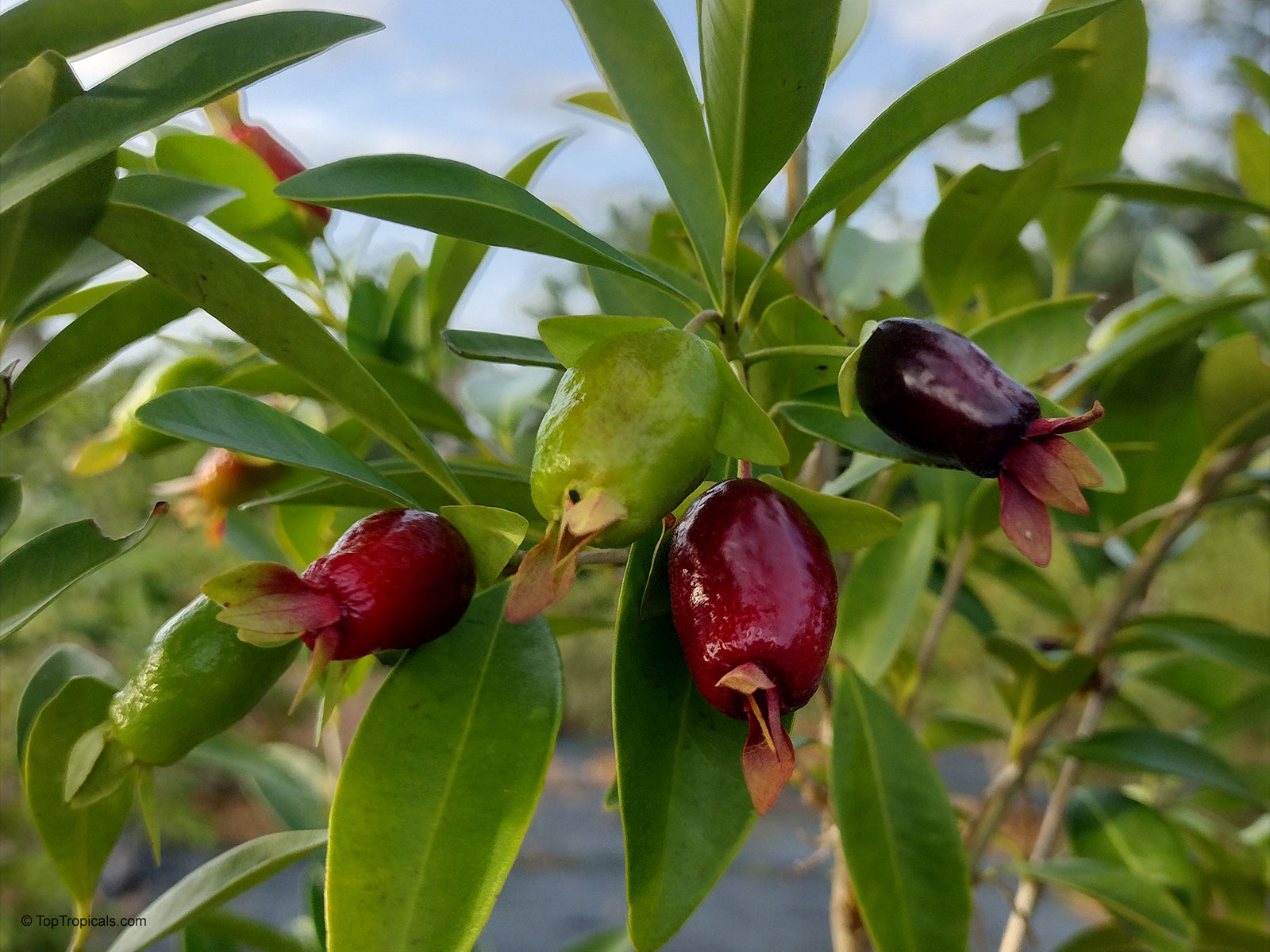
Ripe Grumichama (Eugenia brasiliensis) fruits developing on the
tree, turning deep red to nearly black when fully mature.
Eugenia aggregata (cv. Calycina), Cherry of the Rio Grande
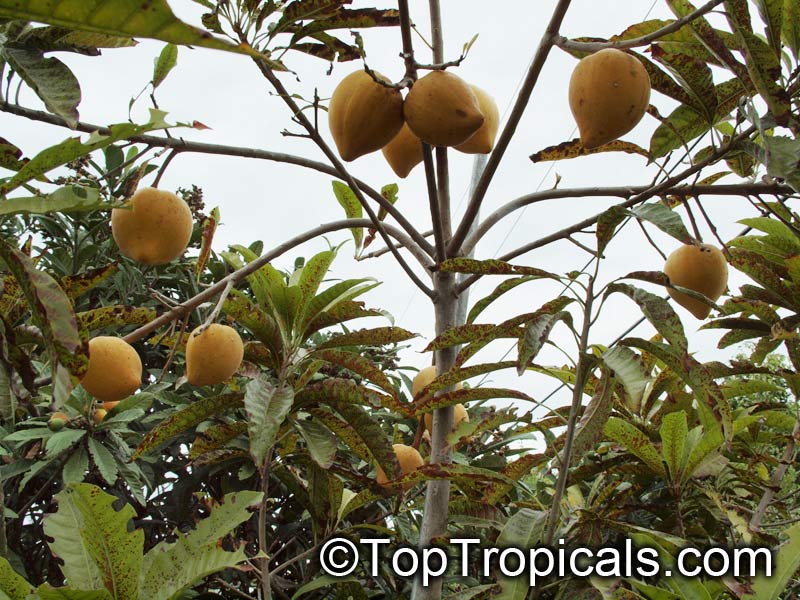
How to get Canistel tree to produce
without dropping flowers and fruit
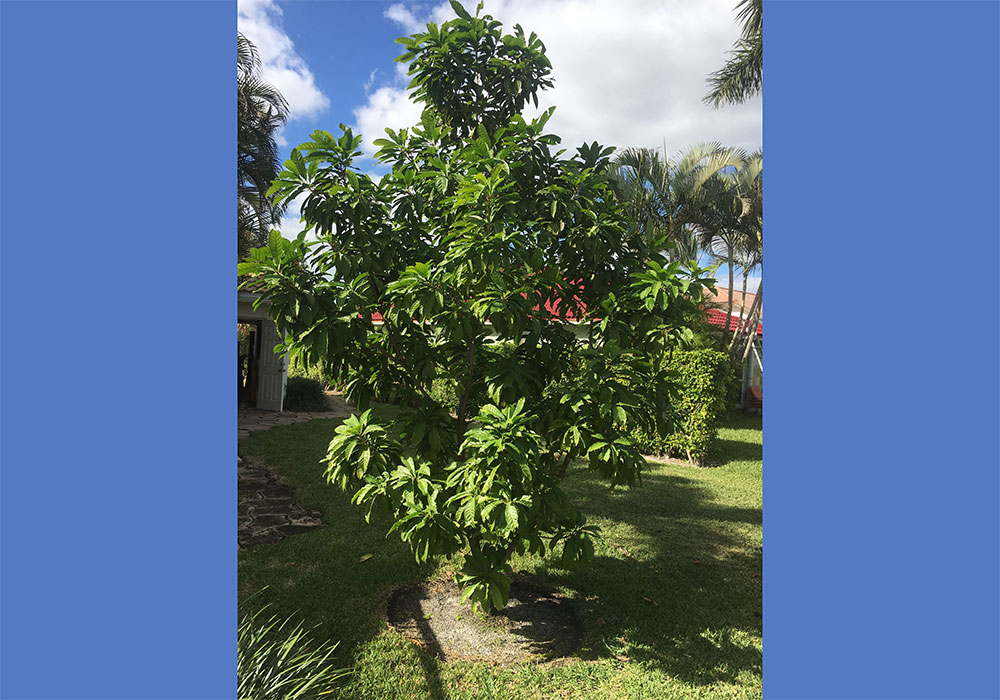
Q: My Canistel tree is 3 1/2 years old and is growing very well, see the
picture below. It gets hundreds of pea sized "berries" but then they fall off. No
canistel fruit. What's wrong?
A: You have such a nice looking tree, it is a shame you can't get
any fruit to ripen.
In our experience, Pouteria trees dropping fruit prematurely is a very common problem.
There may be one of the following reasons, or a combination of them:
- Cold winters may affect production, and while Canistel is generally
pretty hardy tropical plant that can easily withstand short periods of chill, the
fruit may never form properly if it had a cold winter.
- Lack of water. Canistel tree is pretty drought tolerant, but for the
proper production cycle it needs regular irrigation. Especially during hot
summer.
- The tree may be not strong enough; young trees drop fruit very often when
they don't have enough "fruiting energy" built up in their system.
Your tree looks well established and vigorous, however, flower/fruit drop
is often a sign of insufficient nutrients of particular kind, usually Boron
(B) and/or Molybdenum (Mo): either when a tree is too young and not strong
enough, or because of poor soils and lack of necessary elements.
Here is what can be done, considering you live in a warm, frost-free
climate.
1. Provide regular fertilizing program. We recommend liquid
fertilizers Sunshine Boosters that are safe to use with every watering and year
around. It is beneficial to switch plants from traditional "slow-release"
fertilizer to the liquid one because it makes a huge difference in plant growth
and flower/fruit quality and quantity. See also:
- Why liquid fertilizers are better than dry
- Article about benefits of liquid fertilizers.
2. Apply micro-element remedies that are very effective for
improving fruit production, especially when flower or fruit drop occurs:
SUNSHINE Honey - promotes more efficient blossoming and pollination, makes
flowers bigger and reduces bud drop. SUNSHINE SuperFood - improves plant vigor and quality and size of
flowers
These are all natural, eco-friendly supplements that work great for fruit
trees and other edibles.
Date: 16 Dec 2021
Why should you use SunshineBoosters?
by Ed Jones, the Booster guy
...You have heard it before, but I will tell you again. Sunshine
Boosters are safe to use with every watering. It means that you can use Sunshine
Boosters amino acid based fertilizers whenever you water your plants, even in
the winter. Why is that so important?..
...We normally stop using dry, timed release, fertilizers around the
first of November and not resume using them until the first part of March. This
is true in many areas of the deep south where the ground stays above freezing
year round...
However, it is safe to use Sunshine Boosters during these cooler
months... Temperature does not play a role in the absorption of nutrients when using
Sunshine Boosters...
Helping Citrus and other fruit trees with Nutritional
Supplements
Q: Can you recommended a product to help with my citrus?
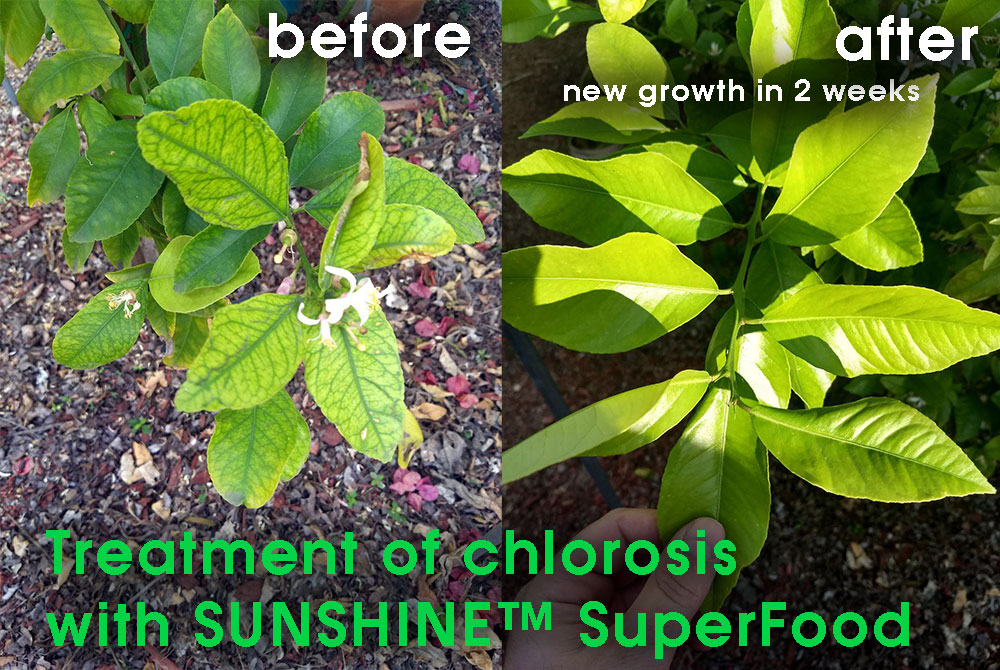
Combating greening and chlorosis.
A: Citrus greening is spread by an insect called the Asian citrus
psyllid. The psyllid feeds on the stems and leaves of the trees, infecting
the trees with the bacteria that causes citrus greening. Florida Citrus
growers dedicated the last decade to researching citrus greening. Officially,
currently there is still no cure, however, some Nutritional solutions have shown
promising results. To slow the progression of citrus greening in infected
trees, nutrients are applied to the leaves and to the roots. Providing better
nutrition helps trees fight against citrus greening and enables them to continue
to produce quality fruit.
We recommend the following products for use on regular basis:
SUNSHINE Epi is a natural Brassinosteroid plant hormone and a
bio-stimulant that may be very effective as citrus greening treatment. It works
through plant's immune system and shows amazing results of recovery of weak and
sick plants.
SUNSHINE Superfood, a complex micro-element supplement, maintains
plant's health and provides vigorous growth.
SUNSHINE-Honey is a basic nutritional complement, it contains essential
plant micronutrients Boron (B) and Molybdenum (Mo). These elements are essential
to vegetative and reproductive growth, cell expansion, tissue growth, and
fertility. A very common problem for most unimproved garden soils is lack of
Molybdenum and Boron as soil micro-component. This results in underdeveloped /
low quality fruit and/or premature fruit drop. Applying SUNSHINE Honey on your
fruit trees will fill that gap and help a fruit tree to form a healthy
fruit.
Macro-nutrients should be applied in combination with micro-nutrients on
regular basis:
Mango-Food - Smart Release Fruit Tree Booster (works great for all
tropical fruit trees)
Fruit Festival Plant Food - Ideal blend designed to improve fruit trees
health and vigor, and increase crop yield.