Garden Blog - Top Tropicals

Date: 30 Aug 2020

Healthy Plant Food

Q&A from Mr Booster

How to make Mango tree fruit
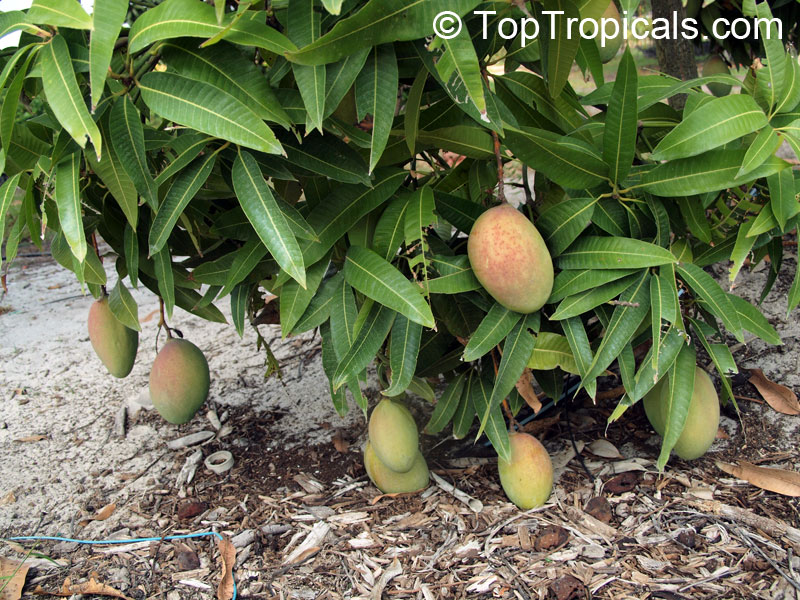
Q: Hello, I have a five-year-old Lemon Meringue tree that has only given me fruit one year. It put out about 50 mangoes and has done nothing for the past three years. Do you recommend any vitamins or any of the nutrients that you guys sell to help with this for next season?

A: We've had very similar problem with our Nam Doc Mai Mango tree, fruited once and no more next year. Usually the reason is nutrients deficiency, here in Florida we have poor soils. We applied Mango-Tango tree booster and it started flowering within a couple of weeks.
Generally, Mango flowering season is over by now, however, we recommend to feed the tree starting now, during active growth season. This way it will get better established before winter and also will store away all elements necessary for triggering flowering and fruiting. So by late Fall through Winter it will be ready to flower.
Along with the fertilizer, additional micro-element supplements will be beneficial. For improving fruit quality and increasing number of flowers, we also recommend to use SUNSHINE-Honey - sugar booster
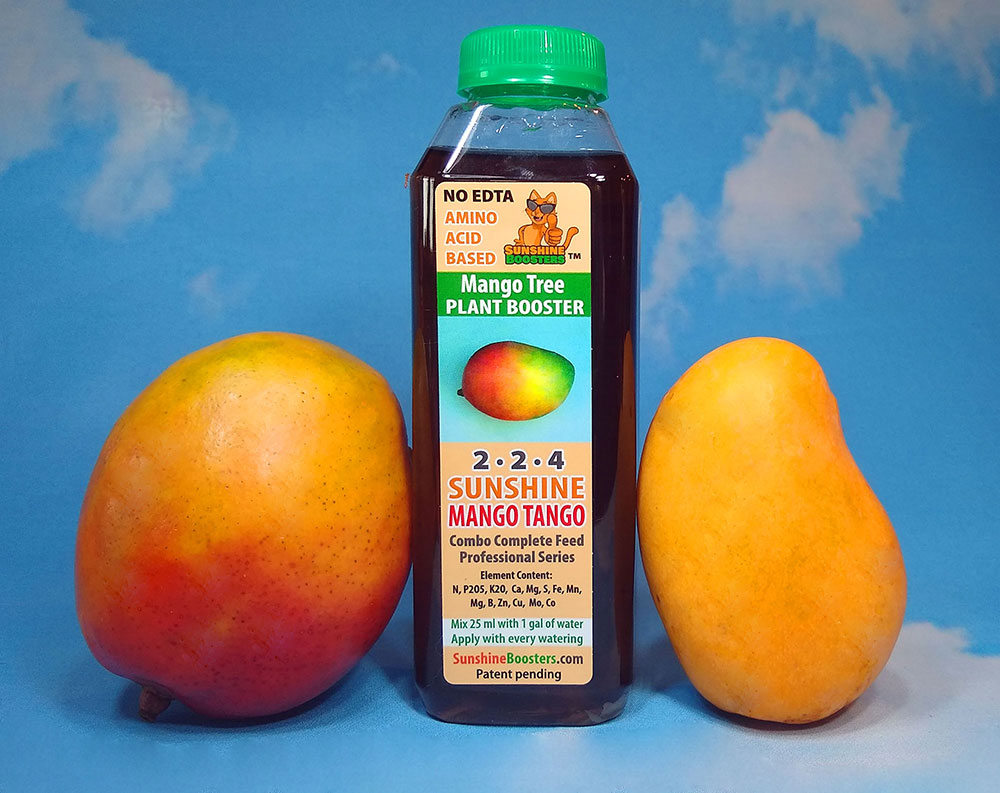
SUNSHINE Mango Tango - Mango Tree Booster, for healthy mango trees and profuse fruit production.
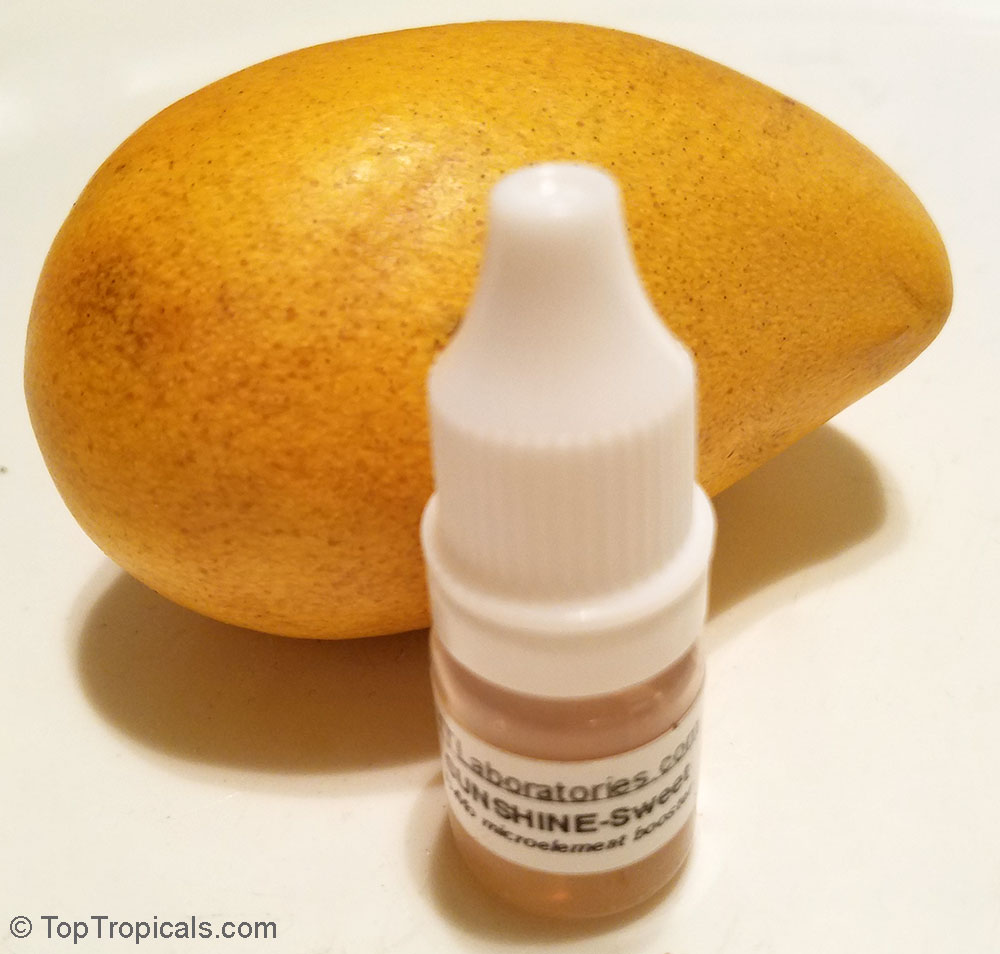
SUNSHINE Honey - a natural supplements that makes fruit sweeter, and increases fruit quantity and quality.

Date: 23 Sep 2020

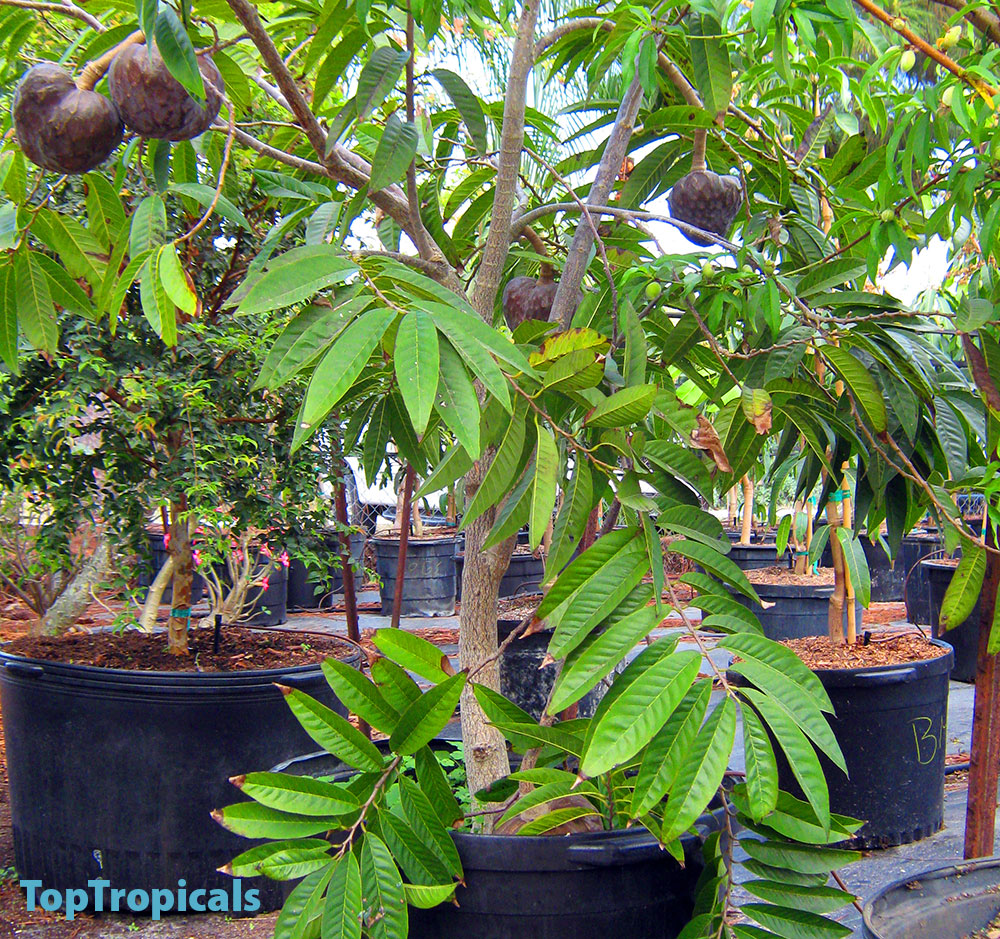
Fast-fruiting trees?

Photo above: Annona reticulata - Red Custard Apple

Q: More of a question than a review, but a review regarding your catalog, it would be easier for us buyers, if we could search for plants that produce fruit in 2 years or less, I don't have the patience to wait longer than that for fruit. I'm trying to buy for a fairly good sized garden but want some fast growers and fruit produced in 2 yrs. Can you help me out?

A: Fruiting time depends on many factors (established size, growing conditions, fertilizing, and even specific variety), this is why we can not just put a simple icon "will fruit within 2 years".
However, most grafted and air-layered fruit trees, including all Mango, Avocado, Loquat, Sapote, Sapodilla, Lychee/Longan, Peaches and Nectarines - will fruit right away. If you see in our store "grafted" or "air-layered" in plant description - these trees will fruit soon. Some of them already flowering and fruiting.
Some non-grafted trees or seedlings like Annona, Artocarpus (Jackfruit), Eugenia, Guava, Banana, Dragon fruit, Mulberry, Blackberry/Raspberry - will fruit within 3-4 years from seed or even sooner (Banana, Mulberry, Dragon fruit, Blackberry-Raspberry - within a year). Usually it says in description that this plant can produce fruit soon.
Bigger size plants are more established and have more energy to produce, so try to get larger size plants if your budget permits, and especially if you can pick up bigger plants rather than shipping them - obviously, shipping has size limitations.
In addition, all spice trees like Bay Leaf, Bay Rum, Allspice and many more - they will produce spice for you right away, so you don't need to wait at all!
If you have questions about fruiting time on any specific plant you put your eye on, don't hesitate to ask!

Photo above: Pimenta dioica - Allspice

Date: 24 Jun 2018

TopTropicals

URBAN TROPICAL GARDENING:
10 secrets of successful Container Mango growing on a balcony.

Q: I live in Miami in apartment on a second floor, and I have a balcony with SE exposure. I wonder if I can grow a mango tree in a pot? Will it fruit for me? I recently moved to South Florida and I don't know much about tropical plants; but I tasted real fiberless mangos from someone's garden - it was so delicious and different from those in the grocery store. I wonder if I can have a fruiting tree on my balcony? And if yes, how do I plant and take care of it?

A: Yes, you can! Here is what you need to do:
1) Temperature. You are lucky to live in Tropics, keep it on a balcony year round.
2) Light. Position the pot in a spot with the most sun exposure. Mango trees can take filtered light too, but the less sun, the less fruit you will get.
3) Soil and Container. Use only well drained potting mix. Step up the purchased plant into next size container (3 gal into 7 gal, 7 gal into 15 gal). When transplanting, make sure to keep growth point (where roots meet the trunk) just at the top of the soil. Covering base of the trunk with soil may kill the plant.
4) Water. Water daily during hot season, but only if top of soil gets dry. If it still moist, skip that day. Mangoes (unlike Avocados!) prefer to stay on a dry side.
5) Fertilizer. Use balanced fertilizer once a month, 1 tsp per 1 gal of soil. Do not fertilize during fruiting - this may cause fruit cracks.
6) Microelements. Apply SUNSHINE-Superfood once a month. This will help your mango healthy, vigorous, and resistant to diseases. Use SUNSHINE-Honey to make your fruit sweeter.
7) Insect control. Watch for scales and mealybugs, clean with solution of soapy water + vegetable oil (may need to repeat 2-3 times with 10 days interval), or with systemic insecticide like imidacloprid only as needed (if non-harsh treatment didn't help). Most Flea shampoo for dogs contain that chemical, you may try that shampoo solution.
8) Trimming. Once potted, do not remove leaves that are discolored or have spots until new growth appears. Dark dots on mango leaves, especially in humid climate like Florida, may be signs of fungus. Treat with fungicide according to label, and remove only badly damaged leaves. Trim crown as needed after flowering and fruiting (by Fall). Train into a small tree, and you may remove some lower branches eventually.
9) Flower and fruit. Mangoes are winter bloomers with bunches of tiny flowers coming in thousands. Many of them set fruit (if pollinating insects present). Keep in mind that young trees can only bare a few fruit. Normally a tree will drop excessive fruit and keep only a few that it can manage. To save the young tree some energy, remove fruit if too many and leave only 2-3 for the first year. It will pay you next year with more abundant crop.
10) Variety. Last but not least: Choose the right variety for container culture! Pick from "condo" dwarf varieties such as Icecream, Nam Doc Mai, Carrie, Cogshall, Julie, Fairchild, Pickering, Graham, Mallika, and a few others - check out Mango Chart pdf and full list of our Mango varieties.

Date: 23 Dec 2023

Butterfly Bush: Fast, Pretty, Low Maintenance...

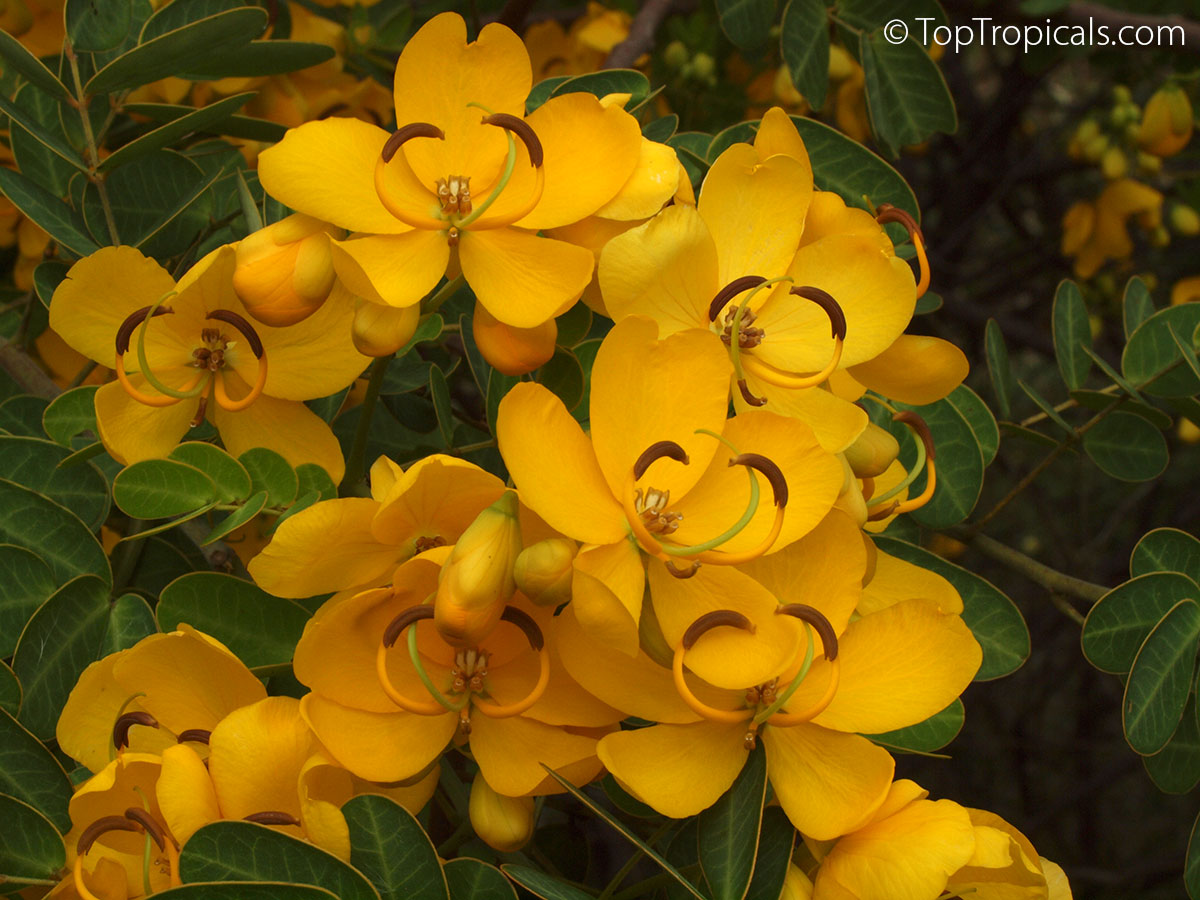
Cassia  (Senna)  bicapsularis  -  Butterfly  Bush

Five unbeatable reasons to plant Butterfly Cassia

Q: I am trying to find some easy flowering shrub to screen the ugly corner of my neighbor's yard, can you suggest something fast growing and pretty?

A: One of our favorite flowering shrubs in Florida is the Cassia bicapsularis, commonly known as Scrambled Egg Bush or Butterfly Bush. It is one of the most desirable plants for the southern landscape. It has all the benefits any gardener may dream of, whether a beginner or an expert:

1. Very fast growing, can screen unwanted views and create a beautiful flowering hedge. Cassia bicapsularis is known for its rapid growth, making it an excellent choice for quickly transforming an unsightly corner into a vibrant and lush area. Its dense foliage and attractive yellow blooms add both beauty and privacy to your outdoor space.

2. Easy to grow, not fussy about soil or water, drought and flood tolerant, cold tolerant. Butterfly Bush is incredibly adaptable and resilient. It thrives in a variety of soil types, is not demanding when it comes to water, and can withstand both drought and occasional flooding. Additionally, it is cold tolerant and can withstand occasional frosts once established.

3. Blooms for many months, featuring especially in winter flowers from Fall to spring. Very pretty, large "sunny" flowers resembling bright yellow butterflies, hence the name. It is a generous bloomer, gracing your garden with vibrant yellow flowers for an extended period, particularly from fall to spring. The large, sunny blooms not only add visual appeal but also attract pollinators, enhancing the ecological balance of your garden.

4. Attracts lots of butterflies. As the common name suggests, the Butterfly Bush is a magnet for butterflies. If you enjoy the presence of these beautiful winged creatures in your garden, planting Cassia bicapsularis is an excellent way to encourage and support butterfly populations.

5. Low maintenance. Butterfly Bush can be trimmed and controlled at the desired shape if needed, but if you have room for a big bush in a full sun area - just let it go and it will form a nice dense bush without any pruning: this shrub is a low-maintenance delight. While it can be pruned and shaped according to your preferences, it also flourishes when left to grow naturally. Its ability to form a dense and attractive bush without constant pruning makes it an ideal choice for those seeking a fuss-free gardening experience.

If you're looking for a fast-growing, low-maintenance, and aesthetically pleasing solution to screen an unsightly corner, Cassia bicapsularis is an unbeatable choice. It ticks all the boxes for a beautiful and resilient flowering shrub in the southern landscape.

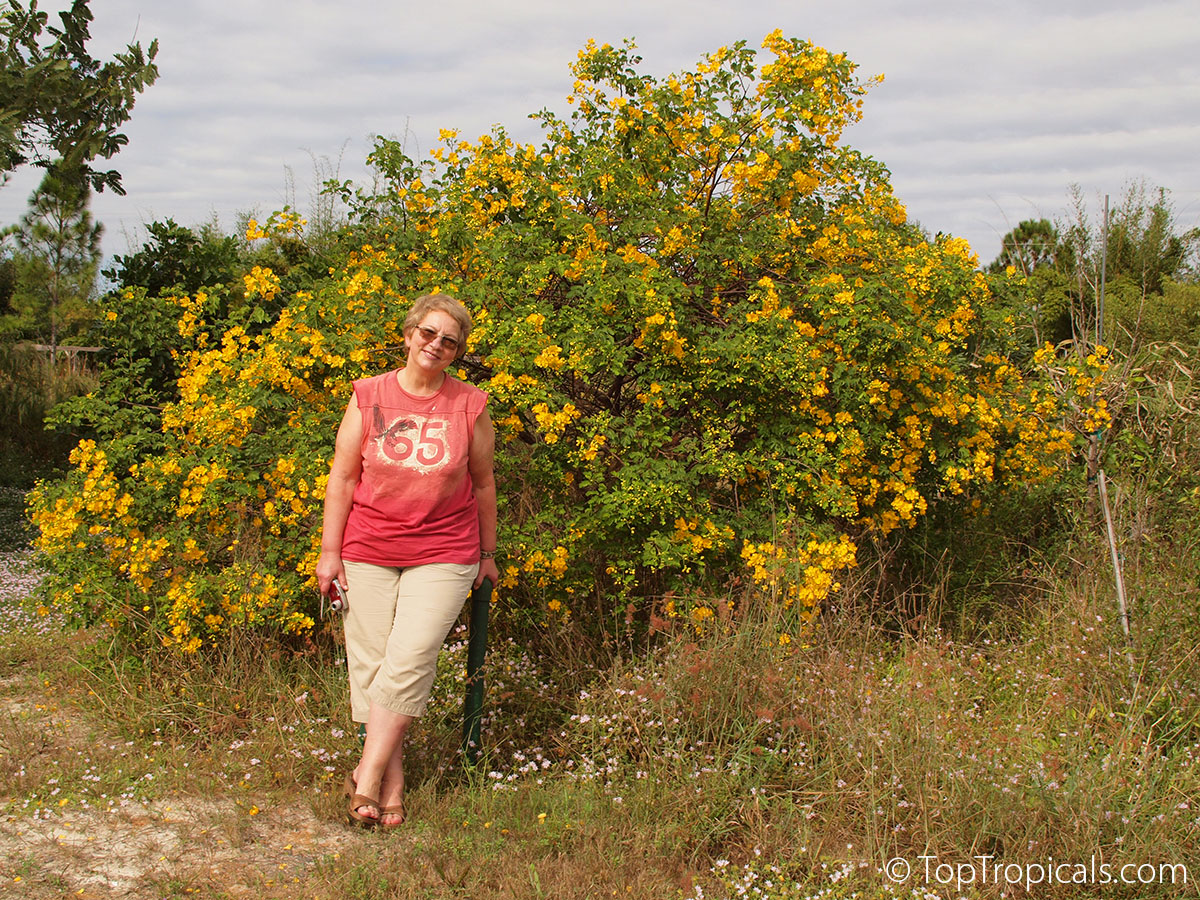
A  lady  standing  next  to  Cassia  (Senna)  bicapsularis  -  Butterfly  Bush

"...Without a doubt, Butterfly Cassia became one of my favorite plants during my visit to Florida for Christmas a few years ago. I only wish I could have taken it back home with me to Latvia. If only my windowsill hadn't already reached its greenhouse capacity!.." - Alex Butova.

To see more options for flowering shrubs, check out the reference chart Hedges with Benefits Chart.

Date: 9 Jul 2019

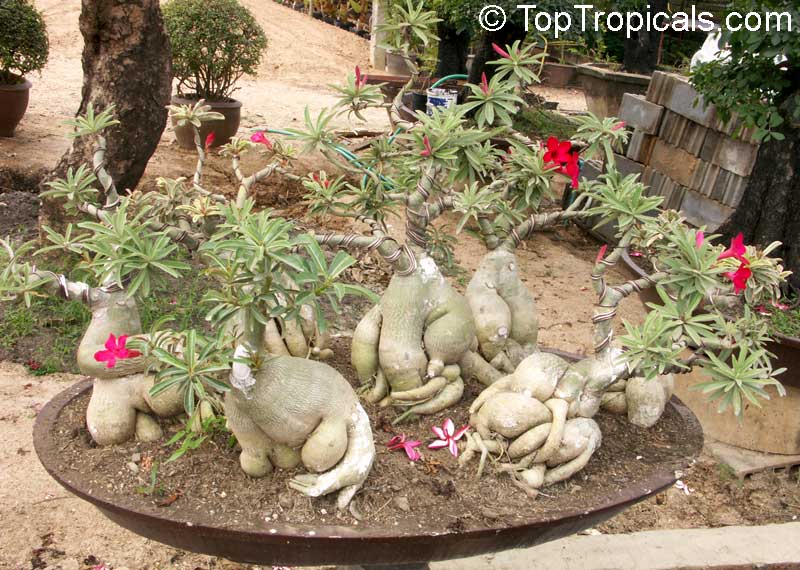
Growing desert roses

Q: I purchased a Desert Rose and planted it in Adenium mix. I keep it in full sun with once a week watering assuming this is a desert plant that likes lots of sun. Some leaves turned yellow and now I am not sure should I move it into shade or need to water more? Or maybe fertilize with something?

A: Desert Rose - Adenium, unlike cacti and other succulents, prefers filtered light. It can grow in full sun but leaves look healthier in light shade. Watering must be very moderate, however don't let soil harden like a rock: water again right after the soil gets dry. We suggest to use special Adenium Mix. Cactus mix may work well, as well as regular potting mix, in which case it is recommended to add a bit of limestone (we simply put sea shells on top of the pot - it looks very pretty!) - because adeniums prefer slightly alkaline soil (while most of tropical plants like acidic soils). If leaves turn yellow, this may be a sign of underwatering. Use water soluable fertilizer with high phosphate as foliage spray, and only on healthy plants, according to label dosage. It helps both caudex growth and flowering. Make sure to avoid fertilizer contact with a caudex.

RECOMMENDED SUPPLIES:
Adenium Plant Food - Flower and Caudex Booster
SUNSHINE-BC - Caudex booster
Adenium Soilless Mix

Read more about growing Adeniums:
What you need for successful growing Adeniums
Growing Exotic Adeniums