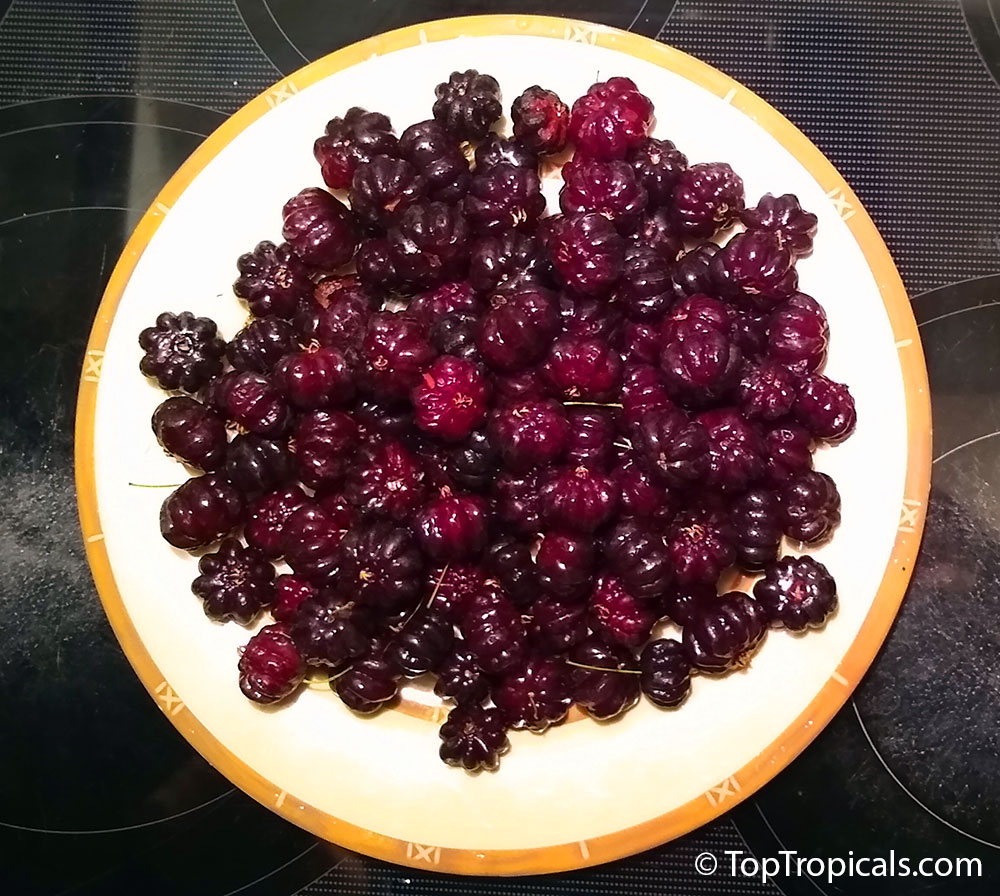
The Lolita is a special form of Surinam cherry. Fruits ripen nearly black, turning sweet and rich without the resinous bite of the common red type. The taste is often compared to a mix of grape and cherry with a tropical twist.
Fruit Season: Mainly spring into early summer, often with a smaller second crop in fall
Plant Size: Usually 6–8 ft in the ground, 4–5 ft in containers
Container Friendly: Thrives in larger pots, stays compact with pruning
Pollination: Self-fruiting — no partner tree needed
Health Benefits
High vitamin C content for immunity and skin health
Antioxidants that help reduce inflammation
Fiber to support digestion
A versatile kitchen fruit — eaten fresh, made into jams, sauces, or desserts
Eugenias have earned a spot in many Southern gardens because they’re
easy, dependable, and surprisingly versatile. These small trees and shrubs
grow well in the ground or in containers, and they don’t waste time
before setting fruit.
15% Off
Eugenias – Limited Time
Use code EUGENIA15 at checkout.
Excluding S/H. Offer expires 08/28/2025
👍 Popular
Choices:
What Makes Eugenia Cherries
Stand Out
Start producing fruit in just a couple of years
Compact size — easy to keep 6–12 ft tall, smaller in
pots
Low-care — tolerant of most soils and resistant to common
pests
Strong in hot weather, yet can handle a light frost down to the mid-20s
°F
Plenty of fruit for people and birds alike
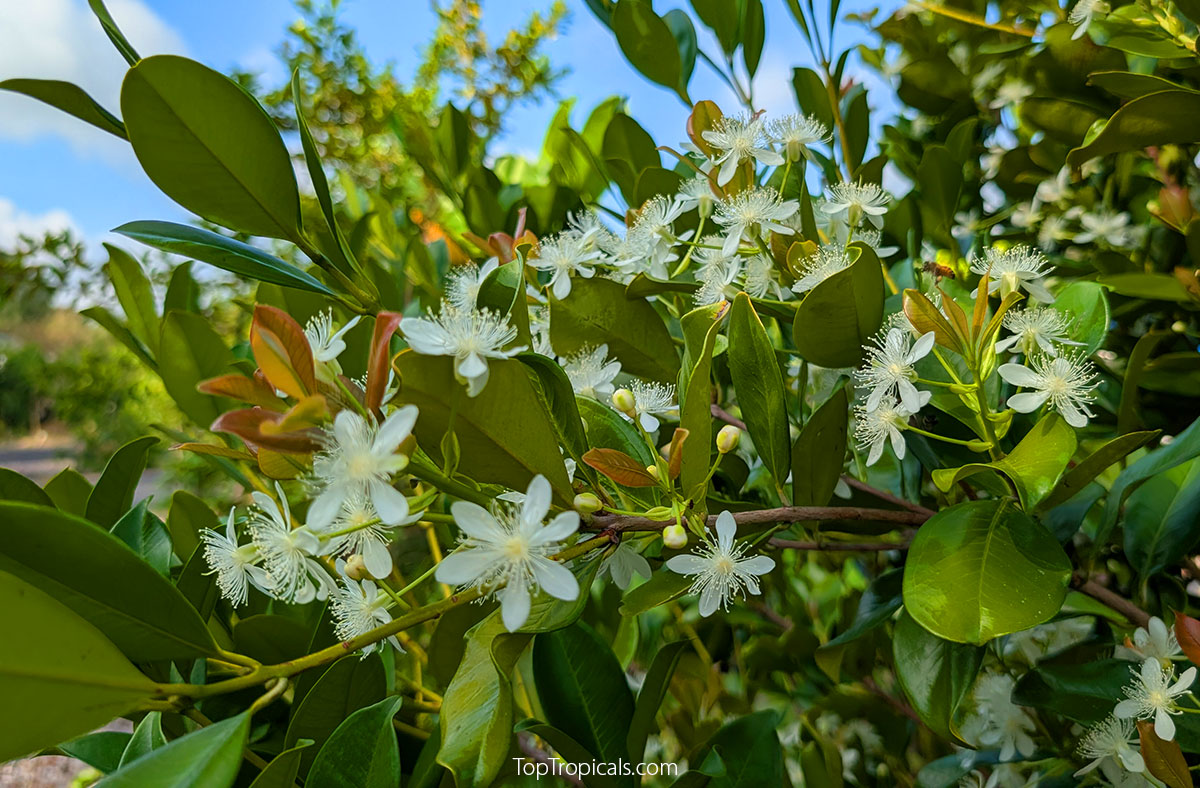
Grumichama Tree in Bloom – Eugenia brasiliensis
Growing & Care
Outdoors
Best in USDA Zones 9–11
Sun or partial shade; more sun usually means sweeter fruit
Plant in well-drained soil; avoid heavy, wet spots
Withstands summer heat and humidity, and can take a light freeze
Container / Indoor
Do well in 5–10 gallon pots on patios or balconies
Need bright light indoors — a sunny window or grow lights
Can flower and fruit in containers if kept warm and well lit
In cooler zones, bring plants indoors for winter and back out in
spring
General Care
Water: Keep soil evenly moist; drought-tolerant once established but
best yields with regular watering
Soil: Use good potting mix - LINK TO SOIL
Fertilizer: Balanced slow-release LINKL TO FERTILIZER Sunshine
Boosters
Pruning: Light trimming keeps plants bushy and productive
Pollination: Self-fertile; one plant will fruit on its own
One bite, your whole day of vitamin C: Barbados Cherry that outdoes oranges!
Malpighia glabra - Barbados Cherry, Acerola
🍒 One bite, your whole day of vitamin C: Barbados Cherry that outdoes oranges!
🍒 Malpighia glabra - Barbados Cherry, or Acerola has 65 times more vitamin C than an orange! Just a single berry-sized fruit can provide your entire daily vitamin C needs, along with vitamins A, B1, B2, B3, carotenoids, and bioflavonoids. In short, this little cherry is one of the most powerful antioxidant fruits in the world.
🍒 But it isn’t just about nutrition. Barbados Cherry is a compact, fast-growing shrub or small tree that starts fruiting young, often within its first year. It produces crops several times a year, and the bright red cherries are as beautiful as they are useful. The fruit is tangy-sweet and makes excellent juices, smoothies, jams, and jellies. It also freezes well without losing its vitamin content.
🍒 Gardeners love this plant not only for its fruit but also for how easy it is to grow. Unlike many tropicals, it tolerates alkaline soils, is drought-resistant once established, and can handle light freezes. That makes it a surprisingly tough choice for a tropical fruit tree. Birds enjoy the fruit too, so planting one is also a gift to your local wildlife.
🍒 It's also a beauty in the garden, covered in pretty pink flowers and bright red fruit, often both at the same time.
🍒 If you are short on space, the dwarf variety Nana is a perfect choice. With tiny leaves, compact growth, and smaller fruit, it works well in containers, borders, or even as a bonsai. It's both ornamental and productive.
🍒 Whether you want a reliable vitamin boost, a wildlife-friendly garden addition, or just a cheerful little tree with bright red fruit, Barbados Cherry has you covered.
 Growing & Care