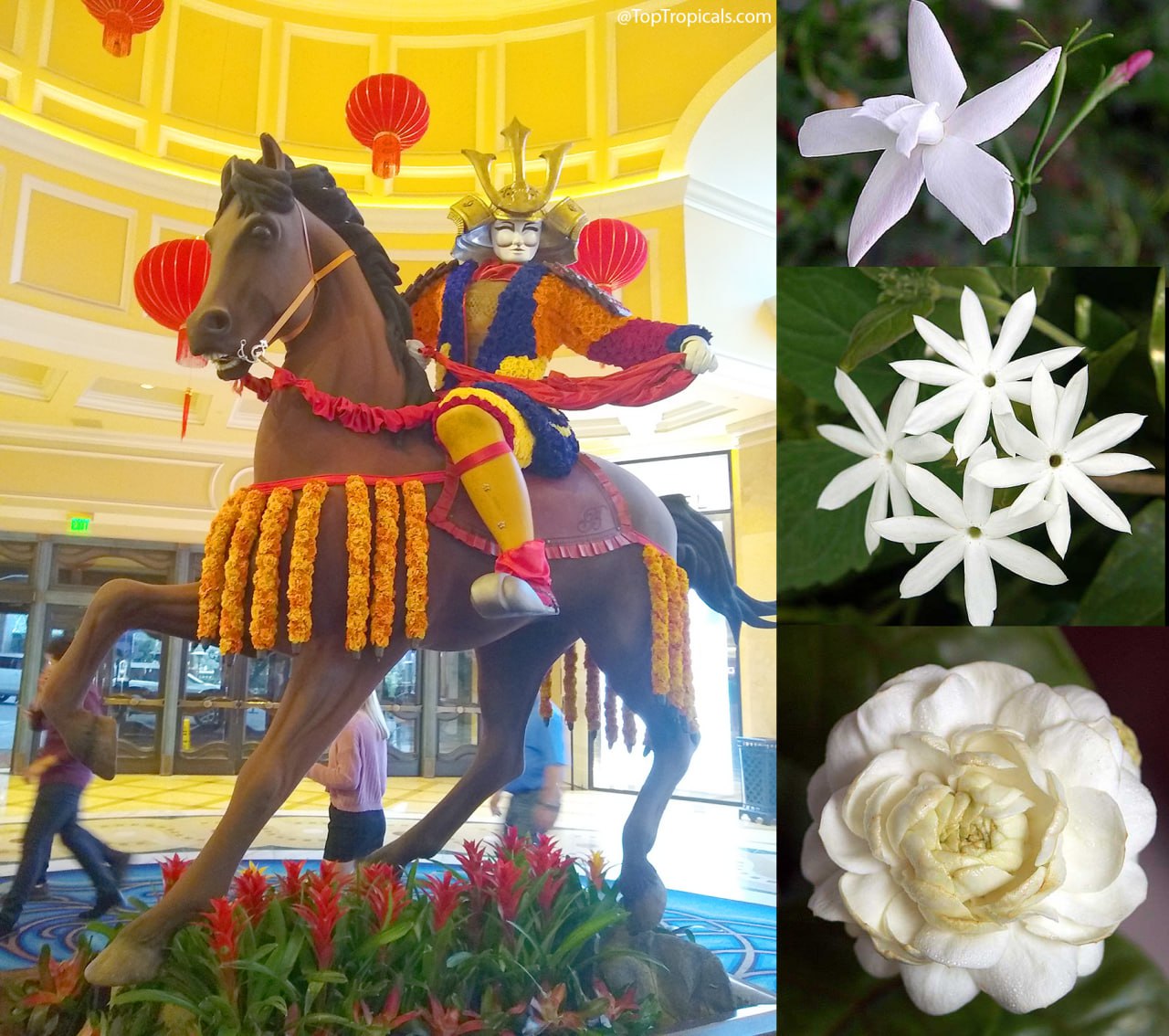
Lunar New Year starts today - welcome the Year of the Fire Horse 2026 with Jasmines
🔥 Lunar New Year starts today - welcome the Year of the Fire Horse 2026 with Jasmines
💮 One of the luckiest plants for 2026 is Jasmine. Today, February 17, 2026, the Lunar New Year begins, welcoming the energetic and passionate Year of the Fire Horse.
💮 If you’ve been feeling restless, ready for movement, or craving something fresh in your life - that’s Horse energy. This year is about action, authenticity, and doing things your way. And in Chinese tradition, certain plants help align your space with that powerful momentum.
💮 Why Jasmine is especially lucky this year
Jasmine symbolizes love, luck, and beauty - three themes closely connected to the Fire Horse’s vibrant spirit. Horses are social, expressive, and affectionate. Jasmine’s sweet fragrance supports harmony, romance, and positive energy in your home. In Feng Shui traditions, fragrant flowering plants help soften intense Fire energy. Jasmine does exactly that - it balances passion with calm.
💮 How to use Jasmine for good fortune in 2026
· Grow jasmine near entrances or windows to invite good luck into your home
· Place it in patios or garden walkways where its scent can circulate
· Use jasmine oil or candles in bedrooms to enhance relaxation and romantic harmony
💮 RReady for momentum?
Ready to feel bold, inspired, and a little unstoppable? The Year of the Fire Horse moves fast - and it rewards those who move with it. Think you need more clarity, more spark, more direction? Jasmine anchors that fire with calm confidence. It keeps the passion high and the chaos low. If you’re stepping into 2026 with purpose, don’t just make resolutions. Plant something living. Let jasmine bloom beside you - and grow into the year you’ve been waiting for.
Yes, you can grow a mango tree on your patio - here is how to do it right
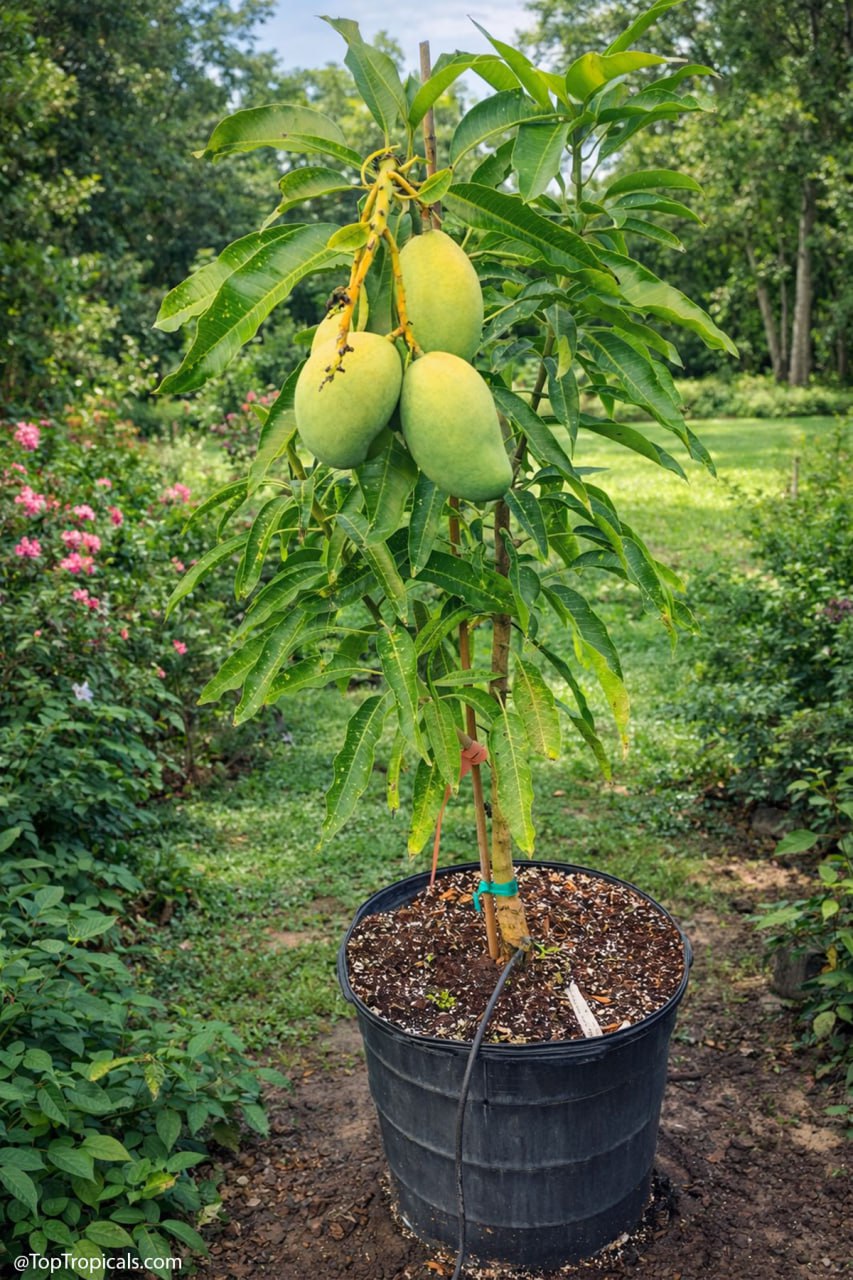
🥭 Yes, you can grow a container mango tree on your patio - here is how to do it right
Think you need a backyard orchard to grow mangoes? You don't. Mango trees grow very well in containers. Compact varieties, often called condo mangoes, stay naturally smaller and are well suited for pots, patios, and small yards. We grow and ship mango trees nationwide and have seen which varieties perform best in containers.
Growing mangoes in pots is also practical in cooler climates. The tree can be moved to protection during cold weather while still producing real fruit. Here is how to do it right.
🥭 Pick the right condo mango tree variety
Choose condo or semi-dwarf mango varieties that stay smaller and respond well to pruning. These mango trees usually stay 6 to 10 feet tall in containers with light pruning. Fruit size is full-size, just fewer than on large trees.
Start small. Young mango trees do best in a 5- to 7-gallon pot. Oversized containers too early often cause overwatering and root issues.
Increase size gradually: First pot: 5-7 gallons Next size: 10-15 gallons Mature container: 20-25 gallons
The pot must drain well. Mango roots dislike wet soil. Add holes if needed. Plastic, ceramic, and fabric pots all work.
🥭 Use fast-draining soil
Mango trees need air around their roots. Use a loose, fast-draining mix, such as Abundance Professional Soilless Mix. Improve drainage with perlite, pine bark, or coarse sand. Avoid heavy or water-holding soils. Drainage matters more than fancy ingredients.
🥭 Water carefully
Mango trees prefer a wet-dry cycle. Water deeply, then allow the top few inches of soil to dry before watering again. Always check with your finger first. In warm weather, water once or twice a week. In winter, much less. Overwatering is the most common container mistake.
🥭 Give plenty of sun
Mango trees love sun and heat. Place the pot in full sun with at least 8 hours daily. More sun improves growth and flowering. If overwintered indoors, use the brightest window possible. Grow lights help, but outdoor sun is best when weather allows.
🥭 Fertilize lightly but consistently
Potted mango trees benefit from regular feeding during active growth. Use a balanced mango or fruit tree fertilizer such as Sunshine Mango Tango (safe to use with every watering, year-around). Controlled-release fertilizer Green Magic (every 6 months) work well too. Avoid excess feeding, which promotes leaves over flowers. If leaves pale, check watering first, then nutrition.
🥭 Prune to stay compact
Pruning is essential for mangoes in pots. Light tipping and trimming control size, encourage branching, and increase flowering points. Keep the canopy open and balanced. Watch how simple tipping works in real life:
. Avoid heavy pruning before flowering. Most pruning is best right after harvest.
🥭 Protect from cold
Mango trees are tropical and cold-sensitive. When temperatures drop below 40F, move the pot to protection or indoors. Young trees are especially vulnerable. During winter, reduce watering and stop fertilizing. Growth slows and the tree rests. When warm weather returns, reintroduce the tree to sun gradually to prevent leaf burn.
🥭 Final thoughts
Growing a mango tree in a pot is practical and rewarding. With the right variety, good drainage, full sun, and careful watering, a potted mango can thrive and fruit for years, even in small spaces.
Ready to start? Choose a compact mango variety.
Vanilla planifolia Vine, Flower, and Cured Vanilla
Beans
How to Grow Vanilla: quick how-to
Vanilla is not complicated, but it does have preferences. Start with a
pot and regular, well-draining mix. It does not need anything exotic. Give
it:
Bright, indirect light
Warm temperatures
Good humidity
Air movement
Most importantly, give it something solid to climb. A wooden trellis, a log,
or a burlap-covered board works well. The surface should be porous so the
aerial roots can grip.
As it grows, guide the vine gently. You can prune it to control size.
Vanilla is slow to mature. That is normal.
The Bloom Secret
Vanilla does not bloom just because it looks healthy. It blooms when it
feels secure.
This is a climbing orchid. It must attach firmly to a solid, porous
support such as a wood log, trellis, or burlap-covered board. When the
aerial
roots grip and the plant reaches maturity, flowering becomes possible.
Once the flowers appear, they usually need to be hand pollinated to
produce pods. Each flower stays open for only a short time, so timing
matters.
How to pollinate vanilla: In this video, we show you
exactly how to pollinate vanilla step by step
❓Vanilla care: quick FAQ
Does Vanilla planifolia really produce vanilla
beans?
Yes. Vanilla planifolia is the commercial source of vanilla. After
flowering, it can form long green pods (vanilla beans). The aroma develops
later during curing.
What is the secret to getting vanilla to bloom?
Let it climb. Vanilla is a climbing orchid and usually will not bloom until
its aerial roots attach firmly to a solid, porous support like a wood log,
trellis, or burlap-covered board.
Do I need to pollinate vanilla flowers?
Yes. In most home growing conditions, vanilla flowers must be hand
pollinated to produce pods. Each flower is open for only a short time, so
timing matters.
Can I grow vanilla indoors?
Yes, if you can provide bright, indirect light, warmth, humidity, and a
support to climb. A sunny room with filtered light and a trellis or log can
work well.
What should I use for support?
Use a sturdy trellis, a wood log, or a burlap-covered board. The key is a
porous surface that aerial roots can grip. Avoid chemically treated wood.
Check out this unusual way to
grow Vanilla Orchid over a wall.
What potting mix should I use?
Start in a pot with a regular, well-draining potting mix such as Sunshine
Abundance. As the plant matures, it relies more on its support and
aerial roots than the soil.
What fertilizer should I use?
Sunshine
Boosters Orchidasm is formulated specifically for orchids and will work
perfecty for Vanilla orchid as well.
How big will it get?
As big as you let it. Train it and prune it. Vanilla grows according to the
structure and space you provide.
How long until it flowers?
Typically a few years. Vanilla is a long-term project, but it is very
rewarding once established.
For Collectors and Enthusiasts:
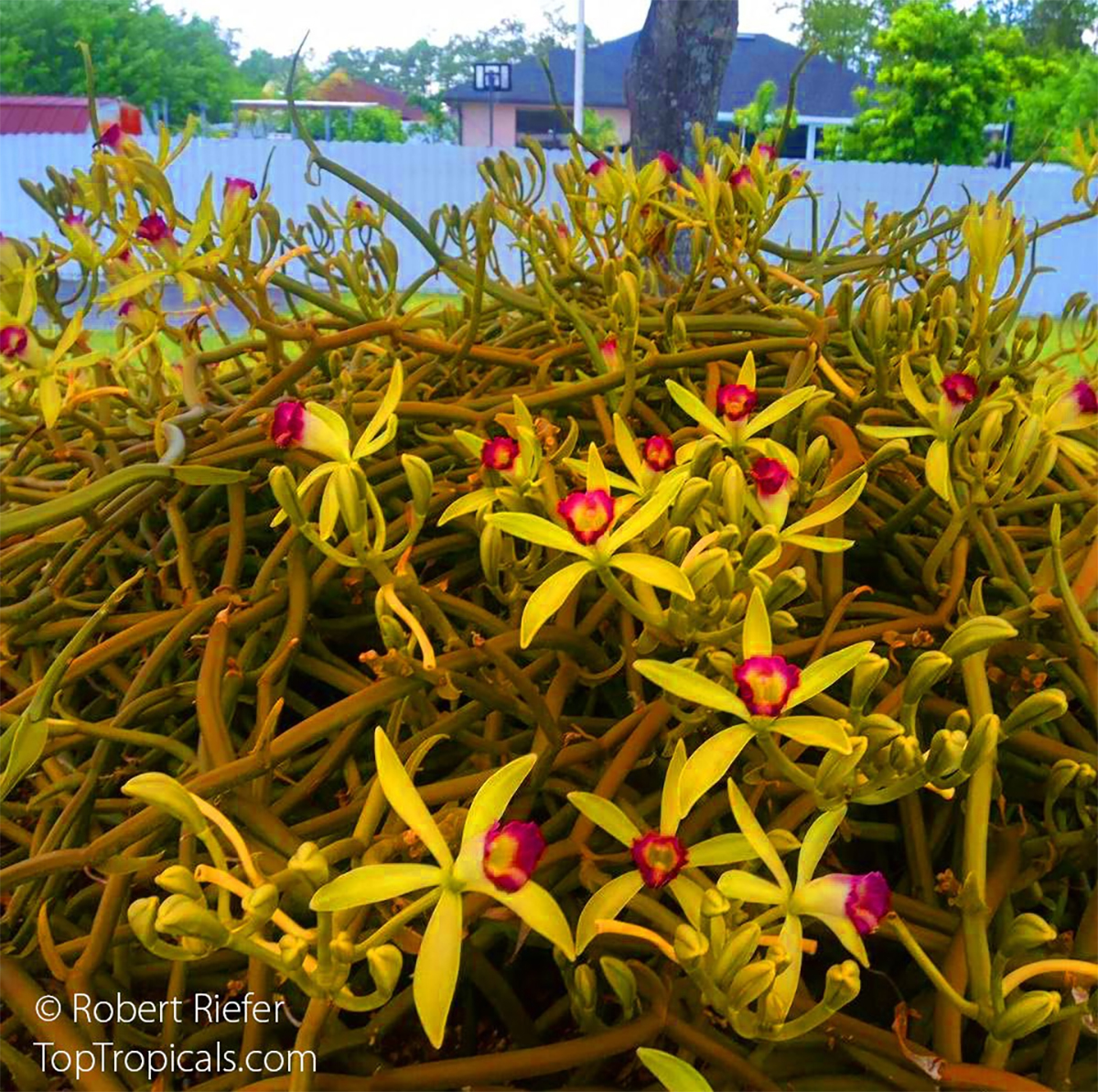
Vanilla dilloniana in Bloom - Rare Florida Native
Orchid
We also offer Vanilla dilloniana, a rare
Florida native species with distinctive flowers.
One remarkable specimen of this species, grown by our friend Robert
Riefer, became so vigorous over many years that it outgrew a 100 gallon
container and was eventually moved into a 250 gallon pool on wheels.
The plants we offer are propagated from that very specimen:
🎥 Video: Vanilla dillioniana - The Biggest Vanilla Orchid in
100 Gal Pot
That kind of growth reflects deliberate cultivation and ideal conditions
- not something that happens unintentionally.
Vanilla grows according to the space and structure you provide.
For gardeners focused on producing real vanilla beans for the kitchen,
Vanilla planifolia remains the right place to
start.