Garden Blog - Top Tropicals

Date: 21 May 2026

Rare Pineapple that looks like a sunset and thrives on neglect
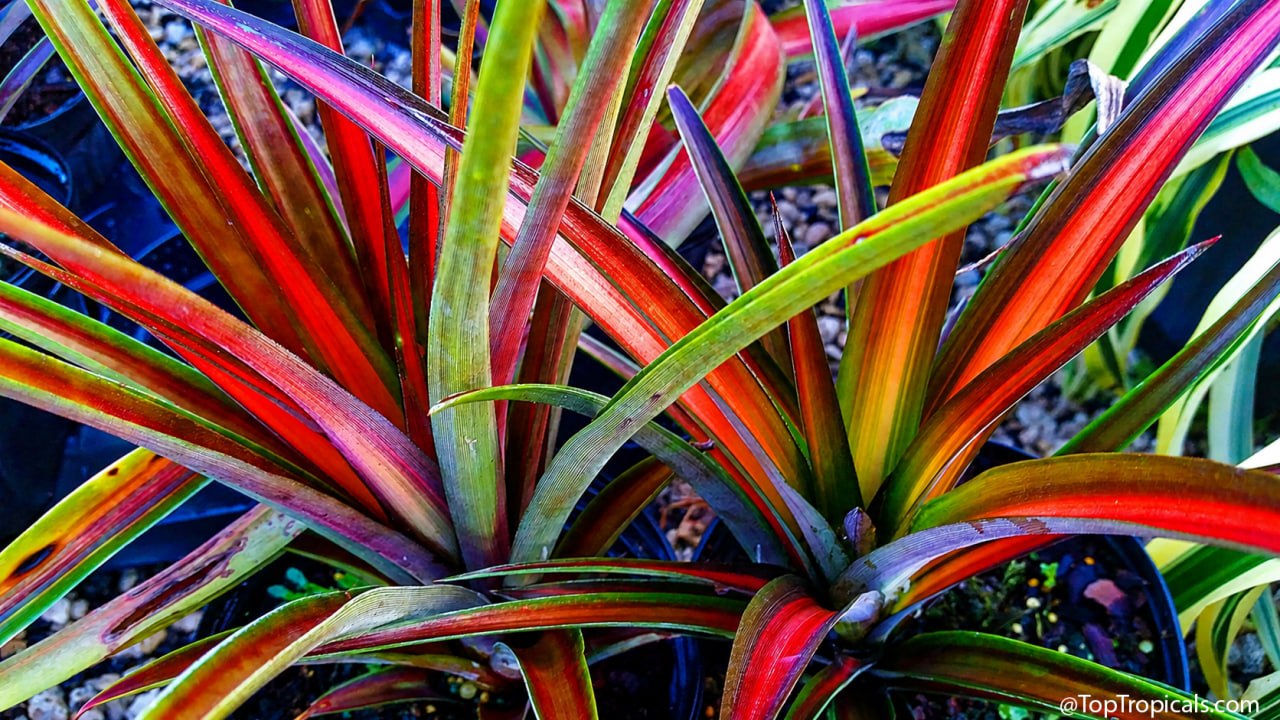
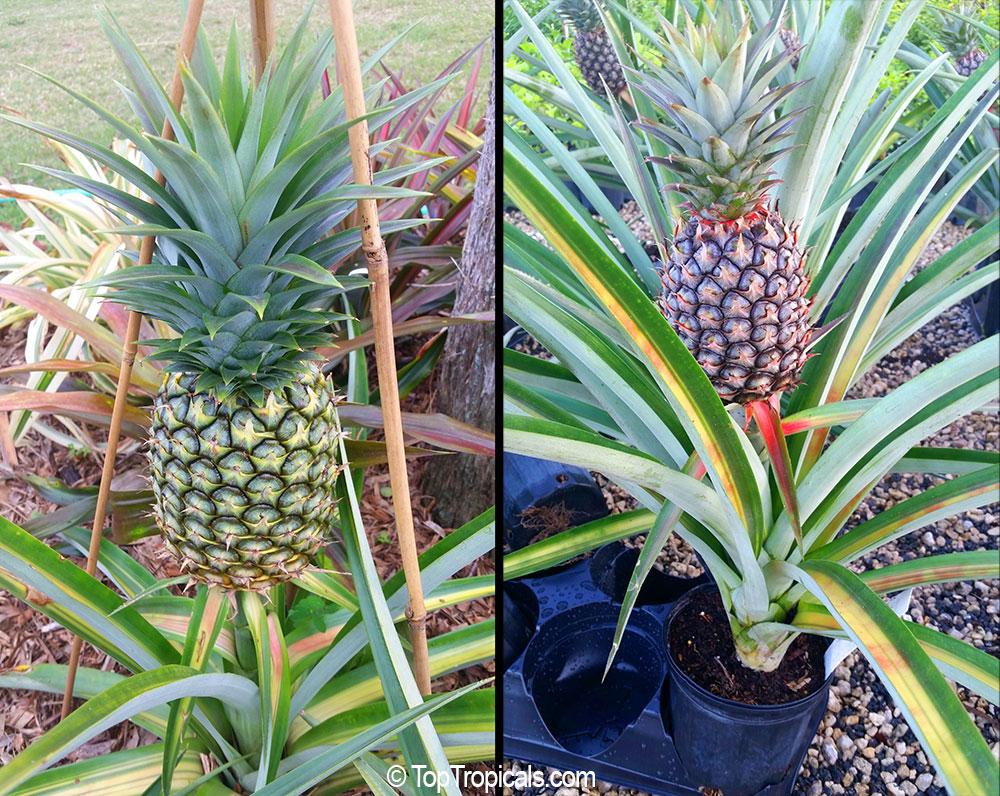
Pineapple Lava Burst colorful leaves
Pineapple Lava Burst colorful leaves

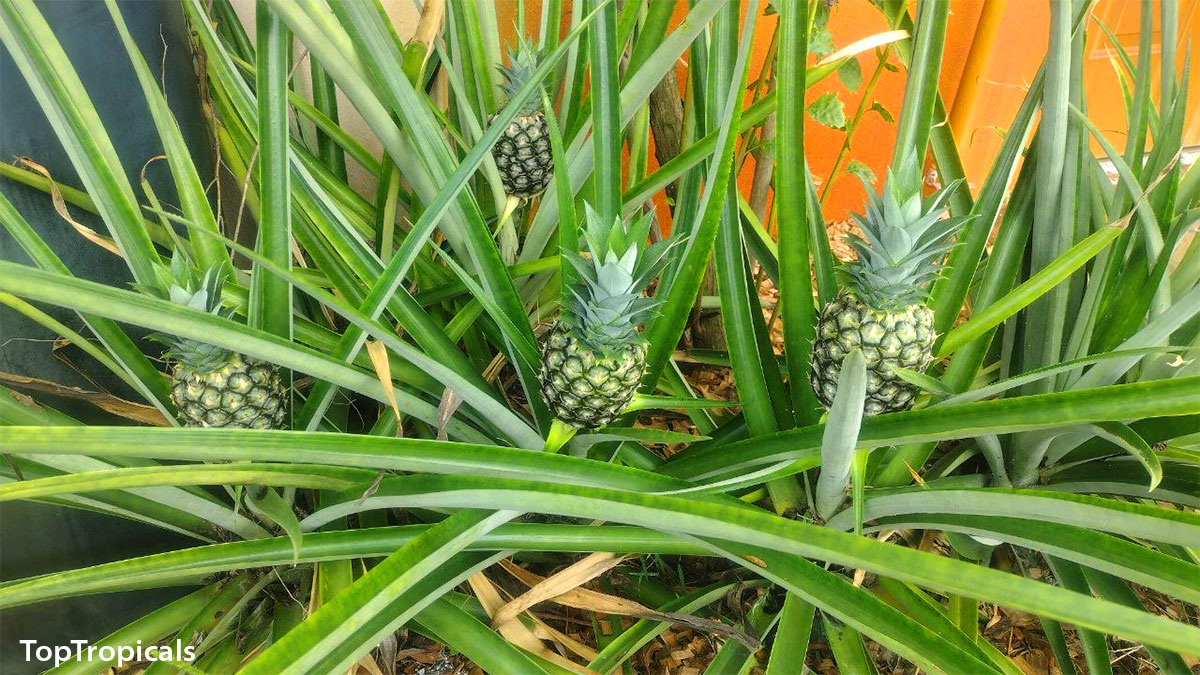
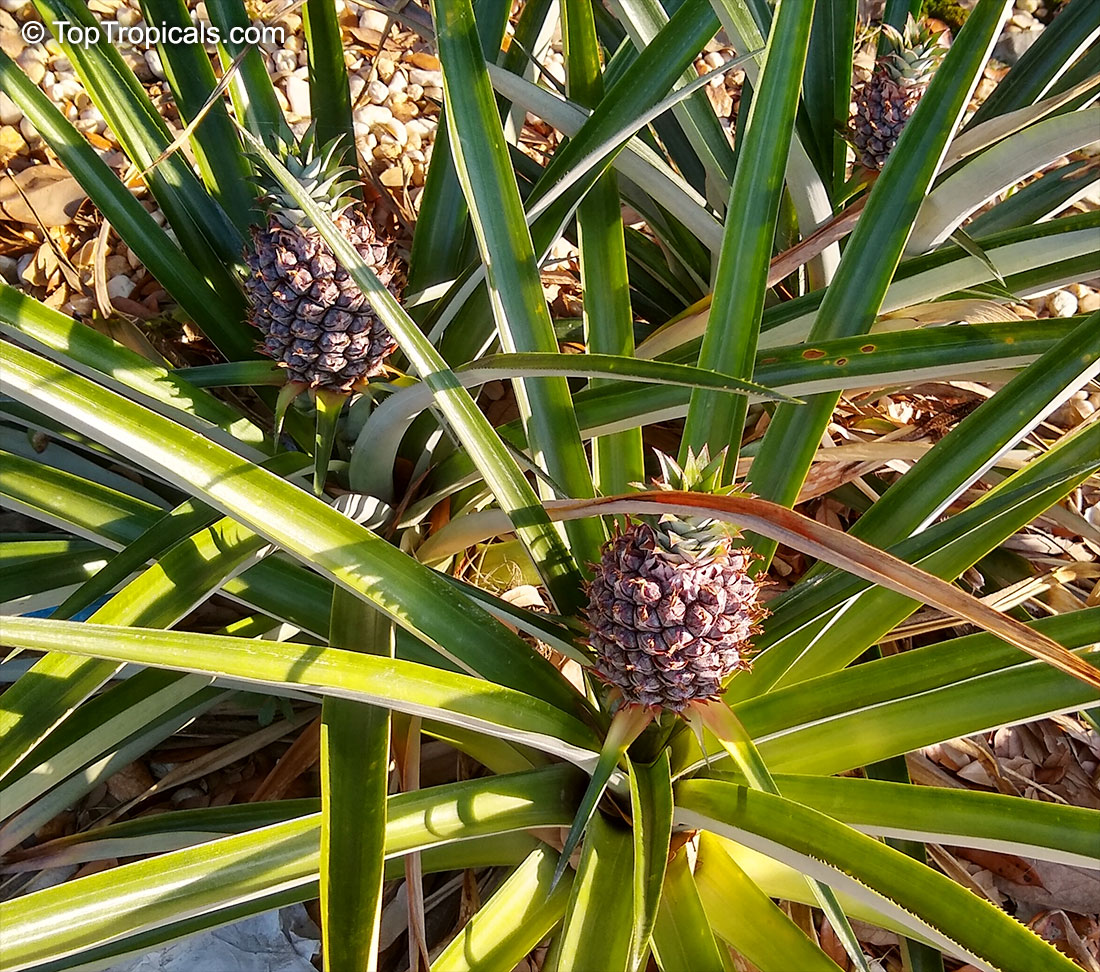
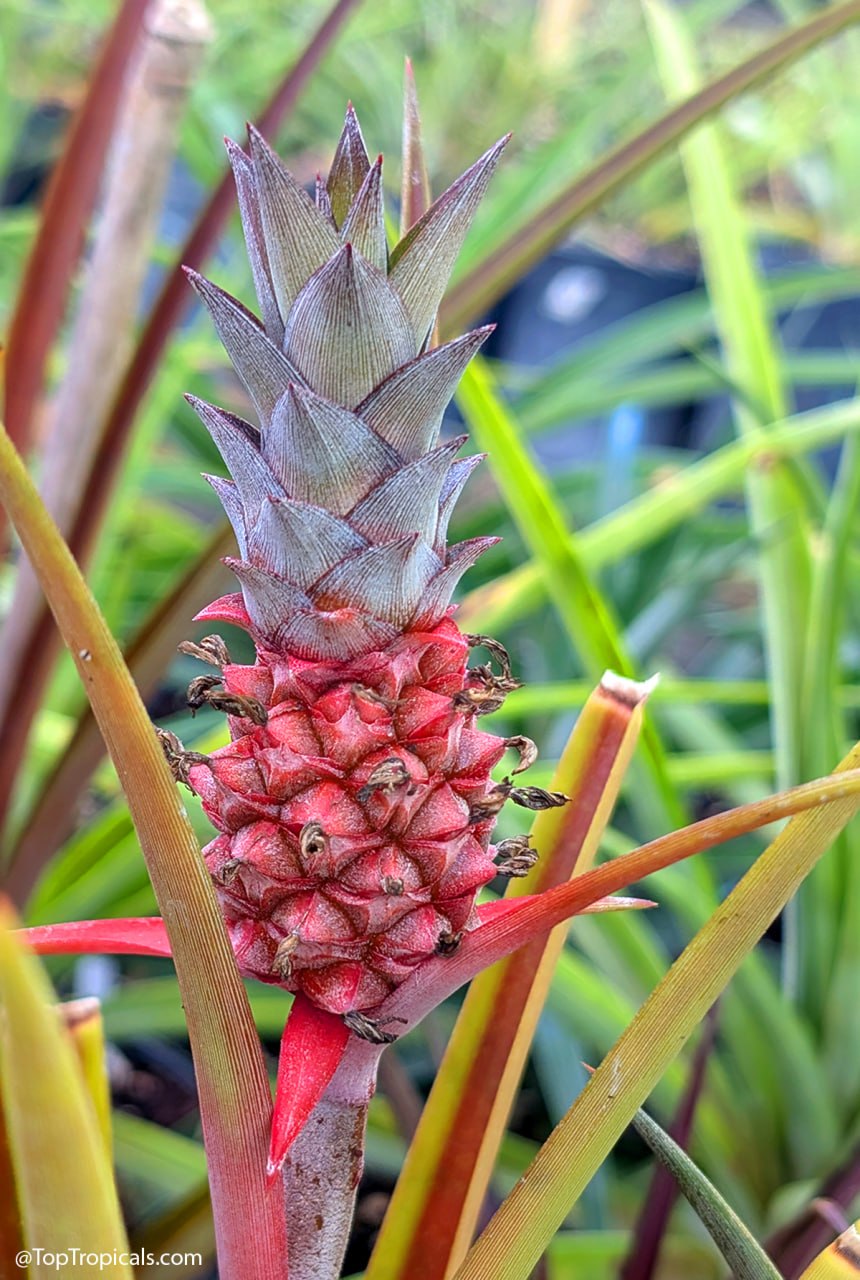
Pineapple Lava Burst fruit
Pineapple Lava Burst fruit

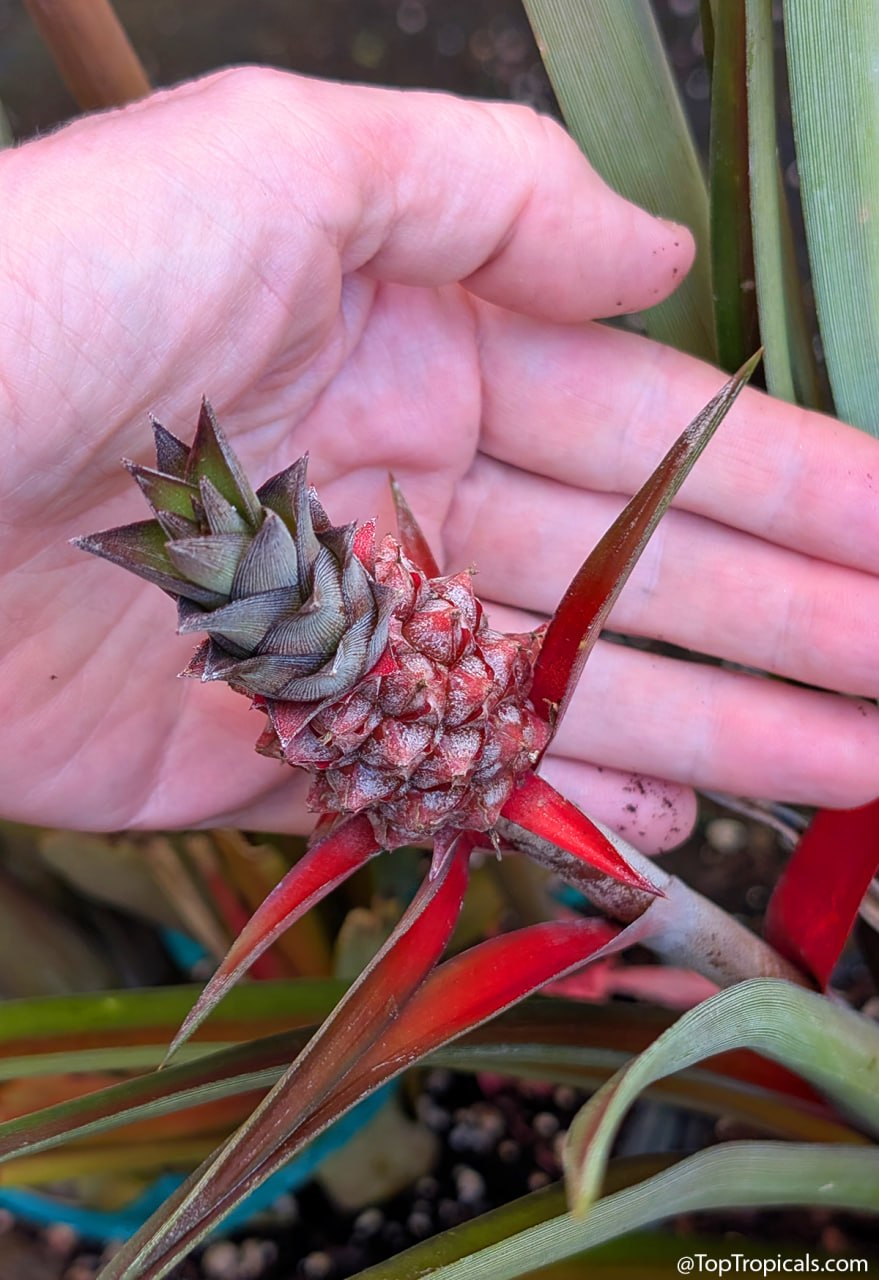
Pineapple Lava Burst fruit

Pineapple Lava Burst fruit

🌅 Rare Pineapple that looks like a sunset and thrives on neglect


Forget plain green plants - this pineapple looks like a tropical sunset! One look at Pineapple Lava Burst and you immediately understand why people stop and stare. This isn't your typical pineapple plant hiding quietly in the background; the leaves explode with shades of burgundy, pink, cream, green, and bronze, often changing intensity depending on sunlight and temperature. Even gardeners who don't normally collect bromeliads suddenly want one after seeing it in person.

Pineapple Plant Facts

Botanical name: Ananas comosus
Also known as: Pineapple, Pina
USDA Zone: 9 - 11
Highligths Small plant 2-5 ftSemi-shadeFull sunWatering: Moderate. Water when top soil feels dryOrnamental foliageThorny or spinyEdible plantSubtropical plant. Mature plant cold hardy at least to 30s F for a short time
Get personalized tips for your region


🍍 A pineapple plant that acts like living artwork


Pineapple Lava Burst belongs to the same plant family as bromeliads, and it definitely inherited the dramatic side of the family. The long arching leaves create a fountain-like shape, while the bold variegation gives the plant a painted appearance. In bright light, the burgundy and pink tones become especially intense, making the whole plant glow with tropical color.

Unlike many ornamental plants that only shine during bloom season, Lava Burst stays visually interesting year-round. Even without fruit, it looks like a centerpiece.

🍍 Yes - it actually produces a pineapple


One of the fun surprises about Lava Burst is that it does produce a real edible pineapple. The fruit is usually smaller than grocery store pineapples, but that’s not really the point. When the colorful fruit forms in the center, the plant becomes a tropical sculpture - a combination of striped foliage and bright fruit that looks like it belongs in a botanical garden rather than a typical backyard.

🍍 Pro-Grower Tips for Success


👌 Color Intensity: To get the most "lava" out of your plant, give it plenty of light. Increased UV exposure is the physiological trigger for anthocyanin production - the pigment responsible for those deep red and pink tones. If your plant is looking a bit green, it’s likely asking for a sunnier spot.

👌 Cold Hardiness & Protection: While these thrive in the heat, they are sensitive to frost. After the recent 25°F freezes we’ve seen in Florida, remember that these are the perfect "mobile" plants. Because they handle containers so well, you can easily move them into a garage or indoors during a cold snap to protect the foliage from burn.

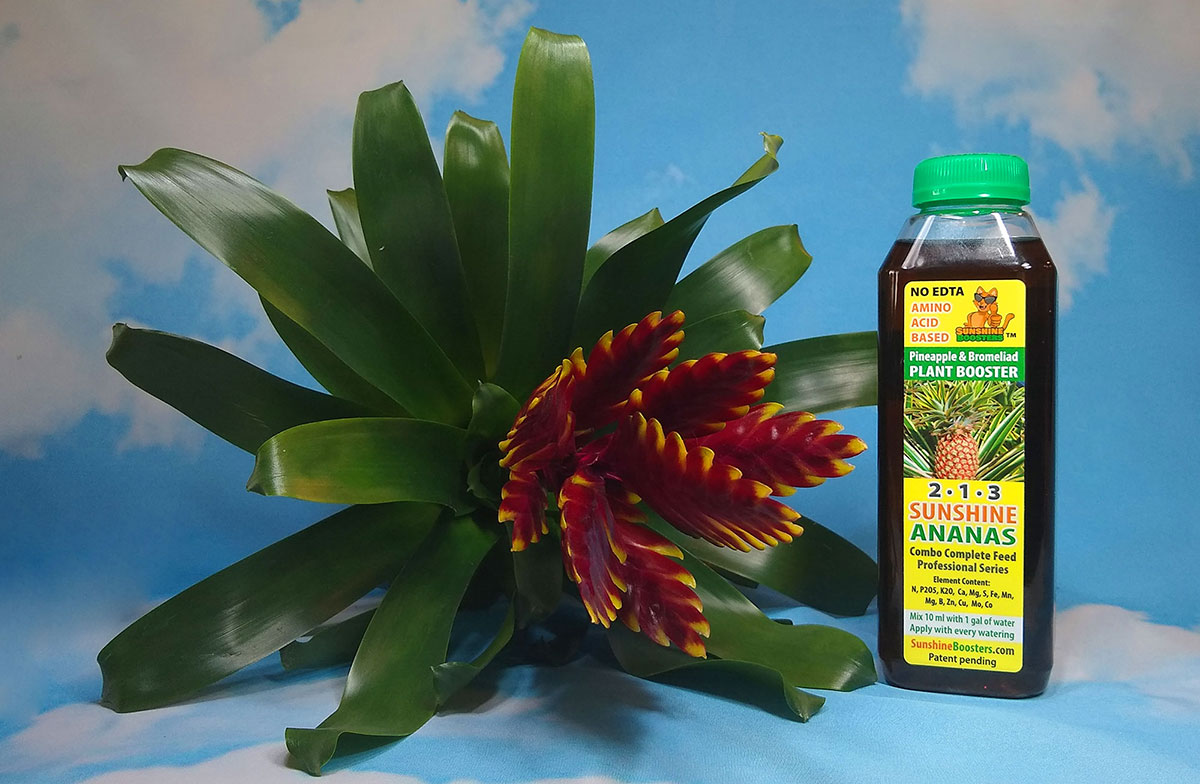
👌 Fertilizing for Vibrancy: To keep the variegation crisp and the colors saturated, use a high-quality micro-element fertilizer - SUNSHINE Ananas - Pineapple and Bromeliad Booster with every watering. During active growth season, a gentle application of Green Magic provides the necessary nutrients to maintain plant health and color intensity without the risk of burning the delicate root system.

🍍 Surprisingly easy for a tropical-looking plant


Despite looking rare and complicated, ornamental pineapples are generally very manageable. Lava Burst likes warmth, bright light, and fast-draining soil. It handles containers extremely well, which makes it popular for patios, pool areas, lanais, and sunny windows indoors. Like many pineapple varieties, it dislikes soggy soil more than occasional dryness, making it much easier to grow than many fussy tropical foliage plants.

Its architectural shape also pairs beautifully with palms, crotons, cordylines, and other colorful tropical mainstays. Whether you have a sprawling poolside landscape or a small-space apartment garden, this plant brings a wow factor that is hard to beat.

🛒 Ready to add a burst of lava to your plant collection?
Check availability for Pineapple Lava Burst beyond traditional Pineapples

📚 Learn more:


Variegated Pineapple Lava Burst Rainbow in Plant Encyclopedia
What is the best pineapple to grow at home
What are the best varieties of Pineapples?
How we ate all pineapples from that ugly corner
The most luscious Hospitality Fruit: Pineapple
Three must-have fruit for every tropical garden

#Food_Forest #Container_Garden #Discover #Nature_Wonders

🟢 Join 👉 TopTropicals
Date: 18 Apr 2023

Five benefits of growing your own Pineapple

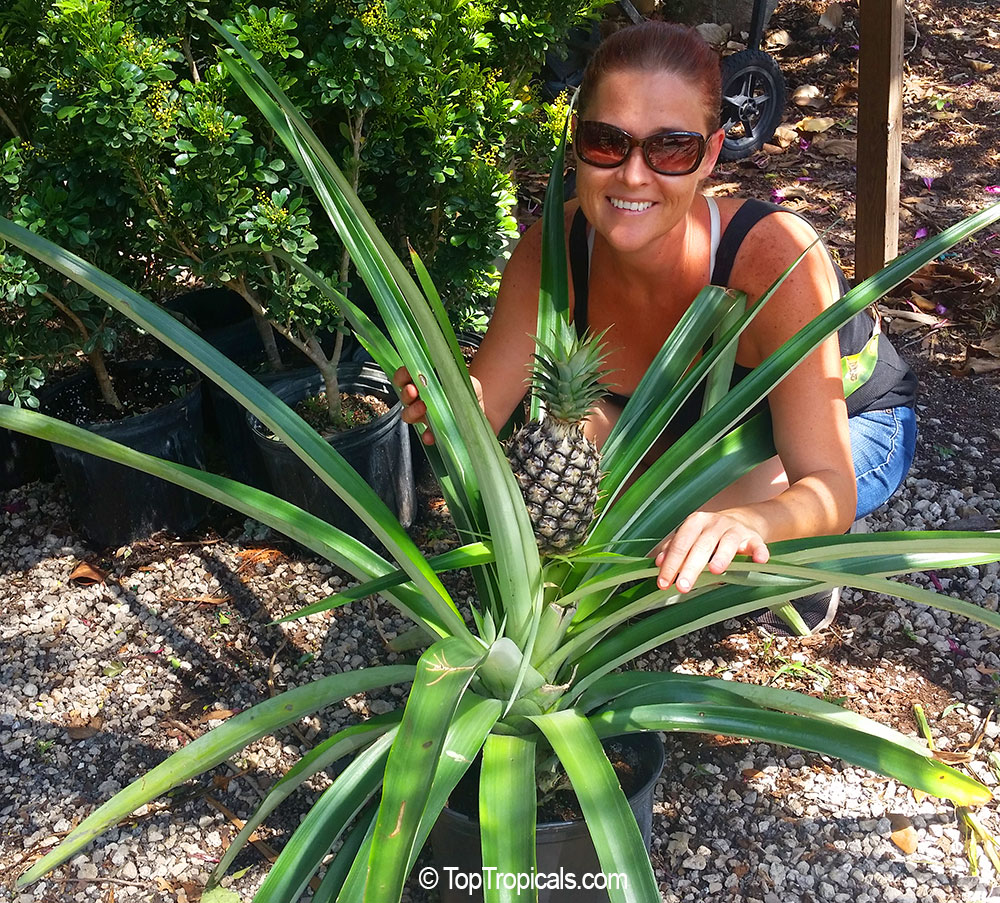
Pineapple  plant  with  a  fruit  and  a  beautiful  girl  Kristi

Q: Can I grow my own pineapple fruit?

A: Growing a Pineapple plant - Ananas comosus - is a fun and rewarding experience that offers both visual and practical benefits:

1. Fresh, homegrown fruit: One of the main benefits of growing a pineapple plant is that you can enjoy the fruits of your labor by harvesting fresh, delicious pineapples right from your own backyard.

2. Aesthetic appeal: Pineapple plants are visually appealing with their long, spiky green leaves and bright, vibrant fruits. They can add a tropical, exotic touch to any garden or indoor space.

3. Low maintenance: Pineapple plants are relatively easy to grow and require minimal maintenance. They can tolerate a variety of soil and light conditions and don't require frequent watering or fertilization.

4. Health benefits: Pineapple fruit is rich in vitamins, minerals, and antioxidants that can provide a range of health benefits, including improved digestion, boosted immunity, and reduced inflammation. It is recommended to eat a slice of a pineapple after every meal to keep healthy digestive system.

5. Collectable varieties: The pineapple plant can be easily propagated by cutting off the top of a pineapple fruit. However, for those seeking excellent quality, it is recommended to choose superior hybrids from professional growers. Become the proud owner of "The King of Fruits" collection! It takes up minimal space and provides fresh fruit throughout the year.

Read more about Pineapple: The most luscious Hospitality Fruit - Pineapple.

Remember to add Sunshine Ananas fertilizer to your purchase for a long lasting Pineapple crop season.

Pineapple  fruit  growing  on  plants

Date: 22 Jun 2024

Pineapple Season started!
The most luscious Hospitality Fruit

Pineapples

Pineapple plant (Ananas comosus) produces a delicious fruit treat and is a fascinating plant to grow.

King of fruits. Pineapple is often referred to as the "king of fruits" (along with Durian and Mango). It is cherished for its sweet and tangy taste, refreshing qualities, culinary uses, and health benefits, including high vitamin C content and digestive enzymes.

Bromelain for healthy guts: pineapples contain an enzyme called bromelain that can break down proteins and is often used as a meat tenderizer. It's great for digestion; eat 1 slice of pineapple after every meal to maintain healthy digestive system.

Single fruit per plant: each pineapple plant produces just one pineapple per year.

Growth time: It takes about 18-24 months for a pineapple to mature and be ready for harvest.

Symbol of Hospitality: in many cultures, pineapples are a symbol of hospitality and welcome.

Those are berries! A pineapple is formed from many individual single fruit (technically, berries), which fuse together around the core.

Cultivation. Pineapples are easy to grow. They need very little water to thrive, and take full sun, shade, semi-shade. For faster production, fertilize with SUNSHINE boosters Ananas - Pineapple and Bromeliad Booster. Perfect container plant, Pineapple can be grown indoors as a houseplant. Many superior varieties are available in selection.

Learn more: The most luscious Hospitality Fruit - Pineapple.

Sunshine  Boosters  Ananas

Pineapple

Date: 28 Jul 2025

What is the best pineapple to grow at home

White Jade Pineapple - Eleuthera

🍍 What is the best pineapple to grow at home


🍍 Pineapple plants (Ananas comosus) are easy to grow, virtually carefree plants. You you plant a few - you will always have the benefit of fresh and delicious fruit on the table, full of health benefits.

🍍 White Jade Pineapple, also known as Eleuthera, is one of the most prized pineapple varieties you can grow at home - and for good reason. If you're only growing one pineapple, make it this one. And here is why:

✔️ Six reasons why you want to grow White Jade Pineapple


🟡Super sweet and low acid: White Jade has tender white flesh that's ultra-sweet with almost no acidity. The flavor is smooth and rich, far better than anything you'll find in a grocery store.
🟡Edible core: The core is soft, juicy, and 100% edible - no waste and no tough center.
🟡Spineless leaves: Unlike most pineapples, White Jade has soft, spineless leaves, making it much easier and safer to handle.
🟡Compact and container-friendly: It stays small, perfect for pots, patios, or tight garden spaces.
🟡Backyard hero, not for shipping: This variety bruises easily, so it's rarely seen in stores - but perfect for home gardeners who want top-tier taste.
🟡Tropical beauty + fast fruiting: With its blue-green foliage and striking fruit, it's ornamental as well as productive. Expect fruit in as little as 18-24 months with good care.

🍍 Although often mistaken as a Hawaiian variety, White Jade actually originated in Eleuthera, Bahamas. It thrives in warm climates and rewards gardeners with a sweet, low-acid treat unlike any commercial pineapple. It is grown in Hawaii now, especially by backyard gardeners and small farms, because it does so well there.

🍍 Make sure to feed your pineapple plants what they crave - sunshine and nutrients! Boost their growth with - SUNSHINE Ananas - Pineapple and Bromeliad Booster. This special formula gives your plants the energy they need to thrive and produce tons of sweet, juicy fruit just for you!

🛒 Plant the pineapple that grocery stores can’t sell

📚 Learn more:


What are the best varieties of Pineapples?
How we ate all pineapples from that ugly corner
The most luscious Hospitality Fruit: Pineapple
Three must-have fruit for every tropical garden

#Food_Forest #Container_Garden #Discover

🟢 Join 👉 TopTropicals

Date: 28 May 2026

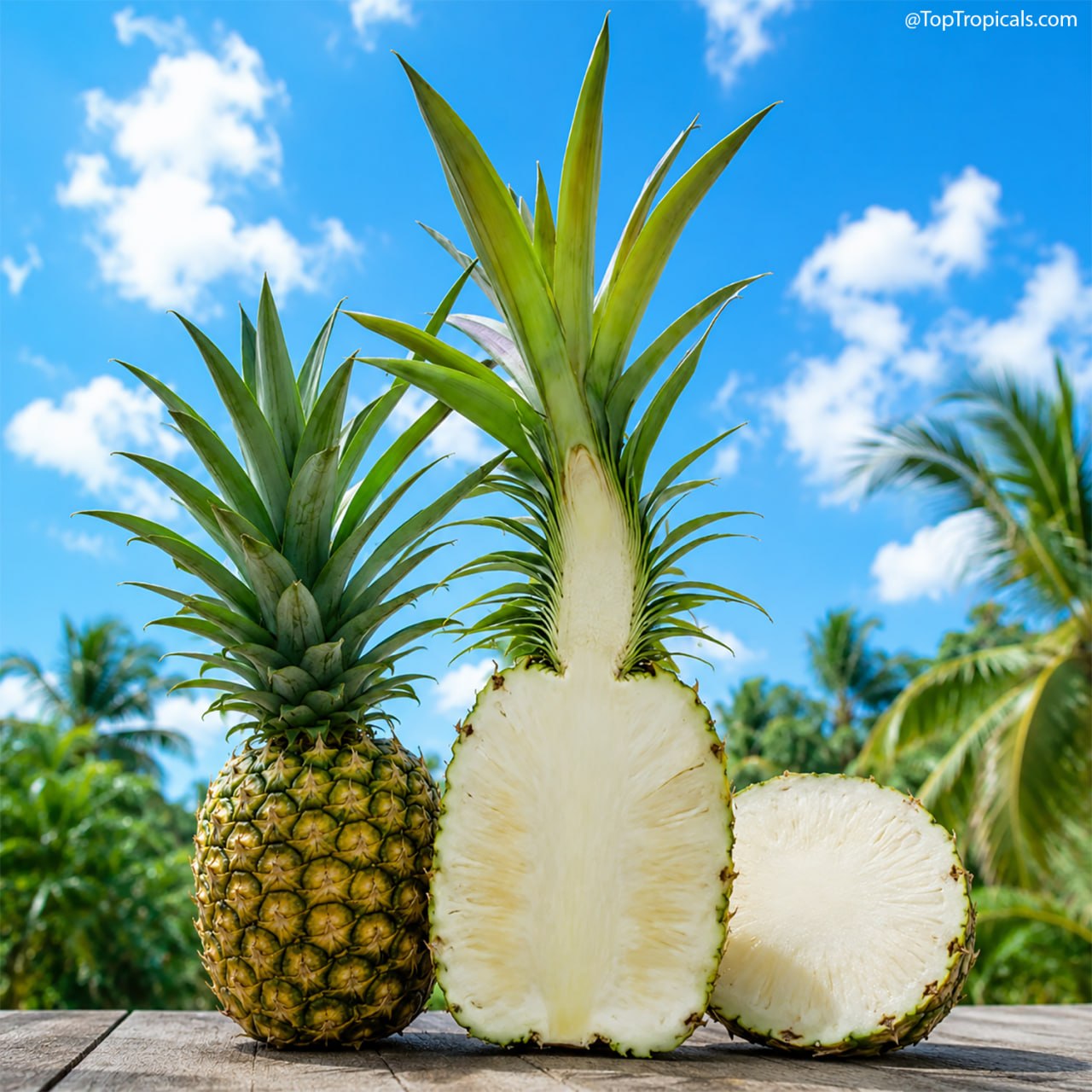
The white-fleshed, low-acid pineapple disrupting tropical gardens

The white-fleshed, low-acid pineapple disrupting tropical gardens

🍍 The white-fleshed, low-acid pineapple disrupting tropical gardens


Most people think all pineapples taste roughly the same - sweet, tangy, yellow, and a little acidic. Then they try a Sugar Loaf pineapple and suddenly understand why rare fruit collectors are obsessed with this variety.
Sugar Loaf - also known as Kona Sugarloaf - completely changes expectations of what a pineapple can taste like. If regular pineapples leave your mouth burning after a few bites, this variety may change your mind about growing tropical fruit at home.

🍍 Why Kona Sugarloaf is completely different from store-bought pineapples


Originally associated with West Africa and later popularized in Hawaii, Sugar Loaf stands out for several unusual characteristics:

Creamy white flesh - Instead of the typical golden-yellow interior, Sugar Loaf produces soft, juicy, creamy-white fruit.
Very low acidity - The flavor is smooth, mild, and intensely sweet, with many growers describing notes of vanilla, honey, and coconut.
An edible core - Unlike regular pineapples with tough woody centers, the core of Sugar Loaf is tender and fully edible.
The green deception - One of the strangest things about this pineapple is that it often stays dark green even when fully ripe. Many first-time growers wait too long expecting it to turn gold.

Standard Pineapple:
Golden Skin ✦ Yellow Flesh ✦ High Acid ✦ Woody Core
Sugar Loaf Pineapple:
Green Skin ✦ White Flesh ✦ Low Acid ✦ Edible Core

🍍 A heavyweight performer in the garden


The fruit itself has a unique shape - taller, slimmer, and noticeably heavier for its size than standard pineapples. Under ideal tropical conditions, a single Sugar Loaf fruit can approach 10 pounds.

Beyond the fruit, gardeners love the plant for its ornamental appeal. It produces a dramatic pointed crown and arching tropical foliage, making it attractive even before fruit appears.

🍍 Kona Sugar Loaf at a glance


Plant Type: Compact, self-fruitful bromeliad
Fruit Size: Up to 10 lbs under ideal conditions
Skin Color at Ripeness: Deep green
Flesh Color: Creamy white
Cold Tolerance: Tropical; protect from frost

🍍 Container-friendly for northern growers


You do not need a Hawaiian orchard to grow this collector favorite. Because Sugar Loaf grows as a compact bromeliad, it adapts well to patios, containers, and small gardens.

In tropical climates, it can be planted directly in the ground. In colder regions, gardeners often grow it in large pots outdoors during warm weather and move it indoors near a bright window for winter.

👉 Grower's Tip: Pineapples and bromeliads respond especially well to regular feeding during warm weather. SUNSHINE Ananas - Pineapple and Bromeliad Booster was designed specifically for bromeliads and fruiting pineapples to support vigorous growth and sweeter fruit production.

For tropical fruit enthusiasts, Sugar Loaf has quietly become one of those varieties that makes ordinary grocery-store pineapples feel surprisingly boring afterward.

🛒 Try the pineapple with the edible core and more pineapple varieties

📚 Learn more:

Red Pineapple Plant Facts

Botanical name: Ananas bracteatus
Also known as: Red Pineapple
USDA Zone: 10 - 11
Highligths Small plant 2-5 ftFull sunWatering: Moderate. Water when top soil feels dryOrnamental foliageEdible plant
Get personalized tips for your region

Ananas varieties (Pineapples) in Plant Encyclopedia
What are the best varieties of Pineapples?
What is the best pineapple to grow at home
How we ate all pineapples from that ugly corner
The most luscious Hospitality Fruit: Pineapple
Three must-have fruit for every tropical garden
Rare Pineapple that looks like a sunset and thrives on neglect
🎥 King of Fruits that makes you healthy and happy

#Food_Forest #Container_Garden #Discover

🟢 Join 👉 TopTropicals