By Tatiana Anderson, Horticulture Expert at Top
Tropicals with
Smokey & Sunshine help
Sunshine Boosters for different types of plants
Here is why SUNSHINE Boosters are the smart choice for your garden this
spring:
Amino Acid Stability: Unlike traditional fertilizers that
use synthetic EDTA chelators, our formulas are amino-acid based. This means
100% of the nutrients are bioavailable and consumed by the plant, leaving
zero
toxic residues or salt build-up in your soil.
Safe for Every Watering: Because our concentrations are
scientifically balanced and mild, they are safe for daily use. This
eliminates the "feast or famine" cycle of dry fertilizers and prevents
accidental root burn.
Pure Taste for Edibles: Our delicate formulas do not
contain excess salts, urea, or ammonium salts that can ruin the flavor of
your harvest. Your fruit and vegetables will retain their pure, natural
taste.
Pollinator Friendly: Our boosters are designed to be safe
for honeybees and other beneficial insects, making them the responsible
choice for an organic-style garden.
🌿For Potted Plants: Breaking the "Foodless" Cycle
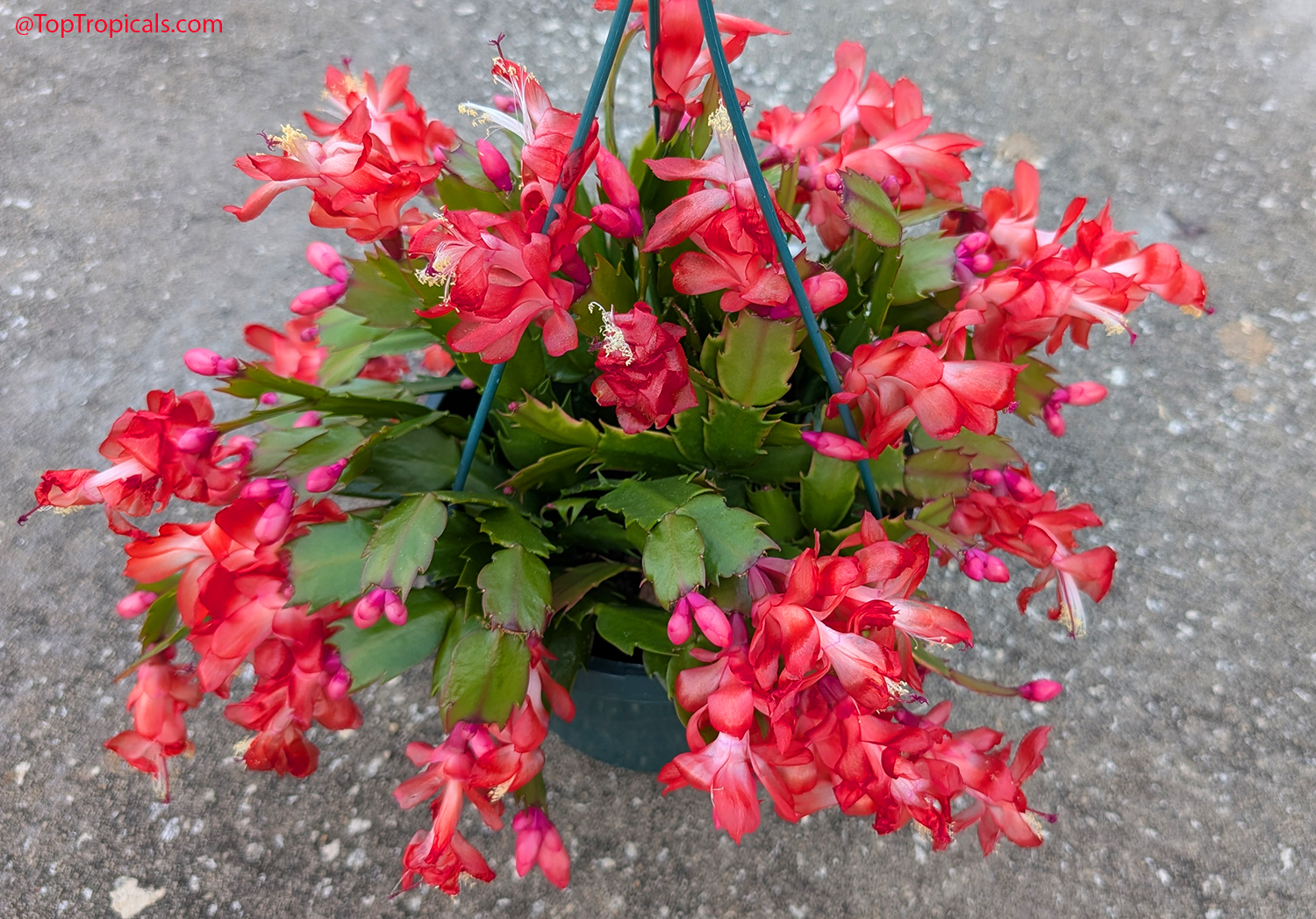
Schlumbergera - Christmas cactus - after boosting
flowers with Sunshine
Megaflor
Container-grown plants are trapped in soilless mixes (peat, bark,
perlite) that are structurally great but naturally nutrient-deficient.
Total Nutrition: Since pots lack the natural "buffet"
of the ground, SUNSHINE Boosters™ provide every
essential mineral the plant cannot find on its own.
No Salt Build-up: Our amino-acid based formulas are
consumed entirely by the plant, leaving zero toxic residue or root-burning
salts behind.
Daily Safety: Our mild concentrations eliminate the
"feast
or famine" cycle of dry fertilizers, making them safe for use with every
single watering.
Even in the ground, plants often struggle to absorb what they need
because soil compounds can "lock up" nutrients.
Enhanced Solubility: SUNSHINE Boosters create a
slightly acidic environment that helps dissolve stubborn salts in the soil,
making them accessible to roots again.
Precision Delivery: We provide mobile elements like
Nitrogen precisely when the plant needs to push new spring growth.
🌿The Foliar Advantage: Direct-to-Leaf Delivery
Did you know a plant leaf can absorb nutrients even more efficiently than
the roots? Foliar feeding is your "emergency button" for instant results.
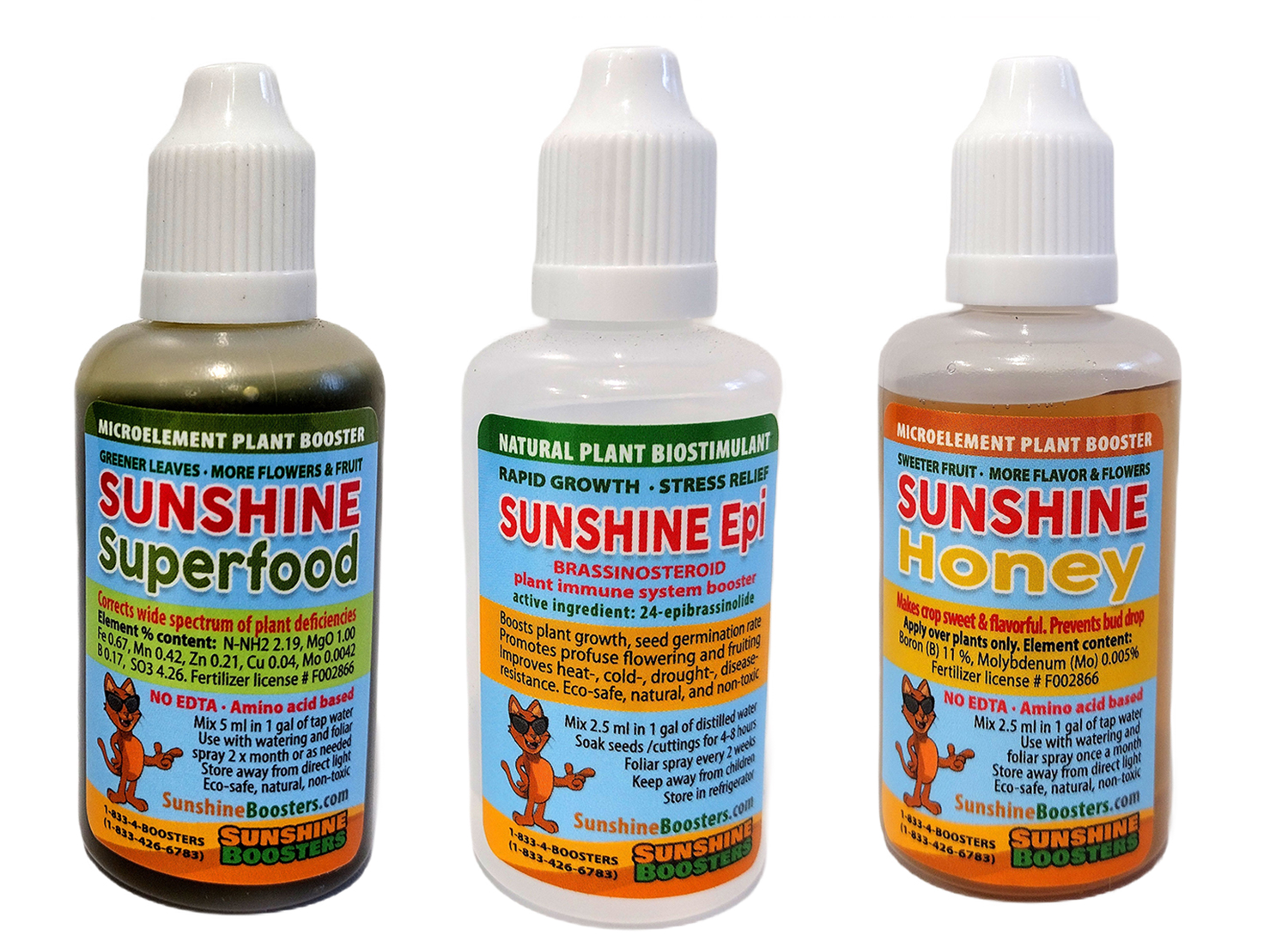
Quick Fix: Foliar applications with Sunshine
Superfood are the fastest way to correct yellowing leaves or visible
deficiencies.
Metabolism Boost: Sprays like SUNSHINE-Epi act
as a bio-regulator, helping plants recover from the stress of spring
temperature swings.
Better Fruit:SUNSHINE Honey is applied to
leaves to naturally move sugars to the fruit, increasing sweetness and
flavor.
🌿The Calcium Problem: Solved
As your plants wake up this Spring, they need structural strength. Think
of Calcium as the "cement" that holds plant cells
together. Without it, new spring growth is doomed to fail.
Signs Your Plant is Starving for Calcium:
Deformed Leaves: New growth looks twisted, hooked, or
curled.
Blackened Tips: The very edges of young leaves turn white,
then quickly blacken and die.
The Industry Secret: The "Missing" Mineral
Most fertilizers, both dry and liquid, completely skip Calcium. Why?
Because it’s a chemical nightmare to keep stable in a concentrated
solution. Most manufacturers rely on your irrigation water to deliver
Calcium, but tap water is inconsistent and often fails to provide what a
hungry, growing plant needs.
The SUNSHINE Boosters: Stable Calcium in Every Bottle
We have successfully stabilized Calcium directly into every single
Sunshine Booster formula.
Whether you are using Bombino, Robusta, or Megaflor, you are delivering a
precise, stable dose of Calcium with every watering. No lockout, no
sediment, and no relying on the "luck" of your tap water. Just strong,
healthy cell walls and perfect spring growth.
🌿SUNSHINE-Epi: The Year-Round Bio-Regulator
Whether it’s the transition of spring, the extreme heat of summer,
or the dry air of indoor wintering, SUNSHINE-Epi is your
plant’s primary defense. This natural Brassinosteroid acts as a
powerful immune booster, helping plants navigate stress wherever it comes
from.
Universal Stress Shield: Protects against temperature
swings (both heat and cold), drought, and transplant shock.
Vigorous Development: Dramatically improves root growth
and speeds up the metabolism of young seedlings and cuttings.
Eco-Safe: 100% non-toxic to humans, pets, and
pollinators.
Note: While Epi is highly effective, it is a
performance booster, not a substitute for proper care. It works best when
paired with the right light, water, and a consistent feeding program. It
won't bring a dead plant back to life, but it will help a struggling one
find its footing.
Don't
let your garden wake up to an empty nutrition plate.
Smokey: Save your gas money for donuts. We're
shipping the boosters for free. Sunshine: Agreed. My charm covers the delivery
cost.
No coupon code required: The free shipping is automatically applied
at checkout.
Complete Nutrition: Stock up on Robusta, Superfood, and Epi for the Spring
growth push.
Offer
valid through 03/14/2026. Free shipping offer is valid on
SUNSHINE Boosters liquid products only. Not valid on previous purchases and
cannot be combined with any other offers, coupons, or discounts. Offer
subject to change or cancellation without notice.
Sunshine Boosters micro
elements and supplements - Superfood micro-element complex, Sunshine Epi
biostimulant and Sunshine Honey supplement for better fruit
❓Frequently Asked Questions: SUNSHINE Boosters™
What water should I use for foliar spraying?
Tap water works perfectly for most. However, if your water is very "hard"
(leaving white mineral spots on leaves), switch to distilled water for a
cleaner finish and better absorption.
How long does a diluted solution last?
For maximum potency and to avoid nutrient degradation, try to use your
diluted mixture
within a few hours of preparation. Keep away from direct sun. Fresh is
always best!
Can I use SUNSHINE Boosters as a daily foliar spray?
Yes! You can mist your plants daily to maintain high vigor, but you must
reduce the dosage (use half the recommended strength) to avoid over-feeding.
Can I mix boosters with pesticides or fungicides?
It is best to apply them separately. Mixing fertilizers with chemical
pesticides in one tank can trigger reactions that "lock out" nutrients or
reduce the efficacy of the treatment.
Will the liquid stain my patio or hands?
No. Unlike traditional fertilizers with heavy blue or pink dyes, our
solutions are clear or very light-colored. If you spill it, simply rinse
with water—no stains, no mess.
Can I mix different SUNSHINE Boosters together in one sprayer?
Yes. All SUNSHINE Boosters are chemically compatible. You can combine a
"growth" booster like Robusta with a "micro-element" complex like Superfood
in the same water to save time.
Are these products safe to use around my pets?
Absolutely. Our formulas are 100% non-toxic and amino-acid based. Just ask
Smokey and Sunshine—they are perfectly safe for households with
curious cats, dogs, and children.
Can I use these boosters on indoor plants?
Yes. They are ideal for indoor use because they don't produce a "fertilizer
smell" and won't cause salt crusting on your decorative pots or furniture.
Is it safe to use on fruit and vegetables I plan to eat?
Yes. Because our formulas contain no urea, nitrates, or harsh salts, they
don't leave a "chemical" aftertaste. They actually help improve the natural
sugars and flavor profile
of your harvest.
What is the best temperature for foliar spraying?
Apply when temperatures are below 85°F. Early morning or late evening
is best; this allows the leaves to remain wet longer, giving the plant more
time to absorb the nutrients.
What Fertilizer to Use and How?
Green
Magic controlled release fertilizer keeps plants green during active
growth season - apply only once in 6 months.
Sunshine: Smokey, you saved my coffee tree. But what do I
do now so it stays happy?
Smokey: Simple. Spray Sunshine Robusta every five days
during active growth.
Sunshine: Five days? Smokey, I barely remember where I left
my coffee
mug five minutes ago.
Smokey: That is exactly why we use Green Magic.
Sunshine: Fertilizer for forgetful gardeners?
Smokey: Controlled release. Sprinkle once and it feeds the
plant for six months.
Sunshine: Six months? I can have a very good nap in that
time.
Smokey: Exactly. The plant keeps eating slowly while you
keep napping.
Sunshine: Perfect. Remember, I will bring the coffee. You
bring the donuts.
Smokey: And next week we will show you exactly how Green
Magic works and why plants love it. Stay tuned.
Spring has arrived, and plants are coming back to life. New shoots are
appearing, fresh leaves are unfolding, and roots are beginning to grow
actively again. As plants enter this important stage of the season, they
need more than just water to support their growth. Proper nutrition is
essential for strong development and healthy
plants. SUNSHINE
Boosters provide the balanced nutrition plants need to start the growing
season strong.
A simple rule we follow in our nursery: new growth responds best to foliar
feeding.
When nutrients are sprayed directly on the leaves, plants can absorb them
quickly and efficiently.
Immediate action – nutrients are absorbed through the
leaves and start working right away.
No delay traveling through soil – plants do not need to
wait for nutrients to move down to the roots.
Avoids soil lockout – micronutrients can become unavailable
in high pH soils, but foliar feeding bypasses this problem.
Supports stressed plants – when roots are cold, damaged, or
newly transplanted, foliar feeding helps
plants recover faster.
However, sometimes plants begin to show visible nutrient deficiencies.
Yellow leaves, slow growth, brown leaf edges, or distorted new leaves are
often early signs that the plant is missing essential elements needed for
healthy development.
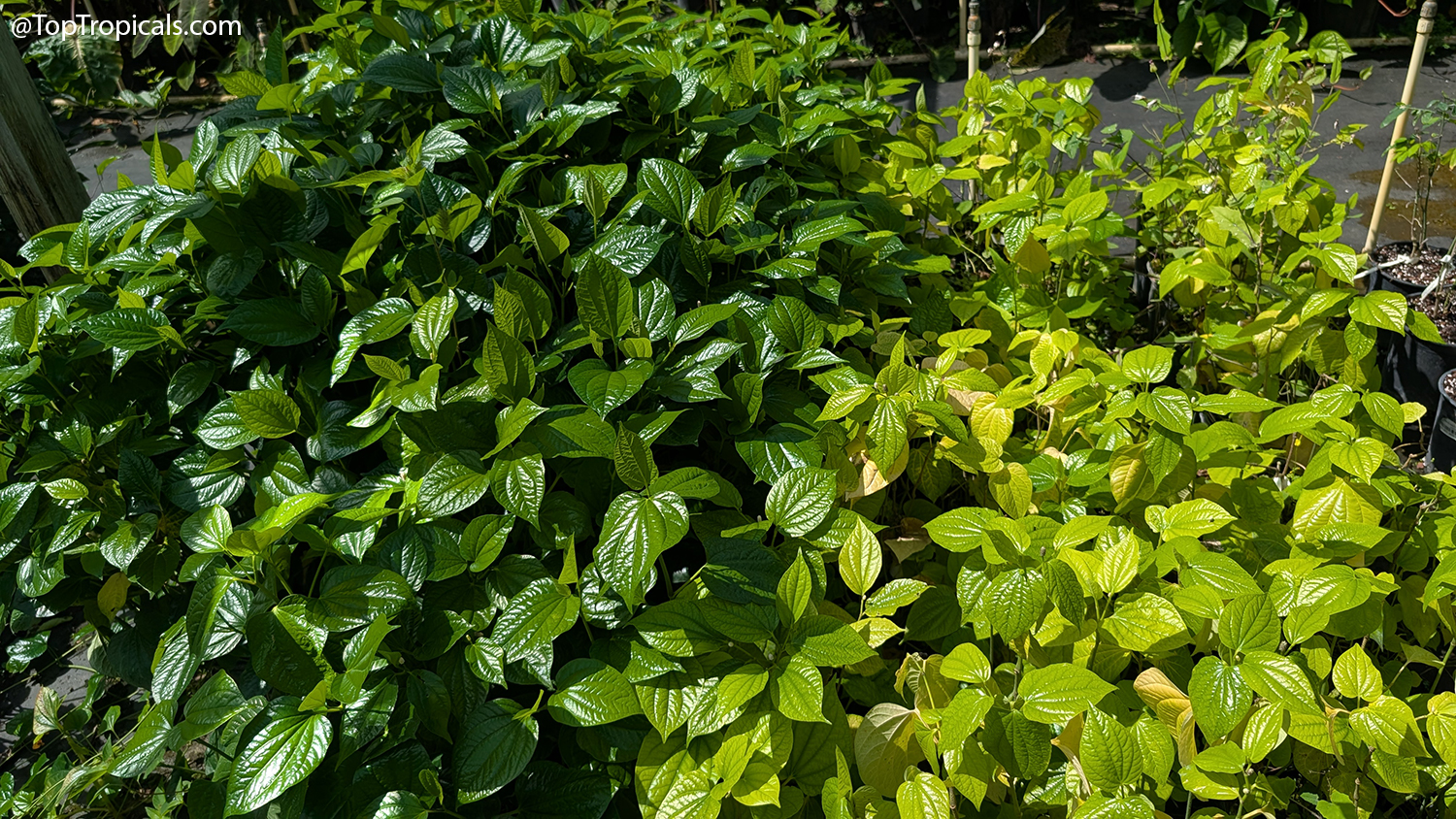
Piper sarmentosum - Vietnamese Pepper - with
fertilizer (left) and without (right)
These symptoms are especially common in container plants, where nutrients
can be quickly depleted or become
unavailable due to soil pH and watering conditions.
Use the quick reference table below to identify common nutrient-related
symptoms and the recommended SUNSHINE solution to correct them.
Symptom you see
What to do
Pale leaves, slow growth, weak new shoots
(often nitrogen related)
For most plants, foliar feeding works best when applied lightly and
regularly during active growth.
Regular feeding (maintenance): Mix with tap water according to
the ratio on the label. For SUNSHINE Robusta use 25 ml (5 tsp)per gallon
of water and spray leaves every 5-7
days during active growth.
Correction feeding ("medicine" dose): if plants show visible
nutrient deficiencies, combine SUNSHINE Robusta with SUNSHINE Superfood and
spray every 5–7 days until new growth appears healthy. All SUNSHINE
Boosters
products are compatible and can be mixed with water in the same sprayer.
Best time to spray: early morning or evening when temperatures
are cooler and leaves can absorb nutrients efficiently.
Important: spray both the top and underside of leaves for
maximum absorption.
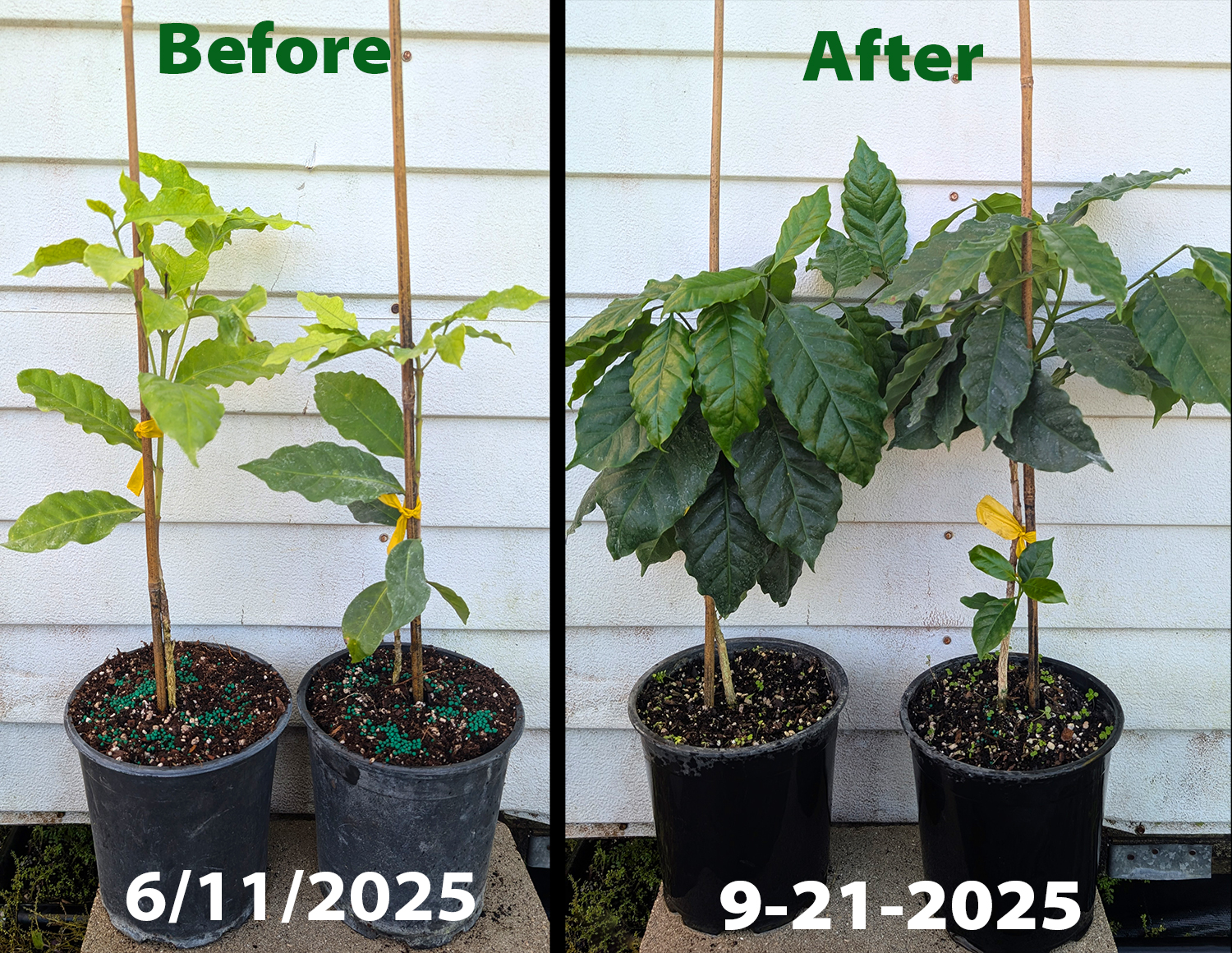
Coffee plants before and after regular Sunshine
Robusta applications
The Magic Number 65: when tropicals finally wake and the 7-Day Rule you should know
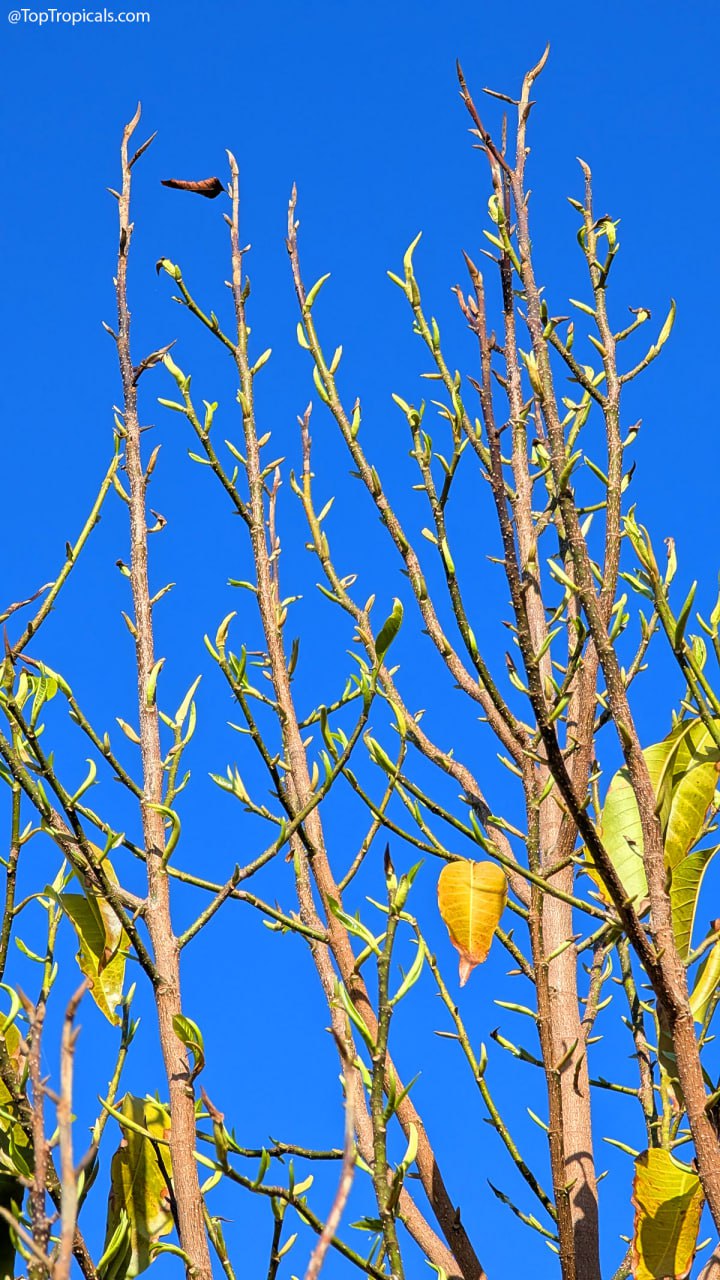
Champaka tree new growth sprouts
A Champaka tree (Joy Perfume Tree) first fresh sprouts
The Magic Number 65: when tropicals finally wake and the 7-Day Rule you should know 🌱
Discover the "Magic 65" rule for waking up your garden and the exact time to start fertilizing for maximum growth. Learn the specific temperature threshold that signals your tropicals to wake up and how to handle spring cold snaps.
🌿 If you’ve been staring at your dormant trees and shrubs wondering if they survived the winter, you aren't alone. The most frequent question every spring is: "When will my tropical plants start sprouting?"
🌿 While the calendar might say spring, tropical plants don’t use a watch - they use a thermometer. If you want to see green shoots and active growth, there is one "Magic Number" you need to watch: 65F 🌡
🌿 The 7-Day Rule for Tropical Growth
The gold standard for the tropical world is simple: plants generally wake up when minimum nighttime temperatures remain at or above 65F for at least one full week.
🌿 Why 65°F?
Tropical species are biologically programmed to stay dormant to protect their cell structure from cold damage. A single warm day won't fool them, but seven consecutive nights of 65F+ signals that the "growing season" has officially arrived. Once you hit that 7-day mark, you’ll see buds pushing and fresh leaves finally sprouting.
🌿 Can You Force Them to Wake Up Faster?
Patience is a virtue, but if you’re looking to "push" your plants, focus on two things:
🌞 Sun Exposure: Ensure they are in the brightest spot possible to warm the soil. ♨️ Heat Retention: Use dark mulch or move potted plants onto concrete surfaces that retain daytime heat.
🌿 When to Start Fertilizing
❌ Don’t reach for the fertilizer until you see that active growth. Feeding a dormant plant can lead to root rot or wasted nutrients.
👉 The Signal: After that first week of 65F nights.
✅ The Action: Once you see green tips, start your fertilization routine. This is when the plant actually has the metabolic "engine" running to use those nutrients.
🌿 Watch Out for the "False Spring"
Before you go all-in, ensure the risk of a hard freeze has passed. A minor cold snap - a few nights in the 50s - won't kill your progress, but it will act as a "pause" button. If cool weather persists, tropicals may "lock up" and return to dormancy. If that happens, simply reset your clock and wait for the next stretch of 65F nights.
🌿 Ready for the Wake-Up Call? Fuel Your Tropical Growth!
Don’t get caught empty-handed when that 7th day of 65F hits. Stock up now so you can feed them the moment they wake up. Using the right nutrients during the active growth phase is key to lush blooms. Check out our curated selection of professional-grade fertilizers:
📷 Recovery in Action: The Joy Perfume Tree - Champaka showing off its first fresh sprouts in March after a chilly Florida winter. This is exactly what happens once you hit that 7-day streak of 65F nights! 📚 Learn more: ✦ Why is my Champaka Tree dropping leaves?
Beyond fruit: how this African tree supports wildlife and garden health
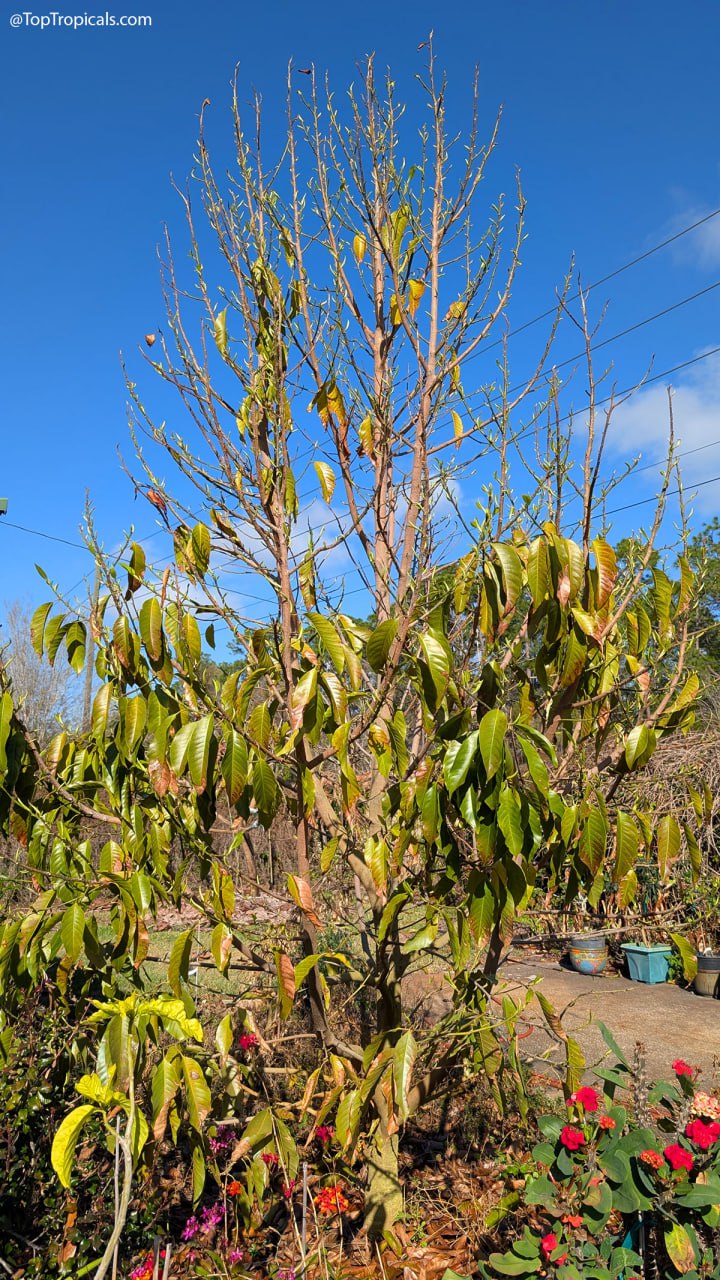
Vangueria infausta - Spanish Tamarind
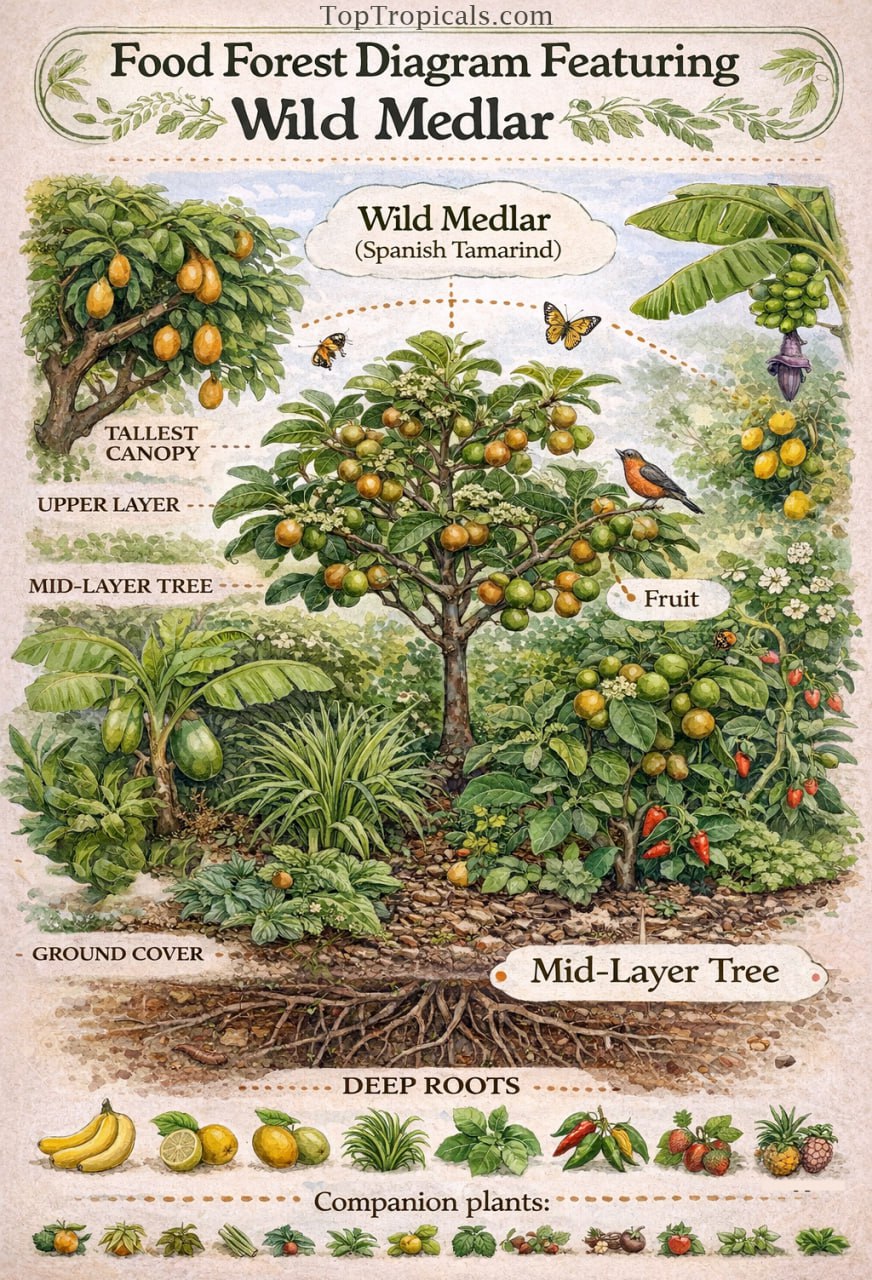
Beyond fruit: how this African tree supports wildlife and garden health: Wild Medlar in the ecological food forest 🍊
Vangueria infausta (Spanish Tamarind, Wild Medlar) might win your heart for its sweet-tart fruit and folk medicine magic - but did you know it’s also a quiet hero in the ecosystem? Whether you’re planting a full-blown food forest or just a mixed backyard garden, Vangueria infausta brings more than fruit to the table. It brings balance, beauty, and biodiversity.
🐝 Pollinator power
When in bloom, this tree produces nectar-rich flowers that attract bees, butterflies, and other pollinators. These beneficial insects don’t just help the Wild Medlar fruit - they boost productivity in your entire garden.
If you grow mangos, citrus, guava, or veggies nearby, Spanish Tamarind helps keep the pollinator traffic moving.
🐦 Bird magnet
Birds are big fans of this tree. They nest in its dense branching, snack on overripe fruit, and help spread seeds. In return, they’ll help keep down pests like caterpillars and beetles.
Even in a small garden, one Wild Medlar can be a micro-habitat for birds, insects, and other helpful wildlife.
🌱 Soil stabilizer
With its deep roots and drought-hardy nature, Wild Medlar helps hold soil in place, especially on slopes or rocky patches. It improves drainage and reduces erosion, which makes it a great addition to food forests in challenging spots.
🍂 Natural mulch & green cleanup
The tree drops a modest amount of leaf litter, which breaks down into soft, rich mulch. In a diverse planting, that means fewer weeds, better soil structure, and less watering needed.
🌿 Companion planting & food forest stacking
· Works great as a mid-layer tree in multi-tiered systems
· Provides light shade for herbs or smaller fruiting plants
· Plays well with bananas, papaya, guava, lemongrass, and ground covers
In zones 9-11, it can live happily in a mixed border or permaculture guild. In colder zones, just keep it potted and move it around as needed - it still offers many of the same benefits.
🛡 Pest and disease resistant
One more bonus: Spanish Tamarind is incredibly low-maintenance. It resists most common pests and doesn’t suffer from fungal issues like many tropical fruit trees do. That means fewer chemicals and more harmony in your garden ecosystem.
✍️ Ready to plant something that gives back?
Think you need more than just another fruit tree? More life. More movement. More meaning in your garden?
Grow Wild Medlar for the fruit - but keep it for everything else it brings. The pollinators. The shade. The quiet medicine. The steady presence that makes your space feel alive.
If you’re building a food forest - or simply want a tree that earns its place every single season - this one doesn’t just sit there. It contributes.
By Tatiana Anderson, Horticulture Expert at Top
Tropicals with Smokey & Sunshine help
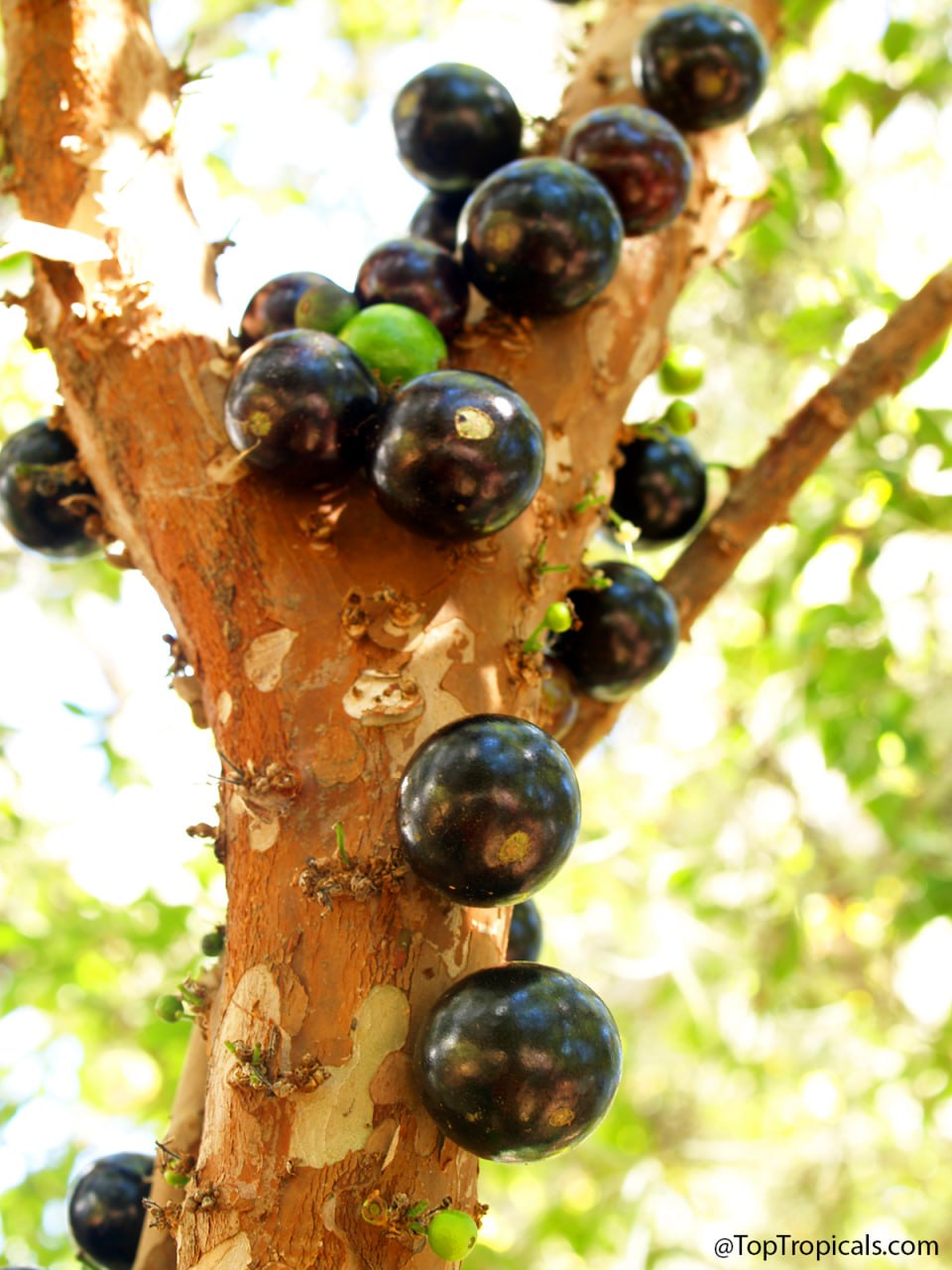
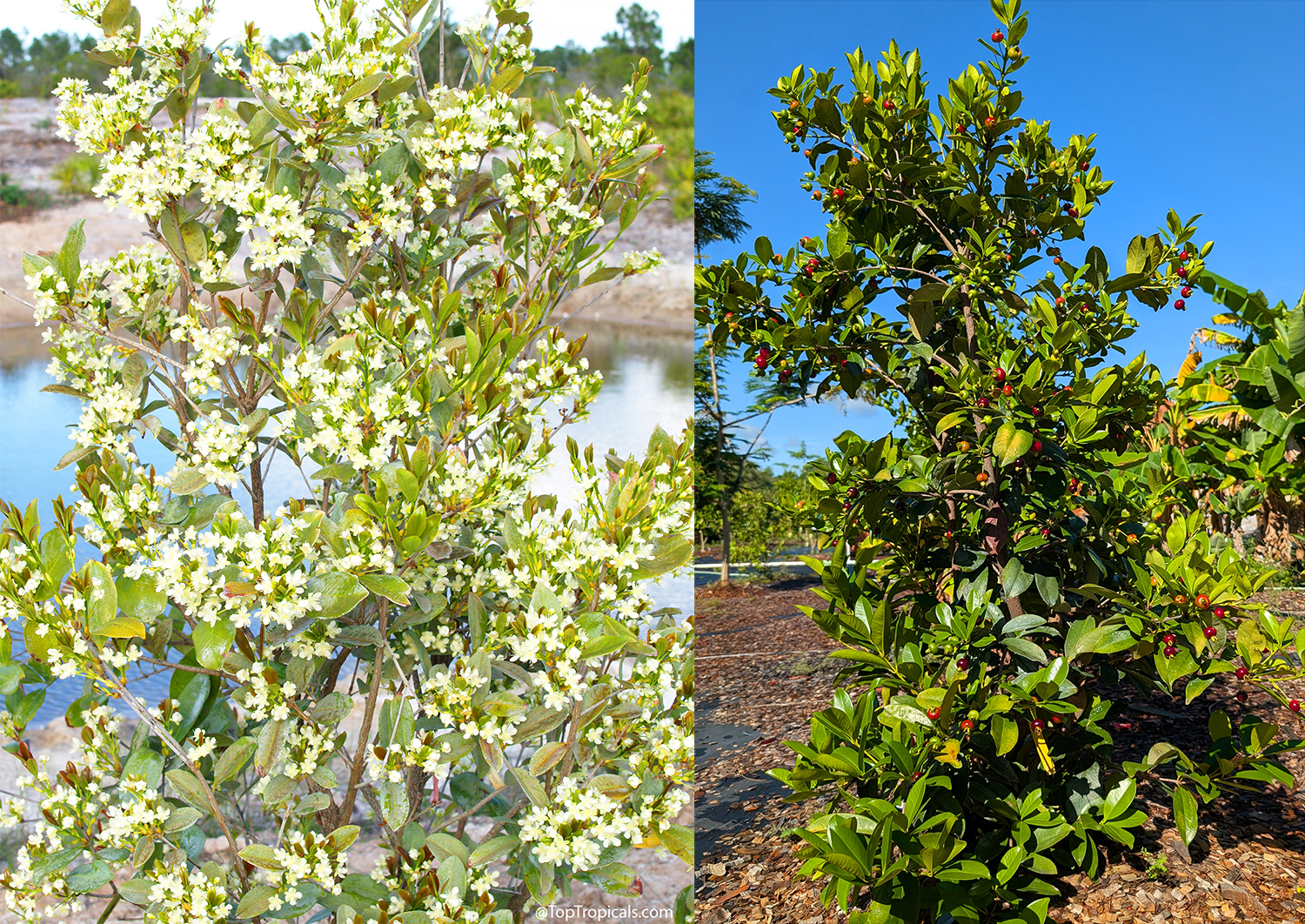
Eugenia brasiliensis - Grumichama fruit on the branch
Growing Eugenia Cherries (Cherry of the Rio Grande & Grumichama)
Cherry of the Rio Grande and Grumichama are compact, adaptable tropical
fruit trees well suited to Southern landscapes. While forgiving, they
perform
best when planted correctly from the beginning.
Site and Planting
Drainage is essential. Avoid low areas where water collects. Plant on
a slight mound if soil is heavy or clay-like.
Choose full sun for best flowering and fruit production. Partial shade
is tolerated.
A south or southeast exposure near a wall improves cold resilience and
reduces wind stress.
Dig a hole twice as wide as the container, but no deeper than the root
ball.
Set the tree level with surrounding soil. Do not bury the trunk.
Water and Feeding
Water regularly during the first few months while roots establish.
Once established, trees tolerate short dry periods but fruit best with
moderate, consistent moisture.
Established Cherry of the Rio Grande can tolerate brief drops into the
low 20s.
Established Grumichama tolerates temperatures into the upper 20s.
Harvest and Production
Cherry of the Rio Grande fruits from late spring into summer. Pick
when fully dark and slightly soft.
Grumichama ripens quickly, often within four weeks after flowering.
Pick when glossy and deep purple-black.
Both trees often begin fruiting within 2–3 years and increase
production steadily with maturity.
Growing in Containers
Use at least a 10–20 gallon pot for long-term growth.
Ensure multiple drainage holes.
Use a high-quality, well-draining container mix. Avoid heavy garden
soil. Top Tropicals Abundance soil-less mix is specially formulated for pot
growing
Place in full sun for best fruiting.
Water deeply, then allow the top layer to dry slightly before watering
again.
Move containers to a protected area during hard freezes.
Prune lightly to maintain shape and airflow.
Common Mistakes
Planting in poorly drained soil.
Overwatering and keeping soil constantly saturated.
Over-fertilizing with excessive nitrogen.
Planting too deep and burying the trunk.
Expecting heavy crops immediately instead of allowing time for
maturity.
Which one tastes better – Cherry of the Rio Grande or
Grumichama?
Cherry of the Rio Grande has a deeper, classic “sweet cherry”
flavor with slight richness. Grumichama is softer, juicier, and often
described as cherry with hints of grape and plum. Both are excellent fresh;
Grumichama is especially popular for jam.
Which tree produces more fruit?
Grumichama typically produces heavier crops once mature and can carry
hundreds of fruits in a season. Cherry of the Rio Grande produces
consistently but
in slightly smaller volumes.
Do birds take all the fruit?
Birds are attracted to both trees, especially Grumichama. Netting during
peak ripening or harvesting promptly usually solves the issue.
Are these true "tropical" trees or subtropical?
They are best described as subtropical tropicals. Unlike ultra-tender
tropical fruits, Eugenia cherries tolerate occasional frost once
established,
making them more reliable in Southern landscapes.
Do they drop fruit messily?
Fruit will fall if overripe, but the trees are compact and manageable.
Regular harvesting prevents ground drop and keeps the area clean.
Can they be used for hedging or screening?
Yes. Their dense evergreen foliage and upright growth make them suitable
for edible hedges or privacy screens while still producing fruit.
Choosing between them is not about survival — both have proven
resilient. It is about flavor preference, crop volume, and how you want to
use
the fruit in your kitchen and landscape.
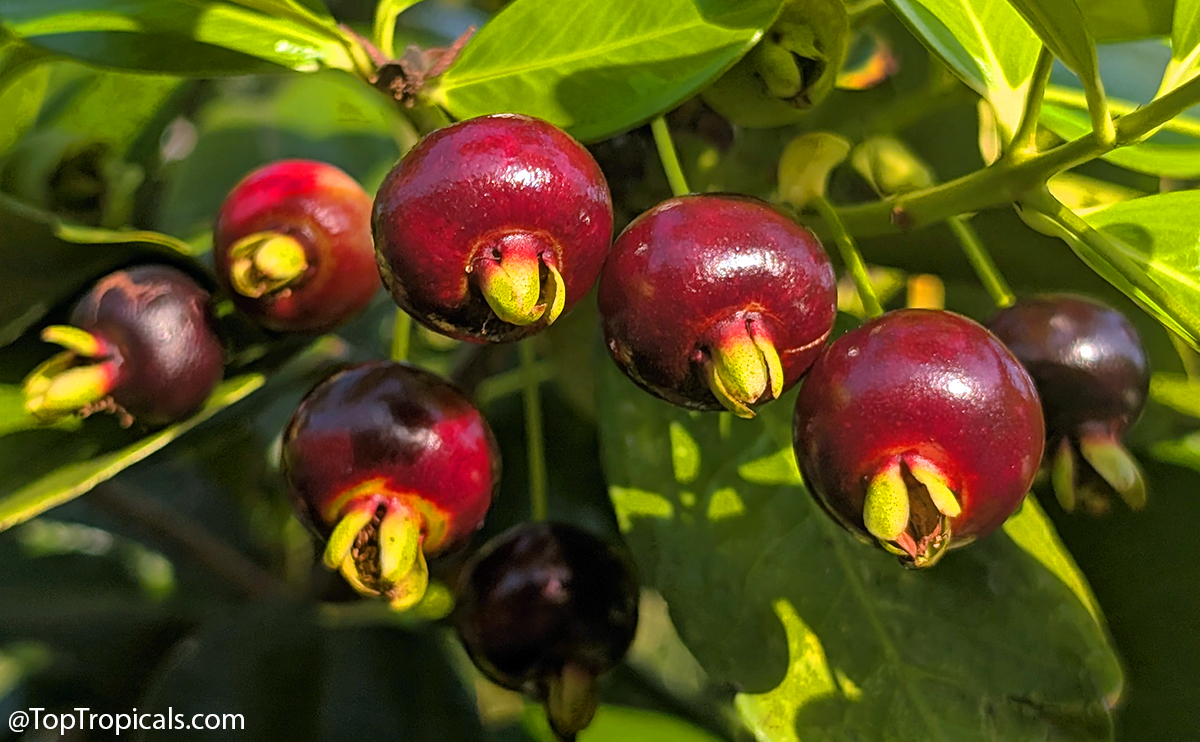
Eugenia brasiliensis - Grumichama fruit close up
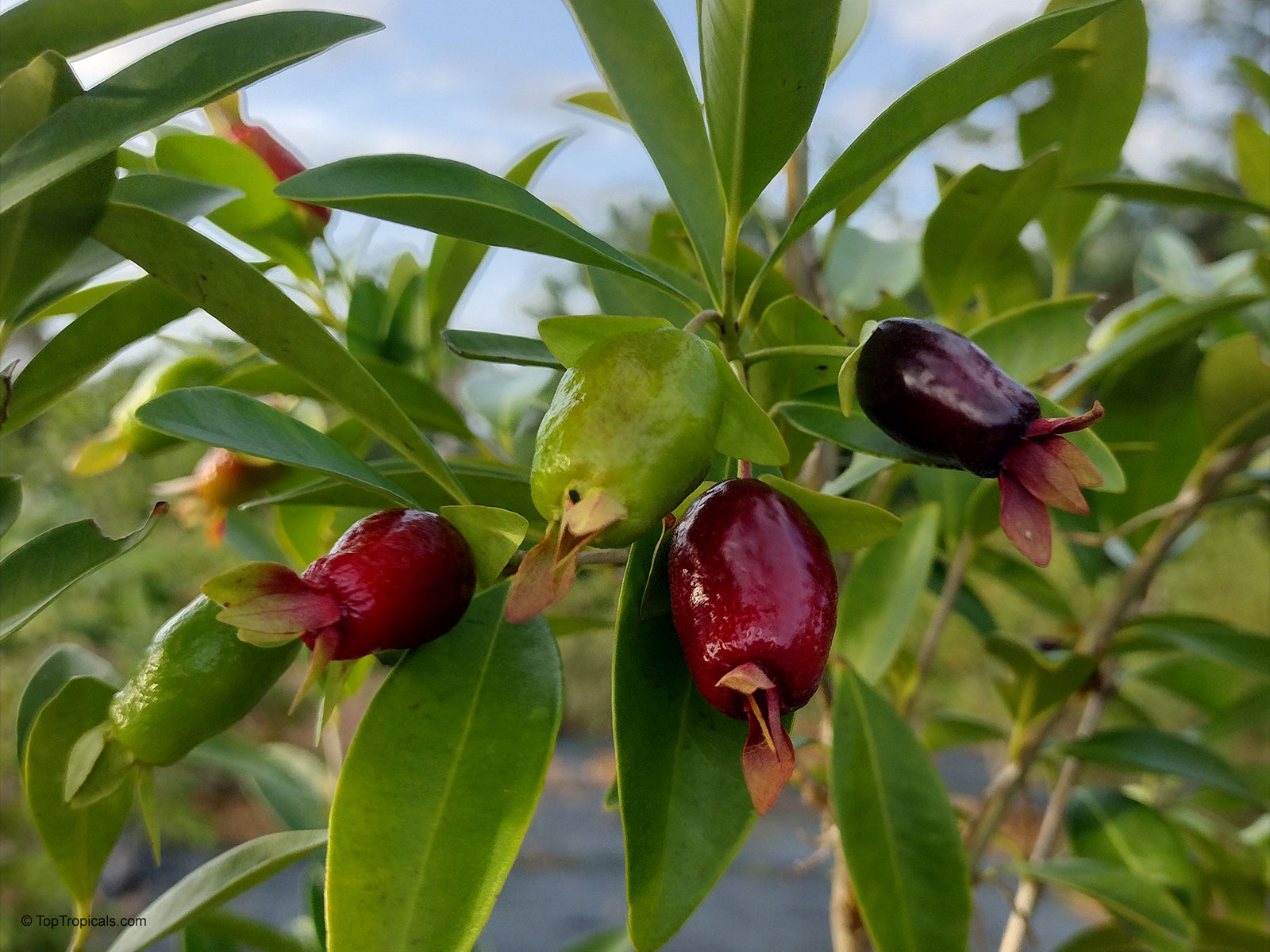
Eugenia aggregata (cv. Calycina), Cherry of the Rio Grande
Sunshine: You know, February 27 was International Polar Bear Day. I
just learned about it and got a brilliant marketing idea. Cherry of the Rio
Grande survived 25F. With wind. Real wind. That means we go north. Let them
taste this magic. I even have a donut recipe with the fruit. It’s a
bomb,
Smokey. We expand. Trust me. Finally you can afford that new watering
timer.
Smokey: Not so fast, genius. Twenty five degrees is not the North
Pole. And polar bears and penguins do not share zip codes.
Sunshine: You always pour cold water on my brilliance. Fine. Where
do we start?
Smokey: Well, first you go talk to Tatiana. She graduated from the
Geography Department. She can explain climate zones. Cherry of the Rio
Grande
can grow in North Florida, Texas, and similar climates. Let’s master
that before we conquer Arctic.
Sunshine: So… Phase One: Geography?
Smokey: Exactly.
Some stories are easier to tell with a little humor. Smokey and Sunshine
were never just mascots. They represent the two forces behind every decision
we make here: bold ideas and careful reality. One dreams big. The other
checks
the climate zone map. Together, they remind us that growing plants is part
science, part optimism, and always personal. If you have ever wondered why
they keep appearing in our newsletters, you can read their full story on the
Smokey and Sunshine page. They have been with us longer than most people
realize.
Freeze Testing of Grumichama and Cherry of Rio Grande
🍒❄️
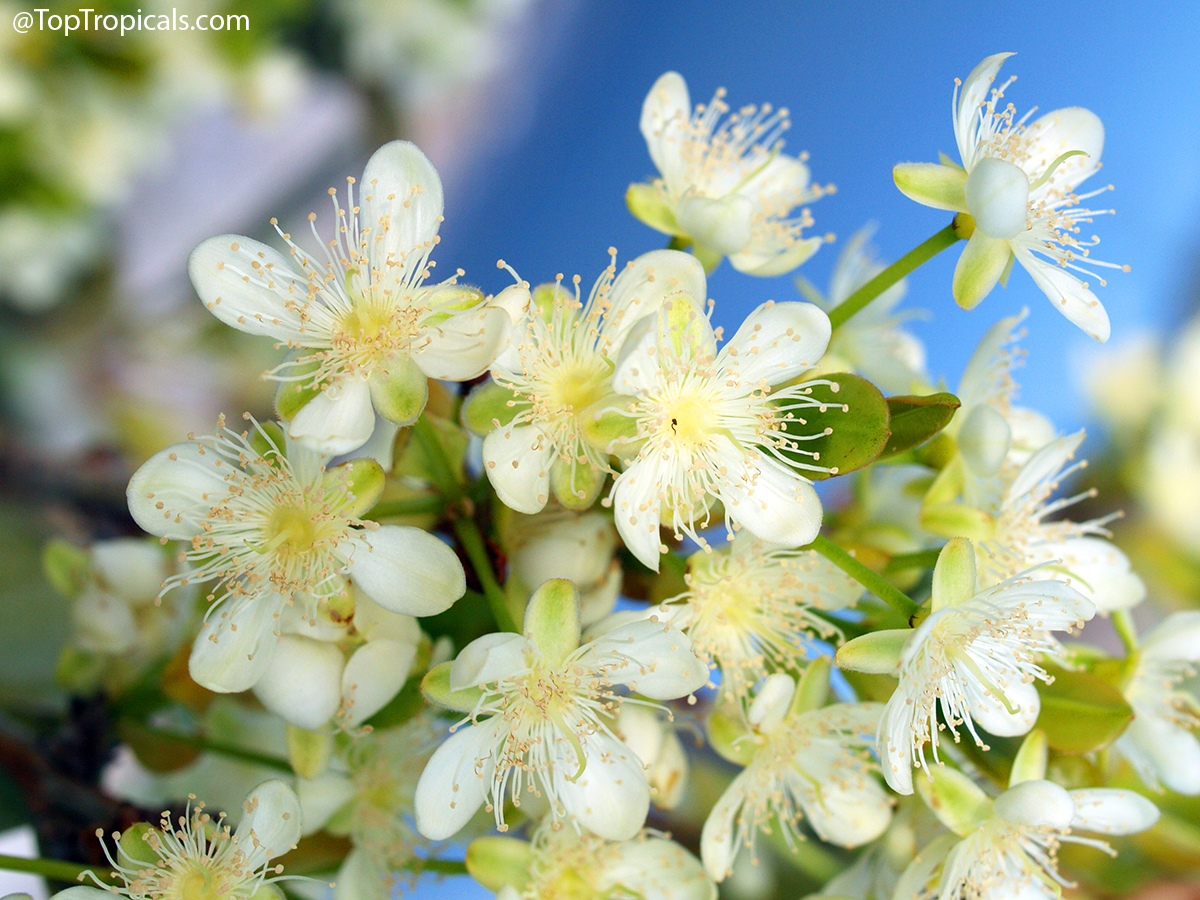
Eugenia brasiliensis - Grumichama tree flowering and fruiting
When temperatures dropped to 25F, with wind chill near 14F, winter made
it clear which tropical trees were truly resilient. Some plants burned back.
Tender growth collapsed. But our established Eugenia cherries stood
steady. Leaves held. Branches stayed flexible. The canopy remained intact.
Cherry of the Rio Grande (Eugenia aggregata) and Grumichama (Eugenia brasiliensis) are among the most cold-hardy tropical
cherries for Southern gardens. Both are native to Brazil and thrive in USDA
Zones 9b–11, and even protected 9a sites.
Cherry of the Rio Grande produces dark ruby fruit that ripens
almost black, with a rich, full cherry flavor. It flowers early in spring
and
can fruit well into summer. Mature trees can tolerate brief drops into the
low
20s once established. Trees typically grow 8 to 15 feet tall, remain
naturally compact, and often begin fruiting within 2 to 3 years.
Grumichama is an evergreen tree known for both beauty and
productivity. In spring, it covers itself in white starburst flowers that
attract
pollinators. Within about four weeks, glossy purple-black fruit develops.
Established trees tolerate temperatures into the upper 20s and grow well in
the
ground or in 5–10 gallon containers. Mature trees can produce hundreds
of
fruits per season.
Across the Eugenia group, strengths are consistent: early
bearing, compact growth, heat tolerance, light freeze endurance, and low
pest
pressure. They are adaptable to different soils, need modest water once
established, and perform in full sun or partial shade. Birds enjoy the
fruit, but there
is usually plenty to share.
Nutritionally, Eugenia cherries provide Vitamin C, fiber,
antioxidants, and notable Vitamin A that supports eye health. They offer
sweetness
with real dietary value.
In the kitchen, they are simple and rewarding. Cherry of the Rio Grande
makes an easy
compote. Simmer the fruit with a small amount of water until soft, mash
lightly, and spoon over pancakes or warm bread. Grumichama turns into a deep
red
jam with sugar and lime, or can be blended into a bright spoon drizzle over
vanilla ice cream.
Even when not fruiting, both trees remain attractive year-round with
glossy evergreen foliage and clean structure. They fit well into edible
landscapes, small yards, and container gardens.
Winter will return. The difference lies in planting fruit trees that can
handle heat, humidity, and the occasional cold snap. If you are building a
food forest for lasting harvests, cold-hardy tropical cherries like Cherry
of
the Rio Grande and Grumichama deserve a place in your garden.
Ripe Grumichama (Eugenia brasiliensis) fruits developing on the
tree, turning deep red to nearly black when fully mature.
Eugenia aggregata (cv. Calycina), Cherry of the Rio Grande