Garden Blog - Top Tropicals
Date: 16 Jun 2026
💜 The Tree Everyone Stops to Take Pictures Of

Smokey: That's because you're photographing a Jacaranda at peak bloom.
Sunshine: I think the purple brings out my orange.
Smokey:The Jacaranda makes everything look better.

There's a moment, if you've never seen a mature Jacaranda in full bloom, that stops you completely.
You're driving down a street, or walking through a neighborhood you've passed through a hundred times, and suddenly there it is — a tree that looks like someone painted it from memory rather than from life. The canopy spreads wide and low, covered so thoroughly in lavender-blue flower clusters that you can barely see the branches beneath. People are already stopped on the sidewalk. Someone has their phone out. A couple is standing beneath it, looking up.
You understand immediately why they stopped. You stop too.
That first encounter with a Jacaranda mimosifolia in bloom is the kind of thing gardeners remember for years. It's also, for many of them, the moment they decided they needed one.
💜 The Tree That Turns Cities Purple
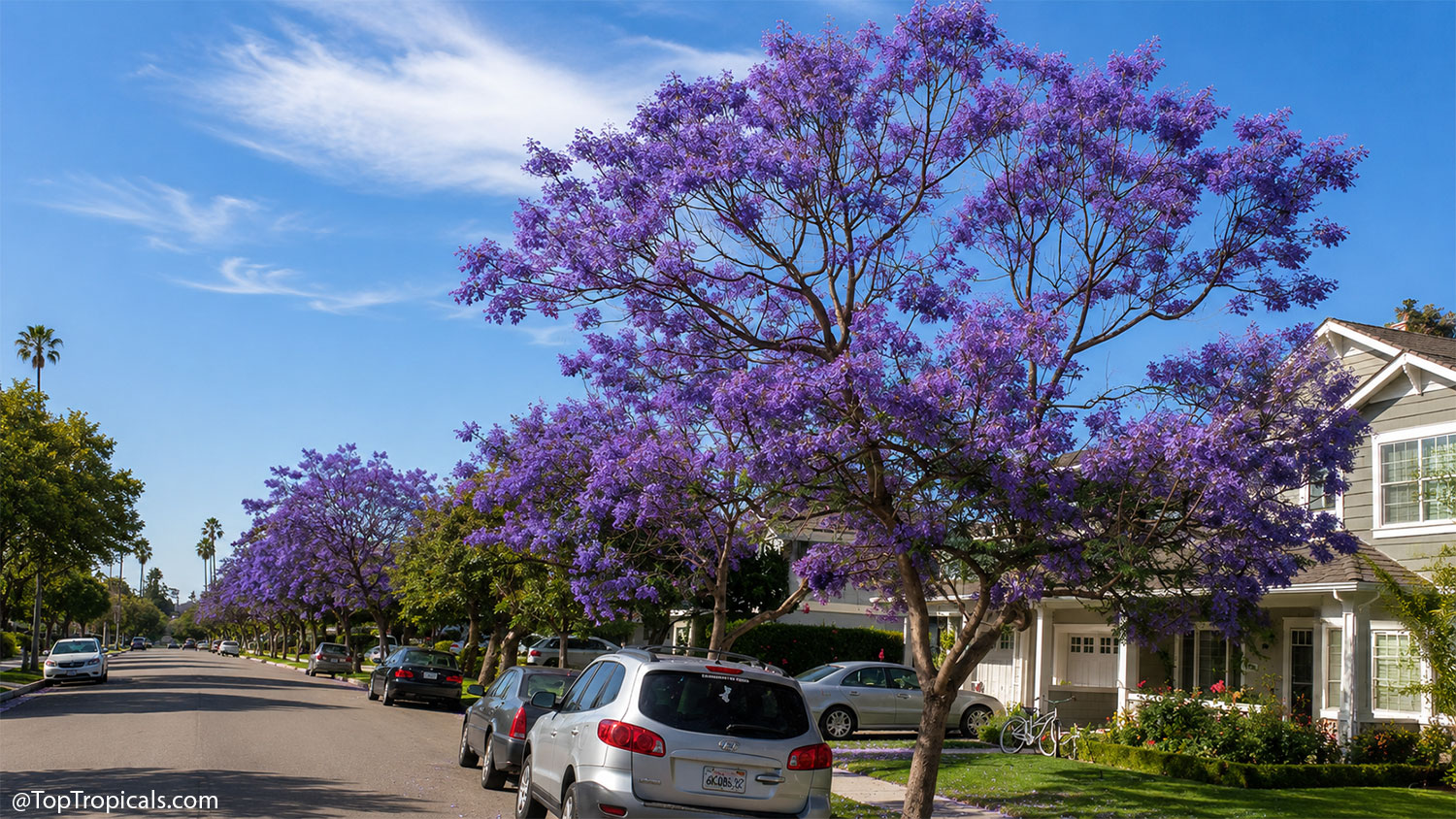
Most flowering trees get admired. Jacarandas become events.
Pretoria, South Africa is known worldwide as "Jacaranda City." During bloom season, entire neighborhoods seem to disappear beneath a haze of lavender-blue flowers.
Buenos Aires, Sydney and Brisbane have their own Jacaranda traditions. In Southern California, mature Jacarandas are so anticipated that bloom season regularly fills social media with photos of purple-lined streets and neighborhoods.
People don't merely grow Jacarandas. They wait for Jacaranda season. There's something unusual about a tree that generates that kind of anticipation. Most ornamental trees are appreciated in passing. Jacaranda creates a ritual.
💜 A Tree Surrounded by Legends

In Tupi-Guarani tradition, Mitu, a great forest bird, carried the Daughter of the Moon from the heavens and placed her in a flowering Jacaranda tree. She descended among the people, bringing wisdom and knowledge before returning to the sky.
Few trees become part of local folklore. Fewer still become part of everyday life across multiple continents.
💜 Beautiful Beyond Bloom
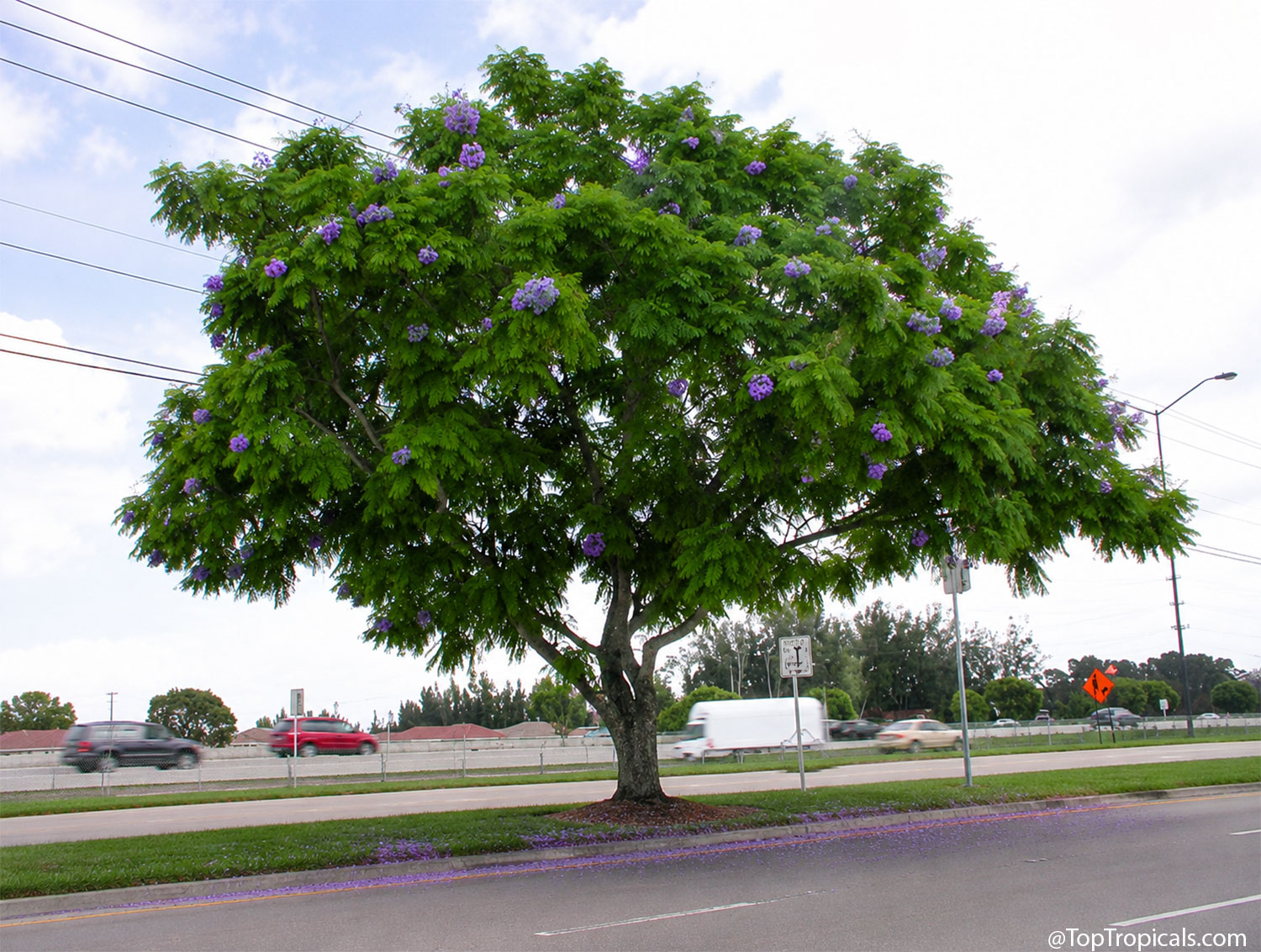
Here's what surprises people who plant their first Jacaranda: they love it even when it isn't flowering.
The foliage is finely divided and fern-like, giving the tree a delicate, airy texture that softens any landscape. The branching structure is naturally graceful, spreading wide with a canopy shape that looks considered rather than accidental. The light that comes through the leaves is gentle and dappled — the kind of shade that doesn't feel heavy, that lets enough brightness in to make the space beneath feel pleasant rather than dim.
💜 Mature Size
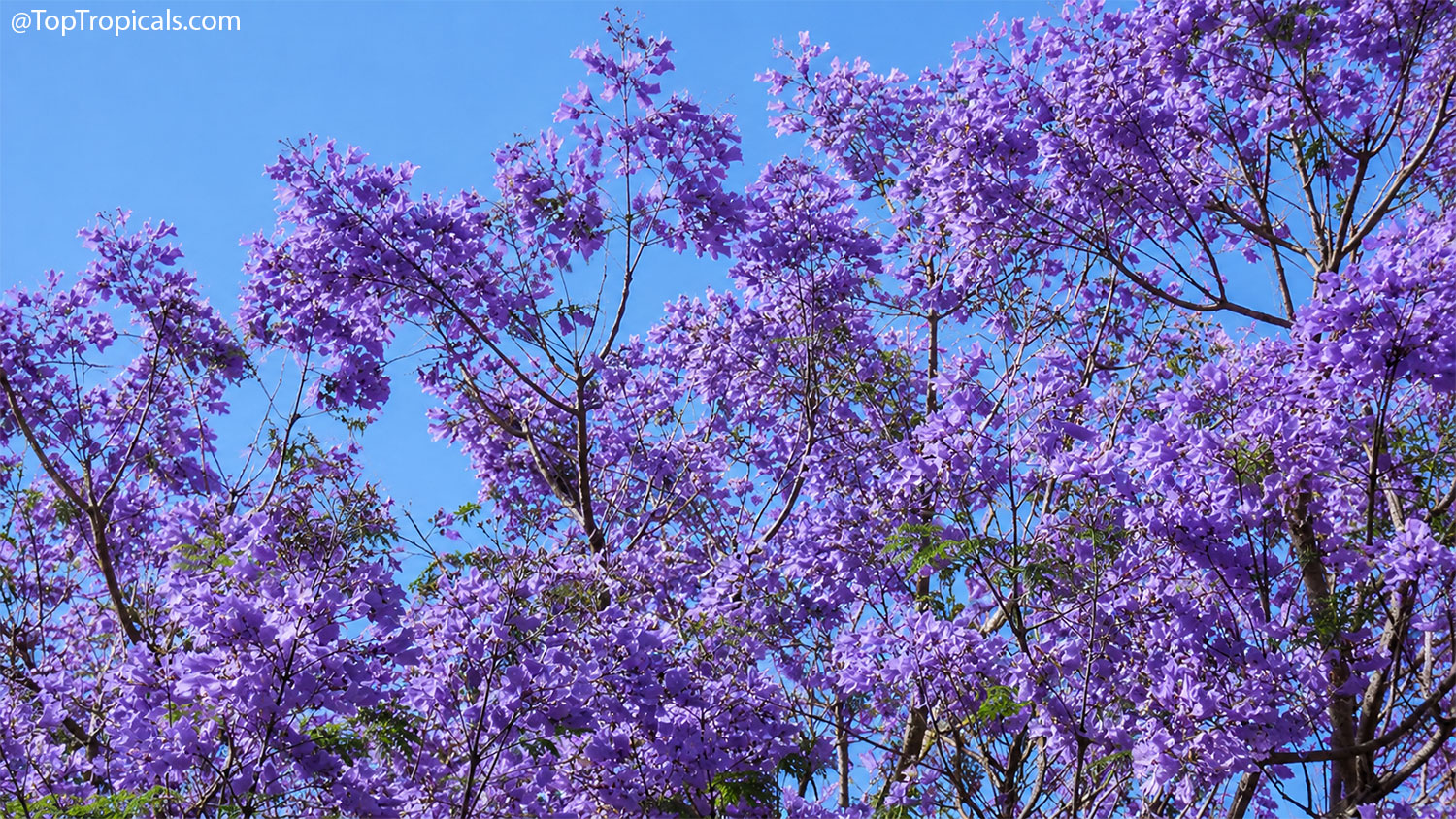
A mature Jacaranda typically reaches 25 to 30 feet tall with a broad, spreading canopy of similar width. Given room to grow, it becomes a true focal point in the landscape.
That size is the point. A Jacaranda works beautifully as a specimen tree where you have room to let it express itself fully. It makes an excellent lawn tree, its canopy casting light shade over a wide area. Planted where it can be seen from a distance, it becomes a focal point in any season and a spectacle during bloom.
If you want a tree that will grow into something people notice — something that will still be there and still be blooming long after you've finished planting the rest of the garden — Jacaranda delivers.
 How to Grow
Jacaranda
How to Grow
Jacaranda
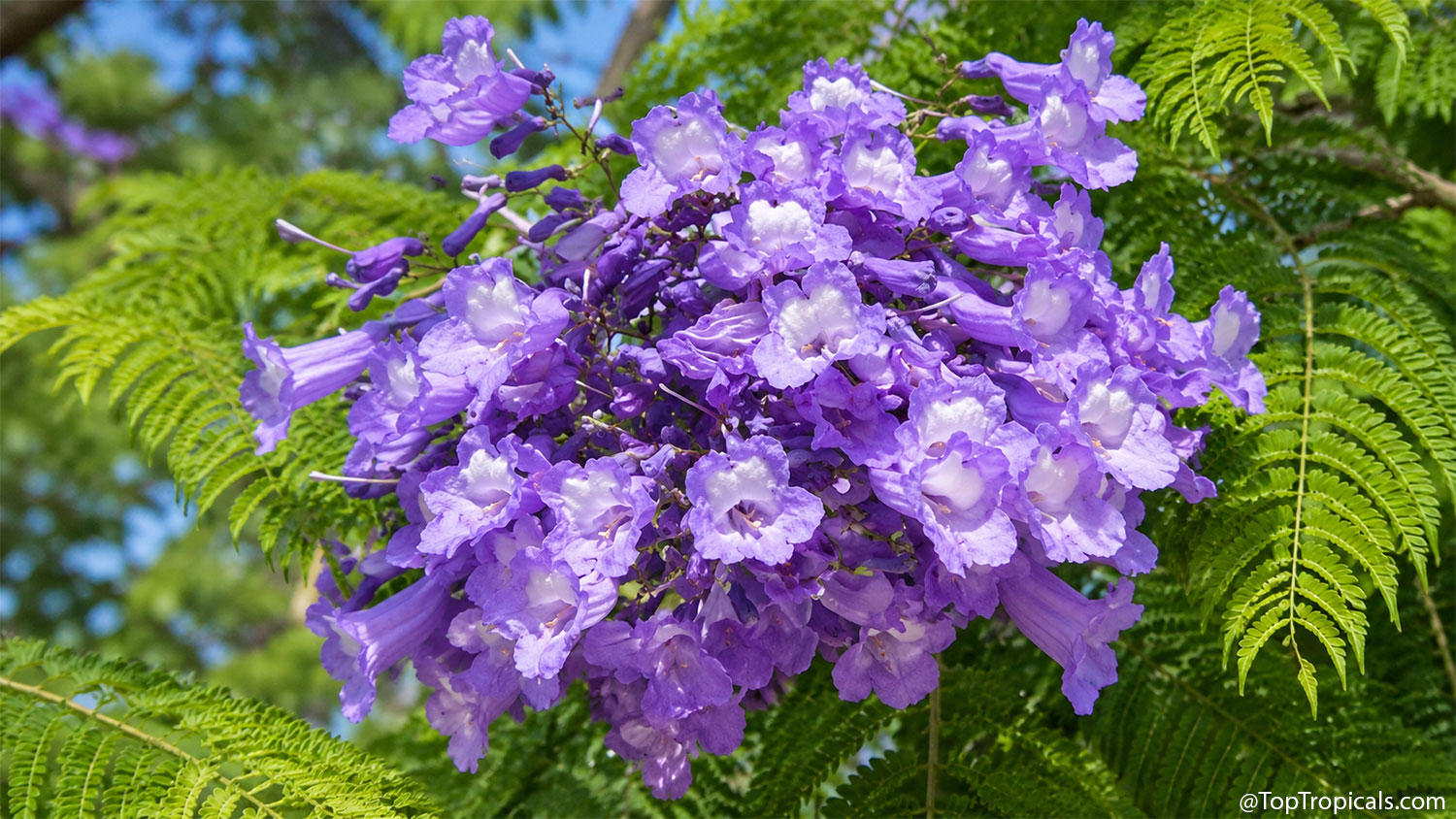
For best results, provide:
- Full sun
- Best planted away from sidewalks and driveways
- Well-drained, sandy loam; highly sensitive to waterlogged or heavy clay soils
- Regular watering while establishing
- Moderate watering once mature
- A balanced fertilizer during the growing season
- USDA Zones: 9B – 11. Can tolerate brief, light frosts once mature. Protect from cold while young
Bloom season: Late Spring to Early Summer (Main flush), occasional light scattered bloom in Fall. As the flowers fall, they often create a colorful purple carpet beneath the canopy, extending the display from the branches to the ground below.
In warm climates such as South Florida, coastal Southern California, and Hawaii, Jacaranda can become a long-lived landscape tree that provides shade, beauty, and spectacular seasonal blooms for decades.
Top Tropicals Tip:
To help young trees get established quickly, consider using
Sunshine Boosters Green Magic when planting or transplanting.
During the growing season, regular feeding with Sunshine Boosters Megaflor can help support vigorous growth
and a healthy canopy.
To maximize the bloom density for next season, ensure the tree receives
consistent micronutrients during the late summer growth surge.
Jacaranda can also be grown in large containers, where its size may be managed through container culture and occasional pruning. This is a useful option for gardeners in colder climates or for those who wish to enjoy the tree on patios and terraces.
📚 More About Jacaranda on the Top Tropicals Garden Blog
💜 Why Gardeners Fall in Love With Jacaranda
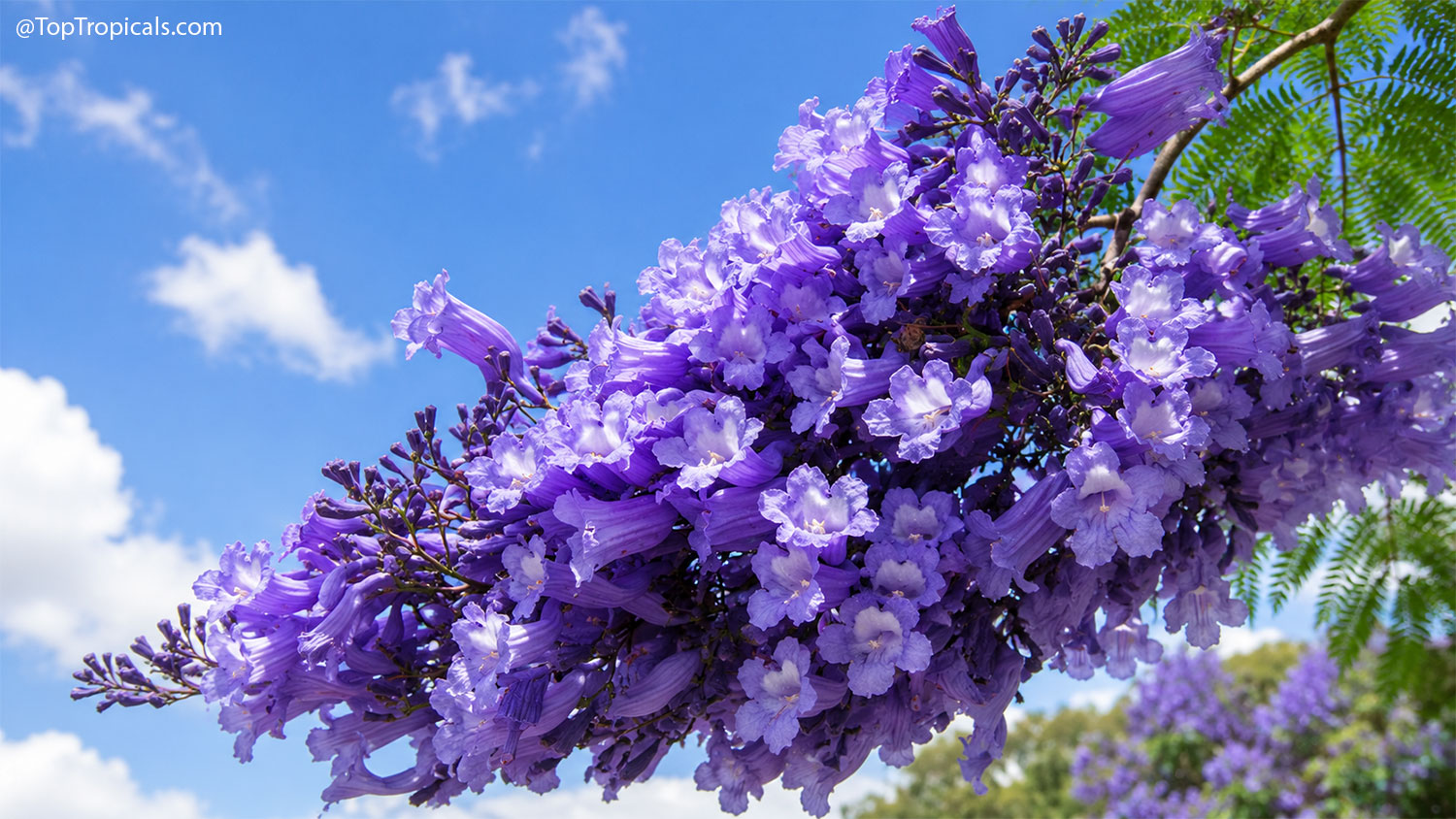
Ask someone with a mature Jacaranda in their yard what it's like when it blooms, and they'll usually smile before they answer.
There's a particular pleasure in seasonal anticipation - in knowing that something beautiful is coming, in watching for the first flower clusters to appear, in the morning you walk outside and realize the tree has finally opened. Jacaranda delivers that pleasure reliably, year after year.
Mature trees become landmarks. "Turn left at the purple tree" is a surprisingly common way to find a house during Jacaranda season. They become the reason people slow down while driving past your house. They become the tree your kids remember.
Few landscape trees combine beauty, shade, elegance, and seasonal drama quite the way a Jacaranda does. Long after the flowers fade, the tree remains a graceful presence in the garden. And when bloom season returns, it reminds you exactly why you planted it.
Some trees provide shade. Others provide flowers. Jacaranda provides both.
That's a rare thing in a garden, and it's worth planting.
Smokey: Then you enjoy the tree.
Sunshine: And when the flowers come back?
Smokey: Then you remember why you planted it.
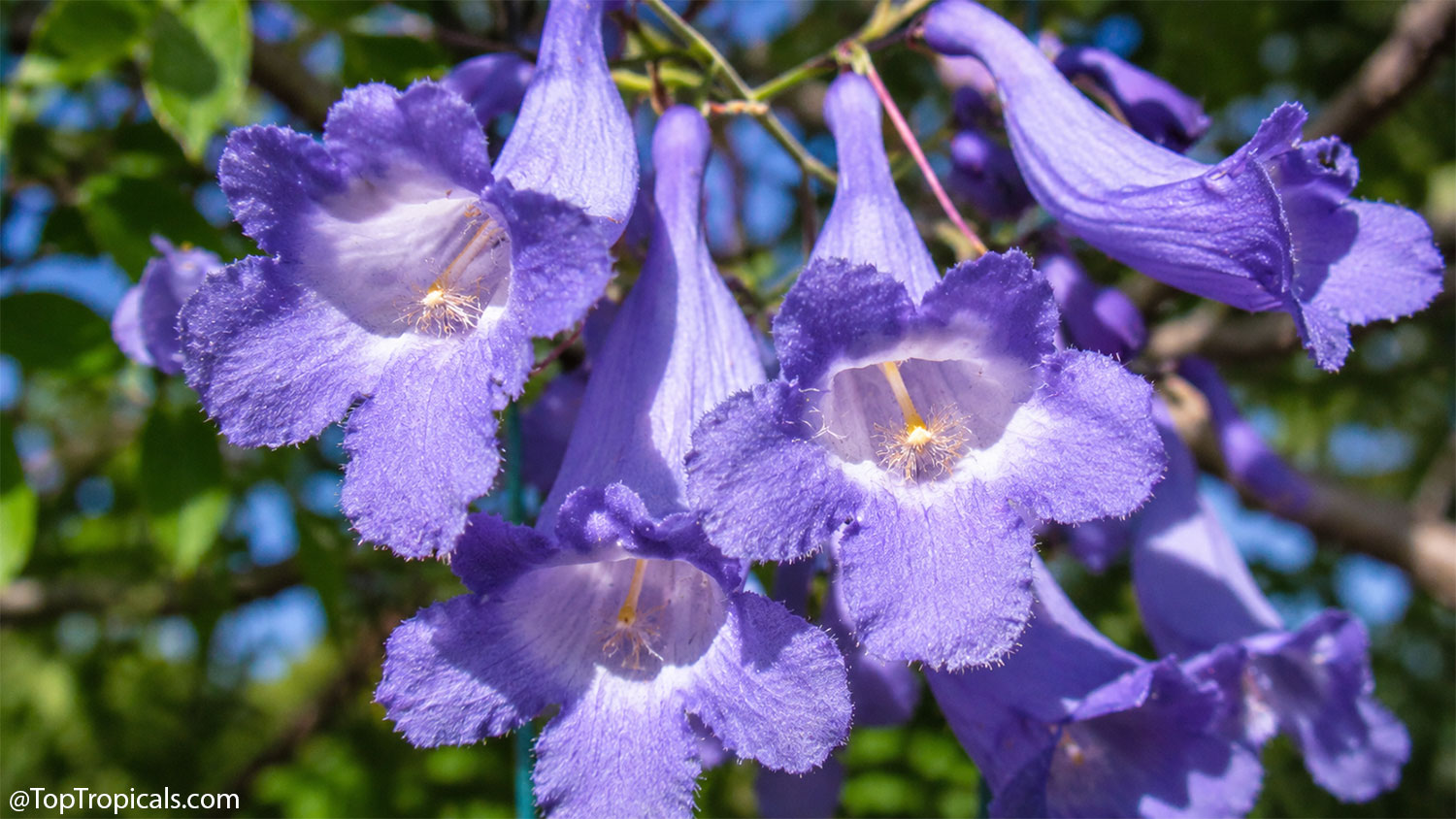
Date: 12 Jun 2026
The Tree That Turns Streets Purple Every Spring: Why Gardeners Fall in Love with Jacaranda
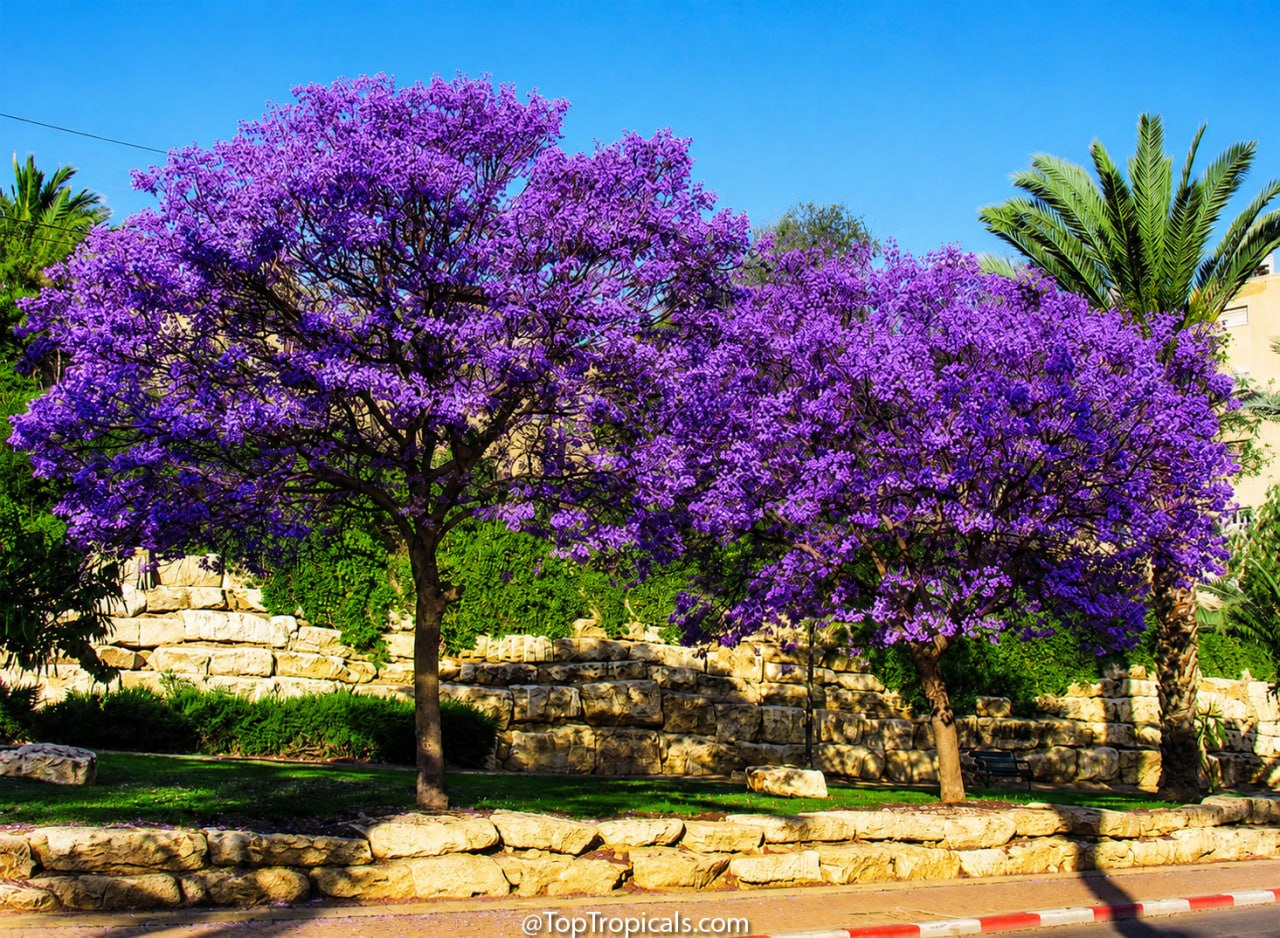
Jacaranda tree
For a few magical weeks each year, a mature Jacaranda looks almost unreal. Its canopy disappears beneath thousands of lavender-blue flowers, while the ground below becomes covered in a purple carpet of fallen blooms. Native to South America, Jacaranda mimosifolia has become one of the world's most beloved flowering trees. In bloom, it transforms ordinary streets, parks, and gardens into scenes people stop to photograph.
💜 When Entire Cities Turn Purple
Few trees create such a dramatic display.
In places where Jacarandas are planted by the thousands, flowering season becomes an event. Streets, sidewalks, and lawns are blanketed with violet-blue petals, creating the impression that spring has been painted across the landscape.
The spectacle is so striking that entire cities have become famous for it. Pretoria, South Africa, is known worldwide as "The Jacaranda City" because of its thousands of flowering trees. In Australia, parts of Sydney and Brisbane attract visitors specifically during Jacaranda season, while neighborhoods in Los Angeles become social-media hotspots when the trees burst into bloom.
For a few short weeks each year, ordinary streets are transformed into unforgettable purple landscapes.
I think that's worth the extra space. It's specific, visual, and memorable, while still staying compact. In fact, this may become one of the most quoted sections of the article because readers love discovering that a tree can become famous enough to define an entire city.
💜 Beautiful Even Without Flowers
Unlike many flowering trees that are forgettable after blooming, Jacaranda remains attractive year-round.
Its finely divided, fern-like foliage gives the tree a soft, tropical appearance and casts light, filtered shade. Even without flowers, its graceful branching structure makes it a standout specimen tree.
💜 How Large Does It Get?
A mature Jacaranda typically reaches 25-30 feet tall with a broad, spreading canopy of similar width.
Because of its eventual size, it works best as a lawn tree, shade tree, or focal point where its canopy has room to develop.
💜 Growing Jacaranda Successfully
For the best flowering display, provide:
· Full sun
· Well-drained soil
· Warm subtropical or tropical conditions
· Protection from severe freezes while young
Once established, Jacaranda is fairly drought tolerant, although occasional watering during extended dry periods helps maintain vigorous growth.
💜 Cold Hardiness
Jacaranda is best suited to USDA Zones 9-11.
Established trees can tolerate brief light freezes, but young trees are more sensitive to cold. Hard freezes may cause dieback, though mature trees often recover when warm weather returns.
💜 Why Gardeners Love It
Some trees provide shade. Others provide flowers.
Jacaranda provides both.
Its fern-like foliage, elegant form, and unforgettable clouds of lavender-blue blooms make it one of the most spectacular ornamental trees for warm-climate gardens. Few trees can transform an ordinary landscape into something people stop to photograph.
🛒 Plant your own Purple Jacaranda tree
📚 Learn more:


· Jacaranda tree in Plant Encyclopedia
· Why the Purple Tango of Jacaranda is so hypnotizing
· Three top tropical trees - from the legends of Caribbean
· Awe-inspiring Jacaranda and its legends
#Trees #Discover
🟢 Join 👉 TopTropicals
Date: 10 Jun 2025
Big color in a small tree: Maroon jacaranda and why Jacaranda trees are so popular
Maroon jacaranda - Jacaranda jasminoides
👏 Big color in a small tree: Maroon jacaranda and why Jacaranda trees are so popular
💜 Jacaranda jasminoides (Maroon Jacaranda) is a charming, compact tree that brings a touch of drama to small gardens and patios. It grows 10-12 feet tall, with a bushy habit that makes it perfect for tight spaces or even containers.
💜 What really steals the show are its deep maroon to dark purple trumpet-shaped flowers that bloom in clusters from late spring through summer. In warm climates, it may surprise you with blooms at other times too!
💜 The fine, fern-like leaves add a delicate, lacy texture to the overall look.
💜 This jacaranda loves full sun but will tolerate a bit of shade, and it is happiest in fertile, well-drained soil. Water it regularly when it is young or during dry spells, but once established, it is fairly easygoing. It s best suited for USDA zones 9 to 11, and while mature plants can handle brief cold snaps down to 20F, younger ones appreciate a little extra protection when the temps dip.
💜 Whether in the ground or in a pot, the Maroon Jacaranda is a low-maintenance beauty. A little pruning here and there keeps it tidy, and its elegant blooms make it a standout wherever it s planted. In warm places it may keep its foliage year-round, giving you a long-lasting touch of tropical color. A great pick for anyone who wants big color in a small footprint!
📚 Learn more:
· Hypnotizing Purple Tango of Jacaranda
· Three top tropical trees - from the legends of Caribbean
· Awe-inspiring Jacaranda and its legends
🛒 Shop Jacaranda trees
#Trees #Container_Garden
🟢 Join 👉 TopTropicals
Date: 31 Aug 2026
Get the Garden Ready
By Tatiana Anderson, Plant Expert, Top Tropicals
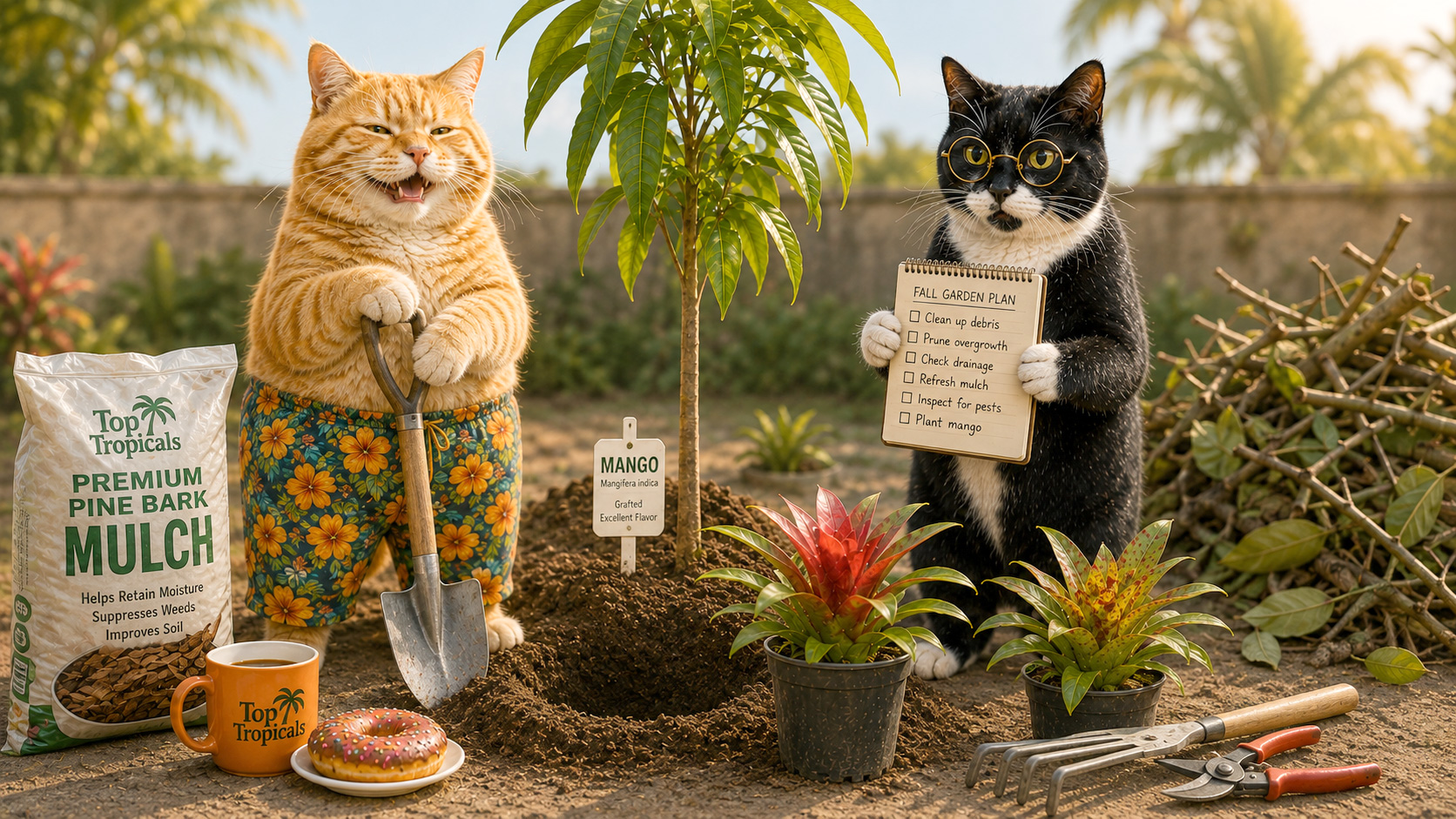
Smokey: Cleanup, trimming, drainage, pests...
Sunshine: Checked, checked, checked. And donuts.
Smokey: Fine. You can plant now.
Summer did what summer does. Heat, downpours, fast growth, weeds, fallen fruit, and at least one plant that outgrew the space you gave it.
Now the season is turning. For warm-climate gardeners, fall is the best planting stretch of the year, but it pays to clean up and take stock first. For gardeners farther north, it means the tropicals that summered outside have to come indoors before the first frost. And if you garden somewhere in between, you're doing a bit of both: the tender plants come inside, and the rest of the garden gets the fall checkup. Warm-climate readers, start here. The northern list is further down.
Clean Up the Summer Mess
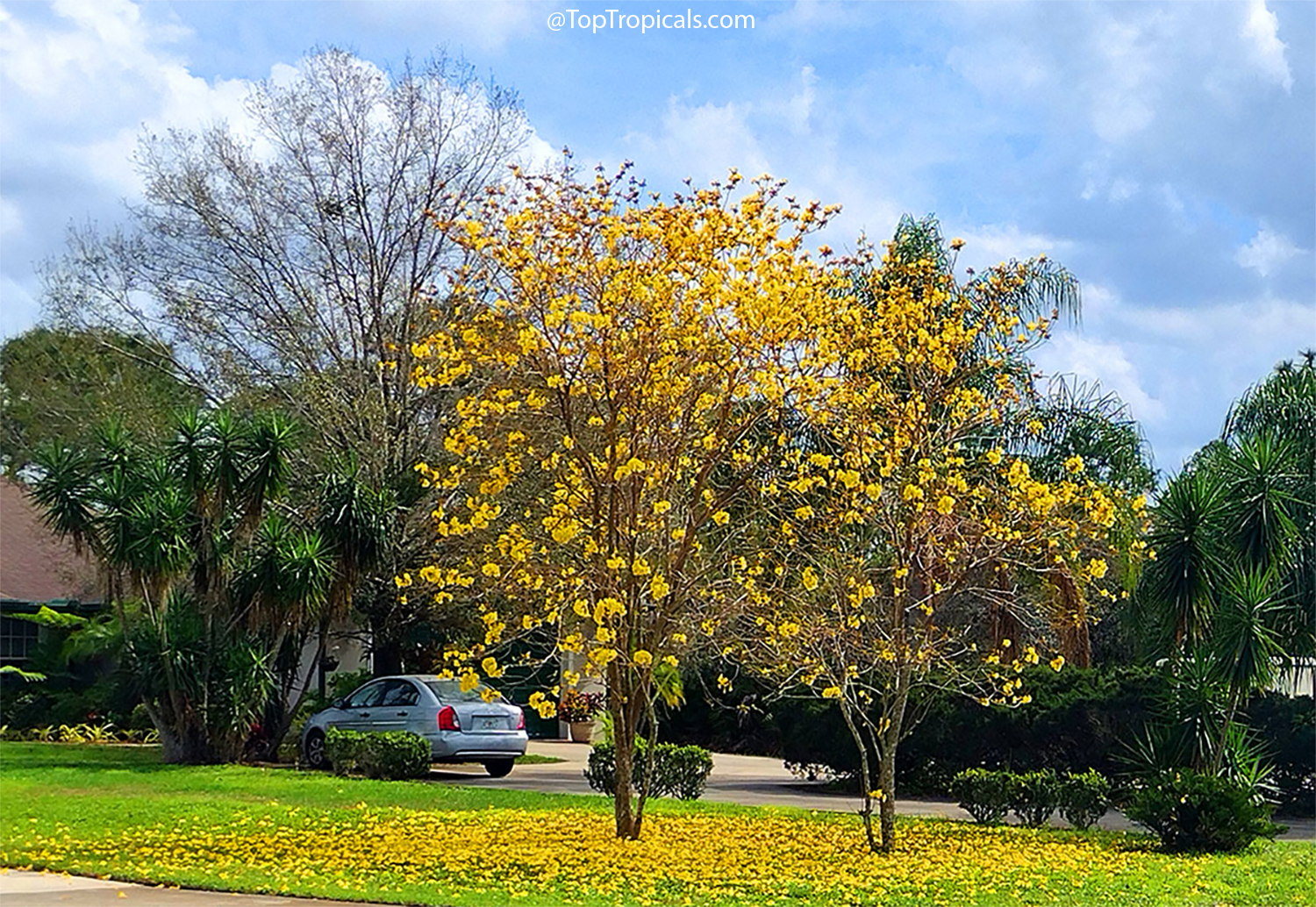
Months of heat, humidity, and growth leave even a well-kept garden looking wild. Clear the fallen fruit, spent flowers, weeds, dead branches, and the debris packed around the base of plants. Take out diseased leaves and anything the storms tore up.
You don't need to strip the beds bare. Leaf litter feeds the soil. What you're after is the material that causes trouble: rotting fruit, diseased foliage, and the wet mat of debris held against stems where rot begins.
✂️ Prune What Got Out of Control
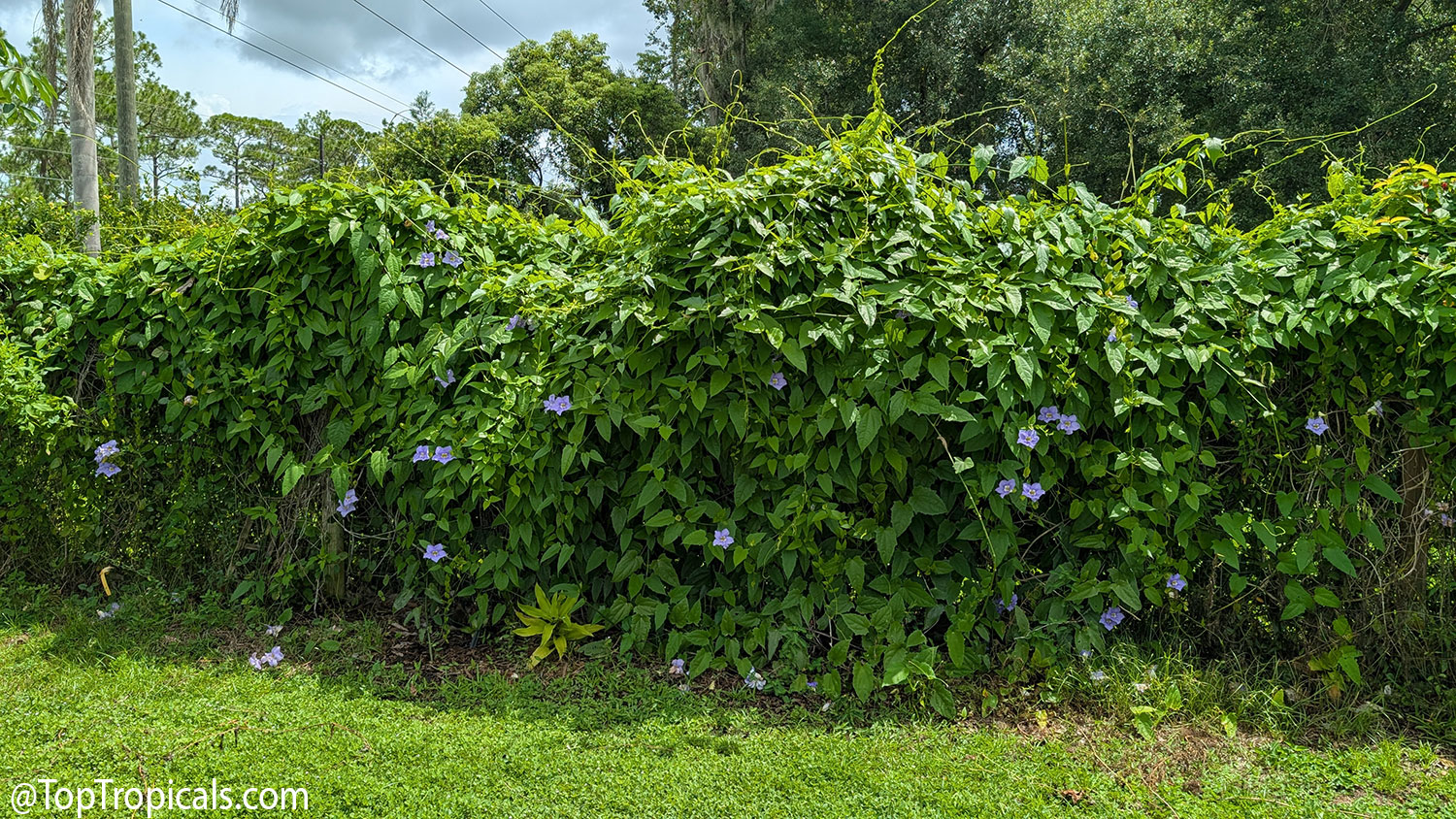
Cut the branches that cross, rub, or block a path. Bring in the vines that left their trellis. If one plant is shading another that needs the light, open it up.
Go easy. Heavy pruning in warm weather can push a flush of soft new growth, and that tender growth is the first thing to burn if the temperature drops. Shape now; leave the hard cutting-back for its proper season.
☀️ Look at What Worked This Summer
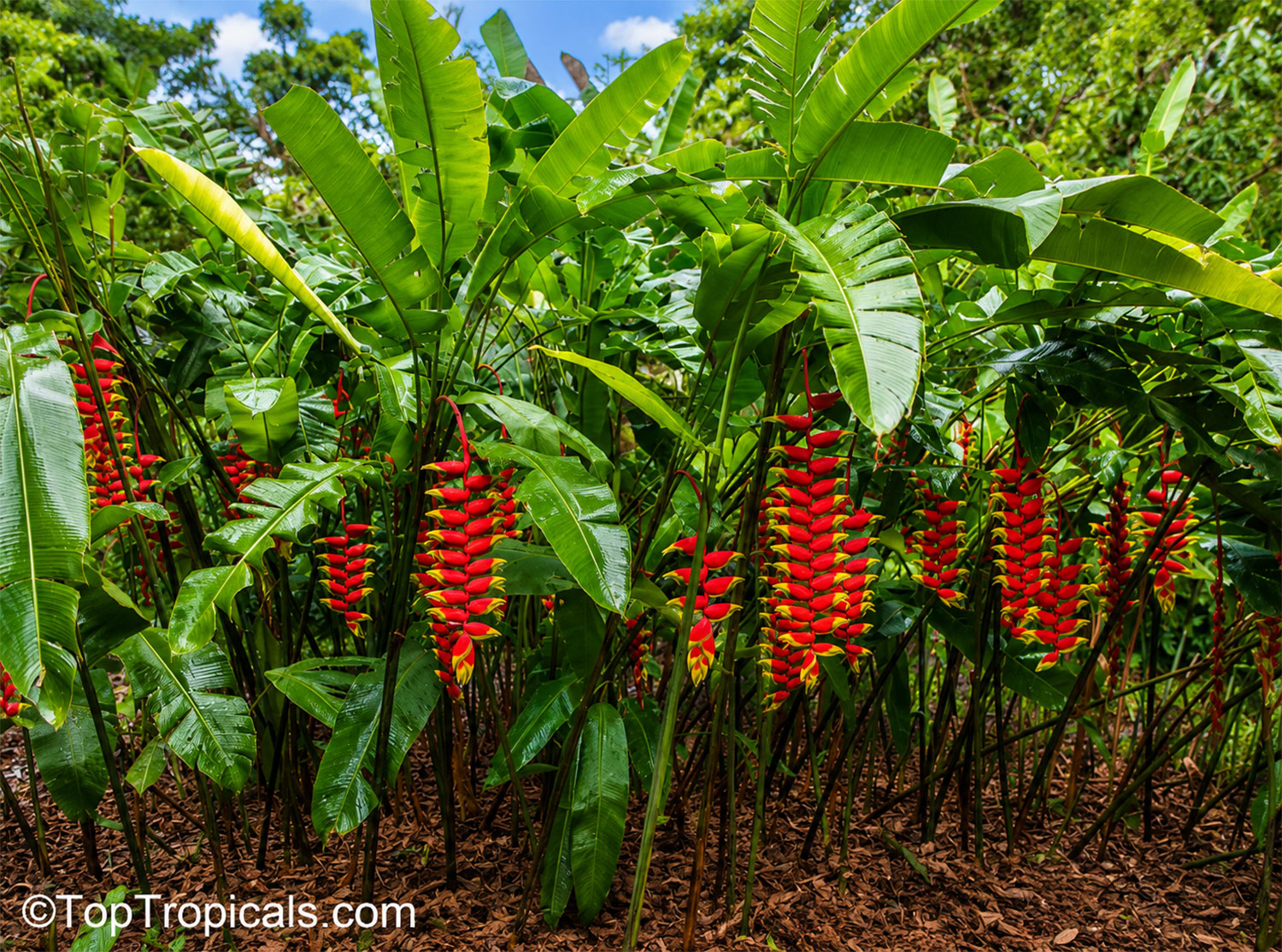
Before you buy anything new, look hard at the garden you have. Summer has already shown you what worked and what did not.
Walk the beds and ask:
- Which plants thrived where they stood, and which struggled all season?
- Where was there too much sun, and where too little?
- Which spots stayed soggy, and which dried out fast?
- Which plants outgrew their space and crowded a neighbor?
Some of what you find is worth acting on now: a plant that belongs in a different spot, or one that will only crowd its neighbors more next year.
🌀 Storm Season Isn't Over
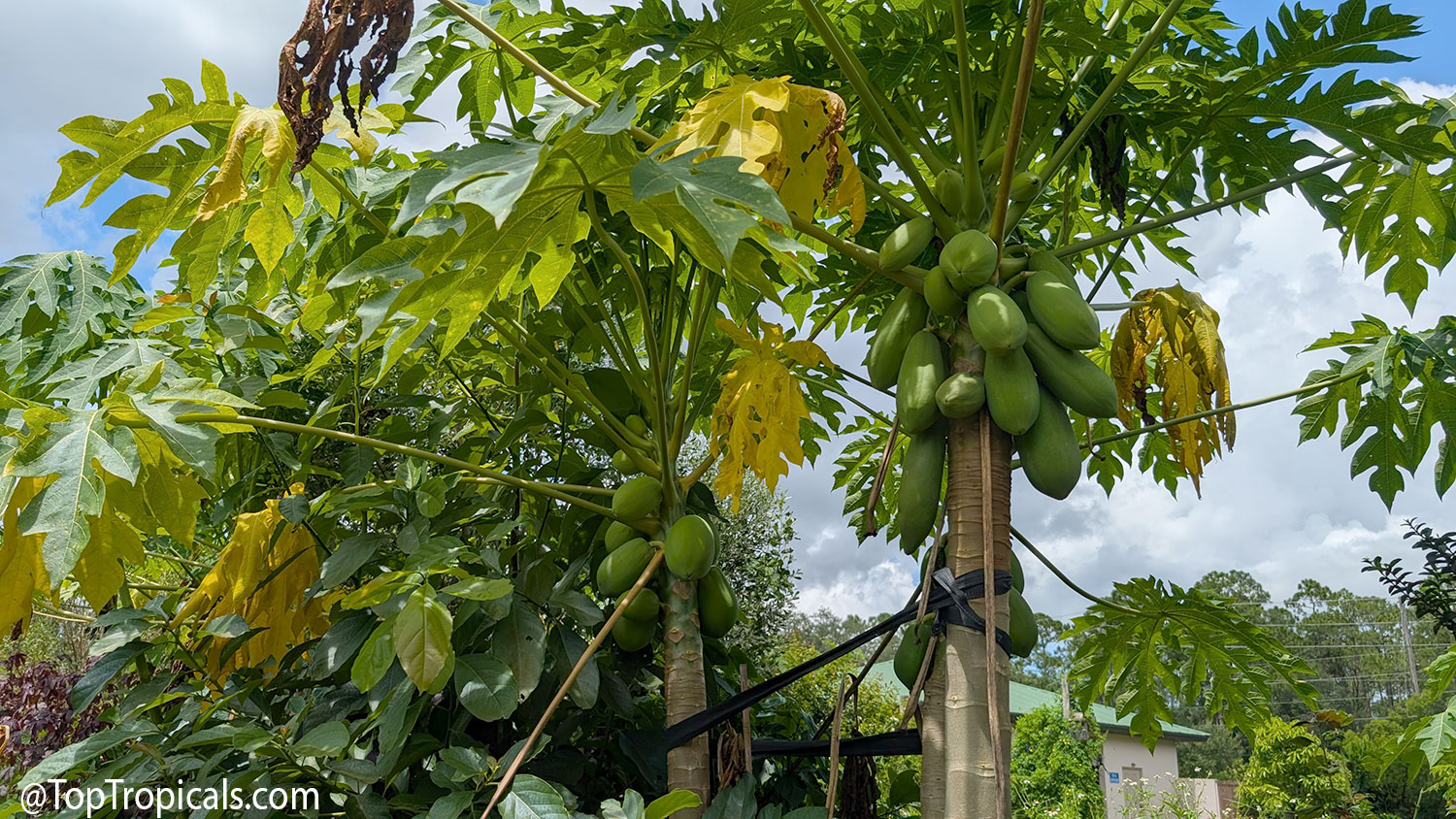
For a lot of warm-climate gardeners, the most important fall prep has nothing to do with planting. If you live in Florida or anywhere along the Gulf or Atlantic coast, hurricane season peaks in September, so the loose and the dead things in your yard are what to deal with first.
Before the next big blow:
- Move or group potted plants so they can't tip over or become projectiles.
- Take down dead or cracked branches that a strong gust could turn into a hazard.
- Clear drains, gutters, and low spots so heavy rain has somewhere to go.
💧 Check Drainage
A summer of hard rain shows you exactly where your garden doesn't drain. Note where the water pooled and sat: the beds that stayed soggy for days, the low pockets, the runoff that drains straight at a plant that hates wet feet, the ground packed too tight to take it.
Fix those spots before you plant. Sometimes that means regrading. Sometimes it means building the bed up and setting the plant high. Drainage depends on a lot at once, the soil, the grade, how deep you plant, so if a spot held water all summer, solve that before you put anything new in it.
💦 Check Irrigation
This is a good time to check the irrigation system itself, so it is ready when rainfall becomes less reliable.
Run it and watch it work. Look for clogged emitters, broken or misaimed heads, and plants grown so large the spray no longer reaches the roots. Then adjust the watering to match the rain you're actually getting, not the schedule you set back in spring.
🏡 Refresh Mulch
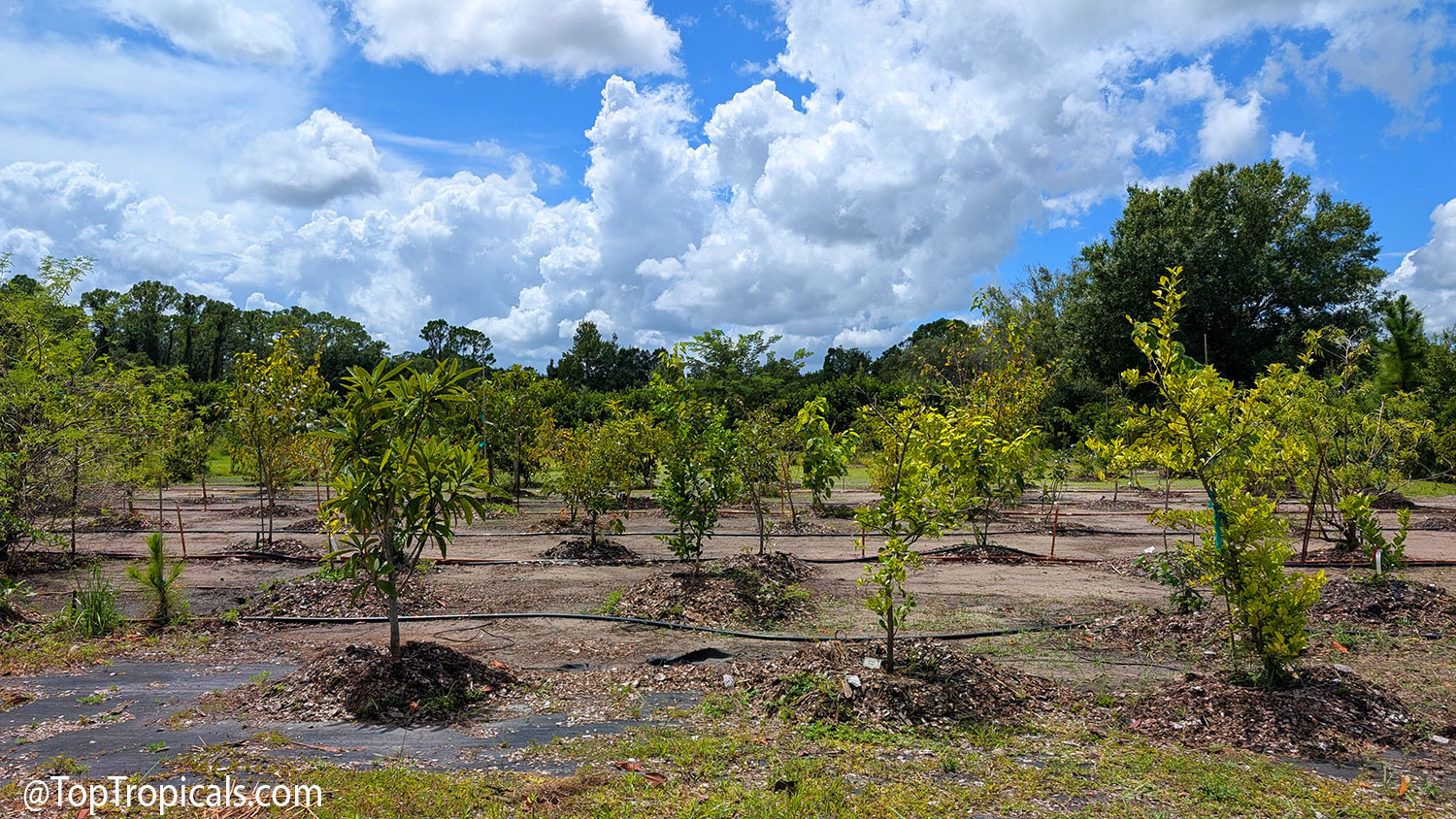
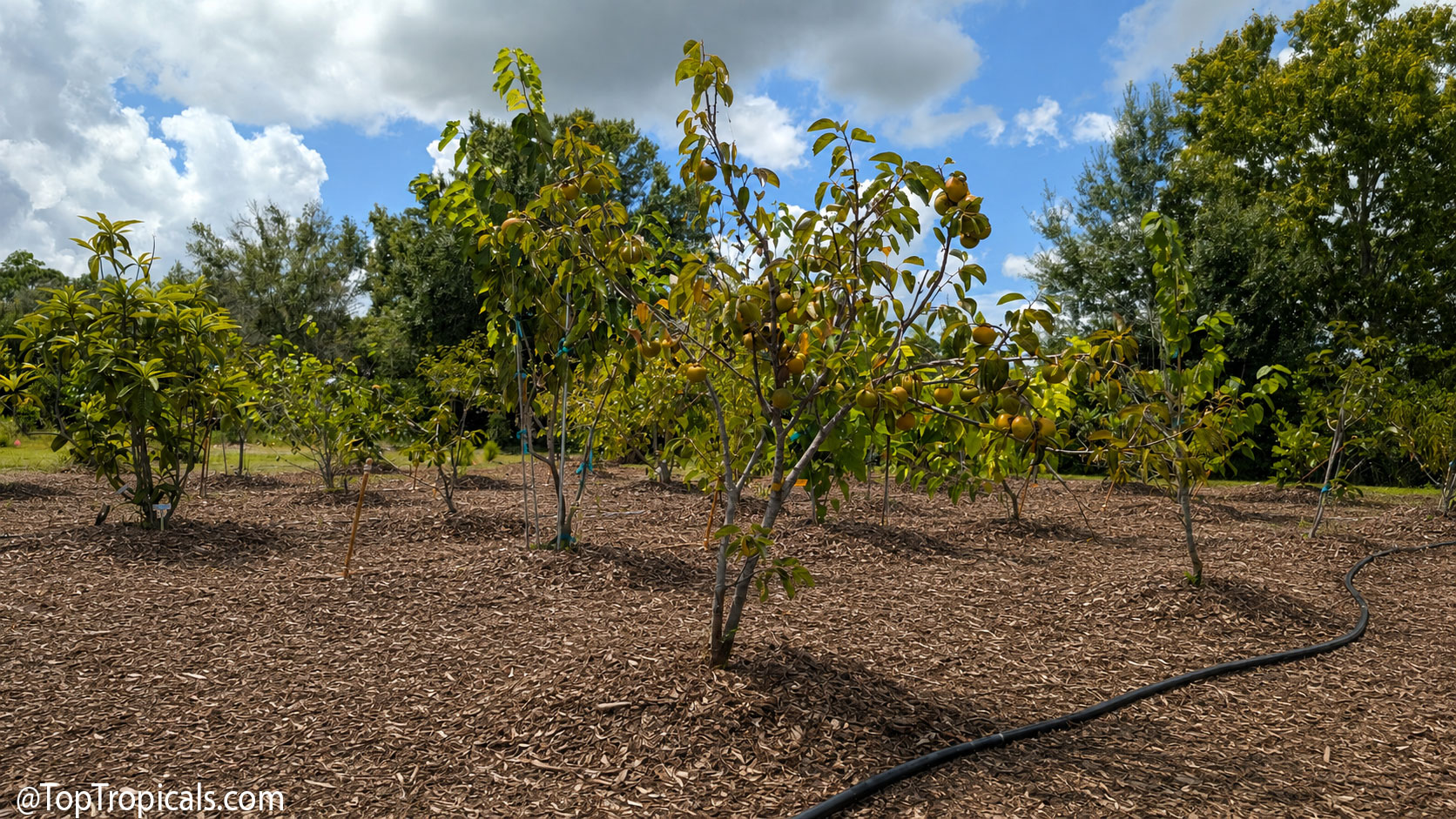
Mulch holds moisture, keeps weeds down, and shields the soil. If yours has thinned or broken down over the summer, top it up.
One rule: keep it off the trunks and stems. Pull it back a few inches so moisture and rot don't collect against the base. No mulch volcanoes.
Feed Carefully, or Not at All
This is not the season to fertilize everything in sight. Heading into fall, the goal is steady health, not a surge of soft new growth right before any cool weather.
Two things to keep in mind. First, feed the plants that show a real need, and go easy on the rest. Pale or off-color leaves can point to a nutrient problem, but they can also mean overwatering, root trouble, or pests, so it's worth figuring out the cause before you reach for fertilizer. Some fruit trees and container plants may need feeding more often than established landscape plants, but the timing and amount depend on the plant.
Second, and this matters, many counties and cities regulate landscape fertilizer during the rainy or summer months, and some ban nitrogen and phosphorus outright for part of the year. Before you spread anything, check your local rules. You may need to consult your county extension office or municipal guidelines, because they vary from place to place.
When you do feed, a slow- or controlled-release fertilizer is a good choice in warm, rainy weather. It releases nutrients gradually, which keeps growth even and, when heavy rain follows soon after application, is less likely to leach or run off than a fast-release product.
🐛 Inspect for Pests
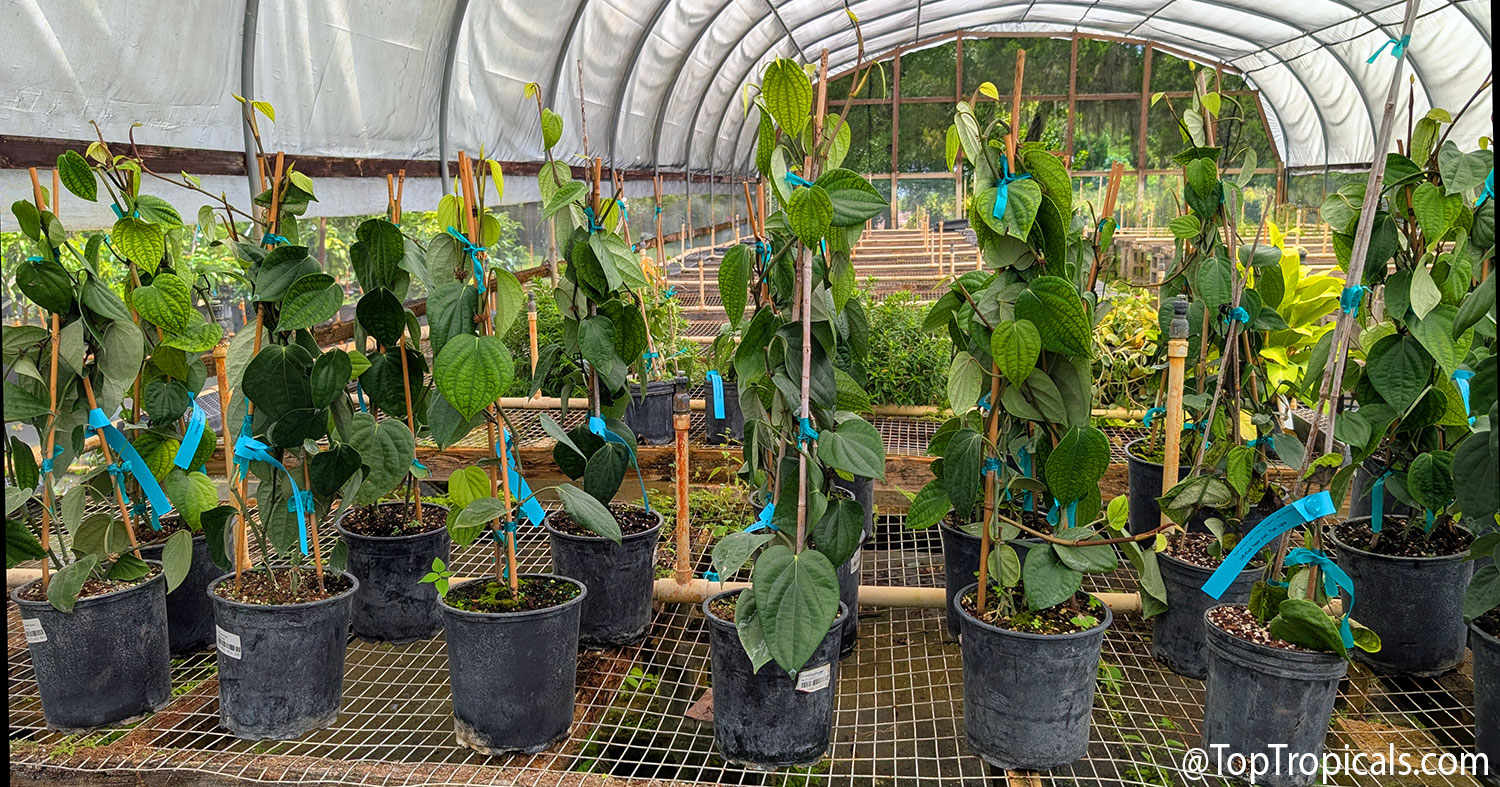
A small infestation is far easier to end than a large one, so catch it early. Watch for scale, spider mites, whiteflies, mealybugs, and aphids. They tuck into the spots that are easy to miss: new growth, leaf undersides, stems, and the joints where branches meet.
Start gentle. A strong spray from the hose knocks aphids and mites right off, and for a lot of soft-bodied pests that's most of the battle. For something more stubborn, a homemade neem oil spray works well: mix neem oil with water and a few drops of liquid soap to help it blend, and coat the undersides of the leaves where the pests actually sit. Insecticidal soap does a similar job. These are easier on the garden than a broad-spectrum insecticide, which tends to kill the beneficial insects along with the pests, and those beneficials were helping keep the problem down in the first place.
Whatever you reach for, know what you're treating before you spray. The right approach depends on the pest, and the milder options usually handle far more than people expect.
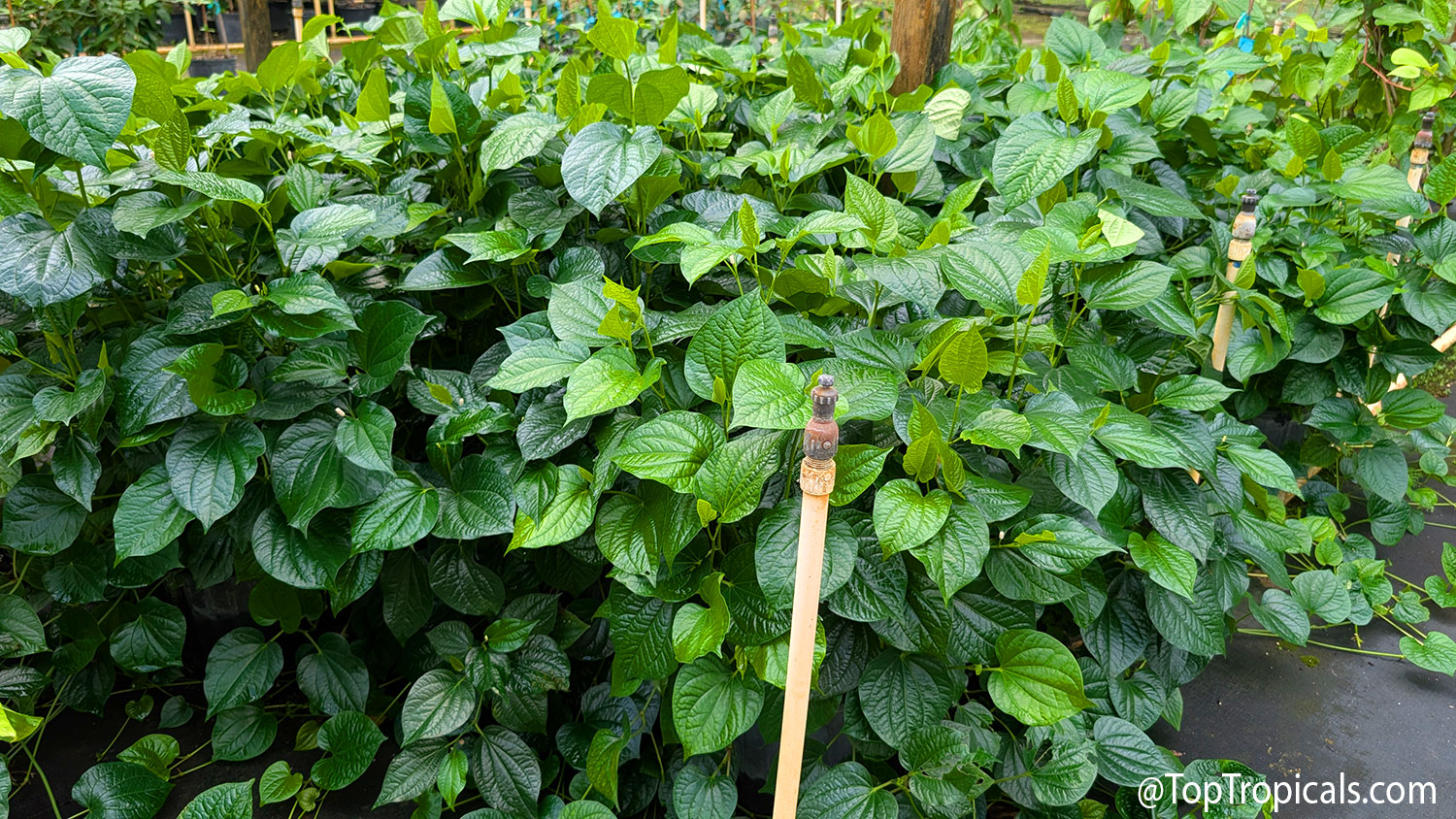
🌱 Prepare New Planting Areas
Before you fall for a plant at the nursery, be honest about where it will live. Check the light, the drainage, the room, and the size the plant reaches at maturity. Measure the distance from the house, the walkway, and the neighbors, and make sure water can reach it.
Match the plant to the location, not the location to the plant. The garden holds together better when you place a plant where it fits than when you buy it first and hunt for a spot after.
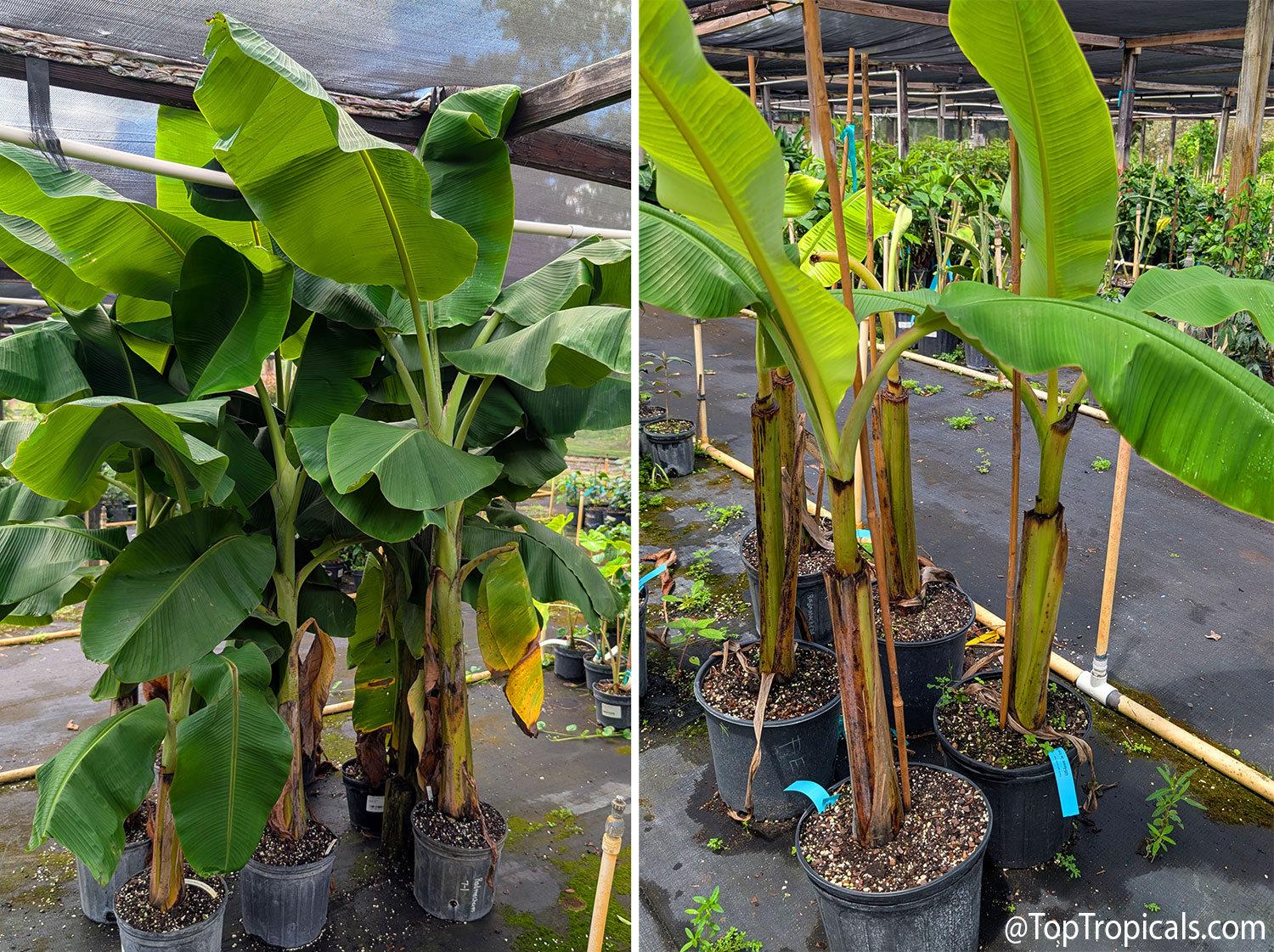
🌳 Decide What to Plant This Fall
For most warm-climate gardens, fall is one of the best planting windows of the year. As the worst of the summer heat eases, plants deal with less heat stress and water evaporates more slowly, making establishment easier. The work is easier on you, too.
That head start lets a plant establish itself well before next summer's heat. Not everything belongs in the ground the same week, though. The most cold-sensitive tropicals still need timing suited to your own spot, so hold those for the right moment.
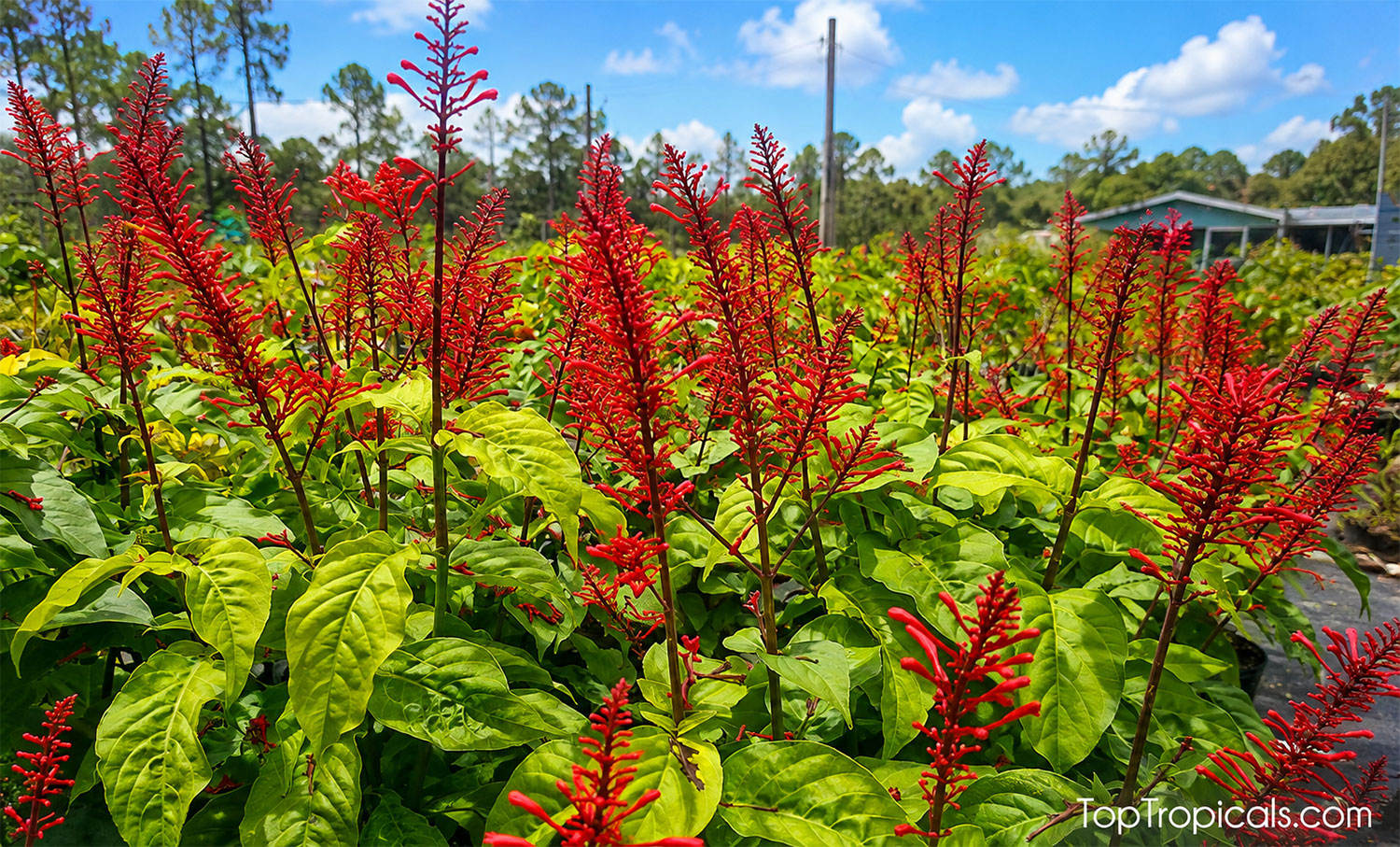
✅ Start the Fall Wish List
With a clear picture of what worked and what failed, make a list.
Fruit trees. Flowering tropicals. Something fragrant by the door. A vine, a screen to hide a view, a standout for a container. And honest replacements for whatever gave out this summer.
If some of that list leads you our way, we won't argue. Get the list right first.
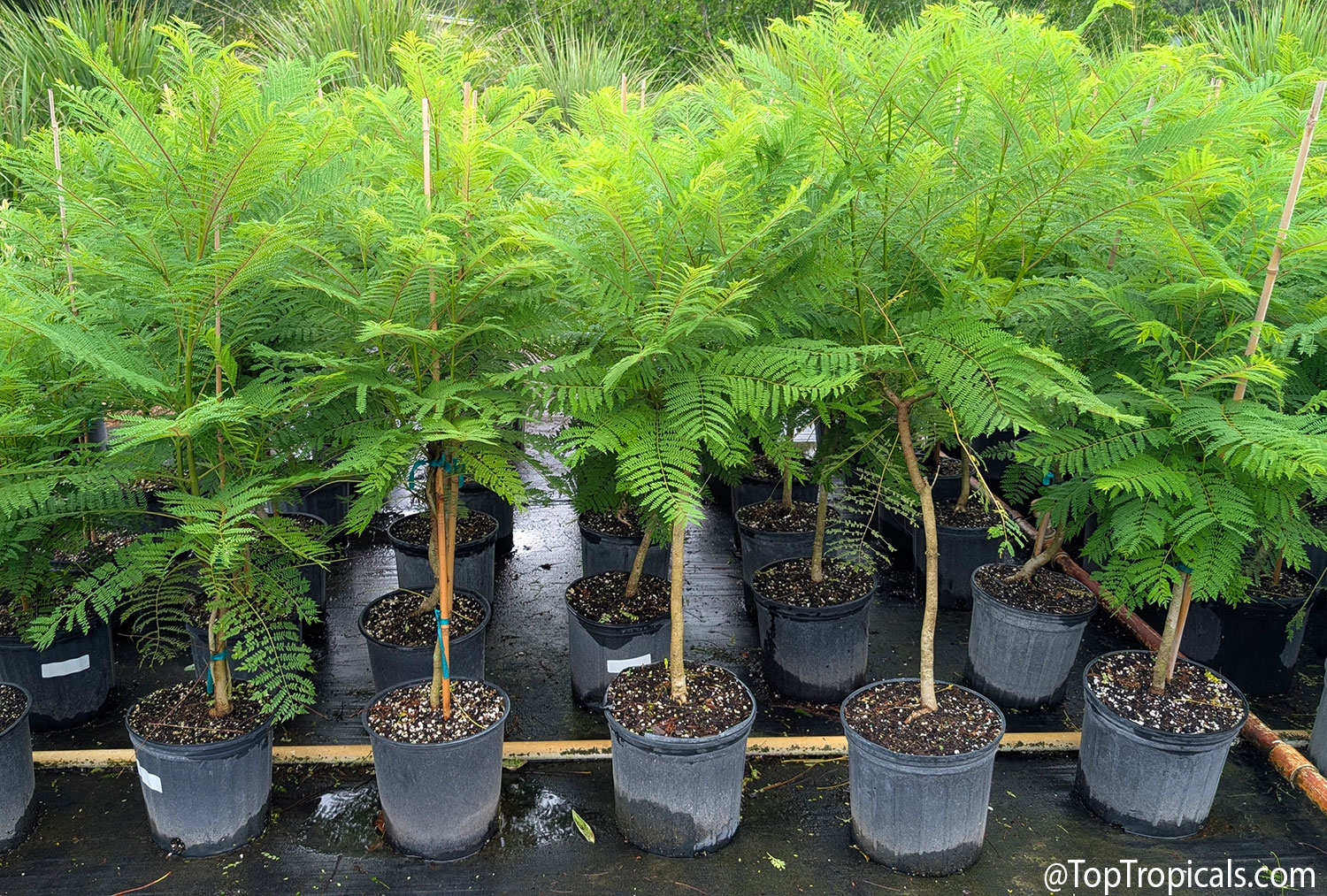
❄️ Northern Gardeners: The Plants Come Inside
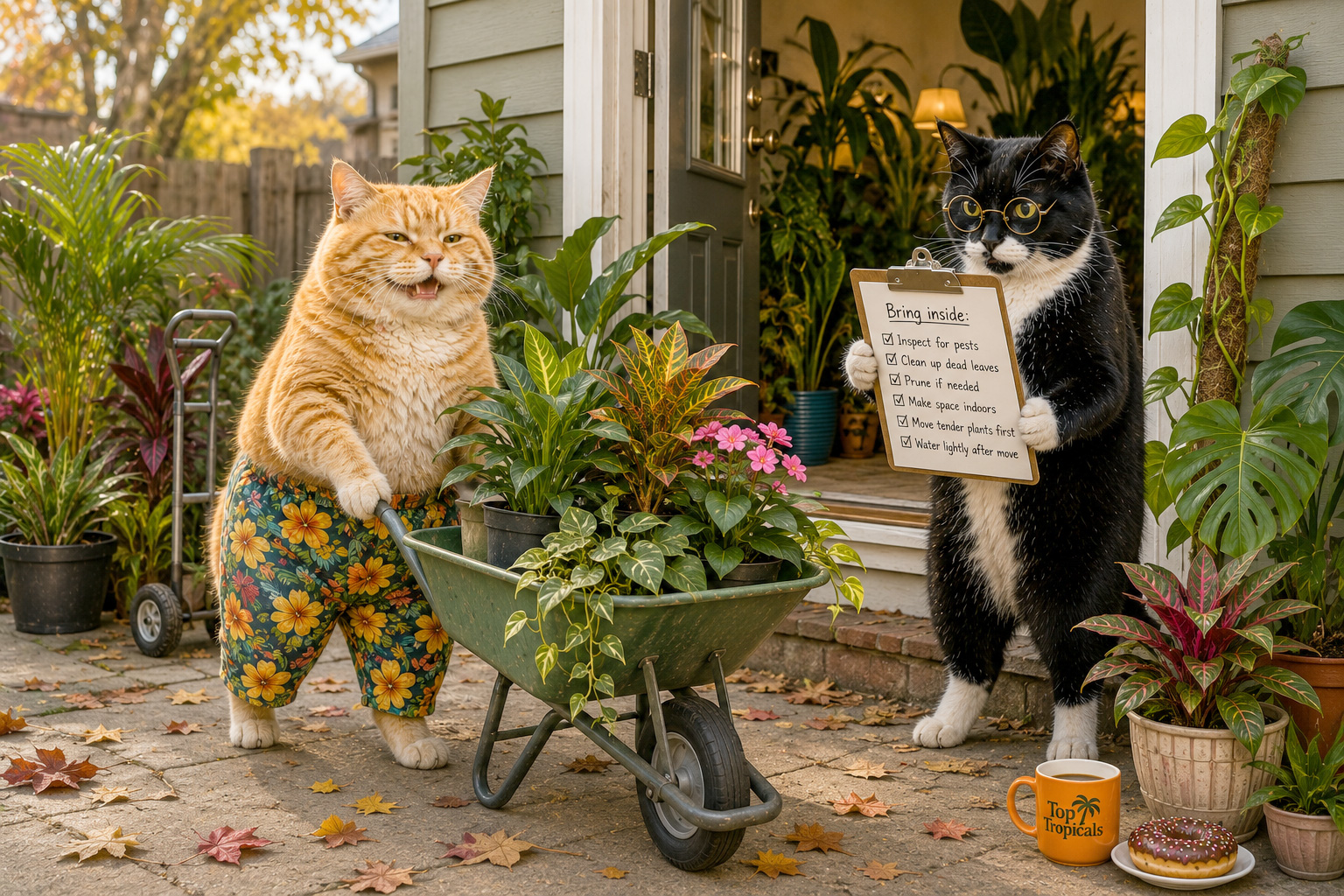
Smokey: As many as it takes to get all the plants inside.
Sunshine: And a donut break?
Smokey: After the insect inspection.
If fall means figuring out how all those pots fit indoors again, this part is yours. You have less time than the warm-climate folks, and a different job.
Decide what comes in. Not every plant is worth the space. Some are too big, too far gone, or not worth the winter room. Make those calls now, not on the first cold night.
Inspect for pests first. A plant that looks clean outdoors can carry scale, mites, whiteflies, mealybugs, aphids, or a few ants. Check leaf undersides, stems, branch joints, the pot rim, the drainage holes, and the soil surface. Bring in the plant, not the whole yard with it.
Clean the plants and pots. Pull the dead leaves, clear the debris and the weeds that took hold in the pots, and wipe down the dirty pot exteriors. It is simpler now than on a crowded windowsill later.
Prune only if you must. Some plants need to lose a little size to fit through the door and into their spot. Trim for that and no more.
Ease them toward lower light. A plant that spent summer in strong sun struggles when it lands in a dim room. Where you can, move it to shadier ground for a week or two first, so the change is gradual rather than sudden.
Settle where they will live, and plan the light. Group plants by what they need: the light-hungry ones get your best windows, the tolerant ones take what's left. South-facing windows give the most winter light and north-facing the least, though trees and overhangs change that fast. A plant headed for a dark corner will likely need a grow light to get through winter; a more tolerant plant can be allowed to slow down instead.
Cold matters too. A windowsill right against the glass can get much colder on a winter night than the rest of the room, so keep tender plants off the coldest sills, away from heating vents, and remember that indoor winter air is dry, which is hard on tropicals used to a humid summer.
Don't repot everything on the way in. A new pot, a new spot, and lower light at the same time is a lot of change to hit a plant with. Repot only what needs it: a rootbound plant, or one with pests or a soil problem you want out of the house.
Water less as growth slows. Indoors, in weaker light, plants use water slowly, and overwatering is a common winter problem. Check the pot before you water rather than following a fixed schedule.
Sort the ones that grow from the ones that slow. With enough warmth and light, some tropicals keep going through winter. Others slow to a near stop, more from low indoor light than any real dormancy, so don't overwater or overfeed one that's just marking time.
Take cuttings where it fits. If a plant is simply too large to haul indoors, cuttings can sometimes carry it through instead. It won't work for every species, but consider it before you give up a favorite.
Don't wait for frost. Move your tender plants by their cold tolerance, not by the calendar. A merely chilly night can hurt some tropicals with no frost at all, and because species differ so widely, there's no single safe number to trust. Know your plants and bring the tender ones in early.
Do the cleanup now, make the planting list, and get tender plants indoors before temperatures become a problem. Then you can handle the rest of the season as it comes.
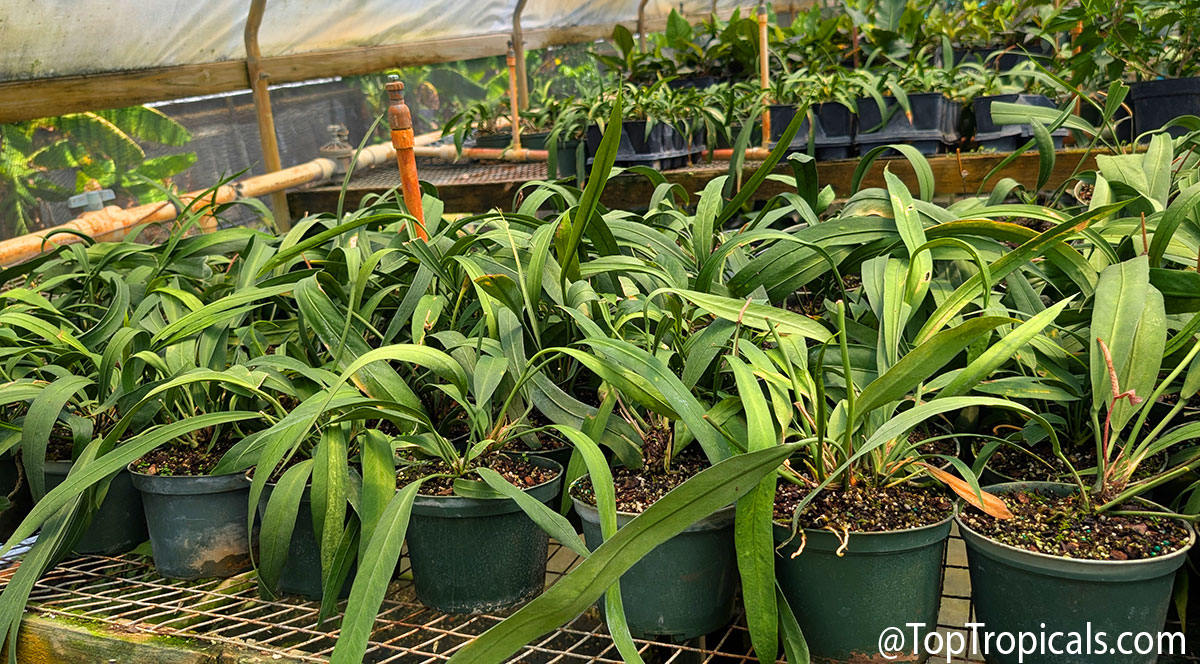
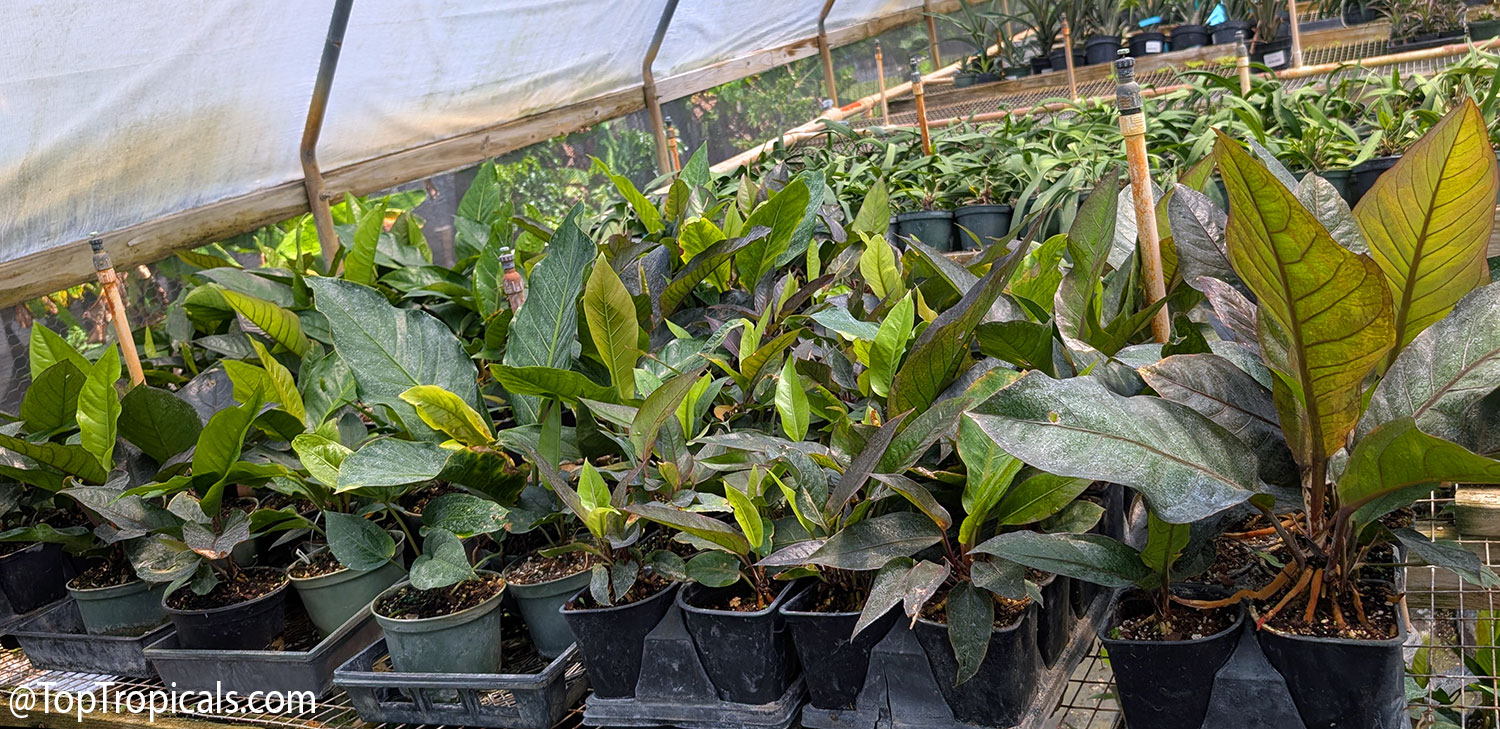
✍️ Winter preparation from Top Tropicals Garden Blog
🎥 Watch How-To Gardening ideas
Date: 22 Sep 2024
Why the Purple Tango of Jacaranda is so hypnotizing
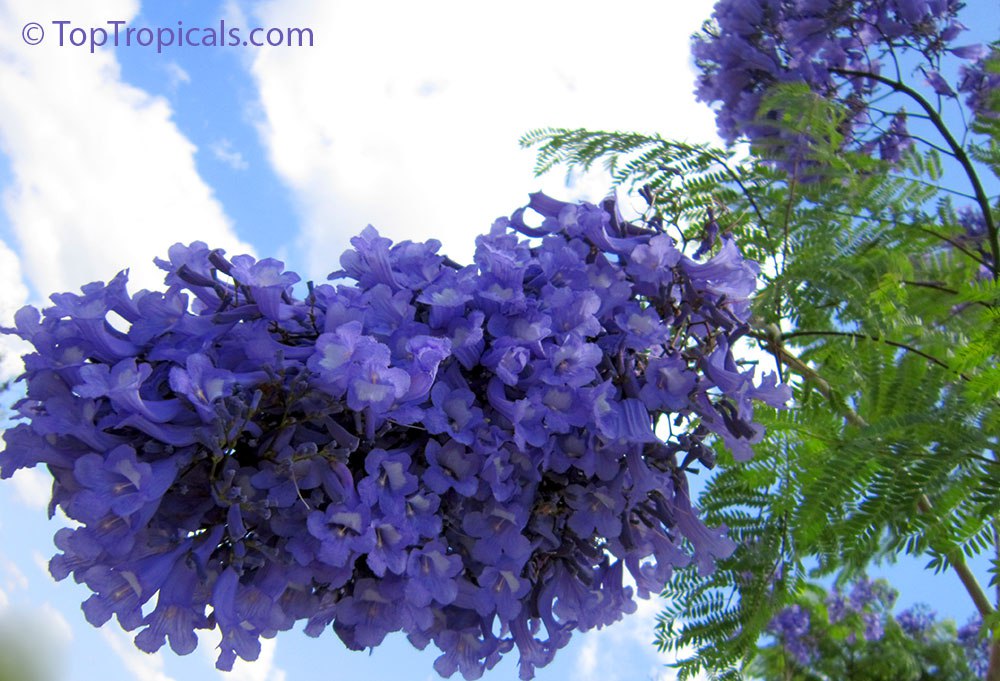
Jacaranda Tree flowers
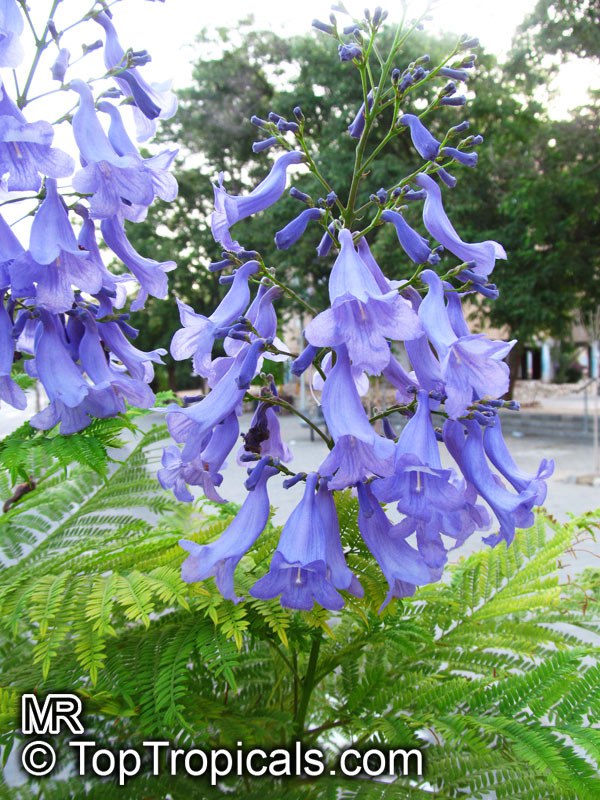
Jacaranda Tree flowers
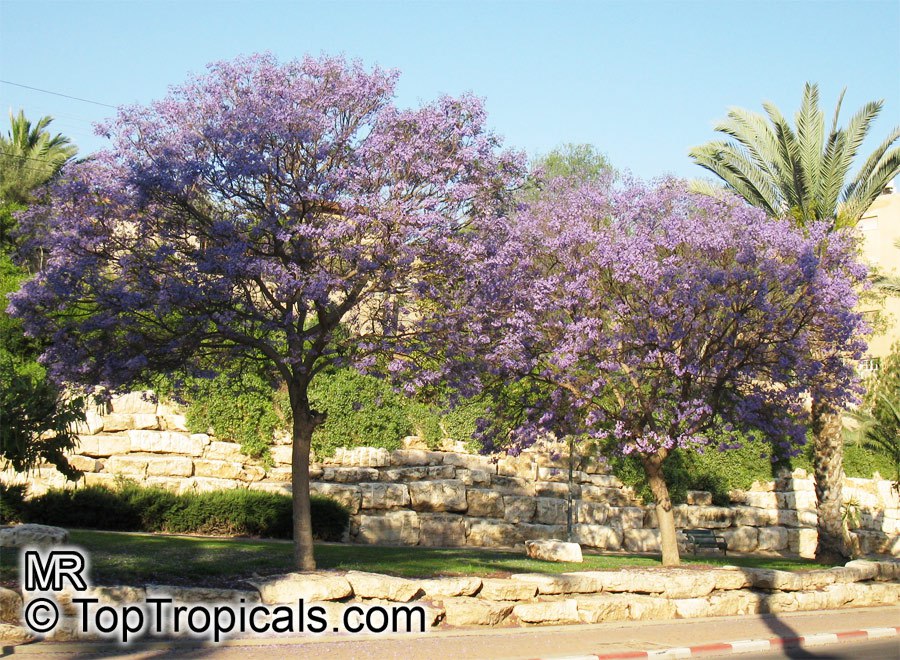
Jacaranda Tree
💃 Why the Purple Tango of Jacaranda is so hypnotizing
💜 The Jacaranda Tree enchants with its stunning purple-blue trumpet-shaped blooms that create a mesmerizing, lilac carpet when they fall.
💜 A true spectacle of spring, its fern-like leaves and fast-growing nature make it perfect for landscaping. It’s often compared to dancing in the streets of Buenos Aires or Pretoria, where Jacarandas paint the cities in a dazzling purple.
💜 This tree is not just eye candy but a symbol of wisdom, rebirth, and good fortune, rooted in legend and tradition.
📚 Learn more:
· Three top tropical trees - from the legends of Caribbean
· Awe-inspiring Jacaranda and its legends
🛒 Plant your own Purple Jacaranda tree
#Trees
🔴 Join 👉 TopTropicals