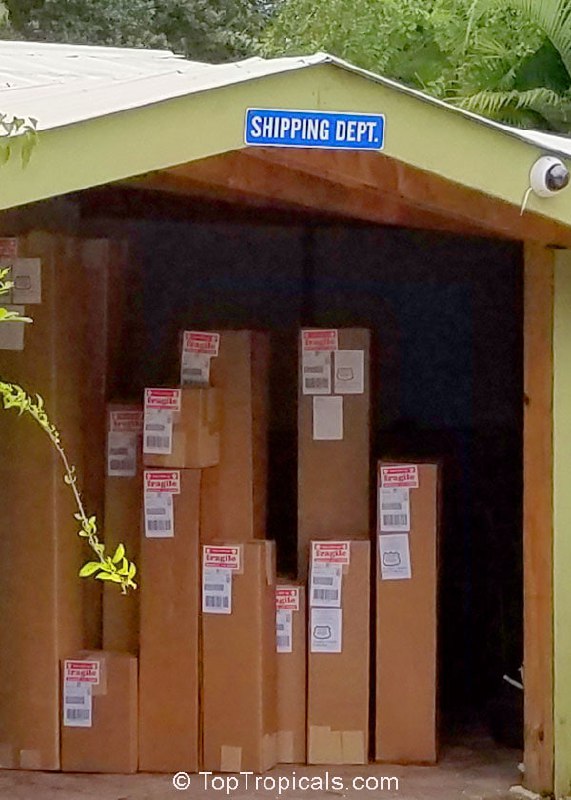
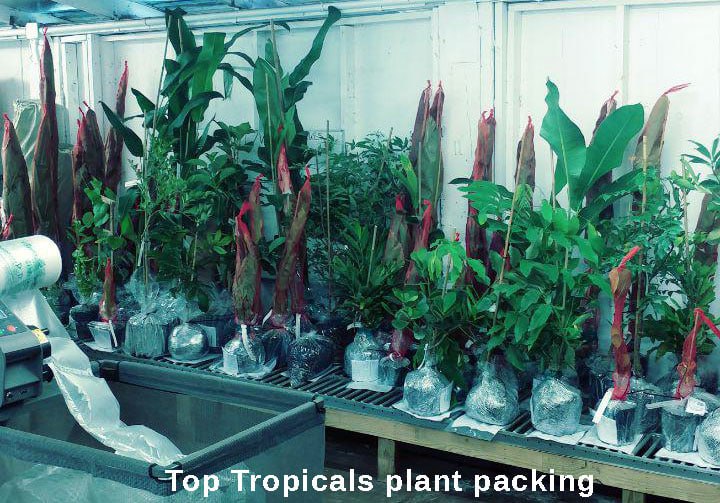
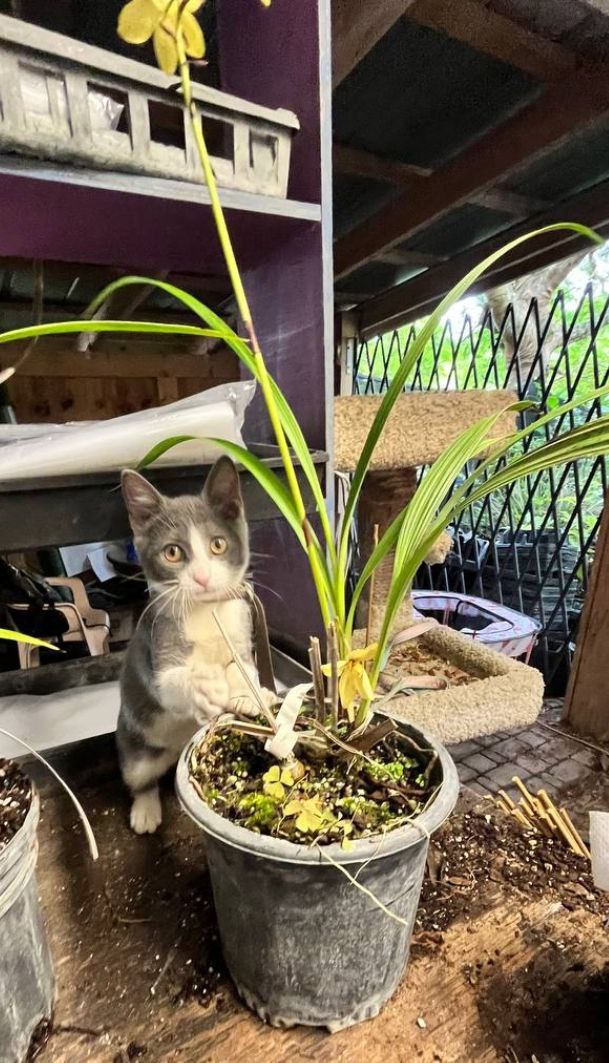
· James Coconuts managing Shipping Department at TopTropicals · Plants packed in boxes and ready to go · Plant packing conveyer · Mittens is a new Shipping hire
📦 Every order comes with planting instructions. Read them first!
How to take care of your mail order plant (potted plant)
When your plant arrives, carefully remove it from the box and water it right away. Place it in bright light but out of direct sun for the first few days so it can recover from shipping. Keep the soil evenly moist, not soggy. After about a week, gradually introduce it to more sun or move it to its permanent spot. Read detailed instructions.
🌴 How to plant your mail order plant in the ground
Don't put a new plant straight from the box into the ground! First, pot it up and let it recover and grow strong for a few weeks. Once it's well established, choose a sunny, well-drained spot outdoors. Dig a hole twice as wide as the pot, place the plant at the same depth, and backfill with good, rich soil. Water thoroughly to settle the roots and add mulch around the base, keeping it away from the stem. Keep watering regularly until the plant takes off. Read detailed instructions.
🎥 Part 3 shows you how to unpack a plant. Happy Gardening!
😺 Pelmen is a Sphynx cat. Sphynx is the famous hairless cat breed. He looks bald, but really has a soft peach-fuzz coat that feels like suede.
😺 Look, this summer Pelmen even got a suntan! His head is tanned while the rest stayed pale. Why? Because he was wearing a sweater outside! (Yes, he owns a whole wardrobe… the definition of a spoiled baby)
😺 Why a sweater? Sweaters aren’t just for fashion. Since Sphynx cats lack a fur coat, they need extra warmth, regular baths to wash off skin oils, and sun protection.
😺 The Sphynx may look like a little alien, but they’re really velcro cats - clingy, cuddly, and people-loving. The breed began in 1966 when a hairless kitten named Prune was born in Canada. From that quirky start, the Sphynx became one of the most affectionate cats around.
10-minute recipe Bo La Lot with a leaf youve never cooked before!
Bo La Lot recipe with Vietnamese pepper Lalot (Piper sarmentosum)
🍴 10-minute recipe Bo La Lot with a leaf you’ve never cooked before!
🌮 Forget boring tacos - this wrap will blow your mind! In Vietnam they call it Bo La Lot - beef wrapped in peppery Lalot leaves.
🌮 It started as grape leaf wraps in the Middle East, but in tropical Asia grapes don’t grow, so people swapped to Lalot. Way more flavor than grape leaves!
🌮 Grilled beef, garlic, onion, lemongrass - all can be tucked into these shiny green leaves. Smoky, juicy, and so good you’ll wonder why you didn't try it sooner! It's better than grape leaf wraps, because it has so much flavor!
🌮 Most large leaf pepper plants will work for this recipe - Vietnamese pepper Lalot (Piper sarmentosum), Betel Leaf (Piper betle), or even large leaves of the traditional Black Pepper plant (Piper nigrum).
· Preheat the grill.
· Combine all ingredients in a large mixing bowl and mix well.
· Wrap about 2 tablespoons of the mixture into each betel leaf.
· Spear 3 to 4 betel leaf wraps onto a skewer and grill until the meat is thoroughly cooked.
· Be sure to eat immediately.
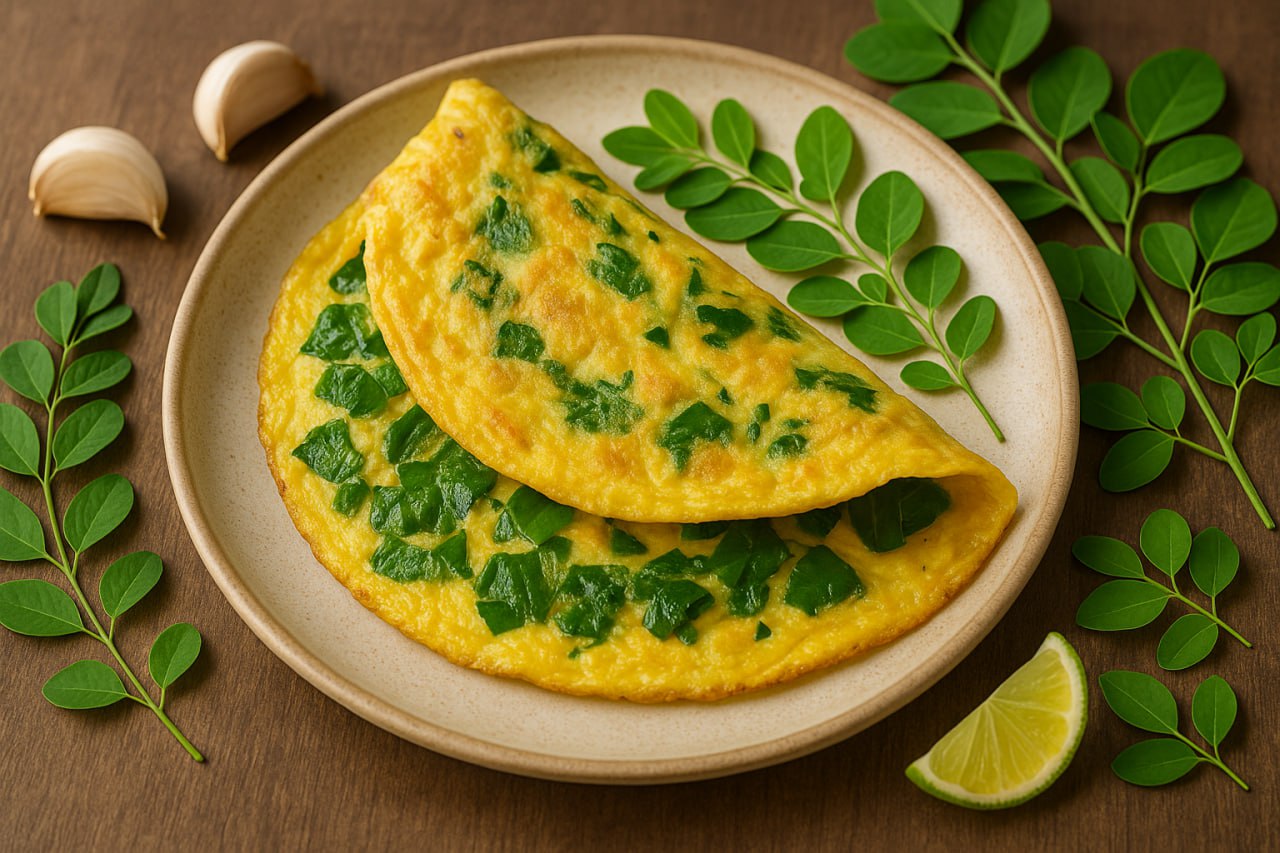
🟡Whisk eggs with chopped Moringa leaves, garlic, and a dash of soy sauce. 🟡Pour into a hot pan with some cooking oil and cook for a minute or two until fluffy and golden. 🟡A green power-packed breakfast!
Moringa Omelet
Ingredients
2 eggs
1/2 cup fresh Moringa leaves (chopped)
1 small onion (chopped)
1 tomato (diced)
1 clove garlic (minced)
Salt and pepper to taste
1 tsp oil or butter
Instructions
Beat the eggs in a bowl and season with salt and pepper.
Heat oil in a pan, sauté onion, garlic, and tomato until soft.
Add the chopped Moringa leaves and cook for 1 minute.
Pour in the beaten eggs and cook until set, flipping once.
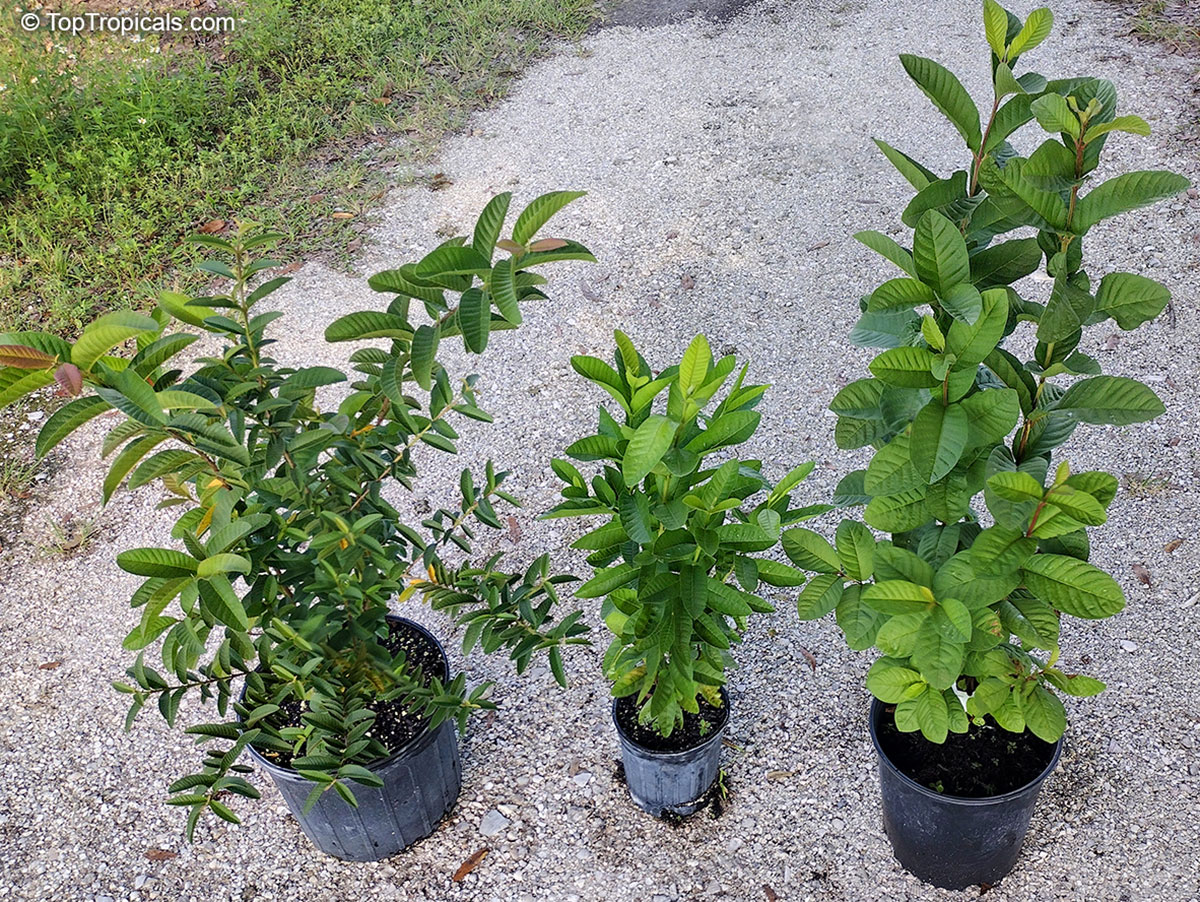
Guavas love full sun — aim for 6–8 hours of direct light.
They’re adaptable to many soils but do best in well-drained, organic-enriched
mixes. Plant them in a spot where you can water
easily; guavas are thirsty trees during fruiting.
Container & Indoor Growing
Don’t have space or live in a cooler climate? Guavas thrive in
large pots. Use well-drained potting mix. LINK TO OUR SOIL Keep them on a
sunny
patio during warm months and bring them indoors when nights dip below
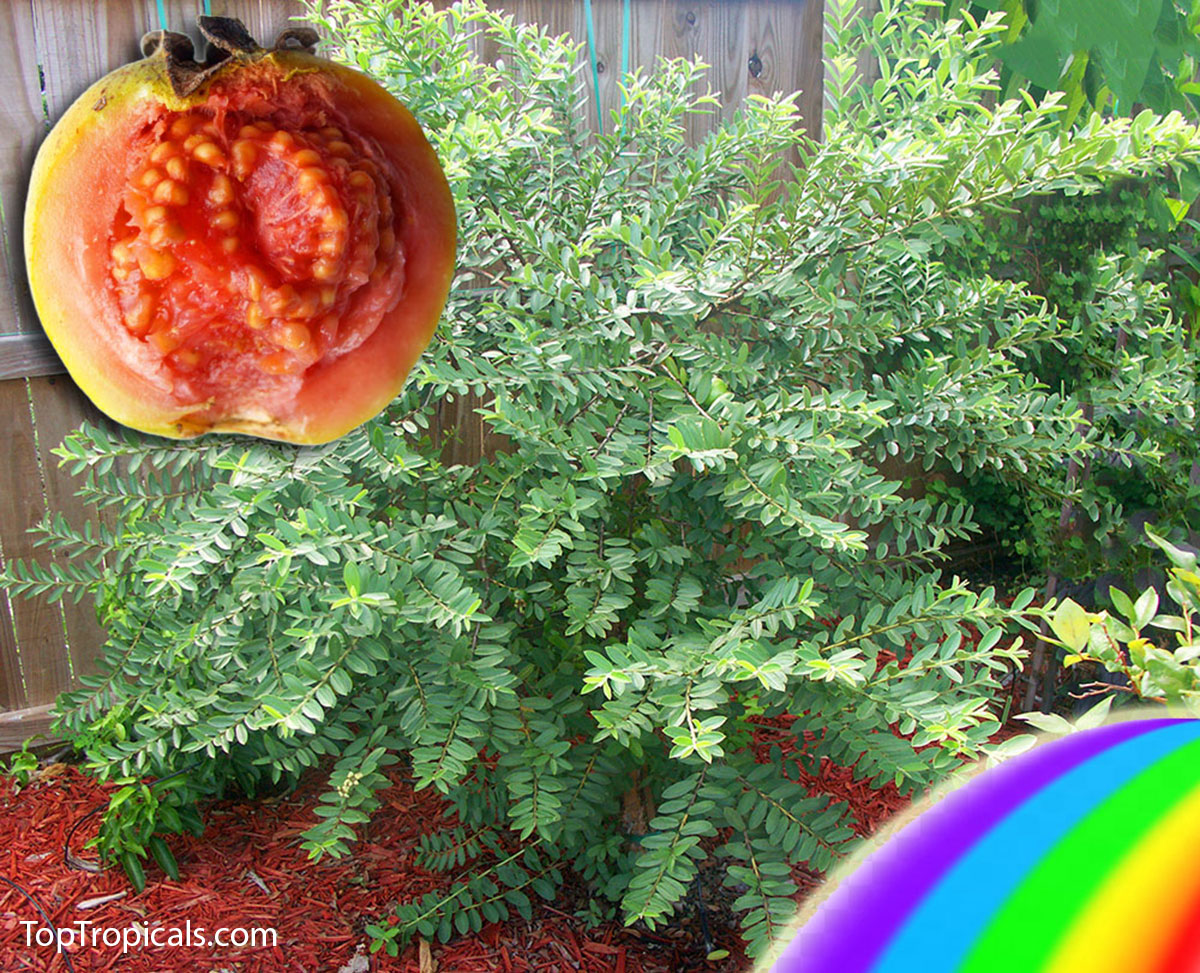
freezing. Compact varieties like Dwarf Hawaiian
Rainbow or Tikal are especially
good for pots.
Winter Care
Mature guavas can handle a light frost (down into the high 20s F), but
young plants need protection. If planted outdoors, cover them with frost
cloth
on cold nights. Container guavas can be wheeled into a garage, greenhouse,
or bright indoor window until the weather warms.
Watering and Fertilizing
Water deeply once or twice a week, more often in hot weather or when
fruit is developing. They don’t like soggy soil, but they won’t
complain about short floods either. Fertilize 3–4 times a year during
the
growing season with a balanced fruit tree fertilizer. Guavas especially love
potassium and phosphorus for strong flowering and heavy crops. We recommend
liquid crop booster Sunshine
C-Cibus and balanced controlled release fertilizer Green
Magic.
Pruning
Prune after fruiting to keep them compact and open up airflow. Remove
crossing or dead branches. In containers, trim back vigorous shoots
regularly
to manage size and encourage more fruiting wood.
Pests and Problems
Guavas are generally tough and pest-resistant. The main thing to watch
for in humid or rainy climates is mealybugs - those cottony white clusters
on
leaves or stems. They're easy to manage with neem oil or a quick spray of
horticultural soap.
Fruit time
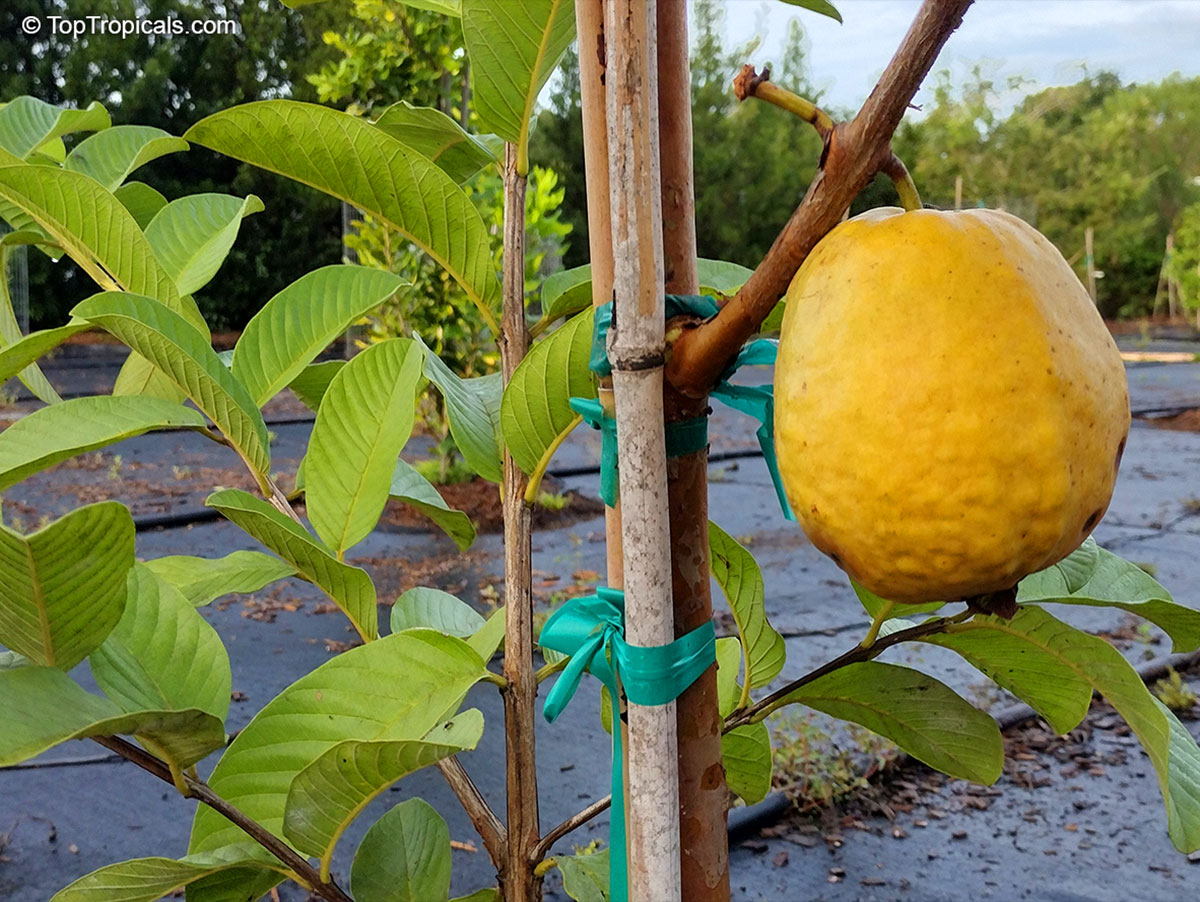
Guavas fruit young - often within a year or two.
Pollination
Guavas are self-pollinating, so you'll get fruit even with a single
tree. Planting more than one tree, however, often boosts harvests and gives
you a
longer fruiting season.
If you've ever wanted instant gratification from a fruit tree, guava is
it.
🍴
Guava Recipes
With all that fruit, the next question is always: "What do I do with
it?" Here are our favorites:
Cas Guava: Make Agua de Cas
Boil halved Cas Guava fruits with sugar, simmer, strain, and bottle.
Dilute with water when serving. The concentrate keeps for months in the
fridge.
Check out the recipe.
Hawaiian Gold: Make Drinks
Perfect for Mojitos or Margaritas. Sweet, tangy juice pairs beautifully
with lime and mint. Learn more
Araca Pera: Guava Wine
Famous in Brazil, where the fruit is turned into a vibrant rosу wine.
Locals say it’s the taste of summer in a glass — and yes, you
can make it at home too. Learn more...
Quick snack: Guava Grilled Cheese
Spread guava paste or fresh mashed fruit with cheese, grill until
golden. Sweet and savory heaven. Learn more...
Simple Guava Juice
Blend ripe guavas with water, ice, and a little sugar if you like. Instant
refreshment.
✅Ready to Grow? Whether you want fresh juice, sweet fruit,
or even your own guava wine, we’ve got the best varieties in stock
right now. Your future self, sipping guava juice on a hot summer afternoon,
will
thank you.
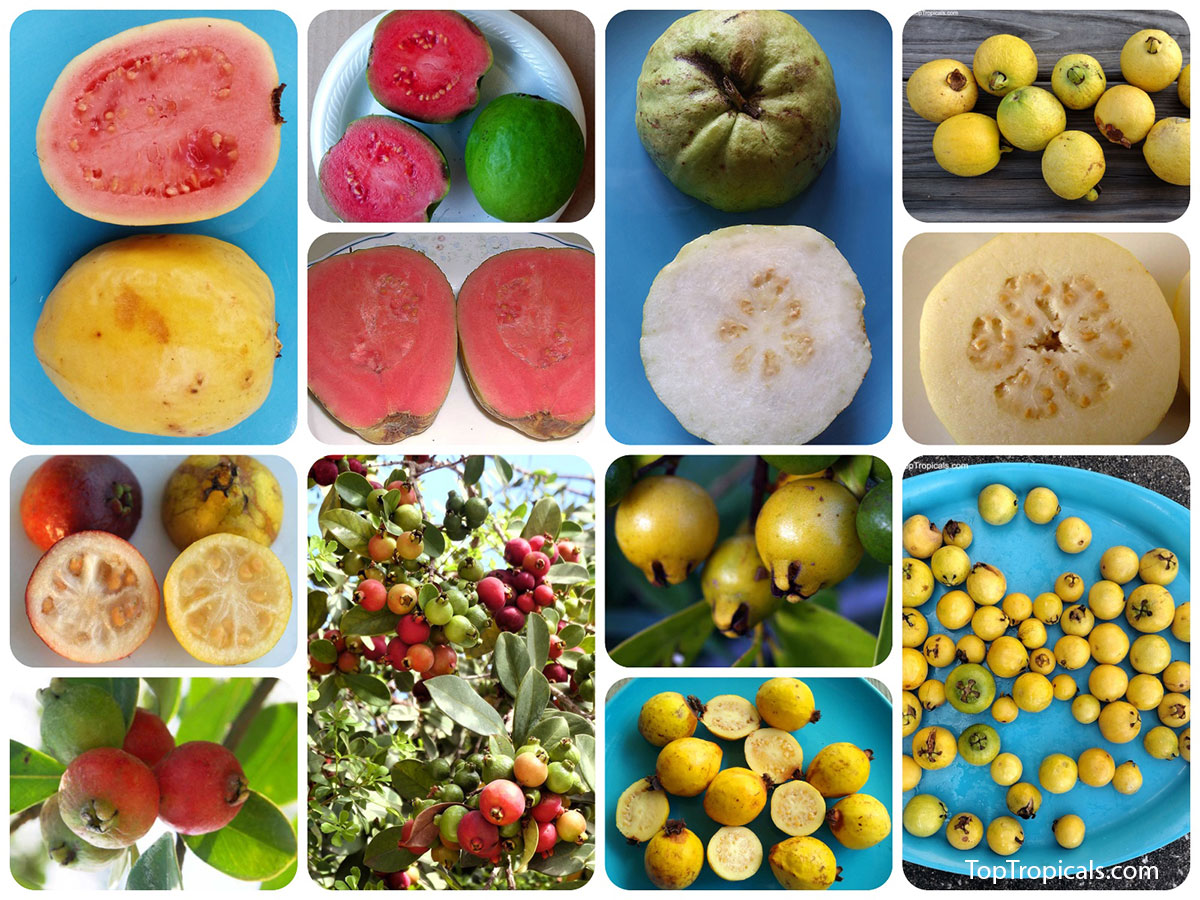
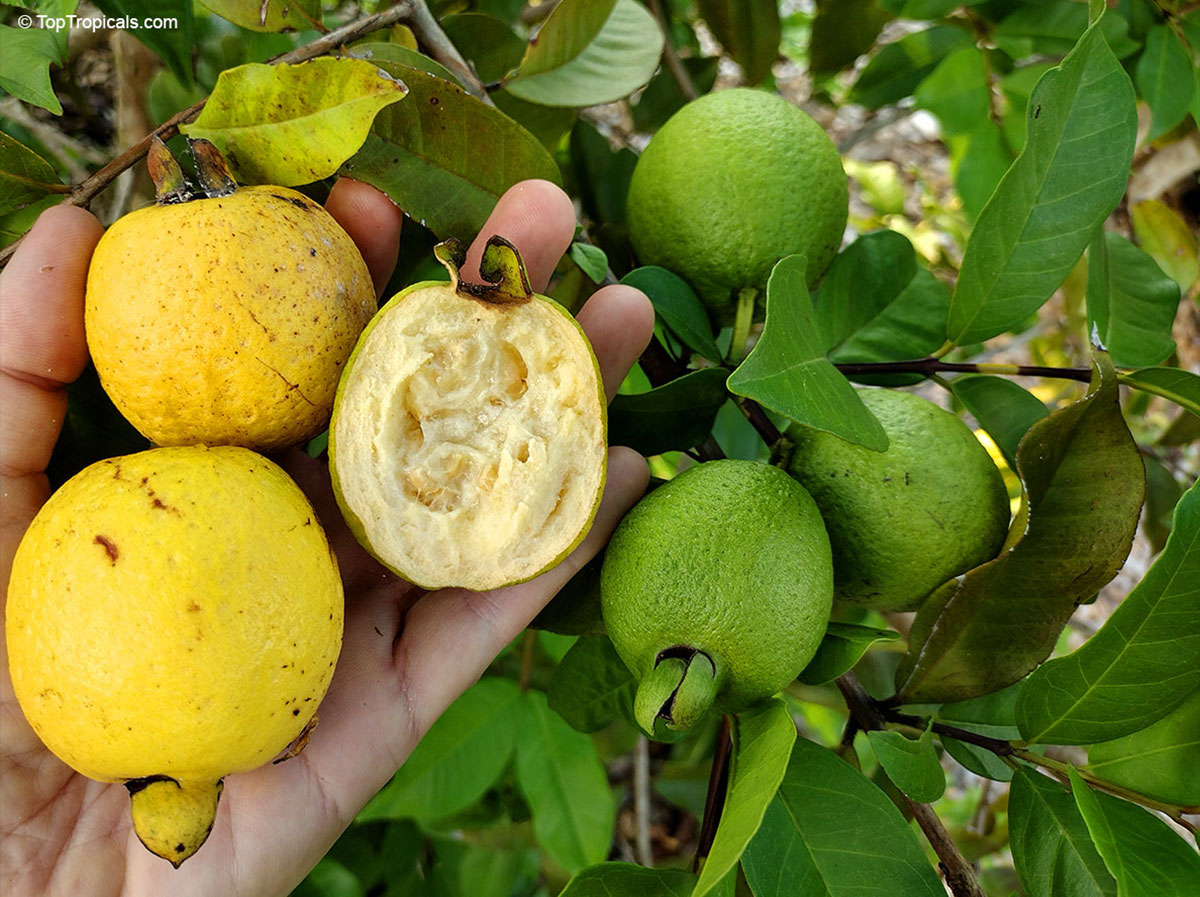
Guava varieties: Pink flesh (upper left quarter), White flesh and Cas
(upper right quarter), Red Cattley Guava (bottom left quarter) and Golden
Cattley (bottom right quarter).
Let’s talk Guava. Few fruits check as many boxes: flavor,
productivity, health, and adaptability. We’ve grown guava trees at Top
Tropicals for years here in Florida, and it never fails to surprise people
with how
easy it is — and how quickly it rewards you.
🌿 Health Benefits
We know the first question:"Why guava in addition to all the other
fruit trees I could plant?"Because guava is one of the healthiest tropical
fruits you can eat and grow — and it produces faster than almost
anything
else.
Vitamin C powerhouse — guava has four times more vitamin C than
oranges. One fruit covers your daily needs and then some.
Potassium and fiber — good for balancing blood pressure and
keeping your heart strong.
Antioxidants like lycopene and vitamin C — these keep your skin
glowing and help protect your cells from damage.
Dietary fiber — aids digestion and helps keep blood sugar
steady.
Guava is a true"food as medicine"tree you can plant right in your
backyard or in pot.
♥️ Our Favorite Varieties are Available Now
We currently have a DOZEN excellent guava varieties in stock selected by
our plant expert Tatiana Anderson — something special for every
garden. Our top picks are:
Pink Guavas
Barbie Pink
– Yellow pear-shaped fruit with thick pink flesh, sweet and juicy.
Cold
hardy for a tropical fruit. The best seller.
Hong Kong
– Large, round, smooth pink fruit. Sweet flavor, very few seeds, and
very
productive.
Tikal
– Our top pick. Fast-growing, disease-resistant, and produces the
sweetest
pink guavas with very few seeds.
White Guavas
Indonesian White
– Aromatic, classic white-fleshed guava with an excellent
tropical flavor.
Kilo White
– Giant fruit up to 2 lbs (1 kilo) each! Few seeds, creamy white
flesh,
and fruits even in containers.
Brazilian Araca
Pera – Rare hybrid used for Guava Wine in Brazil. Tart,
concentrated juice makes excellent wine, sorbet, or jelly. Learn more...
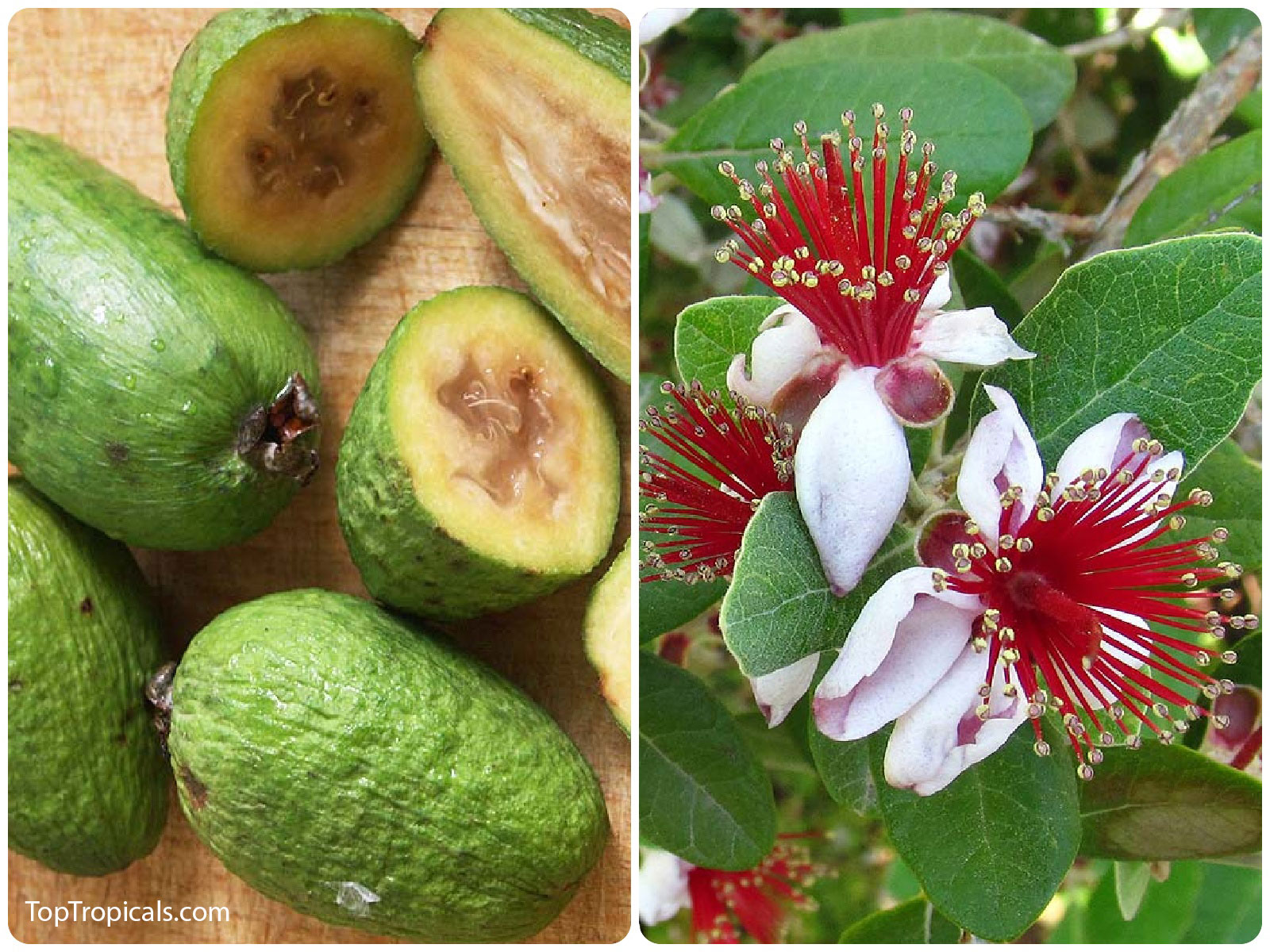
Pineapple Guava,
Guavasteen – Feijoa sellowiana. Strongly perfumed fruit, best
enjoyed when the pulp is mixed with sugar – like forest strawberries.
Cold-hardy, tolerates freeze, and doubles as a great windbreak. Learn more...
How do we ship plants? Part 2: packing in the box.
🚚 How do we ship plants? Part 2: packing in the box.
📦 In the previous video (Part 1: prepare the plant), we showed you how to prepare a plant for shipping.
Now comes the most important step - boxing it up!
📦 We’ll show you how to place the plant in the box, keep it snug and secure, and make sure i'’s ready for a safe trip from our nursery to your door.
📦 Watch out for shipping confirmation email to avoid your package sitting on a hot porch or freezing doorstep.
🎥 Part 2 shows you how to pack a plant.
❗️Stay tuned - the final step is coming in Part 3!






 Guava Tree Plant Care