Prunus persica 'Nectarina' (Nectarine)
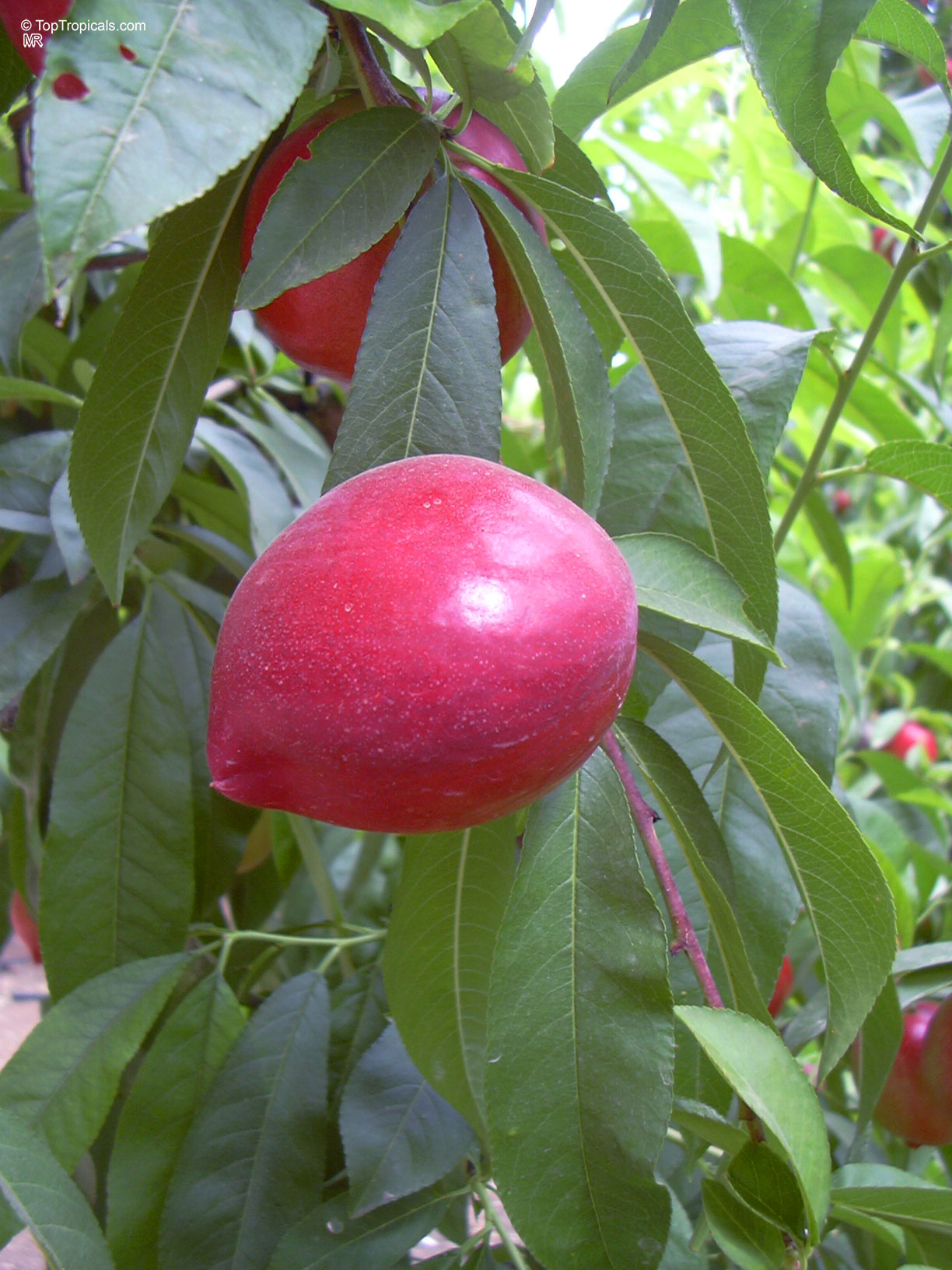
Botanical names: Prunus persica, Amygdalus persica
Common name: Nectarine
Cultivar: Nectarina
Family: Rosaceae
Origin: Northwestern China


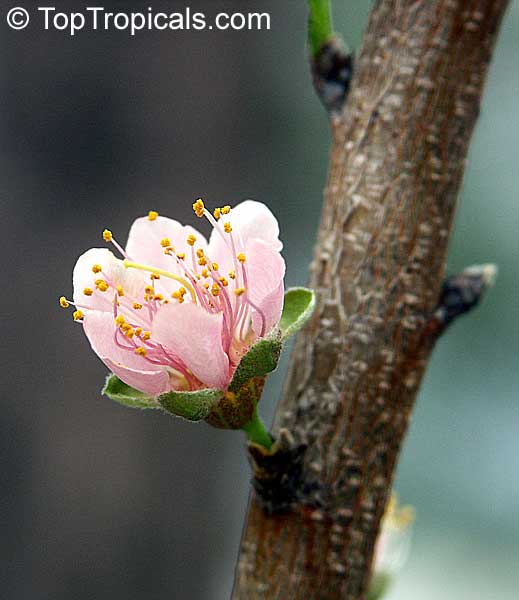
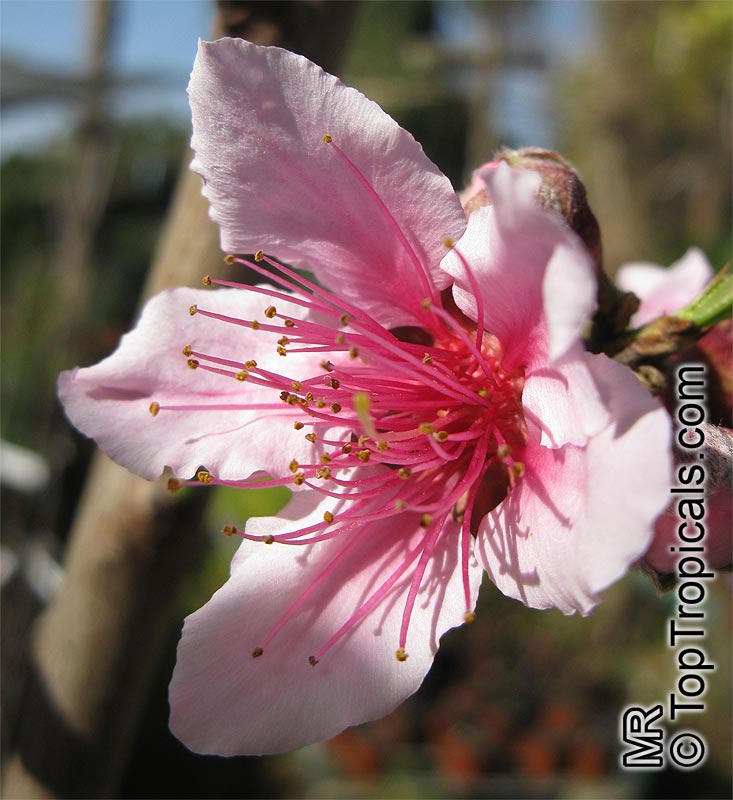
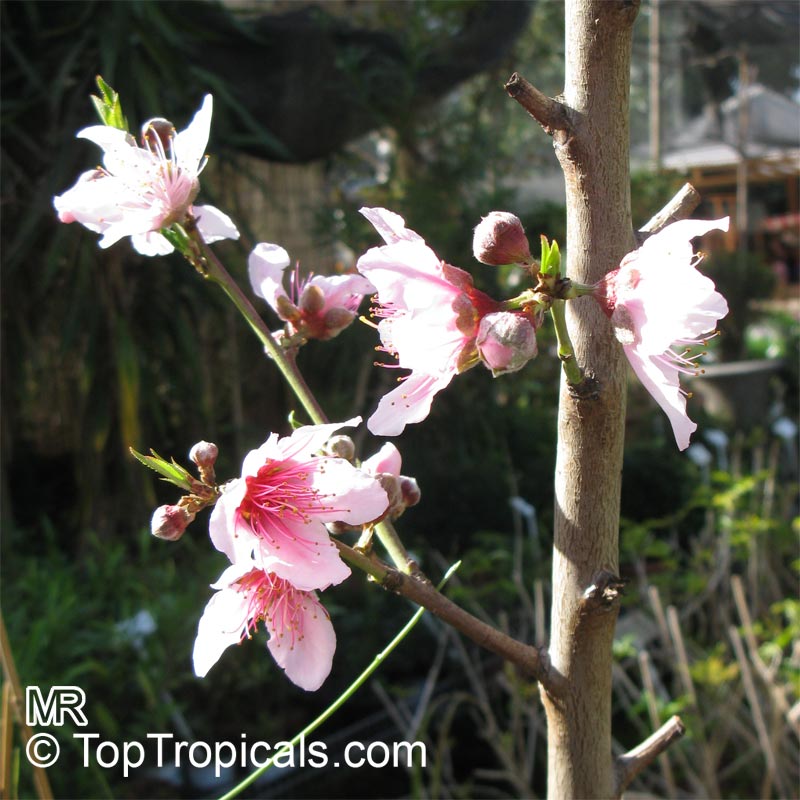
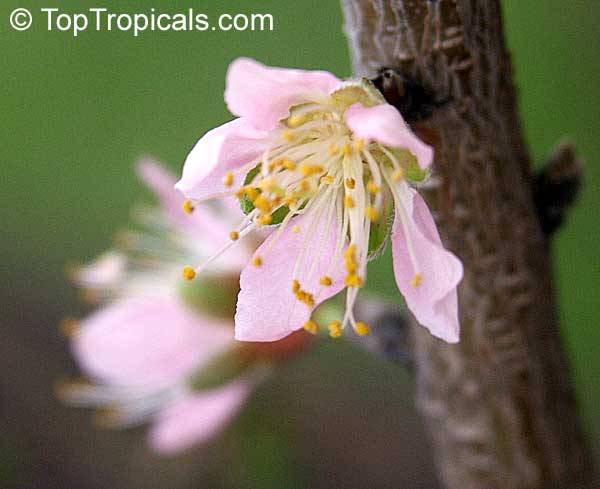
Prunus persica, commonly known as Peach, is a deciduous fruit tree in the Rosaceae family native to China, where it has been cultivated for thousands of years before spreading throughout Asia, Europe, and eventually the rest of the world. Despite its scientific name, the species did not originate in Persia but was introduced to Europe through ancient trade routes. Depending on the cultivar, peach trees typically grow 10 to 25 feet (3 to 8 m) tall with an open, rounded canopy and produce a spectacular display of pink flowers in early spring before the leaves emerge.
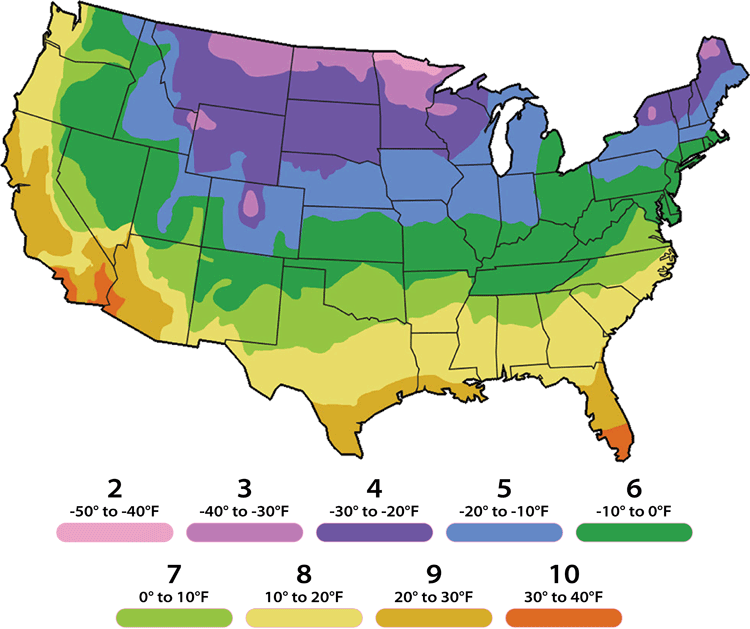
The velvety fruits are prized for their juicy, fragrant flesh, which ranges from white to yellow and may cling to or separate easily from the pit, depending on the cultivar. Thousands of cultivars have been developed for fresh eating, canning, and cooking, including both high-chill and low-chill selections suitable for a wide range of climates. Peach trees grow best in full sun and fertile, well-drained soil with regular moisture during the growing season. Most cultivars require winter chilling to produce abundant crops, although low-chill varieties perform well in subtropical regions. Hardy selections are generally suitable for USDA Zones 5-9, with some low-chill cultivars thriving in Zones 8-10. In addition to their delicious fruit, peach trees are valued as ornamental landscape plants for their beautiful spring blossoms and attractive seasonal display. Prunus persica var. nectarina is almost identical to the Peach in habit and flowers but its fruit are smooth skinned, mostly smaller and with a subtly different flavor.
The Nectarine is classified as a sub-species of Peach.
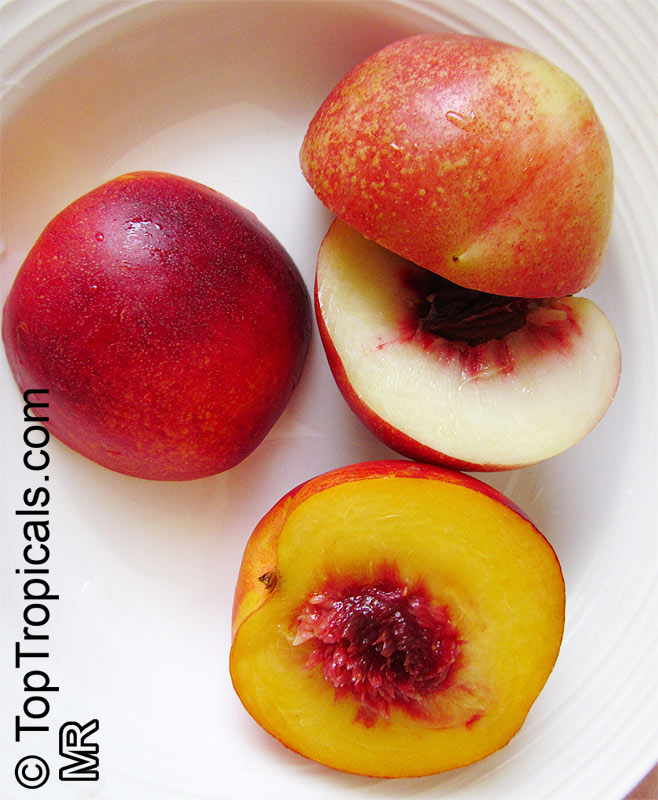
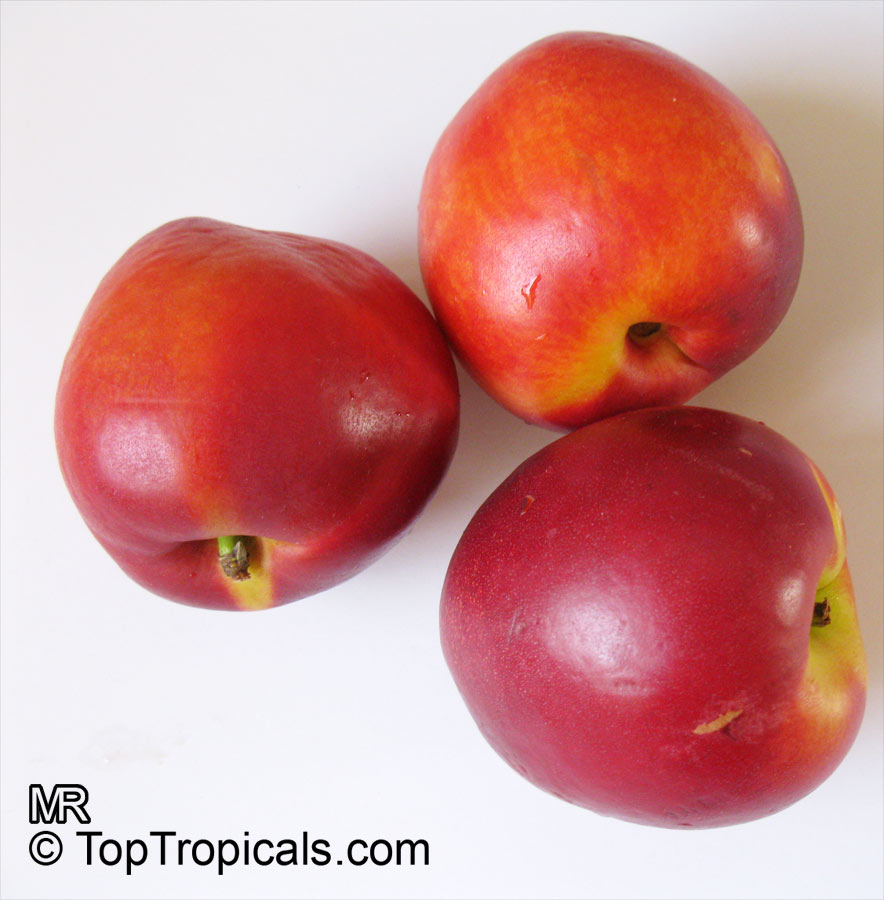
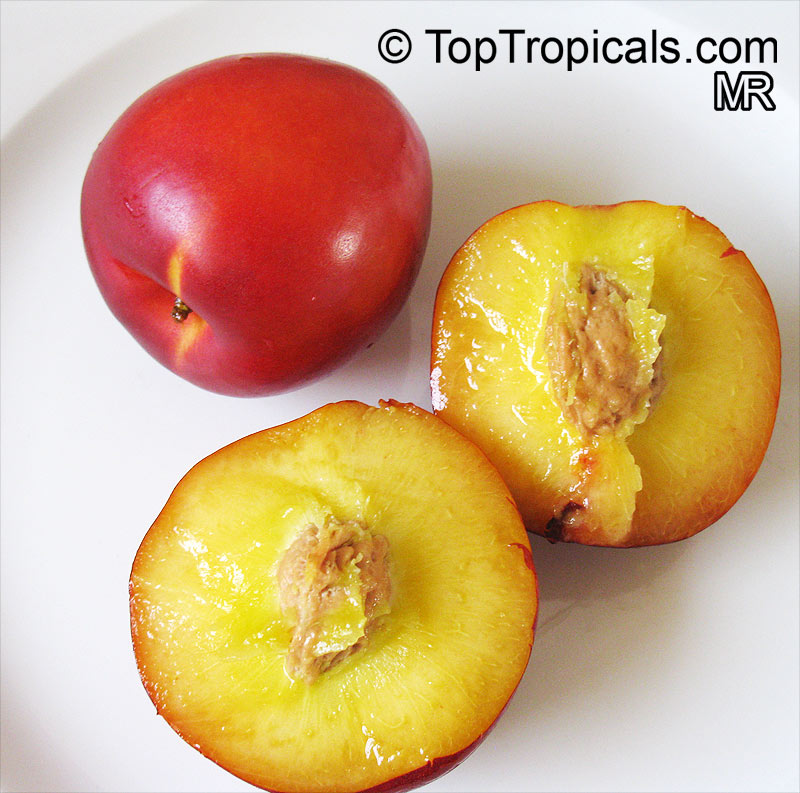
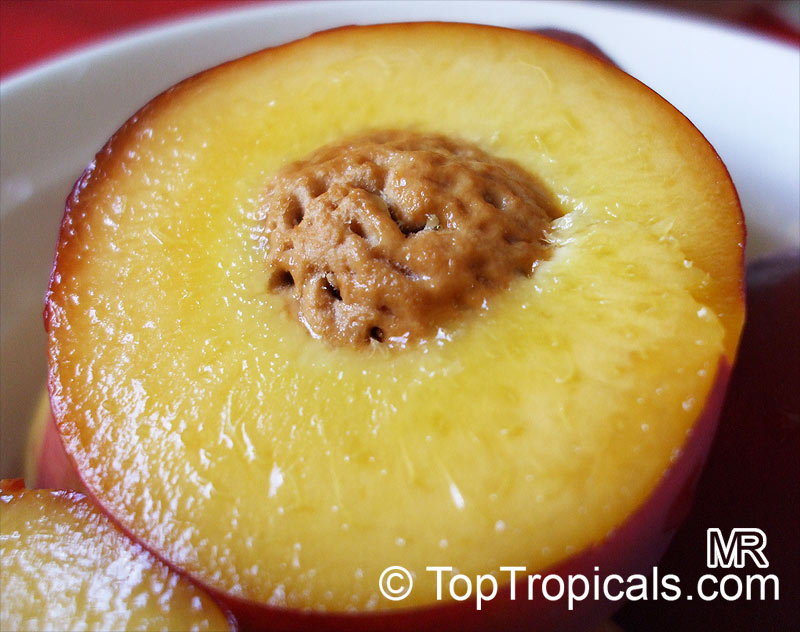
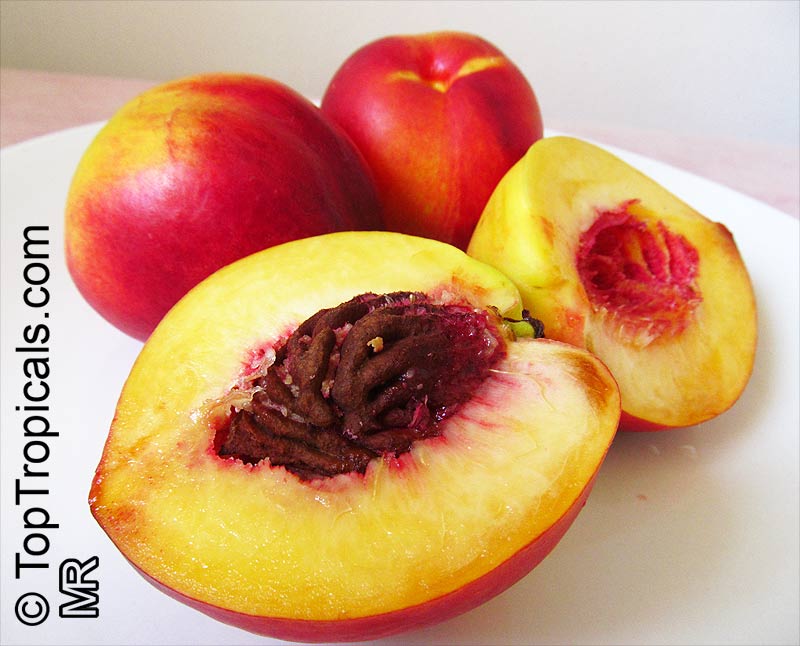
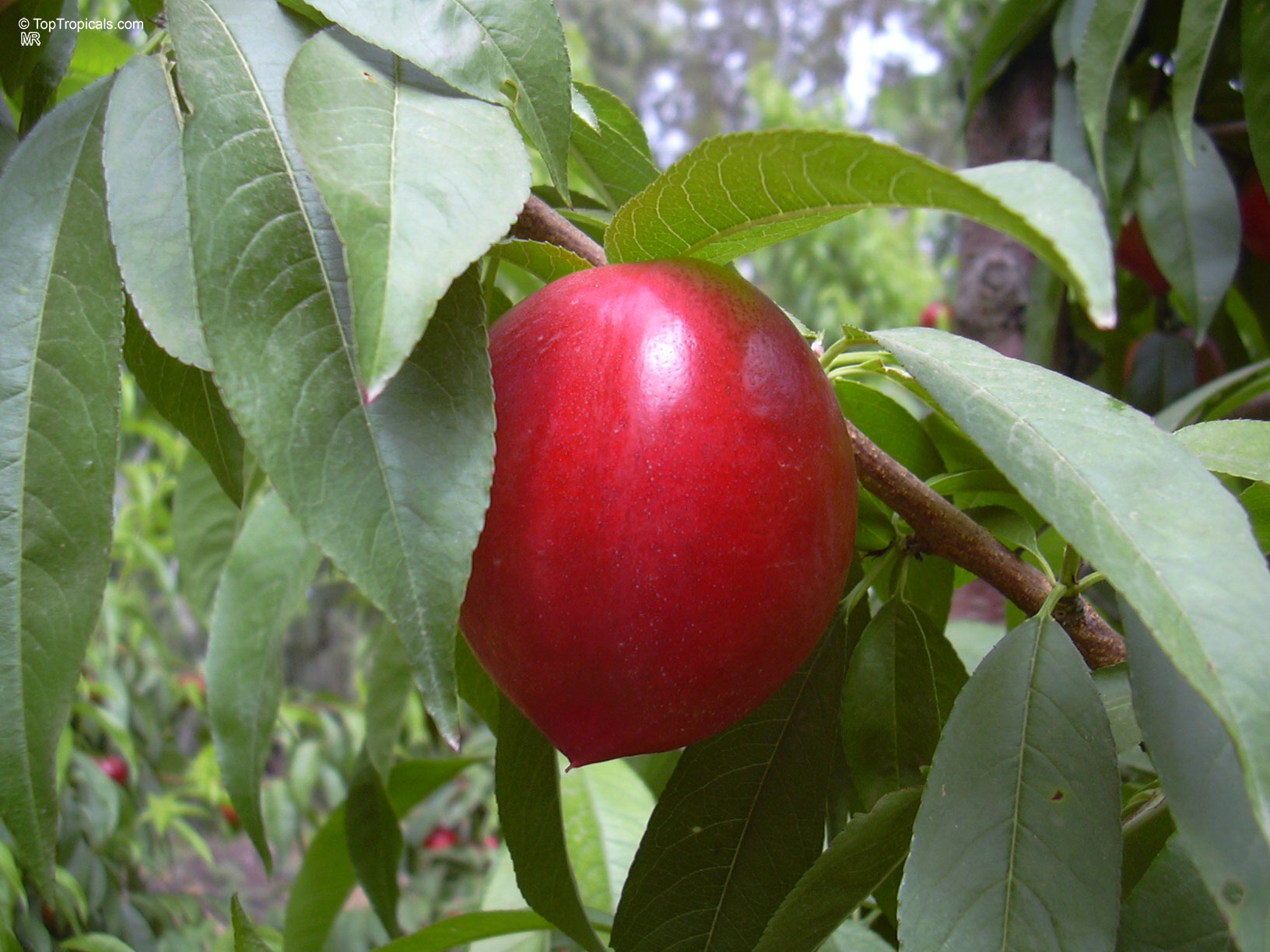
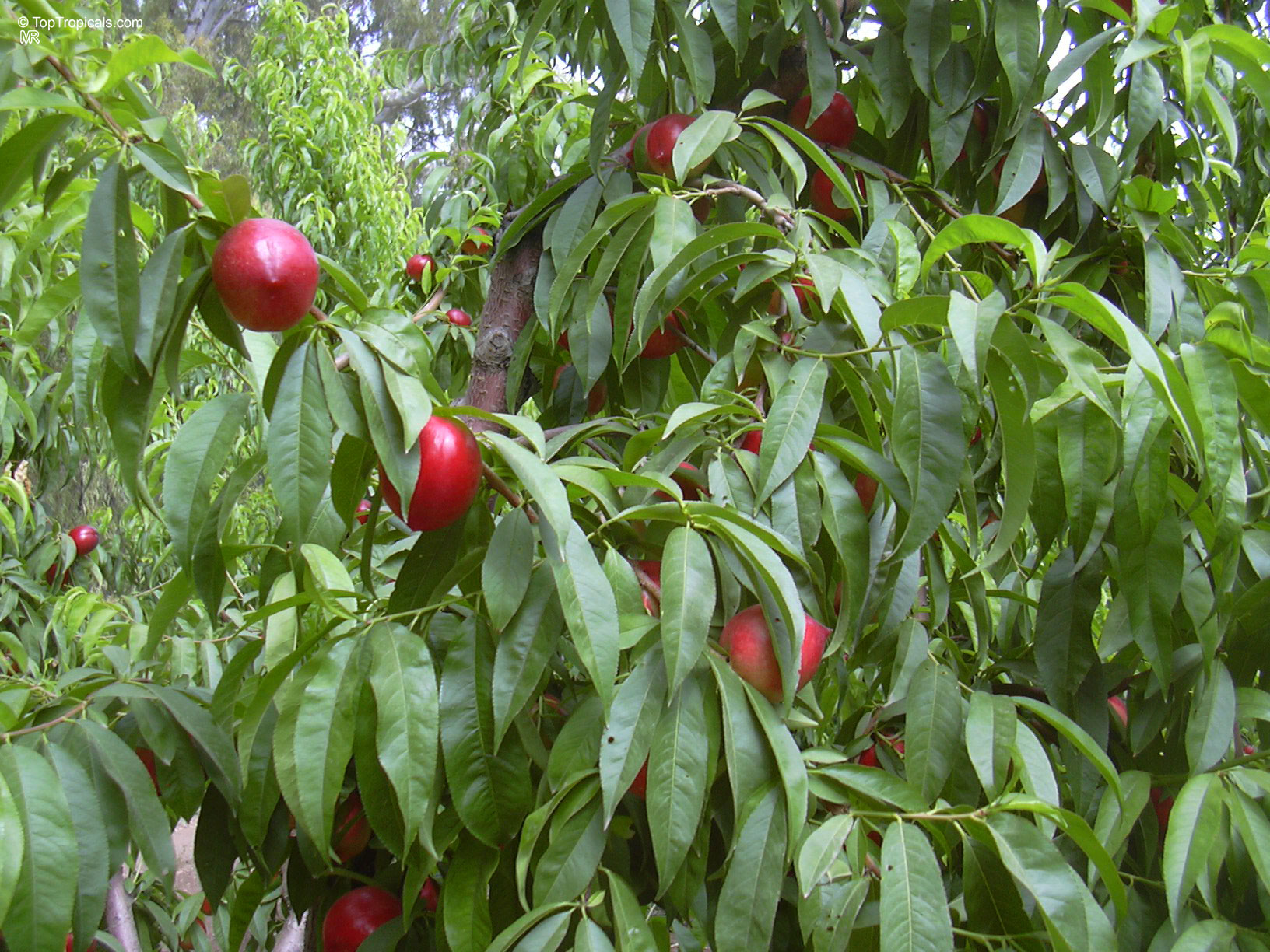
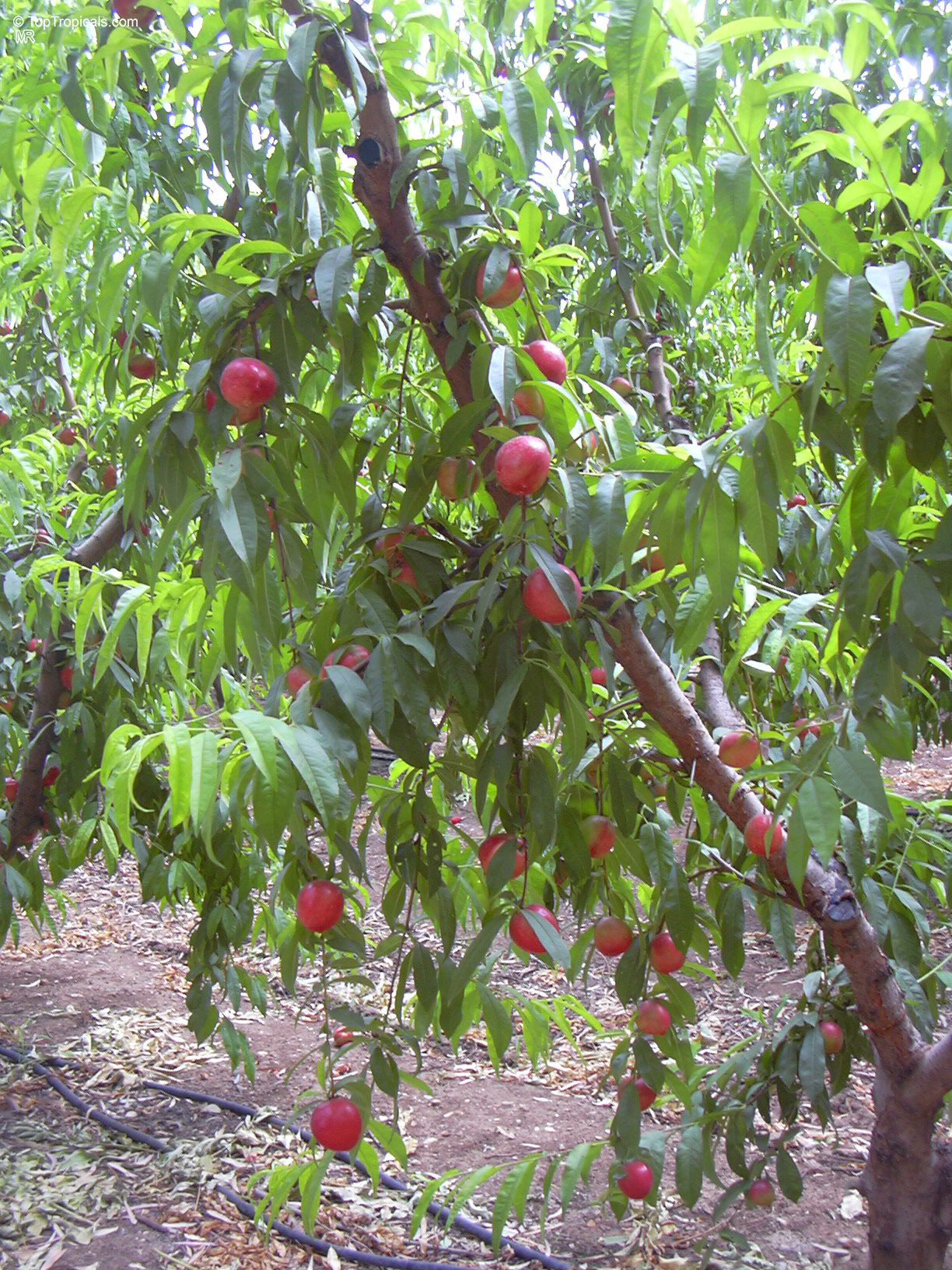
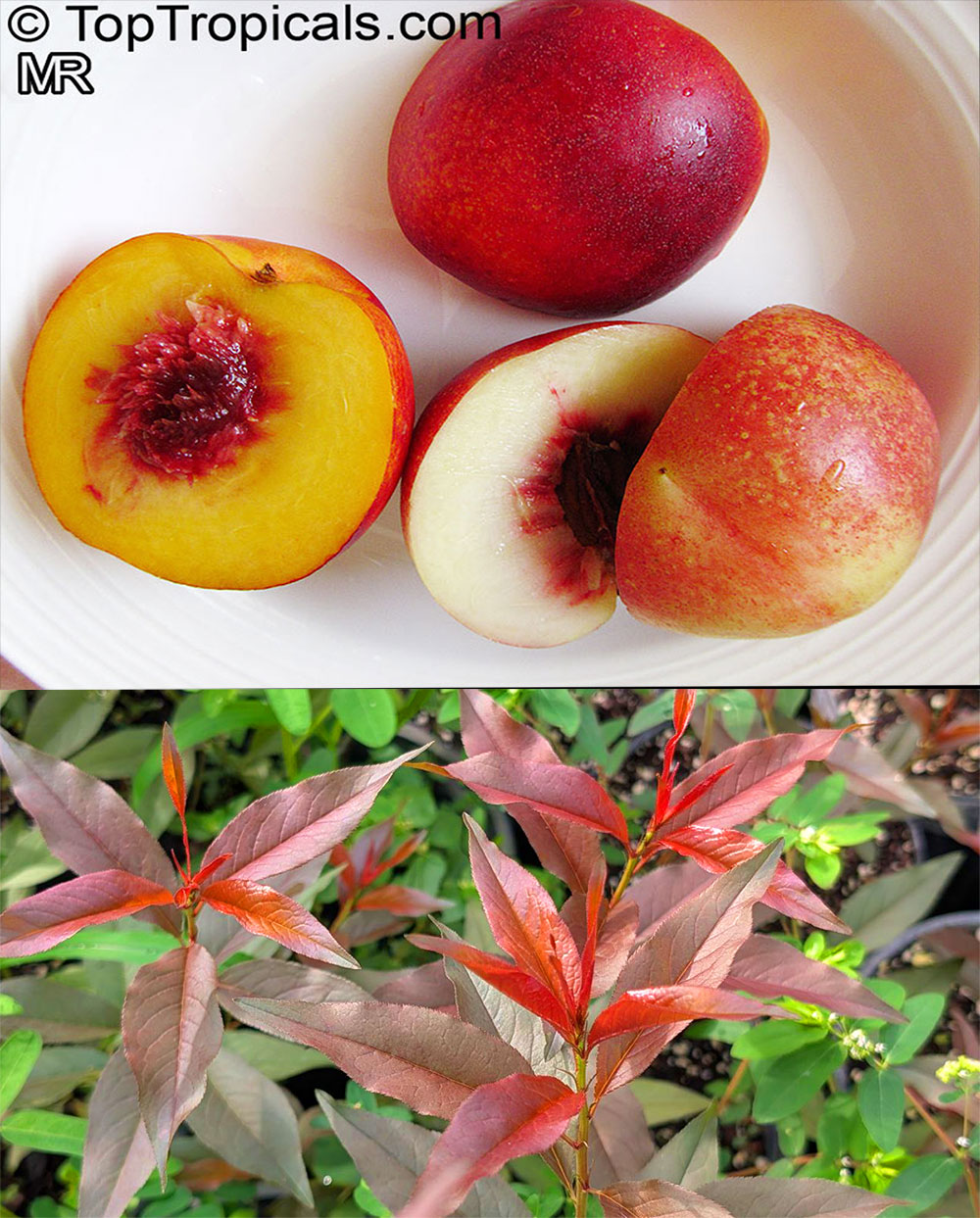
Nectarine fruit is similar to Peach fruit except that the Nectarine fruit tend to be smooth and have more red color on the fruit surface. Nectarine fruits may be either yellow or white-fleshed.
Similar plants: Prunus persica 'Nectarina' (Nectarine)
- Prunus armeniaca (Apricot)
- Prunus dulcis (Almond)
- Prunus persica (Peach)
- Prunus webbii (Wild Almond tree )
- Prunus avium (Wild Cherry)
- Prunus campanulata (Taiwan Cherry)
- Prunus cerasifera (Cherry Plum)
- Prunus cerasoides (Himalayan flowering cherry)
- Prunus glandulosa (Chinese Bush Cherry)
- Prunus ilicifolia (Hollyleaf Cherry)
Grow a better peach trees with Flordaguard / MP-29 peach-plum hybrids - tough roots, bold looks! They are Florida's frontline fruit trees. It's a hardy, red-leafed hybrid with real potential in the warm-climate garden. Developed specifically for Florida's tough growing conditions, it shines as a nematode-resistant, low-chill performer that also happens to be visually striking. Used commercially for rootstock due to their excellent qualities, they are more than just a rootstock and can be grown in Florida heat with a great success.
This red-leafed peach-plum hybrid has a real potential as a productive, compact fruit tree for the modern grower. Originally developed by the USDA and University of Florida, this clonal hybrid combines the best traits of both peach and plum, resulting in a semi-dwarf tree that is disease-resistant, space-saving, and high-yielding.
Compact size, full performance, these trees grow to about 75% the size of standard peach trees, perfect for small gardens or high-density orchards.
The striking red foliage adds ornamental appeal, making it stand out even before fruiting.
Root-knot nematode resistance - one of Florida's most notorious soil pests. This hybrid is also immune to root rot and peach tree short life - two of the biggest threats to stone fruits.
Great yields and fruit quality: produce excellent crops, often outperforming standard rootstocks in both quantity and quality.
Low maintenance, lower chemical input: with its built-in disease resistance, this hybrid helps reduce the need for chemical sprays. Thrives in areas with as little as 300 chill hours, making it ideal for southern growers.
Grafting-friendly: Compatible with most low-chill peach varieties, whether you prefer freestone or clingstone fruit.
Whether you're looking to graft or grow it as a compact fruiting tree, FloridaGuard (MP29) offers both performance and personality. A smart choice for serious growers and collectors alike!
Recommended Fertilizer: SUNSHINE C-Cibus - Crop Nutrition Booster
SUNSHINE-Honey - sugar booster
 SUNSHINE C-Cibus (NPK 2-2-4) - Crop Booster for every watering.
  SUNSHINE C-Cibus (NPK 2-2-4) - Crop Booster for every watering.