Prunus cerasifera (Cherry Plum)
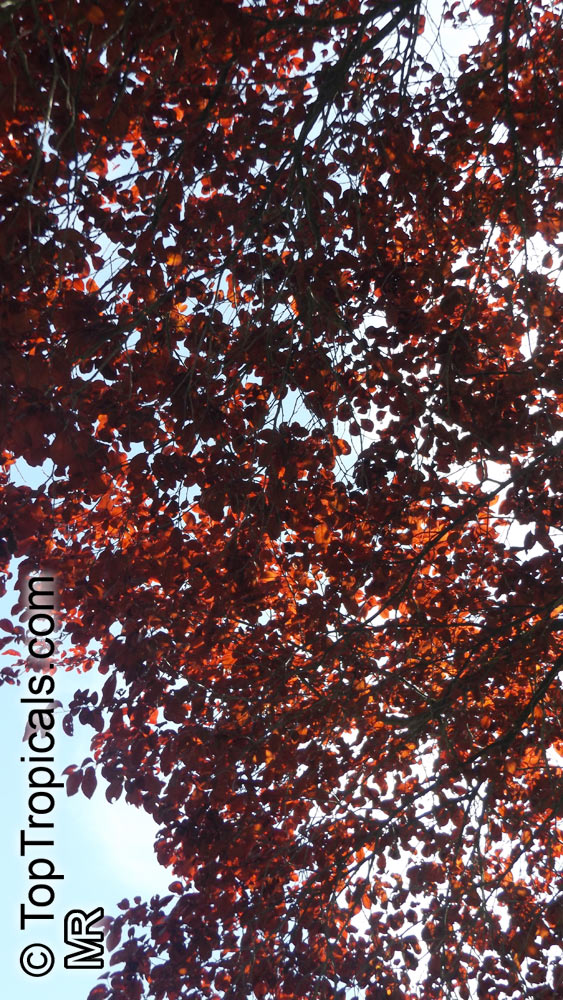
Prunus cerasifera (Cherry Plum) dense canopy with dark purple foliage reaching toward the light sky
Botanical names: Prunus cerasifera, Prunus divaricata
Common names: Cherry Plum, Myrobalan Plum, St. Lukes Flowering Plum
Family: Rosaceae
Origin: Europe, Asia
USDA Plant Hardiness Zone Map
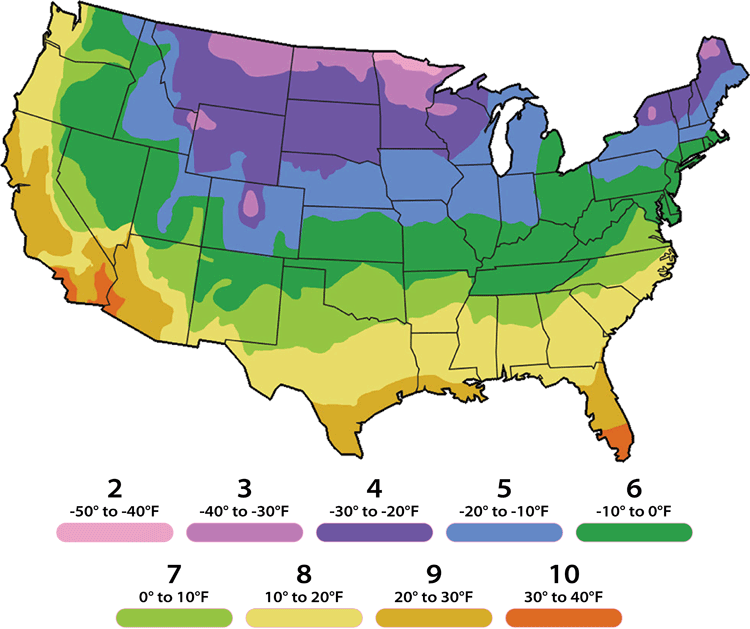
USDA Zone: 4b-10a
Plant type: Fruit or edible
Fruit type: Fruit or edible


 Plant form: Large bush or small tree; suitable for bonsai
 Mature height: 10-20 ft
 Sun exposure: Full sun or bright light indoor; semi-shade
 Cold tolerance: Tolerates light freezing to about 30°F for short periods (mature plants). Young plants must be protected.
 Watering: Moderate
 Flower color: Pink; white and off-white
 Suitable for: Outdoors in the suitable USDA zone; small gardens, containers, and indoor growing
 Foliage: Deciduous
 Thorns: Thorny or spiny
 Fragrance: Fragrant; perfume plant
 Wildlife: Attracts butterflies and hummingbirds
Wild types are large shrubs or small trees reaching 6-15 meters tall, with deciduous leaves 4 to 6 centimeters long.
Prunus cerasifera is a popular ornamental tree for garden and landscaping use, grown for its very early flowering. Numerous cultivars have been developed, many of them selected for purple foliage. They can have white or pink flowers.
Fruit are flavorful and tart, used in preserves, pies and desserts.
Similar plants: Prunus cerasifera (Cherry Plum)
- Prunus armeniaca (Apricot)
- Prunus avium (Wild Cherry)
- Prunus campanulata (Taiwan Cherry)
- Prunus cerasoides (Himalayan flowering cherry)
- Prunus dulcis (Almond)
- Prunus glandulosa (Chinese Bush Cherry)
- Prunus ilicifolia (Hollyleaf Cherry)
- Prunus laurocerasus (Cherry Laurel)
- Prunus persica 'Nectarina' (Nectarine)
- Prunus persica (Peach)
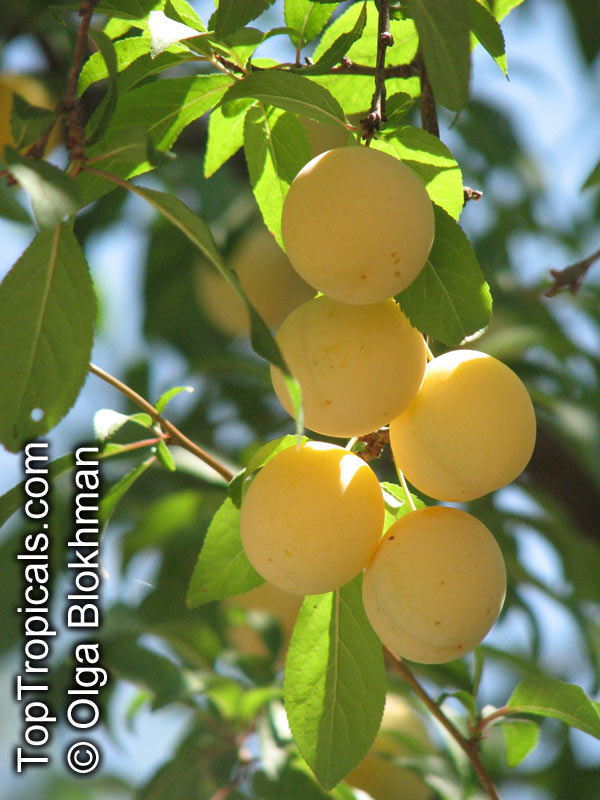
Prunus cerasifera (Cherry Plum) yellow fruit suspended from thin branches amid lush green foliage
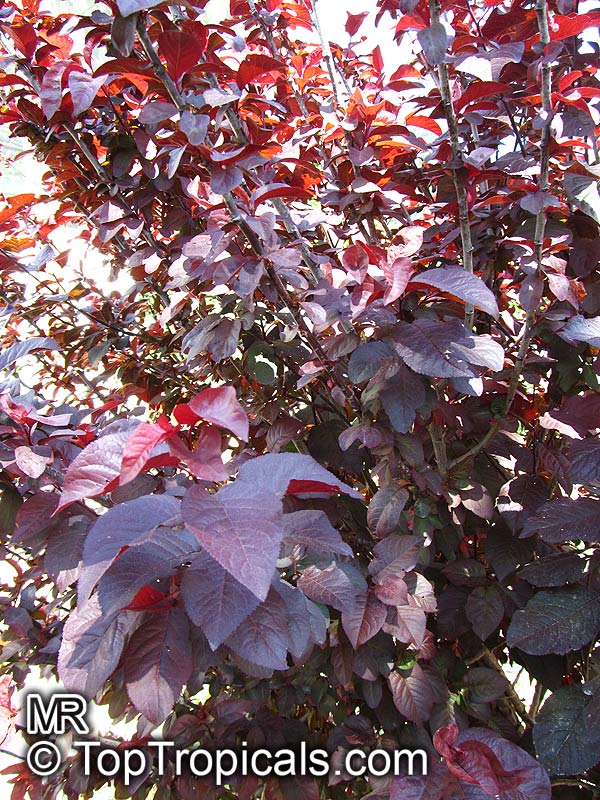
Prunus cerasifera (Cherry Plum) foliage with intense dark purple color covering many woody branches.
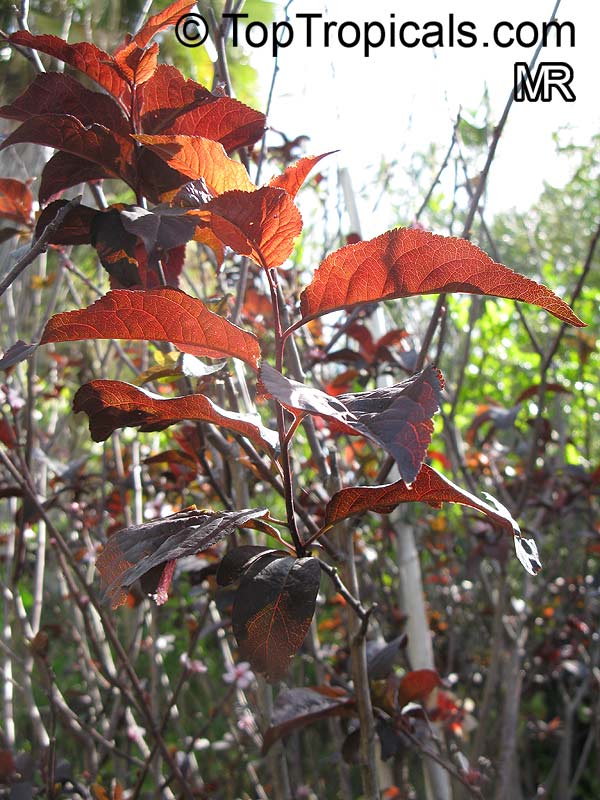
Prunus cerasifera (Cherry Plum) branches hold numerous serrated leaves with a deep red color.
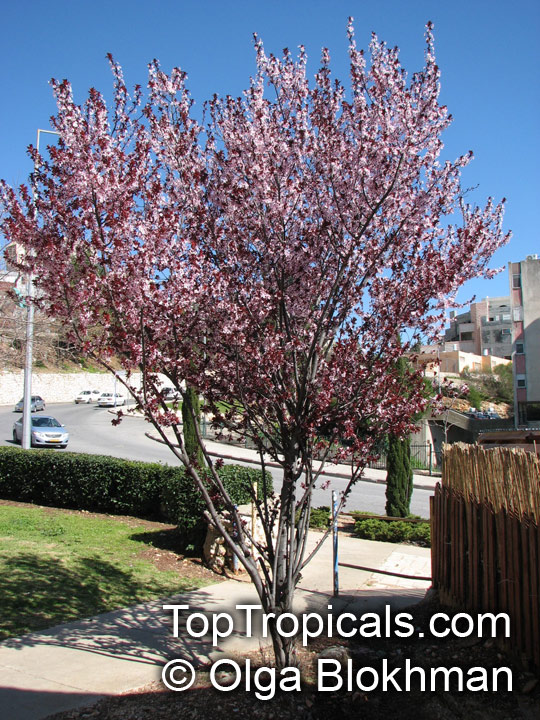
Prunus cerasifera (Cherry Plum) tree with deep purple foliage and dense soft pink flower clusters
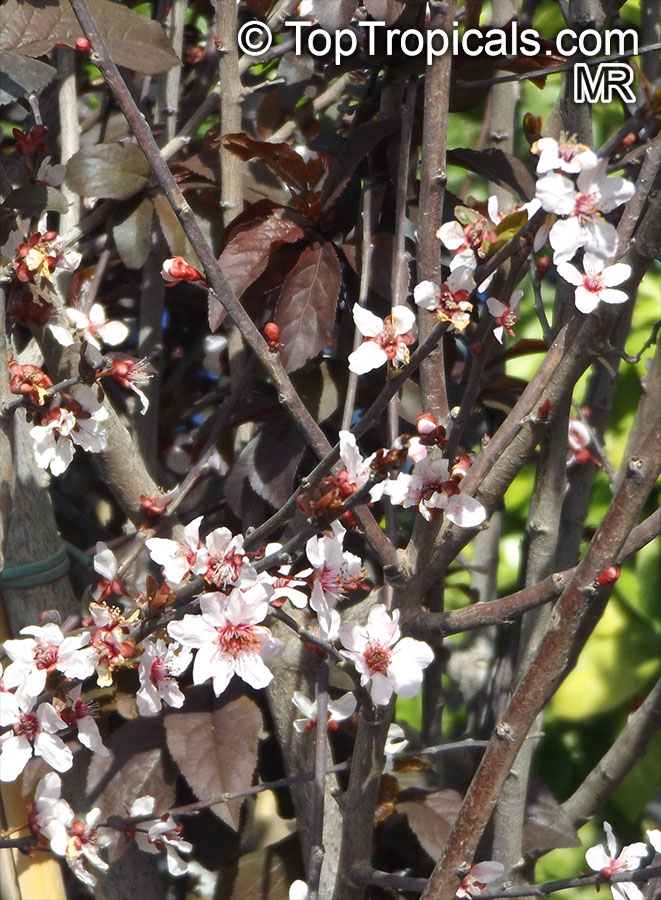
Prunus cerasifera (Cherry Plum) delicate white petals stand out against dark maroon stems and foliage.

Prunus cerasifera (Cherry Plum) pale pink flower clusters growing along a woody tree branch.

Prunus cerasifera (Cherry Plum) yellow fruit clusters nestled among jagged green leaves on a tree branch

Prunus cerasifera (Cherry Plum) light pink flower with delicate rounded petals atop a thin woody branch.
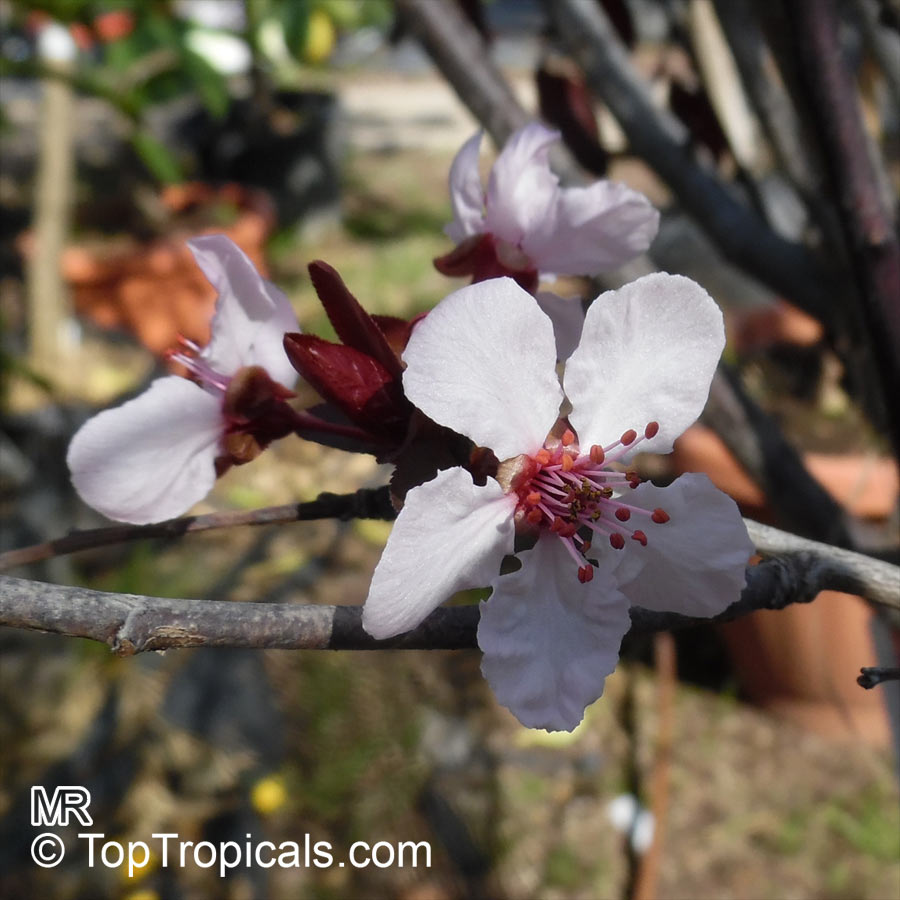
Prunus cerasifera (Cherry Plum) white and pink flower growing on a thin brown woody stem
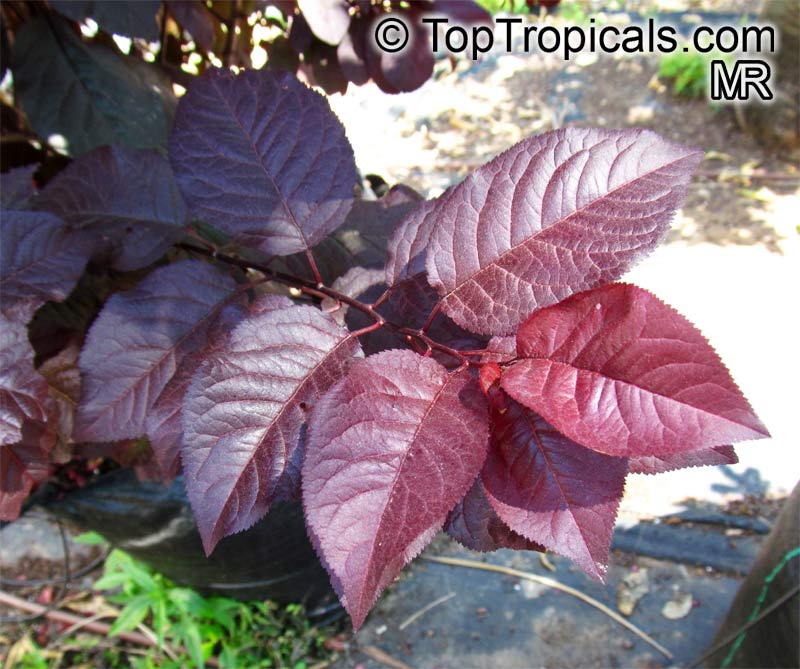
Prunus cerasifera (Cherry Plum) thick foliage with deep purple tones on a woody stem.
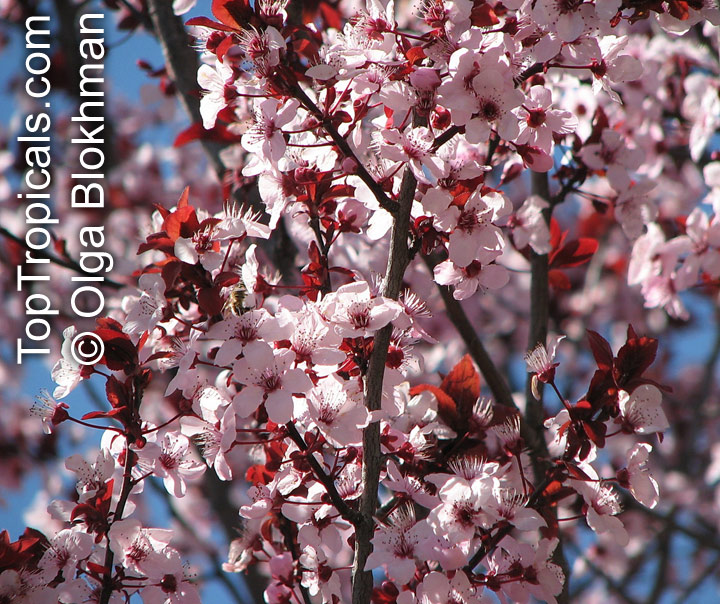
Prunus cerasifera (Cherry Plum) covered in many small light pink flowers and dark reddish leaves
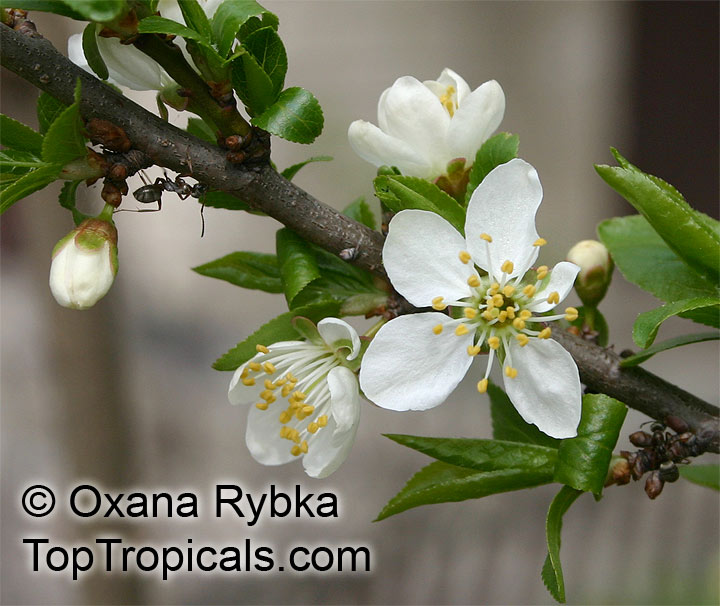
Prunus cerasifera (Cherry Plum) white flower and buds on a thin wooden branch with green leaves
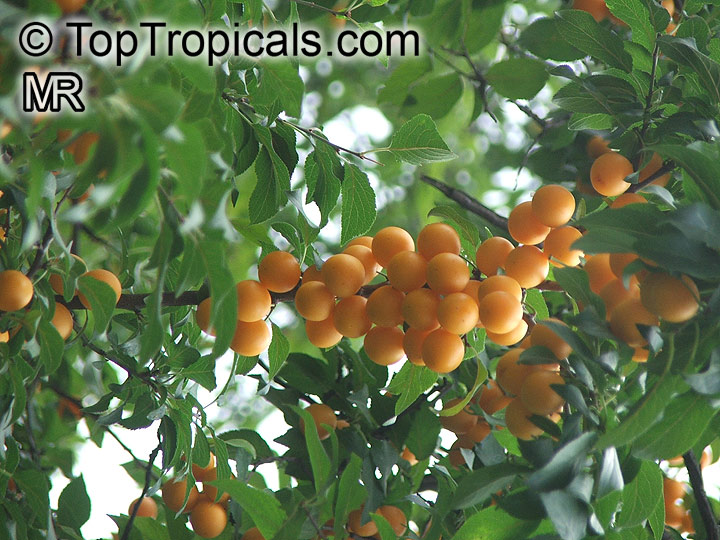
Prunus cerasifera (Cherry Plum) clusters of small yellow fruit nestled among many green leaves.
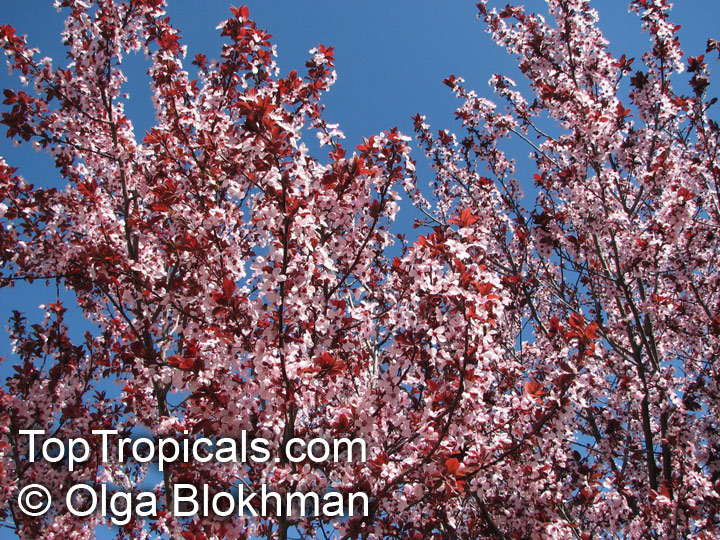
Prunus cerasifera (Cherry Plum) tree covered in dense clusters of light pink flowers and purple foliage
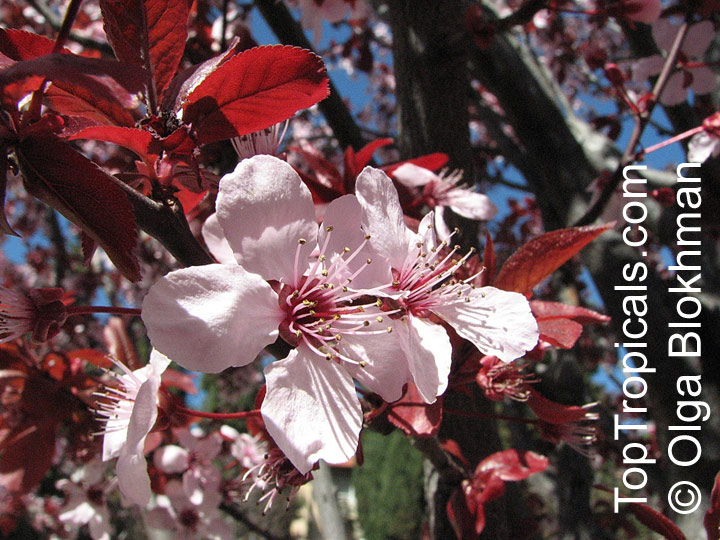
Prunus cerasifera (Cherry Plum) flower with five delicate pink petals and thin central stamens.
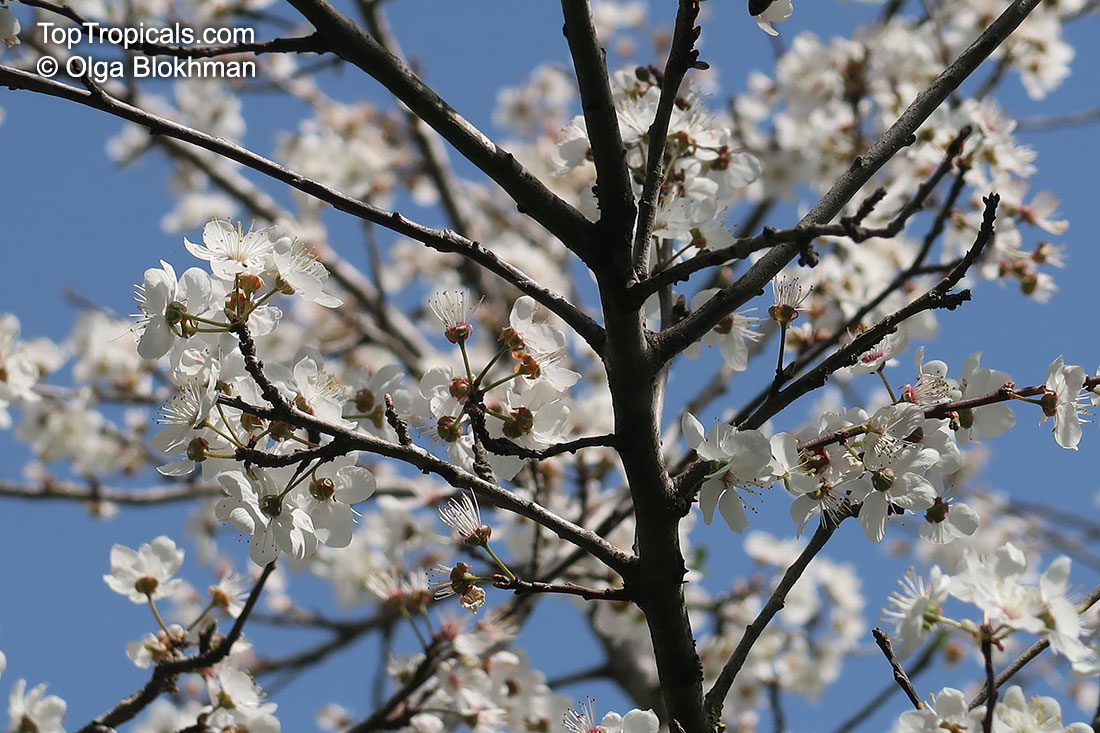
Prunus cerasifera (Cherry Plum) clusters of white flowers covering thin branches against blue sky
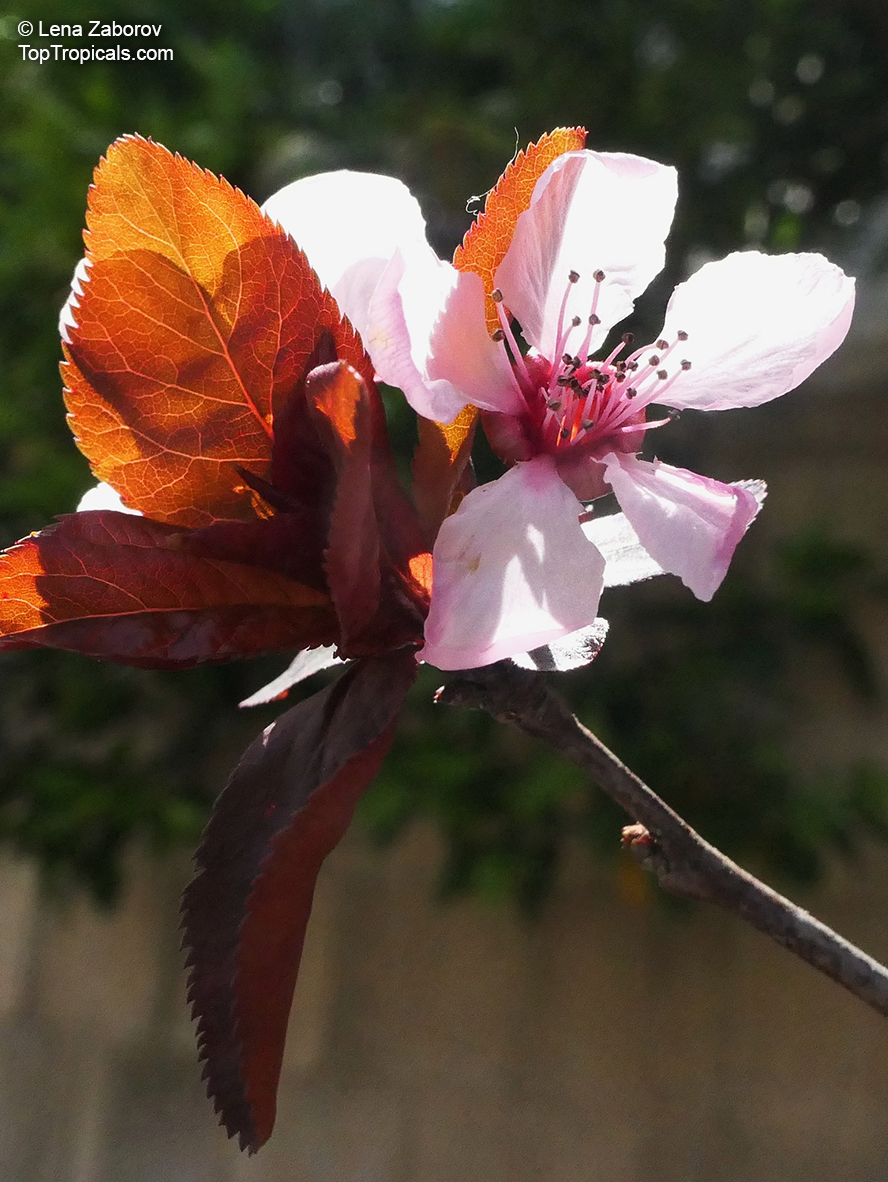
Prunus cerasifera (Cherry Plum) flower with pale pink petals positioned near dark red foliage.
Link to this plant:
https://toptropicals.com/catalog/uid/prunus_cerasifera.htm