Sterculia foetida (Peon)
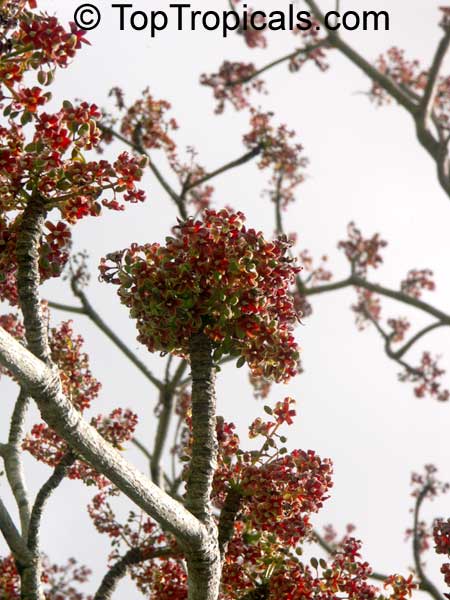
Sterculia foetida tree showing dense clusters of tiny red flowers on branches
Botanical name: Sterculia foetida
Common names: Peon, Indian Almond, Hazel Sterculia, Java Olive, Skunk Tree
Family: Malvaceae
Subfamily: Sterculioideae
Origin: Tropical Asia, Australia
USDA Plant Hardiness Zone Map
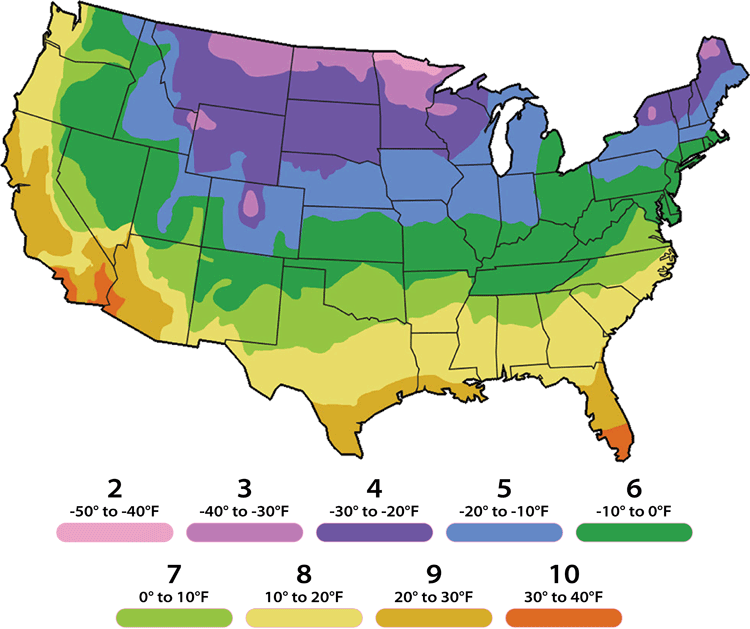
USDA Zone: 9-10
Plant type: Fruit or edible
Fruit type: Fruit or edible


 Plant form: Large or medium tree; suitable for bonsai
 Mature height: 20 ft or more
 Sun exposure: Full sun or bright light indoor
 Cold tolerance: Frost sensitive. Protect from freezing.
 Watering: Dry conditions
 Flower color: Red, crimson, vinous
 Suitable for: Outdoors in the suitable USDA zone; large gardens
 Wildlife: Attracts butterflies and hummingbirds
 Ethnomedical: Ethnomedical plant, traditionally used in folk or indigenous medicine
Large tree of Old World tropics having foul-smelling orange-red blossoms followed by red pods enclosing oil-rich seeds sometimes used as food. Roasted seeds are edible. Seeds are above-average for angiospermous plants for the amino acids. It has unisexual flowers with a single perianth whorl constituting a valvate calyx. Female flower has anthers of vestigial stamens around the base of the stalked ovary.
Similar plants: Sterculia foetida (Peon)
- Brachychiton australis (Broad Leaved Bottletree)
- Firmiana colorata (Colored Sterculia)
- Firmiana simplex (Chinese Parasol Tree)
- Pterygota alata (Buddha Coconut )
- Sterculia apetala (Bellota)
- Sterculia appendiculata (Mgude)
- Sterculia ceramica (Lanyu Sterculia)
- Sterculia coccinea (Shrub Sterculia)
- Sterculia lanceifolia (Lanceleaf Sterculia)
- Sterculia lanceolata (Lanceleaf Sterculia)
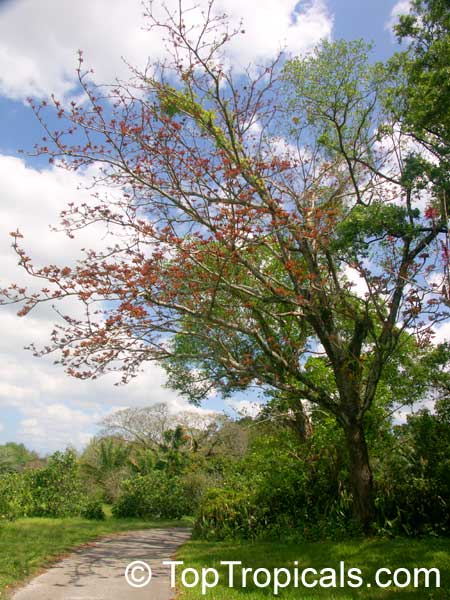
Sterculia foetida tree spreading branches with orange red leaves against blue sky
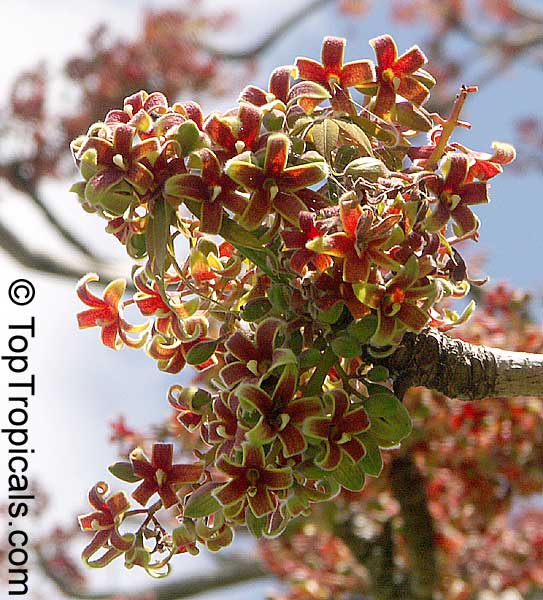
Sterculia foetida flower clusters with star shaped petals in red and yellow
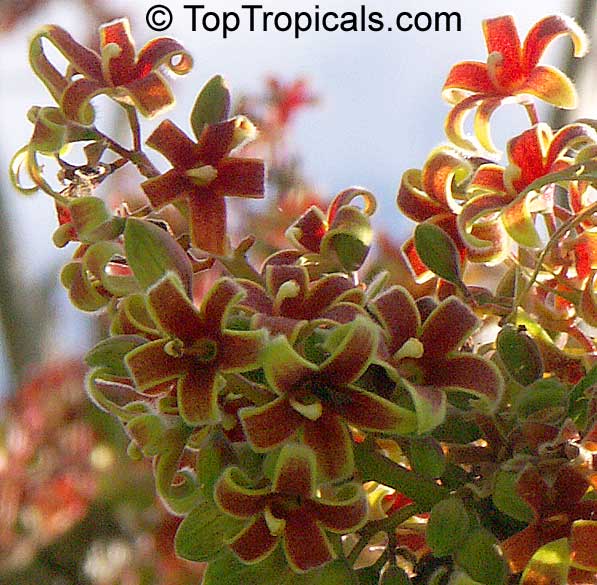
Sterculia foetida clusters of five petaled flowers with red and green tones
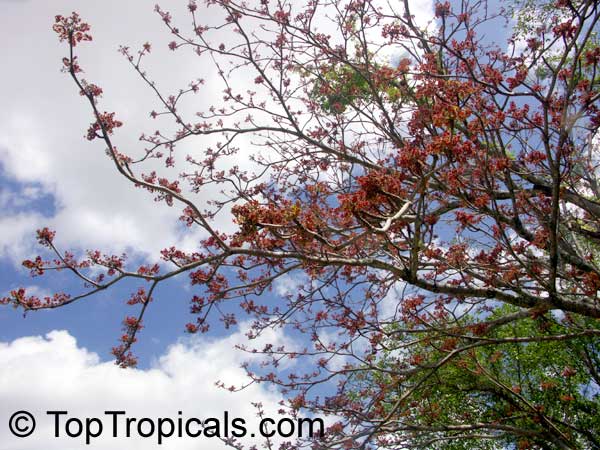
Sterculia foetida branches covered in red flower buds reaching toward the blue sky.
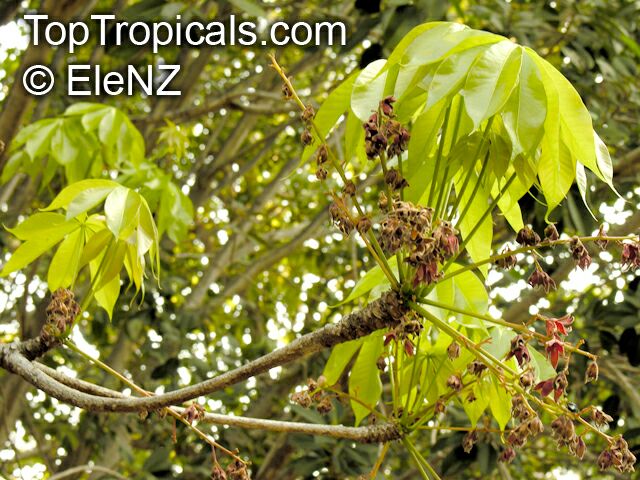
Sterculia foetida (Peanut tree) with light green leaves and small dark red flower clusters on branches.
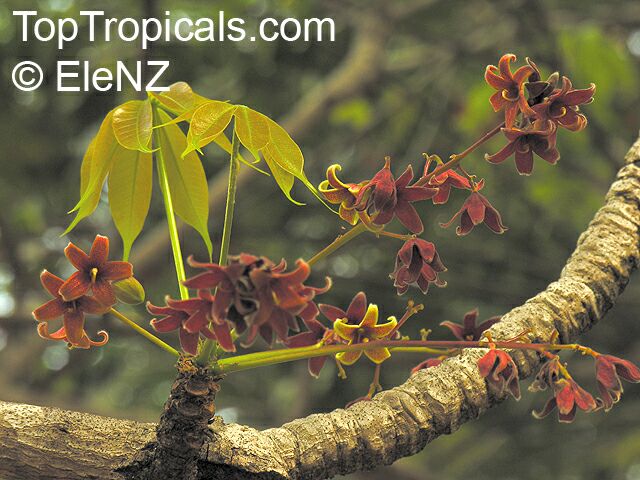
Sterculia foetida (Peanut tree) with star-shaped dark red flowers and emerging pale green leaves
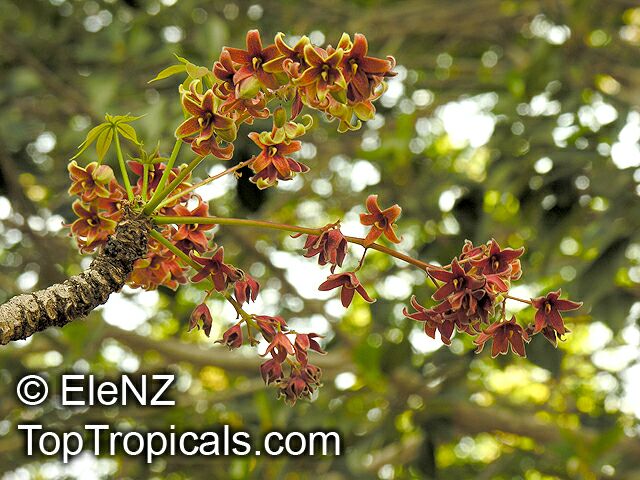
Sterculia foetida (Peanut tree) branch with orange star-shaped flower clusters reaching out in the light.
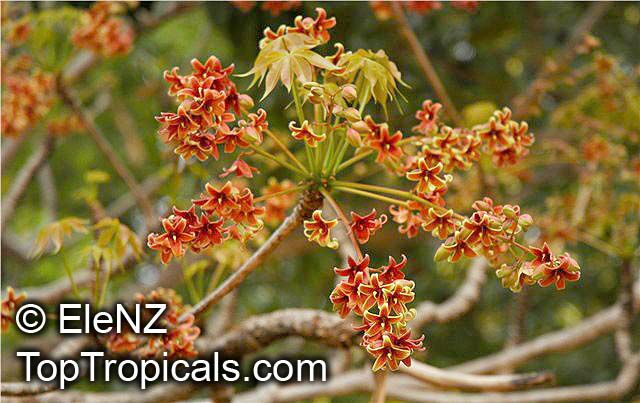
Sterculia foetida (Peanut Tree) orange flower clusters on a bare woody branch in soft light

Sterculia foetida (Peon) brown dry woody fruit with multiple open segments held near green foliage.
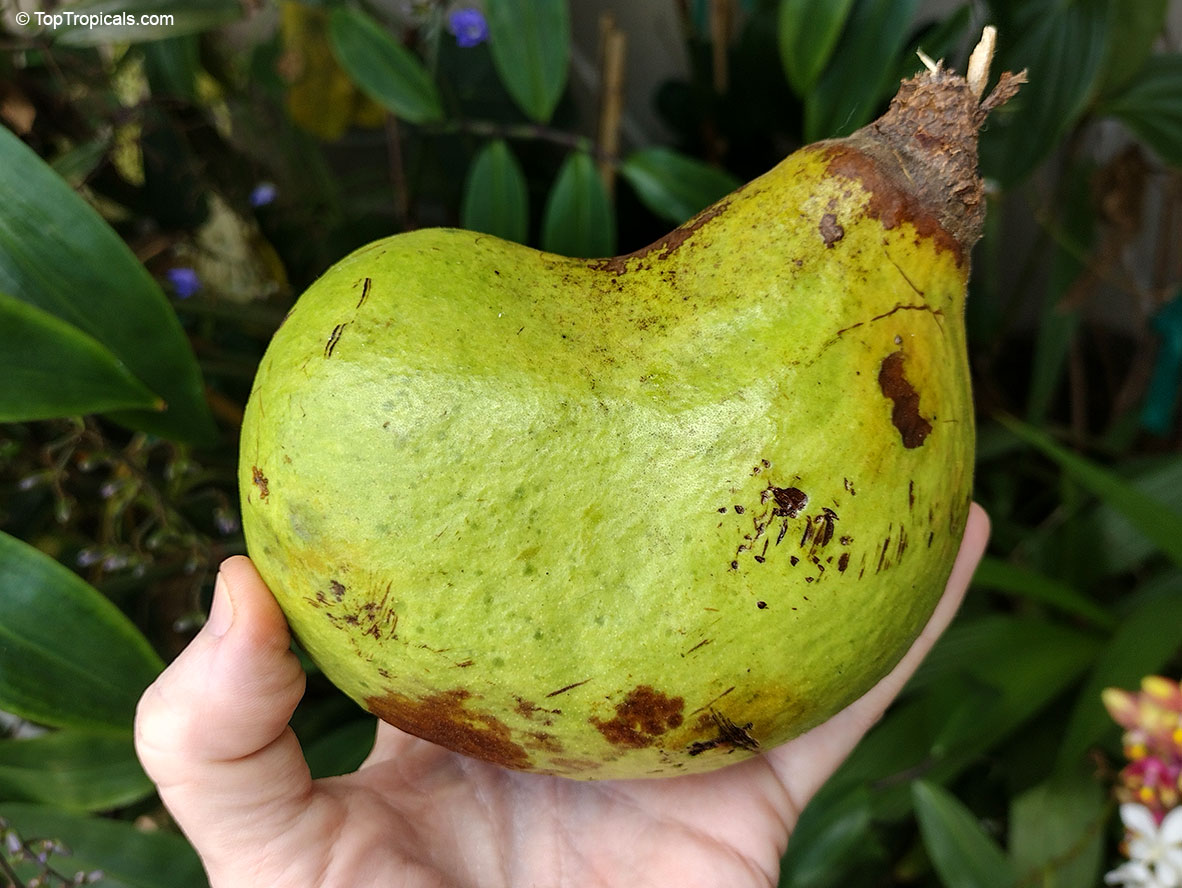
Sterculia foetida (Peon) green fruit held in hand showing size and thick woody texture
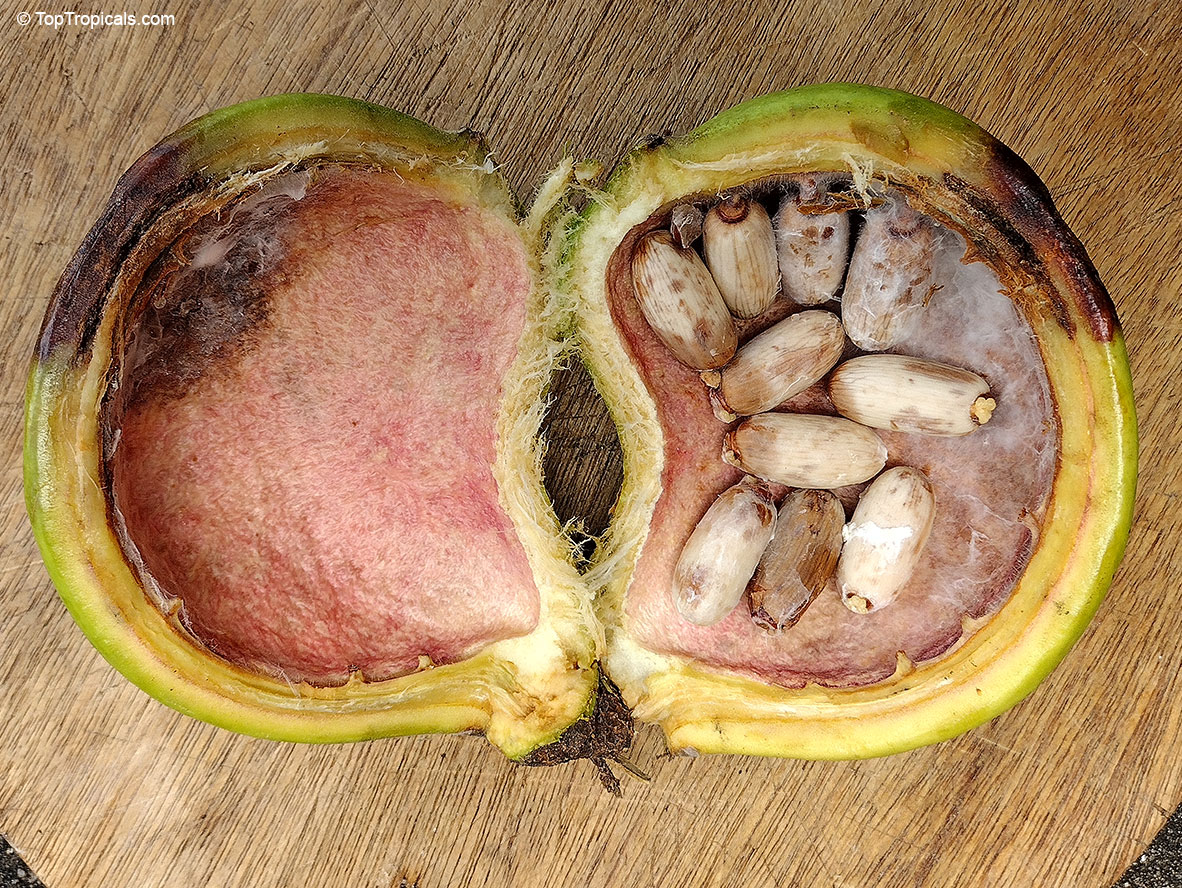
Sterculia foetida (Peon) fruit opened to reveal interior pink flesh and many oval seeds.
Link to this plant:
https://toptropicals.com/catalog/uid/sterculia_foetida.htm