Date:
What
Fertilizer to Use Now and How?
Five important keys to healthy plants
Q: It's early Spring this year. Should I start fertilizing my plants sooner than usual?
A: Most fertilizer instructions recommend fertilizing tropical plants from March to November. This is because plants don't need as much food during the cooler months when many go dormant, and excess nutrients can burn the roots if not absorbed. However, for the most effective fertilizer program and healthy plants, consider these points:
1. Sunshine Boosters Year-Round
Liquid amino-acid-based fertilizers like Sunshine Boosters are safe to use year-round. Since watering is reduced in cooler weather, the intake of water-soluble fertilizer is also lower, providing plants with just the essential nutrients for their minimal needs.
2. Dry Fertilizer Schedule
Be cautious with dry fertilizers. Apply them only during active growth in the hot season.
3. Temperature Is Key
If March is still cold, delay dry fertilizer use. However, if nighttime temperatures in February stay above 65F, you can start a dry fertilizer program using slow-release, granulated plant food.
4. What Fertilizers to Use and How
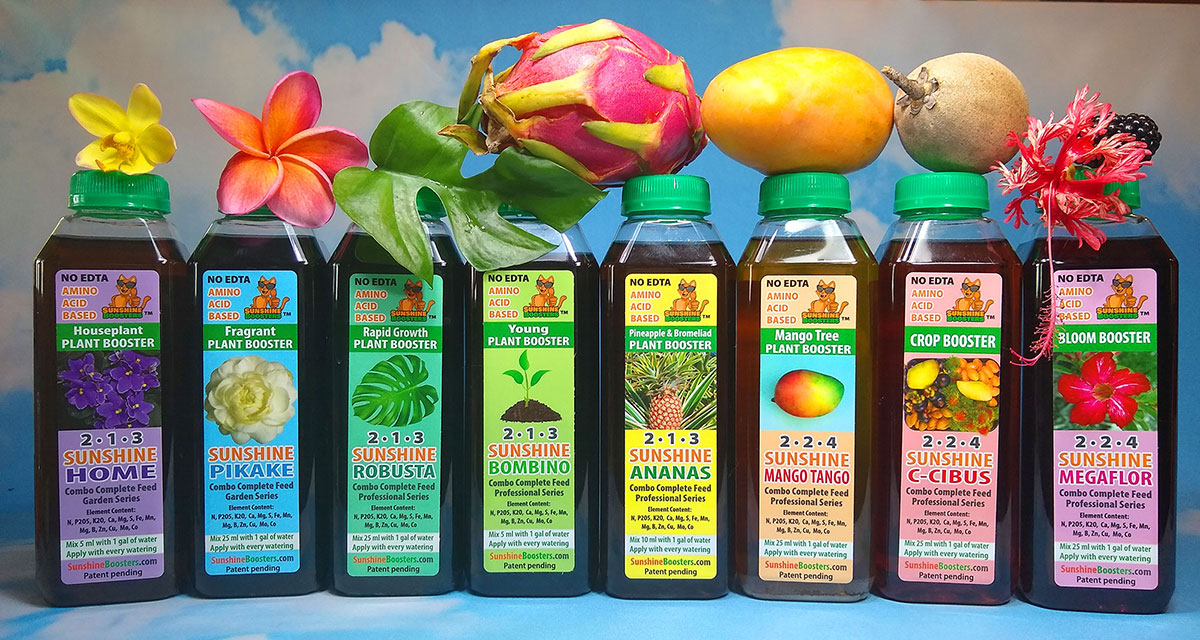
Check out our Sunshine Boosters selection for different types of plants and choose the right type for your needs. These can be applied as often as with every watering:
For Rapid Growth
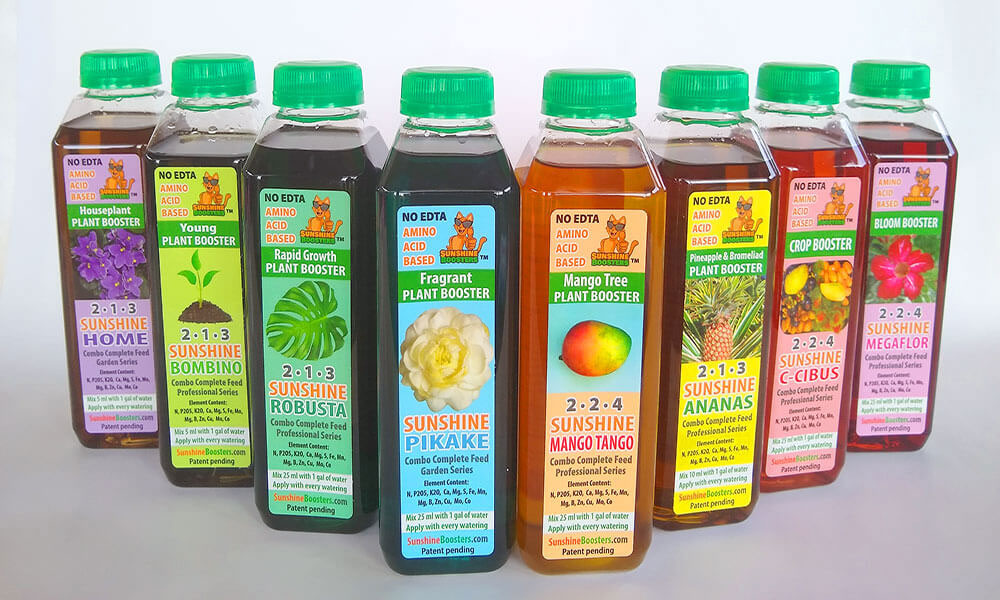
Sunshine Robusta - Rapid Growth Booster: general fertilizer for both foliage
plants and small starters that need an extra boost.
For Flowers
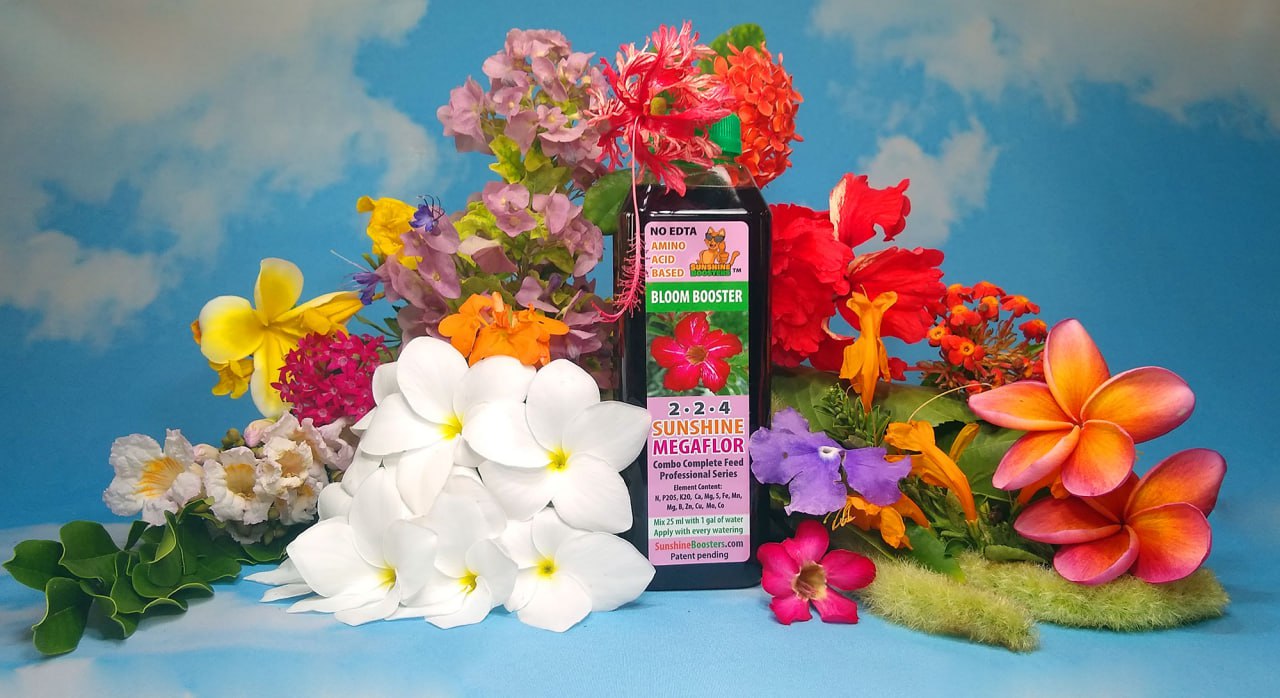
Sunshine Megaflor - Bloom Booster: boosts flowers on established plants; and Sunshine Pikake - Fragrant Plant Booster: best for fragrant flowers.
For Fruit Trees
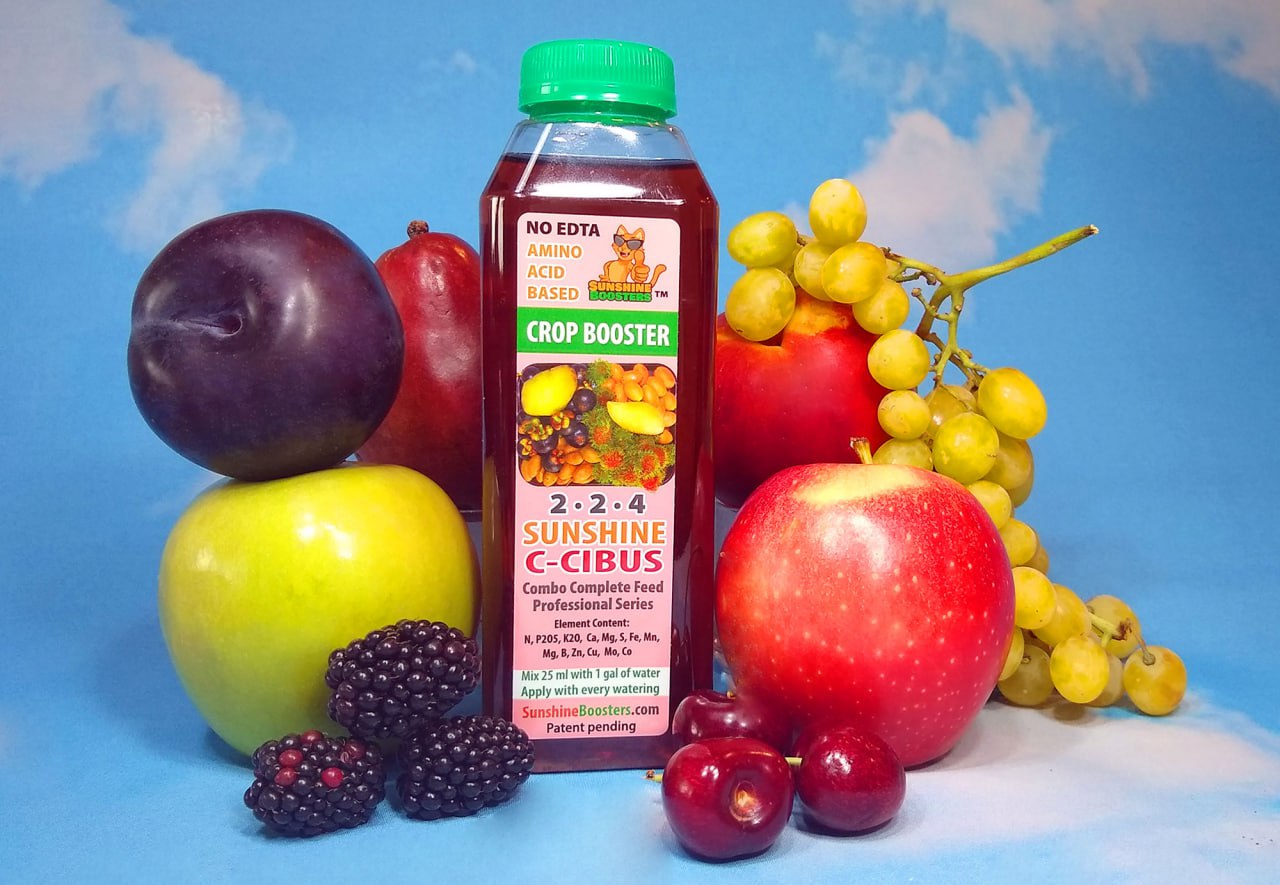
Sunshine C-Cibus - Crop Booster: contains all necessary elements for fruit trees and their production. Sunshine Mango Tango - specifically formulated for Mango and Avocado
trees, and Sunshine Citron - ideal for citrus trees.
For Tender Perennials
Sunshine Orchidasm - Orchid Total Feed and Sunshine Ananas - Pineapple and Bromeliad Booster: mild formulas for these tender perennials.
5. Microelement Supplements Are a Must
Besides macronutrients, plants need additional microelements, just like humans need vitamins. Be sure to apply these supplements along with your regular plant food:
For Green Leaves and Health
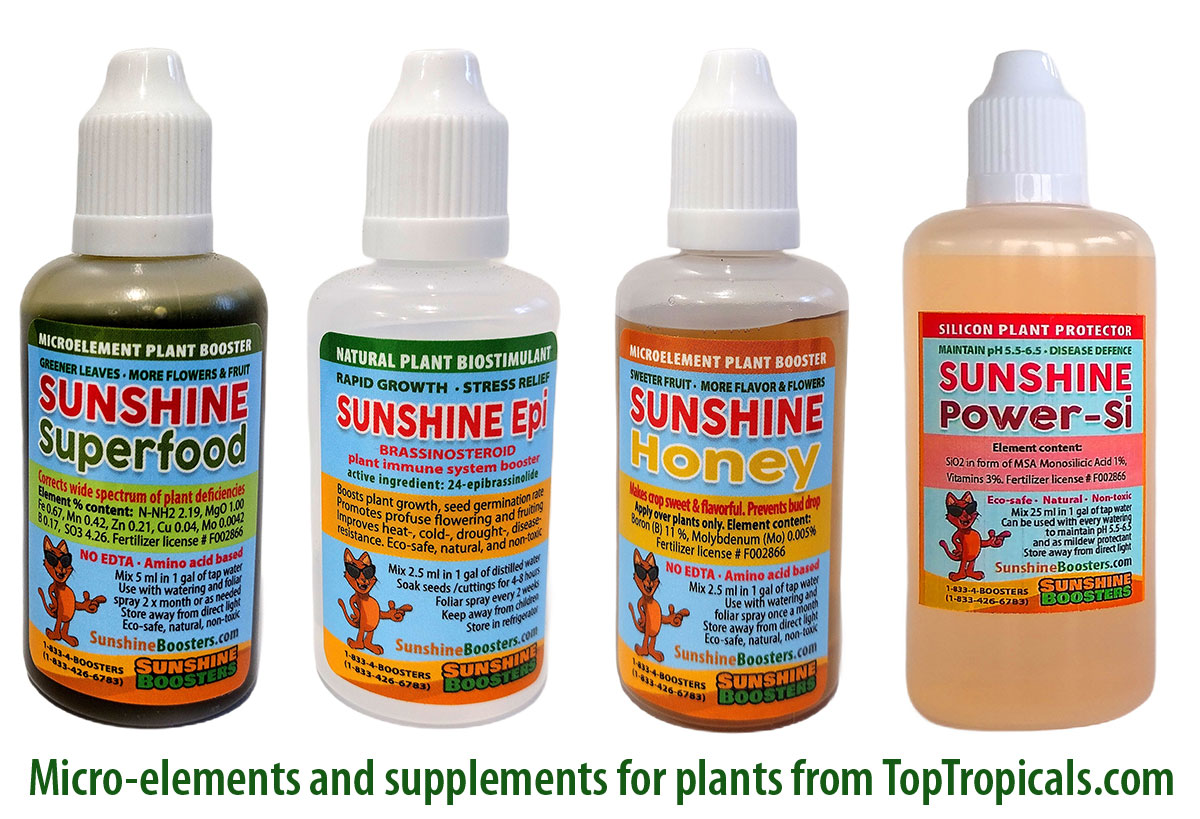
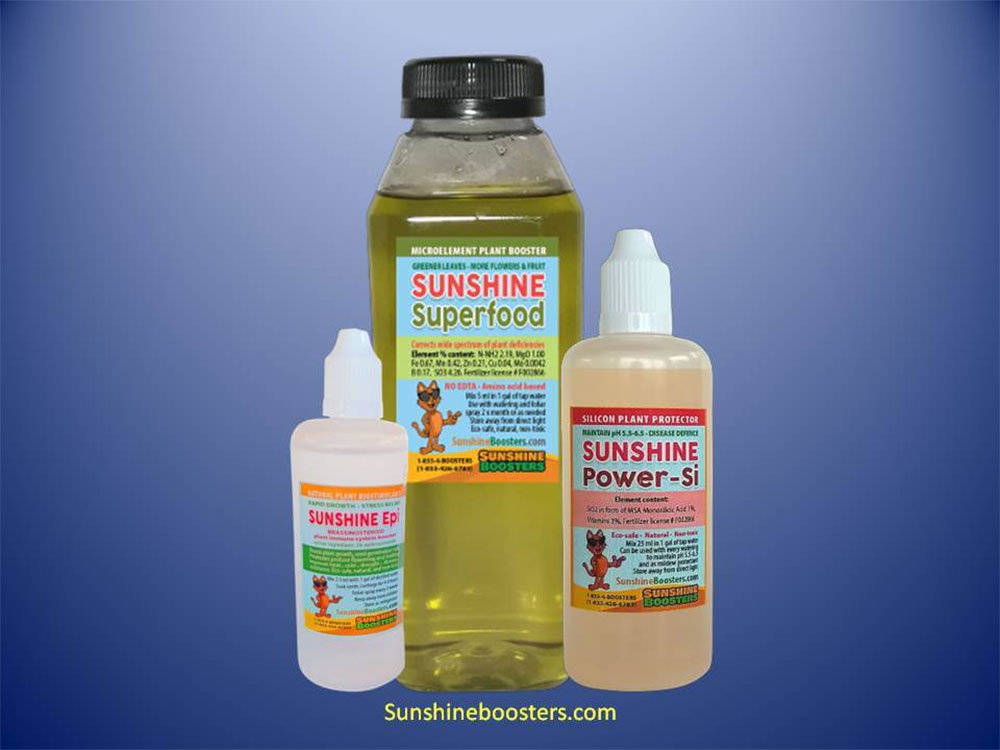
Sunshine SuperFood - Complex Microelement Supplement: a
must for healthy plants. Apply once a month.
For Stress Relief
Sunshine-Epi - Brassinosteroid Plant
Hormone: essential for plants recovering from stress (shipping, transplanting,
drought, insect damage, cold stress, etc.). Apply as needed.
For Sweeter, Bigger Fruit
Sunshine Honey - Fruit Sugar Booster: application on fruit trees will make
fruit bigger and sweeter by directing sugars to the fruit from other plant parts, and helps to prevent bud
drop. Apply 4 times a year: at bud setting, flowering, fruit setting, and
after harvesting.
For Better Resistance
Sunshine Power Si - Silicon Protector - enhances resistance to insects, diseases, drought, and frost, while boosting growth. Apply once a
month, along with Sunshine SuperFood.
Need Help? Our Plant Experts Are Ready to Assist!
Date:
Using SUNSHINE Complete Nutrition System
For hydroponics and potted plants
Q: I recently bought both the 5ml of the sunshine epi and the 100 ml advanced nutrition kit. I read on the paper for the Epi not to use any other strong fertilizers along with this but I was wondering if it'd be alright to use both this foliar spray and nutrition watering together?
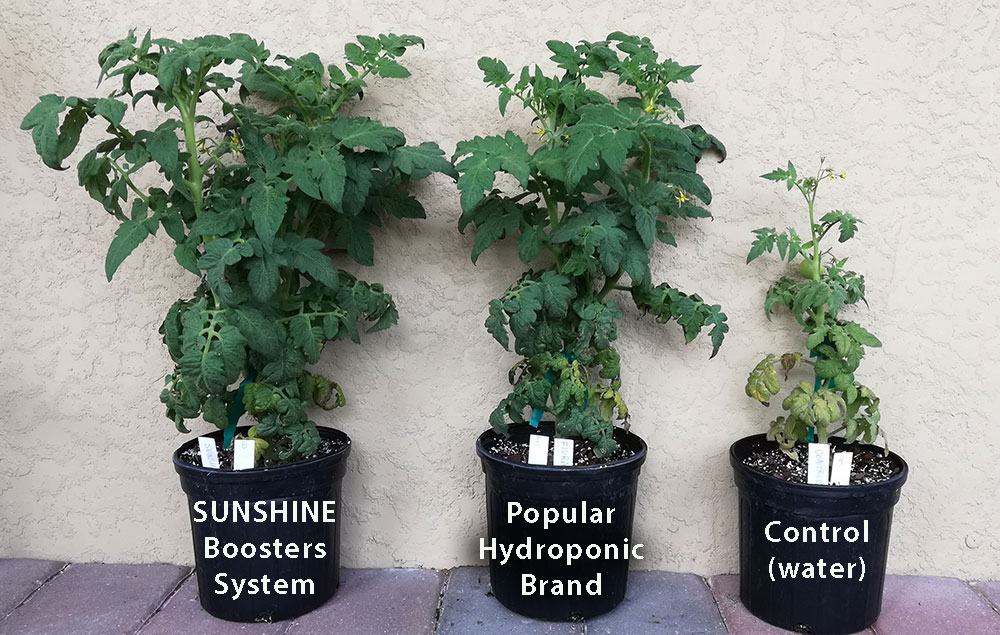
A: All solutions in SUNSHINE Booster Nutrition System (NPK-macro and micro-boosters) are
compatible.
The only exception is Sunshine-Epi - brassinosteroid bio-stimulant. Epi
should be mixed with distilled water separately from other boosters. The
reason is, it is very bio-active, and if mixed with other compounds, oxidizes
quickly which may affect its performance.
Sunshine-Epi solution must be prepared using distilled water and applied as foliar spray only (it only works on contact with leaves and not through the root system). Epi shows extremely impressive results when you apply it before the application of other nutrients because it increases plant metabolism; so all boosters become even more effective if you spray Epi the day before.
When using Micro- and Macro-boosters, you may mix all components in one watering can/tank (except for Epi), using regular tap water. Besides watering root ball, the macro-micro solution can be also used for foliar spray. It is optional, as in some circumstances growers prefer to keep leaves dry at all times: to stay away from mold, fungus and other issues caused by the wet environment.
Here is an example of Sunshine Boosters Nutrition System application:
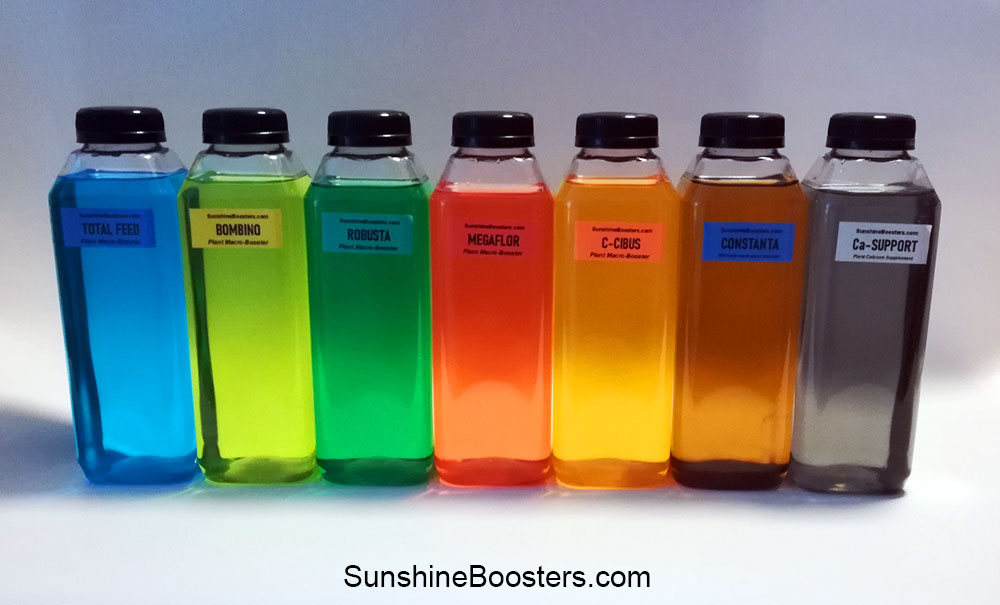
1. Daily watering in one can: NPK 25 ml/gal (one of 5, depending on growth stage) + Constanta 5 ml/gal + Ca-Support 5 ml/gal, mixed in tap water
2. Every 2 weeks: spray Sunshine-Epi 2.5 ml/gal - to boost the immune system and growth rate,
mixed in distilled water
3. From daily to every 2 weeks: Sunshine-Power-Si 25 ml/gal to protect from diseases and keep pH at
5.5-6.5. Can be used as often as daily and mixed with a daily watering solution
(1)
4. As needed: Sunshine SuperFood and GreenLeaf - for correcting deficiencies. Can be also mixed with the
daily solution (1)
Make sure to prepare a solution right before use and do not store solution for more than 1 day. Keep concentrates and solutions protected from bright sunlight.
Here is also advanced information on Sunshine Boosters compatibility.

Date:
Prepare your plants for Winter with Sunshine Boosters

We usually stop using dry slow-release fertilizers from November to March. However, liquid Sunshine Boosters, which are natural plant food, can be used all year. They help your plants survive winter. When it gets colder, we water less, so the fertilizer decreases too. The plants only use what they need. To learn more about how Sunshine Boosters work and why they're safe and helpful, check out this blog: Using Sunshine Booster during Winter.
Apart from giving your plants nutrients during winter, you also can improve their ability to handle the cold. Try the Sunshine Boosters supplement kit for tropical plants. Follow the schedule and use three different supplements: SUNSHINE Superfood, SUNSHINE Epi, and SUNSHINE-Power-Si. Read more about treatment with Sunshine boosters supplement kit.

What Fertilizer to Use Now and How?
Sunshine Megaflor - Bloom Booster
Sunshine C-Cibus - Crop Booster
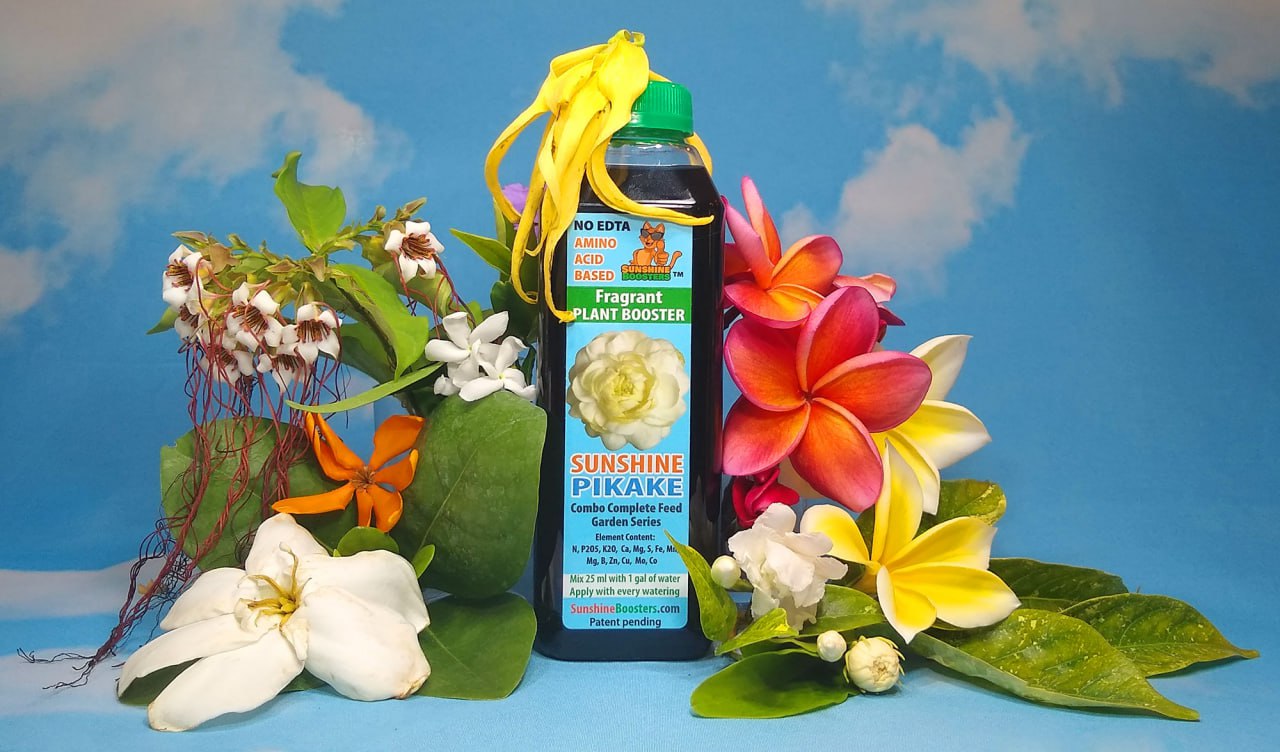
Sunshine Pikake - Fragrant Plant Booster
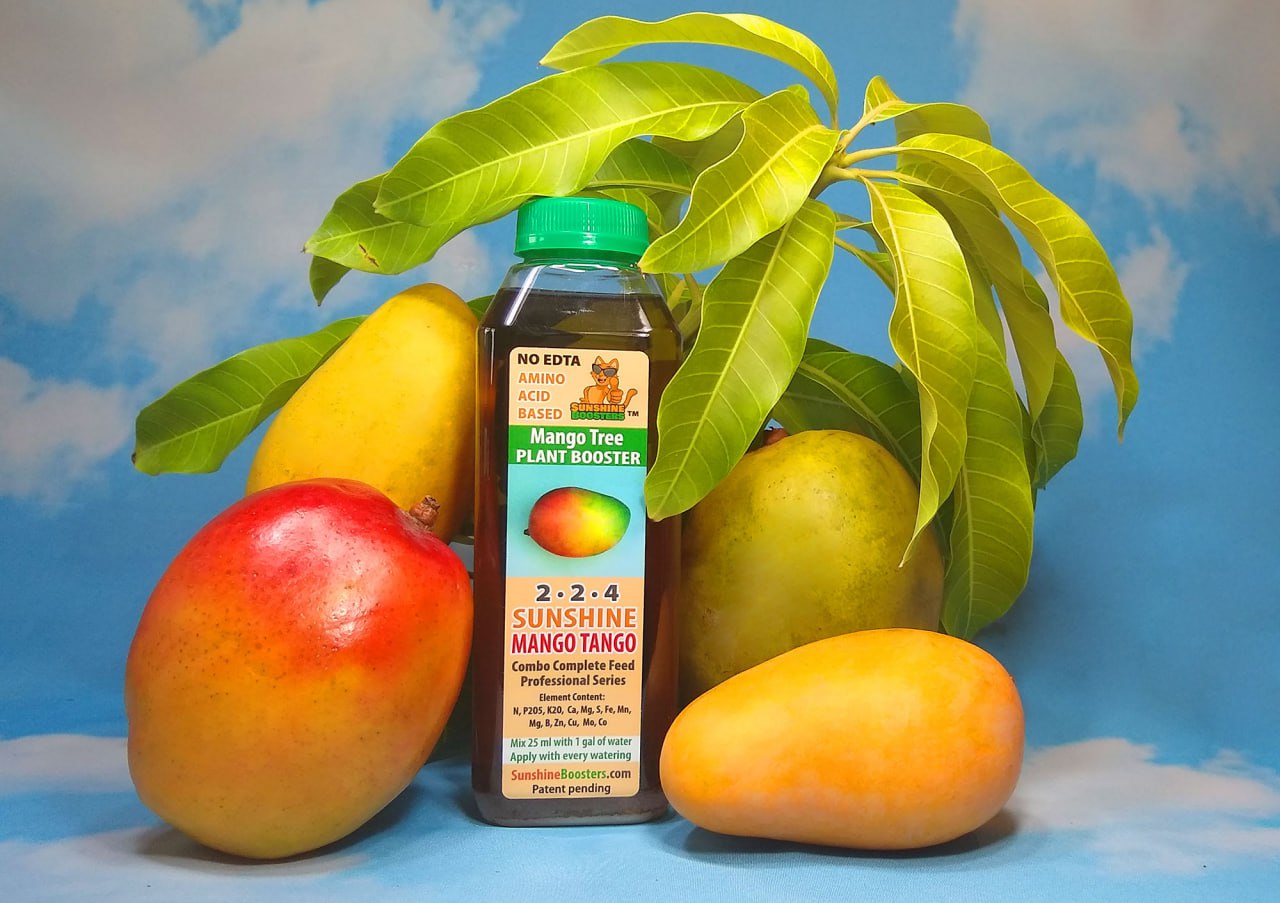
Sunshine Mango Tango for Mango and Avocado trees
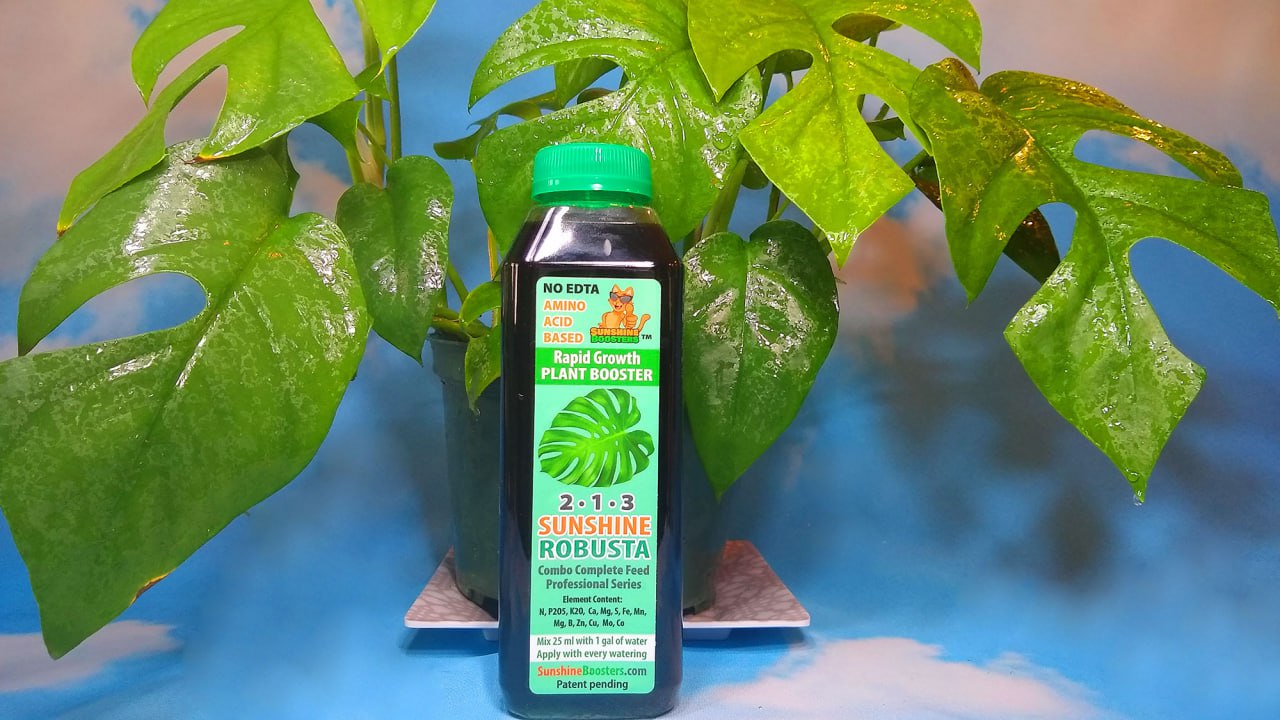
Sunshine Robusta - Rapid Growth Booster
Part 2. Macro elements, or everyday plant food
Sunshine Booster for different types of plants can be applied as often as with every watering.
- ✔️ For Rapid Growth
- ✔️ For Flowers
- ✔️ For Fruit Trees
- ✔️ For Tender Perennials
- ✔️ Microelement Supplements Are a Must
Sunshine Robusta - Rapid Growth Booster: general fertilizer for both foliage plants and small starters that need an extra boost.
Sunshine Megaflor - Bloom Booster: boosts flowers on established plants; and Sunshine Pikake - Fragrant Plant Booster: best for fragrant flowers.
Sunshine C-Cibus - Crop Booster: contains all necessary elements for fruit trees and their production.
Sunshine Mango Tango - specifically formulated for Mango and Avocado trees, and Sunshine Citron - ideal for citrus trees.
Sunshine Orchidasm - Orchid Total Feed and Sunshine Ananas - Pineapple and Bromeliad Booster: mild formulas for these tender perennials.
Besides macronutrients, plants need additional microelements, just like humans need vitamins. We will explain in details about micro-elements in our next post 🔽
🛍 Shop Sunshine Boosters
#Fertilizers #How_to
🔴 Join 👉 TopTropicals
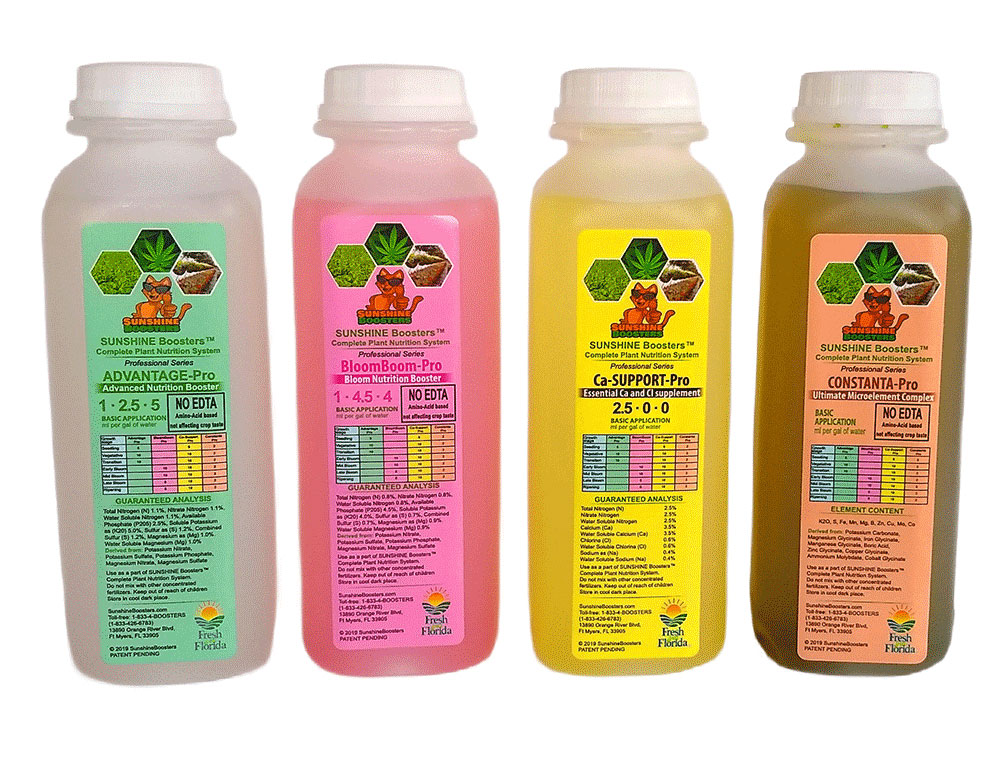
Macro and Micro elements
Plants, like living organisms, require adequate nutrition for grown. The concept of plant nutrition includes the following substances:
Carbon dioxide. In the process of photosynthesis with the participation of chlorophyll, in the leaves of plants from water, carbon dioxide and light, organic compounds are formed that participate in the construction of the organism. This is the main and only significant source of organic matter for plants.
MACRO-elements. The macroelements include inorganic compounds necessary for the vital activity of a living organism. The prefix macro-means a relatively high content of these elements in the composition of plants, respectively, their high demand. The macroelements include: carbon, hydrogen, oxygen, sodium, potassium, chlorine, sulfur, calcium, magnesium, nitrogen and phosphorus.
Liquid Sunshine Boosters - Mild stable formulas, can be used year-around. Organic acid-based, Sunshine Boosters are perfect for organic gardens, edibles and do not affect crop pure taste. Amino-acid stable formulas have NO EDTA chelators to eliminate nutrients lockup in soil. Pollinating insects friendly. Designed for continuous use, Sunshine Boosters contain no excess salts, maintain soil pH at optimal level (5.5-6.5) and do not require soil flushing or additional pH regulators. They can be use with every watering, year around.
Water-soluble fertilizers - dry (powdered) fertilizers that must be diluted in water before use. EDTA-chelated. Can be used only during hot weather, during active growth season.
Smart release (granulated) fertilizers - Slow-release during 1-3-6-12 month period. EDTA-chelated. Can be used only during hot weather, during active growth season.
MICROelements. Microelements are inorganic compounds involved in the synthesis of enzymes and biologically active substances. The content in a living organism is very low, but they play a vital role in the life of plants. The microelements include: iron, manganese, zinc, copper, boron, molybdenum, cobalt.
ULTRA-microelements. Very small amounts of almost all elements of the periodic table are contained in all organisms. They fall into plants with root nutrition from the soil. The necessity for the life of ultramicroelements is not fully proved. Of more or less necessary are considered: vanadium, iodine, nickel, titanium, aluminum, cadmium, fluorine (for plants).
See full article: The role of elements in plant nutrition.
Fertilizers, or Plant Food, contain macro- and micro-elements, for example:
Macro-elements: Nitrogen (N), Phosphate (P), Potassium (K).
Micro-elements: Boron (B), Molybdenum (Mo), Copper (Cu), Iron (Fe), Manganese (Mn), Zink (Zn), Sulfur (S).
Application: Follow directions on the labels. Do not exceed the recommended dose. Less concentration is always better than overdose. Generally, for tropical plants, dry fertilizers should be used only during the growth period when temperatures are above 65F, and Amino-acid based liquid fertilizers can be used year around.
See also: Plant Growth Hormones
For more information about Sunshine Boosters, see SUNSHINE BOOSTERS PAGE and learn more about Essential Nutrients.
See detailed plant profile in new window: https://toptropicals.com/catalog/uid/fertilizers.htm
Family:Apocynaceae
Subfamily:Asclepiadoideae
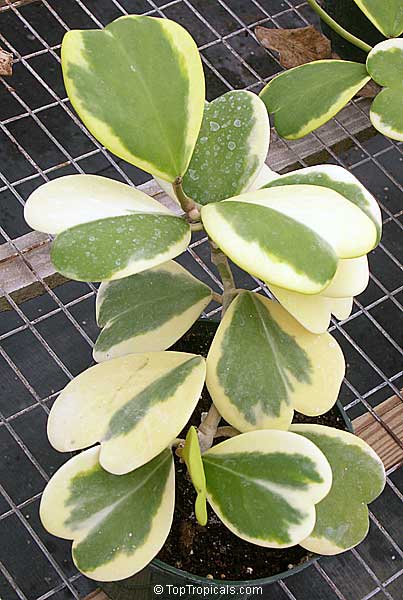
Wax Hearts, Sweetheart Hoya, Valentine Hoya, Heart leaf


Hoya kerrii is named Sweetheart Plant or Sweetheart Hoya because of the heart or valentine shaped leaves. It has thick, succulent type, opposite leaves that are indeed shaped like flat hearts. The leaves are joined to the long, twinning stems (by the sharp tip of the heart-shape leaf) with 1/2 to 1 inch long, 1/8 inch thick petioles (leaf stalks). The stems produce aerial roots which in their native
... more
| Hoya kerrii |  |
Hoya kerrii makes an ideal houseplant. It is called the Sweetheart Plant since it has become increasingly popular in recent years. Unusual and quirky "heart" shape leaves appeal to anyone looking for that special novelty gift for their plant enthusiast friend. Most often Sweetheart Plant is sold as a single small leaf in a small pot. We have large developed plants, ready to bloom! You will have something much more beautiful and striking because the unusual shaped leaves on mass, as you might be able to guess, looks like a bush of green hearts! What a great Valentine gift to give someone, and the reason it sometimes goes by the name Valentine Hoya!
The plant is super easy to look after, with only minimal care. It would probably tolerate one good watering a month - it's that hardy. This plant will need a reasonably light room in order to actually grow, although it will still get by even if you pick a shadier spot, you could position it almost anywhere in your home or office.
With its succulent qualities it's quite adapt at storing water for longish periods of time between waterings. This makes it a hardy and undemanding plant for the most part, of course only providing basic care will result in a surviving rather than thriving plant, so where possible wait until the soil has dried out a little and then water again. The Sweetheart Plant isn't bothered about humidity either.
The flowers, like most Hoya's, are stunning as the contrast in the flowering parts are really bold. The all green variety tends to grow more quickly (although it's still slow by most houseplant standards) and is arguably more hardy, but it also comes in a pretty variegated variety. The variegated version of Hoya kerrii can be hard to find.
Close window
Detailed plant profiles: 2 plants found