Garden Blog - Top Tropicals
Date: 15 Nov 2026
Grandmas Coffee Tree: the Houseplant Ill Never Forget
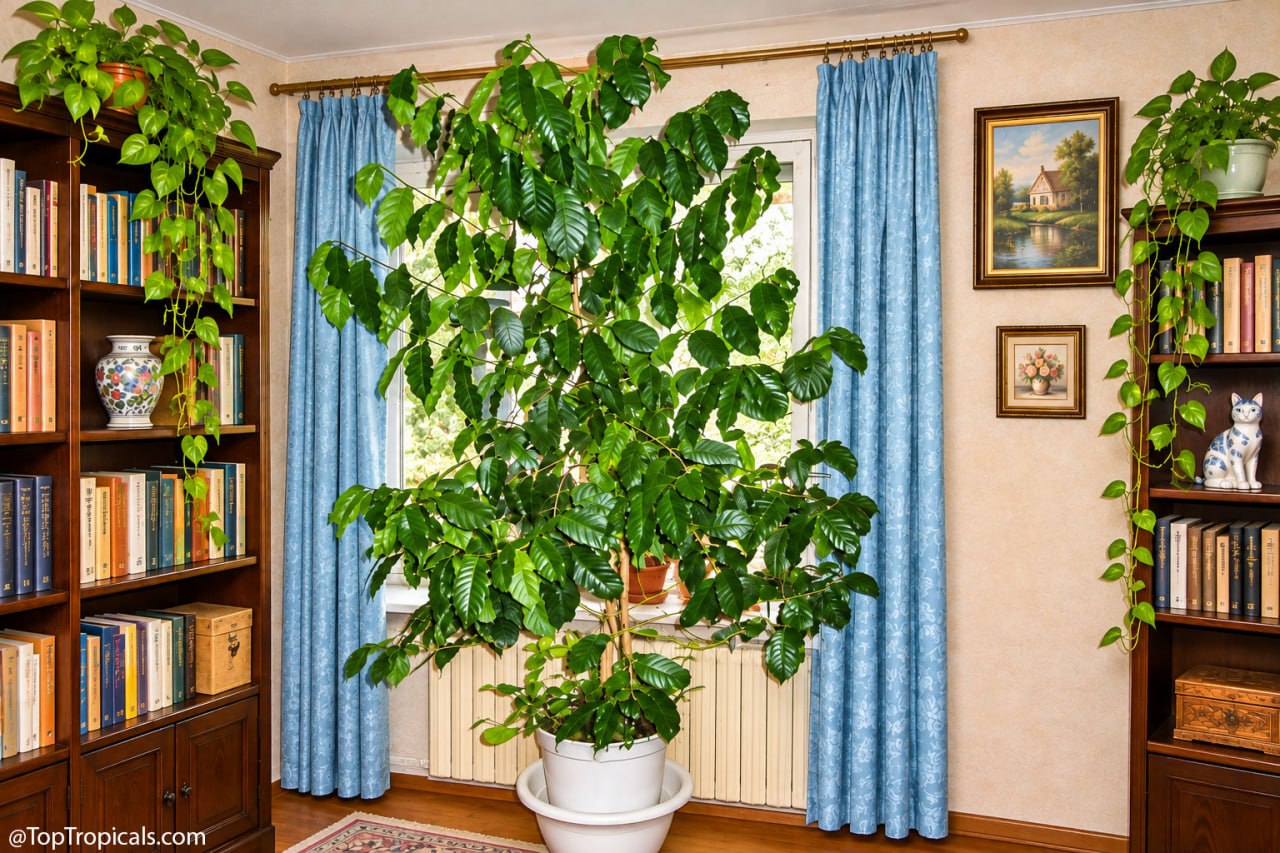
🌳 Grandma's Coffee Tree: the Houseplant I'll Never Forget
One of my favorite childhood memories is my grandmother's Coffee Tree. Before houseplants were trendy, she had this beauty that started my love affair with tropical plants!
She didn't have many houseplants. A few African Violets, some Geraniums and philodendrons, nothing particularly exotic. But her Coffee Tree was her pride and joy!
Its glossy, deep-green leaves looked almost artificial. Every guest admired it. And I think that's where my lifelong love of tropical plants began.
Today, I still believe every tropical plant lover should have a Coffee Tree!
🌿 Why Coffee makes a wonderful houseplant
Coffee (Coffea arabica) naturally grows beneath taller tropical trees, so it loves filtered light. That's exactly what makes it so suitable for indoor growing!
It grows relatively slowly in containers, and occasional pruning keeps it compact and beautifully shaped.
Imagine one in your living room, bedroom, or office. Those elegant, shiny leaves bring a touch of tropical luxury to any space.
🌿 And there's a fragrant surprise!
Coffee belongs to the same botanical family as Gardenia. Its delicate, star-shaped white flowers have a wonderful, sweet fragrance that can fill the room!
After flowering come colorful coffee cherries, turning bright red when ripe. Inside each cherry are usually two seeds - your very own coffee beans!
Will you harvest enough for your daily coffee? Probably not. But imagine serving guests a cup made from beans you grew yourself! Even a few cherries make a wonderful conversation piece.
🌿 How to grow Coffee indoors
Light: Bright, indirect light is ideal. Coffee tolerates shade, but avoid dark corners and harsh afternoon sun.
Water: Coffee enjoys regular watering during active summer growth. Keep the soil evenly moist, but never soggy. In winter, when growth slows, reduce watering and let the upper soil dry slightly. Overwatering is one of the biggest mistakes!
Humidity: Coffee loves humid air. Keep it away from drying air-conditioning and heating vents.
Soil: Use a rich, slightly acidic, well-draining potting mix. Good drainage is essential!
Fertilizer: Our Coffee Trees respond beautifully to Sunshine Robusta and Green Magic fertilizers, developing vigorous growth and gorgeous, glossy foliage. Feed during active growth, following label directions.
Pruning: Pinch or trim growing tips to encourage branching. You can easily maintain an attractive, compact indoor tree.
🌿 Keep those beautiful leaves healthy!
Spider mites, mealybugs, and scale may occasionally bother indoor Coffee Trees, especially in dry air.
Inspect leaves regularly, including undersides. Keep foliage clean and maintain comfortable humidity. Early treatment prevents bigger problems.
🌿 A tropical treasure for your home
You don't need a tropical plantation to enjoy growing coffee. A bright spot, a beautiful pot, and a little care are all it takes.
With patience and enough light, your Coffee Tree may reward you with fragrant flowers and even homegrown coffee beans!
And who knows? Maybe one day your Coffee Tree will become a treasured family memory, just like my grandmother's was for me!
🛒 Start Your Own Coffee Tree Story
📚 Learn more:


• Coffea arabica in Plant Encyclopedia
• From Coffee Tree to Morning Cup
• How to Roast Coffee You Grew Yourself, step by step
• What is the most popular and the easiest tropical fruit tree grown as a house plant?
' target="_blank" rel="noopener noreferrer">🎥 How to Roast Coffee You Grew Yourself
#Food_Forest #Container_Garden #Shade_Garden #Discover
🟢 Join 👉 TopTropicals
Date: 14 Nov 2026
The perfect perfume tree for containers: is Cerbera
🌸 The perfect perfume tree for containers: is Cerbera better than Plumeria?
Imagine a tree with the intoxicating fragrance of jasmine and gardenia, beautiful purple-tinted foliage, and the easygoing nature of Plumeria. Now imagine it staying compact, evergreen, and perfectly happy in a container for years!
That's Enchanted Incense (Cerbera × manghas), a rare perfume tree originally introduced from Thailand. After growing and testing it at Top Tropicals, we're convinced: this might be the ultimate fragrant tree for container gardens!
🌸 Why we prefer Cerbera over Plumeria
We love Plumerias, but they have their drawbacks. They can grow quickly, develop thick, heavy branches, outgrow their pots, and drop their leaves in winter.
Enchanted Incense behaves differently.
- Evergreen in warm climates, keeping its ornamental foliage year-round.
- Naturally compact, slowly reaching about 6 feet in our experience.
- Beautiful purple-tinted leaves, adding color even without flowers.
- Well-behaved roots that don't quickly overwhelm the container.
- Heat-loving and drought-tolerant, just like Plumeria.
And unlike many small flowering trees, it develops a wonderfully full, bushy crown without becoming a giant.
🌸 A fragrance you won't believe!
This is where Enchanted Incense truly steals the show!
Its gorgeous red-and-white striped flowers release an extraordinarily powerful, sweet perfume. Imagine jasmine and gardenia combined, then turn up the intensity...
At our nursery, visitors sometimes notice the fragrance before they even spot the flowers.
The scent is rich, exotic, and unforgettable. One flowering tree can perfume an entire patio, making it a spectacular choice for outdoor seating areas.
🌸 Our container-growing experience
We've tested Enchanted Incense in containers, and it has exceeded our expectations.
The tree stays short, its roots remain manageable, and it doesn't constantly demand a bigger pot. A dream tree for container gardeners!
💡 One practical warning: although the trunk and roots stay compact, the crown can become quite bushy. Strong winds may create a sail effect, tipping over a lightweight container. Choose a heavy, stable pot or secure it against tipping.
🌸 Easy care and surprising resilience
Enchanted Incense loves Florida sunshine and summer heat. It's drought-tolerant once established, and young plants especially prefer slightly dry conditions between waterings. Avoid constantly wet soil.
🕷 PEST-FREE. We've noticed no pest problems on our plants!
And here's another surprise! During a hard Florida freeze, our in-ground specimens suffered branch damage but regrew from their trunks. That's encouraging, although it doesn't make the tree reliably frost-hardy. Container plants should still be protected from freezing temperatures.
🌸 A little tree with everything!
Evergreen foliage. Purple leaves. Incredible perfume. Compact growth. Easy care.
For anyone dreaming of a fragrant tropical tree without the size and maintenance of a full-grown Plumeria, Enchanted Incense is hard to beat.
🛒 Bring Enchanted Incense to Your Patio
📚 Learn more:


• Cerbera x manghas in Plant Encyclopedia
• The Search for Enchanted Incense
• Fragrance lovers, this plant changes everything!
• What flower is sweeter than any Jasmine
• 7 best exotic dwarf trees for maximum impact in small tropical landscapes
#Perfume_Plants #Container_Garden #Discover
🟢 Join 👉 TopTropicals
Date: 13 Nov 2026
Nepenthes growing secrets: fertilizer myths, rooting tricks, and more!
🐸 Nepenthes growing secrets: fertilizer myths, rooting tricks, and more!
Everyone knows that Pitcher Plants eat bugs. But does that mean they never need fertilizer? And why do so many gardeners struggle to propagate them?
We've been growing tropical Pitcher Plants (Nepenthes) for years at Top Tropicals, and we've discovered a few tricks that make all the difference!
🐱 Secret #1: Carnivorous plants CAN use fertilizer!
It's a common myth that Nepenthes should never be fertilized because they catch insects.
But insects aren't their only source of nutrients! These plants make their own food through photosynthesis and can absorb mineral nutrients through their leaves and roots. Nepenthes do not require insects to survive. They obtain energy through photosynthesis, like other green plants. Insects supply supplemental mineral nutrients, particularly nitrogen and phosphorus.
💡Our trick: Treat them like orchids - but feed them much more gently!
We recommend Sunshine Orchidasm (NPK 2-1-3), our fertilizer designed for orchids and epiphytes.
For Nepenthes, dilute just 1 ml per gallon of water, applied once a month when insects aren't available. That's only one-fifth of our regular orchid feeding concentration!
Avoid strong fertilizers and mineral salt buildup. With Nepenthes, less is more!
🐱 Secret #2: Propagation doesn't have to be difficult!
Many gardeners complain that Nepenthes cuttings simply rot instead of rooting.
We experimented with a simple method, and it worked beautifully. Every cutting rooted, giving us lots of new plants!
💡Our secret rooting mix: 50% sphagnum moss + 50% perlite.
Take healthy stem cuttings with 2–3 nodes. Remove the lower leaves and insert at least one node into the moist mixture.
Keep warm, humid, and in bright indirect light. Cover loosely with a clear plastic bag or humidity dome, allowing some airflow. If you have a mist house - even better!
Sphagnum retains moisture while perlite provides air around developing roots. No soggy, suffocating soil!
🐱 Secret #3: Beautiful leaves but no pitchers?
Your Nepenthes looks healthy but refuses to produce its famous traps?
Often, insufficient light or humidity is the problem.
Provide bright filtered light, protection from scorching afternoon sun, and humid air. Many hybrids appreciate humidity above 60%.
- Carnivorous Plant Society
💡And remember: Pitchers are modified leaves, not flowers!
🐱 Secret #4: Moist roots, but never swampy!
Unlike many bog-loving carnivorous plants, Nepenthes dislike standing in water.
Use an airy mix of sphagnum, perlite, and optionally orchid bark. Keep it moist but well-drained.
Rainwater, distilled water, or reverse-osmosis water is safest. Avoid mineral buildup from hard tap water.
One final surprise: Not all Nepenthes like the same temperatures! Lowland species love tropical warmth, while highland species often need cooler nights.
💡 The biggest secret? Nepenthes aren't impossible to grow. Give them orchid-like conditions, gentle feeding, and plenty of air around their roots - and enjoy their extraordinary living insect traps!
🛒 Let Your Plants Catch Dinner!
📚 Learn more:


• Nepenthes alata in Plant Encyclopedia
• The strange tropical plant that eats bugs - and gardeners can't stop collecting
• Nepenthes: Deadly traps of Monkey Cups
#Container_Garden #Nature_Wonders #Shade_Garden
🟢 Join 👉 TopTropicals
Date: 12 Nov 2026
Daily Dose of Cat: Do Cats Get Depressed?
🐾 Daily Dose of Cat: Do Cats Get Depressed? 🎤
Poor Matilda.
She has a soft pillow, comfortable chair, unlimited affection, regular food delivery, and absolutely no responsibilities.
And yet she looks like life has disappointed her terribly!
🐾 Can cats actually get depressed?
Cats can experience prolonged stress and depression-like behavior, although we can't diagnose their emotions the same way we do in humans.
And here's the tricky part: a miserable-looking cat isn't necessarily miserable. Some cats just have a naturally grumpy face. Matilda has perfected hers.
The real clues are changes in behavior. A normally playful cat stops playing. A sociable cat withdraws. Appetite changes. Grooming declines. A cat who used to greet you suddenly spends all day hiding. These changes can signal stress, grief, boredom - or a medical problem. Never assume it's just depression without ruling out illness.
Cats thrive on familiar routines, safe hiding places, companionship on their own terms, and opportunities to play and explore.
🐾 As for Matilda?
She still enjoys her meals, demands attention, and supervises household activities from her pillow.
Diagnosis: Possibly disappointed that nobody has invented a pillow with built-in food delivery!
❓ Does your cat ever look completely miserable despite living a life of luxury?
🐈📸 TopTropicals rescued cat Matilda, contemplating the hardships of feline existence at PeopleCats.Garden.
🐈 Stay with us for your #DailyDoseOfCat!
#DailyCatLesson #PeopleCats
🟢 Join 👉 TopTropicals
Date: 12 Nov 2026
The forever vegetable: plant once, harvest for years!
The forever vegetable: plant once, harvest for years!
Tired of replanting vegetables? Grow this perennial superfood instead!
Every year, it's the same story. We plant lettuce, spinach, and other leafy vegetables, enjoy a few harvests, and then summer arrives, the heat takes over, plants bolt or die, and our vegetable garden is finished until cooler weather returns. Especially here in Florida! Growing traditional vegetables through our hot, humid summers can be a real challenge.
But what if you could plant a vegetable once and harvest it for years?
The vegetable that refuses to quit
That's exactly why we love Longevity Spinach (Gynura), a tropical leafy perennial that keeps producing delicious greens year after year.
We grow two types: Green Longevity Spinach and Purple Okinawa Spinach. Both are equally easy to grow, taste delicious, and make wonderful edible additions to the garden.
Unlike traditional spinach, Gynura loves tropical heat and humidity. While other leafy vegetables struggle through summer, these plants keep growing!
And here's another surprise: they can survive frost! Cold weather may damage or kill the foliage, but established plants can recover from their roots when temperatures warm up. Of course, severe freezes can kill them, so protection is recommended.
Fresh vegetables without replanting
Imagine stepping into your garden whenever you need fresh greens. No sowing seeds, no waiting for seedlings, no starting from scratch every season. Just snip a few tender shoots, and the plant grows more!
Frequent harvesting actually encourages branching and bushier growth, giving you a continuous supply of fresh leaves.
Gynura grows beautifully in garden beds, containers, and even pots on a sunny windowsill. Give it well-drained soil, regular moisture, and sun or partial shade. In intense Florida summer sunshine, some afternoon shade is beneficial.
Want more plants? Simply root a few stem cuttings. It's that easy!
From garden to dinner in minutes
Gynura has tender, mild-flavored leaves that are delicious fresh or cooked.
Add young leaves to salads and sandwiches, toss them into stir-fries, mix into omelets, or use them in soups and stews.
They cook quickly, so add them near the end to preserve their delicate texture.
And unlike seasonal vegetables, you can keep harvesting fresh greens throughout the growing season!
Is Longevity Spinach really a superfood?
Gynura has been valued in traditional Asian cuisine and herbal medicine for generations.
Its leaves contain antioxidants and other beneficial plant compounds. Researchers are studying their potential health benefits, although claims about lowering cholesterol or extending lifespan still need stronger human evidence.
Will eating Longevity Spinach make you live longer?
It certainly can make your vegetable garden last longer!
Why keep planting vegetables that last only a few months when you can grow one that feeds you year after year?
🌱 Plant once. Harvest again and again.
🛒 Discover our Longevity Spinach plants
👨� Check out the recipes⬇️
📚 Learn more:


• Gynura crepidioides in Plant Encyclopedia
• Do you have Longevity Spinach in your garden?
• How to make healthy food taste delicious: Longevity Spinach Super-food Recipes
• Longevity Spinach Superfood Recipes
• Gynura: Longevity Spinach Superfood Recipes
• 9 tropical vegetables to grow indoors, or how to have garden-fresh produce all year
• 5 most useful edibles for tropical garden
🎥
#Food_Forest #Recipes #Remedies #How_to
🟢 Join 👉 TopTropicals