Garden Blog - Top Tropicals
Date: 23 Oct 2026
😌 A Little Zen, a Lot of Gold
By Tatiana Anderson, Plant Expert, Top Tropicals
Sunshine: And now they are from my Zen garden..
Smokey: That is not a recognized geographical region.
Sunshine: Who cares? They look great. This is my style.

⭐ Gold on Bare Branches
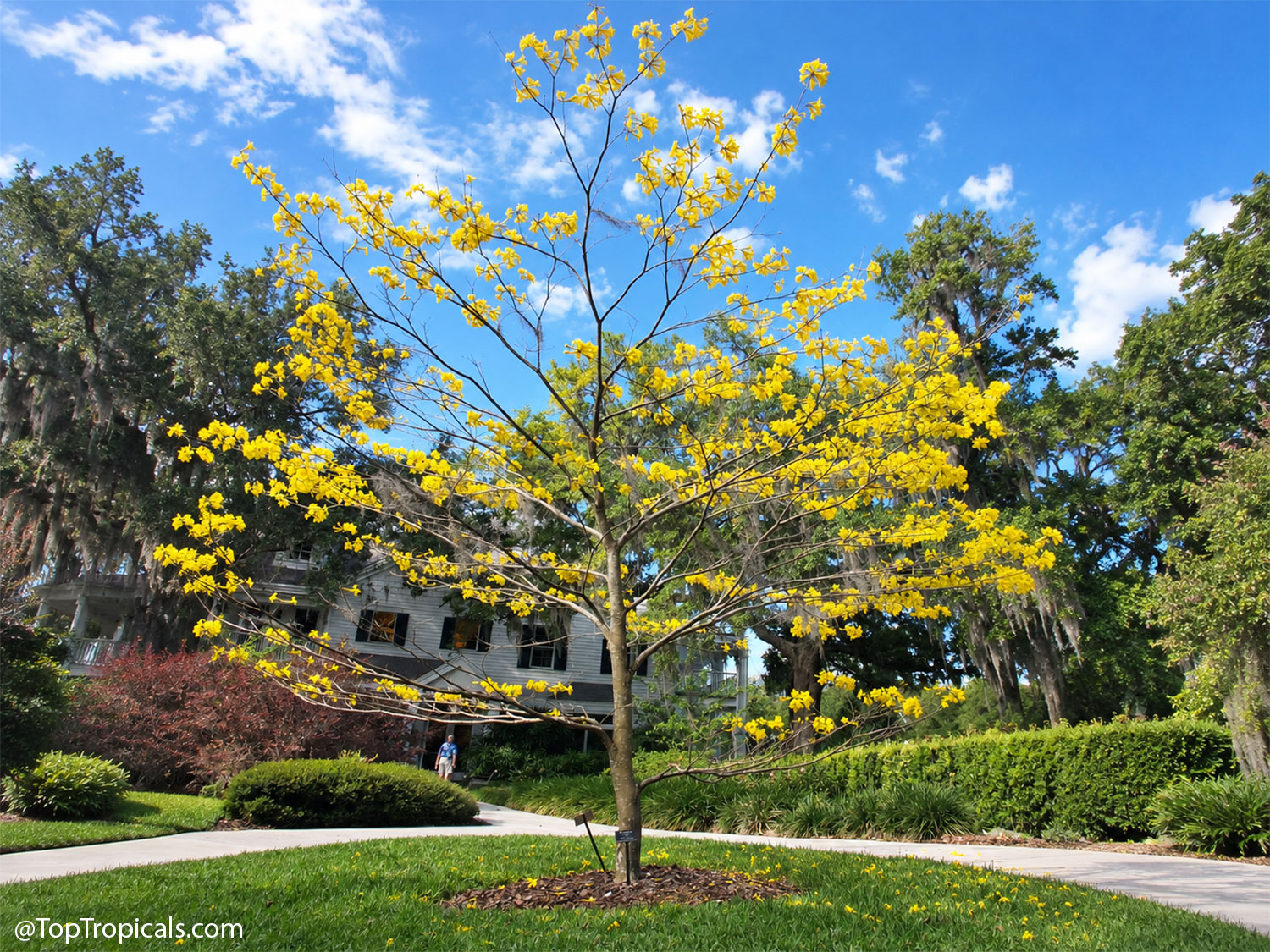
Toward the end of winter, a Golden Tabebuia pulls off a trick. Buds swell at the tips of its bare twigs, and within days the whole crown opens into clusters of bright yellow trumpets. There is little or no green anywhere. Just gray branches and flowers, so many that the tree seems lit from inside. People who drove past it all year without noticing slow down, and some pull over to take pictures.
The rest of the year, it is a tidy small tree with hand-shaped leaves, minding its own business. That is what makes the change so startling. One week it is part of the scenery. The next week it is the scenery.
This is Handroanthus chrysotrichus, still known to many gardeners by its older name, Tabebuia chrysotricha. It is a South American tree and a member of the Bignoniaceae, the same family as the Jacaranda and the Trumpet Vine. For me, it has been a favorite for twenty-five years.
Love at First Bloom
I first saw Tabebuia chrysotricha at the home of Jesse Durko, the legendary Fort Lauderdale horticulturist and flowering tree expert. There it was, growing in a pot in front of his house, completely covered in brilliant golden flowers. I fell in love instantly!
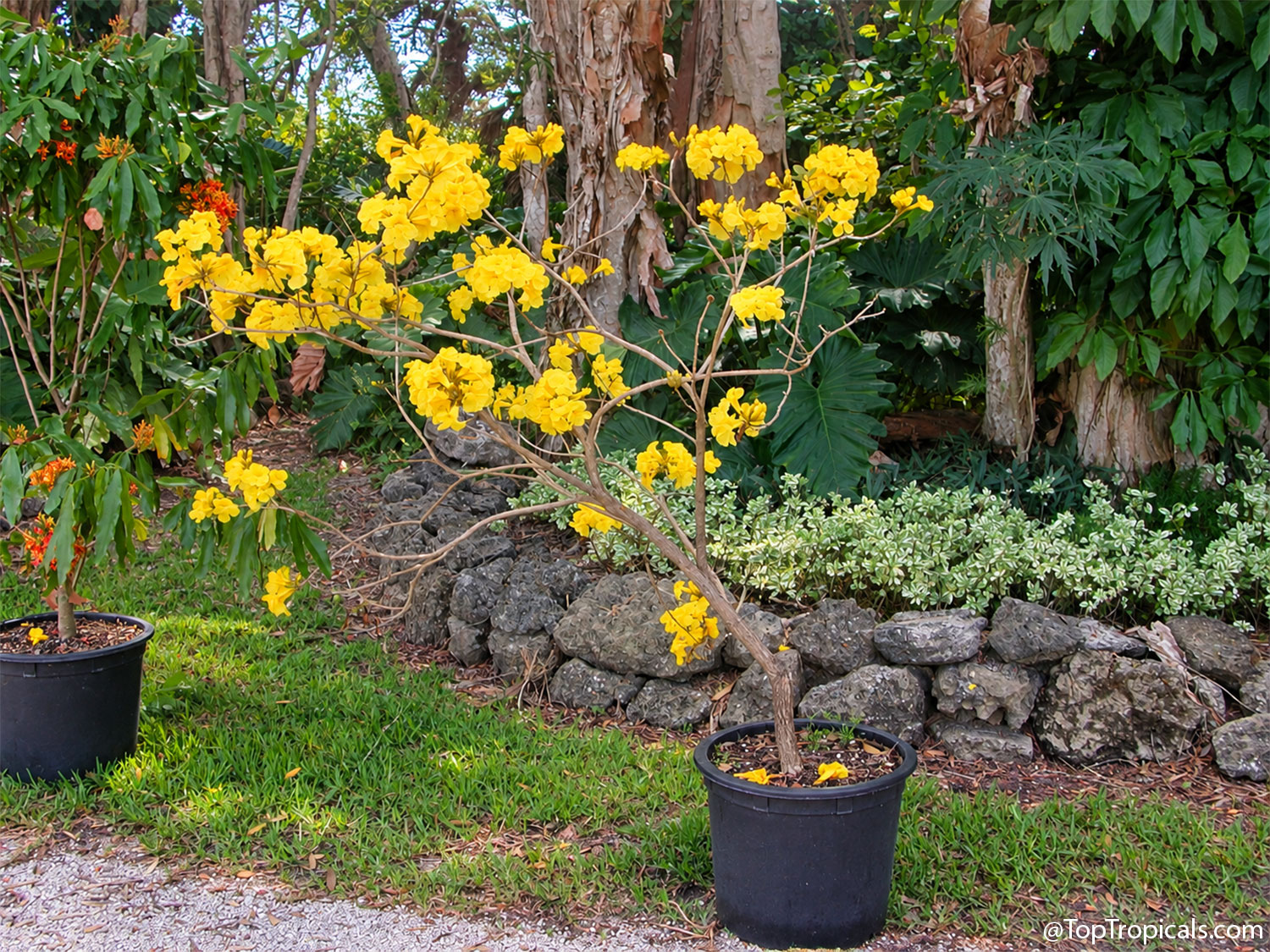
Our dear friend Jesse passed away a year ago. What a loss to all of us who knew him and loved his wonderful plants! My first plants came from his collection a quarter-century ago, and some, including my Xanthostemon, are still growing in my garden today.
Later, I saw Golden Tabebuia blooming in Central Florida landscapes. What a show!
Why It Blooms on Bare Branches
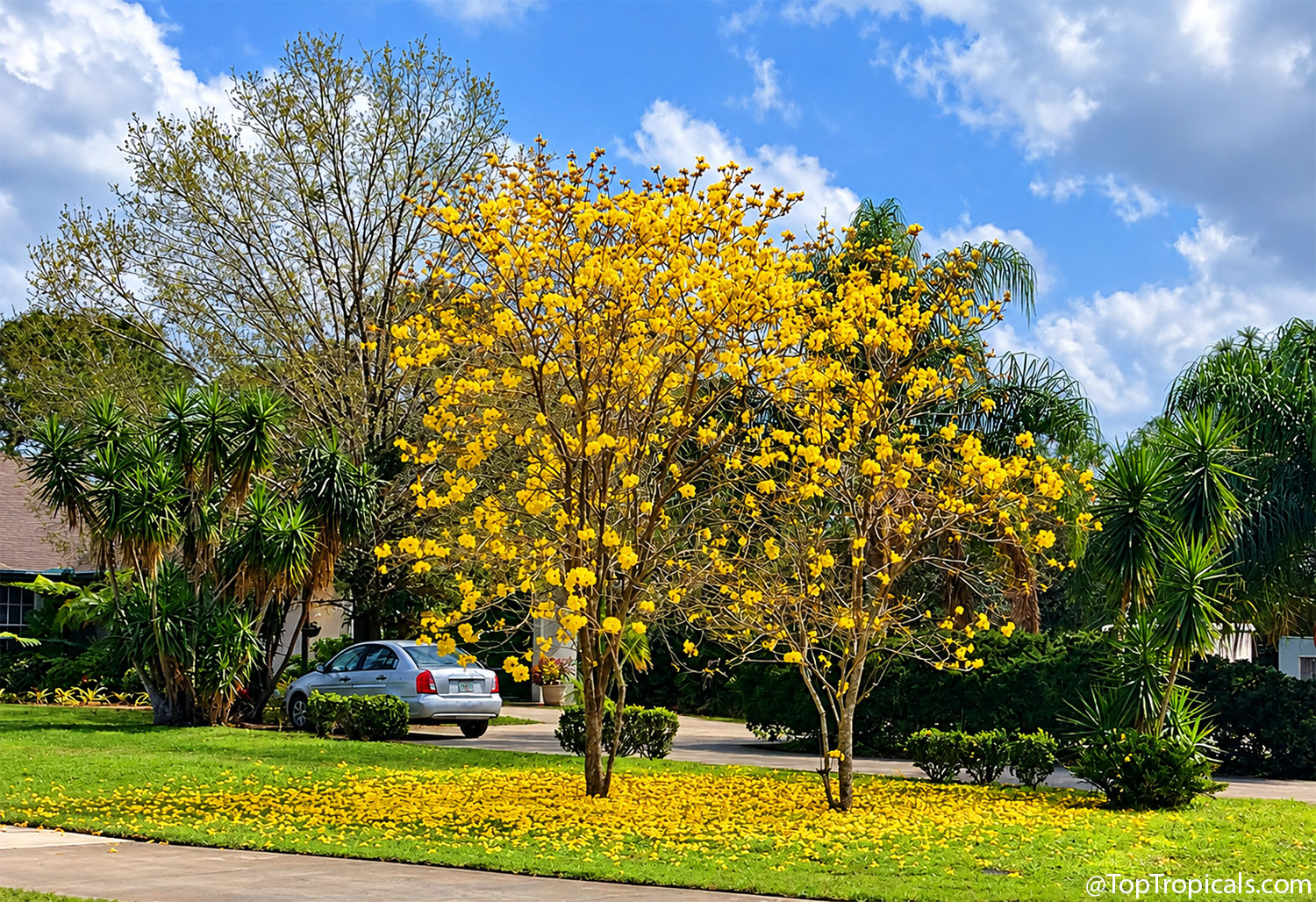
Most flowering trees bloom in the middle of their foliage, so the flowers have to share the view with the leaves. Golden Tabebuia doesn't bother with sharing. In the cooler, drier part of the year it drops most or all of its leaves, and then it opens its flowers on the bare wood, before the new leaves arrive. With nothing green in the way, the yellow carries a long way.
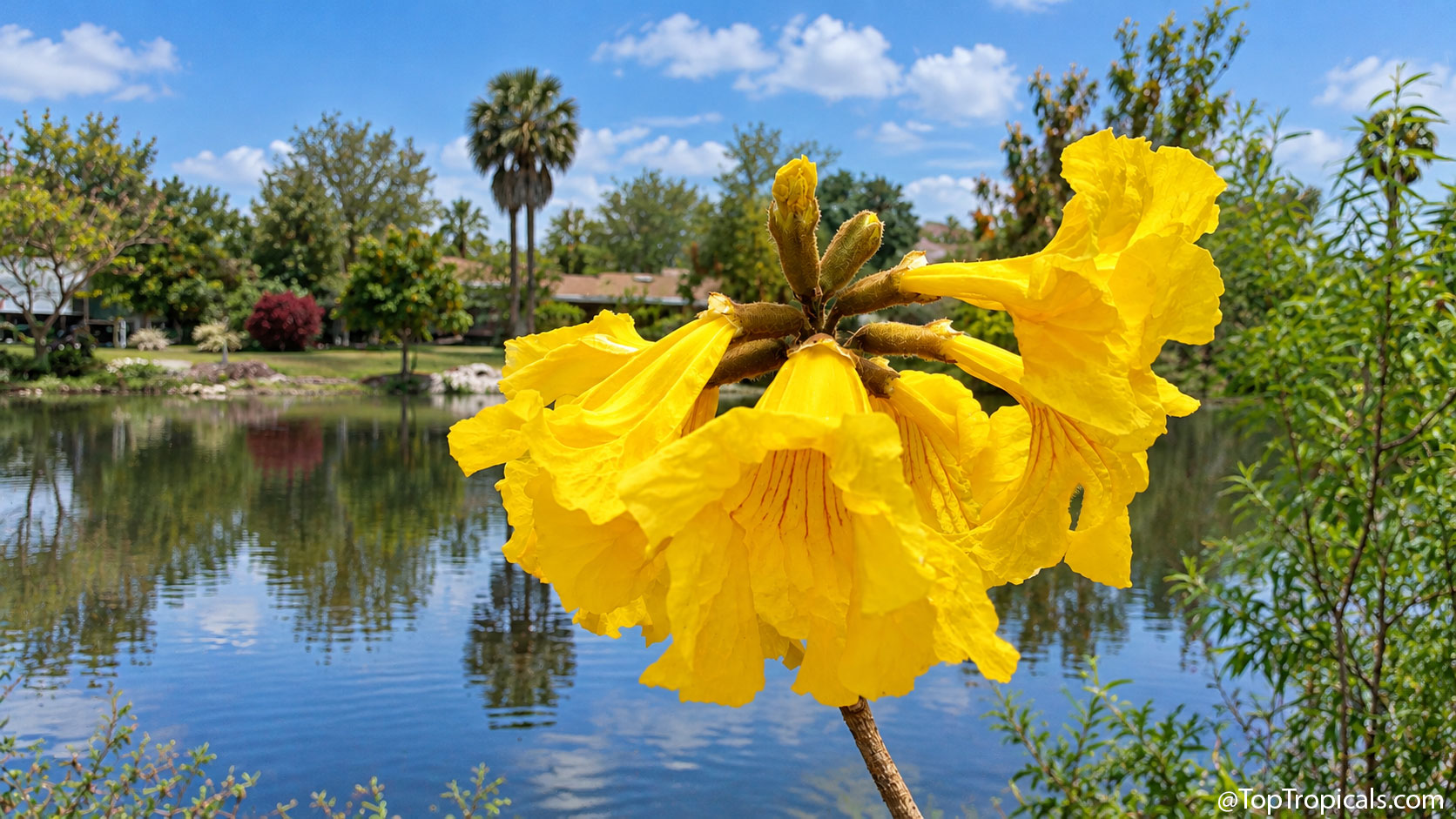
Up close, each flower is a ruffled trumpet a few inches long, packed into rounded clusters at the ends of the branches. The show builds for a few days, peaks, and can go on for several weeks. Then the flowers start to drop, leaving a yellow carpet under the tree, and fresh leaves follow.
The species name points to a detail most people miss. Chrysotrichus means "golden-haired," for the fine rusty-gold fuzz on the young leaves, the flower buds, and the seed pods. Run a finger along a new shoot and you can feel it. So the tree is golden even when it isn't blooming. It just doesn't advertise.
No two years are quite the same. A cooler, drier winter usually brings a cleaner leaf drop and a heavier bloom. That is part of why the trees I saw in Central Florida made such an impression: a little more winter chill, and the whole tree goes gold at once.
Florida helps the effect in another way. Our late-winter landscape is mostly evergreen: palms, live oaks, clipped hedges, all in the same steady green. A tree that suddenly turns solid yellow against a clear blue sky has no competition.
A Golden Tree for Smaller Gardens
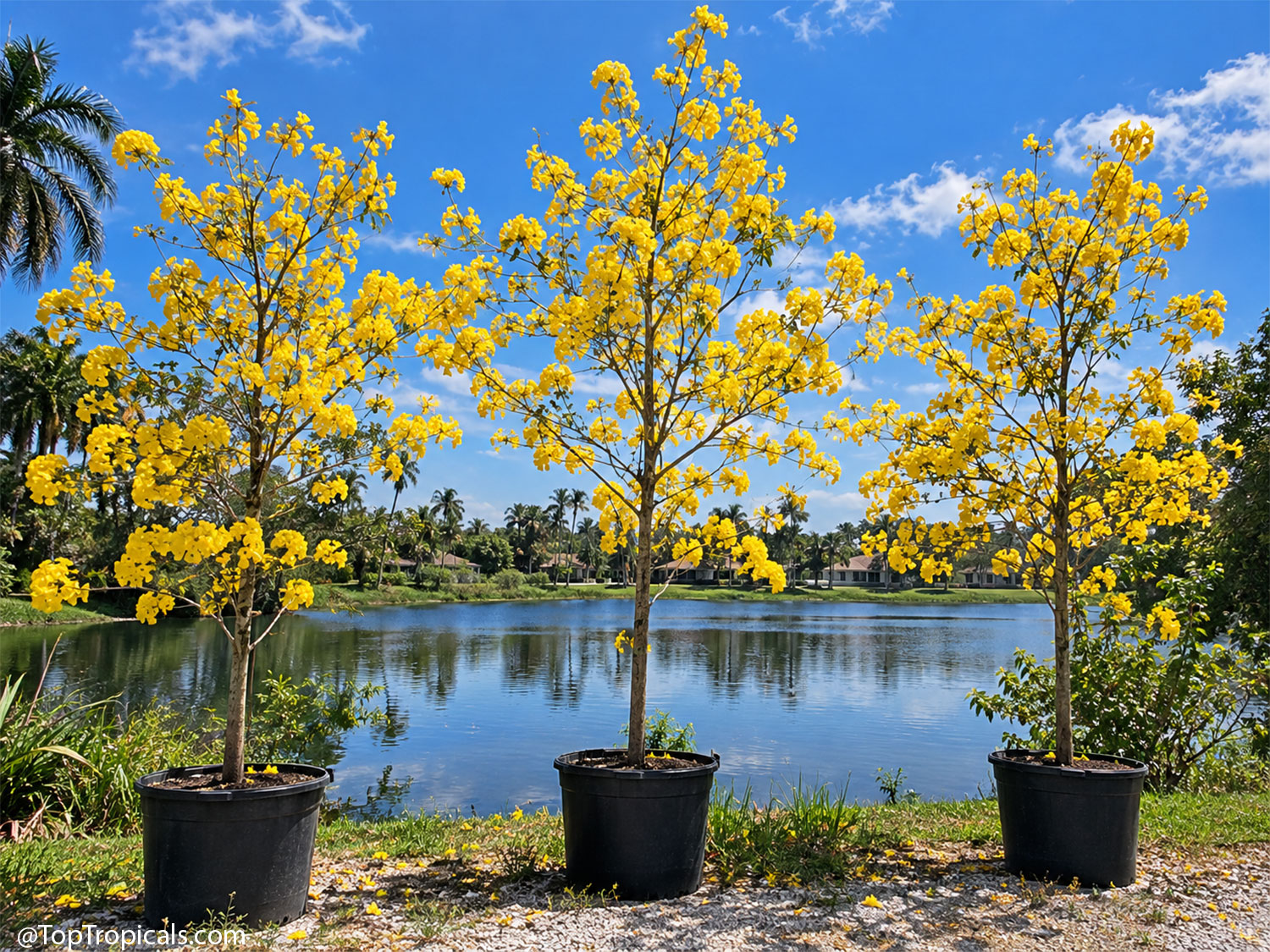
Not everyone has room for a full-sized Golden Tabebuia, which can reach 25 to 35 feet. That's where the Dwarf Golden Tabebuia comes in. This more compact form typically grows to about 10 to 20 feet in the ground, bringing the same spectacular golden flowers to smaller gardens, front yards, and patios.
But here's the best part: you don't even need to plant it in the ground. Dwarf Golden Tabebuia is an excellent candidate for container growing. In a large pot, with occasional pruning, you can keep it at a manageable size. A flowering tree covered in golden trumpets beside your front door or on the patio is hard to ignore!
Growing it in a container also opens up possibilities for gardeners farther north. Give it plenty of sunshine outdoors during the warm months, then move it into a bright, frost-free sunroom or greenhouse for winter. You can enjoy a tropical flowering tree even where winters are too cold to grow one in the ground.
And the wait for flowers is shorter than you might think. Our seed-grown trees start flowering at around three years old, and some of our current plants bloomed last winter.
That's why I love this one. You get the same gold on a tree that fits in a regular yard, or even in a big pot on the patio.
Growing Your Own
Golden Tabebuia is a fairly easy tree to grow in the right climate. Give it full sun, and it will give you the heaviest bloom. Water it regularly while it is young. Once it is settled in the ground, rain does most of the work. It isn't fussy about soil: sand, clay, acidic, or alkaline will do, as long as water drains away. Our trees are perfectly happy in the poor sandy soil of Highlands County. For pots, use a fast-draining mix such as our Abundance mix.
It grows best outdoors in Zones 10 and 11, and in the warmer parts of Zone 9. Established trees can usually handle a brief light frost, but young trees and potted plants appreciate a blanket or a trip indoors on cold nights.
And when your tree drops its leaves in winter, don't panic. It isn't dying. It is getting ready.
A Tree Worth Waiting For
For most of the year, a Golden Tabebuia asks very little of you. It grows quietly, drops its leaves on schedule, and spends part of the winter looking like a bundle of sticks. Then, for a few weeks, it gives you everything at once.
That is the bargain of flowering trees like this one. You plant them for a short season of color, and they end up staying in your memory much longer than the bloom itself.
📚 Tabebuia in Top Tropicals Garden Blog
📚 LEARN MORE:
📚2 most favorite flowering trees for small yards
📚 Top Ten Flowering Tree Winners of Florida 2026 Record Freeze
📚8 best flowering trees that will bloom for you in Winter
📚7 best exotic dwarf trees for maximum impact in small tropical landscapes
📚9 Showy Trees to Plant This Fall for a Colorful Florida Winter
📚 Eight most spectacular winter blooming trees
🛒 SHOPPING LINKS:
Date: 23 Oct 2026
Golden Tabebuia: a little tree with a million-dollar flower show!
⭐️ Golden Tabebuia: a little tree with a million-dollar flower show!
Imagine a tree covered in pure gold! Every late winter to early spring, Golden Tabebuia (Tabebuia chrysotricha, now Handroanthus chrysotrichus) transforms Florida gardens into a spectacular sea of yellow.
In this video, see two beautiful Golden Tabebuia trees in full bloom, surrounded by a golden carpet of fallen flowers. Take a closer look at their gorgeous trumpet-shaped blossoms and discover why this tree is such a wonderful choice for patios and small gardens!
🌳 Why grow Golden Tabebuia?
🌼 Spectacular golden-yellow flowers on nearly leafless branches
🌼 Blooms at a young age, sometimes just 3 years from seed
🌼 Fast-growing and easy to maintain with pruning
🌼 Can be kept around 5-8 feet tall in containers
🌼 Tolerates poor sandy soils and occasional light frost
🌼 Generally low-maintenance and trouble-free
Whether you're growing it in a Florida landscape or a container farther north, Golden Tabebuia brings a burst of tropical sunshine when you need it most!
🛒 Shop Tabebuia trees
📚 Learn more:
• Tabebuia chrysotricha in Plant Encyclopedia
• A small tree of a pure gold
• 9 Showy Trees to Plant This Fall for a Colorful Florida Winter
• 7 best exotic dwarf trees for maximum impact in small tropical landscapes
• Top Ten Flowering Tree Winners of Florida 2026 Record Freeze
• Eight most spectacular winter blooming trees
• 8 best flowering trees that will bloom for you in Winter
• 2 most favorite flowering trees for small yards
🎬
#Trees #Container_Garden #Discover


Date: 22 Oct 2026
Tropical paradise in the shade, Part 2:
What to plant? Shade-tolerant tropical plants.
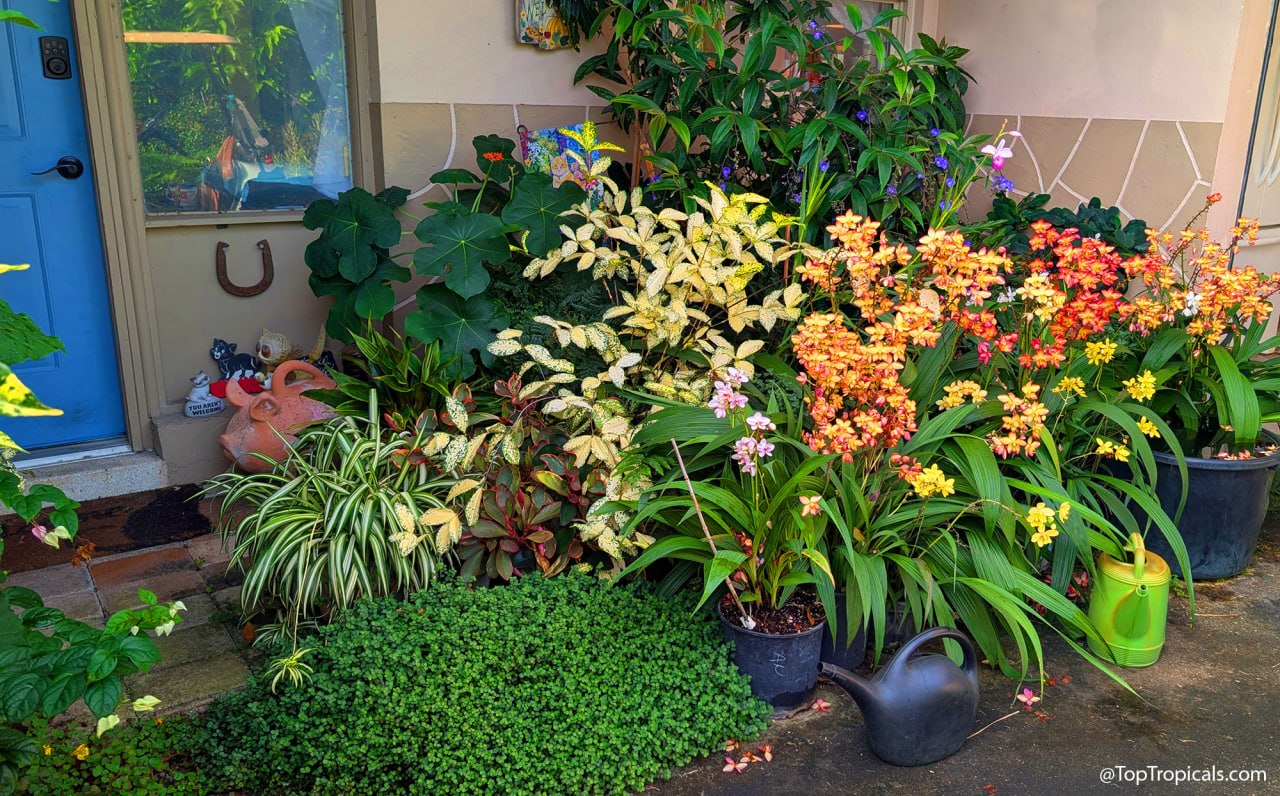
Not enough sunshine? You can still grow a tropical paradise with lush foliage, fragrant flowers, and even fruit! Here are our favorite plants for partial shade.
• 🌿 Big leaves, bold colors, instant jungle
Alocasias and Colocasias create dramatic tropical foliage; many varieties adapt to sun or shade. Macaranga produces enormous leaves, while Jatropha podagrica can develop surprisingly giant leaves in shade.
For year-round color, try Cordylines, Iresine, Eranthemums, Pseuderanthemums, and Graptophyllums, with foliage in pink, purple, burgundy, and variegated patterns.
Rainforest classics - Philodendrons, Monsteras, Anthuriums, and Calatheas - are natural choices for bright indirect light.
• 🌺 Flowers without full sun
Justicia, Barleria, purple Brunfelsias (Yesterday-Today-Tomorrow), Clerodendrums, Wrightia, and Serissa offer blooms in filtered light or morning sun.
Sclerochyton adds unusual blue flowers; Medinilla produces spectacular hanging clusters in humid, sheltered spots. Tibouchina, Plumbago, Hibiscus, and Azaleas tolerate partial shade but bloom best with some direct sun. Don't overlook the delicate, unusual flowers of Eucrosia lily.
• 🌸 Fragrance for shady patios
Arabian Jasmine (Jasminum sambac), especially Malichat, Mysore Mulli, Baby Duke, and Arabian Nights, is worth trying in bright filtered light.
White-blooming Brunfelsias perfume the garden, often most strongly in the evening.
Artabotrys offers wonderfully fragrant flowers, though brighter light encourages blooming.
Patchouli contributes aromatic foliage.
• 🌼 Vines that climb toward the light
Thunbergia, Hiptage, Solandra, Tecomanthe, Chonemorpha, and Mexican Flame Vine can grow in partial shade, especially when their stems reach sunlight above the canopy.
Clitoria (Butterfly Pea) produces vivid blue flowers, also used for colorful tea. A little morning sun helps these vines bloom more generously.
• 🌴 Gingers, orchids, and rainforest curiosities
Many Gingers flourish in filtered light.
Amorphophallus and Tacca bring wonderfully bizarre flowers to sheltered beds.
Ground Orchids suit bright, partially shaded locations.
Vanilla Orchids climb sheltered supports and tree trunks.
For hanging baskets, try Hoyas, Schlumbergera (Christmas Cactus), Epiphyllums, and other jungle cacti. Their flowers can be spectacular!
Nepenthes adds colorful insect-trapping pitchers, provided the light is bright enough.
• 🍒 Tropical fruit in filtered sunlight
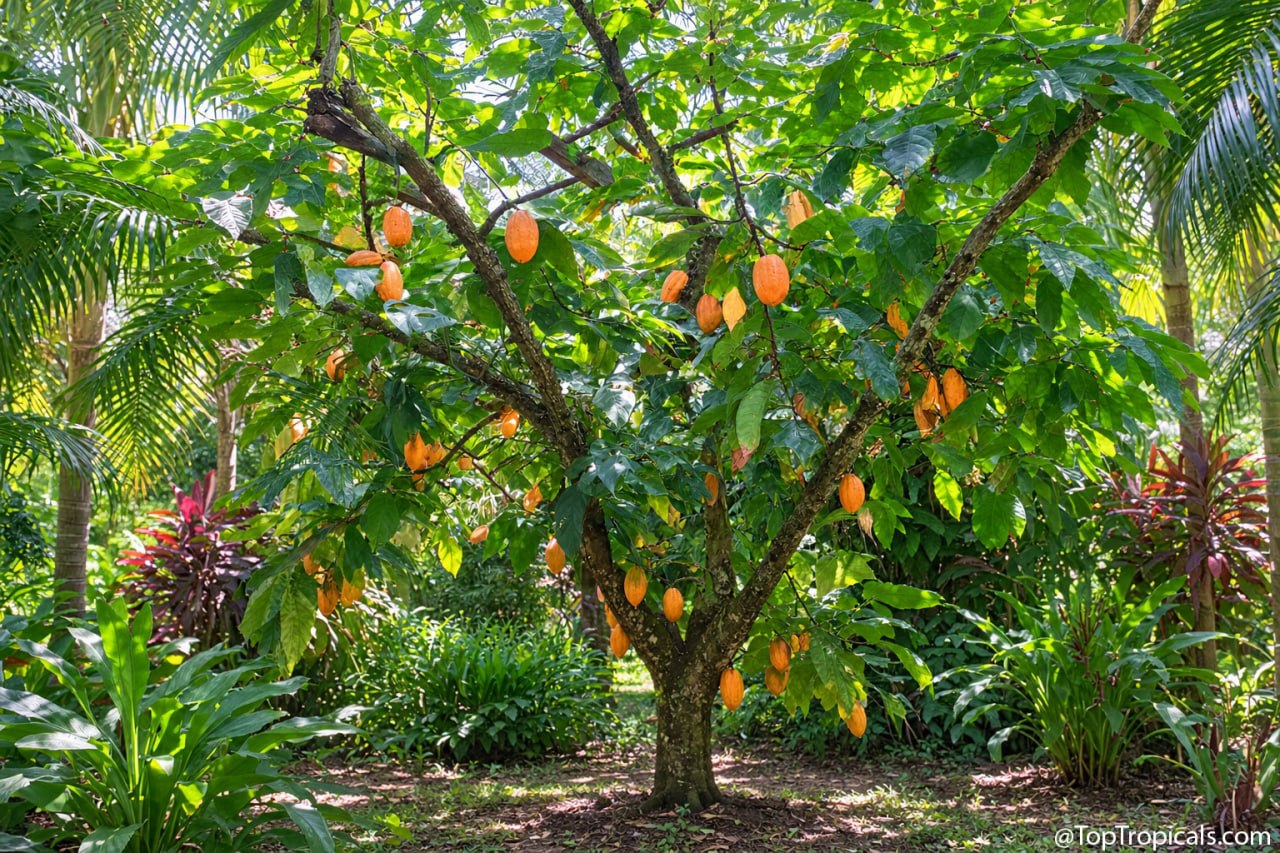
Coffee and Cacao are classic understory crops. Miracle Fruit (Synsepalum) also grows well in bright filtered light, producing berries that make sour foods taste sweet.
Randia, Bunchosia, and Neea offer less familiar fruiting possibilities; success depends on species and available light.
Bananas grow lush foliage in partial shade, but need more light for good harvests.
Even Peaches and Plums can benefit from relief from Florida's scorching afternoon sun - provided they still receive ample sunlight for fruiting.
• Edibles for the food forest
Pipers include ornamental and useful plants adapted to filtered light; some provide edible leaves or spices, like Black Pepper, Lalot and Betel Leaf.
Gynura (Longevity Spinach) and Sauropus (Tropical Asparagus, Katuk) grow readily beneath open canopies, supplying edible greens.
• 👍 Make the most of your shade
Layer bold foliage beneath trees, add flowering shrubs and vines, and hang orchids or jungle cacti in brighter openings. Shade-tolerant doesn't mean darkness-loving: give each plant as much suitable light as you can.
You don't need full sun to grow a tropical paradise. Just the right plants!
🛒 Explore low-light tolerant plants for more inspiration
📚 Learn more
· Tropical paradise in the shade, Part 1: Making the most of limited sunshine
· Full Sun Isn't Always Best for Peach Trees - Especially in Florida
· When Is the Best Time to Water Your Plants?
· How much water is too much?
#How_to #Discover #Shade_Garden
🟢 Join 👉 TopTropicals
Date: 22 Oct 2026
Tropical paradise in the shade, Part 1:
Making the most of limited sunshine.
More sunshine, more flowers and fruit. Right?
Usually! But Florida's blazing summer sun can scorch leaves and overheat roots, while too little light limits growth and blooming.
What if your garden is shaded by trees, your patio is covered, or your tropicals spend winter indoors?
Can you still grow a tropical paradise? Absolutely! The secret is knowing your shade.
🌳 Not all shade is created equal
Bright filtered light: Sunlight passing through an open tree canopy or shade cloth. Excellent for many tropical plants, including flowering and fruiting species.
Partial shade: A few hours of direct sun, preferably morning sun, followed by shade during the hottest hours. Often ideal for flowering tropicals in Florida.
Bright indirect light: Plenty of daylight without direct sun, as on a covered patio or near a bright window. Great for foliage and some flowering plants.
Deep shade: Dense canopy, dark corners, or areas between buildings. Mostly suited to foliage plants. Don't expect abundant flowers or fruit.
Even a shaded outdoor garden often receives much more light than a bright-looking indoor room.
🔎 Quick shade test: Look at the shadows!
You don't need a light meter to evaluate your garden.
On a sunny day, look at the shadow your hand casts on the ground:
Sharp, dark shadow: Strong direct sunlight.
Soft, blurry shadow: Filtered light or light shade.
Barely visible shadow: Deep shade or weak indirect light.
Check the same spot in the morning, at noon, and in the afternoon. Light changes throughout the day and across seasons.
Best trick: Count the hours of direct morning sunshine. Even 2-4 hours can make a big difference for many flowering tropicals.
🌳 Learn from the rainforest
Tropical forests grow in layers. Philodendrons and Aglaonemas thrive beneath trees, Coffee and Cacao tolerate filtered light, while vines climb toward the sun.
But shade-tolerant doesn't mean darkness-loving. Even understory plants often grow and bloom better with brighter light.
🌳 Growing isn't the same as flowering or fruiting
A plant may grow lush foliage in shade but never bloom. Less light means less energy for flowers and fruit.
Rule of thumb: More light means more bloom, bigger harvests. But not necessarily full sun! Morning sun and filtered afternoon light often work great.
🌳 Work with your shade, not against it
Watch how sunlight moves through your garden. Even shady spots may get valuable morning sun.
Save brighter spots for flowers and fruit; place foliage plants in deeper shade.
Create jungle layers with shrubs, vines, and groundcovers.
Thin tree canopies to let in filtered light.
Grow vertically: let vines climb toward sunshine.
Move containers as seasonal light changes.
Water less: shaded soil stays moist longer.
Don't overfertilize: fertilizer can't replace sunlight.
Allow airflow to prevent fungal problems in damp shade.
🌳 Growing indoors?
Indoor light drops sharply away from windows. Choose the brightest spot or add grow lights.
Overwintering tropicals? Just keep them healthy until spring. Slower growth is normal. Reduce watering and feeding, and avoid cold window glass.
🌳 A little shade can be a blessing
In Florida, afternoon shade protects leaves from scorching, keeps roots cooler, and reduces water stress. Tree canopies may even offer some frost and wind protection.
The secret is balance: enough light for healthy growth without excessive sun.
Don't fight your garden's conditions. Choose plants that make the most of them!
👉 Coming next: Part 2: What to plant: tropical foliage, fragrant flowers, vines, and even fruit trees that grow in filtered light.
🛒 Explore shade-tolerant tropical plants
📚 Learn more
· Tropical paradise in the shade, Part 2: What to plant? Shade-tolerant tropical plants.
· Full Sun Isn't Always Best for Peach Trees - Especially in Florida
· When Is the Best Time to Water Your Plants?
· How much water is too much?
#How_to #Discover #Shade_Garden
🟢 Join 👉 TopTropicals
Date: 21 Oct 2026
Daily Cat Lesson: Pets dont know theyre disabled



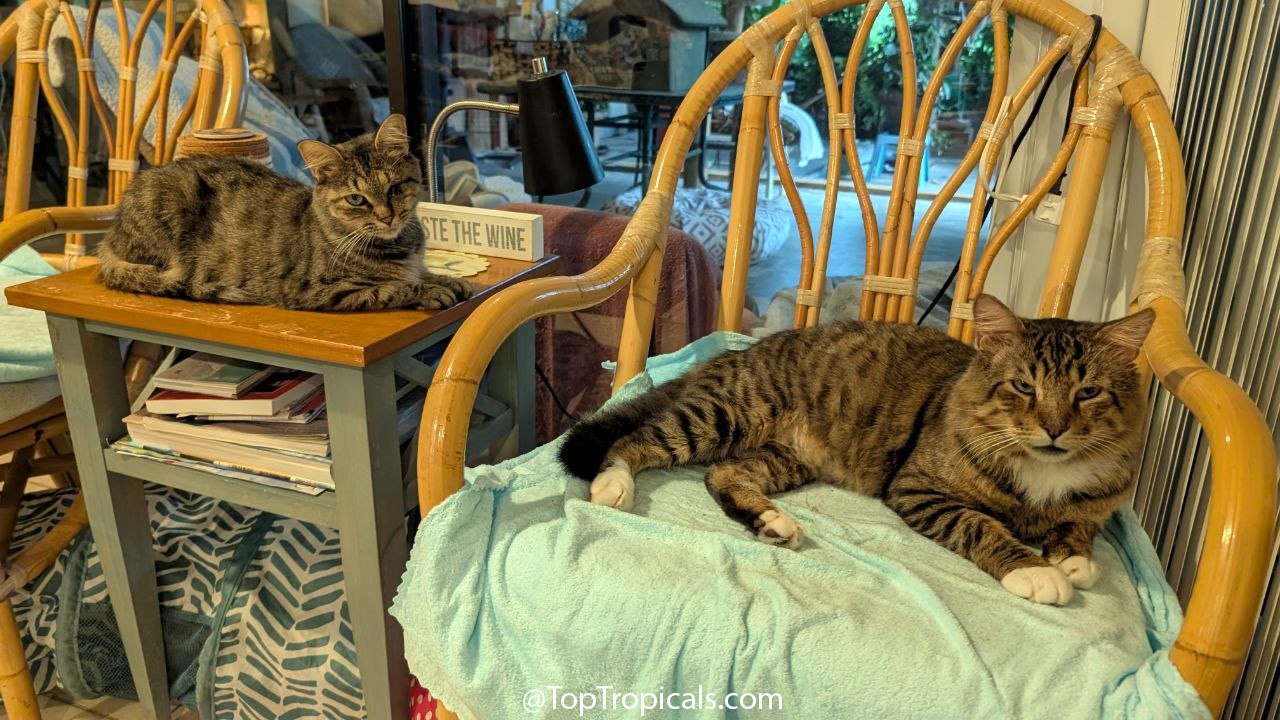
🐾 Daily Cat Lesson: Pets don't know they're disabled
Pets don't know they're disabled. They don't feel sorry for themselves or worry about what they're missing. They simply adapt and enjoy life with whatever equipment they have!
A missing eye, a few teeth, or even three legs instead of four? No big deal!
Cats are remarkably good at adjusting to physical limitations, using their other senses and abilities to compensate. They don't dwell on what they've lost. They're too busy being cats!
🐾 Daily Dose of Cat: Meet Marie the Pirate! 🏴☠️
Remember our story about the box of kittens with a one-eyed mama?
Well, we owe you a correction! The tiny "mama" turned out to be just another kitten.
Yes, apparently it was just a box of miscellaneous cats!
Marie is is about 8 months old, and her vet recently discovered that she was actually born with only one eye!
Marie moved to our B-Farm, quickly made friends with Simon and 12 other cats, got spayed, and is now happily exploring her new catio.
One eye, zero worries, and a whole new life!
Marie will be reporting from her favorite Catio soon. Stay with us for more pirate adventures!
🐈📸 Top Tropicals rescued cat One-Eye Marie found her new home and new friend - Toothless Simon at PeopleCats.Garden.
📚 Learn more:
Orphaned kittens finding the Right Door
Simon "Walkie-Talkie" - the cat who made the right decision
🐈 Stay with us for your #DailyDoseOfCat!
#DailyCatLesson #PeopleCats
🟢 Join 👉 TopTropicals