Garden Blog - Top Tropicals
Date: 23 Sep 2026
This Kitchen Herb Survives Las Vegas - and My Sons Backyard

🌿 This Kitchen Herb Survives Las Vegas - and My Son's Backyard
Every time I visit Las Vegas, there is one plant I always notice.
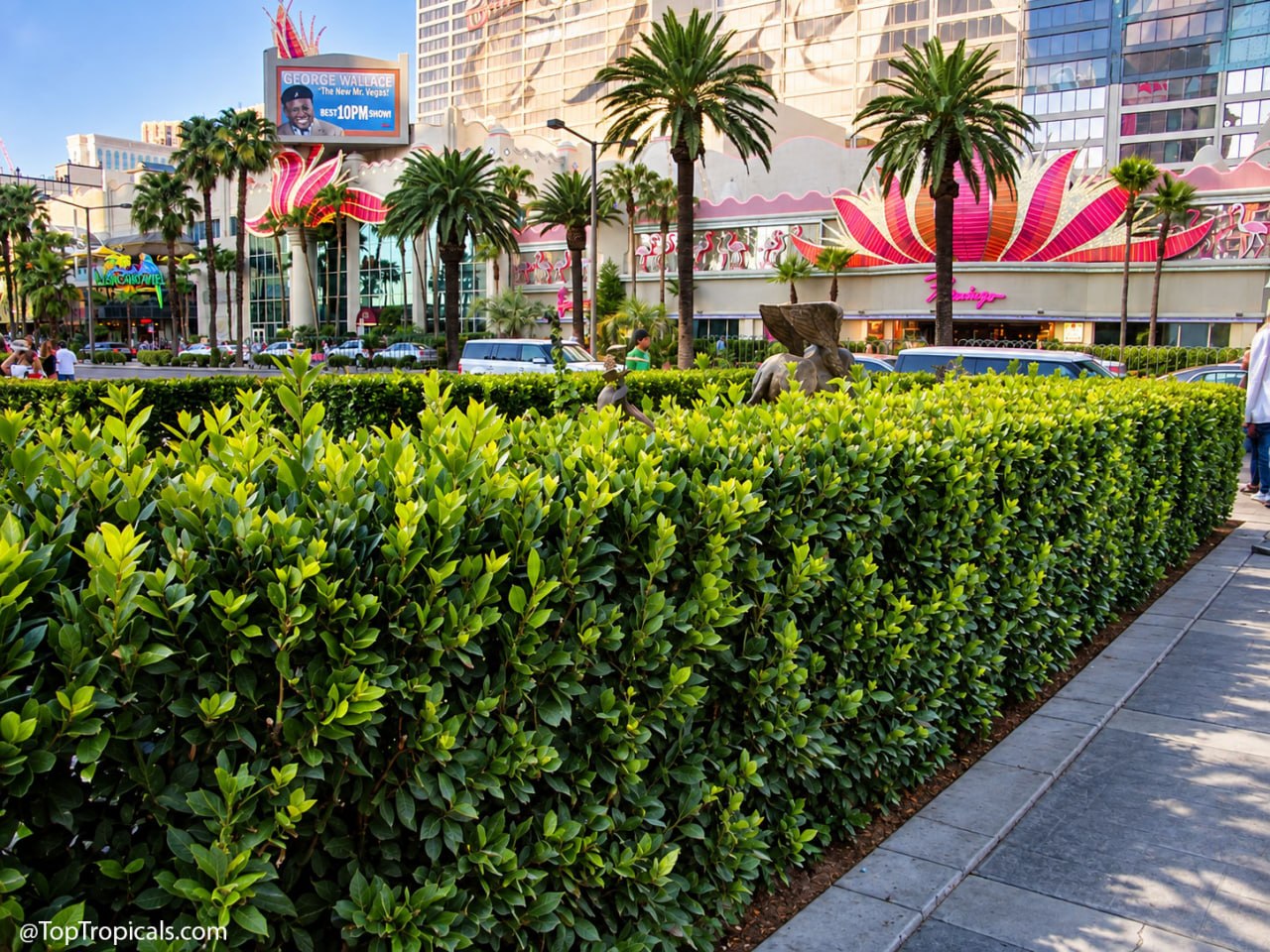
Not in a botanical garden. Not inside a fancy conservatory. Outside the Caesar Palace and the Bellagio.
While everyone is watching the fountains, I'm admiring the Bay Laurel hedge.
And every time I see it, I'm surprised by how good it looks. Dense, green, glossy and perfectly happy.
Las Vegas is not exactly gentle on plants. Summers are brutally hot and dry, while winter nights can dip below freezing.
Yet there it is: Bay Laurel (Laurus nobilis).
🌿 The Herb I Keep Admiring Outside the Bellagio
We usually think of Bay Laurel as a culinary herb - those dried leaves floating around in soup.
But this is actually a tough evergreen Mediterranean shrub or small tree. Its thick, leathery leaves are built to conserve moisture, and established plants tolerate heat and periods of dry weather remarkably well.
Of course, a manicured Las Vegas landscape is irrigated. But seeing Bay Laurel looking so beautiful there year after year says something about just how adaptable this plant can be. And I have an even better experiment much closer to home.
🌿 I Planted One in My Son's Backyard
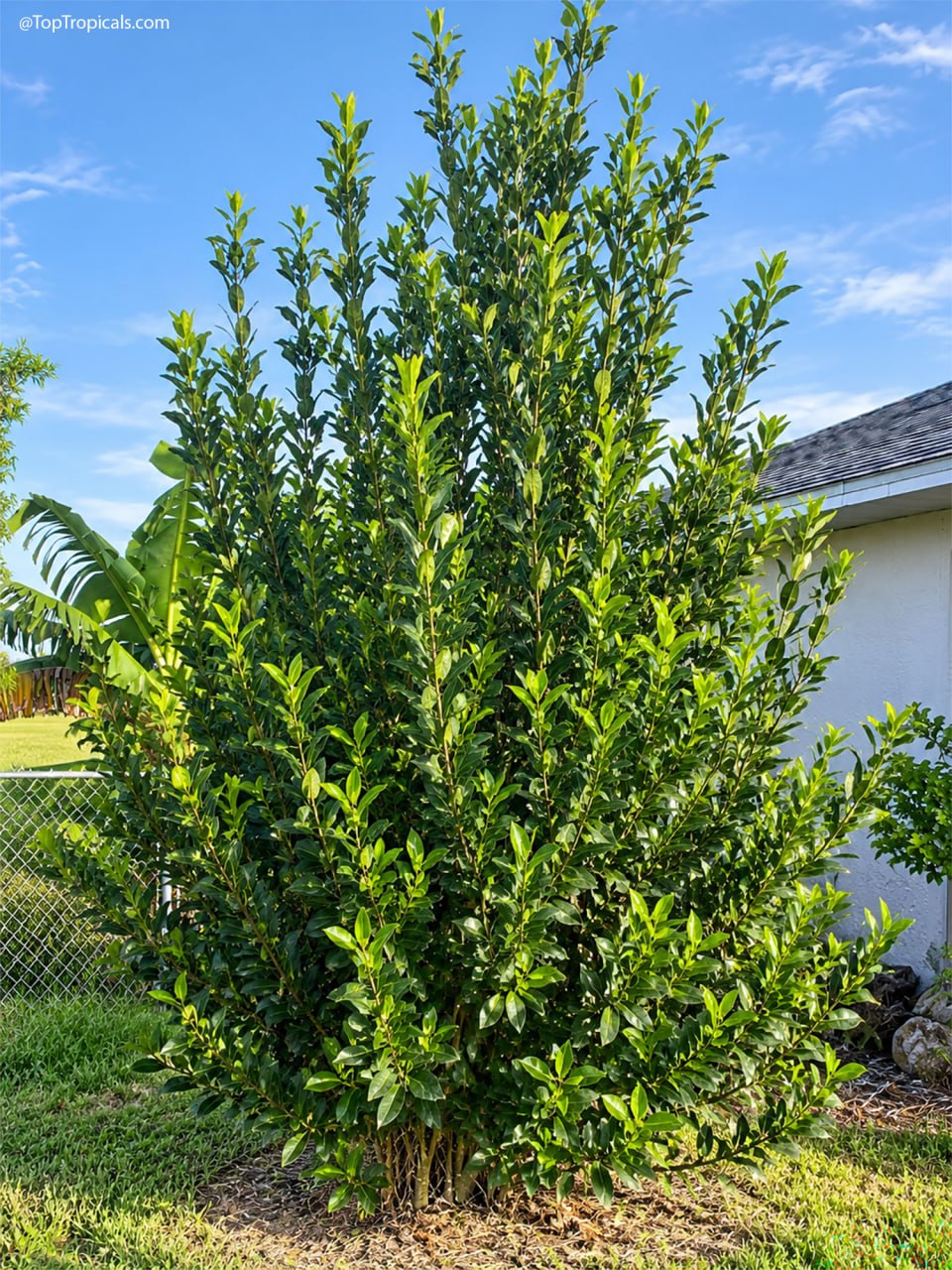
A few years ago, I planted a tiny Bay Laurel at my son Alex's house.
He's not a plant person.
So there was no fertilizing schedule. No hovering with the hose. No pruning and fussing.
Basically, the plant was on its own.
Look at it now.
It has grown into the massive bush. And there's a nice bonus: Alex's wife Heather cooks with it all the time. And they send me the cuttings!
Need a bay leaf? Walk outside and pick one.
That's my kind of edible landscaping.
🌿 The Secret: Don't Love It to Death
Bay Laurel comes from the Mediterranean region, so it appreciates conditions many herbs would complain about.
Give it sun, good drainage and reasonable water while it establishes. Once it has a strong root system, it becomes considerably more forgiving of occasional drought. It also handles pruning beautifully, so that monster can become a hedge, small tree, topiary or compact patio plant.
The big thing it doesn't appreciate is constantly soggy soil. Bay Laurel would rather be a little dry than sit with wet roots.
And despite its elegant appearance, it isn't strictly tropical. Established plants can handle some frost and freezing temperatures, which is one reason Bay Laurel can be grown outdoors well beyond truly tropical climates. Our plants in Sebring, FL survived 2026 Florida record freeze without blinking an eye!
In colder areas, simply keep it in a container and bring it into a protected location for winter.
🌿 Help! My Bay Laurel Became a Monster
That's a pretty good problem to have. Use fresh leaves in soups, tomato sauce, beans, rice, seafood, braised meats, marinades and pickling brines.
Have too many? Dry them - the flavor becomes mellower and develops that familiar warm bay aroma. Just remember to remove whole leaves before serving.
🌿 One Plant May Be All You Need
Bay Laurel isn't an herb you need to replant every season. Give it a permanent spot, and it can keep growing - and feeding your kitchen - for many years.
Mine has convinced me three times: thriving along the Las Vegas Strip, growing into a monster with practically no attention in my son's backyard, and sailing through our 2026 record freeze in Sebring.
If a plant can handle Las Vegas, a plant “dummy”, and a record freeze, I call that one tough herb. 🌿
🛒 Plant Once. Harvest for Years
📚 Learn more:


· Laurus nobilis in Plant Encyclopedia
· Why Ancient Romans Crowned Emperors With the Leaf in Your Spice Rack
· Tropical edibles that reduce your blood pressure
· Tropical plants that survived Florida's historic freeze without protection
#Discover #Remedies #Food_Forest
🟢 Join 👉 TopTropicals
Date: 22 Sep 2026
Daily Cat Lesson: Your Feline Office Assistant

🐾 Daily Cat Lesson: Your Feline Office Assistant
Cats make excellent office assistants.
They warm your chair.
Walk across the keyboard.
Sit on important paperwork.
Attend video meetings uninvited.
🐾 Why do cats love your workspace?
Partly because you are there. Cats may act independent, but many prefer resting near their favorite people - even when they aren't actively asking for attention.
Your office also has premium cat real estate: a warm laptop, moving fingers, interesting papers and, best of all, the chair you just warmed up.
And when you get up for 30 seconds?
Your cat isn't stealing your chair.
He's keeping it warm until you return.
It's an unpaid position, but the benefits package includes unlimited naps.
🐈📸 Top Tropicals rescued cat Jacques keeping the chair warm at PeopleCats.Garden.
🐈 Stay with us for your Daily Dose of Cat! #DailyCatLesson #PeopleCats
🟢 Join 👉 TopTropicals
Date: 22 Sep 2026
5 Best Indian Mango Varieties and Their Flavors

🥭 5 Best Indian Mango Varieties and Their Flavors
Indian mangoes are famous for strong aroma, rich sweetness and complex flavor. If you find many supermarket mangoes too mild, this is a good group to explore.
But they don't all taste alike. Here are five distinctive varieties.
🥭 Alphonso
Perhaps the most famous Indian mango. Alphonso has rich, sweet, aromatic flesh with a smooth, creamy texture and very little fiber. Its flavor is complex rather than simply sugary.
👌Flavor: rich, creamy, intensely aromatic.
🥭 Kesar
Kesar is another highly prized Indian mango, known for its deep orange flesh and powerful aroma. It is very sweet, with a rich, almost dessert-like character.
👌Flavor: very sweet, aromatic, rich and smooth.
🥭 Mallika
Mallika is a hybrid of two Indian varieties, Neelum and Dasheri. The fruit has excellent dessert quality, with sweet, fiberless flesh and a complex flavor that can develop citrusy and melon-like notes when properly ripened.
👌 Flavor: sweet, complex, fruity and aromatic.
💡 Important trick: don't pick Mallika too early. Flavor improves dramatically when the fruit is allowed to mature properly.
🥭 Imam Pasand
Also known as Himayat, Imam Pasand is a celebrated South Indian mango with soft, juicy flesh and very little fiber. Its flavor is rich and aromatic, but different from the heavier Alphonso profile.
👌 Flavor: sweet, juicy, delicate and highly aromatic.
🥭 East Indian
East Indian is an old Jamaican favorite with Indian ancestry and a very different personality. The fruit has a strong, spicy, resinous mango flavor and noticeable fiber. For people who grew up eating it, that powerful flavor is exactly the attraction.
👌Flavor: bold, spicy, aromatic and slightly fibrous.
✅ Which Indian-style mango should you choose?
✓ Choose Alphonso for the classic rich Indian mango experience.
✓ Try Kesar if you love intense sweetness and aroma.
✓ Choose Mallika for smooth flesh and complex dessert flavor.
✓ Try Imam Pasand for something juicy, fragrant and a little more delicate.
✓ And if you like old-fashioned, powerful mango flavor and don't mind fiber, try East Indian.
Indian mangoes aren't about mild sweetness. They're about aroma and character. If that's what you want from a mango, this is a very good place to start.
🛒 Shop Indian mango varieties
📚 Learn more:
Mango Tree - Mangifera indica - in Plant Encyclopedia
5 Best Dwarf Mango Trees for Small Yards
5 Best Mango Trees for Beginners
Top 10 Dwarf "Condo" Mango, great for container culture
Top 5 recommended vigorous Mango tree varieties, reliable producers
Top 5 Favorite Mango we just love
10 steps how to grow a mango tree
#Mango_Rainbow - varieties you should try
#Food_Forest #How_to #Discover #Mango


Date: 21 Sep 2026
Daily Cat Lesson: The Great Outdoors - Without Going Out

🐾 Daily Cat Lesson: The Great Outdoors - Without Going Out
Your cat can enjoy the outdoors without becoming an outdoor cat.
- 🐾 Why keep cats indoors?
Free-roaming cats face cars, dogs and other predators, fights, parasites, disease, poisons and the risk of simply getting lost.
Indoors is safer. But there's one problem: - 🐾 Cats REALLY want to know what's happening outside.
Fresh air. Sunshine. Birds. Lizards. Bugs. Interesting smells. To a cat, the backyard is television and breaking news rolled into one. - 🐾 The solution? A catio!
A catio gives cats the sights, smells and fresh air of outdoors while keeping them safely enclosed.
And it doesn't have to be huge.
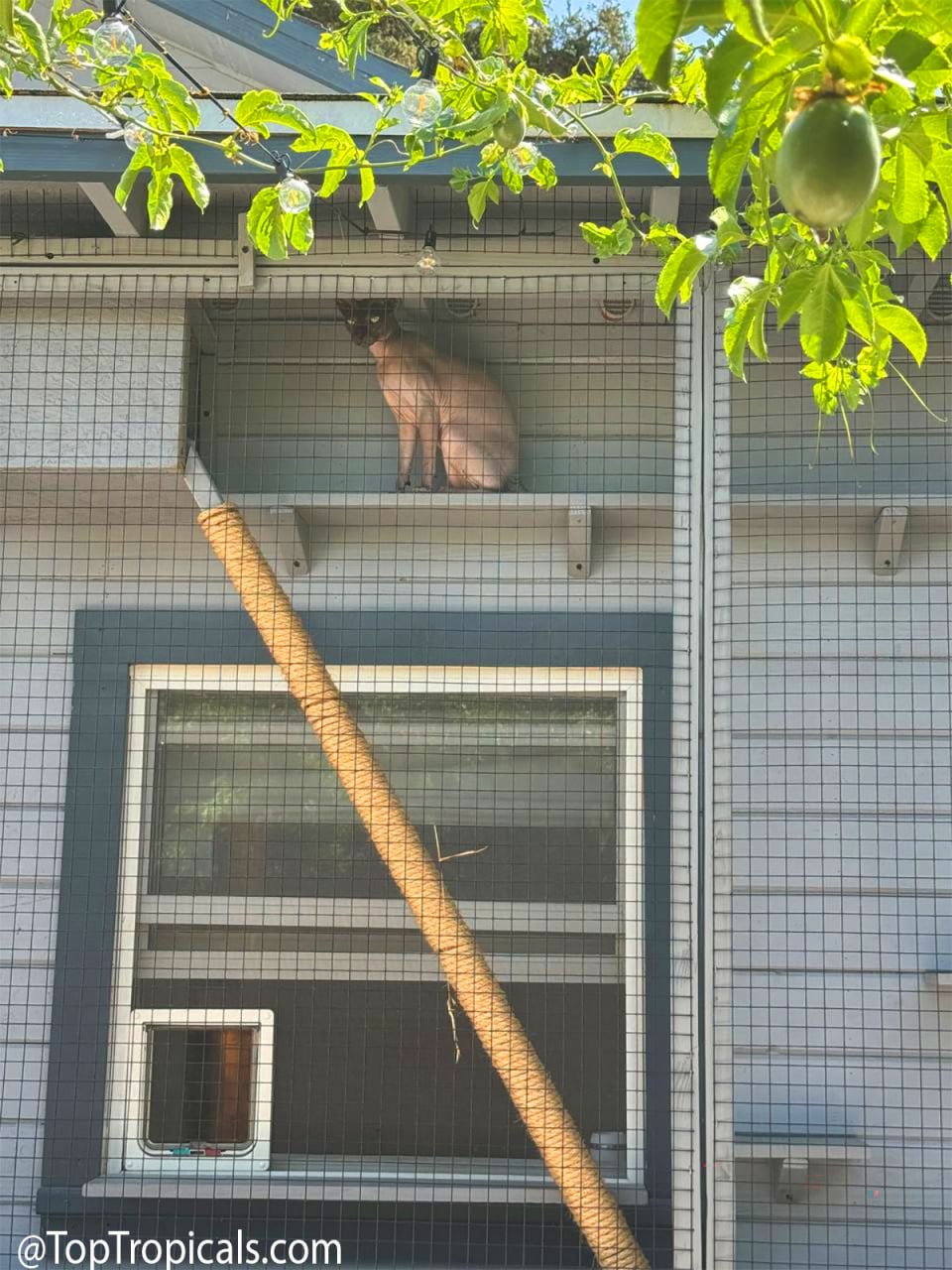
At our B-Farm house we have a large catio, but our good friend Pelmen just got this clever narrow version along the side of his house. Shelves and a climbing ramp turn a small footprint into plenty of vertical territory. - 🐾 No room for a big catio? Build UP.
Even a small enclosure can give a cat space to climb, perch, watch and lounge. A screened porch, enclosed balcony or secure window catio can work too.
And judging by Pelmen's position at the top - the neighborhood is now under surveillance. 👀🐈
🐈📸 Pelmen the Sphynx cat - a friend of TopTropicals PeopleCats.Garden.
📚 Learn more:
· Turn Your Screened Patio Into a Catio
· Cat Pelmen's achievements
🐈 Stay with us for your Daily Dose of Cat! #DailyCatLesson #PeopleCats
🟢 Join 👉 TopTropicals
Date: 21 Sep 2026
The Secret Tree Behind Chanel No 5 - and How to Grow Your Own Ylang Ylang Tree
⭐️ The Secret Tree Behind Chanel No 5 - and How to Grow Your Own Ylang Ylang Tree
It doesn’t look like a million-dollar flower.
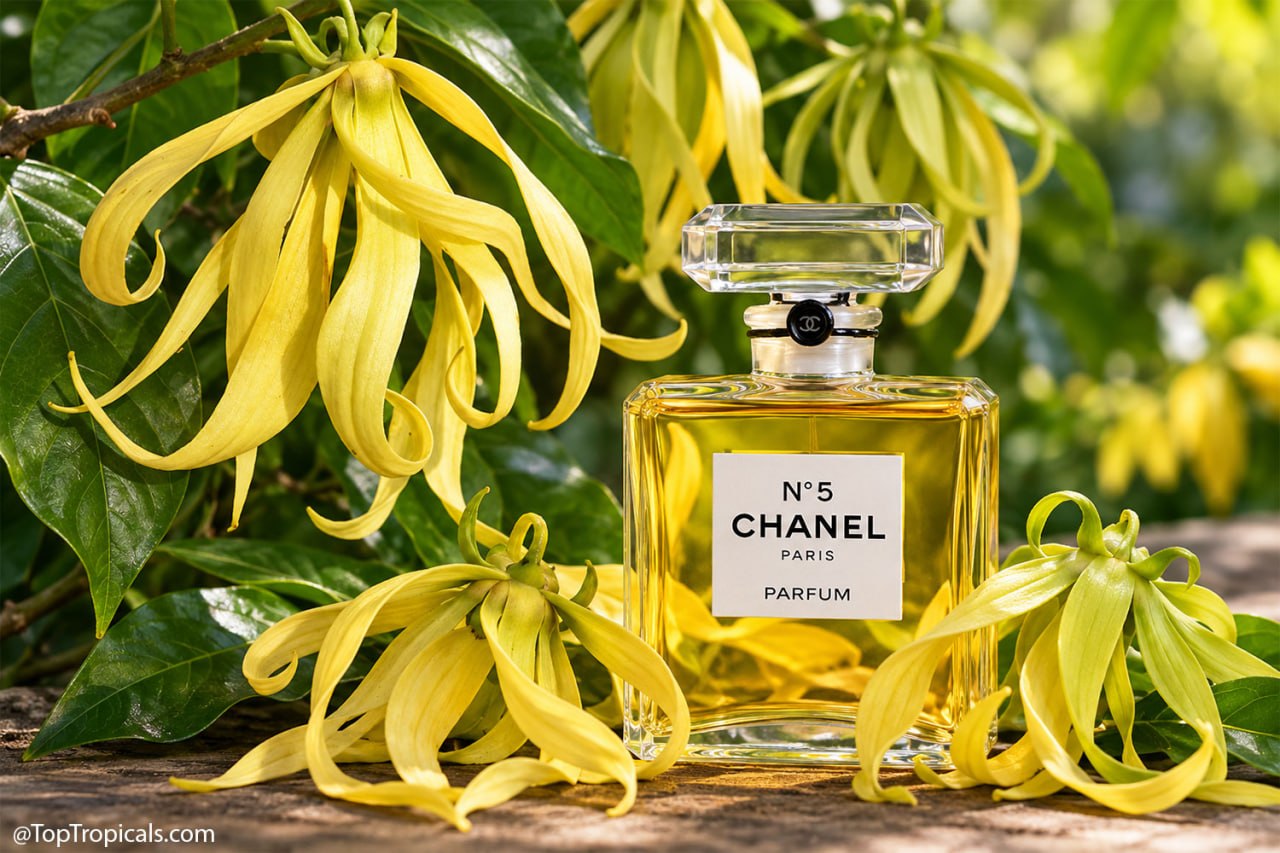
The petals are long, narrow, and twisted, dangling from branches like muted yellow-green ribbons. In a garden, you could easily walk past without giving them a second glance. Then, the wind shifts - and you smell it. This is Cananga odorata - Ylang-Ylang. While jasmine and rose get most of the glory, Ylang-Ylang is the secret engine behind Chanel No. 5, providing the iconic perfume with its lush, velvet-like warmth.
The best part? You don't need a high-end department store to experience it. You can grow the tree right in your own yard.
✨ What Does the Flower Actually Smell Like?
On its own, a fresh Ylang-Ylang blossom doesn't smell like a finished bottle of perfume. It has its own distinct personality: intensely sweet, creamy, fruity, and laced with a warm, spiced floral undertone.
The Secret to Peak Fragrance: Young blossoms start green and scentless. Wait until they turn a deep, rich yellow - that is when the essential oils peak.
Natural Air Freshener: On a warm summer evening, a single blooming tree can perfume an entire yard.
The Car Trick: Pick a ripe yellow flower and place it on your car’s dashboard. As the sun warms the petals, it releases a rich, natural fragrance that outperforms any store-bought air freshener for days.
✨ The Custard Apple Connection
Botanically, Ylang-Ylang harbors a surprising secret: it belongs to the Annonaceae family.
That makes this perfume legend a direct relative of popular tropical fruits like sugar apple, cherimoya, atemoya, and soursop. While you won't get sweet fruit from a Ylang-Ylang tree, examining the broad leaves and flower structure makes the family resemblance clear.
✨ Can You Really Grow It in Your Backyard?
Yes - if you can provide frost-free conditions. Established trees can tolerate light frost but young plants can get cold damaged.
Cananga odorata is a vigorous, fast-growing tropical tree that loves warmth, sun, moisture and good drainage. It can eventually become a substantial tree, although pruning can keep it more manageable.
There is also a compact form, Cananga fruticosa, Dwarf Ylang-Ylang. It stays much smaller and can flower surprisingly young, making it attractive for containers.
Ylang-Ylang Tree (Cananga odorata)
Height: 30+ feet (can be pruned)
Best For: In-ground planting (USDA Zones 10–11)
Fragrance: Maximum potency with heavy oil production
Time to Bloom: 2–3 years from seed
Dwarf Ylang-Ylang (Cananga fruticosa)
Height: 6-8 feet
Best For: Patio containers and small spaces
Fragrance: Mild to moderate scent
Time to Bloom: Blooms immediately
Pro Tip: If extreme fragrance is your main goal, plant the full-sized tree. If you live in a cooler climate or have limited space, opt for the dwarf variety, which can easily be brought indoors over the winter.
✨ Your Personal Outdoor Perfumery
Commercial perfumers use steam distillation to extract Ylang-Ylang oil, but home gardeners don't need fancy equipment to enjoy it.
Simply float freshly picked blooms in a decorative bowl of water, tuck a mature flower into a warm window corner, or let the breeze carry the scent straight off the branch into your home.
People grow citrus for fruit and coffee plants for beans - Ylang-Ylang is the tree you grow purely for luxury.
🛒 Grow This Legendary Fragrance
📚 Learn more:


✦ Cananga odorata in Plant Encyclopedia
✦ The secret tree behind Chanel No 5 perfume
✦ Flowering season of Dwarf Chanel No 5
✦ How to grow your own Chanel #5
✦ What is the best perfume tree for container culture
✦ The Ylang-Ylang: Queen of the Perfume World: the Bearer of an Ideal Fragrance
✦ Perfume in a pot: exotic Dwarf Chanel No 5 Tree
🎥
Perfume in a pot: exotic Dwarf Chanel No 5 Tree
The secret tree behind Chanel No 5 perfume
📖 The Ylang-Ylang - Queen of the Perfume World - book - PDF file download
#Perfume_Plants #Trees #Discover #How_to
🟢 Join 👉 TopTropicals