Garden Blog - Top Tropicals
Date: 4 Sep 2026
Why the Eggfruit Tastes Like Dessert and Loves Your Guts
💛 Why the Eggfruit Tastes Like Dessert and Loves Your Guts
Canistel Looks Like Custard, But Your Gut May Like It Even More
Cut open a perfectly ripe canistel, and the first thing you notice is the texture. The golden-yellow flesh is thick, dense, and creamy enough to eat straight with a spoon.
It looks like egg custard. It tastes like sweet pumpkin pie. But the most impressive thing about this tropical fruit isn't its dessert-like flavor - it's what that dense yellow pulp does for your digestive tract.
💛 A Dessert-Like Fruit Packed With Fiber
Canistel (Pouteria campechiana), often called "eggfruit," has long been a staple in tropical regions across Central America and Southeast Asia. Today, nutritional researchers are taking a closer look at its unique profile.
Unlike watery melons or juicy oranges, a ripe canistel is thick and filling. That dense texture is a giveaway for its key benefit: dietary fiber.
✔️ Supports Regularity: Fiber adds bulk to the digestive tract, encouraging smooth, consistent bowel movements.
✔️ Feeds the Microbiome: The natural fibers act as a power source for the beneficial bacteria living in your gut microflora.
✔️ Sustained Energy: Because it is packed with complex carbohydrates and fiber, it offers a steady release of energy without a quick sugar crash.
💛 Is Canistel a "Gut Detox"?
You will occasionally hear wellness enthusiasts label tropical fruits as "cleansing" or "detoxifying." Scientifically speaking, that isn't quite right - your liver and kidneys handle detoxing, not your fruit bowl.
Canistel isn't a miraculous medicine or a quick-fix digestive cure. It is simply a nutrient-dense whole food that delivers fiber in its most bioavailable, delicious form - no supplements or processed gut-health snacks required.
💛 The Secret Behind the Golden Color
That brilliant yellow-orange hue isn't just visually striking - it points to a rich payload of plant compounds:
Carotenoids: Rich in beta-carotene (a precursor to Vitamin A), which supports immune function and cellular health.
Antioxidants: Packed with natural polyphenols that help combat oxidative stress in the body.
Essential Minerals: Delivers key nutrients like calcium, phosphorus, and niacin.
💛 How to Eat It
If you manage to grab one at a specialty market, wait until it is soft to the touch (similar to a ripe avocado). Scoop the flesh directly out of the skin, blend it into a rich tropical smoothie, or whip it into a natural, dairy-free pudding.
It looks like a treat, tastes like custard, but delivers the heavy-hitting nutrition your digestive system thrives on!
📖 What does the research say?
Canistel's reputation as a nutritious fruit isn't just folklore. Scientific analyses of Pouteria campechiana have documented dietary fiber along with carotenoids, minerals, phenolic compounds and other plant bioactives.
A 2023 review published in the Journal of Functional Foods examined the nutritional composition, phytochemistry and potential health benefits of Canistel, while a 2022 study in the Journal of Agriculture and Food Research analyzed the fruit's pulp and peel and confirmed its fiber and nutrient content.
🛒 Grow the Fruit Your Gut Will Love
📚 Learn more:


Pouteria campechiana - Canistel, Eggfruit - in Plant Encyclopedia
This old-school tropical fruit is making a quiet comeback: Eggfruit - Canistel
Canistel breakfast mash: quick-n-fun exotic recipes
Health Benefits of Canistel Fruit
Pouteria campechiana - Canistel, the curious heart-shaped Egg Super-Fruit
#Food_Forest #Remedies #Discover
🟢 Join 👉 TopTropicals
Date: 3 Sep 2026
Daily Cat Lesson #13: Is Your Cat REALLY Asleep?

🐾 Daily Cat Lesson #13: Is Your Cat REALLY Asleep? 👁
- 🐾 Cats have an impressive "standby mode."
A lot of their daily sleep is actually light sleep or dozing. They can relax while remaining surprisingly aware of sounds, smells and movement around them. - 🐾 Why?
Cats evolved as both predators and potential prey. Being able to rest without completely switching off was useful for survival. A lightly sleeping cat can become alert very quickly when something interesting happens. - 🐾 How can you tell when a cat is deeply asleep?
During deeper sleep, the body becomes much more relaxed. During REM sleep you may see twitching paws, whiskers or ears, and little movements behind closed eyelids. - 🐾 And the famous one-eye-open technique?
Sometimes a resting cat really does keep its eyes partly open. He may be comfortable enough to doze, but not quite ready to stop monitoring the situation.
🐈📸 Top Tropicals rescued cats James Coconuts is not sleeping on the job. He's in power-saving mode at PeopleCats.Garden.
🐈 Stay with us for your Daily Dose of Cat! #DailyCatLesson #PeopleCats
🟢 Join 👉 TopTropicals
Date: 3 Sep 2026
After the Strange Flower Comes an Even Stranger Fruit: Amorphophallus
💄 After the Strange Flower Comes an Even Stranger Fruit: Amorphophallus
At first glance, it hardly looks like fruit at all. A thick, primitive stalk rises from the soil, completely covered in tightly packed berries - green at the base, burning orange through the middle, and vivid crimson at the top.
This is the fruiting display of Amorphophallus bulbifer. While this plant is famous for its bizarre pink bloom, its fruit stage puts on an even wilder show.
💄 One Flower, an Entire Tower of Berries
What appears to be a single, oversized tropical fruit is actually a densely packed cluster of hundreds of individual berries.
During its bloom cycle, Amorphophallus produces a central spike (the spadix) lined with hundreds of tiny female flowers at its base. Once pollinated, the delicate flower fades away, and every single fertilized ovary swells into a fleshy, finger-like berry along a solid central column.
💄 The Secret Behind the Tricolor Gradient
The striking, multi-colored display isn't a rare hybrid trait - it's a snapshot of time:
Green: Newly formed, unripened berries at the base.
Yellow & Orange: Mid-stage ripening where sugars build.
Brilliant Red: Fully mature berries ready for dispersal.
Because berries along the stalk mature at slightly different rates, a single plant temporarily displays a continuous traffic-light gradient of ripening.
💄 A Brilliant Red Signal to Wildlife
That vibrant red isn't just an aesthetic treat for gardeners; it is an evolutionary billboard. In the wild, high-contrast reds and oranges signal to birds and small mammals that a sugar-rich reward is ready. Animals feed on the fleshy outer layer and disperse the hardy seeds far from the parent plant's shade.
💄 Two Ways to Clones and Successors
Inside each mature red berry sits a seed ready to yield the next generation - representing sexual reproduction. But Amorphophallus bulbifer has a backup plan.
Unlike many of its relatives, this species also produces small vegetative "bulbils" directly on its leaf branches. This means a single plant can multiply in two entirely different ways:
♀️♂️ Sexually: Through flowers, pollination, and seed-bearing berries.
🌱Asexually: By dropping leaf bulbils that sprout directly into genetic clones.
💄 Don't Look Away When the Bloom Fades
Most growers collect Amorphophallus bulbifer for its dramatic, umbrella-like foliage and unusual pink spathe. But if you manage to pollinate the bloom, the real transformation begins months later.
The flower gets all the viral attention - but the fruit stalk is the true grand finale.
🛒 Add Some Weird to Your Garden
📚 Learn more:


· Amorphophallus bulbifer in Plant Encyclopedia
· The flower that smells like a dead rat, but gardeners can’t wait for it to bloom
· The biggest flower in the world - Amorphophallus
· Amorphophallus konjak: fun fact about Voodoo Lily
· Amorphophallus paeoniifolius: what's inside the Devils Tongue that smells like trouble?
· Different species of Amorphophallus
#Nature_Wonders #Shade_Garden #Container_Garden #Discover
🟢 Join 👉 TopTropicals
Date: 2 Sep 2026
Daily Cat Lesson #12: Do Not Disturb - Grooming in Progress
🐾 Daily Cat Lesson #12: Do Not Disturb - Grooming in Progress.
Your cat isn't just licking himself clean. Grooming is serious cat business.
- 🐾 How much time do cats spend grooming?
A lot! Cats may spend a surprisingly large part of their waking hours grooming themselves. For a dedicated professional like Bob, cleanliness is apparently a full-time occupation. - 🐾 Why is a cat's tongue so rough?
A cat's tongue is covered with tiny backward-facing, hook-like structures called papillae. They help the tongue work almost like a built-in comb, separating fur and removing loose hair and debris. - 🐾 Does licking help cats cool down?
Yes. Cats don't sweat over most of their bodies like humans do. When saliva left on the fur evaporates, it provides some cooling. - 🐾 Why do cats groom when they're perfectly clean?
Grooming isn't only about dirt. It helps maintain the coat, distribute natural skin oils and remove loose fur. Cats may also groom as a calming behavior when they're relaxing or after something mildly stressful. - 🐾 Why does my cat immediately lick himself after I pet him?
Don't take it personally. Your touch has disturbed the carefully arranged coat and added unfamiliar scents. Grooming helps put everything back in order and restore the cat's own familiar smell. - 🐾 Can grooming tell you something about your cat's health?
Yes. A sudden increase in licking, especially one particular spot, can signal itching, pain or stress. And a cat who suddenly stops grooming may also be telling you something isn't right.
Meanwhile, Bob is healthy, busy and unavailable for comment!
Please hold all questions until the bath is complete. 🐈
🐈📸 Top Tropicals rescued cat Bob being completely unavailable because Important Grooming Operations Are in Progress at PeopleCats.Garden.
🐈 Stay with us for your Daily Dose of Cat! #DailyCatLesson #PeopleCats
🟢 Join 👉 TopTropicals
Date: 2 Sep 2026
What Tropical Fruit Should You Plant in Zone 9?
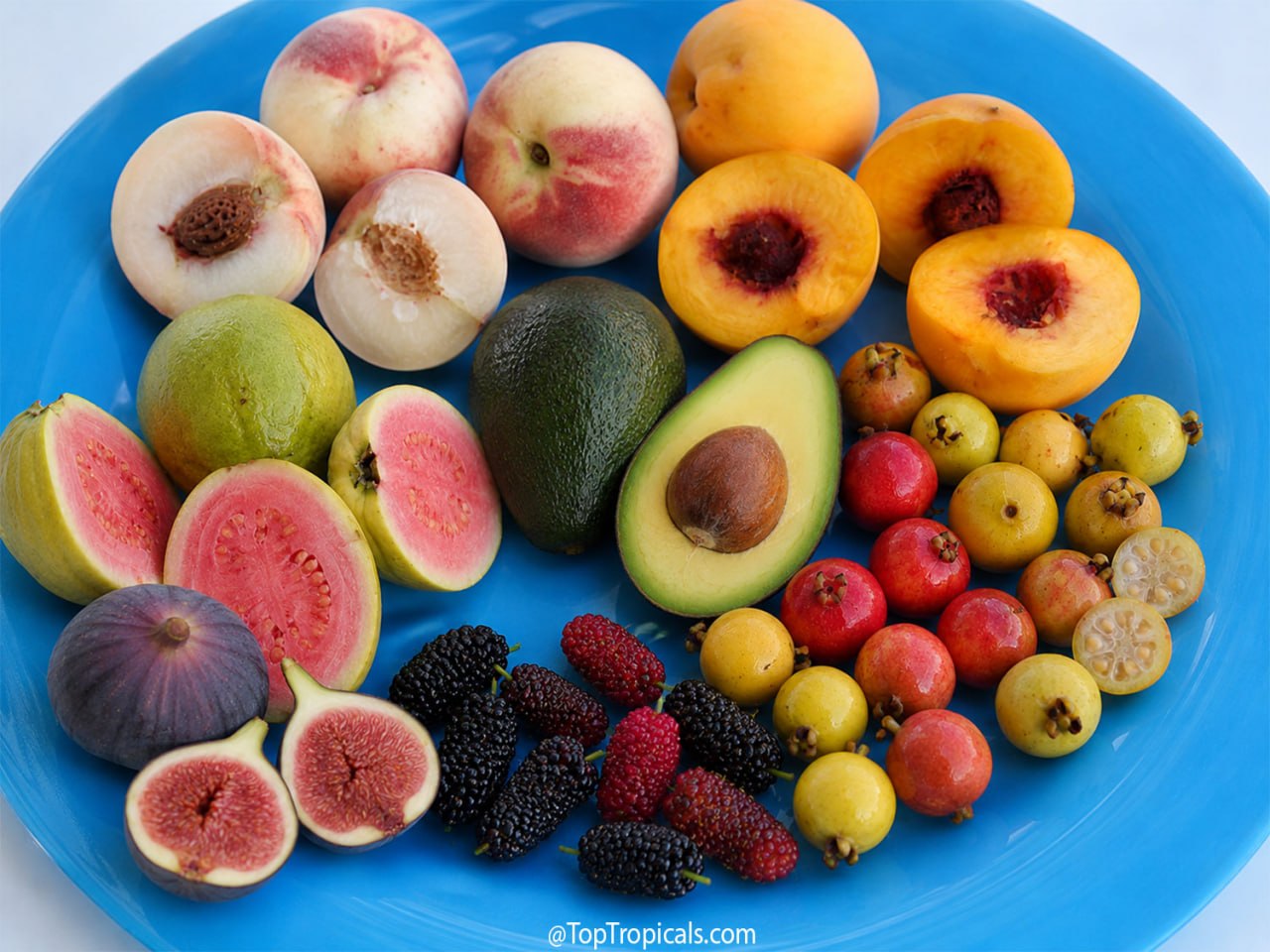
🍑 What Tropical Fruit Should You Plant in Zone 9?
If you live in Zone 9, you don't have to give up on tropical and subtropical fruit trees. The trick is choosing the right variety, because "peach," "guava," or even "avocado" on a plant tag doesn't tell you whether that particular tree will handle your climate. A customer recently asked us what we'd plant in a Zone 9 backyard orchard. Here's what we recommended, based on what we grow ourselves in Florida.
❓ Q: What peaches do well in Zone 9?
Look for low-chill peaches bred for warm climates, such as:
Tropic Sweet, Tropic Prince, Tropic Beauty, Tropic Snow.
We prefer yellow peaches for Florida and other subtropical areas. In our experience, they perform better and the fruit tends to be juicier.
❓ Q: What about guava?
This depends on which guava.
For planting in the ground in Zone 9, we recommend Cattley guava (Psidium littorale). Hawaiian Gold is a yellow Cattley/Strawberry guava with exceptionally sweet and flavorful fruit.
Ruby Supreme Guava - Psidium guajava is a true tropical guava. We don't recommend planting it permanently in the ground in Zone 9 because a hard freeze can kill it. Keep it in a container instead. It grows and fruits well in pots and can be moved to protection when a freeze threatens.
❓ Q: And plums?
They're coming! We've just grafted Hypoluxo, one of our sweetest plum varieties. Those young trees should be ready in 2027.
❓ Q: What other fruit trees are excellent choices for Zone 9?
Cold-Hardy Avocados should be high on the list. The key is choosing cold-hardy varieties rather than standard tropical avocados. We've been growing and testing them here in Florida 2026 Record Freeze, and some varieties can handle surprisingly cold conditions.
🍐 Figs are another easy choice. They're naturally much more cold tolerant than most tropical fruit trees, love our long growing season, and can produce heavily without taking up much space.
🍇 Mulberries are tough, fast-growing, productive, and very well suited to Zone 9. If you want a fruit tree that doesn't need to be babied every time temperatures drop, mulberry is hard to beat.
🍊 Loquat is another excellent Zone 9 fruit tree. It's evergreen, attractive, surprisingly cold hardy, and produces clusters of juicy, sweet-tart fruit. Even better, it flowers and develops its crop during the cooler part of the year, when most of the tropical fruit garden is taking a break.
👉 The takeaway:
Zone 9 can grow a surprisingly diverse backyard fruit orchard. You just have to choose the right species AND the right variety for your climate.
• Low Chill Peaches and Plums? Absolutely.
• Cattley guava? Yes.
• Tropical guava? Yes, but keep it portable.
• Cold-Hardy Avocado? Definitely.
• Figs and Mulberries? Excellent choices.
• Loquat? Absolutely - one of the easiest choices for Zone 9.
Zone 9 isn't the end of tropical fruit growing. It's where choosing the right varieties gets interesting.
🛒 Shop Low Chill Peach Trees and Tropical Fruit Trees
📚 Learn more:


· Prunus persica in Plant Encyclopedia
· Full Sun Isn't Always Best for Peach Trees - Especially in Florida
· The One Peach Tree Every Florida Gardener Should Know About: Tropic Beauty
· What are the best Mulberry varieties
· The fruit tree that every garden must have - Fig
· Ten best fruit trees to grow in Florida and Southern landscapes: Loquat Tree
· 15 "Bulletproof" Fruit Trees for Tough Ground
· What is the most rewarding hardy fruit tree suitable for hot climate
· Top Ten Fruit Tree Winners of Florida 2026 Record Freeze
· Cold-hardy avocado survival groups - what the numbers really mean
#Food_Forest #How_to #Discover
🟢 Join 👉 TopTropicals