Garden Blog - Top Tropicals
Date: 23 Aug 2026
Does a Mango Tree Need Special Soil?
Does a Mango Tree Need Special Soil?
A customer recently asked us a very practical question: "Do you have a blend of soil that you recommend to incorporate with native soil when planting a mango tree in its permanent spot?"
The answer depends on what is already under your feet.
❓ Q: Does a mango tree need special soil?
✅ A: Usually, no. Improve your native soil rather than replacing it.
Mangoes are surprisingly tolerant of less-than-perfect soil. They can grow very well in sandy and relatively poor soils, provided the drainage is good.
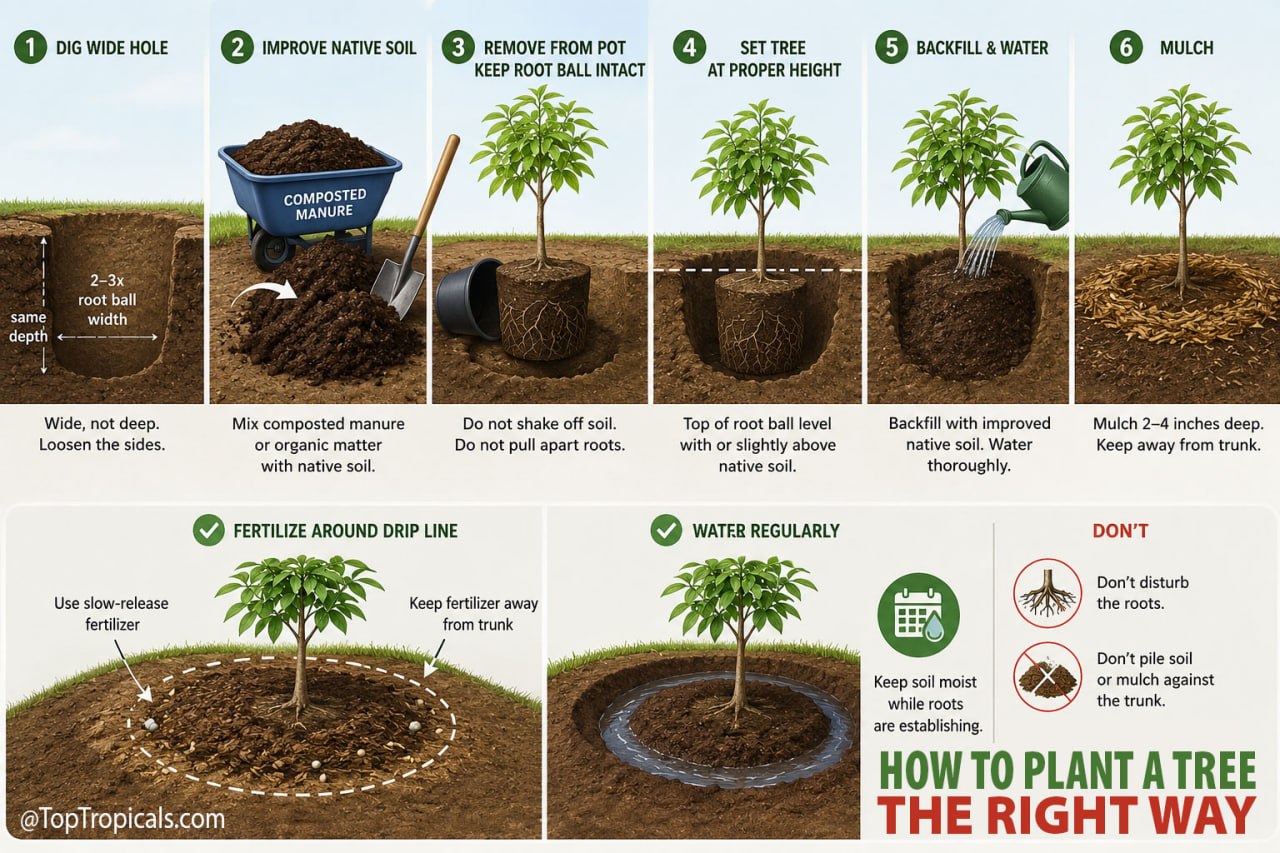
At our farm in Sebring, Florida, our native soil is very sandy. We plant mangoes and other fruit trees directly into it, usually mixing the existing soil with some composted manure or other well-composted organic matter.
The organic matter helps sandy soil hold moisture and nutrients better while still allowing the excellent drainage mango roots appreciate.
❓ Q: Should I fill the planting hole with rich potting soil?
✅ A: No. This is a common mistake.
Don't dig a hole and replace all the native soil completely with beautiful, rich potting mix. You've essentially created a little underground container surrounded by completely different soil.
Instead, work with the soil you have. If it is sandy and low in organic matter, amend it moderately with composted organic material and use the improved native soil around the root ball.
And remember: drainage matters more to a mango than having perfectly rich soil.
❓ Q: Should I fertilize when planting?
✅ A: Yes, but don't pile concentrated fertilizer directly against the roots or trunk.
After planting, we use slow-release fertilizer around the root zone.
Our economical choice for fruit trees is Top Dress Slow Release Fertilizer 8-3-9.
For longer controlled feeding, Green Magic Controlled Release Fertilizer is our preferred choice. It costs a little more, but one application feeds for approximately six months.
❓ Q: What is the most important thing when taking the tree out of its pot?
✅ A: Leave the roots alone.
Don't shake off the soil. Don't wash the roots. Don't pull the root ball apart just because you've heard you're supposed to "loosen the roots."
The tiny feeder roots and root hairs are doing the important work of absorbing water and nutrients. The less you disturb them during transplanting, the easier the transition will be.
Move the intact root ball into its new home, backfill around it, water thoroughly, and let the roots explore the surrounding soil themselves.
💡 The simple rule: Good drainage + your native soil + some organic matter + proper fertilizer.
Mango trees don't need an elaborate designer soil blend. In fact, after growing mangoes in Florida's sandy soil for years, we'd rather improve what nature gave us than replace it.
And whatever soil you have, don't forget the other half of planting correctly: protect that root ball.
👉 More planting help: our detailed planting guides:
How to Properly Plant a Tree
Top Tropicals Planting Guide
📂 Prefer something you can print and take outside with you?
Download Our Planting Instructions PDF
🛒 Shop Mango Trees
📚 Learn more:
Mango Tree - Mangifera indica - in Plant Encyclopedia
How to Plant a Tree - A Fun Guide
How Big Will Your Mango Tree Actually Get?
How long does it take for a mango tree to bear fruit?
What are the Condo Mangos - a practical guide
10 steps how to grow a mango tree
Planting Instructions PDF
#Food_Forest #How_to #Discover #Mango


Date: 22 Aug 2026
Daily Cat Lesson #1: Cats dont need entertainment every minute.

🐈 Welcome to our Daily Cat Lesson!
One cat. One photo. One little thing worth knowing every day.
🐾 Why does your cat follow you to the bathroom?
🐾 Why do cats get the zoomies at 2 a.m.?
🐾 Do cats really need their teeth brushed?
🐾 Why do they love boxes more than the expensive bed you bought them?
🐾 What does that mysterious slow blink actually mean?
🐾 And what can your cat teach you about life, happiness and the fine art of doing absolutely nothing?
We'll talk about:
🐾 Simple cat care & maintenance
Weird and wonderful cat facts
😼 Cat behavior explained
🍗 Food & nutrition
Little things to watch for
🌿 Cats & plants
💭 Cat philosophy
😂 And the everyday absurdity of living with cats
Some lessons will be useful.
Some will be surprising.
Some may be completely unnecessary.
But there will always be a cat. 🐈
Sometimes a chair beside a window is premium television. 📺🐦
Give your cat a comfortable window spot and you've just created hours of free entertainment: birds, squirrels, lizards, falling leaves, passing people and whatever mysterious thing your cat has been staring at for the last 20 minutes that you still can't see.
🐈📸 Top Tropicals rescued cat Bob at PeopleCats.Garden.
🐈 Stay with us for your Daily Dose of Cat! #DailyCatLesson #PeopleCats
🟢 Join 👉 TopTropicals
One cat. One photo. One little thing worth knowing every day.
🐾 Why does your cat follow you to the bathroom?
🐾 Why do cats get the zoomies at 2 a.m.?
🐾 Do cats really need their teeth brushed?
🐾 Why do they love boxes more than the expensive bed you bought them?
🐾 What does that mysterious slow blink actually mean?
🐾 And what can your cat teach you about life, happiness and the fine art of doing absolutely nothing?
We'll talk about:
🐾 Simple cat care & maintenance
Weird and wonderful cat facts
😼 Cat behavior explained
🍗 Food & nutrition
Little things to watch for
🌿 Cats & plants
💭 Cat philosophy
😂 And the everyday absurdity of living with cats
Some lessons will be useful.
Some will be surprising.
Some may be completely unnecessary.
But there will always be a cat. 🐈
🐾 Daily Cat Lesson #1: Cats don't need entertainment every minute.
Sometimes a chair beside a window is premium television. 📺🐦
Give your cat a comfortable window spot and you've just created hours of free entertainment: birds, squirrels, lizards, falling leaves, passing people and whatever mysterious thing your cat has been staring at for the last 20 minutes that you still can't see.
🐈📸 Top Tropicals rescued cat Bob at PeopleCats.Garden.
🐈 Stay with us for your Daily Dose of Cat! #DailyCatLesson #PeopleCats
🟢 Join 👉 TopTropicals
Date: 22 Aug 2026
Why Coffee and Chocolate Grow Under Ice Cream Bean Trees
☕️🍧 Why Coffee and Chocolate Grow Under Ice Cream Bean Trees
The Ice Cream Bean Tree (Inga edulis) sounds like it was invented for kids: enormous pods filled with fluffy white pulp that tastes sweet and vanilla-like.
But in the tropics, it has another important job.
Farmers have been growing coffee and cacao - the plant that gives us chocolate - under Inga trees for generations.
And once you understand how a tropical forest works, the combination makes perfect sense.
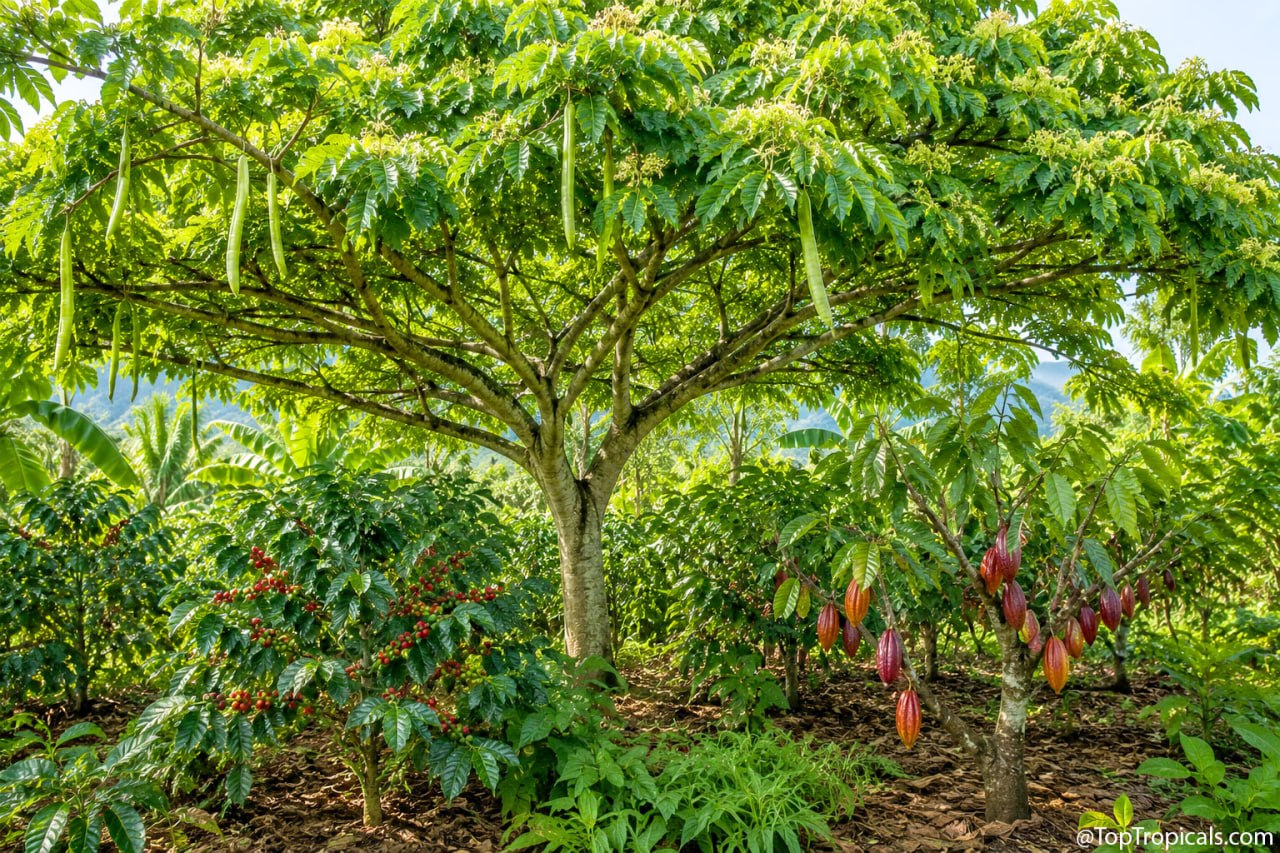
🌳 Think in layers, not rows
Tropical forests grow vertically.
At the top, fast-growing Ice Cream Bean creates a broad canopy. Below it, smaller coffee and cacao trees grow in filtered light. Closer to the ground, there's still room for smaller tropical crops and groundcovers.
That's agroforestry: essentially companion planting in layers. Instead of giving every plant its own separate patch of ground, you combine plants that can benefit from growing together, each occupying a different level.
Ice Cream Bean = upper floor
Coffee and cacao = middle floor
Smaller plants, gingers = ground floor
One piece of land suddenly becomes much more productive.
🌳 Why Ice Cream Bean?
Inga edulis grows fast and develops a spreading crown, which is exactly why it has long been used as a shade tree for coffee and cacao.
Better yet, the shade is manageable. Inga tolerates pruning and regrows vigorously, so the canopy can be opened when the plants underneath need more light.
But shade is only part of the story.
Ice Cream Bean is a legume capable of fixing atmospheric nitrogen through associations with soil bacteria. It also produces lots of leaves and branches.
When leaves fall - or branches are cut during pruning - that material can stay right where it lands as mulch. It helps cover the soil, suppress weeds and gradually adds organic matter and nutrients.
You're basically growing some of your mulch above the garden.
🌳 Build a tiny tropical forest
This same idea can work in a home garden.
Instead of planting every tropical tree in isolation, borrow a trick from nature. Use a larger tree for the upper canopy, grow smaller shade-tolerant plants underneath, and fill the lowest level with groundcovers and other small tropicals.
An Ice Cream Bean can provide the roof.
Coffee and cacao can occupy the protected space below.
And your "shade tree" happens to produce those ridiculous giant pods filled with sweet white fluff.
🌳 So which crop is the bonus?
That's the funny part.
Most people want Inga edulis for the famous Ice Cream Bean fruit. But in tropical farming, the tree has also earned its place for shade, fast growth, biomass and its role in productive layered gardens.
So you're not necessarily planting just one fruit tree.
You may be planting the roof of your future tropical garden.
🛒 Start "Companion" tropical garden:
Ice Cream Bean tree • Coffee tree • Chocolate tree
📚 Learn more:


Ice Cream Bean tree (Inga edulis) in Plant Encyclopedia
The Nitrogen-Fixing Myth: Why Your Ice Cream Bean Tree Still Needs Fertilizer
Did you know that ice cream actually grows on a tree?
What does Ice Cream Bean fruit taste like?
Ice Cream Bean cool fluff: quick-n-fun exotic recipes
🎥
#Food_Forest #Discover #How_to
🟢 Join 👉 TopTropicals
Date: 21 Aug 2026
That tasty garden water
That tasty garden water
"Mom, at least I didn't drink from the toilet. I have standards!"
👍 Thumbs up if your cat drinks from the watering can too
🐈📸 Top Tropicals rescued cat Timo has his drinks preferences at PeopleCats.Garden.
#PeopleCats #Quotes
🟢 Join 👉 TopTropicals
Date: 21 Aug 2026
How Big Will Your Mango Tree Actually Get?
🥭 How Big Will Your Mango Tree Actually Get?
That little mango tree in a 3-gallon pot looks innocent now. But where should you plant it, and how much room will it really need? Before you pick a permanent spot, think about the tree it will become, not the tree you're holding today.
❓Q: How big will my Orange Sherbet mango tree get? How much room should I give it?
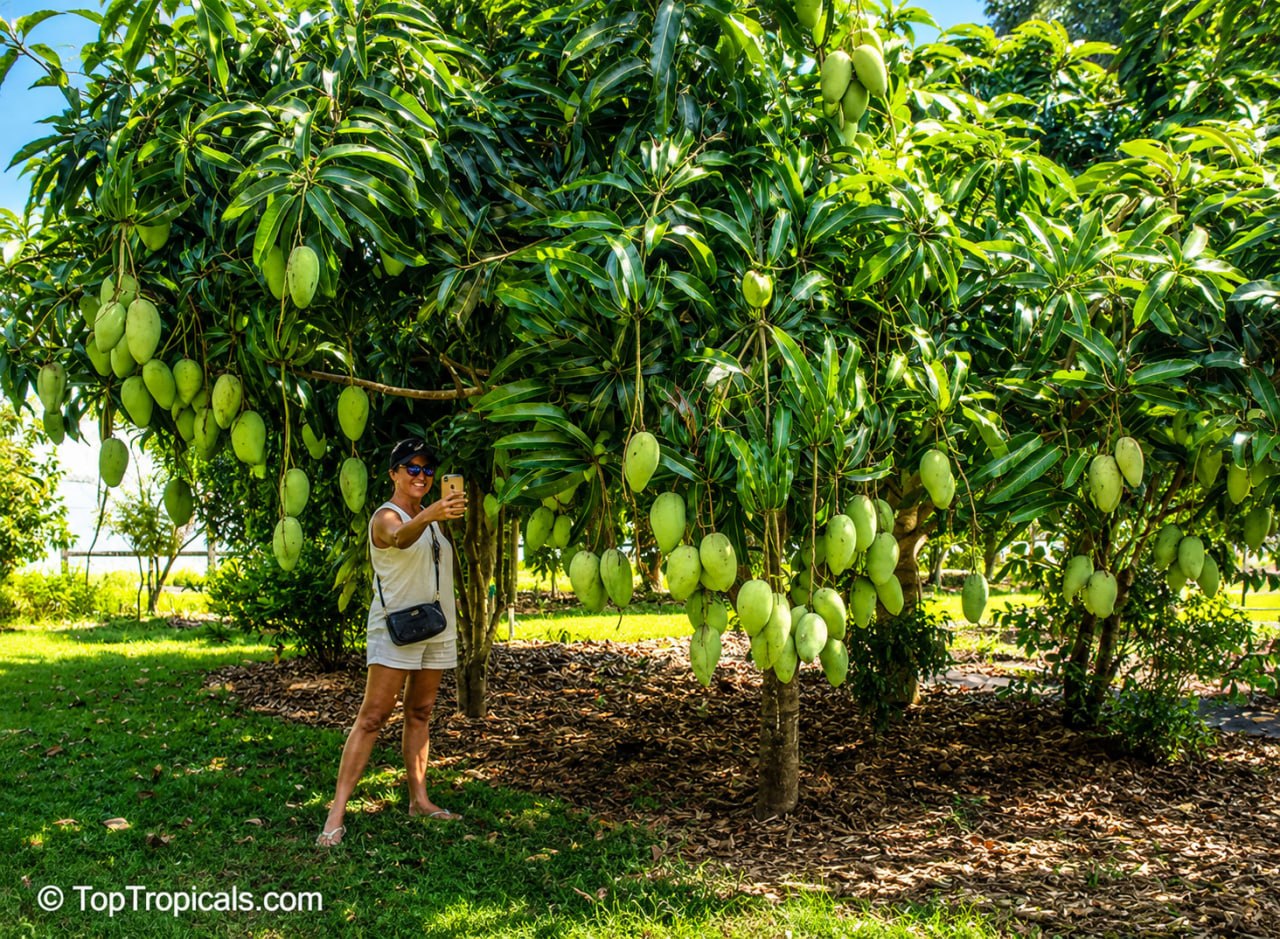
In a home landscape, plan for about a 12-15 ft canopy. With regular pruning, you can comfortably maintain the tree at around 10-15 ft tall and wide.
If you never prune it? Well, it's a mango. It has bigger ambitions.
The good news is that mangoes respond very well to pruning. Annual pruning and tipping after harvest can keep the tree compact, encourage branching, and make fruit much easier to reach. Condo Mango can be easily kept in containers with minimal pruning.
👉 Our planting rule: Don't plan for the size of the tree you bring home. Plan for the tree it wants to become.
Give Orange Sherbet plenty of sun, room for a 12-15 ft canopy, and keep the pruning shears handy.
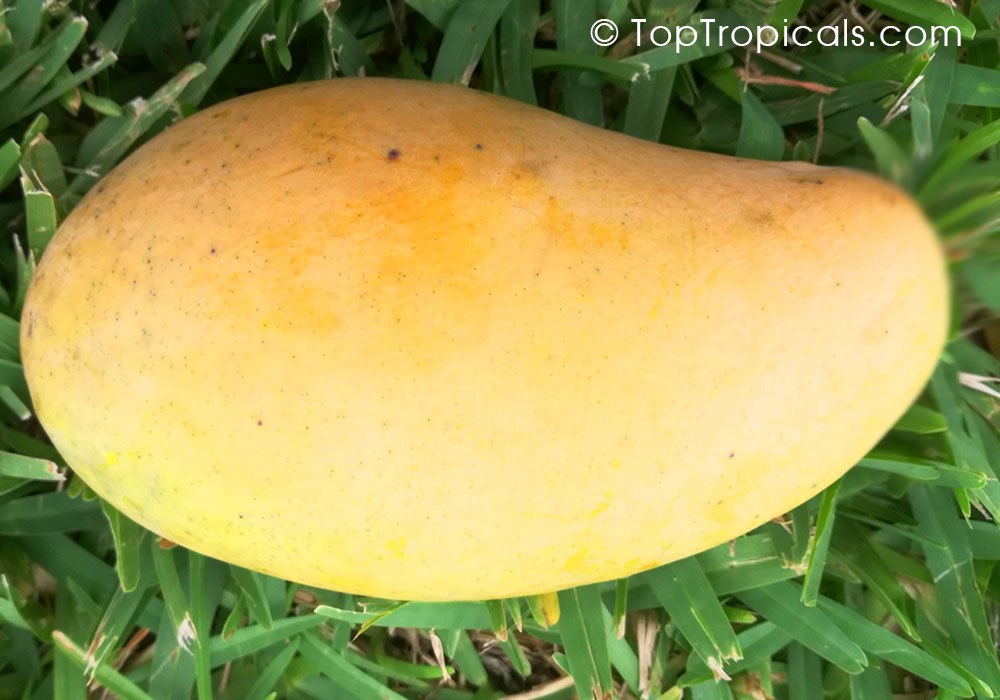
💛 Orange Sherbet Mango - sweet, rich, citrusy flavor and absolutely worth making room for! More...
🛒 Shop Mango varieties
📚 Learn more:
Mango Tree - Mangifera indica - in Plant Encyclopedia
#Mango_Rainbow - varieties you should try
How big does the Condo Mango grow?
Forget the Tropics: These 5 "Condo Mango" Varieties Thrive in Your Living Room
Mango varieties and Condo Mango
Yes, you can grow a mango tree on your patio - here is how to do it right
Mango Tree for Zone 5: top 15 Condo Mango for growing in cold areas
How long does it take for a mango tree to bear fruit?
What are the Condo Mangos - a practical guide
Top 10 Dwarf "Condo" Mango, great for container culture
Top 5 recommended vigorous Mango tree varieties, reliable producers
Top 5 Favorite Mango we just love
10 steps how to grow a mango tree
#Food_Forest #How_to #Discover #Mango
🟢 Join 👉 TopTropicals
That little mango tree in a 3-gallon pot looks innocent now. But where should you plant it, and how much room will it really need? Before you pick a permanent spot, think about the tree it will become, not the tree you're holding today.
❓Q: How big will my Orange Sherbet mango tree get? How much room should I give it?
✅ A: Orange Sherbet is a moderate-growing mango, but it is not a true dwarf.
In a home landscape, plan for about a 12-15 ft canopy. With regular pruning, you can comfortably maintain the tree at around 10-15 ft tall and wide.
If you never prune it? Well, it's a mango. It has bigger ambitions.
The good news is that mangoes respond very well to pruning. Annual pruning and tipping after harvest can keep the tree compact, encourage branching, and make fruit much easier to reach. Condo Mango can be easily kept in containers with minimal pruning.
👉 Our planting rule: Don't plan for the size of the tree you bring home. Plan for the tree it wants to become.
Give Orange Sherbet plenty of sun, room for a 12-15 ft canopy, and keep the pruning shears handy.
💛 Orange Sherbet Mango - sweet, rich, citrusy flavor and absolutely worth making room for! More...
🛒 Shop Mango varieties
📚 Learn more:
Mango Tree - Mangifera indica - in Plant Encyclopedia
#Mango_Rainbow - varieties you should try
How big does the Condo Mango grow?
Forget the Tropics: These 5 "Condo Mango" Varieties Thrive in Your Living Room
Mango varieties and Condo Mango
Yes, you can grow a mango tree on your patio - here is how to do it right
Mango Tree for Zone 5: top 15 Condo Mango for growing in cold areas
How long does it take for a mango tree to bear fruit?
What are the Condo Mangos - a practical guide
Top 10 Dwarf "Condo" Mango, great for container culture
Top 5 recommended vigorous Mango tree varieties, reliable producers
Top 5 Favorite Mango we just love
10 steps how to grow a mango tree
#Food_Forest #How_to #Discover #Mango