Garden Blog - Top Tropicals
Date: 27 Jul 2026
Rare Poodle Hibiscus - Two Flowers in One!
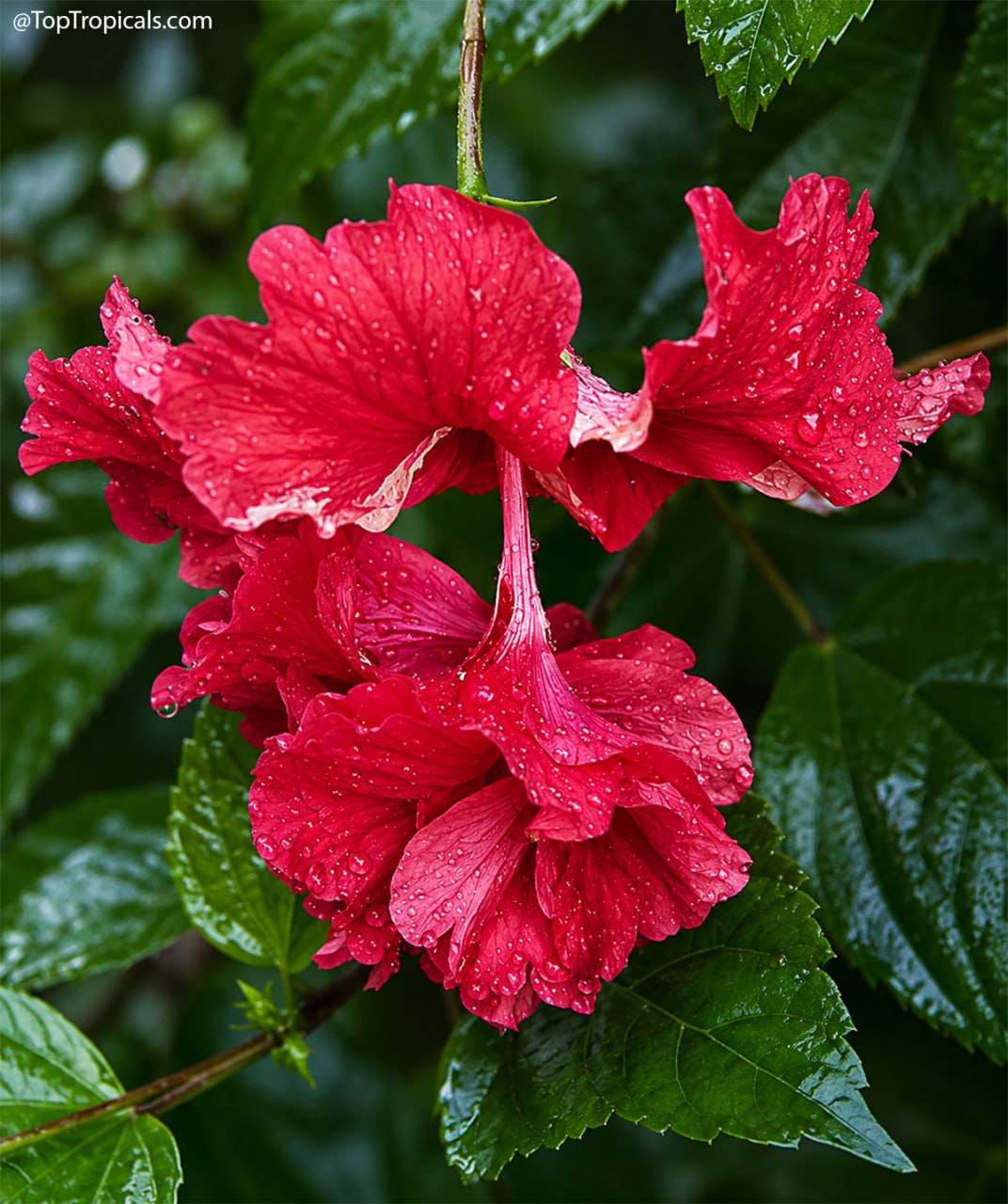
🐩 Rare "Poodle Hibiscus" - Two Flowers in One!
This Cuban mystery flower - El Capitolio - bends every rule of hibiscus. Most hibiscus are famous for their classic, flat, dinner-plate blooms. El Capitolio is so unusual that almost everyone who sees it stops in their tracks to get a closer look.
Instead of facing upright toward the sun, its rich crimson blooms hang downward like delicate botanical chandeliers. Look closer, and you'll notice something even stranger: a second, ruffled tuft of petals dangling straight out from the center column, giving the uncanny illusion of a smaller flower growing right out of the first one.
🌺 The Mystery Behind the "Poodle Flower"
This rare beauty is believed to have originated in Cuba, though its full parentage remains a bit of a tropical mystery.
Botanists point to the exotic Fringed Hibiscus (Hibiscus schizopetalus) as its likely ancestor, which explains those arching, pendant stems and deeply split petal geometry. In fact, because the pom-pom centers look so much like a carefully clipped pom-pom tail, vintage plant collectors nicknamed it the "Poodle Flower."
Unlike modern hybrids bred purely for huge size, 'El Capitolio' blooms hang gracefully at 3 to 4 inches across, swaying in the breeze and catching light from every angle.
🌺 A High-Impact Shrub That Blooms Nonstop
Bloody Mary isn't just a novelty plant - it's a powerhouse in the garden.
Growth Habit: It grows as a vigorous, fast-moving evergreen shrub with arching branches, reaching 5 to 8 feet tall at full maturity.
Landscape Impact: It makes a jaw-dropping focal point, a lush flowering privacy screen, or a spectacular specimen plant for patio pots.
Blooms: In warm climates, it flower-produces almost 365 days a year, putting on its heaviest display through the hottest months. The velvet-red petals look especially incredible right after a warm rain, studded with sparkling water droplets.
🌺 Exotic Look, Low-Maintenance Reality
Despite its delicate, collector-grade appearance, 'El Capitolio' is remarkably tough once established.
Light: Thrives in full sun to bright, filtered afternoon shade.
Soil & Water: Loves well-drained soil rich in organic matter and regular moisture, though it tolerates coastal humidity and heavy summer downpours like a champ.
Hardiness: Outdoors year-round in USDA Zones 9-11. For cooler zones, it prunes down effortlessly to manage as a potted conservatory or poolside plant brought indoors for winter.
Most hibiscus impress with their colors. El Capitolio Bloody Mary impresses with architecture. It’s the ultimate conversation piece for anyone looking to step beyond average garden center plants.
🌺 Poodle Hibiscus Fun Facts
🏺 Historic Cuban heirloom. El Capitolio is an old Cuban cultivar that's been grown for over a century.
🏛 Named after Havana. It is believed to be named for El Capitolio, Havana's famous capitol building.
A flower within a flower. Its unique look comes from petaloidy - some stamens transform into extra petals, creating the ruffled center.
Naturally pendulous. Unlike most hibiscus, its blooms hang gracefully, a trait inherited from Hibiscus schizopetalus.
🌧 Even prettier after rain. The downward-facing flowers shed water easily, leaving sparkling droplets on the ruffled petals.
🦋 Pollinator favorite. The blooms attract butterflies and, where present, hummingbirds.
🐩 Shop the "Poodle" Hibiscus El Capitolio
🛒 More Hibiscus species and varieties
📚 Learn more:
· Hibiscus El Capitolio Bloody Mary in Plant Encyclopedia
· Hibiscus x Fairy Dancer: a flower unlike any other
· Hibiscus El Capitolio Bloody Mary
· Tequila Sunrise Hibiscus breaks the rules
· Skeleton Hibiscus with "crazy petals" - flower will blow your mind
· This Hibiscus is called President for a reason
· Many faces of hibiscus
· Much more than fancy flowers: discover the many faces of hibiscus
· How to get rid of pests on Hibiscus
· How to make your Hibiscus plants thrive and bloom
#Hedges_with_benefits #Discover #Fun_facts
🟢 Join 👉 TopTropicals
Date: 26 Jul 2026
What happens if your cat snores? Sound up
💤 Cat Snoring Facts You Never Asked For
Cats spend about 12-16 hours sleeping every day. Kittens and seniors often sleep even longer.
Not every cat snores. Flat-faced breeds are more likely to, but any deeply relaxed cat can produce impressive sound effects.
Scientists still haven't determined whether cats snore louder when they know you're trying to watch TV.
💤 Who sleeps the most?
🐨 Koalas: up to 22 hours a day.
Bats: around 20 hours.
Hedgehogs: 18-20 hours.
🐈 Cats: 12-16 hours - and somehow they're still tired.
Your cat isn't lazy. It's simply competing with the world's professional sleepers.
💤 New Study: Cat Snoring Improves Household Atmosphere
Researchers found that a snoring cat increases:
Cozy feelings by 87%.
Probability of an afternoon nap by 96%.
Likelihood that humans whisper, "Aww... don't wake him," by nearly 100%.
The control group contained no cats and reported significantly lower happiness.
💡Hibernation fact
Cats don't hibernate - but they certainly audition for the role.
Unlike bears, cats don't truly hibernate. Instead, they master the art of strategic napping, interrupted only by snack breaks, zoomies, and the occasional snore.
🐈📸 Cats Bob and Lilimon catching their their naps at TopTropicals PeopleCats.Garden.
📚 Learn more:
· Why listening to a cat snoring is good for your health
· Niki - the grumpy snoring cat
#PeopleCats #Fun_facts #Discover
🟢 Join 👉 TopTropicals
Date: 26 Jul 2026
Why Ancient Romans Crowned Emperors With the Leaf in Your Spice Rack
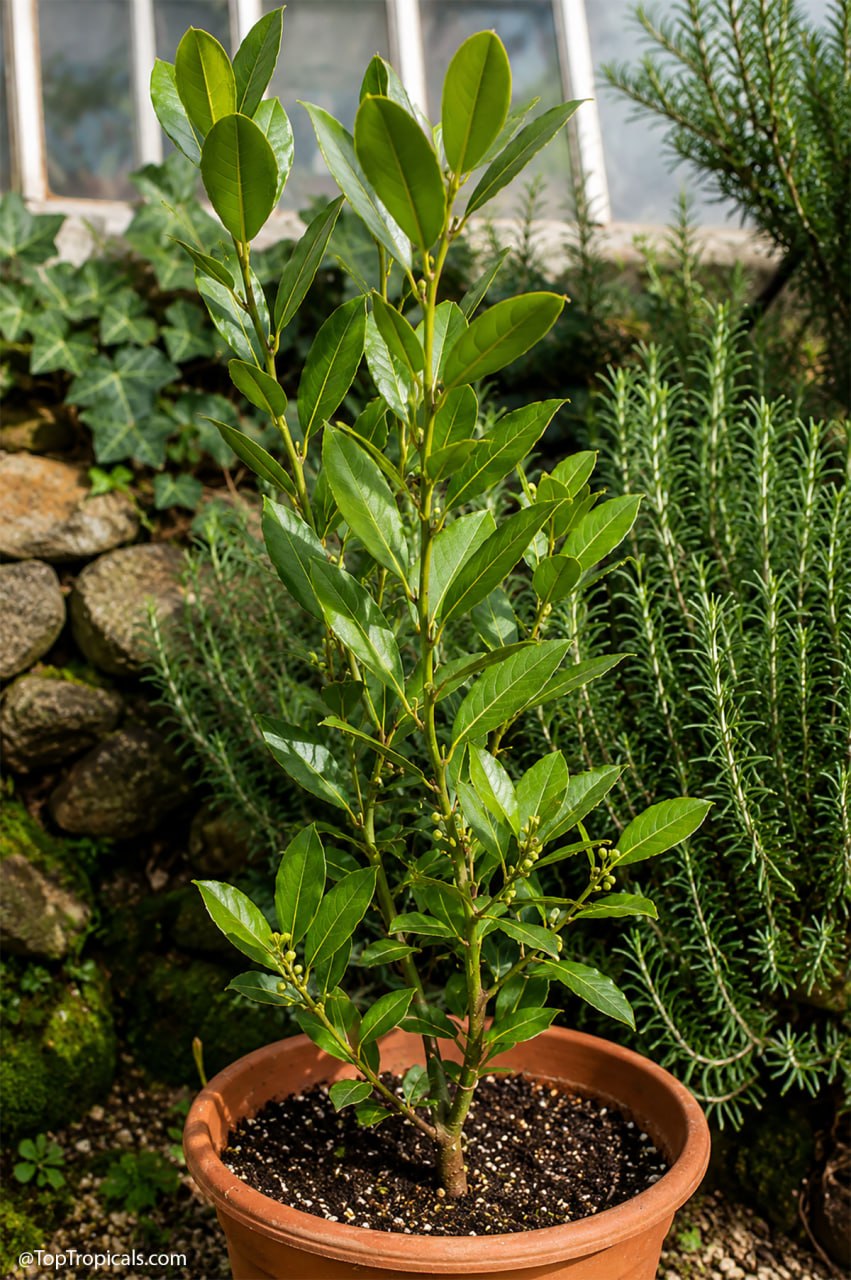
🏺 Why Ancient Romans Crowned Emperors With the Leaf in Your Spice Rack
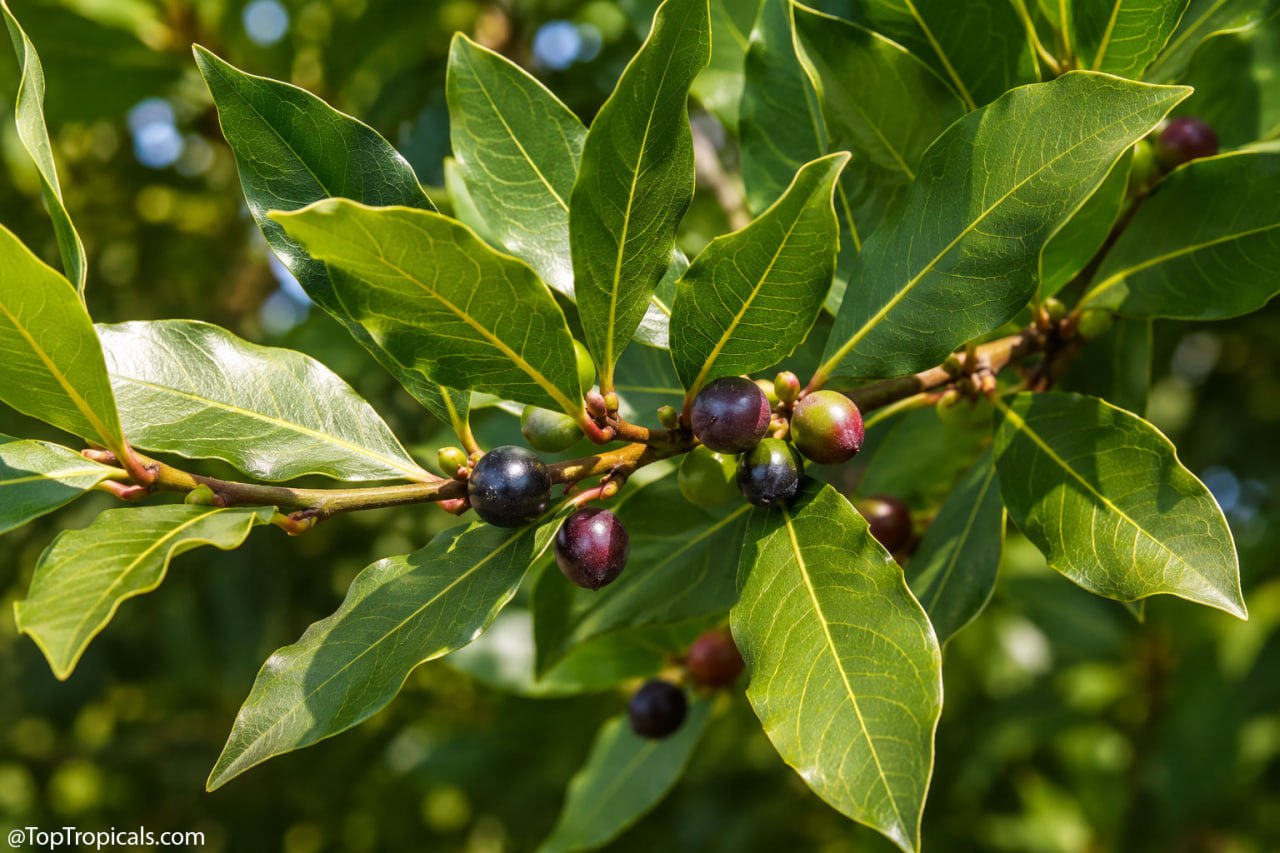
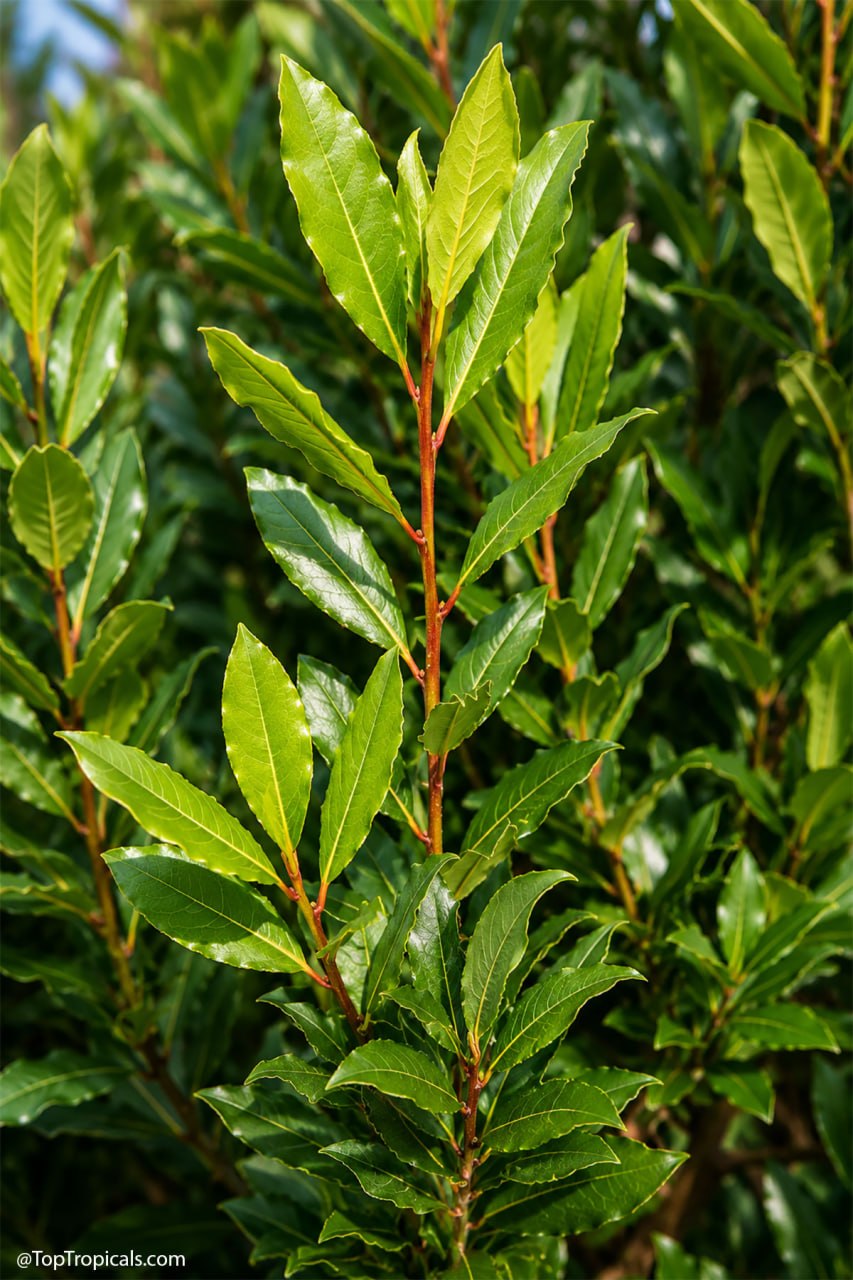
Bay Laurel (Laurus nobilis) isn't just a kitchen staple - it is a stunning, aromatic plant steeped in 2,500 years of mythology, royal history, and culinary tradition. Most people know bay leaves from a dusty spice jar. Few realize they come from a gorgeous evergreen tree you can harvest fresh for decades.
If you’ve only ever cooked with dried store-bought bay leaves, you're missing out on half the magic.
🌿 Bay Leaf (Laurus nobilis)
🏛 The Sacred Leaf of Emperors & Poets
Long before it found its way into slow-simmered stews, Bay Laurel was the ultimate symbol of honor, wisdom, and victory.
Ancient Greeks and Romans crowned victorious athletes, military heroes, emperors, and poets with woven laurel wreaths. The connection runs so deep that our modern word laureate - as in Nobel Laureate or Poet Laureate - comes directly from Laurus nobilis.
According to Greek myth, the nymph Daphne transformed into a laurel tree to escape the god Apollo. Devastated, Apollo vowed to wear its glossy leaves forever, cementing the tree as a timeless emblem of excellence and artistic mastery.
🏛 Why Fresh Bay Leaves Ruin Store-Bought Forever
The difference between a freshly picked bay leaf and a dried store-bought one is night and day:
· Rich Essential Oils: Freshly bruised leaves release intense herbal, eucalyptus-like aromas and rich essential oils that dry leaves lose after sitting on a grocery shelf for months.
· Culinary Punch: A single fresh leaf adds deep complexity to soups, rich tomato sauces, beans, braised meats, and seafood broth.
· Pro Chef Tip: Always gently crack or crush the leaf before tossing it into the pot to release its volatile oils - and remember to fish the whole leaf out before serving!
🏛 An Elegant Ornamental That Outlives Generations
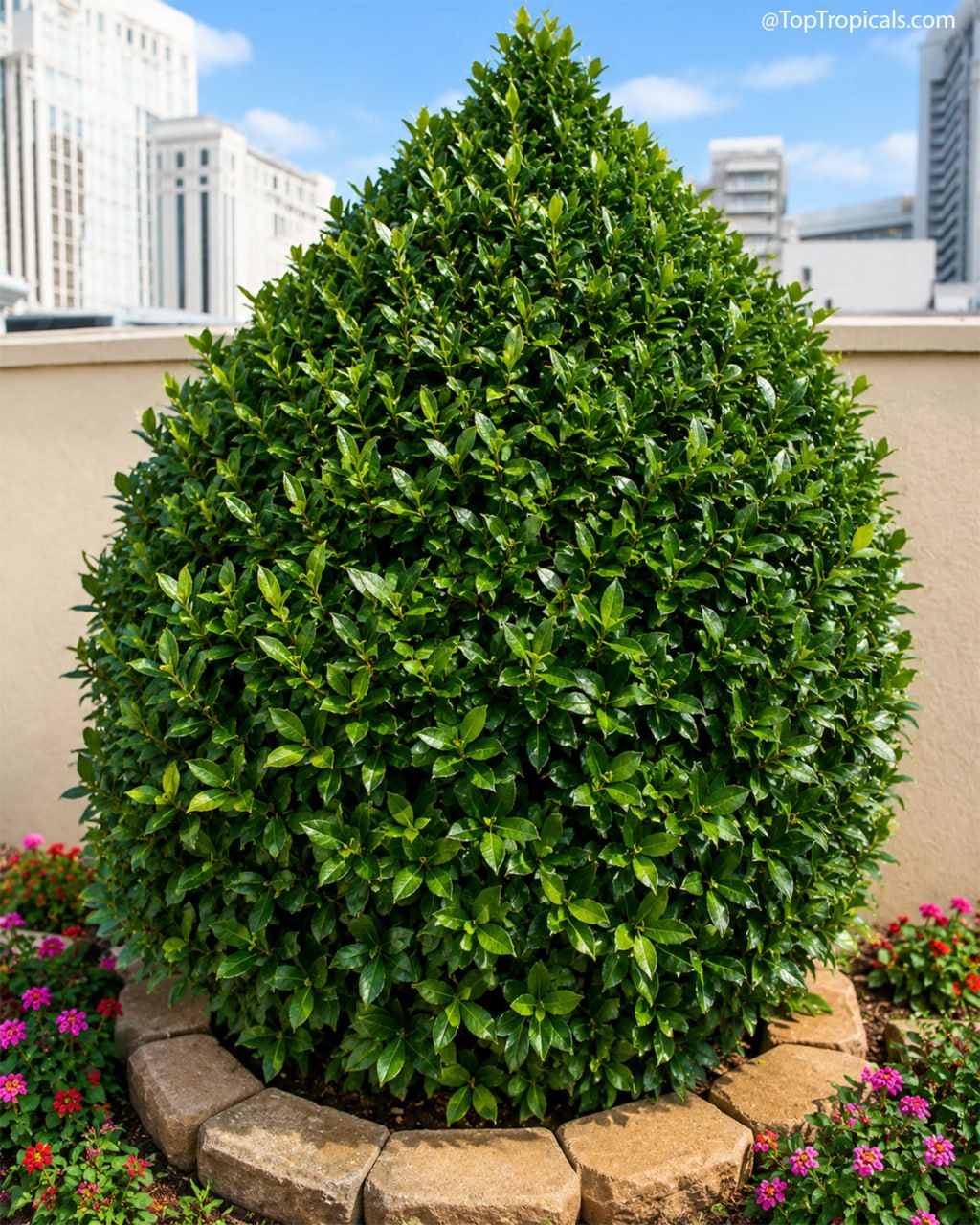
Beyond the kitchen, Bay Laurel is a stunning landscape plant. Its leathery, dark-green foliage can be clipped into formal topiaries, grown as a lush privacy hedge in warm regions, or kept as a sleek, architectural centerpiece in a patio container.
It handles heavy pruning with ease, naturally repels many common garden pests with its aromatic leaves, and is extraordinarily long-lived - with some trees thriving for well over 100 years.
🏛 Shockingly Easy to Grow
Whether you live in a warm tropical zone or a cold winter climate, Bay Laurel is remarkably adaptable:
In Warm Climates (Zones 8–11): Plant it directly in the ground where it can mature into a small, sturdy tree or dense privacy shrub.
In Cold Climates: Grow it in a decorative pot on the patio through spring and summer, then move it indoors near a sunny window when winter temperatures dip.
🏛 Quick Care & Growing Stats
Botanical Name: Laurus nobilis
Common Names: Sweet Bay, Bay Laurel, Poet's Laurel
Mature Size: 10–15 ft in ground (easily kept 3–6 ft in pots)
Light Needs: Full sun to partial afternoon shade
Watering: Moderate; allow topsoil to dry slightly between waterings
Cold Hardiness: USDA Zones 8-11
Best Uses: Culinary herb garden, patio containers, topiary, hedges
Stop buying pale, lifeless dried leaves from the grocery store.
Plant a Bay Laurel today, and enjoy a lifetime of fresh, gourmet harvests right outside your back door.
🛒 Never buy store-bought Bay leaves again - grow your own tree while in stock
📚 Learn more:


· Laurus nobilis in Plant Encyclopedia
· Tropical edibles that reduce your blood pressure
· Tropical plants that survived Florida's historic freeze without protection
#Discover #Remedies #Food_Forest
🟢 Join 👉 TopTropicals
Date: 25 Jul 2026
The magic box everyone has to try out!




🎁 The magic box everyone has to try out!
"Nothing draws a crowd like a crowd." - P. T. Barnum
🐈📸 TopTropicals rescued cats Matilda, James Coconuts, Lilimon, and Riki each take a turn testing the newest empty box at PeopleCats.Garden.
#PeopleCats #Quotes
🟢 Join 👉 TopTropicals
Date: 24 Jul 2026
🌿From Coffee Tree to Morning Cup 🍵
By Tatiana Anderson, Plant Expert, Top Tropicals

Smokey: With proper care, your morning cup can begin on your own coffee tree.
Sunshine: Excellent. I am removing coffee from my Sunshine Special subscription. Donuts only.
Smokey: Please wait until the tree actually produces coffee.

Most people meet coffee as a bag of roasted beans. The plant behind it, Coffea arabica, is an evergreen shrub with dark shiny leaves, white flowers, and red fruit, and it grows well in a container.
Coffee is a Fruit Tree
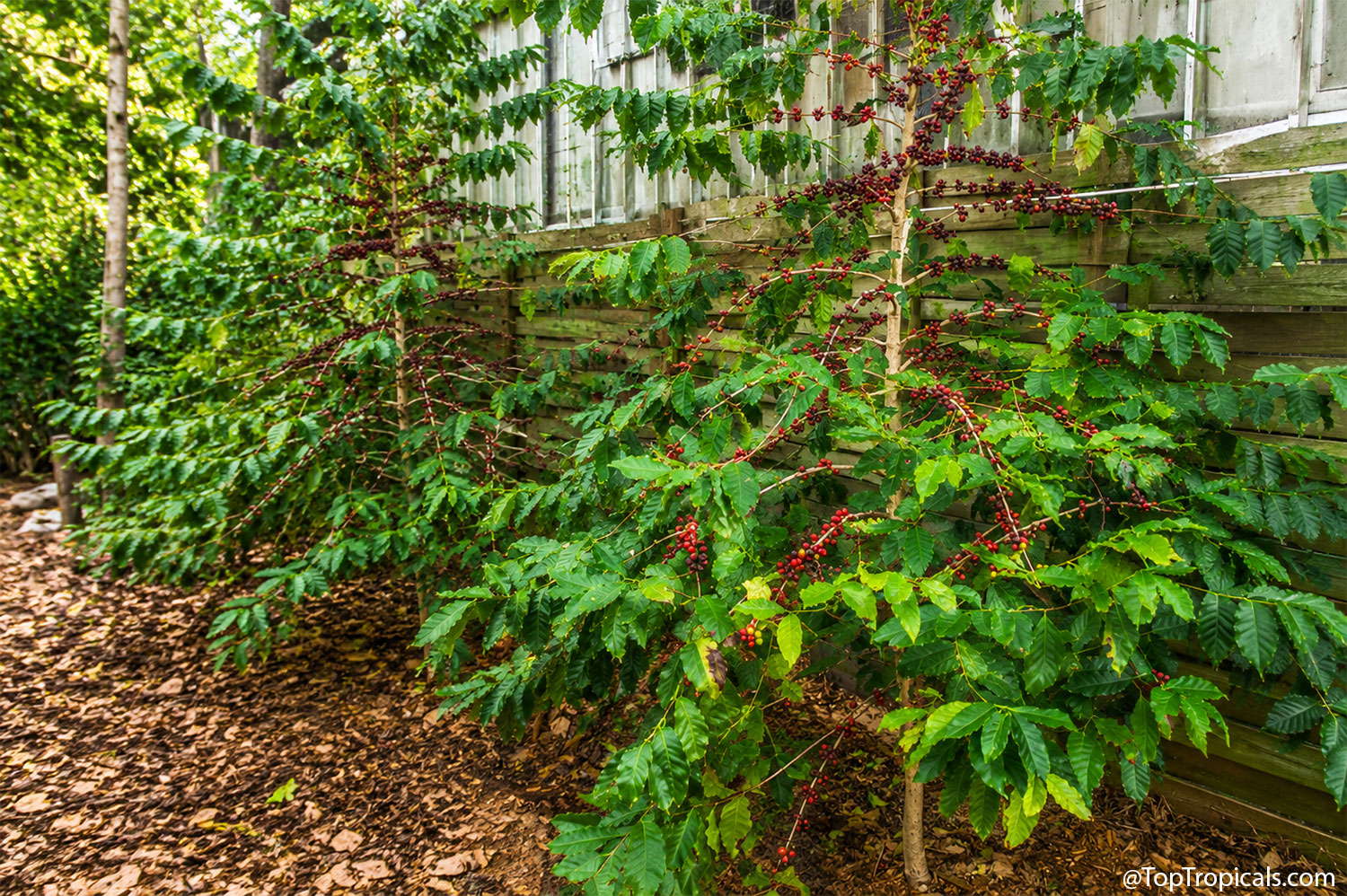
What we call a coffee bean is a seed. Each seed sits inside a small fruit, commonly called a coffee cherry, with a layer of flesh around it. The fruit starts green and passes through yellow or orange-red before reaching full ripeness in deep red, depending on variety and stage. The flesh around the seeds is edible, though the seeds are the part normally processed into coffee.
Why Coffee Does Well In a Pot
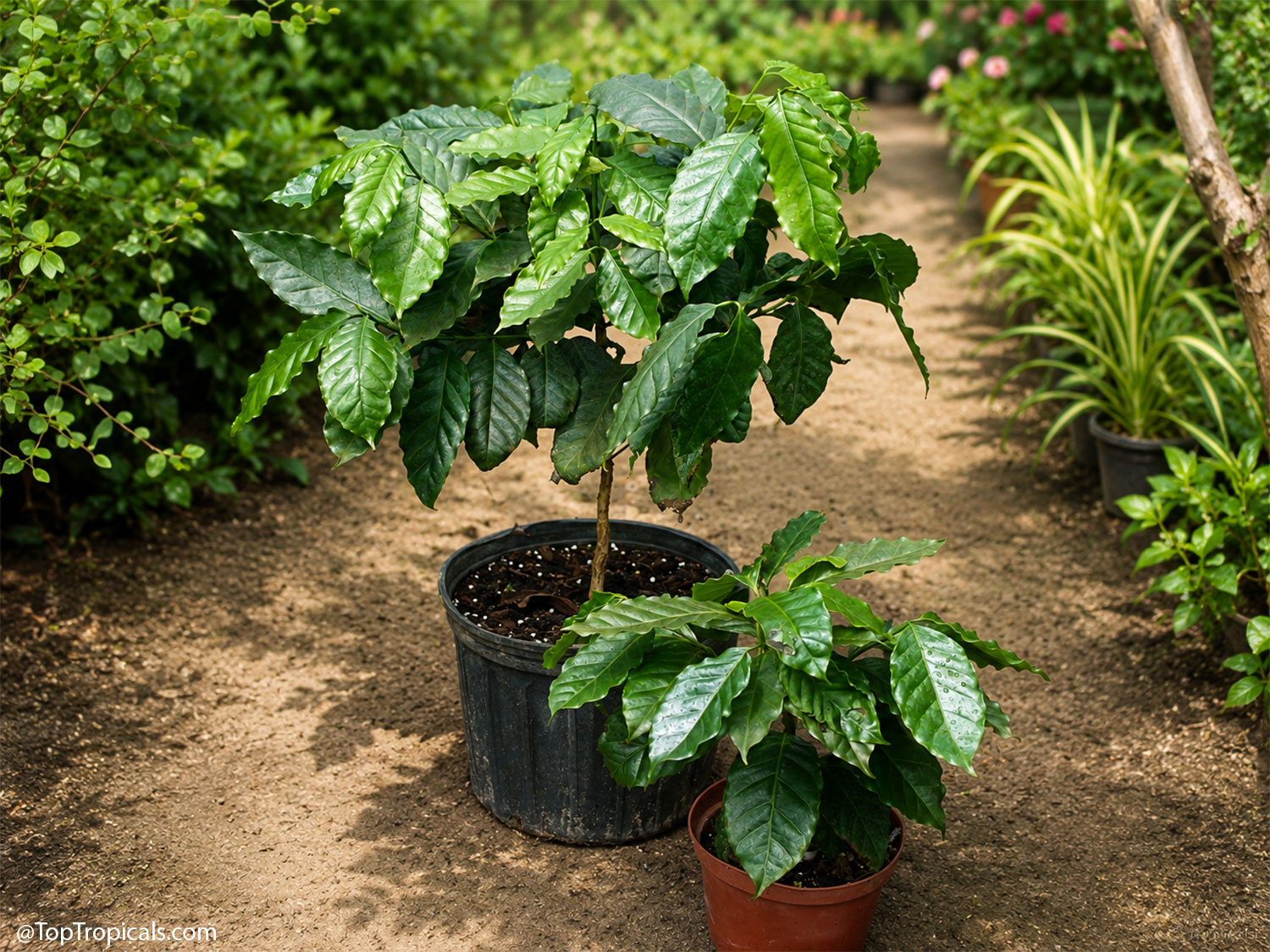
Coffee prefers bright filtered light or partial shade. Harsh, exposed afternoon sun scorches the leaves and bleaches their color. That preference is what makes it practical indoors. A bright window, a shaded patio, a greenhouse bench, or a warm-climate spot under high canopy all work. It stays a manageable evergreen shrub or small tree in a container.
The Flowers
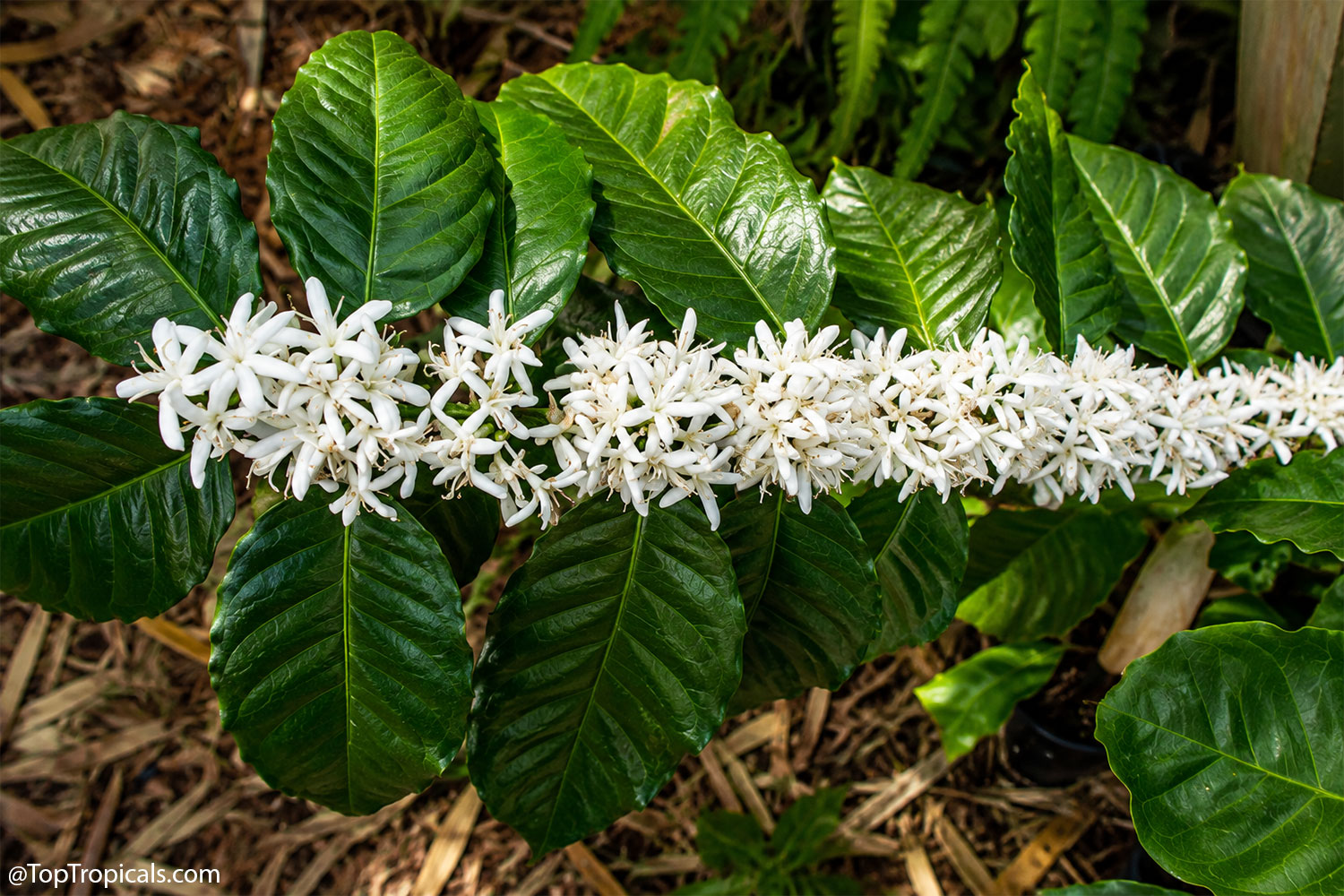
Coffee flowers are small, white, and produced in tight clusters along the branches rather than as single showy blooms. Their scent is often compared to gardenia or jasmine. Coffee and gardenia belong to the same family, Rubiaceae.
Flowering does not last long. A plant may open most of its buds within a day or two, and for that short stretch the whole branch is lined in white and the room smells like a gardenia hedge.
From Flower to Fruit
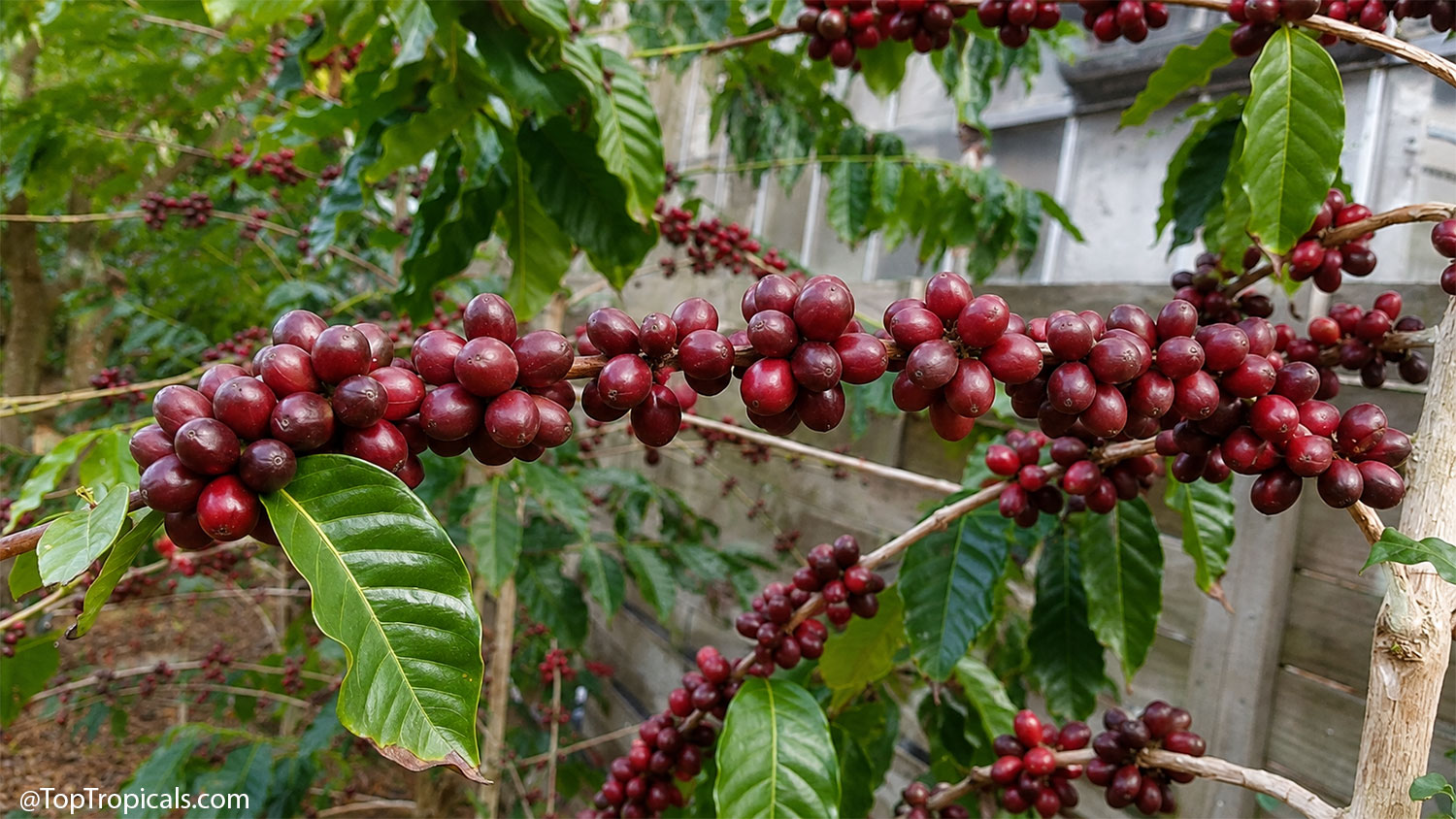
Once the flowers finish, small green cherries set along the same branches. They take months to size up and color. A mature plant often carries several stages at once, so you can find open flowers, hard green fruit, and ripe red cherries on the same branch. Flowering time depends on the plant's age, size, and growing conditions, so patience is part of growing coffee.
Practical Care
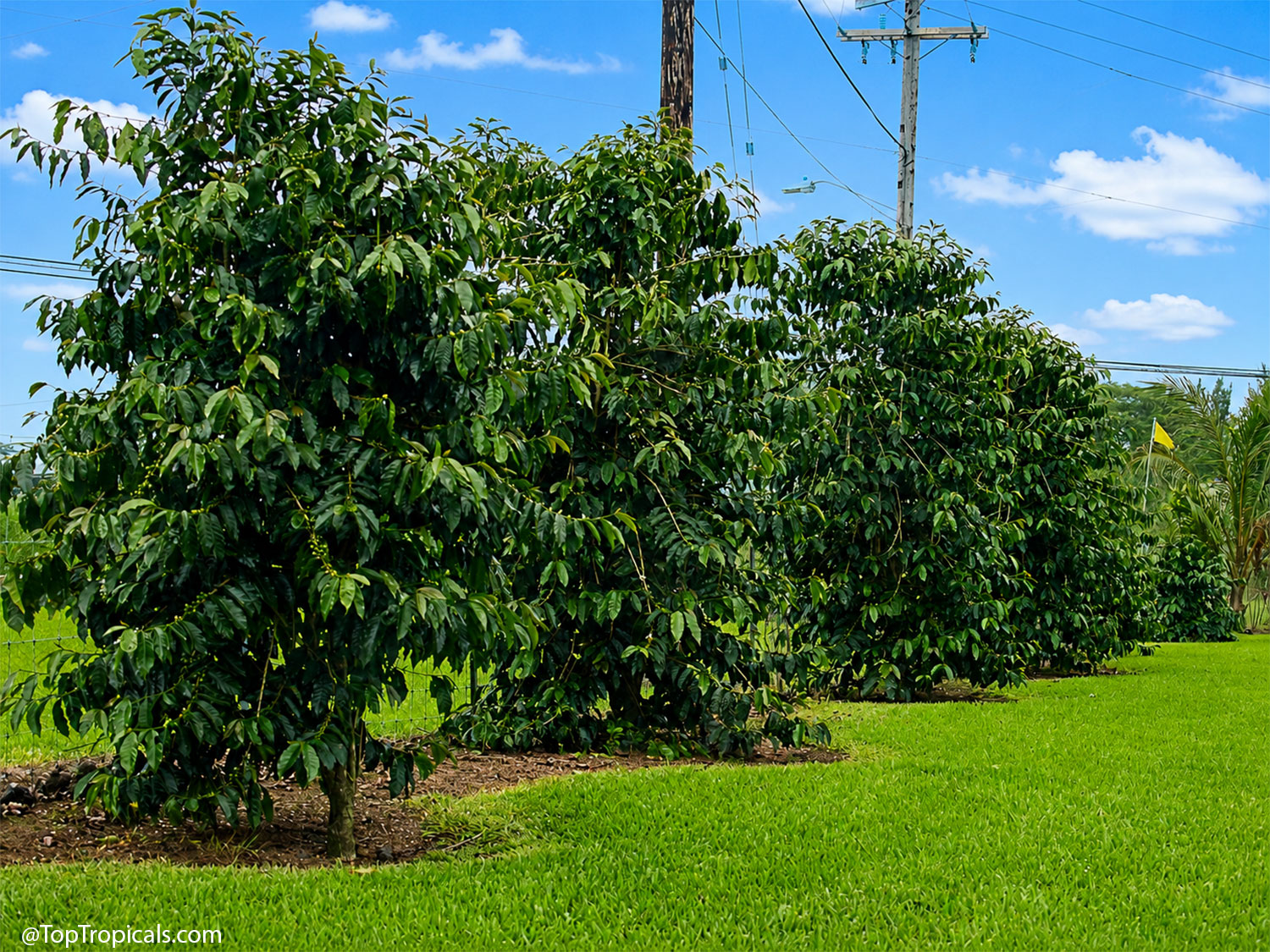
- Light: Bright filtered light or partial shade. Indoors, a plant will survive in modest light, but flowering and fruiting need more. An east or lightly shaded south window, or a supplemental grow light, is usually what it takes to get fruit.
- Water: Water regularly and consistently. Coffee is not a plant you can forget about. Let the top inch of soil dry out, then water thoroughly until excess water drains from the bottom of the pot. Never let the plant sit in soggy soil, as constantly wet roots can quickly lead to root rot. During the cooler winter months, reduce watering significantly. Coffee plants dislike the combination of cold and wet conditions and often enter a semi-dormant state in winter, when their metabolism slows and they require much less water.
- Soil and container: Well drained potting mix with some organic matter, in a pot with real drainage holes and no saucer full of standing water. We recommend Abundance - TopTropicals professional soilless potting mix with perfect drainage characteristics.
- Hardiness: USDA Zone 10-11. In colder climate grow in pot
- Temperature: Warm, and protected from cold. Coffee is not frost hardy, so in a marginal climate bring it in ahead of the first cold night when temperature drops below 40F
- Humidity: Moderate. Indoor winter air with the heat running is dry enough to brown leaf edges, and grouping plants or running a humidifier nearby helps.
-
Feeding: A balanced fertilizer during active growth in the
warm months, easing off in winter when growth slows. We put a scoop of GreenMagic controlled release fertilizer every 6 months and
liquid SunshineRobusta that is safe to apply with every watering, year around. Coffee
plants respond very well to fertilizers.
💡Read more about Sunshine Boosters and plant nutrition - Pruning and repotting: Prune lightly to keep the plant compact and encourage branching, since fruit forms on branches. Move up a pot size as roots fill the container.
From Cherry to Cup
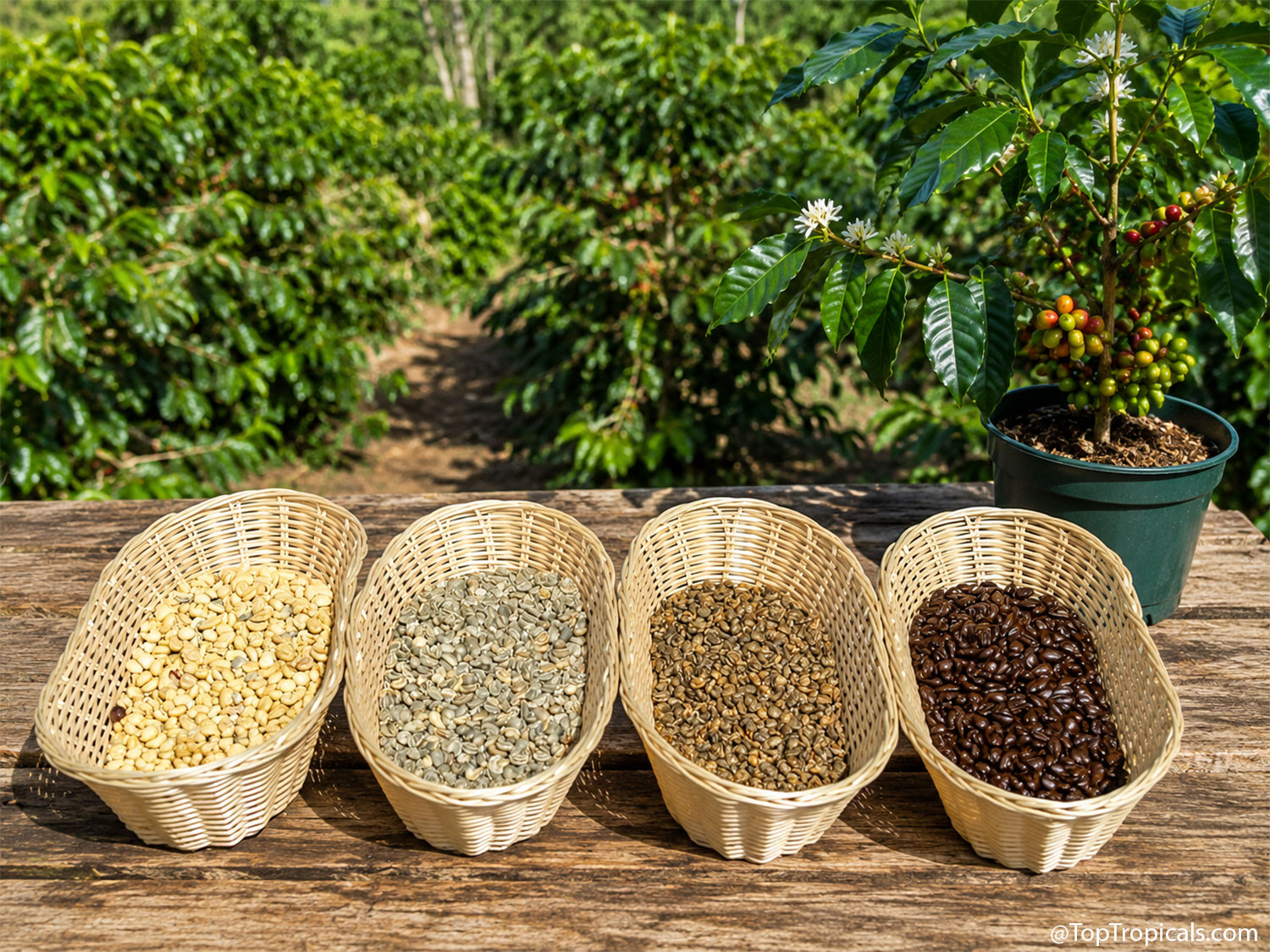
Yes, you can make coffee from your own tree. The process is not complicated, but each step takes time, and most of it is waiting.
- Pick fully ripe red cherries. Underripe fruit makes poor coffee, and ripeness on a single plant is uneven, so expect to harvest in several passes over a few weeks.
- Remove the fruit pulp. A small batch can be squeezed or rubbed off by hand. Underneath is a seed still wrapped in a slippery coating.
- Soak the seeds in water for 12 to 24 hours to loosen the slippery coating.
- Wash the seeds until they feel clean rather than slick.
- Dry them thoroughly, spread in a single layer, until they are hard all the way through.
- Remove the parchment layer, a thin papery husk around each seed. At this scale, rubbing the dry seeds between your hands and blowing away the loose husk works. Easy trick: give the dried beans a quick 1-2 second pulse in a coffee grinder - just enough to crack the parchment loose, not grind the beans. Then simply separate and discard the loosened husks.
- Roast the green beans. A heavy skillet over medium heat or a hot air popcorn popper both work. Keep the beans moving and watch the color.
- Cool them quickly and let them rest a day before grinding.
- Grind and brew as usual.
Home processing is small scale and imperfect. Batches vary, and the results are inconsistent by nature. The pleasure is in growing, harvesting, processing, and tasting coffee from your own tree. It also makes for good company. Pouring someone a cup and telling them it came off a plant in your living room tends to get more attention than anything else you could serve.
✍️ More details: From Coffee Cherry to Coffee Cup - Step by Step
How Much Coffee Will One Tree Make?
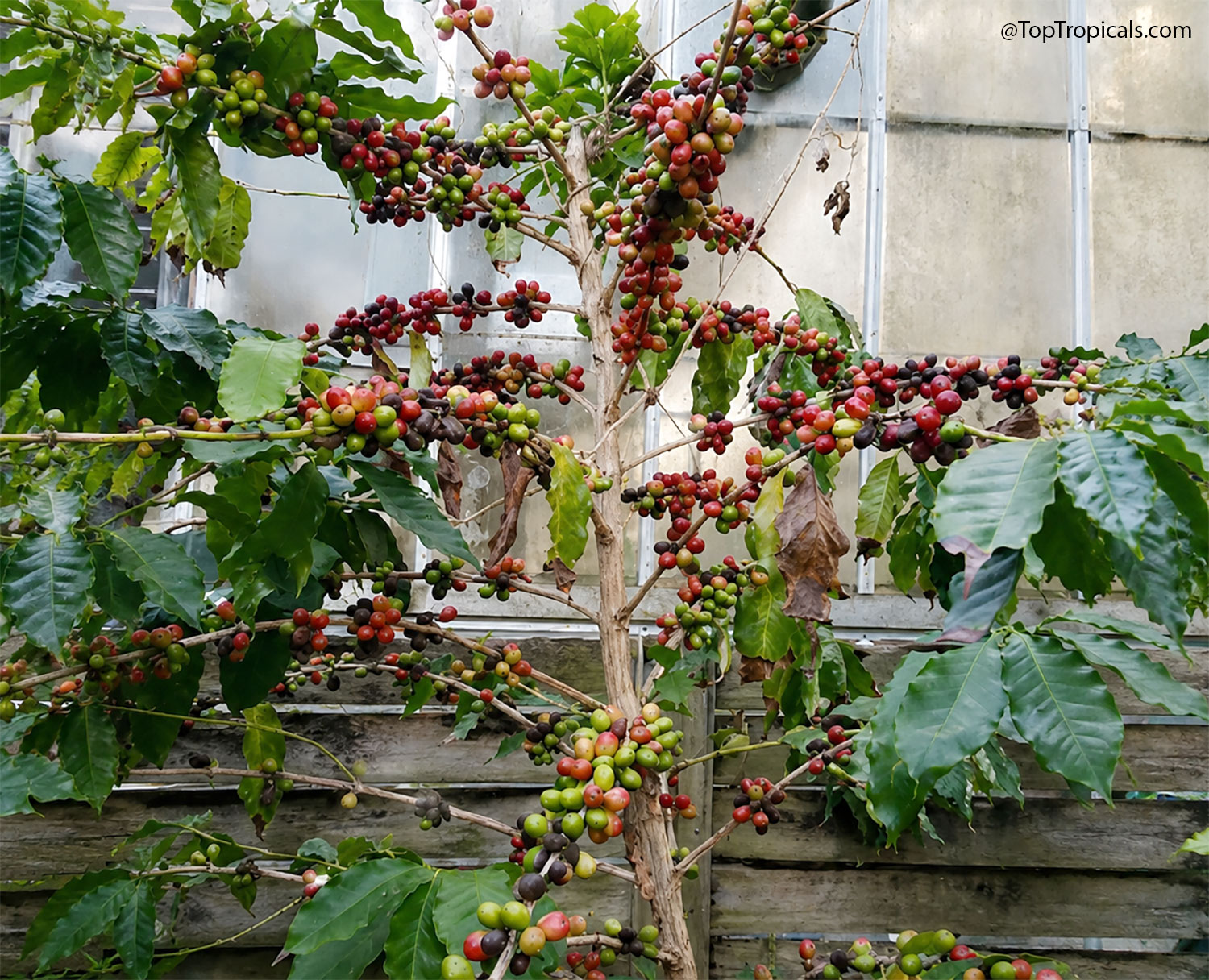
A home-grown tree usually provides a small personal harvest rather than a household supply. Yield depends on the size and age of the plant, growing conditions, how well the flowers set, and how many cherries actually ripen.
Think of a home coffee tree as an ornamental fruit plant that also produces real coffee.
As a Gift

Coffee works well as a gift for coffee drinkers and plant lovers, since the plant connects to something they already drink every morning. Shiny leaves, fragrant flowers, and colorful fruit come with it.
Grow the plant behind your morning cup.
☕️Shop Coffee plants: Grow It. Roast It. Drink It.
Smokey: The color is even and the roast looks good.
Sunshine: Excellent. I will inspect the donuts.
Smokey: You already inspected three.
📚 Learn about Coffee Tree from Top Tropicals Garden Blog
🎥 More videos about Coffee tree