Garden Blog - Top Tropicals

Date: 1 Aug 2026

Meet Simon Walkie-Talkie - the cat who made the right decision

Meet Simon Walkie-Talkie - the cat who made the right decision Meet Simon Walkie-Talkie - the cat who made the right decision Meet Simon Walkie-Talkie - the cat who made the right decision Meet Simon Walkie-Talkie - the cat who made the right decision
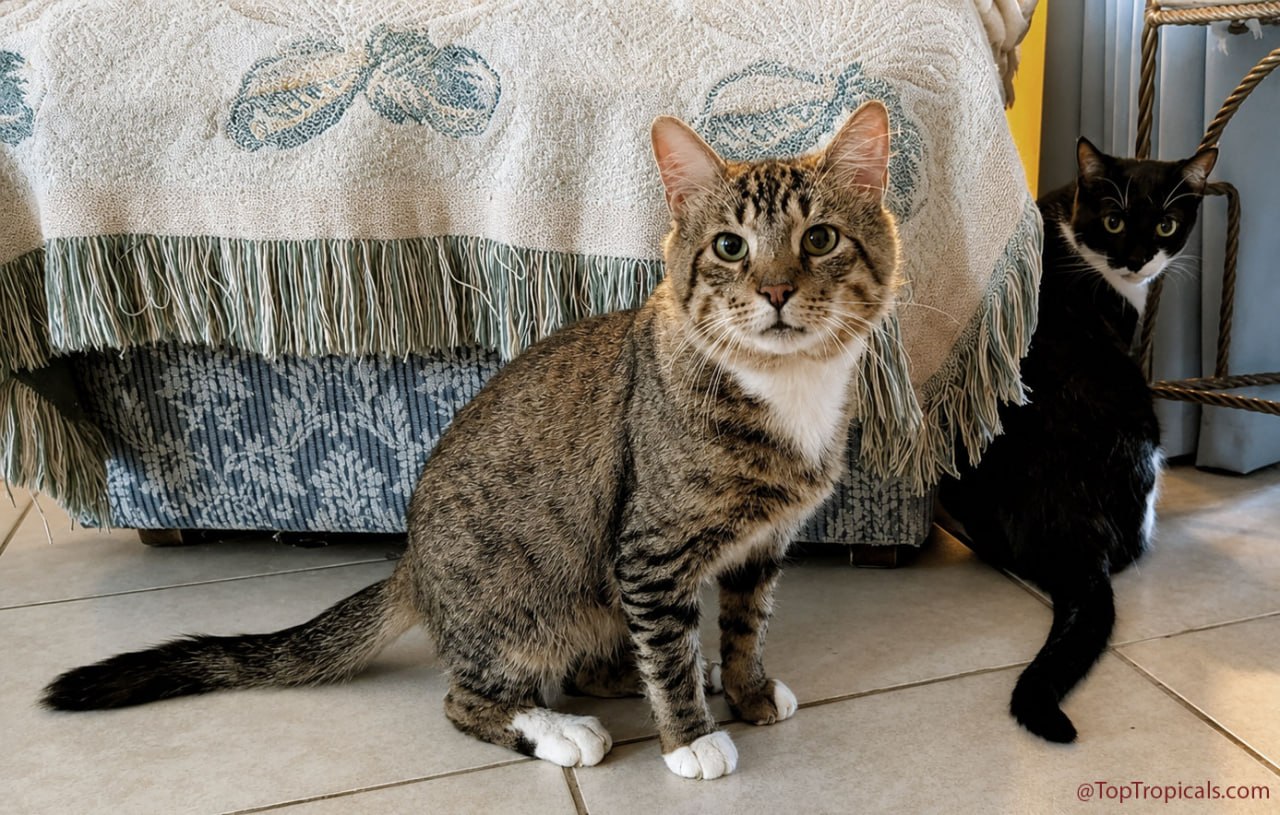

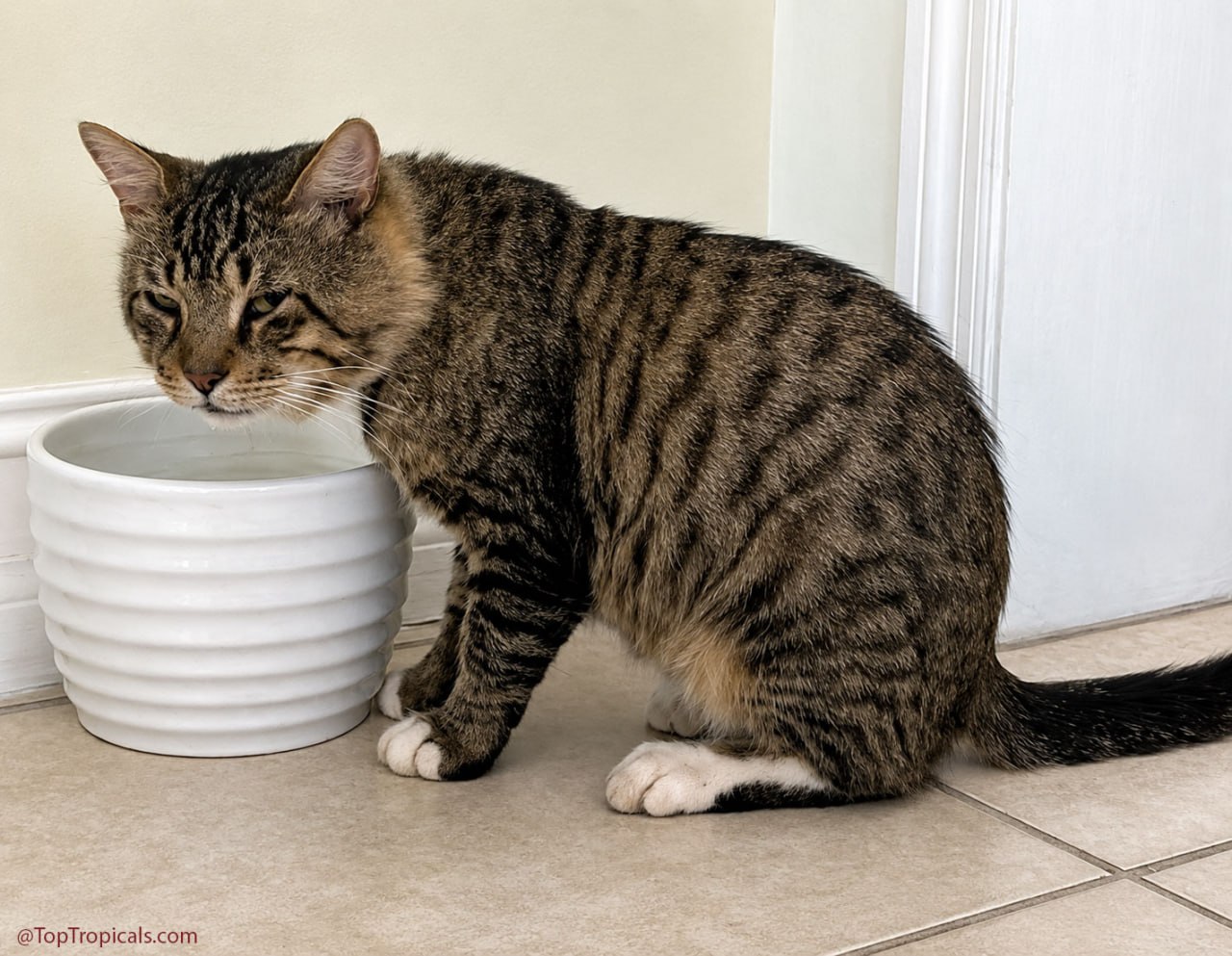
⬆️ Meet Simon "Walkie-Talkie" - the cat who made the right decision

"The hardest thing to learn in life is which bridge to cross and which to burn" - David Russell
Some cats run away from people.
Simon did the opposite.
He showed up at our front porch... and simply refused to leave. He seemed to know something wasn't right. Like he'd already made up his mind that these humans might actually help.
Turns out he was right.

Our new hire arrived looking pretty rough. He has almost no teeth, one loose canine, a sore mouth, an infected eye, scabs all over his skin, and enough battle scars to tell stories for a lifetime. He's probably much younger than he looks - street life simply aged him before his time.
So... we hired him anyway.

First order of business? A trip to the vet. Medications. Flea treatment. Lots of good food. Plenty of naps. Recovery has officially begun.

The funny part?
Simon talks. Constantly.
Not loud meows. More like a tiny walkie-talkie: "Mrr?.. "Mrr?.. "Mrr?.."
He strolls around narrating his day in the sweetest little voice.

And despite everything he's been through, Simon is one of the most affectionate cats we've ever met. He rubs against you, purrs nonstop, and has already made friends with the other PeopleCats.
We haven't heard a single bad word out of his mouth.

Welcome home, Simon.

❤️ Every rescued cat deserves the chance to become somebody's PeopleCat.
Some cats are rescued. Others simply choose their people.

🐈📸 Simon - the newest TopTropicals rescue cat at PeopleCats.Garden.

📚 Learn more:


Meet Max - the cat who won the Life lottery
What happened to James Coconuts: before and after

#PeopleCats #Quotes

🟢 Join 👉 TopTropicals
Date: 1 Aug 2026

Meet Monstera Tiny Cousin That Never Outgrows Your Wall

Meet Monstera Tiny Cousin That Never Outgrows Your Wall

🍃 Meet Monstera Tiny Cousin That Never Outgrows Your Wall


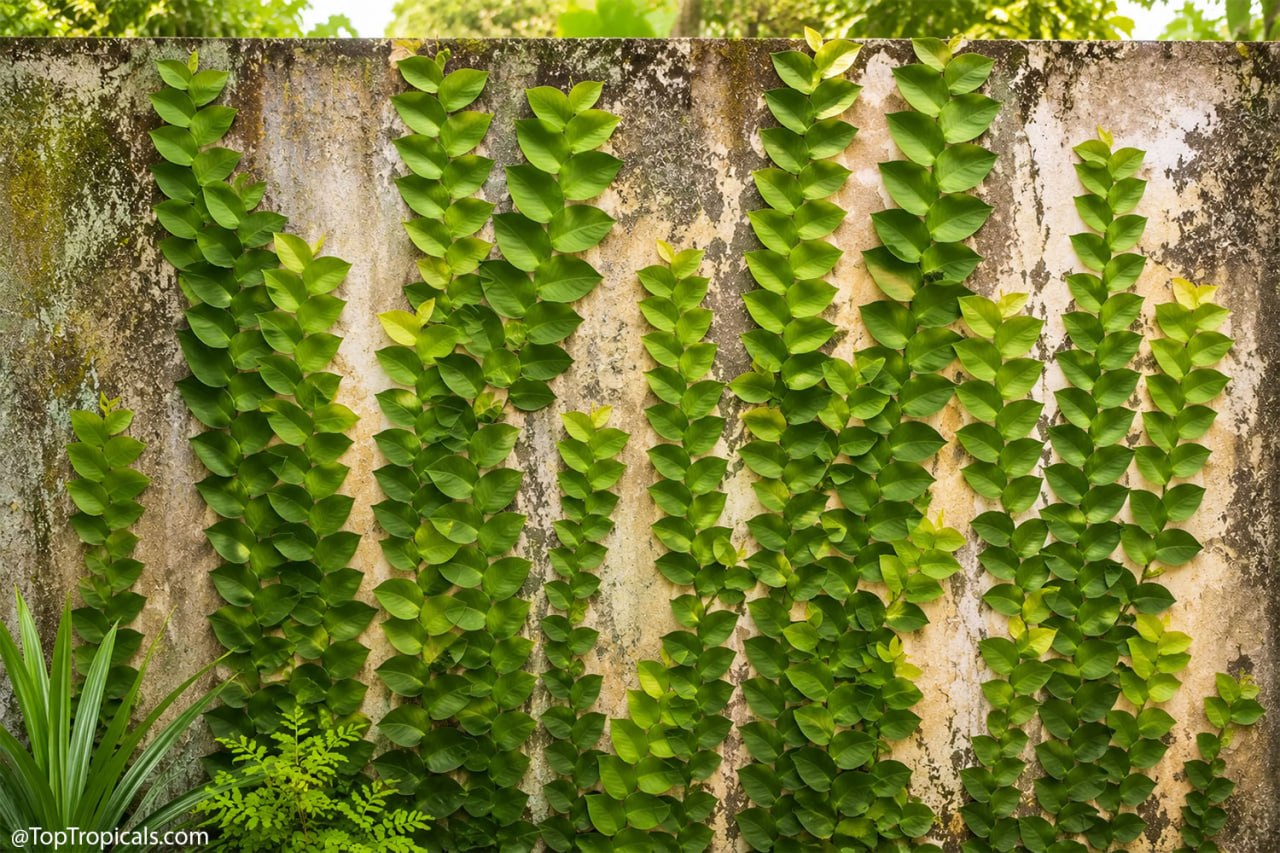
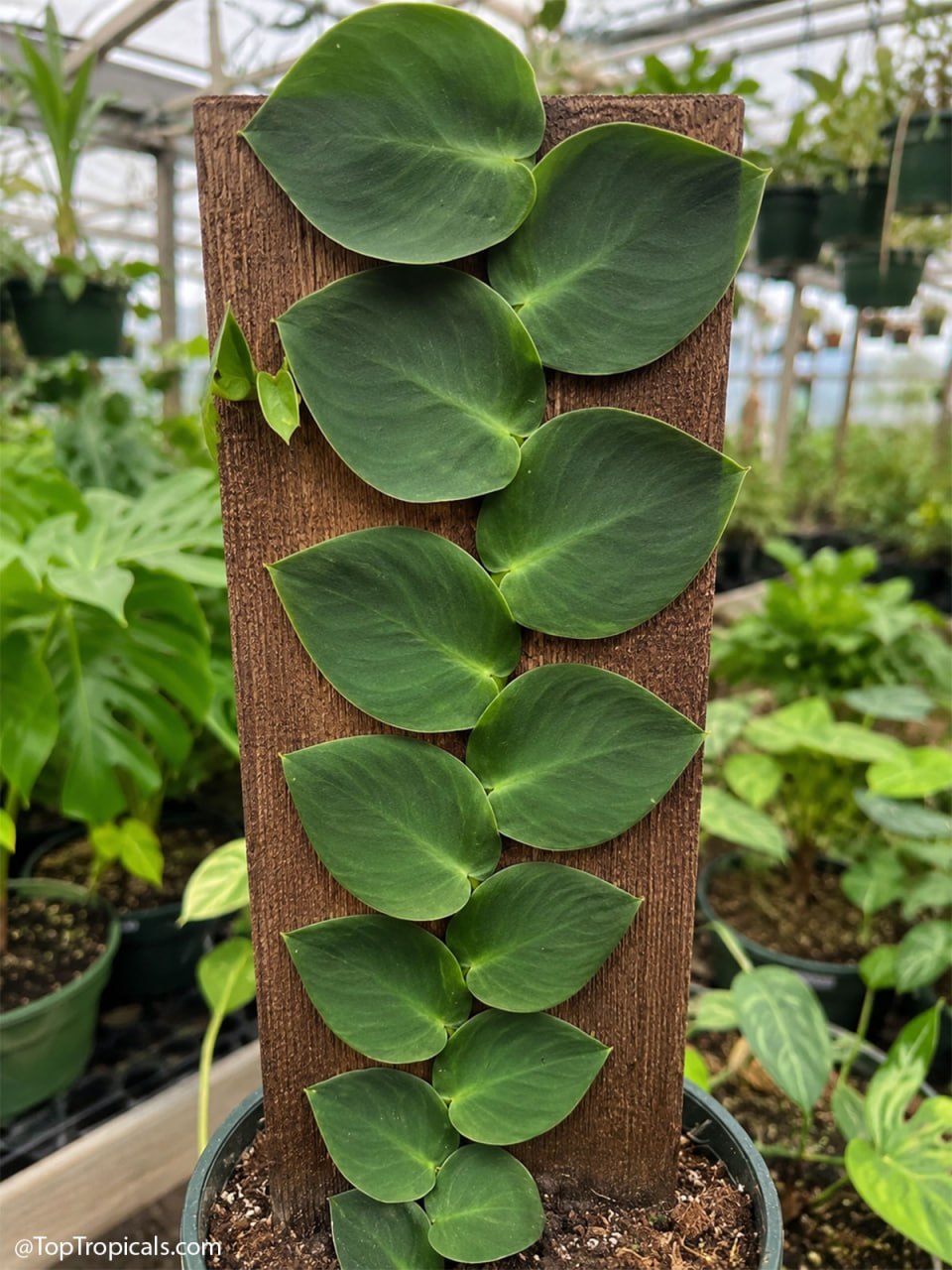
Rhaphidophora hayi belongs to the same genus as the popular Mini Monstera (Rhaphidophora tetrasperma), but instead of developing dramatic split leaves, it hugs tree trunks and wooden boards so tightly it looks painted on. At first glance, you might mistake it for a young Monstera dubia. Both grow in a fascinating habit called shingling, where overlapping leaves cling flat to their support.
Unlike Monstera dubia, Rhaphidophora hayi keeps its compact, architectural look instead of transforming into a giant fenestrated vine.

🌿 Nature's Living Wallpaper (In Miniature)


Native to the tropical rainforests of Papua New Guinea and northeastern Australia (Queensland), Rhaphidophora hayi spends its life hugging tree trunks.
Each leaf overlaps the previous one like roof shingles, creating an elegant pattern of deep green foliage that almost looks attached by glue.
Give it a cedar plank, wooden board, or moss pole indoors - and it immediately starts doing exactly what nature intended. Tiny aerial roots anchor the stem firmly to the surface, allowing the leaves to lie almost perfectly flat.
It's one of the few houseplants that actually looks better when grown vertically.

🌿 Small Leaves. Big Personality.


This is where Rhaphidophora hayi differs from Monstera dubia, even though both are commonly known as the Shingle Plant.
Instead of eventually producing enormous split leaves, it usually keeps its attractive rounded juvenile foliage.
That means you can enjoy the shingled look for many years without needing a huge room or tall greenhouse.

It's perfect for:
• apartments
• offices
• terrariums
• indoor green walls
• anyone who loves unusual foliage without giant plants

🌿 Built to Climb


In the rainforest, shingling isn't just for looks.
Growing flat against the bark helps the plant capture precious filtered sunlight while resisting heavy tropical rains and strong winds.
Its aerial roots grip rough surfaces naturally, so once attached, the plant needs very little encouragement.
Just provide warmth, above-average humidity, bright indirect light, a chunky aroid mix, and a porous support such as a wooden board or moss pole.
The board does the rest.

🌿 Rhaphidophora hayi Quick Care Guide


🍀 Growth Habit: Compact shingling climber
☀️ Light: Bright indirect light
💧 Water: Keep evenly moist, never soggy
Soil: Chunky, well-drained aroid mix
🌡 Temperature: Warm tropical conditions
📏 Size: Slow-growing climber that eventually reaches several feet tall while keeping its compact foliage
🏡 Best For: Moss poles, wooden boards, terrariums, green walls, collectors, and anyone who appreciates living art.

🌿 Did You Know? Botanical Fast Facts


A young species. Although the plant has existed for thousands of years, it wasn't formally described by botanists until 2000 by Peter Boyce and Josef Bogner.
A true rainforest climber. It naturally occurs from Papua New Guinea to tropical Queensland, where it spends its life clinging to tree trunks.
Easy to propagate. New plants root readily from stem cuttings because each node is capable of producing roots.

🌿 Why You'll Love It


If Monstera dubia is the dramatic shape-shifter of the shingling world, Rhaphidophora hayi is its elegant minimalist cousin.
It delivers the same mesmerizing "living wallpaper" effect, but in a compact package that's easy to display almost anywhere. Once it starts climbing, it's nearly impossible to walk past without stopping for another look.

🛒 Shop Rhaphidophora hayi and All Monstera plants

📚 Learn more:

Shingle Plant Facts

Botanical name: Rhaphidophora hayi
Also known as: Shingle Plant, Shingle Vine
USDA Zone: 10 - 11
Highlights Vine or creeper plantSemi-shadeWatering: Moderate. Water when top soil feels dryWatering: Regular. Let topsoil dry slightly
Get personalized tips for your region

Rhaphidophora hayi in Plant Encyclopedia
It looks like painted on the wall: Monstera dubia
The Big Secret Behind the "Mini Monstera" - Rhaphidophora tetrasperma
How mini is Mini Monstera?
• How to harvest and eat Monstera Ice Cream
• Monstera x adansonii - Baby Swiss Cheese Plant

#Shade_Garden #Nature_Wonders #Container_Garden #Discover

🟢 Join 👉 TopTropicals

Date: 31 Jul 2026

Smoky

Smoky

Smoky & Sunshine Plant Clinic


🐈 Sunshine: The mango tree had transplant shock so I gave it extra fertilizer.

🐈 Smokey: That is like giving a stressed patient a second plate of donuts. I am revoking your tree medical license.

🐈 Sunshine: What should I have done?

🐈 Smokey: Think chicken soup, not a feast. Something gentle that helps it recover, not something that makes it work harder.

🐈 Sunshine: And maybe sit beside it and tell it  is going to be okay?

🐈 Smokey: That part actually helps too.

🐈 Sunshine: Finally, a treatment plan I can follow.

🐈 Smokey: Just do not bring the donuts.


🌿
The secret behind healthy green plants

We've tried a lot of fertilizers over the years, but Green Magic quickly became our favorite for container plants at Top Tropicals. Why? Because it feeds slowly and steadily for up to 6 months. No big growth spurts, no hungry periods - just healthy, green plants that keep growing.

Besides the routine feed with liquid Sunshine Boosters, we apply Green Magic on our potted plants twice a year, and the results speak for themselves.

Just mix 1 teaspoon per gallon of soil when potting or repotting, then relax. One application keeps your plants fed for months.

If you want greener leaves, stronger growth, and less work, give Green Magic a try.
👉 more...

🛒
Shop Garden Supplies and fertilizers

📚 Learn more:


· Green Magic Controlled-Release Fertilizer
· Fertilizer or Biostimulant? Why Your Plants Might Need Both
· Sunshine Boosters: Complete Plant Nutrition System
·  About Smokey & Sunshine
·  Smokey & Sunshine interview

#PeopleCats #Smokey_Sunshine #Fertilizers #How_to

🟢 Join 👉 TopTropicals

Date: 31 Jul 2026

The worlds strangest plant that smells like roadkill and makes healthy noodles

The worlds strangest plant that smells like roadkill and makes healthy noodles The worlds strangest plant that smells like roadkill and makes healthy noodles

🍝 The world's strangest plant that smells like roadkill and makes healthy noodles


Most houseplants reward you with beautiful flowers or sweet fragrance. Amorphophallus konjac has a completely different strategy.
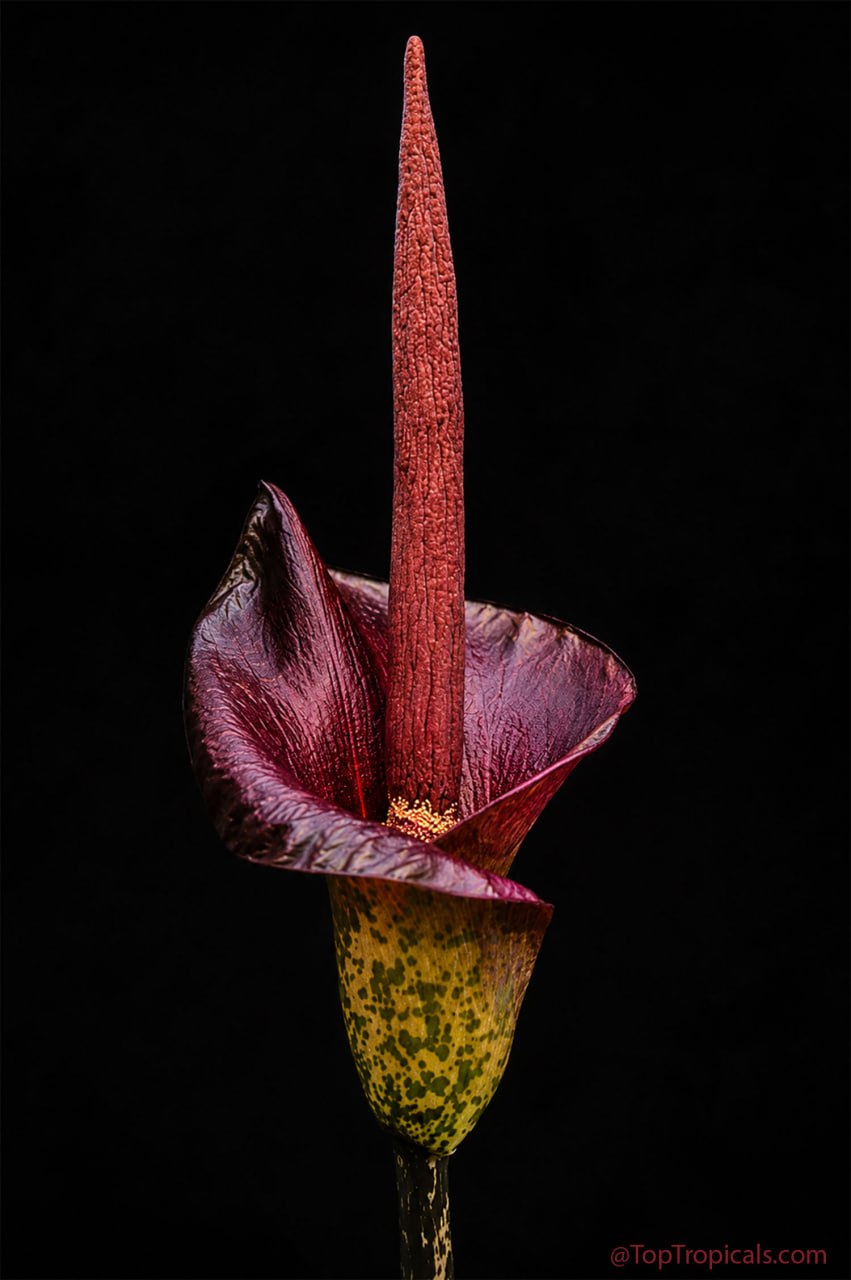
Once mature, this bizarre species sends up a dramatic, deep purple bloom from a single underground corm (a large bulb-like root). For just one day, it releases a scent remarkably similar to rotting meat. While unpleasant to us, it is absolutely irresistible to the flies and beetles that pollinate it in nature. Thankfully, the odor fades almost as quickly as it arrives - and what happens next is why plant collectors (and health food lovers) are obsessed with it...


🍜 The shocking secret behind your shirataki noodles


Here is the twist almost no one expects: if you have ever eaten low-carb konjac noodles, shirataki noodles, konnyaku jelly, or taken the high-fiber supplement glucomannan, you have eaten this exact plant.

The underground corm of the voodoo lily has been cultivated across Asia for over 2,000 years. While the raw corm isn't edible fresh due to irritating calcium oxalate crystals, traditional processing transforms it into a zero-calorie, high-fiber dietary staple. Most people buying these "miracle noodles" at the grocery store have no clue they come from a rare, alien-looking tropical beauty.

🍜 It grows a literal tree from a single leaf


The blooming event is a solo show - the flower appears completely on its own before any foliage emerges. Once the bloom fades, the plant shifts gears into its vegetarian phase, producing just one single, massive leaf.

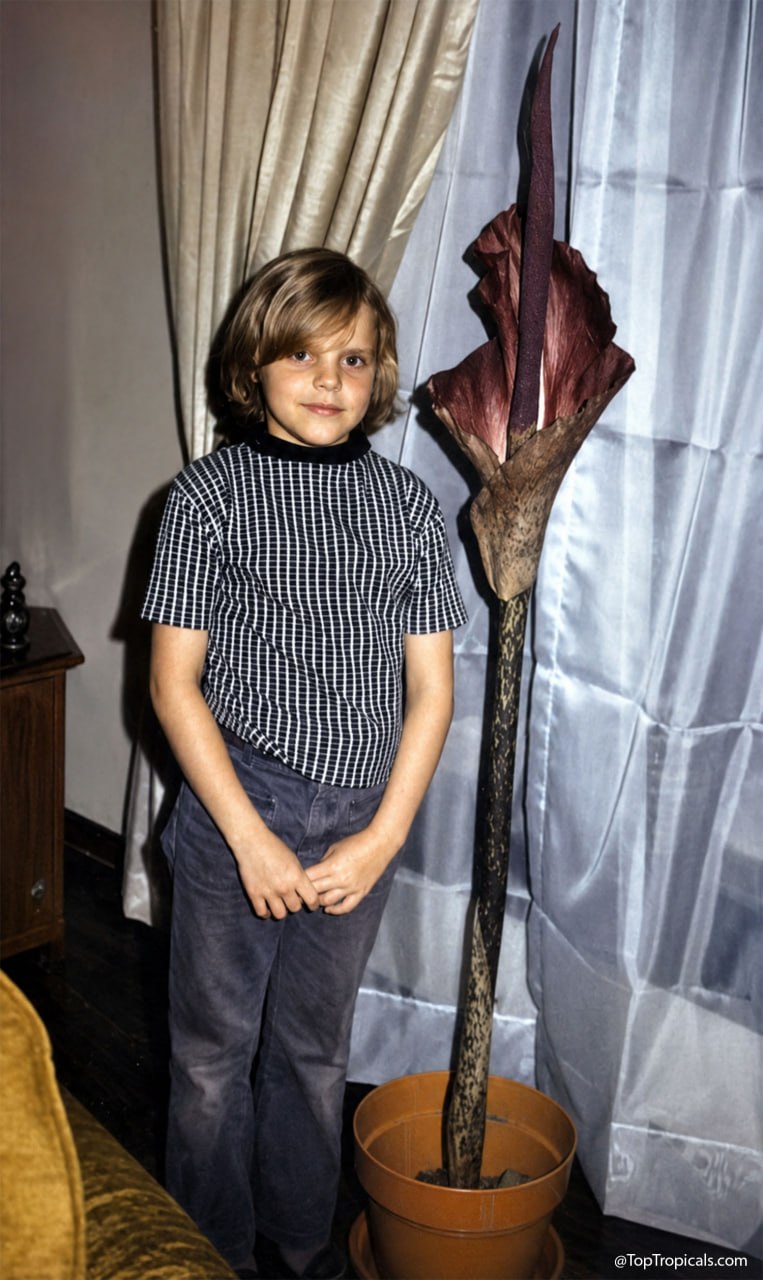
But calling it a leaf hardly does it justice. It stands on a thick, beautifully mottled, snake-patterned stalk and branches out into hundreds of smaller leaflets. It looks so much like a miniature tropical palm tree that visitors will refuse to believe it is actually just one giant, highly divided leaf. On mature specimens, this single leaf can tower 4 to 6 feet tall.

Bigger and bolder every year: Unlike its cousin Amorphophallus bulbifer, this species doesn't grow baby clones on its leaves. Instead, it pours all its summer energy straight back down into the underground corm. Every year the corm grows larger, the tree-like leaf gets taller, and the future blooms get even more spectacular.

🍜 Surprisingly easy to grow at home


Despite its highly exotic reputation and ancient history, this voodoo lily is remarkably easy to keep alive, making it a fantastic conversation piece for shade gardens or large patio pots:

Light: Prefers bright shade or dappled, filtered sunlight.
Soil & Water: Thrives in rich, well-draining soil with regular watering during the summer heat.
Winter Rest: After a few months of glory, the giant leaf naturally dies back for the winter. You simply keep the pot dry and let the corm sleep until it wakes up to surprise you next spring.

🍜 Voodoo Lily Quick Stats


🌿 Botanical Name: Amorphophallus konjac
Claim to Fame: The actual source of shirataki & konjac noodles
🌡 Hidden Talent: The flower warms itself up (thermogenesis) to blast its scent
🌴 Foliage Habit: Grows a massive, single leaf that looks like a palm tree

Add this true botanical wonder to your rare plant collection. It’s weird, beautiful, educational, and guaranteed to be the most talked-about plant in your entire collection.

🛒 Bring home this spectacular noodle-making wonder

📚 Learn more:

Voodoo Lily Plant Facts

Botanical name: Amorphophallus konjac
Also known as: Voodoo Lily
USDA Zone: 8 - 11
Highlights Small plant 2-5 ftSemi-shadeShadeWatering: Regular. Let topsoil dry slightlyUnusual colorEdible plantDeciduous plantEthnomedical plant.
Plants marked as ethnomedical and/or described as medicinal, are not offered as medicine but rather as ornamentals or plant collectibles.
Ethnomedical statements / products have not been evaluated by the FDA and are not intended to diagnose, treat, cure, or prevent any disease. We urge all customers to consult a physician before using any supplements, herbals or medicines advertised here or elsewhere.Irritating plantSubtropical plant. Mature plant cold hardy at least to 30s F for a short time
Get personalized tips for your region

·  Amorphophallus konjac in Plant Encyclopedia
· Amorphophallus konjak: fun fact about Voodoo Lily
· Amorphophallus bulbifer: the flower that smells like a dead rat, but gardeners can’t wait for it to bloom
· Amorphophallus paeoniifolius: what's inside the Devils Tongue that smells like trouble?
· The biggest flower in the world - Amorphophallus
· Different species of Amorphophallus

#Nature_Wonders #Shade_Garden #Container_Garden #Discover

🟢 Join 👉 TopTropicals

Date: 30 Jul 2026

The need to exercise