Garden Blog - Top Tropicals
Date: 22 Dec 2020
The Blue Tea Remedy from the Magic Clitoria
By Alex Butova, the Witch of Herbs and Cats
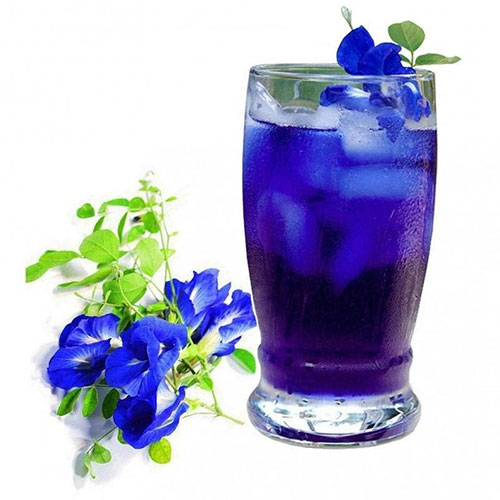
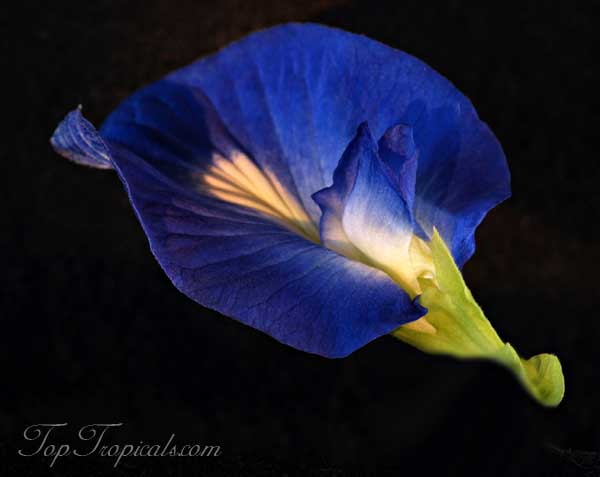
Butterfly-pea flower tea commonly known as Blue Tea is a caffeine-free herbal tea, or tisane, a beverage made from a decoction or infusion of the flower of the Clitoria plant. There are not many who know about the benefits of blue tea. For centuries the butterfly-pea flower tea was only known in South East Asia... The bright blue petals from the flowers of the butterfly-pea plant have been used as an ingredient in herbal tea drinks throughout the region for centuries as well as used in cooking...
CONTINUE READING >>


Date: 20 Dec 2020
PeopleCats of TopTropicals. Cat of the Day: Abu, the Quiet Fighter

The Story of Abu, a brother of poor little Raja, is also challenging, but has a happy ending!
...Abu started out a quiet reserved little man. From the beginning you would find him in the
quarantine room snuggled under his thick blanket sleeping. Abu did not like to ask for help but was grateful when you gave it. We tried to help him use a toilet while his
leg was casted and getting into the letterbox was a challenge for him... However, he was too orthodox in his views to believe he needed help...
...Abu was the worse off of the two found kittens. Dr didn't sugar coat the
outlook. He gave him a thirty percent chance of walking again. The morning after the first medication, I woke up
like a kid on Christmas morning... Dressing quickly, I went to the kitten's room to see if there was any change... Abu was still laying down, not getting up on his
own. As I looked over his little body, I made my way to his swollen little wrist to see if there was any change...
CONTINUE READING >>

TopTropicals PeopleCat Club and Zoo
Thank you for supporting us in helping PeopleCat Community!
Make
your kind donation today and receive a surprise gift from us! Every little
bit helps. Thank you and God bless you and your pets!

Date: 20 Dec 2020
Mango ID and ripeness

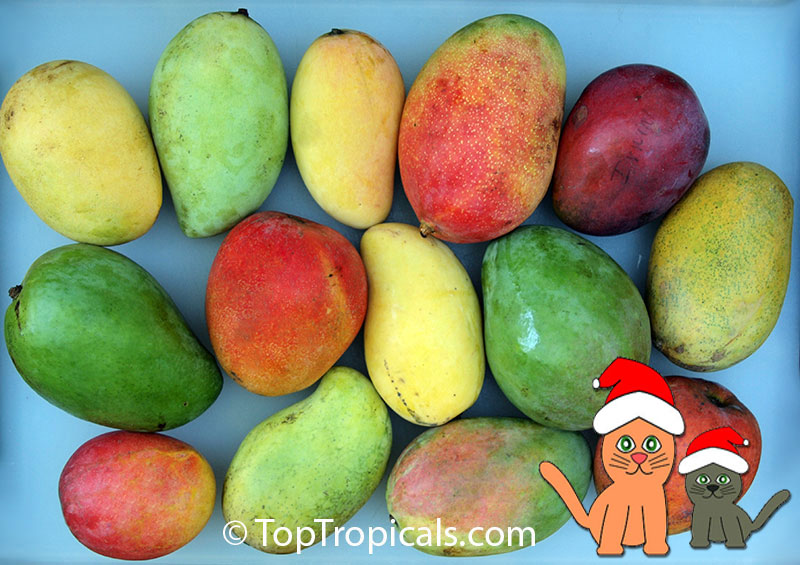
Q: As the World's Leading Authority on Tropical Plants, I hope you can help us out. We obtained a mango tree from a City giveaway, and planted it a few years ago. This is the 1st year it has produced fruit. They are almost all green color, & range from 6-7 inches in length. Attached are a few photos of the tree & its fruit. Please help to identify the type, and how to determine when they would be ready to pick. Or should we just wait until they fall off of the tree?
A: If the tree is grafted, it normally starts flowering within a year after planting. If
the tree is over 6 years old and just now started fruiting - chances are, this is a seedling (possible at giveaways)
without specific variety. However the fruit looks pretty good size and shape, hopefully it tastes great. You will find out soon!
Based on the pictures, there maybe a few possible choices, including
varieties (or their seedlings) Keitt, Rosigold, it can be even Lancetilla if fruit grows bigger than 7" long. The next step would be, wait until the fruit get some color, then it will be easier to narrow down the variety.
Also see if there is a lot of fiber or no fiber.
You may wait until at least one fruit ripens on the tree and let it fall naturally - that
will be the color (can be all green, but in your case it looks like it's turning yellow blush). After that, you may pick full size fruit before they fall and let them
ripen on a kitchen table. Usually once the fruit starts showing color, it is close to ripening. For all-green varieties, just wait till fruit grows to maximum full
size. You may also check if the fruit gets softer to touch, then it's ready.
Date: 15 Dec 2020

Healthy Plants: Q&A from Mr Booster
What is an ideal potting mix?
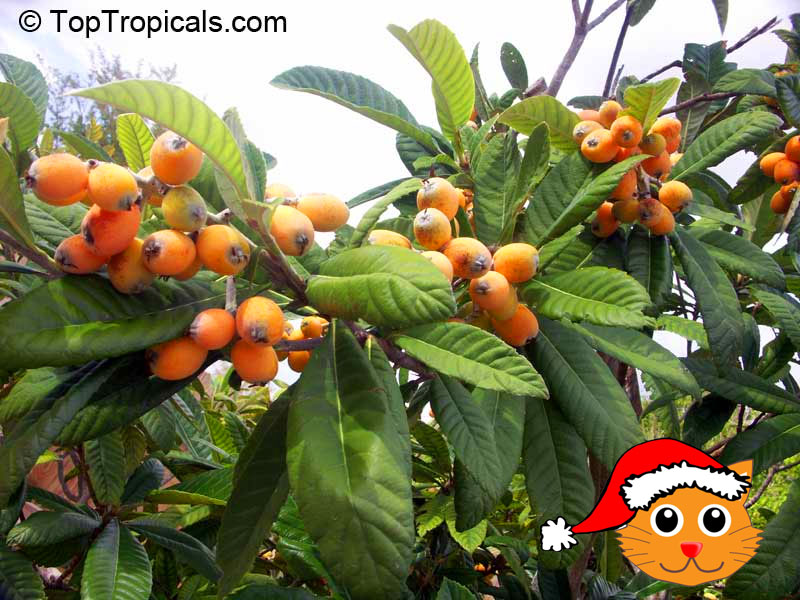
Q: A few years ago, I purchased a Barbie Loquat from you, and I'm pleased to say it's been growing very well. I now have several loquat seedlings. I have read that a well-draining medium should be used, and I have found that the various formulations provided on the web for such medium seem vaguely reminiscent of the recipe provided in your transplanting instructions. Therefore, I would like to retrieve your recipe, unless you could recommend an even better one?
A: The main requirements for a good potting mix are:
- perfect drainage, allowing air circulation that is so necessary for
healthy roots; oxygen circulation helps to avoid root rot
- water retention: to keep nutrients in soil
- low pH (soil acidity) which is important for most tropical plants
- adequate amount of organic matter in the mix, in combination with proper
fertilizer program
In our nursery we experimented with many different potting mixes for the past couple decades. We ended up with an ultimate mix for tropical container plants that we designed ourselves. This custom mix is called -
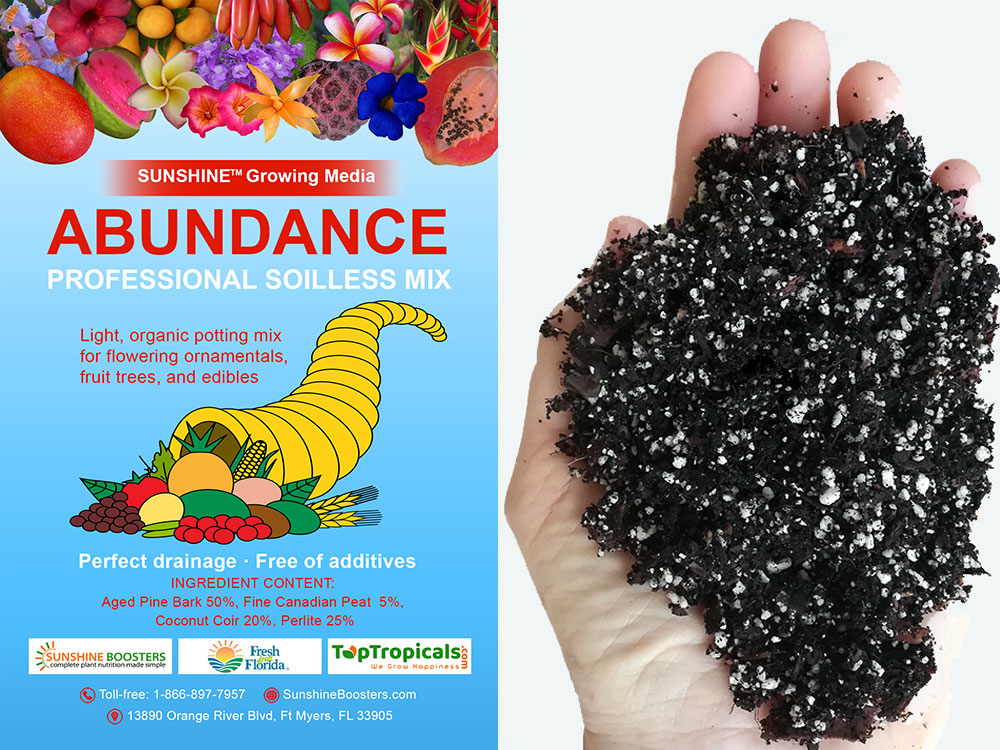
Abundance - TopTropicals professional soilless potting mix
It meets all the requirements above which makes it a perfect mix. All
our plants are happy with it.
Abundance is a professional quality (nursery-grade) potting mix with great
drainage characteristics, ideal for any tropical plants. It is organically
derived soil-less mix, free of any additives.
Ingredients are:
- fine Canadian peat moss
- coconut coir
- perlite
- aged pine bark (soil conditioner).
See more info on
soil mixes.
We have this mix available for purchase in different packaging sizes - 2, 3, and 7 gal
bags.
Besides proper potting mix, all container plants require regular
fertilizing. We recommend the newest, scientifically balanced fertilizers Sunshine Boosters that are natural, eco-safe, great for all edibles and
organic gardening. They are safe to use with every watering, provide all
necessary elements for plant daily needs, and won't burn the roots.
For your loquat tree, consider Sunshine C-Cibus, it boosts both flowering and fruit production. Loquat
is Winter-Spring bloomer, hopefully you will get some crop soon!
See more information about potting mix science
Date: 15 Dec 2020
Plant of the Month:
Fragrant Dombeya Tree
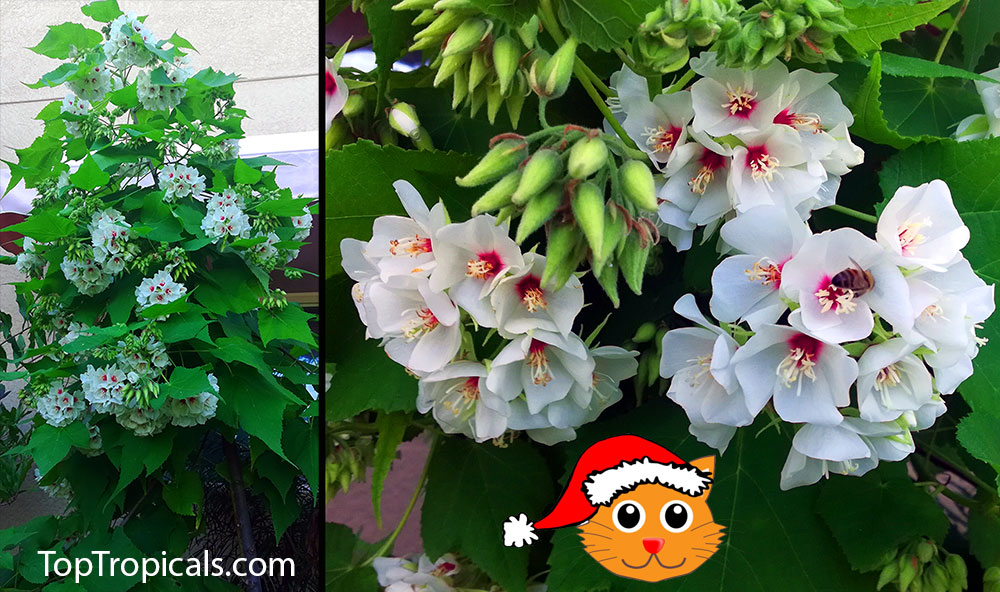
Every tropical gardener wants to have a Dombeya (a.k.a. Tropical Hydrangea) in their collection - an easy to
grow, fast growing winter bloomer. These plants don't require any special care,
thrive in neglect in both sun or shade, and flower profusely during
Fall-Winter months - what an awesome treat! Dombeyas are also wanted for their
vigorous growth habit - they can cover unwanted view in no time, fill and empty
corner in your yard, create a colorful tropical display, and attract lots of
butterflies and bees. They are not afraid of water logging, in fact the more you
water them, the faster they grow. The large tropical leaves are beautiful -
soft, fuzzy, with shallow, maple-like lobes. This plant is tolerant to both
light frost and periods of drought.
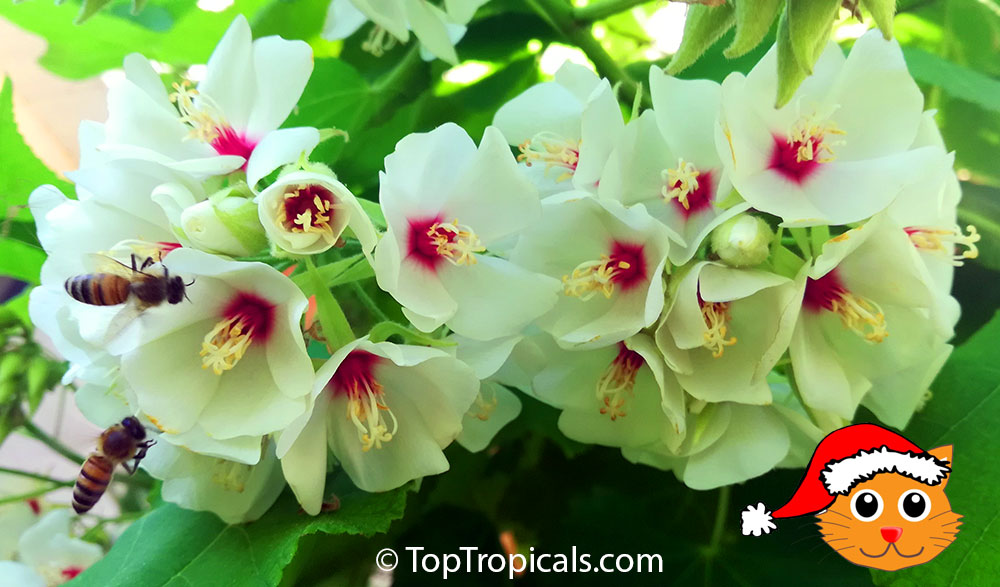
Most Dombeyas grow into round, dense bushes, but this one variety of is
very special. Dombeya burgessiae from South Africa actually grows into a small (10-15
ft), pretty, upright tree that is covered with beautiful blossoms during
winter. The flowers are creme color with raspberry centers, attracting lots of
pollinators, and what is the most special - they are sweetly fragrant! What a
beauty!
Surround yourself with aromatic cloud of Dombeya winter blooms!