Garden Blog - Top Tropicals
Date: 15 Jan 2021
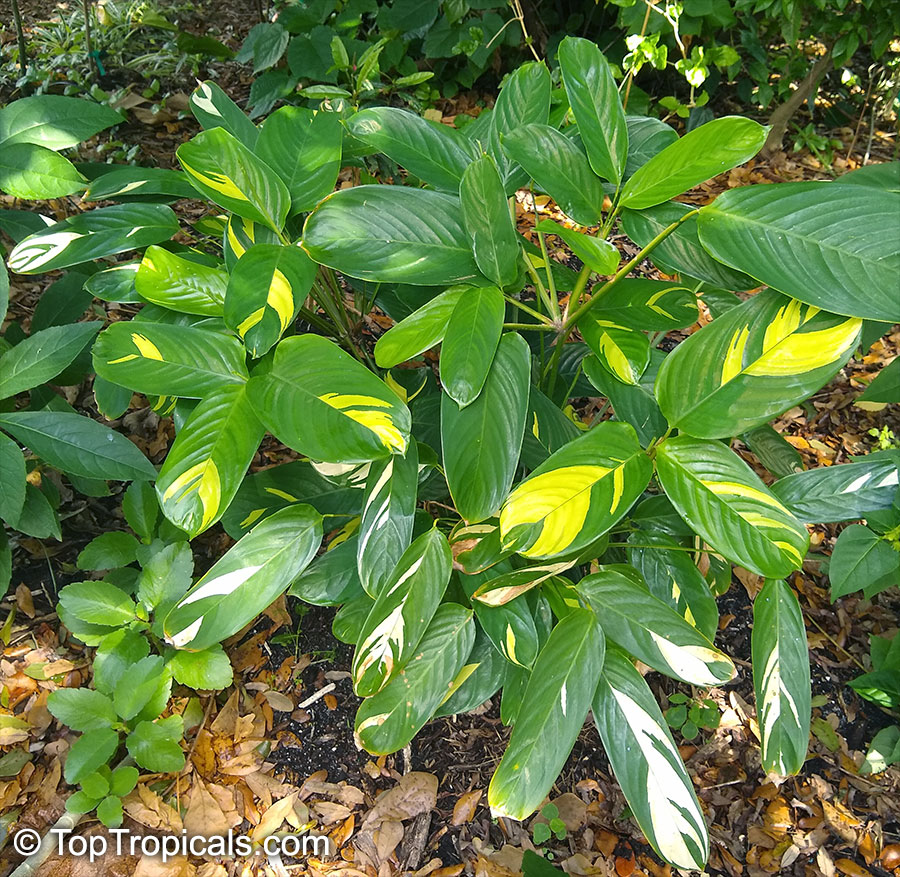
Never-never be without one! Ctenanthe lubbersiana variegata
Stevie's Pick: what's special today?
Our exotic plant grower Steven Gowdy spotlights the most interesting plants he discovers and recommends today while working in TopTropicals greenhouses.
Year 2021 is celebrated as a Year of Variegated Foliage plants, and I have something special for those rare plant collectors. Besides exclusive Monstera variegata Thai Constellation, there are a few less expensive plants that are as much beautiful and yet fit into any budget.
Known as the Never-never plant, this beauty is native to Brazil. I think in South Florida a shade garden should
never-never be without one!
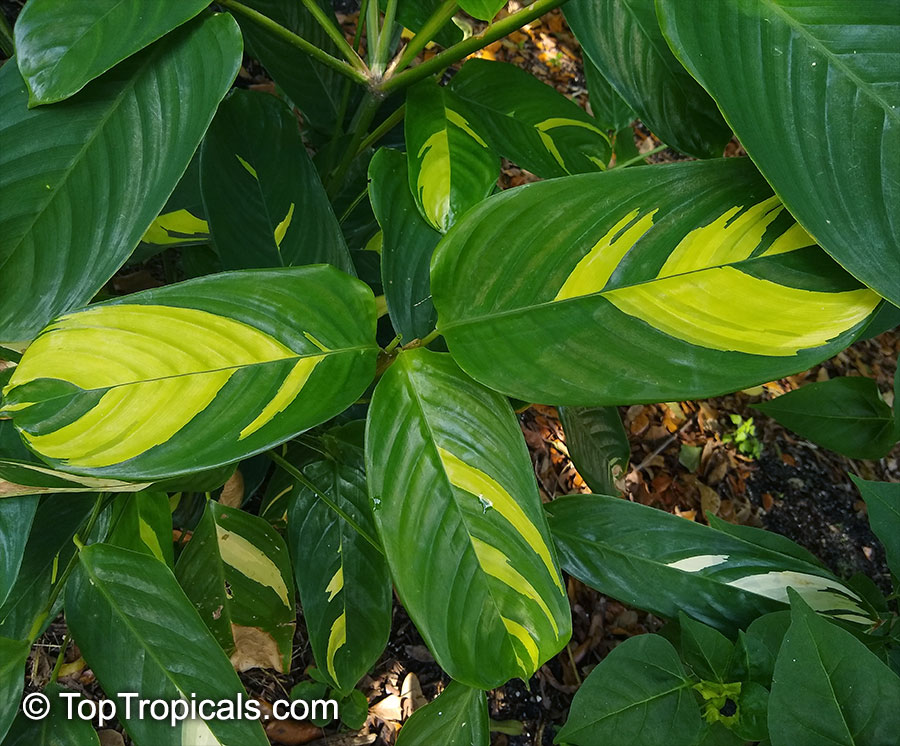
Ctenanthe lubbersiana variegata has deep
variegation, with branching bamboo-like stems and oblong green, veined leaves that are mottled with cream and gold. Needing high humidity and indirect, bright filtered light, it just screams tropical and fun! Ctenanthe is a close relative of showy Marantas grown for the beauty of their foliage, and also makes a great house plant in
cooler climates.
In warmer climates, it can be planted as an under story plant. The plant is growing to 2-3 feet high and 4-6 feet wide, with leaf patterns of indistinct cream and green marbling. It does have a rapid growth rate and liking soil moist, but not soggy. In the winter, water
should only be given when the dirt is somewhat dry. Watch out for mealy bugs, spider mites, and aphids and apply Sunshine NoBug if you notice any - they
will be easy to get rid of.
Give it a liquid fertilizer SUNSHINE Robusta - Rapid Growth Booster and divide as needed.
This plant is one of my favorites. I planted a nice specimen at TopTropicals entrance gate last year, and now we finally have beautiful baby plants propagated from it, looking great!

Date: 11 Jan 2021
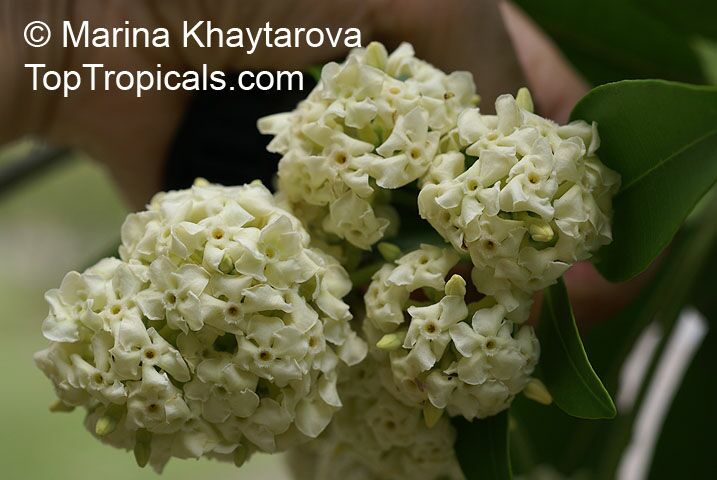
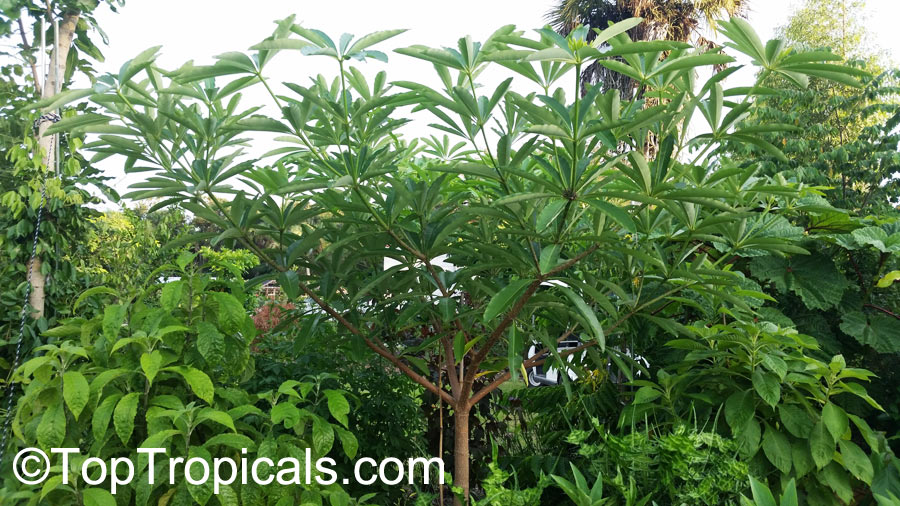
Alstonia scolaris - Indian Devil Tree
A Scholar's Award with intoxicating fragrance
By Alex Butova, the Witch of Herbs and Cats
...This fascinating rare plant with white, strongly perfumed flowers is
valued as a fast growing, impressive ornamental shade tree and is used to
serve as an alternative to quinine...
Popularly known as Devil Tree, as plant is believed to the devil's abode -
probably due to the intoxicating fragrance emitted by flowering trees,
especially at night.
The tree is of great cultural significance in the intellectual circle, as
traditionally its leaves were awarded to scholars and teachers during
convocation ceremonies by the Visva Bharati University (can't think of a better name
than Alstonia scholaris!). This tradition was started by Rabindranath
Tagore...
CONTINUE READING >>

Date: 11 Jan 2021
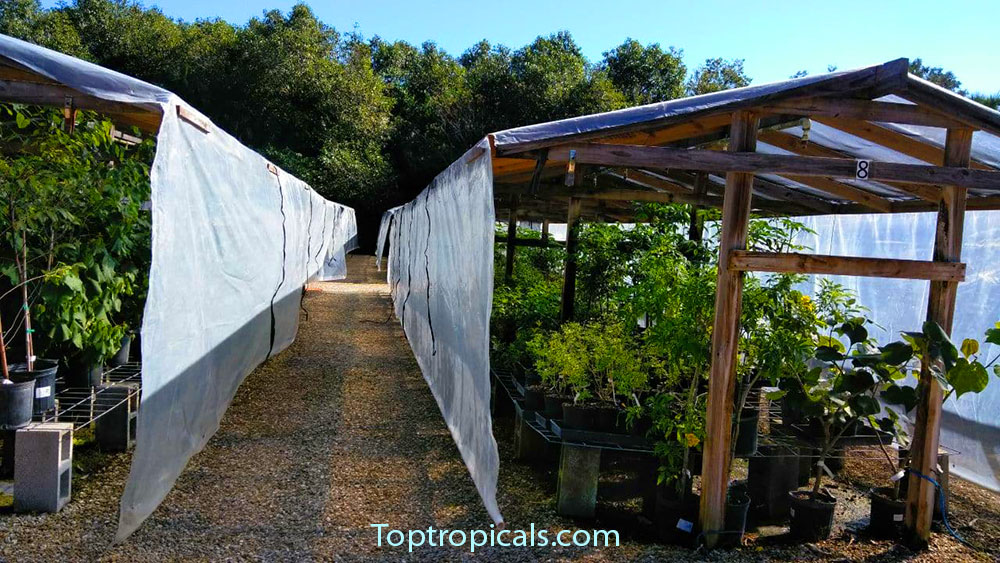
Tropical gardener beginning-of-year checklist

Final pre-Spring check of whatever we had forgotten! For a gardener, the year ahead is a chance to do things you want, as a way to achieve the things you need to do. If your number one New Year's resolution is to garden more (a want-to item), you also will be exercising more (a need-to). Or if you plant a new edible garden (want, want, want), you will end up checking off "eat more leafy vegetables and fruits" from your to-do list!
12 steps to get ready for 2021 season:
1 - Spray fruit trees and houseplants with insecticide and micro-elements
2 - Continue spraying SUNSHINE-Epi to improve plant hardiness
3 - Protect tender plants during cold spells and especially from freeze
4 - Reduce watering during cooler months, keeping the root zone on a dry
side
5 - To give your plants a kick start, fertilize with liquid SUNSHINE Boosters fertilizers - they are safe to be used year round
6 - Plant fruit trees: winter planting is beneficial to avoid heat stress for roots
7 - Plant Butterfly and Hummingbird Attractants
8 - Plant bulbs, vegetables and herbs. Use eco-safe, natural SUNSHINE boosters for all your edibles.
9 - Plan your summer garden and order seeds early
10 - Start tropical plants from seeds (indoors for cooler climates)
11 - Start ordering tropical plants and beneficial soil mix to get them established after shipping in pots
12 - Clean and oil garden tools
Date: 5 Jan 2021
People of TopTropicals. Dog of the Year: Tilda, the Assistant Photographer
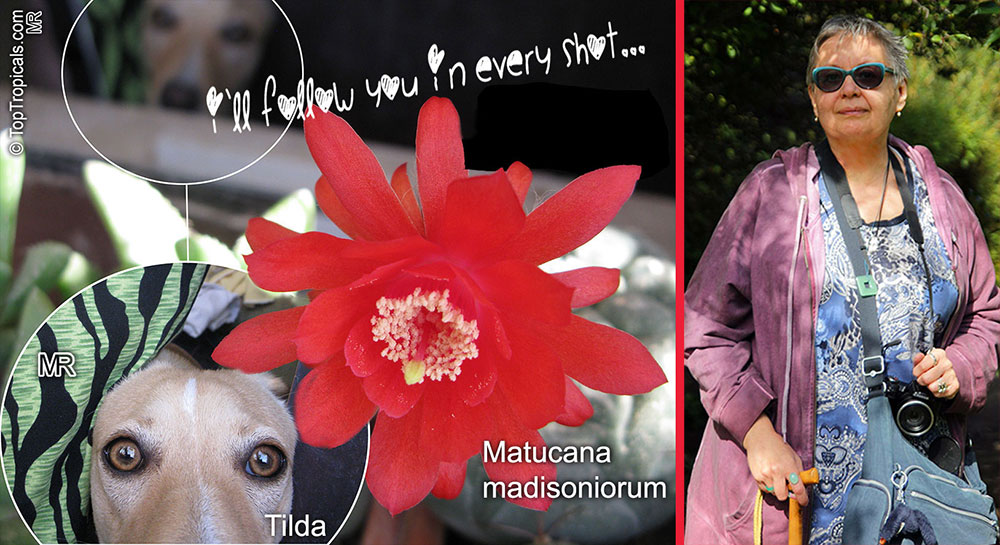
Today is a sad day. Our Editor and Photographer assistant Tilda left us for her last trip to Eternity...
to the Dog's Paradise. For many years, Tilda has been helping Top Tropicals Editor and Plant Expert Marina Rybka to take pictures of beautiful plants from all
over the world. We can often see Tilda's tail, paws, ears or eyes in many photos of our plant catalog. With Marina's and Tilda's help, our catalog today has 4900 tropical plant profiles with 53989 photos!
Tilda, you will always stay with us. You will follow us in every shot you made with your Mom. Thank you for being there for Marina and her TopTropicals. Thank you for making life of tropical gardeners happier! You made the
difference. We love you forever.
TopTropicals PeopleCat Club and Zoo
Thank you for supporting us in helping PeopleCat Community!
Make your kind donation today and receive a surprise gift from us! Every little bit helps. Thank you and God bless you and your
pets!

Date: 5 Jan 2021
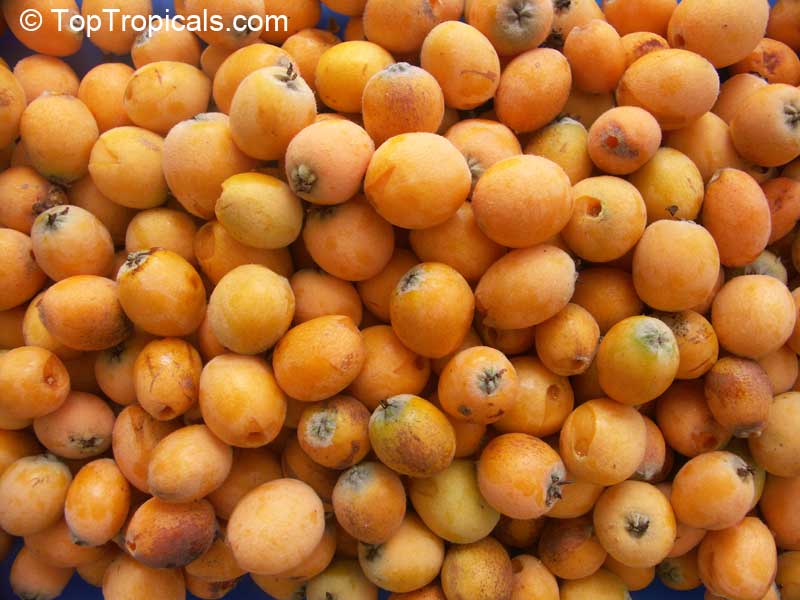
Growing Loquat in container
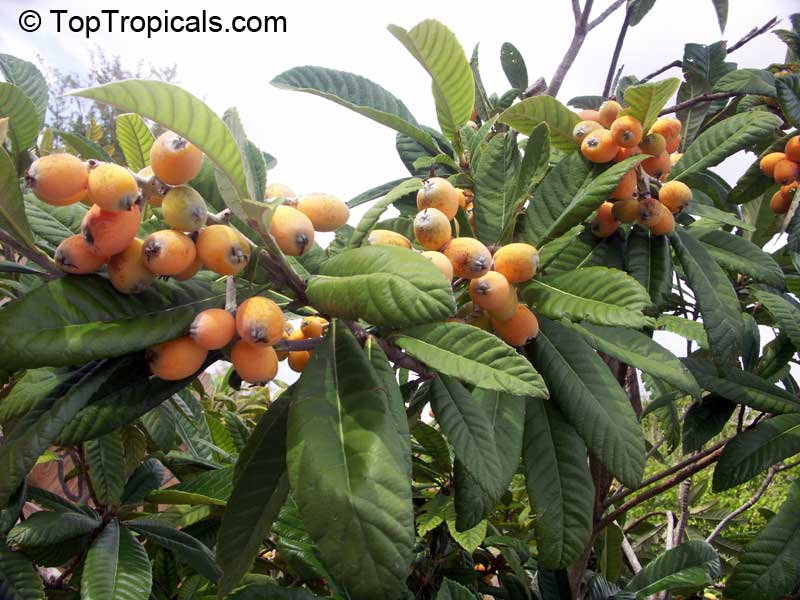
Q: I purchased a Sherry Loquat tree from you in April of 2020. It got off to a slow start initially, but now is five feet tall with healthy leaf growth! It is in a 15-gallon pot and was brought into the house by October 15th. I live in Zone 6 and kept the plant outside from end of May to October 15th. I have given the tree artificial lights in addition to slow release fertilizer. Can you please advise me on what steps I need to take to get the Sherry Loquat tree to fruit? E.g., lighting requirements, soil pH, soil type, etc.
A: Loquat is normally winter flowering and spring fruiting tree, here in Florida it is usually heavily covered with fruit by April. With a proper care, you may see flowers throughout the winter and they may set some fruit for you. Considering that during this time you have to keep the plant indoors, here are some recommendations:
1. Soil. Well-drained, porous potting mix. Do not use any heavy garden soils. For our plants we use the following mix which is excellent for containers: Abundance
2. Light. The brighter the better. Sunroom would be great, or at least put the tree next to a large window. Extra lighting with grow lights is beneficial. Any type of light will work, you can even use a simple clip-on light, the brighter the better. 8-10 hours a day.
3. Water. Loquat is drought tolerant but for fruiting it will need regular watering; just don't keep soil soggy, let is slightly dry before waterings.
4. Fertilizer program. Use liquid fertilizer. We recommend Sunshine
Boosters that are safe to use with every watering and year around - SUNSHINE C-Cibus - Crop Nutrition Booster.
We recommend to switch plants from traditional"slow-release"fertilizer to the liquid one because it makes a huge difference in plant growth and flower/fruit quality and quantity.
Sunshine Boosters are scientifically balanced fertilizers that supply all necessary elements for daily plant
needs. They are natural and eco-safe, great for any edibles.
5. Micro-elements. These are essential for potted plants, because in containers roots can't reach out to elements that are usually present in soil when trees grown in the ground.
Apply micro-element remedies that are very effective for improving fruit production,
especially when flower or fruit drop occurs:
SUNSHINE Honey - promotes more efficient blossoming and pollination, makes flowers bigger and reduces bud
drop.
SUNSHINE SuperFood - improves plant vigor and quality and size of flowers
These are all natural, eco-friendly supplements that work great for fruit trees and other edibles.
Read more about Loquat trees: The best grafted Loquat varieties.