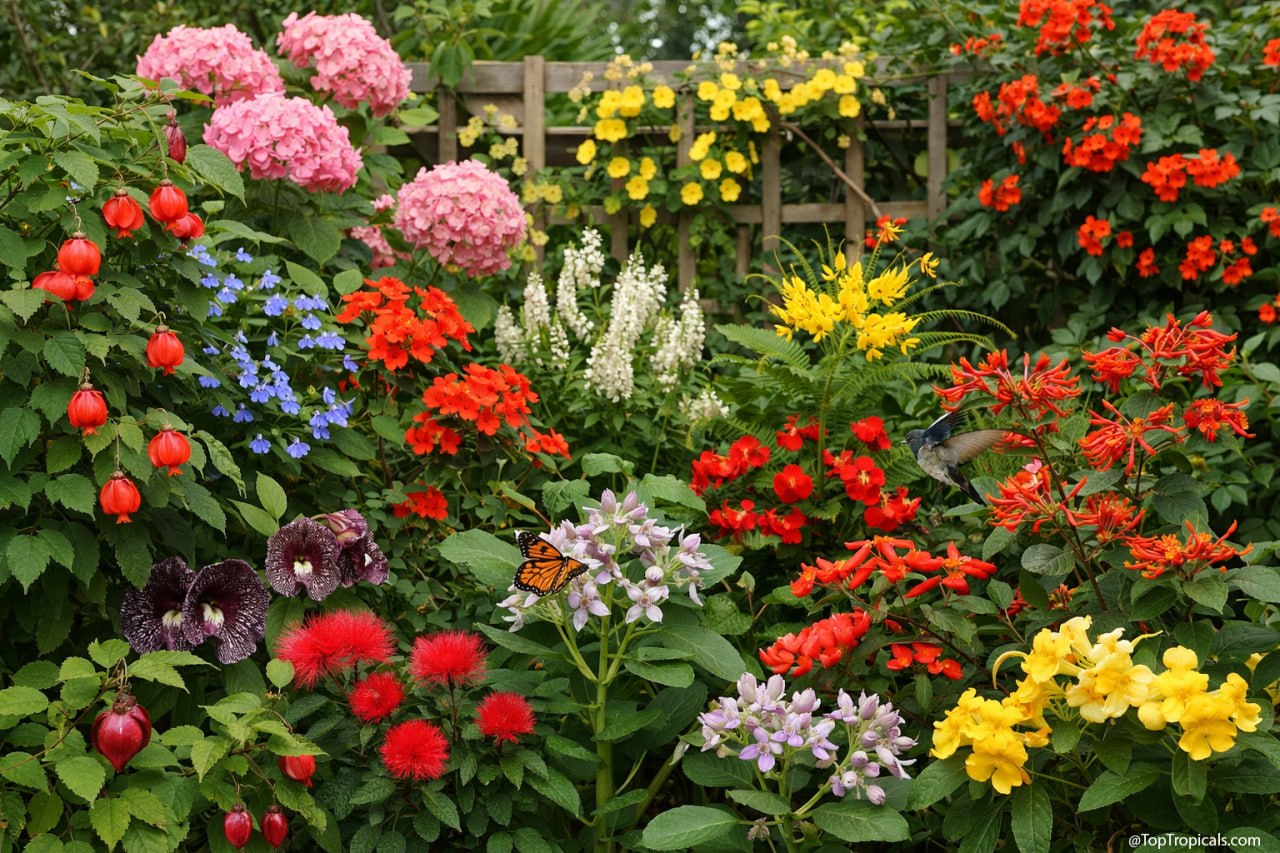
13 tropical flowers to plant in spring to attract pollinators year around
13 tropical flowers to plant in spring to attract pollinators year around: Abutilon Fireball (Abutilon darwinii x striatum), Almond Bush (Aloysia virgata), Calico Flower (Aristolochia littoralis), Pride of De Kaap (Bauhinia galpinii), Mexican Bird of Paradise (Caesalpinia mexicana), Red Tassel Flower (Calliandra tweedii With Love), Giant Milkweed (Calotropis gigantea), Blue Butterfly (Clerodendrum ugandense), Tropical Hydrangea (Dombeya wallichii), Fire Bush (Hamelia patens), Butterfly Orchid
13 tropical flowers to plant in spring to attract pollinators year around
Spring is when everything wakes up - and if you plant smart now, your garden can stay alive with butterflies, bees, and hummingbirds all year long. The key is mixing tropical bloomers that flower in waves, not all at once. These plants don’t just look good - they keep pollinators coming back season after season, turning your yard into a living, moving ecosystem.
1. Abutilon Fireball (Abutilon darwinii x striatum)
Bell-shaped flowers in warm red and orange tones hang like little lanterns. Very cold hardy, blooms on and off through the year, especially in mild climates. A steady nectar source for hummingbirds. More 👉
2. Almond Bush (Aloysia virgata)
Light, airy clusters of tiny white flowers with a strong almond scent. Bees absolutely cover this plant when it’s in bloom. Flowers repeatedly through warm months. More 👉
Sweet Almond Bush Plant Facts
Botanical name: Aloysia virgata Also known as: Sweet Almond Bush, Incense Bush
USDA Zone: 9 - 11
Highligths
3. Calico Flower (Aristolochia littoralis)
One of the most unusual flowers you can grow - patterned like fabric. More importantly, it’s a host plant for butterflies, giving them a place to lay eggs. More 👉
Elegant Dutchmans Pipe Plant Facts
Botanical name: Aristolochia littoralis, Aristolochia elegans Also known as: Elegant Dutchmans Pipe, Calico Flower
USDA Zone: 9 - 12
Highligths
4. Pride of De Kaap (Bauhinia galpinii)
Bright orange-red blooms cover this shrub for months. Tough, fast-growing, and constantly visited by butterflies and bees. More 👉
Pride of De Kaap Plant Facts
Botanical name: Bauhinia galpinii, Bauhinia punctata Also known as: Pride of De Kaap, Nasturtium Bauhinia
USDA Zone: 9 - 11
Highligths
5. Mexican Bird of Paradise (Caesalpinia mexicana)
Sunny yellow flowers with a light fragrance. Handles heat, freeze, and poor soil easily. A reliable nectar plant for bees and butterflies. More 👉
Mexican Bird of Paradise Plant Facts
Botanical name: Caesalpinia mexicana Also known as: Mexican Bird of Paradise, Dwarf Poinciana
USDA Zone: 9 - 11
Highligths
6. Red Tassel Flower (Calliandra tweedii With Love)
Very showy red-flowered powderpuff, fast-growing and spacey shrub. Cold tolerant to hard freeze, making it a strong choice for subtropical gardens. Forms a dense, many-stemmed plant with fine, feathery foliage that folds at night or by touch. Large scarlet tassel flowers bloom from spring to autumn and attract pollinators nonstop. More 👉
7. Giant Milkweed (Calotropis gigantea)
A bold plant with thick leaves and waxy flowers. Important host plant for butterflies, especially monarchs. Handles heat and drought well. More 👉
Giant Milkweed Plant Facts
Botanical name: Calotropis gigantea Also known as: Giant Milkweed, Crown Flower, Giant Calotrope, Arka, Jilledu, Erukkam Madar, White Madaar
USDA Zone: 9 - 11
Highligths
8. Blue Butterfly (Clerodendrum ugandense)
Flowers really do look like little blue butterflies. Blooms frequently and attracts actual butterflies along with bees. More 👉
Butterfly Clerodendrum Plant Facts
Botanical name: Rotheca myricoides, Clerodendrum ugandense Also known as: Butterfly Clerodendrum, Blue Butterfly Bush, Blue Glory Bower, Blue Wings
USDA Zone: 9 - 11
Highligths
9. Tropical Hydrangea (Dombeya wallichii)
Large clusters of soft pink flowers appear in cooler months when little else is blooming. A major nectar source in winter. More 👉
Pink Ball Tree Plant Facts
Botanical name: Dombeya wallichii, Dombeya x cayeuxii Also known as: Pink Ball Tree, Tropical Hydrangea
USDA Zone: 9 - 11
Highligths
10. Fire Bush (Hamelia patens)
One of the best all-around pollinator plants and a tough bush - takes both cold and heat. Tubular orange-red flowers attract hummingbirds nonstop, plus butterflies and bees. More 👉
Fire Bush Plant Facts
Botanical name: Hamelia patens Also known as: Fire Bush, Firecracker Plant
USDA Zone: 8 - 11
Highligths
11. Butterfly Orchid Vine (Mascagnia macroptera)
A climbing, cold hardy vine covered in bright yellow flowers and butterfly-like seeds. Great for fences or trellises, adding vertical color and feeding pollinators. More 👉
Butterfly pea vine Plant Facts
Botanical name: Mascagnia macroptera Also known as: Butterfly pea vine, Yellow Orchid vine, Gallinita
USDA Zone: 9 - 10
Highligths
12. Mexican Flame Vine (Senecio confusus)
Fast-growing, hardy vine with intense red blooms. Flowers heavily and brings in butterflies quickly. More 👉
Mexican Flame Vine Plant Facts
Botanical name: Pseudogynoxys chenopodioides, Senecio confusus Also known as: Mexican Flame Vine, Orangeglow Vine
USDA Zone: 9 - 11
Highligths
13. Yellow Elder (Tecoma stans)
Bright yellow trumpet flowers that bloom over a long season. A dependable plant for both bees and hummingbirds. More 👉
Yellow Elder Plant Facts
Botanical name: Tecoma stans, Bignonia stans Also known as: Yellow Elder, Yellow Bells
USDA Zone: 9 - 11
Highligths
✔️ Planting a mix of these gives you something in bloom almost every month.
That’s the real trick - not just planting for spring, but building a rotation of flowers that keeps pollinators fed all year long.
🎩 How to grow Chinese Hat Flower - when winter colors most needed
The Holmskioldia sanguinea, better known as the Chinese Hat Flower, gets its name honestly. Each bloom looks like a tiny hat or parasol - a little tube backed by a flat, round disc. Once you notice it, you cannot unsee it!
Chinese hat Plant Facts
Botanical name: Holmskioldia sanguinea Also known as: Chinese hat, Cup and Saucer, Parasol Flower, Mandarins hat
USDA Zone: 9 - 11
Highligths
What really makes this plant special is when it blooms. While most gardens slow down, Chinese Hat Flower kicks into gear from winter through early spring. The branches fill with flowers first, and the leaves follow later. It is one of those plants that quietly steals the show when everything else is taking a break.
More than one color
Most people know the classic red form, but there are several color varieties worth mentioning: 🔴 Red - the most common and bold 🟡 Yellow - Holmskioldia citrina, bright and cheerful, harder to find 🟠 Bronze / orange-bronze - warm tones that glow in winter light
Having different colors makes it easy to mix them or use just one as a winter focal point.
How it grows and where it works best
Chinese Hat Flower is a fast-growing, scrambling shrub. It is not stiff or formal. Think loose, graceful branches that like support. It does great when trained on: · Trellises · Fences · Arbors · Large containers with a support · You can also let it grow as a free-form shrub and lightly prune to keep it tidy.
Care, the practical version
· Light: Full sun to light shade · Water: Regular watering, especially while establishing · Soil: Well-drained, not picky · Pruning: After flowering to shape and encourage new growth
Once established, it is easygoing and forgiving.
Bonus points
· Blooms when the garden needs color most · Attracts butterflies and hummingbirds · Works as a flowering screen or accent plant · Looks tropical without being high-maintenance
If you like plants that earn their space and do something interesting in winter, Chinese Hat Flower is one to keep in your garden.
Collecting clerodendrums: big color, little effort
Clerodendrum collage
🎨 Collecting clerodendrums: big color, little effort
🎨 Collector hook
If you love plants that look rare, unusual, and a little dramatic - but do not want high-maintenance divas - Clerodendrums belong in your collection. Clerodendrums are a surprisingly diverse group of plants, ranging from flowering vines to shrubs and even small trees. What they all share is bold, colorful blooms and an easygoing nature that makes them far less fussy than they appear. This combination of exotic looks and forgiving care is exactly why collectors gravitate toward them.
Many clerodendrums bloom repeatedly through the year in warm climates, and several tolerate lower light better than most flowering plants. That makes them flexible - happy in the garden, in containers, on patios, or even indoors near a bright window. Their flowers come in striking combinations of red, white, blue, pink, and purple, often with unusual shapes that stop people mid-walk.
🎨 Why clerodendrums earn collector status
✦ Uncommon, eye-catching flowers ✦ Long or repeat bloom cycles in many varieties ✦ Vines, shrubs, and small trees in one genus ✦ Excellent performance in containers ✦ More tolerant of lower light than expected
🎨 Clerodendrum care made simple
Give clerodendrums bright filtered light to partial sun, regular watering with good drainage, and light feeding during active growth. A little pruning keeps them tidy and encourages fresh blooms. That is it. No complicated routines, no constant fixing.
For collectors who want maximum visual payoff without constant effort, clerodendrums deliver exactly what the title promises - big color, very little work.
🌸Dombeya seminole - Tropical Rose Hydrangea: everyone who sees this plant falls in love at first sight. Exceptional rose-pink flower clusters cover the shrub, and butterflies and bees go wild over it. While it is considered a winter bloomer, here at Top Tropicals garden we regularly see it flower multiple times a year, with peak bloom from November through January and surprise blooms the rest of the year.
Tropical Rose Hydrangea Plant Facts
Botanical name: Dombeya Seminole Also known as: Tropical Rose Hydrangea
USDA Zone: 9 - 11
Highligths
🌸 Here is how to keep your Dombeya seminole happy and blooming more:
💋 1. Full sun
The more sun it gets, the more flowers it produces. Sun equals bloom power.
💋 2. Adequate water
Dombeyas are heavy drinkers. Regular watering fuels fast growth and heavier flowering.
💋 3. Feed for flowers
Use Sunshine Megaflor bloom booster with regular watering, or apply Green Magic controlled-release fertilizer every 6 months.
💋 4. Trim after flowering
Prune once blooms fade. A bushier plant means more flowering points next season.
💋 5. Give it space
This is a round, airy shrub. Allow at least 6 x 6 ft for good air circulation and even light exposure.
🌸 Quick facts you will appreciate: 💋Often called Tropical Hydrangea because of its hydrangea-like flower clusters 💋Blooms fall through spring, often all winter 💋Reaches about 6-7 ft tall and wide, but can be kept smaller with pruning 💋Thrives in full sun to partial shade and tolerates poor soil 💋An excellent nectar source for butterflies
If you want a beautiful color that refuses to quit, this shrub earns its spotlight.
🌸 Tropical Hydrangea - Dombeya x wallichii - really shines, if you need privacy in your garden fast!
🌸 Dombeya is the fastest-growing flowering shrub you can plant. In just one season, it can turn an open space into a thick, leafy privacy screen. Large, heart-shaped tropical leaves fill in quickly, creating solid coverage long before slower hedges even get started.
🌸 The bonus comes in winter, when the plant is covered in big, soft pink, hydrangea-like flower clusters that also attract bees and pollinators. It loves water and handles wet spots with ease, making it a great choice for Florida gardens and rainy summers.
🌸 If you are looking for a fast, flowering solution for privacy in your garden, Dombeya is your hedge with benefits!