Date: 21 Aug 2025
🍒 Tropical Cherries – Eugenias
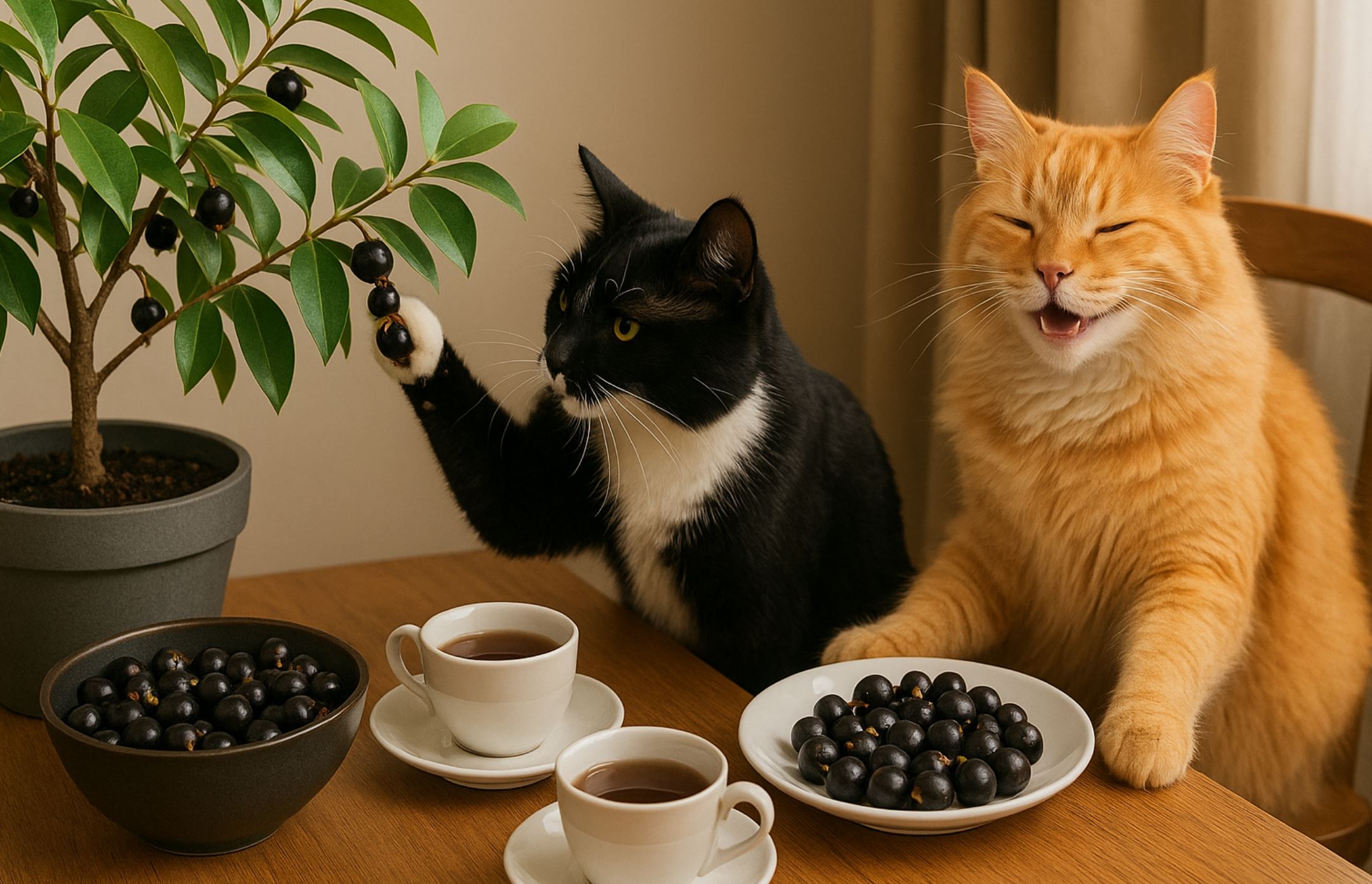
Tropical Tea Time with Grumichama
Eugenias have earned a spot in many Southern gardens because they’re easy, dependable, and surprisingly versatile. These small trees and shrubs grow well in the ground or in containers, and they don’t waste time before setting fruit.
15% Off Eugenias – Limited Time
Use code EUGENIA15 at checkout.
Excluding S/H. Offer expires 08/28/2025
👍 Popular Choices:
What Makes Eugenia Cherries Stand Out
- Start producing fruit in just a couple of years
- Compact size — easy to keep 6–12 ft tall, smaller in pots
- Low-care — tolerant of most soils and resistant to common pests
- Strong in hot weather, yet can handle a light frost down to the mid-20s °F
- Plenty of fruit for people and birds alike
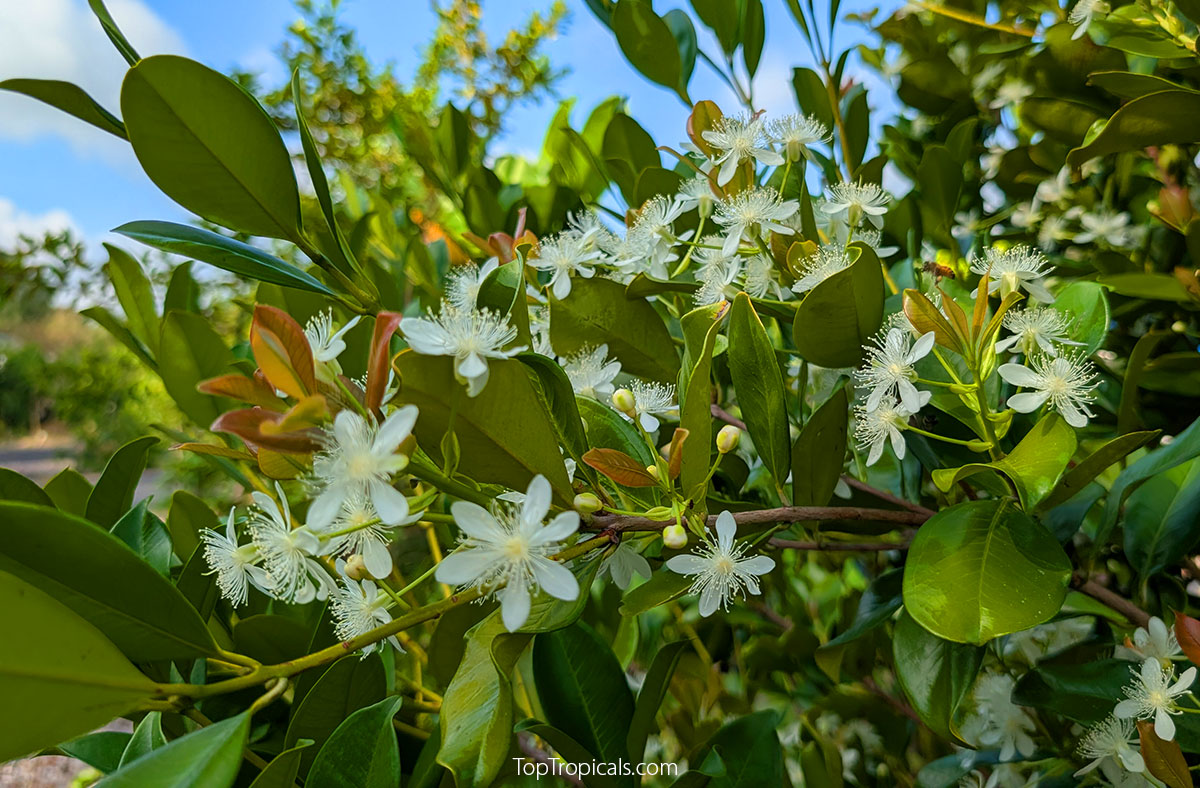 Grumichama Tree in Bloom – Eugenia brasiliensis
 Growing & Care
Outdoors
- Best in USDA Zones 9–11
- Sun or partial shade; more sun usually means sweeter fruit
- Plant in well-drained soil; avoid heavy, wet spots
- Withstands summer heat and humidity, and can take a light freeze
Container / Indoor
- Do well in 5–10 gallon pots on patios or balconies
- Need bright light indoors — a sunny window or grow lights
- Can flower and fruit in containers if kept warm and well lit
- In cooler zones, bring plants indoors for winter and back out in spring
General Care
- Water: Keep soil evenly moist; drought-tolerant once established but best yields with regular watering
- Soil: Use good potting mix - LINK TO SOIL
- Fertilizer: Balanced slow-release LINKL TO FERTILIZER Sunshine Boosters
- Pruning: Light trimming keeps plants bushy and productive
- Pollination: Self-fertile; one plant will fruit on its own
Read Garden Blog about Tropical Cherries
Date: 18 Mar 2026
The Alien Lily: why this rare Peruvian bulb is taking over garden feeds
Eucrosia bicolor - Peruvian lily
Most bulbs are predictable, but Eucrosia bicolor is a total showstopper. Discover why this rare Peruvian lily looks like a firework and how to grow it.
- 💥 I planted a simple, nondescript bulb and honestly? I wasn’t prepared for what came out of the soil. This one feels like it belongs in a museum, or on a tiny stage with spotlights!
- 💥 Eucrosia bicolor is not your typical garden plant - it’s a rare bulb from the dry regions of Peru, and when it blooms, it puts on a theatrical performance. It’s rare, it’s a bit dramatic, and it looks like something designed for a sci-fi movie set.
💥 Move over, Orchids: why Peruvian Lily is the ultimate conversation starter
The Eucrosia bicolor is a rare bulb from the dry forests of Peru. For months, it sits quietly in its pot, looking like a plain onion. But then, the magic happens:
- · The "Fireworks" Bloom: A tall stalk shoots up, topped with bright red flowers and impossibly long, golden-tipped "whiskers.
- · The"Museum"Look: The stamens are so long and delicate they look like frozen explosions or a tiny botanical chandelier.
- · Lush Foliage: Even when it isn't blooming, its broad, soft leaves offer a"Lily of the Valley"elegance that keeps your shelf looking green.
💥 The"introverted"bulb: why you should stop watering this plant to make it bloom
Being part of the Amaryllis family, Peruvian Lily has a unique quirk: it craves a"disappearing act."
It requires a dry dormancy period where it completely dies back.
It’s essentially a"don't call me, I'll call you"plant.
But when it decides it's time? It comes back stronger every year.
💥 Quick Care Guide for Collectors
How to Master the"Peruvian Performance"? Caring for this rarity is actually quite simple once you understand its rhythm.
- · Light. Yes, it blooms in shade! To get those museum-quality blooms, you’ll want to place it in a spot with warmth and bright, indirect sunlight - a sunny windowsill is usually its happy place.
- · Water. During its active growing season, keep the soil moist, but here is the"secret sauce": once the leaves begin to yellow, stop watering entirely. This mimics the dry season in Peru and allows the bulb to rest.
- · Placement. Because of this specific"on/off"cycle, it’s best kept in a container where you can easily control its environment and move it to a place of honor the moment those firework-like stalks appear.
- · The Verdict: It’s not a constant bloomer, and that’s exactly why it's special. When that stalk finally appears, it feels like an event. It’s the kind of plant that makes you run to the living room every morning just to see if"today is the day."
🛒 Find the Peruvian Lily here
🎥 Close-up of Eucrosia bicolor flower with long golden stamens
📚 Eucrosia bicolor in Plant Encyclopedia
#Container_Garden #How_to #Discover


Date: 7 Mar 2017
Taking care of Guanabana (Soursop) after shipping
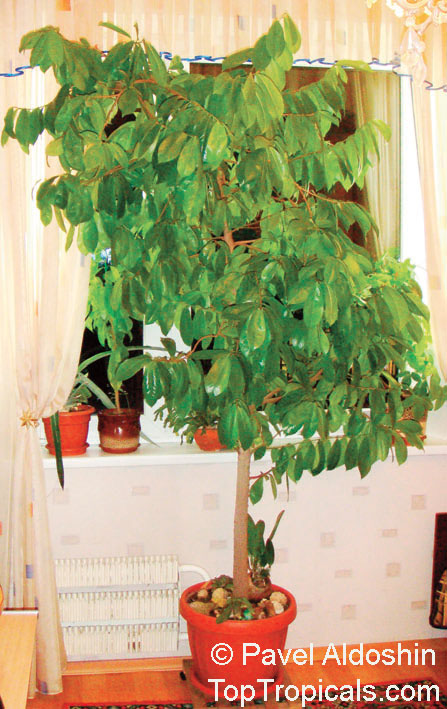
Q: Since I have never grown a soursop tree before I need some pro help. My tree was delivered absolutely beautiful, leaves were a pretty green. I potted it and gave it a good drink of water and put it in a shaded area outside. Then the weather here became cool so I brought it in for a few days until the weather warmed, and it lost all the leaves. Is it in shock and will come around eventually? Will I be able to grow this tree indoors during winter?
A: Soursop - Annona muricata trees are very sensitive to temperature drops. This always causes leaf loss. You seem to be doing everything right. Do not water until soil gets slightly dry; keep it in bright shade. The weather should be good now with high temperatures and humidity rising. No fertilizer until the plant shows active new growth. Be patient with your plant, it should recover soon.
Soursop is an ultra-tropical tree and doesn't take any freeze. If you live in cooler climate, keep the plant in a pot (the good news is,
Annonas in general have compact nature and are perfect for container culture). Bring the tree indoors during cold period,
providing bright light.
Remember that grafted trees start flowering and producing fruit right away, unlike seedlings of Soursop that may take a few years till
fruiting.
We have very interesting article about growing and fruiting Soursop in apartment. Check out Tropical Treasures Magazine #7
Date: 24 Feb 2017
TopTropicals news, sales and updates
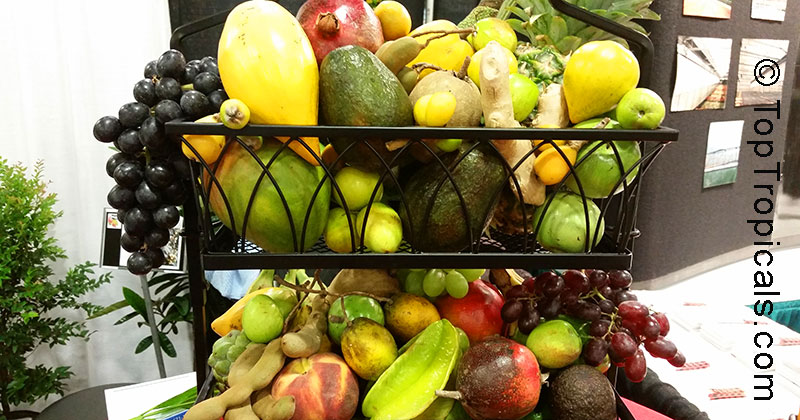
Extended sale 15% off on all fruit trees! Take advantage of our "Spring is coming!" fruit tree sale extension 15% off on all fruit trees and spices, including mango new exclusive varieties. No minimum order required. Hurry up, sale extension ends on Saturday, Feb 25.

Radio Top Tropicals Live Webcast upcoming event: Saturday February 25, at 11 am EST.
Topic: GROW YOUR OWN! DUDE!
1) Herbs, both annual and perennial.
2) Fruit trees.
3) Foods once thought to be only ornamental.
Our Host Robert Riefer - Internationally Certified Crop Adviser - answering all your questions.
Listen to Radio Top Tropicals, every Saturday, at 11 am EST! You may use our website radio player DURING AIR TIME and see the pictures of plants we are talking about. To ask questions using live chat, you need to log in at Mixlr.com or simply call our office 239-887-3323 during air time!
If you missed a live webcast, you may listen to recording by following Showreel item link.
Check out our upcoming radio shows and get your gardening questions ready!
Pisces Zodiac lucky plants

Pisces- 2/19 - 3/20. As a WATER sign ruled by both Jupiter and Moon (and Neptune, that was not discovered until 1846, after the plant correspondences were established; Neptune is considered a "higher octave" of the Moon), Pisces plants are often large but hard to find, and may grow near the ocean. The most healing plants for Pisces are those that strengthen the immune system or have an antibacterial effect. Pisces plants may also catalyze expanded states of awareness and be helpful in dream work.
Herbs connected to Pisces are ruled by its former ruler, the Moon (Neptune, the current ruler, was not discovered until 1846, after the plant correspondences were established; Neptune is considered a “higher octave†of the Moon). Diseases of Pisces have traditionally included psychotic disorders, various forms of substance addiction, lung diseases such as tuberculosis, and ailments of the foot; contemporary herbalists also add immune system diseases. Pisces is strengthened by rosemary's ability to promote an aura of centered grounding. This protective herb helps strengthen boundaries and cultivate a closer connection to the physical realm.
Pisces Zodiac lucky plants: Water lily, Lotus, Clematis, Wisteria, Lisianthus, Brunfelsia, Echinacea, English Lavender, Rosemary, Coconut palm, Cranberry, Clove, Coccoloba, Sea Oats, Mangroves, Ochrosia, Aquatic plants, Colocasia, Alocasia, Aralia, Ficus trees, Banyan, Peepal, Banana, Mango, Mimosa, Olive, Anise, Vilca and Yopo, Kava-kava, Nutmeg, Anthuriums, Eucalyptus, Bauhinia, Clusia, Caesalpinia, Callistemon, Bucida, Cassia fistula, Cordia, Calabash, Lipstick palm , Delonix, Elaeocarpus, Erythrina, Fatsia, Guaiacum, Mahoe, Koelreuteria, Kopsia, Macaranga, Pandanus, Peltophorum, Psychotria,Banesteriopsis, Tabebuia.
For links to these plants and other signs information, see full Plant Horoscope
Date: 13 Feb 2017
New Video. Radio Top Tropicals.
New Video: 10 plants that will make you happy, Plant #2 - Candle Tree.
We continue your series about Ten Plants That Will Make You Happy. Today's story is about Candle Tree... one of the most fascinating ornamental and fruit trees in cultivation. This unusual plant will be a conversation piece of your plant collection. Happy candles will help you to cope with a cold and will definitely make you happy.
Visit our Facebook, YouTube Channel and stay happy!
Check out this video: 10 plants that will make you happy. Plant #2 - Candle Tree.
Stay updated with TopTropicals Videos by subscribing to our channel at YouTube.com/TopTropicals and get our latest video news of what's fruiting and blooming!
Radio Top Tropicals - every Saturday 11 am! Introducing Radio Top Tropicals. Our first live webcast last Saturday was a success.
The topic was Plants of Love - Aphrodisiacs.
The webcast followed our Valentine's Day local sale.
We are extending this sale for 2 days, from local customers, to those who live in other states. Hurry up and take advantage of this generous 25% off on Plants of Love - Aphrodisiacs! Sale ends end of Valentines day, Tuesday, February 14.
Our next air time: Saturday February 18, at 11 am.
Topic: WEED OR WONDER PLANT?
We will explore plants considered invasive species, or weeds, here in Florida, and reveal interesting and not-so-well-known facts about them. Our Host Robert Riefer - State Certified Crop Adviser, and Weed Specialist - answering all your gardening questions.
Listen to Radio Top Tropicals, every Saturday, at 11 am! You may use our website radio player DURING AIR TIME and see the pictures of plants we are talking about. To ask questions using live chat, you need to log in at Mixlr.com or simply call our office 239-689-5745 during air time!
Check out our upcoming radio shows