Garden Blog - Top Tropicals

Date: 19 Jan 2021

Healthy Plants: Q&A from Mr Booster

Fertilizing in Winter
Q: I have many tropical plants in my garden, both in the ground and in pots. I realize it is wintertime and some of them, the Hydrangea, Hibiscuses, and roses are in bloom but the rest of them seem wilty and droopy. Is it alright to fertilize them now, or should I wait for a few days? I have an all purpose tropical fertilizer and a 20-20-20 also. Please advise what to do.

A: During wintertime, tropicals may suffer from low temperatures and lack of sunshine which causes droopy leaves, and leaf loss.
Regardless of the cause and plant condition, you should NEVER apply traditional dry fertilizers during cool months. When cold, dry fertilizers (EDTA-chelated) may create nutrient lock up in soil and damage the roots. Dry fertilizers (both granulated and water-soluble) can be used only during hot season - when min temperatures stay above 65F for at least a week in a row, and daytime temperatures are over 75-80F. During hot, active growth season plant metabolism increases. This provides less chance for a chemical root burn, as the nutrients are used up quickly.

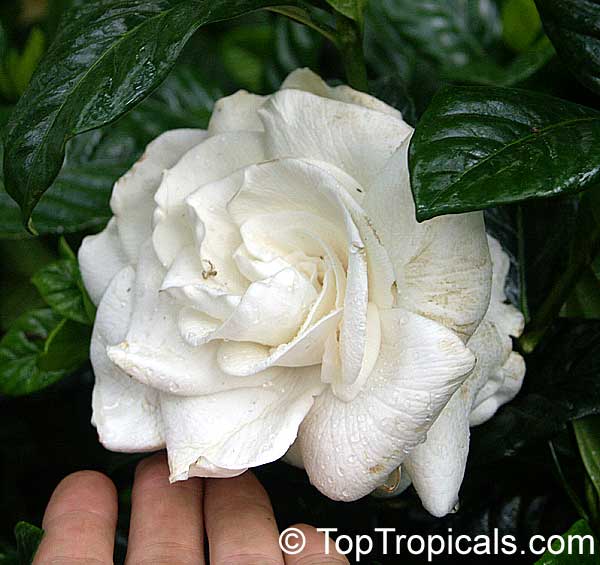
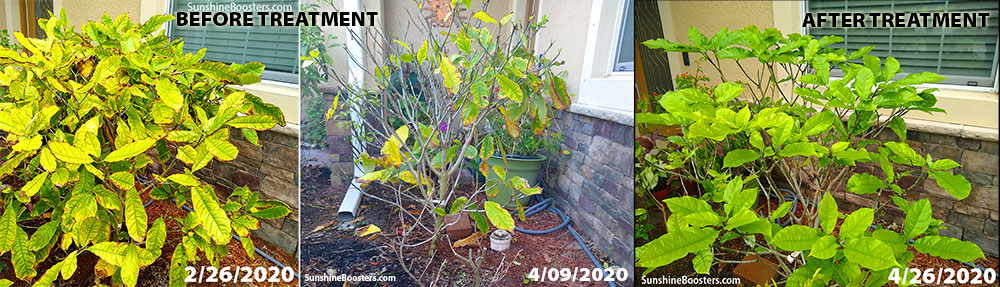
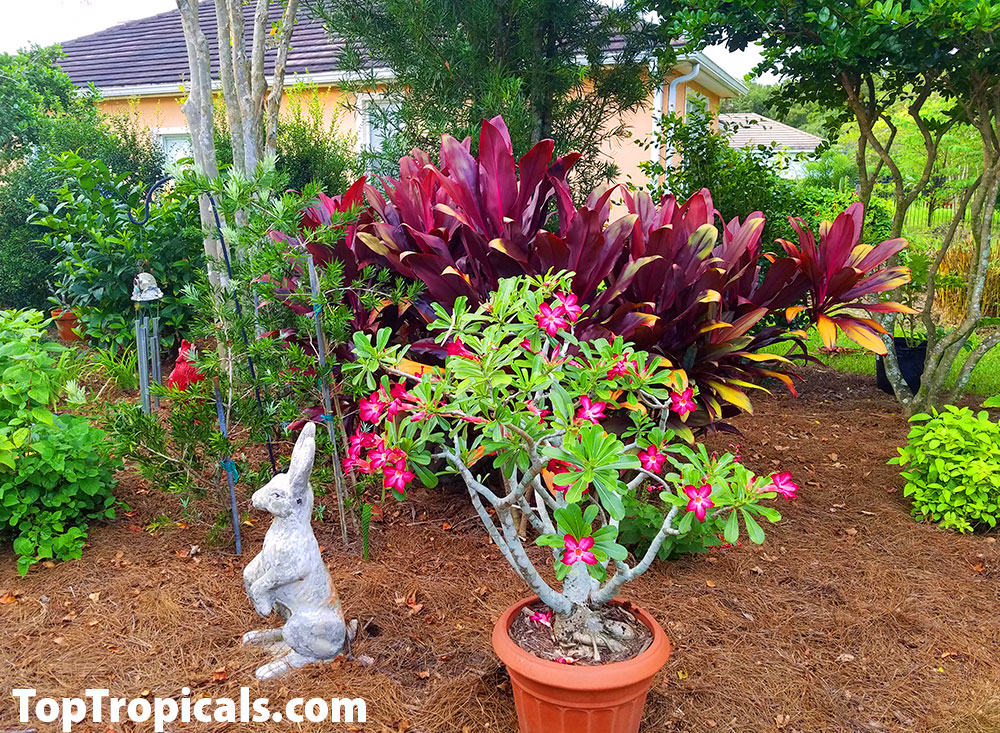
However, liquid fertilizers, as long as they are amino-acid based, can be used year round. From our own experience last winter, we discovered that fertilizing sickly looking plants (with signs of cold damage and root issues) with Sunshine Boosters actually revived those plants. Sunshine Boosters even brought back to life some hopeless specimens. Take a look at this gardenia that grows in our garden (picture above). See full article.
In your case, it would be beneficial to use a mild formula of liquid boosters in combination with Sunshine Epi -a natural plant hormone that boost their growth and helps to cope with cold-, temperature- and low-light-related stress.

These are the products we recommend:
- Sunshine Bombino - add to every watering
- Sunshine Epi - twice a month as foliage spray

Since you grow plants in pots, feeding program is especially essential, because plants are limited with a container size where roots can't reach out to more food in the outer soil. In professional nursery set up with injector irrigation systems, container plants are fed daily (depending on season, more than once a day) with every watering. This is why greenhouse plants are so healthy looking.
So feel free to give your plants Sunshine boosters with every watering, dozing according to the label. During cold period, plants need less frequent watering, so fertilizer input will be balanced accordingly, it will depend on temperature and plant metabolism.
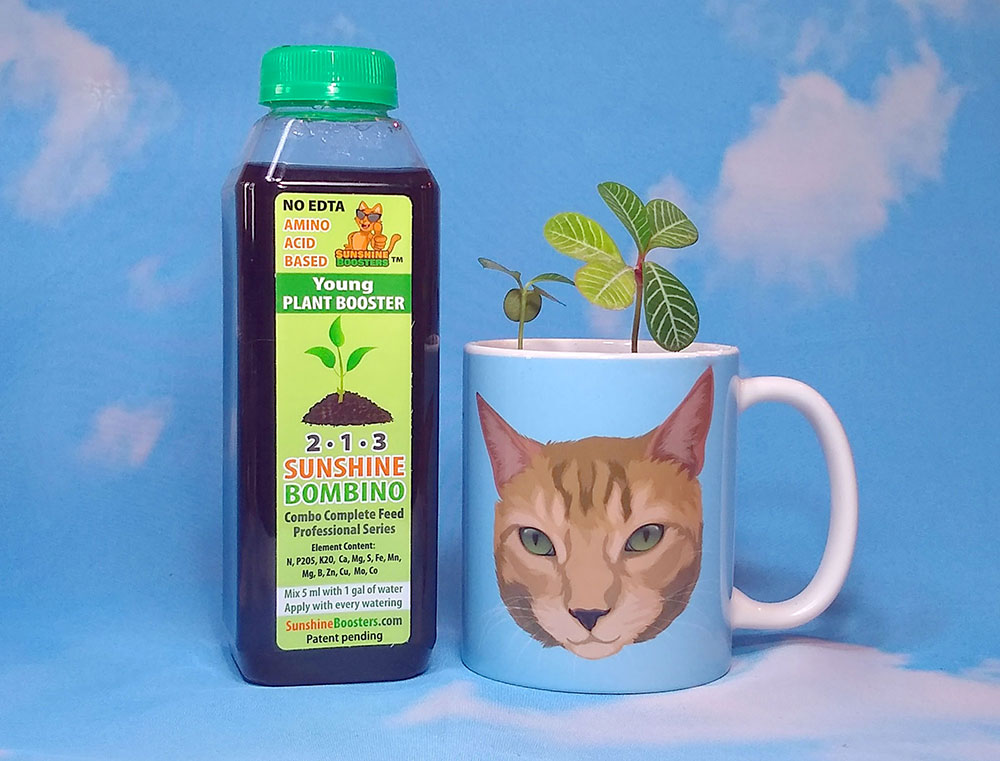
Sunshine Bombino - mild, "pampering" formula for young and tender plants, as well as plants recovering from stress and/or winter damage.

Date: 24 Nov 2020

Healthy Plants: Q&A from Mr Booster

How not to kill gardenias?

Q: I have tried to grow gardenia in pots for years and never keep them alive. When i look on camellia websites they say fertilize potted plants twice a year. I'm confused as I tend to kill them with kindness haha. Also, if our tap water has high cal/mag and that stops the gardenia getting other nutrients why would I make up the feed with tap water? So confusing and online is mixed messages...

A: Gardenias are not the easiest plants to grow, however, they are easier in pots than in the ground: they prefer acidic soils, and in many areas soils are alkaline. The most important factor is balanced and sufficient nutrients. In the ground, plants have no limits to reach out to different elements by spreading their root system. In a pot, once all the good stuff is consumed, plants start suffering nutrient deficiency. This is why a balanced feeding program is important.

Generally speaking, Cal/Mag in tap water cannot be bad, because they are essential elements, good for plants (in proper amounts). However, just Cal/Mag is not enough. This is why you need a balanced liquid fertilizer for plants that prefer acidic soil. Excessive Cal/Mag alone can create nutrient lock up, especially if they are chelated with EDTA like in dry fertilizers, which are not fully accessible for plants.
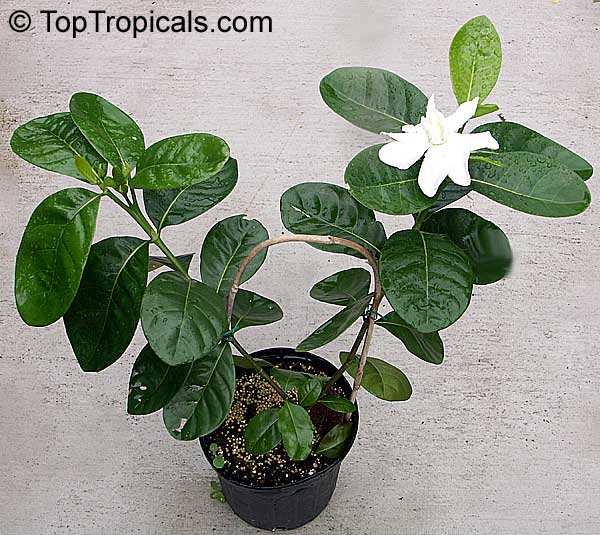
We recommend natural, Amino-Acid based fertilizers that are completely consumed by a plant and are safe to use with EVERY watering, even in Winter. They are scientifically formulated and cover all plant needs. For your gardenias, you should use SUNSHINE Pikake - Fragrant Flower Booster.
Another important factor is proper watering. Gardenias like regular water but don't like wet feet = well drained potting mix is a must, similar to Abundance professional growing mix.

Date: 13 Aug 2019

What are the most rare fruit trees?

Q: What is the rarest and unusual plant that you have? I want something special for my tropical fruit tree collection. I already have everything I could possibly get...

A: Are you sure you have everything? Check out our rare plant section, and look at these couple plants we just received... these won't last long, we have only a few!

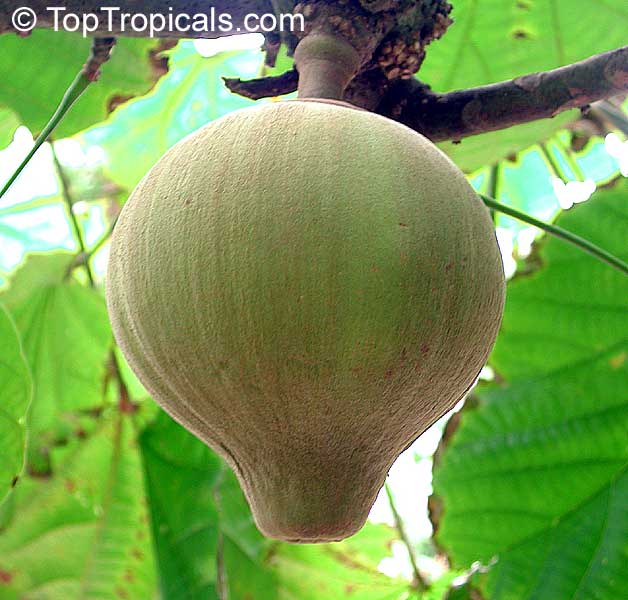
Quararibea cordata - Zapote Chupachupa, South American Sapote (with express shipping)

Chupa-chupa, Zapote, South American Sapote... One of the most amazing and showy tropical fruit trees with huge heart-shaped leaves, heart-shaped fruit, and fast-growing habit. The fruit has a bizarre shape like a large breast with a nipple, and the pulp is very tasty. For best performance, the tree needs full sun, rich soil, plenty of moisture and fertilizer.

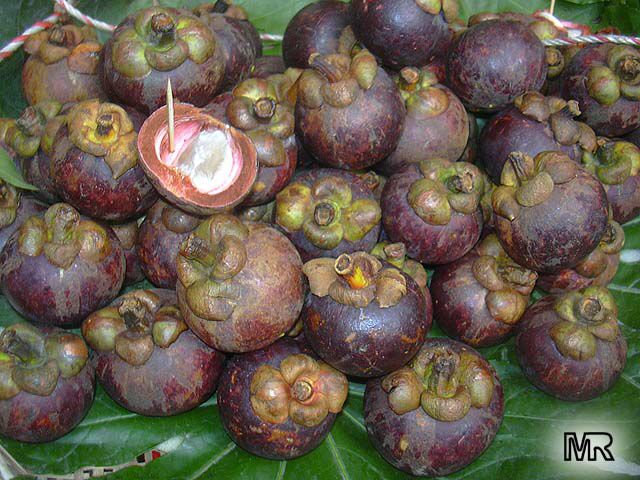
Garcinia mangostana - Mangosteen

Mangosteen... This delicious fruit has a thick, dark-red skin, inside which are creamy-white segments with a sweet, slightly tart flavor. Purported by many who have had the luxury of tasting it as being the best tasting fruit in the world.

Date: 23 Apr 2019

Fruit tree size and production

TopTropicals.com

Q: I am interested in a Strawberry Tree... does this tree produce fruit while still small or do I have to wait until it is large before it produces? Should I fertilize it so it produces sooner? I ask because my garden is not large and I prefer to keep my fruit growing trees in a smaller size. Also, how big is the fruit and does it have a seed?

A: Strawberry Tree, Muntingia Calabura, is one of those fascinating fruit trees that starts flowering and fruiting in small size. We have plants growing in 1 gal containers that already have flowers. This tree is nearly year-round producer providing warm conditions. It is a fast grower, although a compact tree when mature, and can be trimmed to desirable size without affecting production.
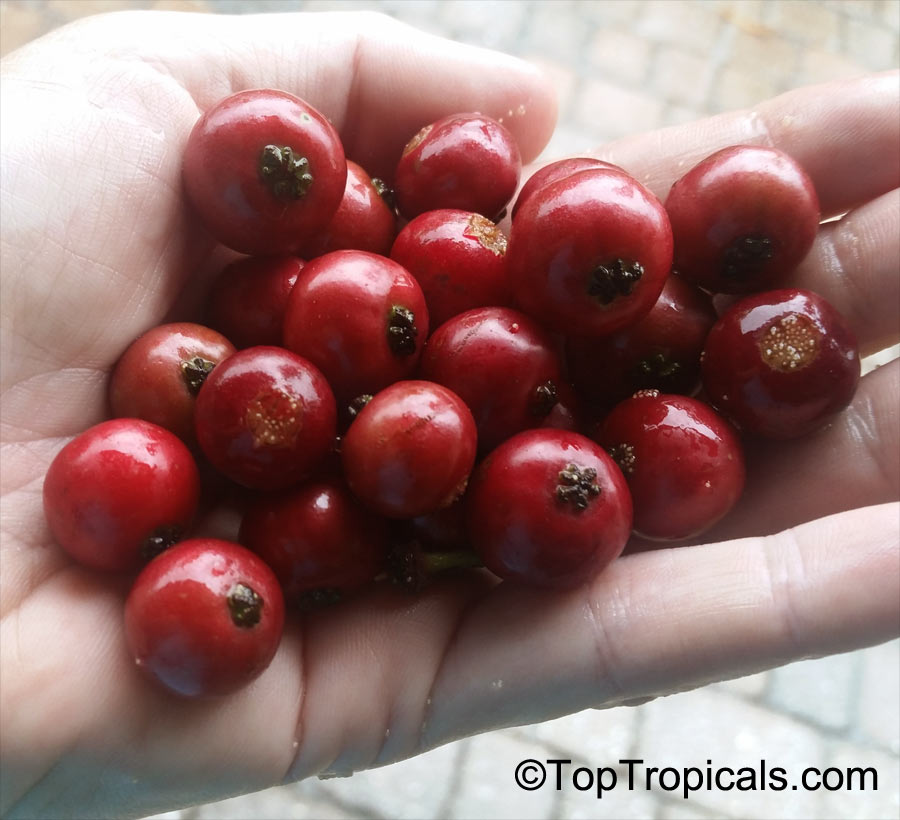
Muntingia fruit is one of our favorites. It is super sweet and juicy, and the seeds are tiny small, not bigger than the strawberry seeds, so you don't have to spit them out. The fruit size normally about 1/2 inch, but we have a tree in our garden that produces almost cherry-size fruit! See picture above. The secret is, good watering and using fruit booster - SUNSHINE honey micro-element supplement. We also fertilize our fruit trees using Fruit Festival and Mango-Food fertilizers.

Date: 26 May 2024

How to grow Bottle brush trees

Callistemon  -  Bottle  Brush  Tree

Q: Please recommend me a cold hardy flowering tree that doesn't need much care.

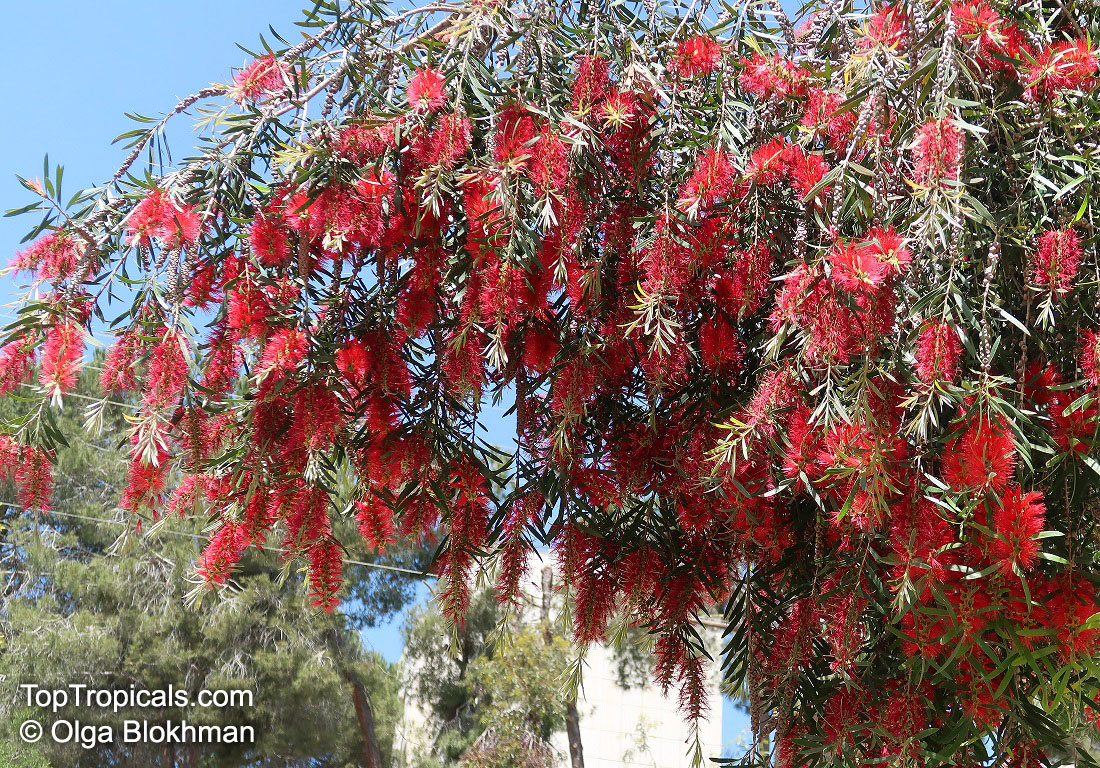
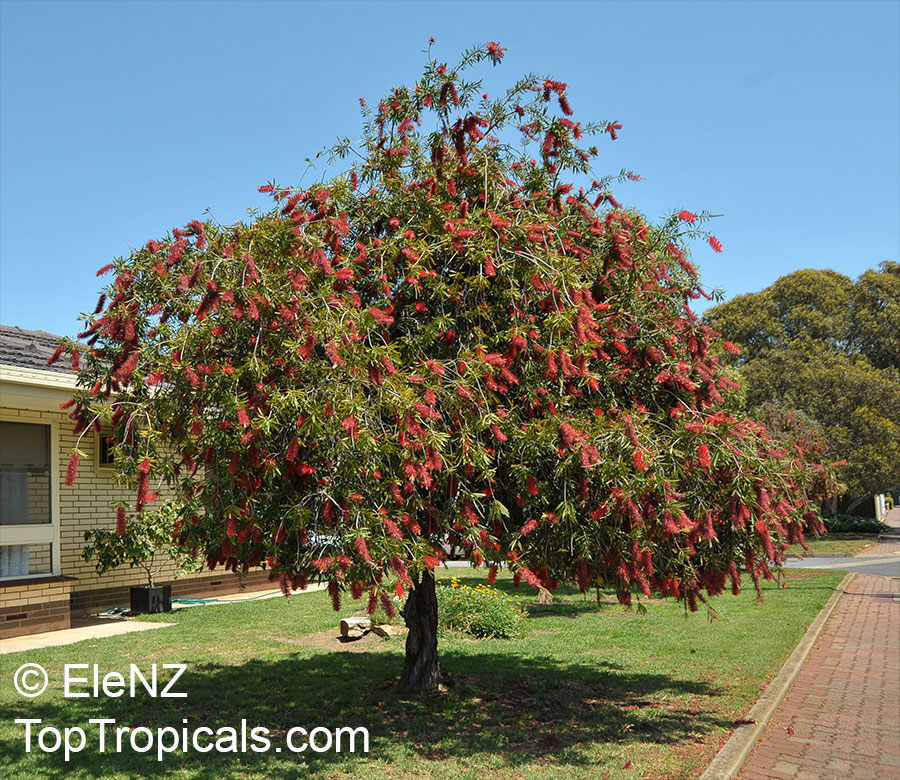
A: Growing bottle brush trees (Callistemon spp.) can be a rewarding experience, as they are known for their striking, brush-like flowers and ability to attract pollinators. Here are some detailed tips to help you successfully grow and maintain these trees.

Hardiness

Bottle brush trees are best suited for USDA hardiness zones 8-11. They thrive in warm climates and can tolerate some light frost, but severe cold can damage or kill the plant.

Planting Location

Sunlight: Bottle brush trees require full sun to thrive. Ensure they get at least 6-8 hours of direct sunlight per day.
Soil: They prefer well-draining soil. While they are relatively tolerant of poor soil conditions, a sandy or loamy
Space: Consider the mature size of the tree when planting. Some species can grow quite large, so provide enough space for them to spread without being crowded by other plants or structures.

Attracting Pollinators

Bottle brush trees are popular with pollinators. Their bright, nectar-rich flowers attract bees, butterflies, and birds, particularly hummingbirds. This makes them an excellent choice for a garden designed to support local wildlife.

Blooming and Fertilization

Bottle brush trees typically bloom in late spring to early summer. However, in mild climates, they may have sporadic blooms throughout the year.
Fertilization: While bottle brush trees do not require heavy fertilization, applying a balanced, slow-release fertilizer in spring can promote healthier growth and more abundant blooms. Be cautious not to over-fertilize, as this can lead to excessive foliage growth at the expense of flowers. During the year, use |find_name=Sunshine Boosters Megaflor(Sunshine Megaflor)| - it is safe to use with every watering, year around.

Watering

During the establishment period, keep the soil moist. Once established, they are quite drought-tolerant but will benefit from regular watering during dry spells.

Pruning

Prune after flowering to maintain shape and remove any dead or diseased branches. This also encourages bushier growth.

By following these guidelines, you can enjoy the beauty and benefits of bottle brush trees in your garden. Their vibrant flowers and attraction to pollinators make them a delightful addition to many landscapes.

Callistemon  -  Bottle  Brush  Tree