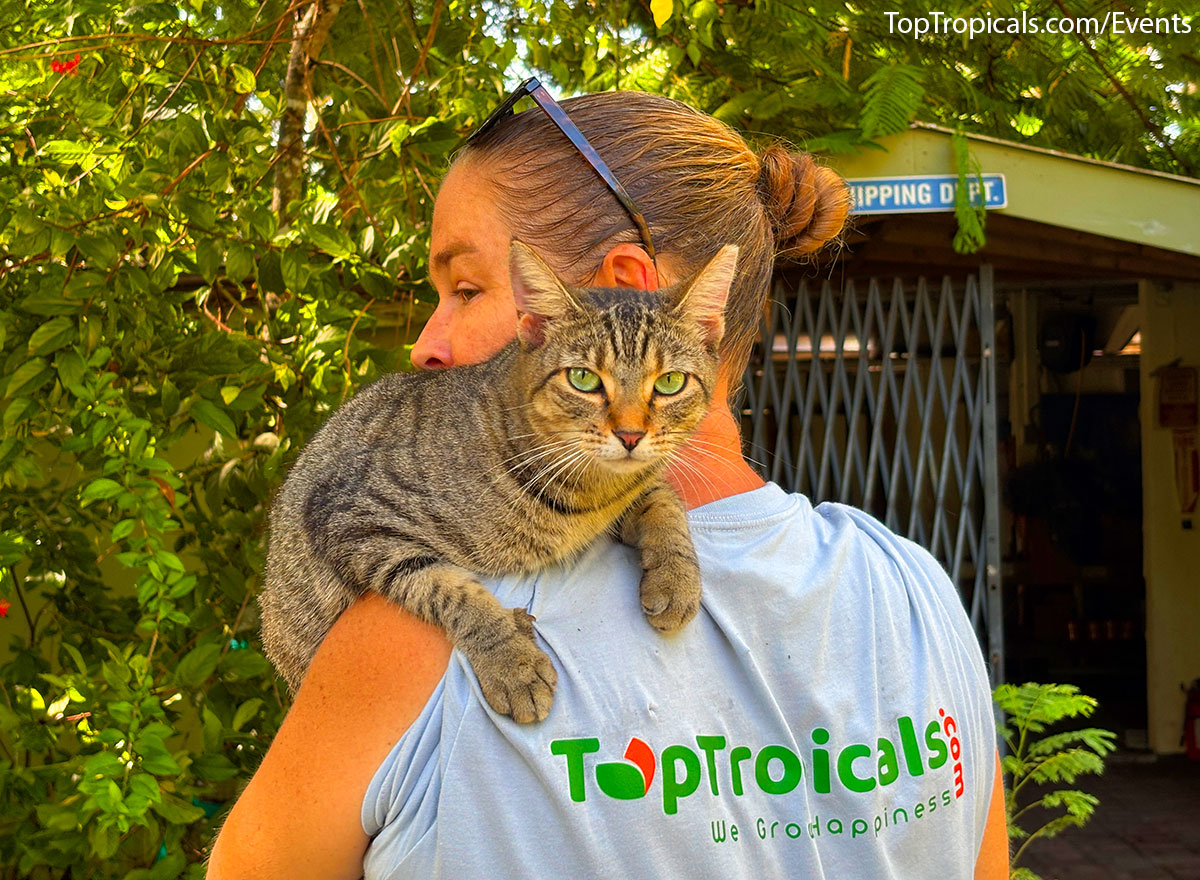
Kristi Vanbenschoten, Top Tropicals manager, and
Persephone the cat
Thank you to everyone who came out and supported our Holiday
Plant Market last Saturday, December 13, 2025. It was great to see
familiar faces, meet new visitors, and watch the garden fill with people
exploring, asking questions, and choosing new plants to take home. Our
CatsPeople were busy greeting guests, supervising carts, and making sure
everyone felt welcome. Your support and good energy are what make these
events special for us. We hope your new plants settle in
beautifully, and we look forward to seeing you back in the garden soon!
9 tough trees for hot, dry spots that actually thrive
☀️ 9 tough trees for hot, dry spots that actually thrive
Why that one brutal spot in your yard never works? There’s always that one place - blazing sun, sandy or rocky soil, dries out fast, and everything you plant there struggles. In Florida, Arizona, and California, this isn’t rare - it’s the norm. The good news? Some trees don’t just tolerate it - they prefer it. Once established, these picks handle heat, drought, and neglect far better than typical landscape plants. What makes these trees different? These are survivors. Many store water, have deep root systems, or evolved in dry climates. Translation - less watering, fewer losses, and a lot less frustration.
🔥 9 best trees for hot, dry spots
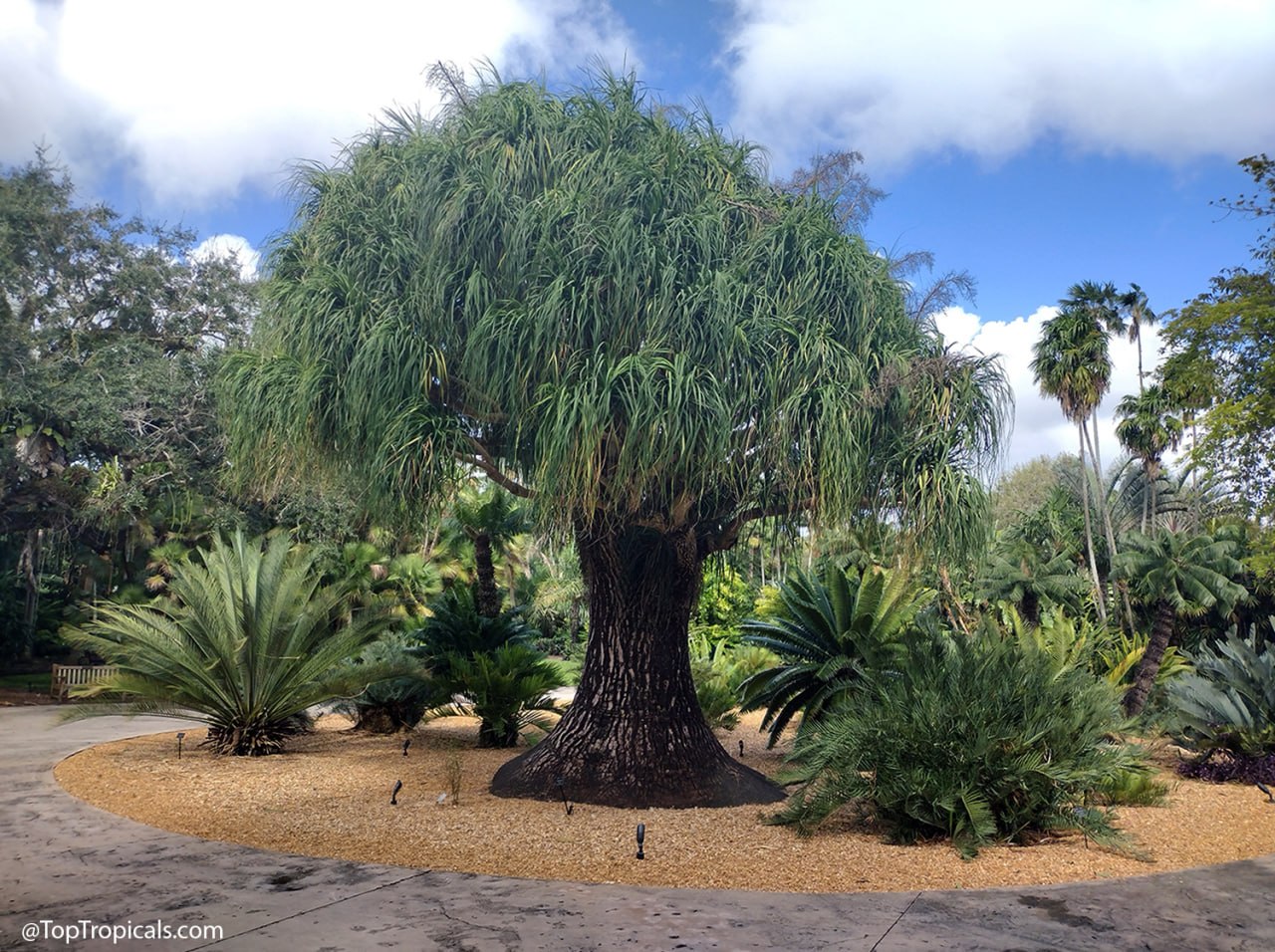
☀️ 1. Pony Tail Palm - Beaucarnea recurvata 📸 Not a true palm - it stores water in its showy, swollen trunk, making it incredibly drought tolerant and perfect for harsh, dry areas.
Ponytail Palm Plant Facts
Botanical name: Beaucarnea recurvata, Nolina recurvata Also known as: Ponytail Palm, Pony Tail, Bottle Palm, Nolina, Elephant-foot Tree
☀️ 2. Monkey Ear Tree - Enterolobium cyclocarpum A fast-growing shade tree with curious seed pods, surprisingly tough in heat and drought, with massive canopy benefits.
Monkey Ear Plant Facts
Botanical name: Enterolobium cyclocarpum Also known as: Monkey Ear, Ear Pod Tree, Elephant Ear Tree, Eartree, Guanacaste Tree, Arbol de Guanacaste
☀️ 3. Firebush - Hamelia patens Technically a large shrub/small tree - thrives in heat, blooms nonstop, attracts butterflies, and handles dry conditions once rooted in.
Fire Bush Plant Facts
Botanical name: Hamelia patens Also known as: Fire Bush, Firecracker Plant
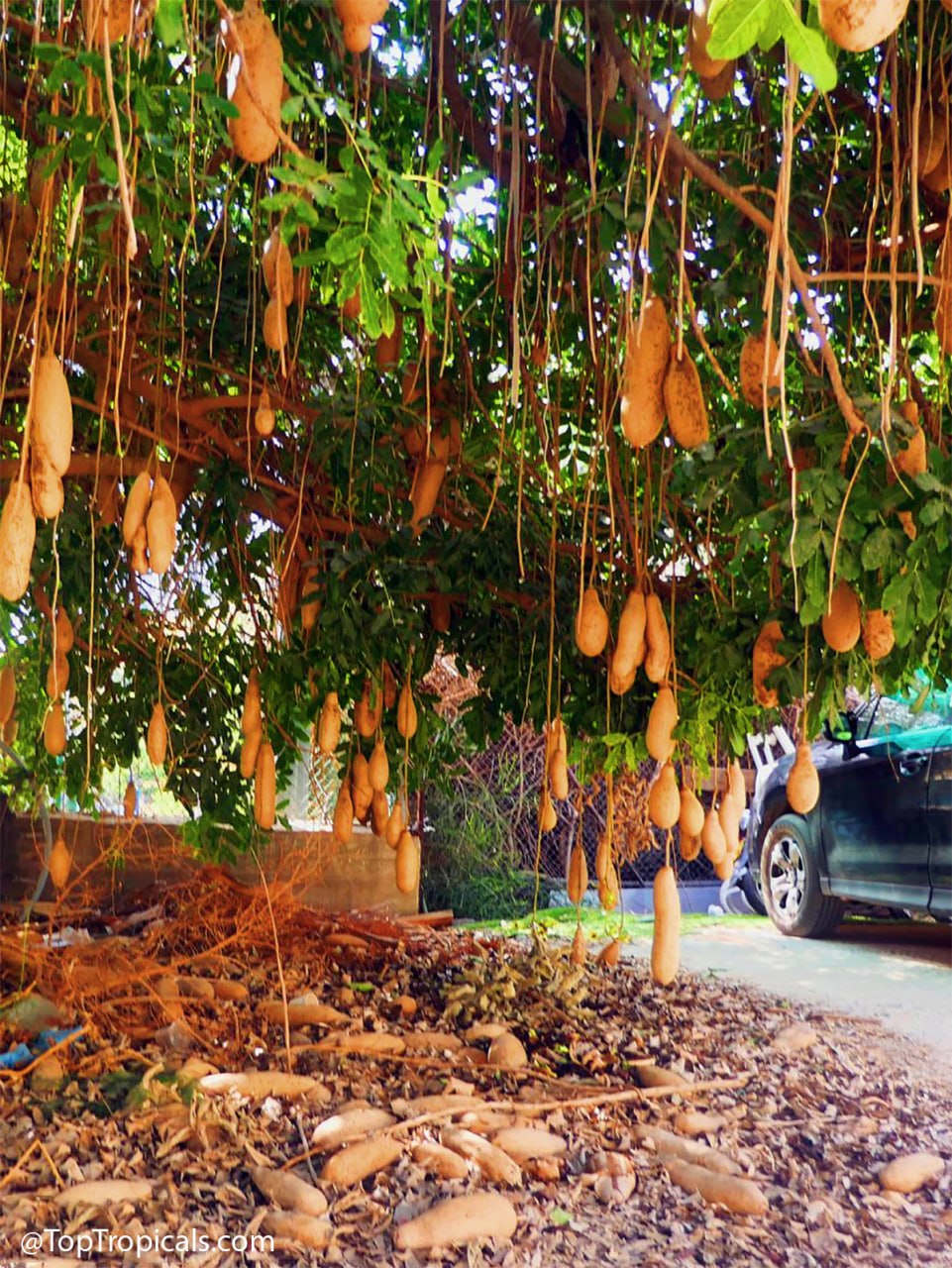
☀️ 5. Sausage Tree - Kigelia pinnata 📸 A bold tropical look with bizarre flowers and fruit, with serious heat tolerance; once established, it handles dry spells better than expected.
Sausage Tree Plant Facts
Botanical name: Kigelia pinnata, Kigelia africana Also known as: Sausage Tree
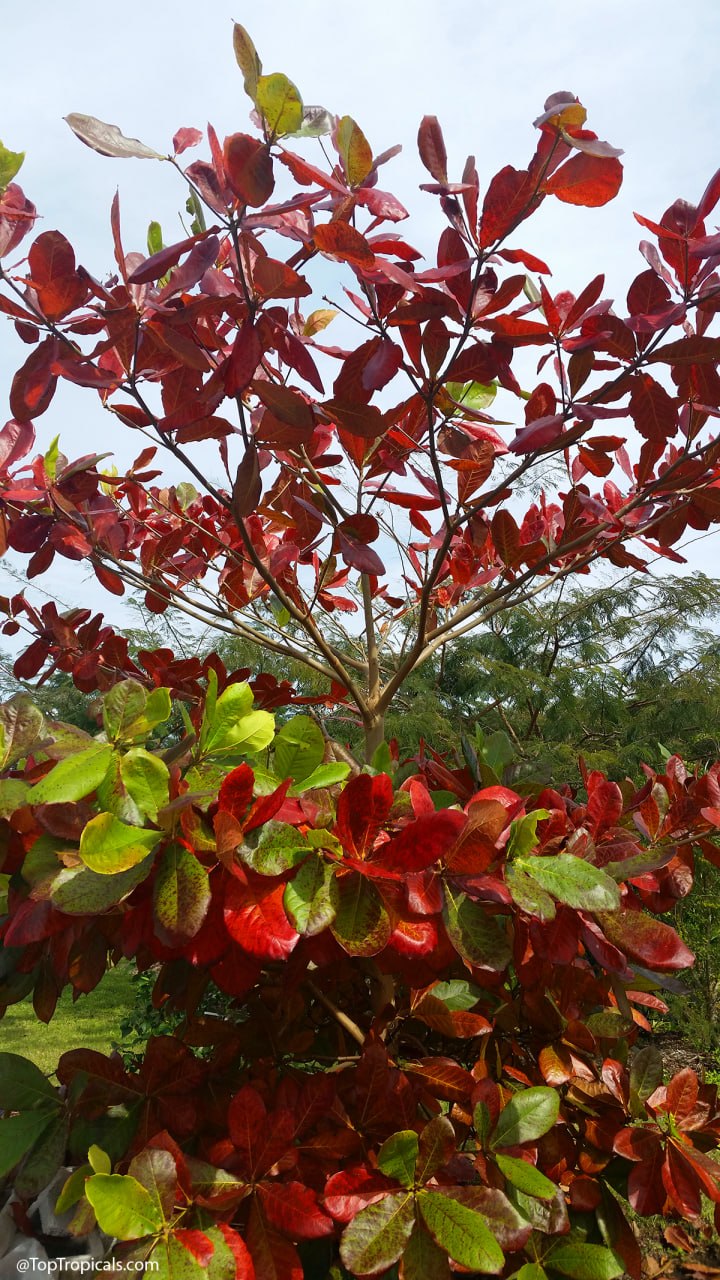
☀️ 9. Tropical Almond - Terminalia catappa 📸 A classic coastal shade tree that thrives in heat, wind, and dry sandy soil once established. Its broad, layered canopy provides excellent shade, and the large leaves turn striking shades of red and orange before dropping - a rare bonus color show for hot-climate landscapes. Plus almond nuts as extra bonus!
Tropical Almond Plant Facts
Botanical name: Terminalia catappa Also known as: Tropical Almond, Badamier, Java Almond, Indian Almond, Malabar Almond, Singapore Almond, Ketapang, Huu Kwang, Pacific Almond
💕 Why is this shrub everywhere in Southern landscapes?
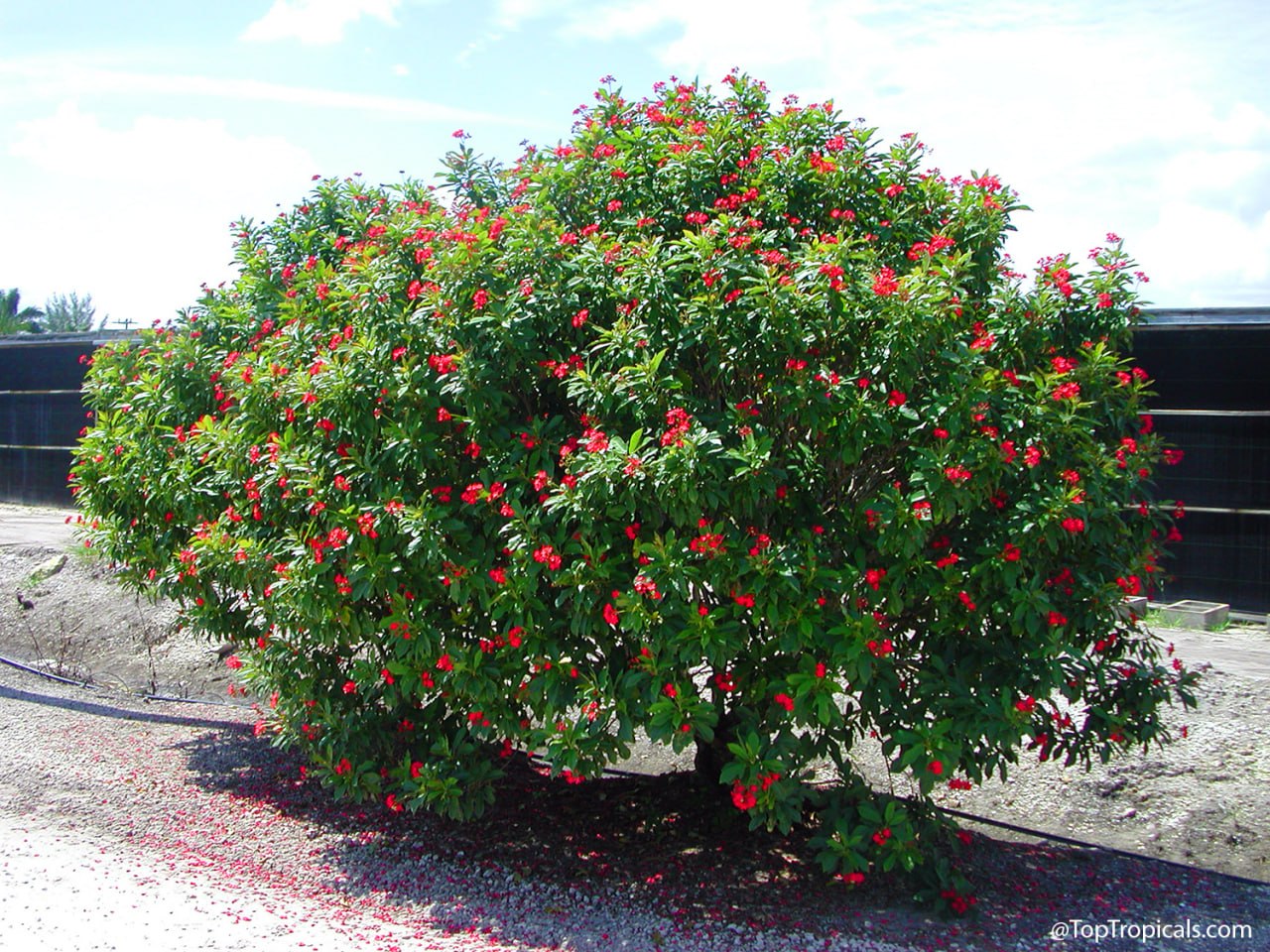
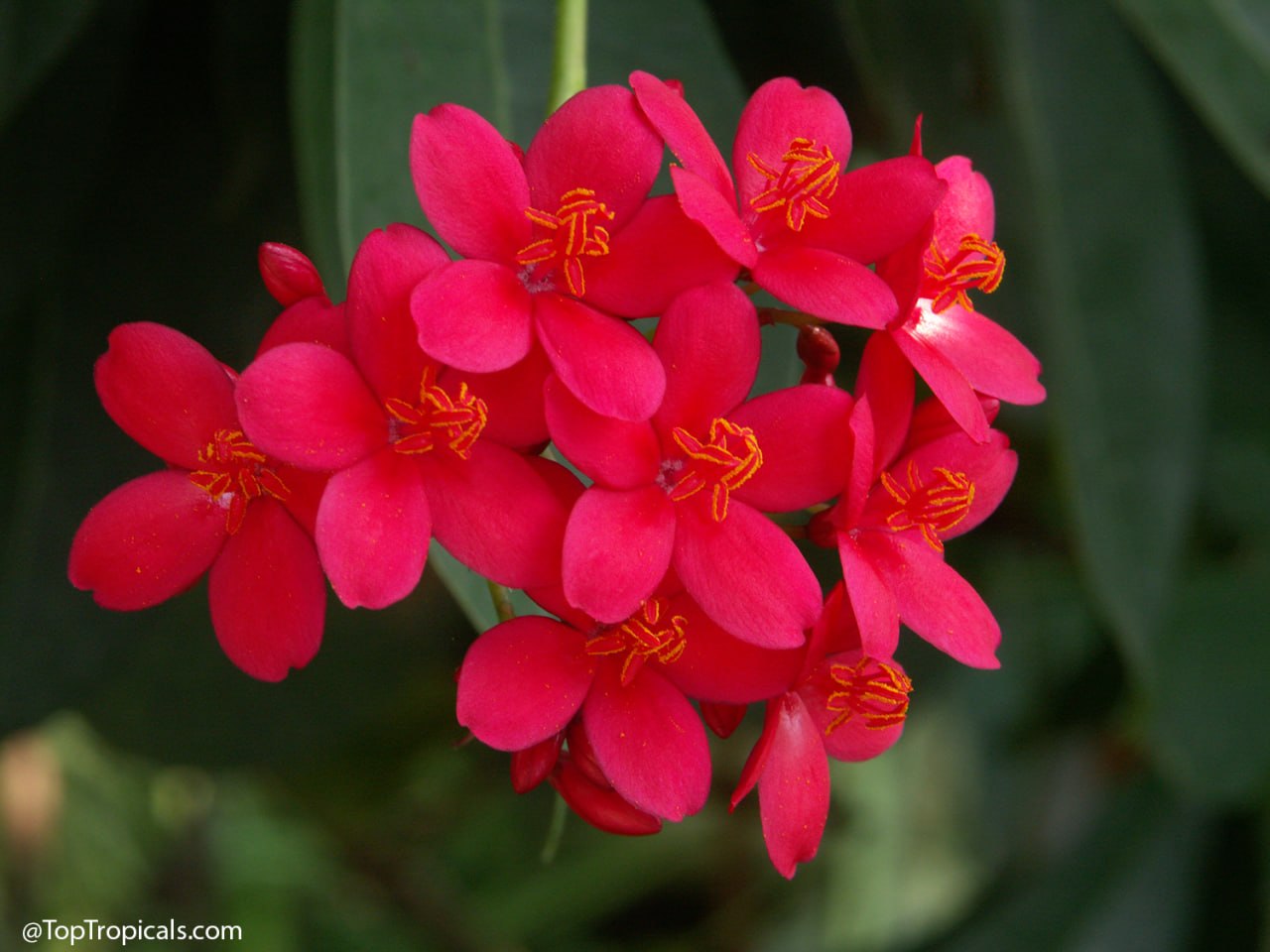
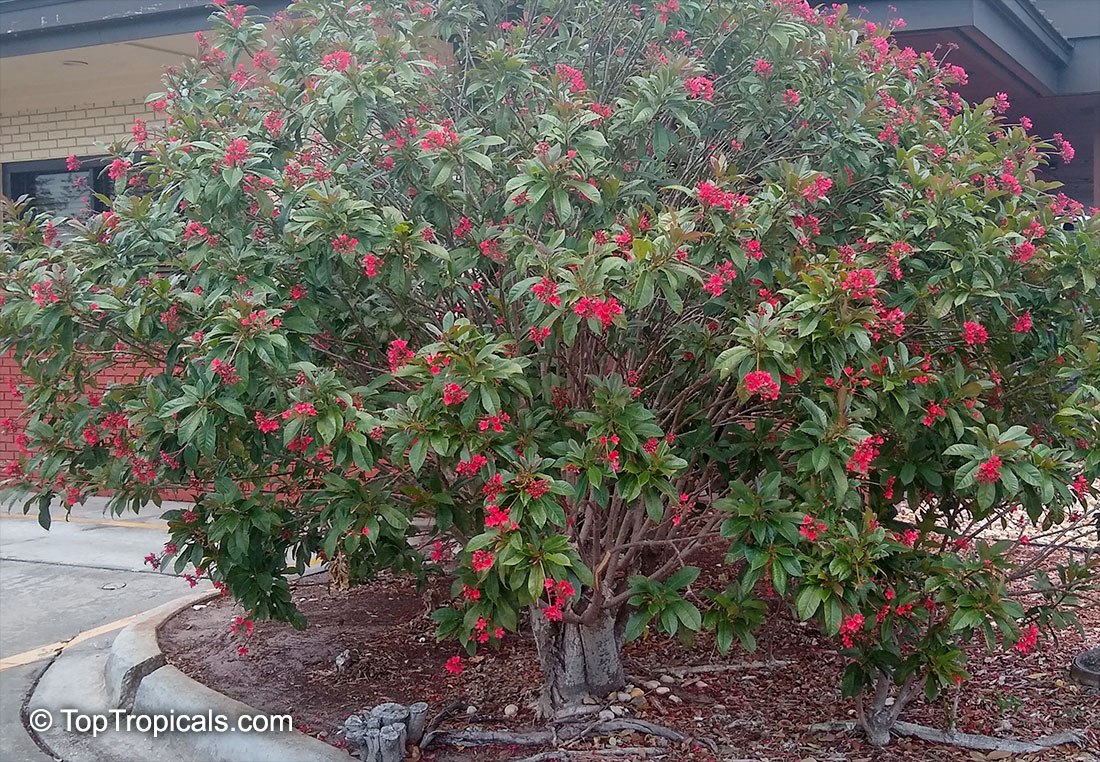
🌸 Nonstop blooms One look at Jatropha integerrima compacta - Peregrina and the answer becomes pretty obvious. This compact tropical shrub or a dwarf tree blooms almost nonstop with clusters of bright scarlet star-shaped flowers that butterflies can't seem to resist. In warm climates, it keeps adding color when many other plants take a break.
Peregrina Plant Facts
Botanical name: Jatropha integerrima, Jatropha pandurata Also known as: Peregrina, Spicy Jatropha, Coral Plant, Physic Nut
USDA Zone: 9 - 11
Highligths
🌸 Compact size, big impact Compacta stays smaller and fuller than the regular Peregrina, which makes it especially popular for foundation plantings, pool areas, patios, and smaller gardens where oversized shrubs become a headache. The glossy green leaves stay attractive year round, giving it a clean, lush look even when it's between bloom cycles.
🌸 Surprisingly low maintenance Another reason gardeners love it - this plant is surprisingly easygoing. It tolerates many soil types as long as drainage is good, handles heat well, and can be pruned almost anytime because it flowers on new growth. Want a tidy shrub? Trim it. Want a small tropical tree shape? It can do that too.
🌸 A Southern landscape favorite For Southern gardeners looking for reliable color without constant fuss, Peregrina has quietly become one of those "plant it and enjoy it" landscape favorites.
🔮 When the World Around Becomes Too
Gray: Plant a Tree. Eat a Donut. Keep going.
Sunshine: Smokey, what do we do when the world around
becomes too gray? Smokey: Plant a tree. Sunshine: And if that does not help? Smokey: Plant another one. Sunshine: And eat a donut. Smokey: Not strictly necessary, but statistically
beneficial.
If you have been feeling a little worn down lately, you are not
alone.
You already know about the headlines. We do not need to list them. You
have probably seen them today before breakfast.
We are not here to pretend that is not happening. It is happening. And
it is a lot.
But here is the thing we keep coming back to, the thing that has been true
for as long as people have had hands and a patch of ground: when the world
feels out of control, you can still plant something.
Gardening is not an escape. It is an answer. When you put a tree in the
ground, you are making a quiet statement. You are saying that you expect
there to be a future. That you intend to be in it. That shade and fruit and
flowers still matter, and you are going to make sure they exist in your
corner of
the world.
That is not naive. That is courageous in the most ordinary and
underrated way.
One tree, planted this season, might give you fruit in a few years. It
might give butterflies somewhere to stop. It might give a bird a place to
nest. It will almost certainly give you something to look at on a hard day
that
reminds you the world still contains beauty, and that you put some of it
there.
And if one tree does not quite do it? Plant another one.
Dostoevsky said beauty will save the world. We think a mango fruiting in
your backyard counts. So does a Magnolia opening on a quiet morning.
Do not skip the donut.
A donut is a small, simple, completely unnecessary thing. That is
exactly the point. It is not productive. It does not solve anything. It is
just
good, and sometimes that is the whole reason. In a world that constantly
demands
you be useful and informed and concerned, eating a donut is a quiet act of
being human. You are allowed to enjoy a small thing on a hard day. You do
not
have to earn it.
Rest a little. Then go put something in the ground. Anything that will
grow and flower and remind you that beautiful things are still happening
whether the headlines mention them or not.
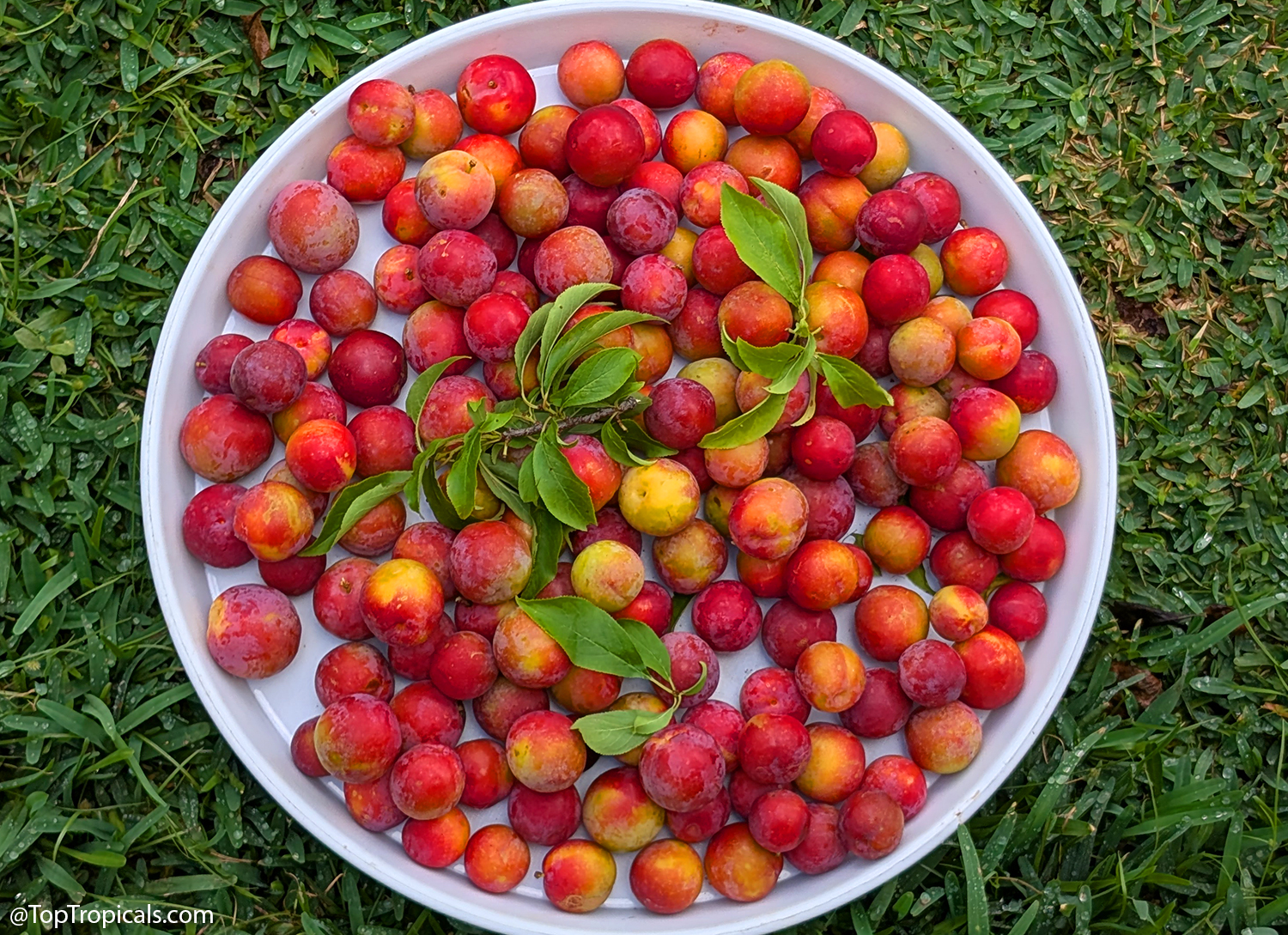
We just finished harvesting loquats
and mulberries,
and now another wave is coming in - low chill plums,
peaches, and nectarines fresh from the garden. This is one of
the most rewarding times of the year, when every season brings the fruit of
your labor and all that work finally turns into something sweet.
Most plants don't need more fertilizer - they need the right one at the right stage. Growth, flowering, and fruiting all require different support. Once you match feeding to what the plant is actually doing, everything starts to improve.
One system for every plant and stage
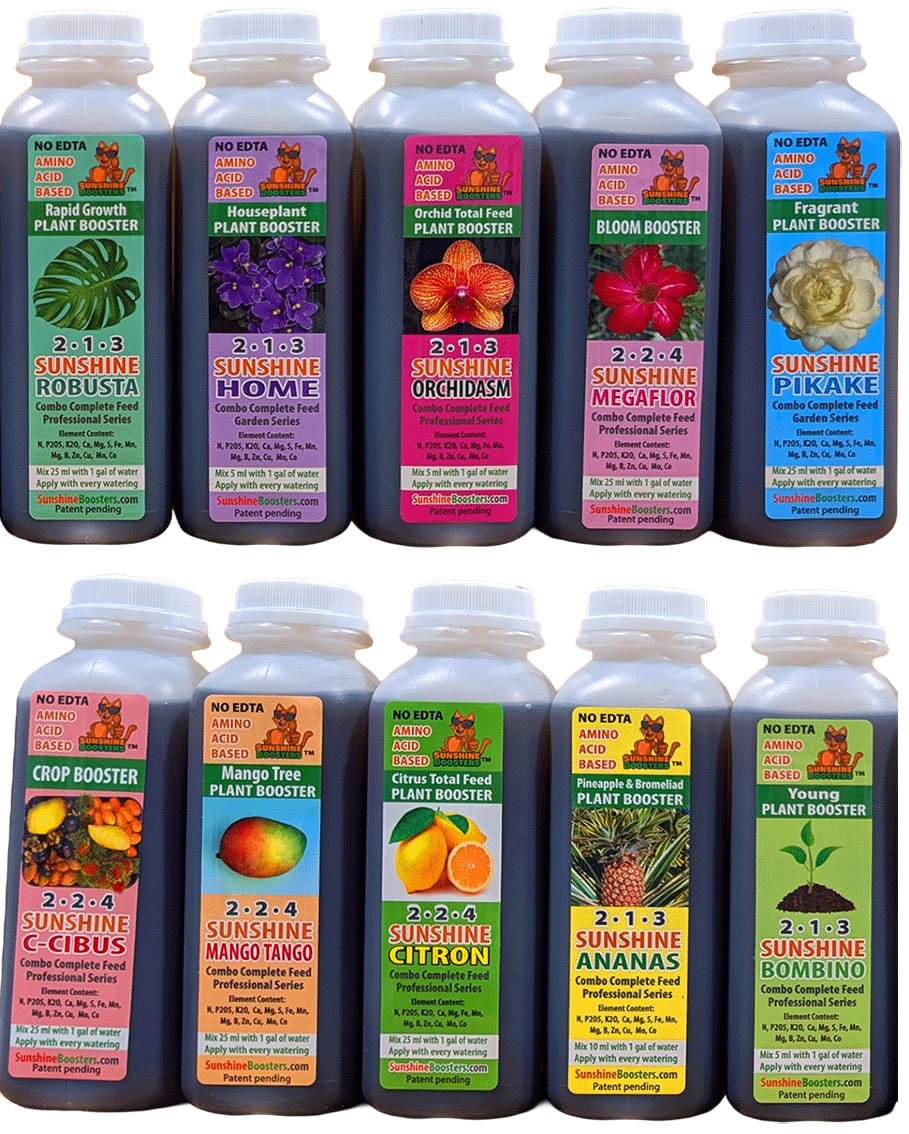
The Sunshine Boosters system includes different formulas for different stages of growth or plant types. Some are designed for young plants, some for vegetative growth, and others for flowering and fruiting. This allows you to match feeding to what your plant is doing without changing the overall system. All formulas, including additional supplements, remain compatible and can be used together when needed.
Build structure and foliage
Sunshine Robusta supports vegetative growth. It is useful for building strong structure, adding foliage, and helping plants recover after stress or damage. Sunshine Bombino is a gentle formula for young plants, seedlings, and cuttings. It supports early root development without stressing tender growth. Sunshine Home is made for indoor houseplants. It is mild and balanced for regular feeding of sensitive plants grown indoors.
Feeding for flowers Sunshine Megaflor is a bloom booster. It helps plants produce more flowers, improves flower size, and supports strong pollen development. Sunshine Pikake is designed for fragrant flowering plants. It increases the number of blooms and improves flower fragrance. Sunshine Orchidasm is a complete feed for orchids. It supports steady growth and encourages longer and more frequent blooming cycles.
Feeding for fruit and yield Sunshine C-Cibus is a crop and fruit booster. It is used during flowering and fruit development to improve yield and plant vigor. Sunshine Mango Tango is designed for mango trees. It helps improve flowering, fruit set, and reduces flower and fruit drop.
Mango Plant Facts
Botanical name: Mangifera indica Also known as: Mango
USDA Zone: 9 - 11
Highligths
Sunshine Citron is a complete formula for citrus trees. It supports healthy leaves, strong growth, flowering, and fruit production. Sunshine Ananas is made for bromeliads and pineapple. It supports healthy growth and improves fruit quality in these plants.
Pineapple Plant Facts
Botanical name: Ananas comosus Also known as: Pineapple, Pina
USDA Zone: 9 - 11
Highligths
To be continued - next we'll cover the additional boosters that take your plants from good to exceptional. More... Get your plants real food