Date: 23 Jan 2020
Datura: a fragrant treat for tropical or indoor garden
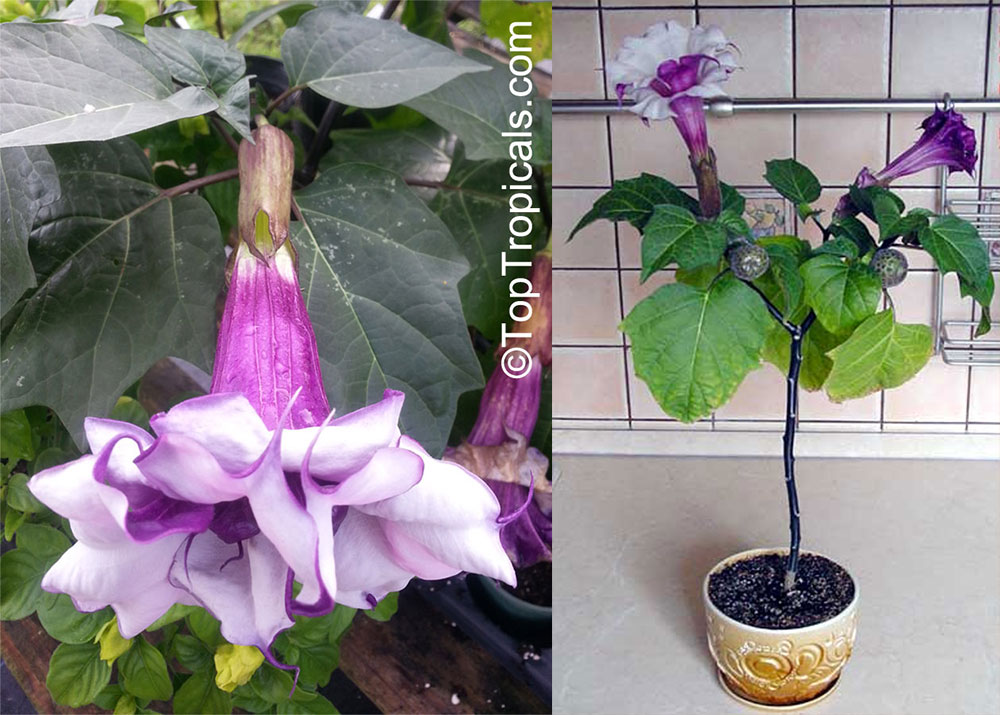
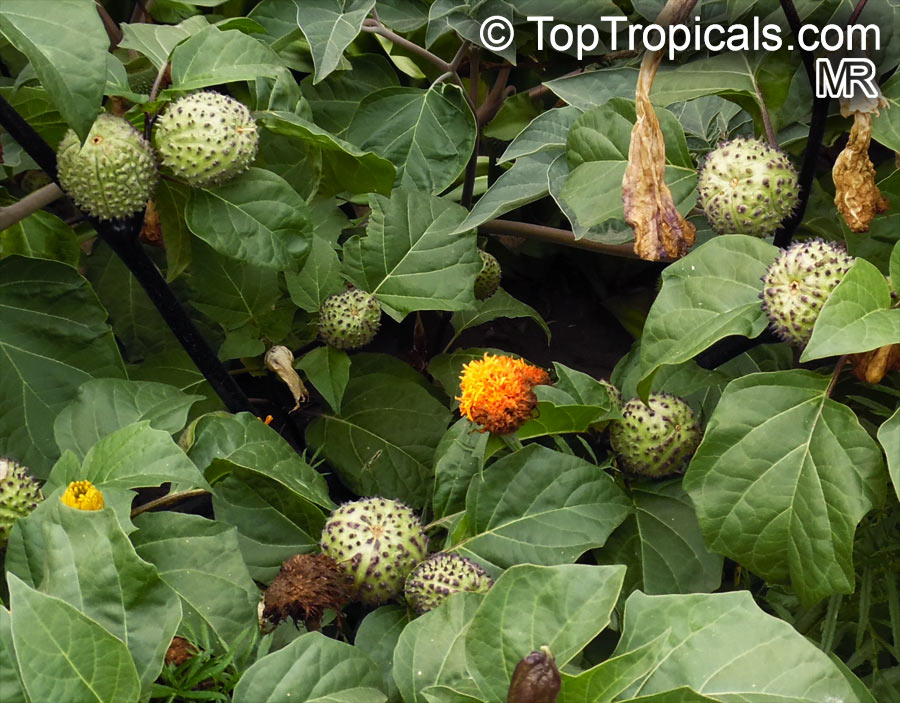
Q: A few years ago I purchased Datura from you and it was doing well. As a matter of fact I took cuttings and propagated new plants. Now they have markings on the leaves and I do not know what it is. Any remedy?
A: Generally, Datura is a bi-annual plant, unlike its close
relative perennial Brugmansia that grows for many years. Which means, Datura is
short-lived (2-3 years maximum for the same plant) although it seeds easily and
is a very fast grower, reaching from seedling to 4-5 ft size in a matter of
couple months.
At this time of the year, markings on the leaves may be a result of normal
aging (the plant may already exhausted its natural cycle) in combination with
a cool weather that affects the leaves and overall look.
Here at Top Tropicals we especially love this plant and keep up with
propagating new plants every few months. Propagation may be by means of seeds or
cuttings, but seeds are always better for stronger, longer-lasting Datura
specimens. A lot of times you will notice little baby seedlings around the Mother
plant, even if you think all seeds has been harvested.
Just continue growing younger plants from seeds, and Datura will always be
with you in your garden to bring you joy of showy scented flowers. It makes a
great houseplant too!

Date: 9 Sep 2019
How to make leaves green?
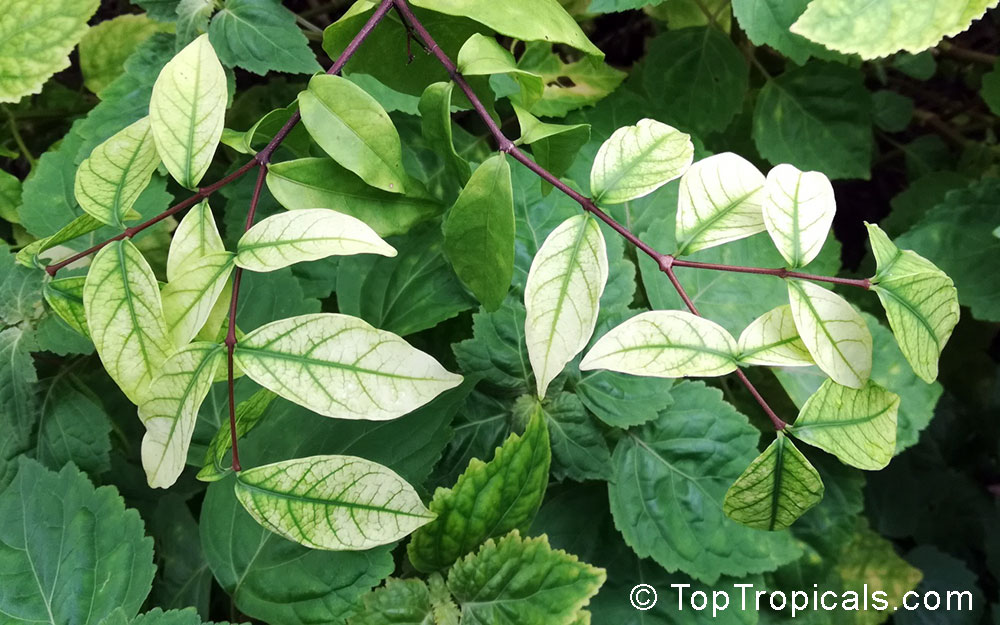
Q: I purchased several plants from you and they all arrived in great shape. The Wrightia is very large and vigorous but some leaves are yellowish. How can I improve that look? Any special fertilizer?
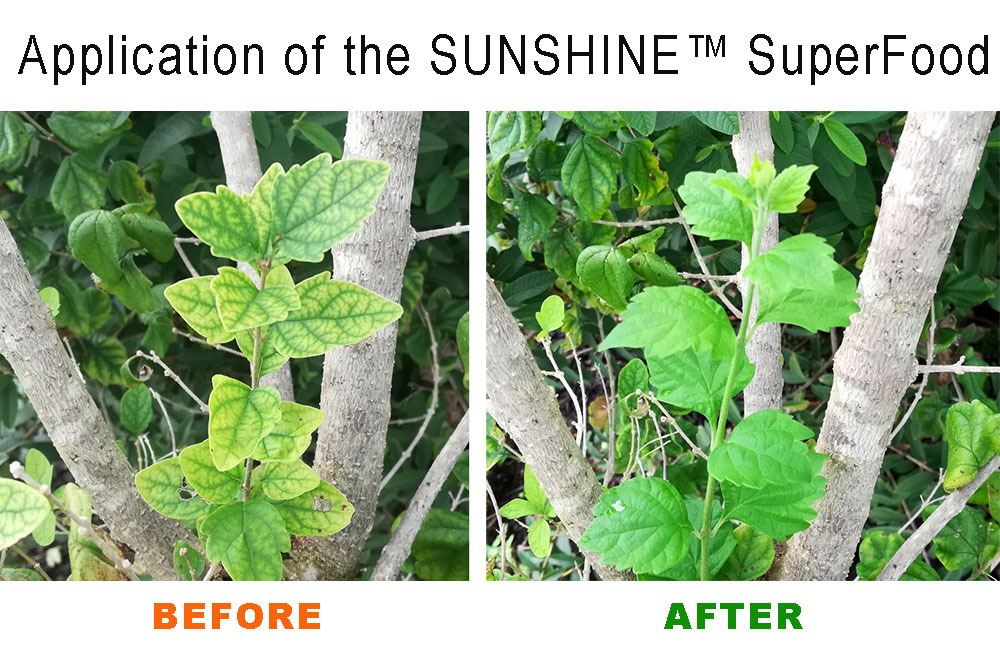
A: Wrightias are very showy and beautiful plants, although sometimes they are susceptible to leaf chlorosis which in other words is iron deficiency, especially during wet rainy weather. It is not harmful to the plant and can be corrected with microelement applications. Use Microelements once a week to correct the iron deficiency that usually goes away within a month. Then maintain plants health with monthly applications. It is beneficial to use microelements in combination with regular applications of health boosting fertilizer.
Recommended boosters and microelement supplements:
Pink N Good Daily Plant Food - Flower Booster
Tropical Allure - Smart-Release Booster
SUNSHINE SuperFood - plant booster
SUNSHINE-Greenleaf
See SUNSHINE Boosters page for the complete list of plant boosters.
Date: 24 Aug 2019
How to keep iguanas away?
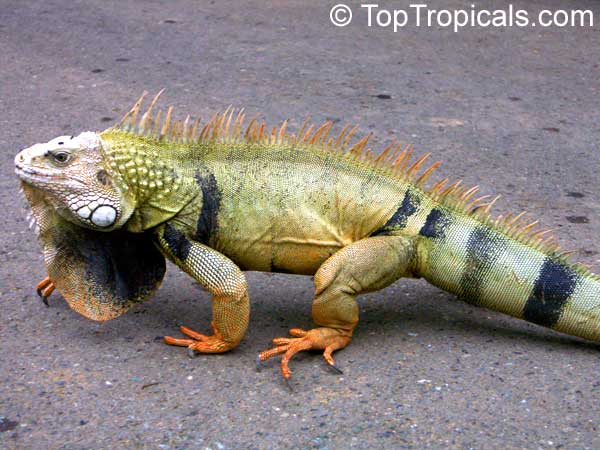
Q: Really enjoy all the plants that I have got from you, but having a hard time keeping iguanas eating everything! We are not on the water, any solution to keep them out?
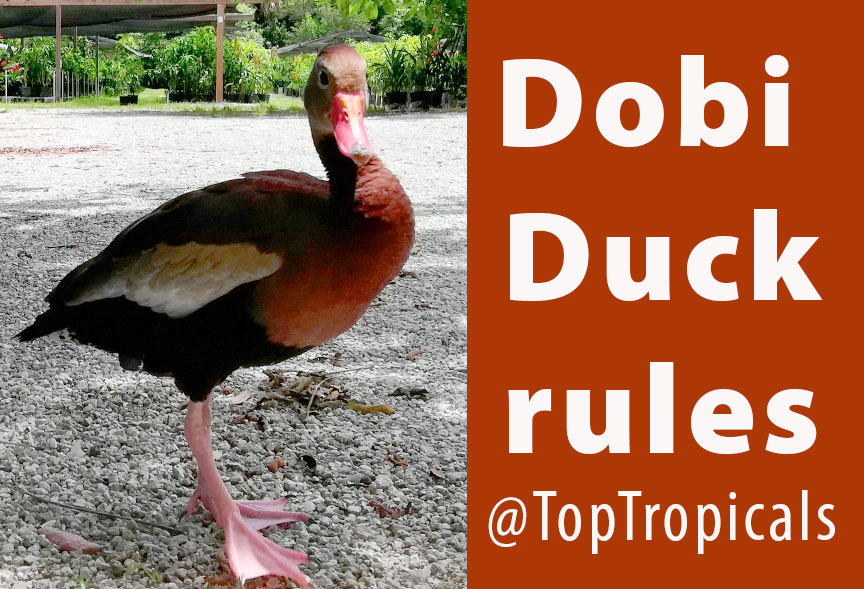
A: Iguanas may become quite a problem in the garden. Our first suggestion would be - get a Duck as we have (Duck Dobi), she is so dominant and keeps any wild animals away from the property, including gators... and cats! They are scared of her! Dobi thinks she owns the place.
Here are a few other ways to control iguana problem in your backyard:
1. Rid your lawn of dropped fruits. Iguanas love fruit. And they love
low-hanging fruit or fruit that's easy to get to. If you have fruit trees, take
the time to pick up your yard and dispose of any dropped fruit.
2. Keep a lid on a garbage can. Put your garbage cans in a place they
can't get to, or put a cinder block on your can lid.
3. Do not leave pet food out. If you're putting a bowl of dog food or a
plate of cat food out for your pets, you're inviting iguanas into your yard.
4. Fill iguana holes. Iguanas like to dig. Wherever you see a hole,
fill it. Stuff rocks into the hole first, then fill it with dirt and top it with
sod. The iguana may return to dig again, but he won't dig through large
rocks.
5 Do NOT feed the iguanas. Don't be friendly with them, so they won't
come back.
6. Wire netting around plants. You can use wire netting or screens to
prevent iguanas from entering plants and shrubs.
7. Spray them with a hose. When you see an iguana in the yard, spray
them with the hose. They also hate loud noises. Constant harassment can keep
them from returning.
8. Keep your yard clean. Excessive overgrowth or yard storage are great
places for iguanas to hide.
9. Do not leave food out, unattended. Iguanas are mainly herbivores but
that doesn't mean they won't smell something good and want to eat it. They
will TRY anything.
Hopefully these tips help keep your iguana problems to a minimum.
Date: 13 Jun 2019
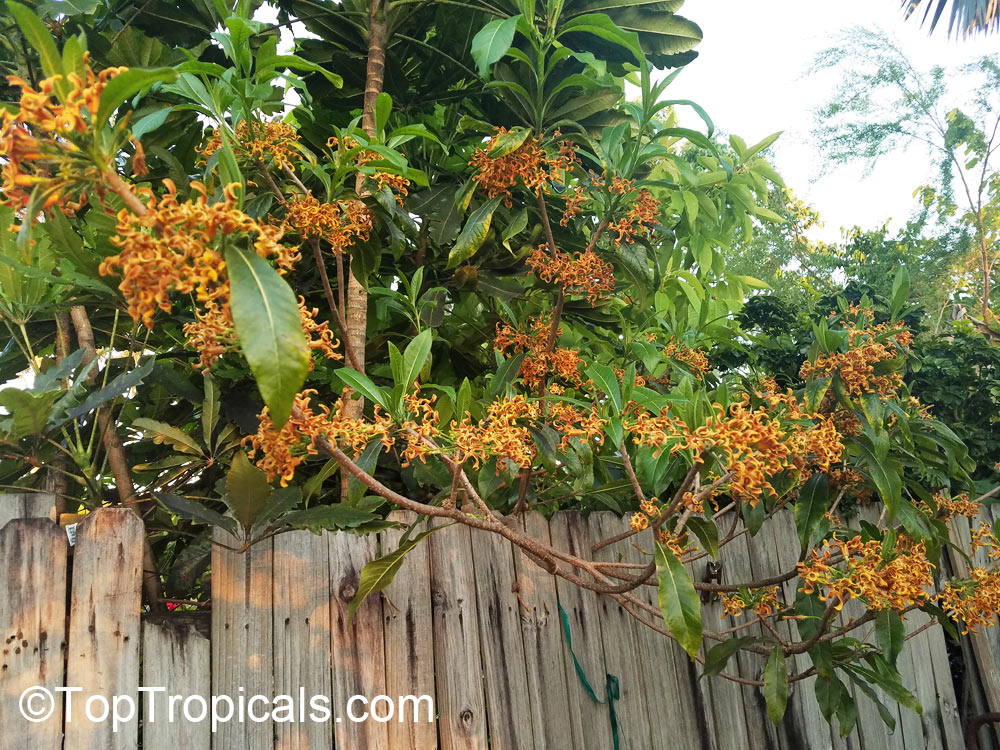
How to get Strophanthus tree to bloom?
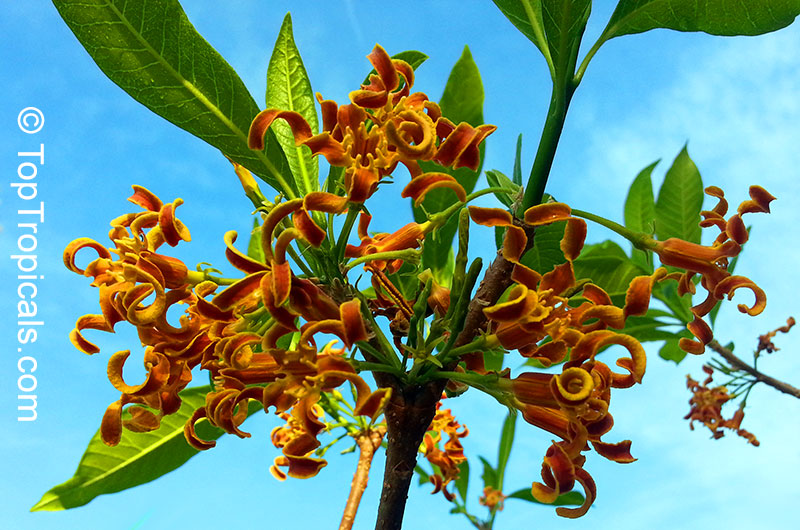
Q: I purchased from you three of these plants - Strophanthus bovinii and I wonder if you could help me. The plants are out of control growing large limbs to the sides and I would like it to grow more upright. Is this possible? Second, it does not flower. What type of fertilizer should I use and how often? How about the watering schedule? I have them in an eastern exposure but possibly they are not getting enough sun? Right in front of them, there is a large tree outside the curb of my house. What should I do about that?
A: Strophanthus bovinii - Wood shaving flower, is quite a unique plant
that is very rare in cultivation, this is why very little information is
available on its cultivation due to limited experience among gardeners. We have had
this plant in our garden for over 12 years and this is what we can advise.
In the nature (Madagascar) it supposedly grows into a large tree, however,
from our experience, it tends to be rather bushy, umbrella-like large shrub.
Yes, you can train it into a tree by trimming branches growing side-wise, and
by removing lower branches. The best time for pruning is early spring when
the tree starts new growth and re-leafs (it is semi-deciduous).
As far as flowering, the plant is very particular about blooming season,
with profuse flowering in Summer (here in SW Florida), however it may produce
more flowers sporadically throughout the year.
It thrives in full sun but will tolerate bright filtered light. If a large
tree is shading it too much, try to trim some limbs of that large tree to
allow more light. Water needs of Strophanthus bovinii are very moderate, so you
can rely on your sprinkler system or water once a week for established
plants.
You should use 2 types of fertilizers - slow release (once a month) and
water-soluble bloom booster (frequent applications are safe):
Pink N Good Daily Plant Food - Flower Booster
Tropical Allure - Smart-Release Booster