💕How would you like to give a Valentine plant gift?
Choose the plant
If you already know what feels right, choose the plant now.
Sweetheart Hoya is a favorite for a reason, and there are other Valentine
plants to explore if you want options.
A good choice when you feel confident, love plants, or are gifting something
meant to live indoors.
Let your Valentine choose
If timing, weather, or choice feels uncertain, a Gift Card keeps the moment simple. Your Valentine can choose the
perfect plant when the time is right.
Especially helpful for gardeners up north, or when you want the gift to
unfold later.
About shipping and timing
We ship live plants with care and pay close attention to weather along the
way.
If conditions are not right, we may hold a shipment briefly to keep plants
safe.
If timing or weather makes you hesitate, a Gift Card is an easy way to give a Valentine gift now and choose the
plant later, when conditions are perfect.
Valentine Day Gift Card Bonus
To make Valentines Day a little sweeter, we are offering a special gift
card bonus for a limited time.
When you purchase a gift card, we add 15% extra
value. Just add Valentine greeting in gift card message field.
For example, a $100 gift card becomes $115 to spend.
Offer valid through 02/15/2026.
The bonus value is not valid with other promotions or discounts. Gift
cards cannot be used to purchase other gift cards. Bonus value is added at
the
time of purchase.
Mango Tree for Zone 5: top 15 Condo Mango for growing in cold areas
Mango Tree for Zone 5
🥭 Mango Tree for Zone 5: top 15 Condo Mango for growing in cold areas
🥭 Can you grow a mango tree in Zone 5? Short answer - yes! The trick is - containers!
Mango trees are tropical plants but they do great in pots when you choose the right varieties.
🥭 Compact types stay short, respond well to pruning, and produce in containers.
You can grow them on a patio, balcony, even move them indoors in your condo for winter. That is why they are called condo mangoes!
During warm months, they live outside.
When cold weather hits, they come inside.
🥭 With good light, proper watering, fertilizing, and some patience, these trees can reward you with real mangoes. Not a farm harvest, but enough to enjoy and share.
Sunshine: I'm blazing into the 2026 Year of the Horse! Call me
Mister Fahrenheit. Don't stop me now! 'Cause I'm having a good time —
I'm a shooting star, leaping through the sky like a tiger, defying
the laws of gravity! Smokey: It's jasmine, Tiger. A shrub. Not Wembley. Calm down.
💮
2026 Year of the Horse - and the Plant I Trust Most
By Tatiana Anderson, Horticulture Expert at Top
Tropicals
Every new year carries its own energy.
2026 is the Year of the Horse - a year of movement, fire, momentum, and
bold decisions. It is not a quiet year. It pushes us
forward.
When fellow gardeners ask me what to grow in a year like this, my answer
is simple:
Grow something that balances strength with grace.
For me, that plant is Jasmine Sambac.
In many cultures, Sambac represents devotion, purity, and deep affection.
In the Philippines it is the national flower -
Sampaguita - woven into garlands for weddings and sacred ceremonies. In
Hawaii, it becomes leis - a symbol of welcome and connection -
Pikake. In India, it perfumes temples
and homes.
This is not just a fragrant shrub.
It is a plant tied to love, loyalty, and continuity.
The Horse runs forward.
Jasmine anchors the heart.
In a fiery year like 2026, I believe we need both.
And that is why I always return to Jasminum sambac.
Over the years I have grown thousands of plants, but very few have the
staying power of Jasmine Sambac.
It is not just fragrant. It is intensely, unmistakably fragrant. One open
flower can perfume an entire patio. In the evening, the scent becomes
deeper and richer.
But what makes Sambac truly special is its adaptability.
It can grow as a compact patio shrub, a flowering hedge, or a climbing
vine. It performs beautifully in containers. It tolerates both full sun and
partial shade. The more light you give it, the more flowers it rewards you
with.
And unlike many tropicals, Sambac does not bloom just once. With proper
care, it flowers in cycles throughout the warm season.
For gardeners, that combination is rare: beauty, perfume, flexibility,
and repeat bloom.
That is why it has remained one of the most wanted fragrant plants in
cultivation.
By Tatiana Anderson, Horticulture Expert at Top
Tropicals
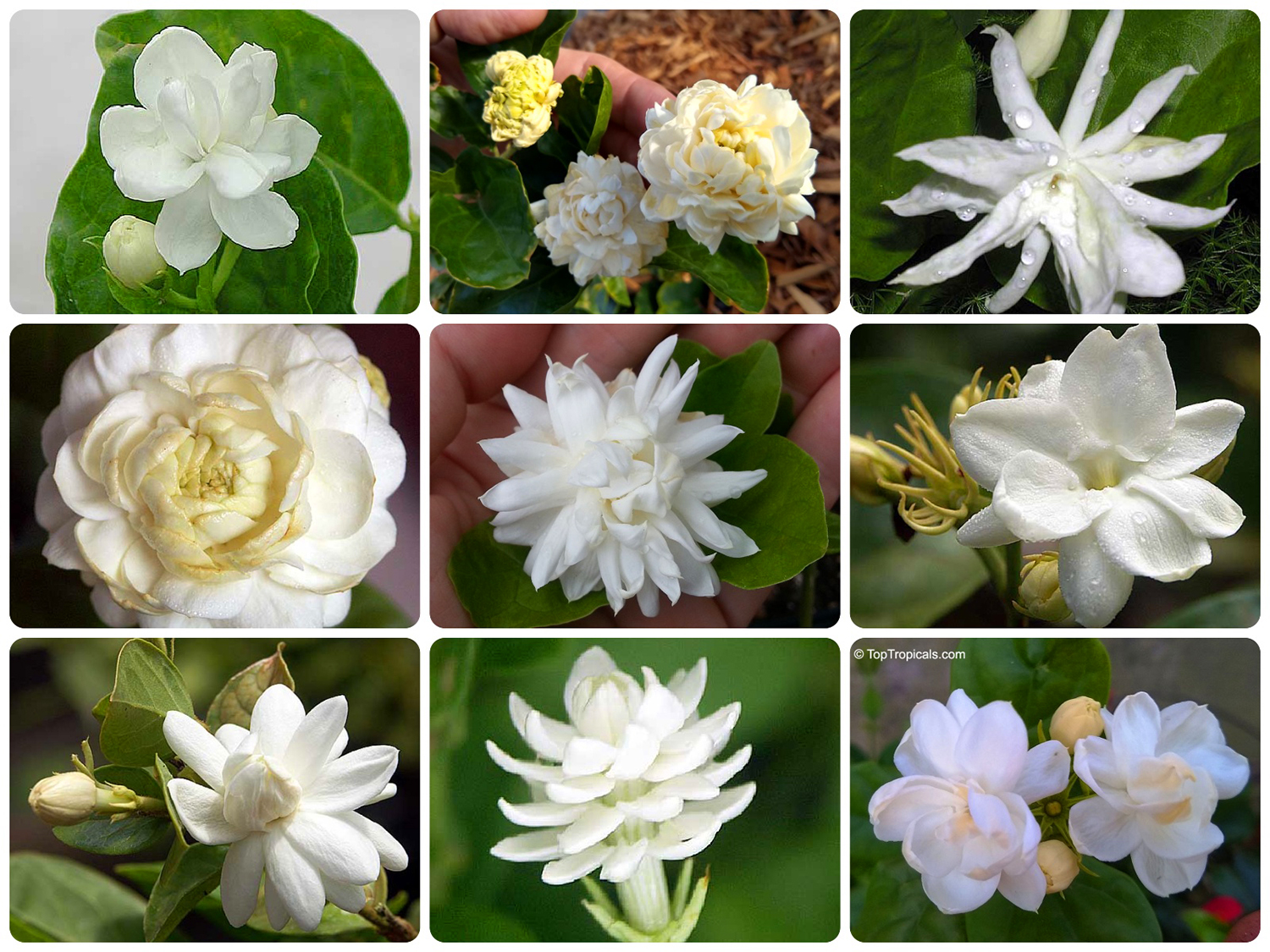
Jasmine Sambac varieties: Arabian
Nights, Little Duke, Belle of India, Grand Duke, Duke Supreme, Maid of
Orleans, Mysore Mulli, Malichat, Gundu Mallii
One of the reasons Jasmine Sambac is so fascinating is that it does not
come in just one form. Each variety has its own personality.
If you want a compact patio plant, Arabian Nights or Little
Duke are excellent choices. They stay tidy, bloom generously, and are
easy to manage in containers.
If you prefer elegant, elongated petals and a refined look, Belle of
India is a favorite. It can be grown as a small bush or trained lightly
as
a vine.
For those who love full, carnation-like double flowers, Grand Duke of
Tuscany and Grand Duke Supreme are classic
selections. They are vigorous and make impressive shrubs in warm
climates.
If you need a stronger climber for fences or hedges, Maid of
Orleans performs beautifully in full sun while Mysore Mulli
prefers semi-shade.
Collectors often enjoy rare forms like Mali Chat or newer hybrids
such as Gundu Malli, which combine traits from different lines.
How to Grow Jasmine Sambac Successfully
Sambac is not difficult, but it responds best to consistency.
Light: Full sun produces the most flowers. In very hot
climates, light
afternoon shade is acceptable. Indoors, place it in the brightest window
available.
Soil: Use a well-draining potting mix such as Sunshine
Abundance. Sambac does not
like heavy, constantly wet soil.
Water: Water thoroughly, then allow the top layer to dry
slightly before watering
again. Reduce watering during cooler months.
Pruning: Light trimming after a bloom cycle encourages
branching. More branches mean more flower buds.
Feeding: Sambac is a heavy bloomer, and fragrance takes
energy. During active growth, feed regularly with a balanced fertilizer that
supports flowering such as Green Magic (controlled release every 6 months) or liquid Sunshine
Boosters Pikake (formulated especially for fragrant flowers) - with
every watering. I prefer formulas slightly higher in potassium to encourage
stronger bud formation and richer bloom cycles. Consistent feeding during
warm months makes
a visible difference in both flower count and intensity of scent.
With proper care, Jasmine Sambac will reward you not just with flowers,
but with perfume that changes the atmosphere of your entire garden.
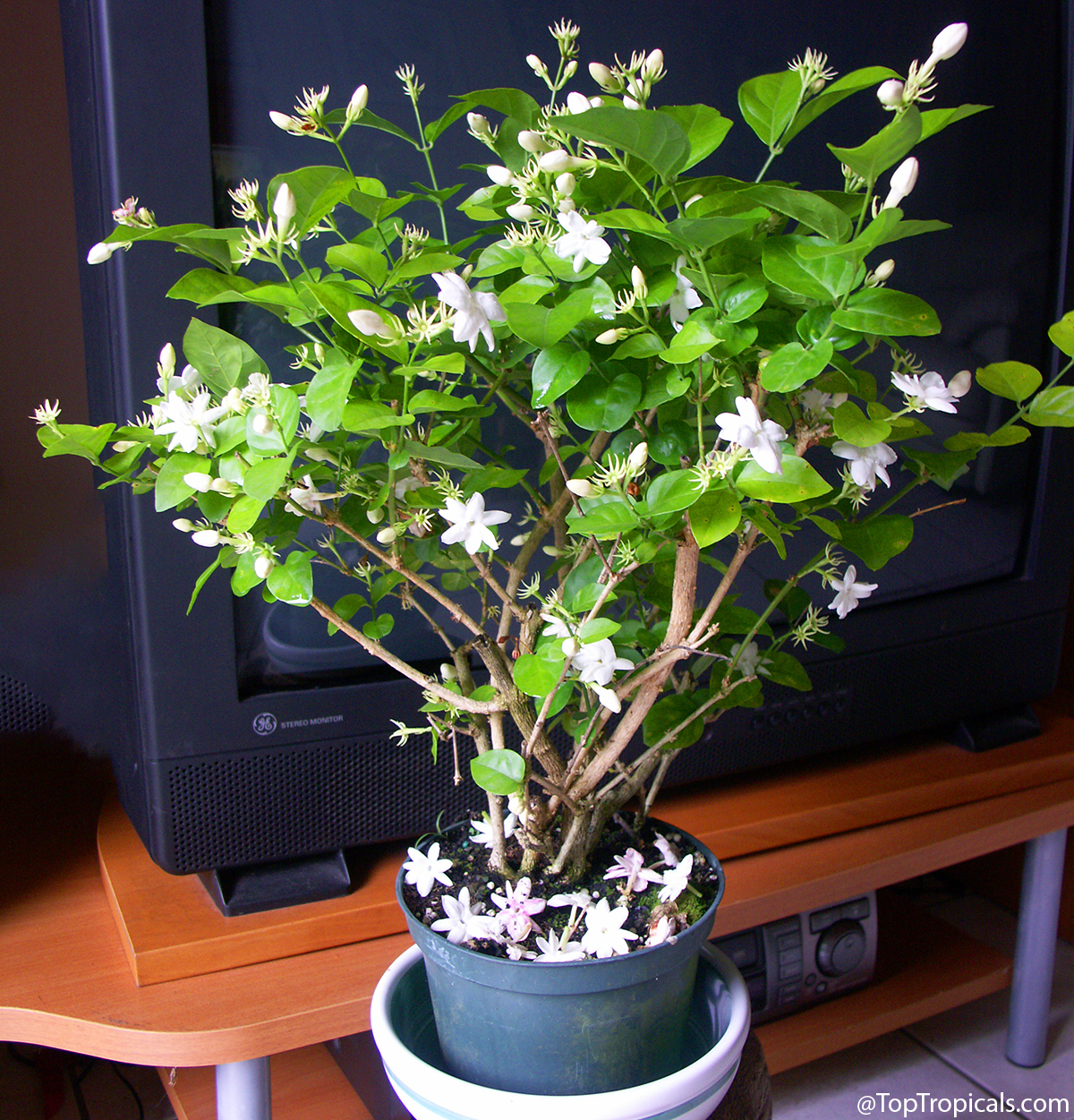
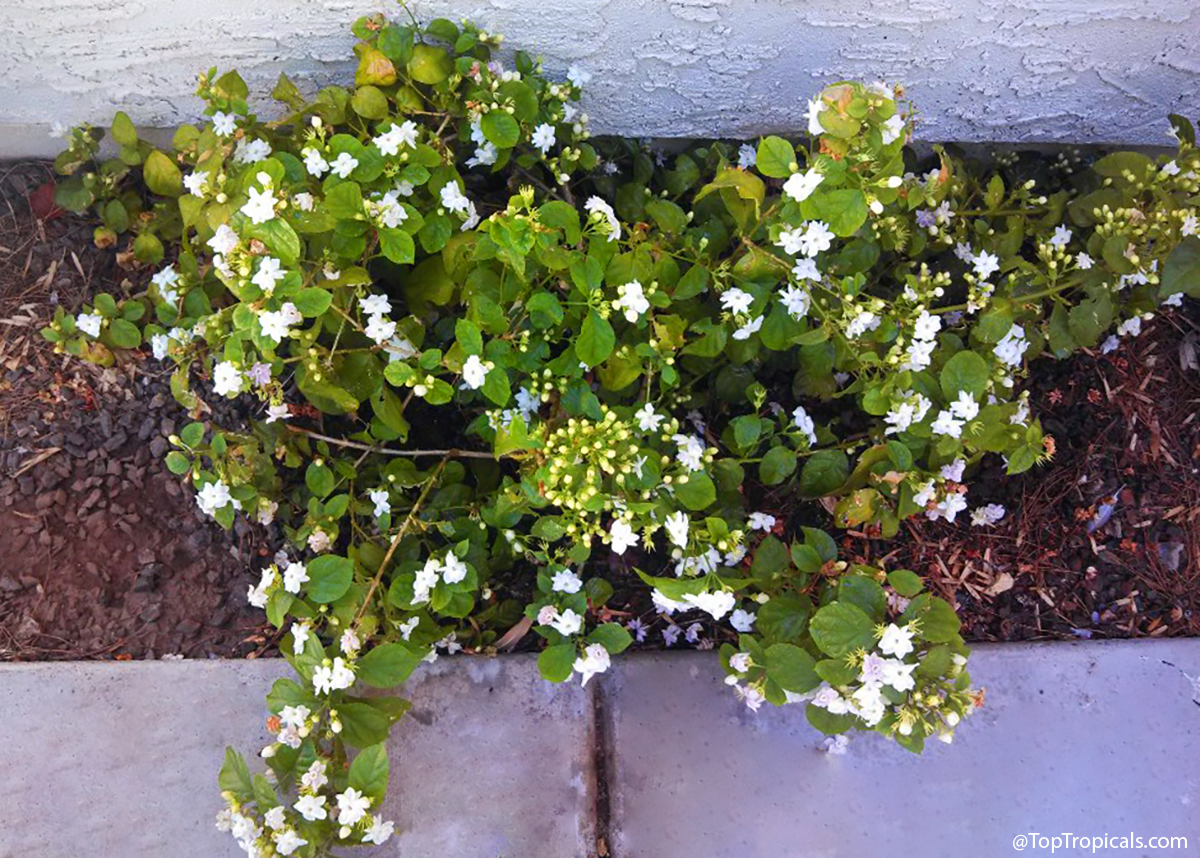
Jasmine Sambac Maid of
Orleans flowering indoors in a container under bright light.
❓Frequently Asked Questions About Jasmine Sambac
Does Jasmine Sambac need full sun?
It flowers best in full sun. In very hot climates, light afternoon shade
is acceptable. Indoors, give it the brightest window possible.
Can I grow it in a pot?
Yes. Sambac performs beautifully in containers. Many gardeners prefer pots
because it is easier to control size and move during cold weather.
How often does it bloom?
With proper light and feeding, it blooms in cycles throughout the warm
season. Consistency in care makes flowering more reliable.
Why is my plant not blooming?
The most common reasons are insufficient light or irregular feeding.
Increase light first, then review your fertilizing routine.
Is it difficult to grow indoors?
Not if you provide strong light and good air circulation. Compact varieties
adapt especially well.
Is it frost tolerant?
No. Jasmine Sambac is tropical. Protect it from temperatures below 40F and
bring it indoors before frost.
🌸 Year of
the Horse Special – Jasmine Bonus
Celebrate 2026 with the fragrance of Jasmine plants. For a limited time,
enjoy special savings when you grow one of
the most wanted perfume plants in cultivation.
Jasmine Sale - 15% Off
Save 15% on all Jasmine plants.
Discount is already applied in the online store - no code needed.
Florida freeze damage - what to replant after a record cold winter
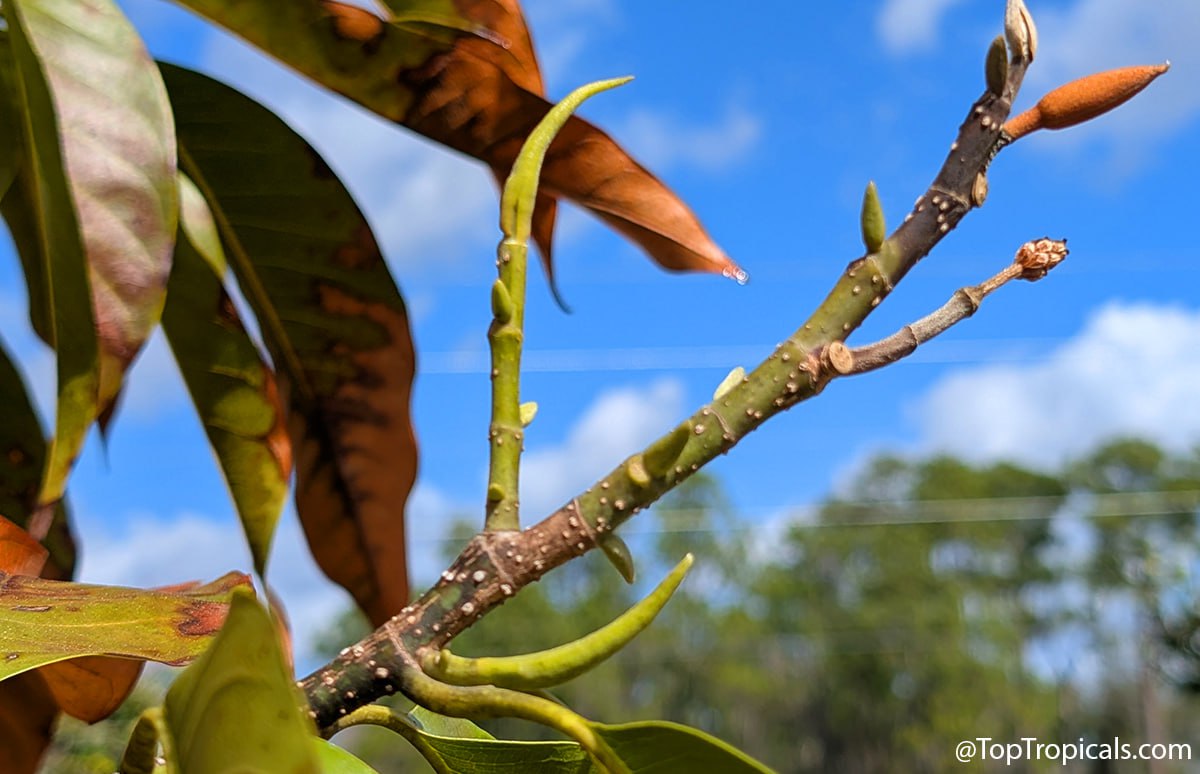
Magnolia champaka new shoots
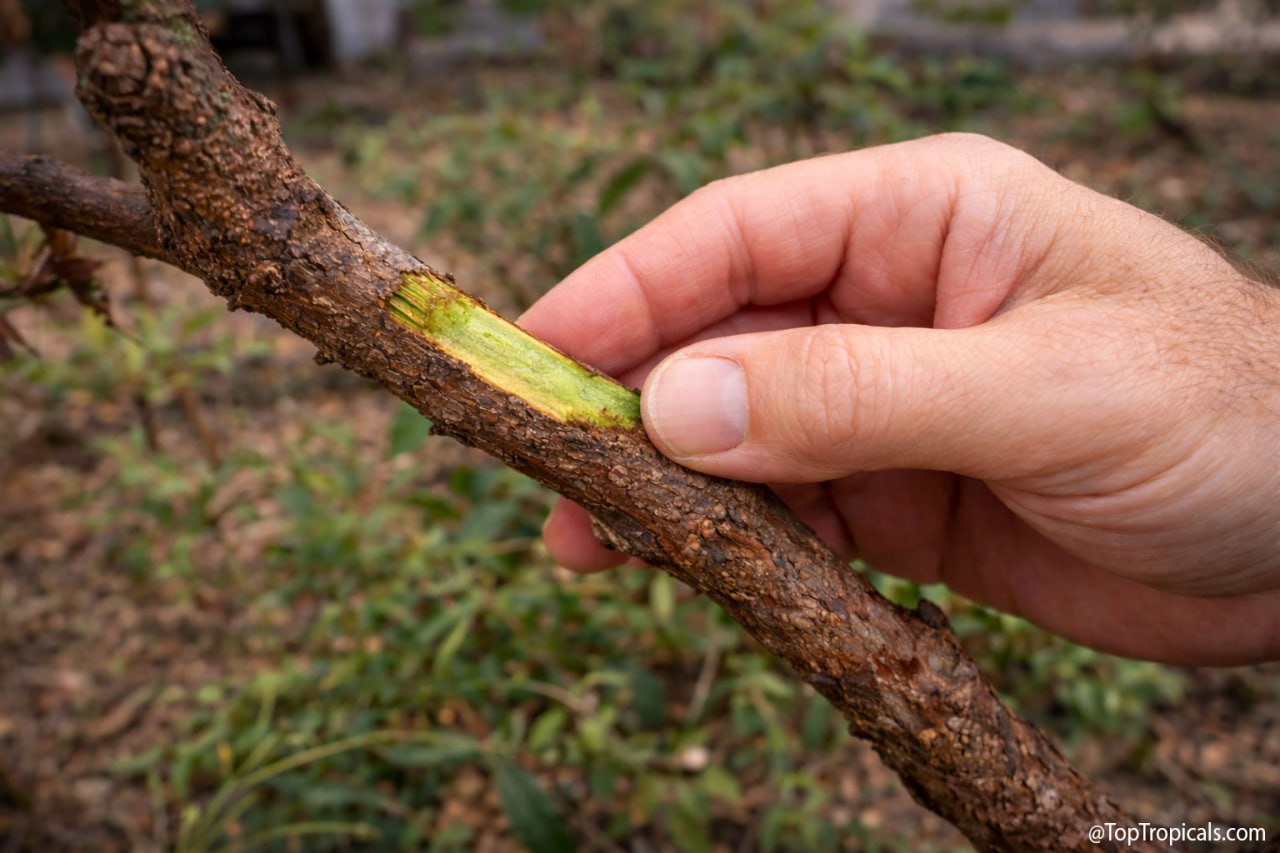
Scratch test on a bark
❄️ Florida freeze damage - what to replant after a record cold winter
🌱 A record freeze changed Florida gardens
After the recent record cold across Florida, many gardeners are now seeing the real damage - browned leaves, split stems, collapsed shrubs, and fruit trees that may not recover.
Some plants surprised us with new growth. Others are clearly gone.
The practical question is simple: what should you replant so it does not happen again next winter?
The good news - you can build a more frost-resilient garden without giving up beauty or fruit.
🌱 First - do not rush to rip everything out
Before replacing anything, check carefully:
Scratch the bark lightly - green underneath means the branch is alive.
Wait for consistent warm weather - some plants re-sprout weeks or even months later.
Look for growth higher on the stem, not just at the base.
After freezes, many tropicals look worse than they are. Patience often saves money.
🌱 Why some plants survived and others did not
Freeze survival depends on several factors:
Duration of cold - 2 hours vs 8 hours makes a major difference
After freeze damage, many gardeners replant quickly - only to repeat the same losses.
A better approach:
Identify what truly died.
Learn which species survived locally.
Choose varieties proven in your climate zone.
Design with cold in mind.
One freeze can become a turning point. Many Florida gardens become stronger after a hard winter because the plant list gets refined.
🌱 Spring Equinox - a natural reset
The Spring equinox marks equal day and night and the astronomical start of spring. From this point forward, daylight increases and active growth accelerates.
For Florida gardeners, it is a natural reset.
New growth begins. Roots wake up. Replacement planting becomes safer.
This is the right time to rebuild.

 How to Grow Jasmine Sambac Successfully