Garden Blog - Top Tropicals

Date: 30 Apr 2023

Attracting butterflies

Cat  with  butterflies

Q: How to attract more butterflies to my garden?

A: Attracting butterflies to your garden can be a fun and rewarding experience. Here are some tips to help you create a butterfly-friendly environment.

1. Choose the right plants: Butterflies are attracted to nectar-producing flowers such as milkweeds, butterfly bushes. Plant lots of bright flowers, especially of yellow and pink colors like some cassias which seem to be the pleasant to butterfly's eye. Use a variety of flowers to attract different species of butterflies. This is a full list of butterfly-attracting plants.

2. Provide food for caterpillars: Butterflies lay their eggs on specific host plants that caterpillars will eat. For example, monarch butterflies lay their eggs on milkweed. Passion flower is also a great butterfly host, but be prepared to sacrifice some leaves!

3. Provide a water source: Butterflies need a source of water to drink from. A shallow dish or birdbath with rocks in it will provide a place for butterflies to rest and drink.

4. Avoid using pesticides: Pesticides can harm butterflies and other beneficial insects. Try using natural methods to control pests in your garden, such as companion planting and hand-picking.

5. Create a sunny spot: Butterflies love warm, sunny spots. Plant your butterfly garden in an area that receives at least six hours of direct sunlight each day.

6. Add a butterfly house: A butterfly house can provide shelter for butterflies during bad weather and at night.
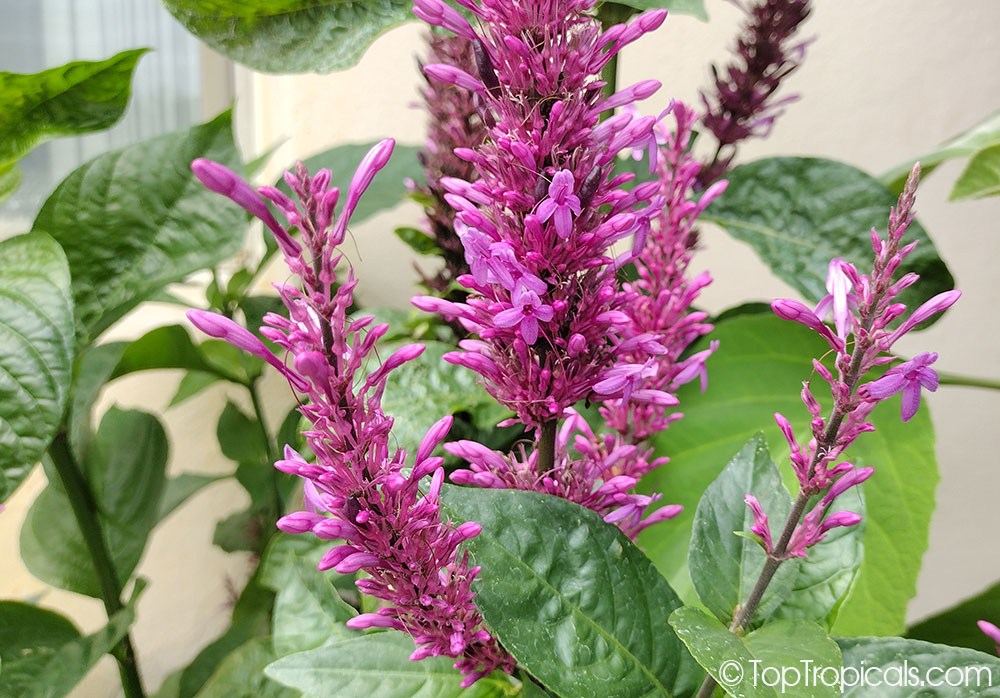
Odontonema  callistachyum  -  Lavender  Butterfly  Bush

In the photo: Odontonema callistachyum - Lavender Butterfly Bush. Showy bright lavender flowers, butterfly attractor. Blooms in both sun or shade.
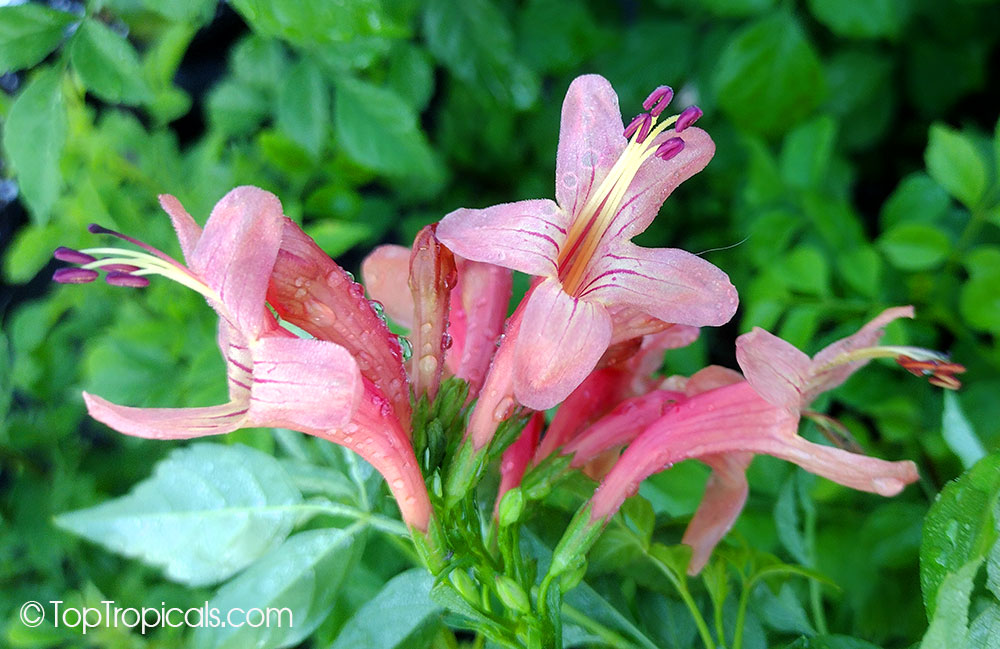
Tecomaria  capensis  Apricot  (Hammers 
 Rose)

In the photo: Tecomaria capensis Apricot - Hammers Rose, Apricot Tecoma, Cape Honeysuckle. Very fast growing, it has attractive, light green foliage and frequent displays of long, tubular flowers that may be apricot or orange at the ends of the stems. Great for a privacy hedge that attracts butterflies!
Date: 18 Apr 2023

Five benefits of growing your own Pineapple

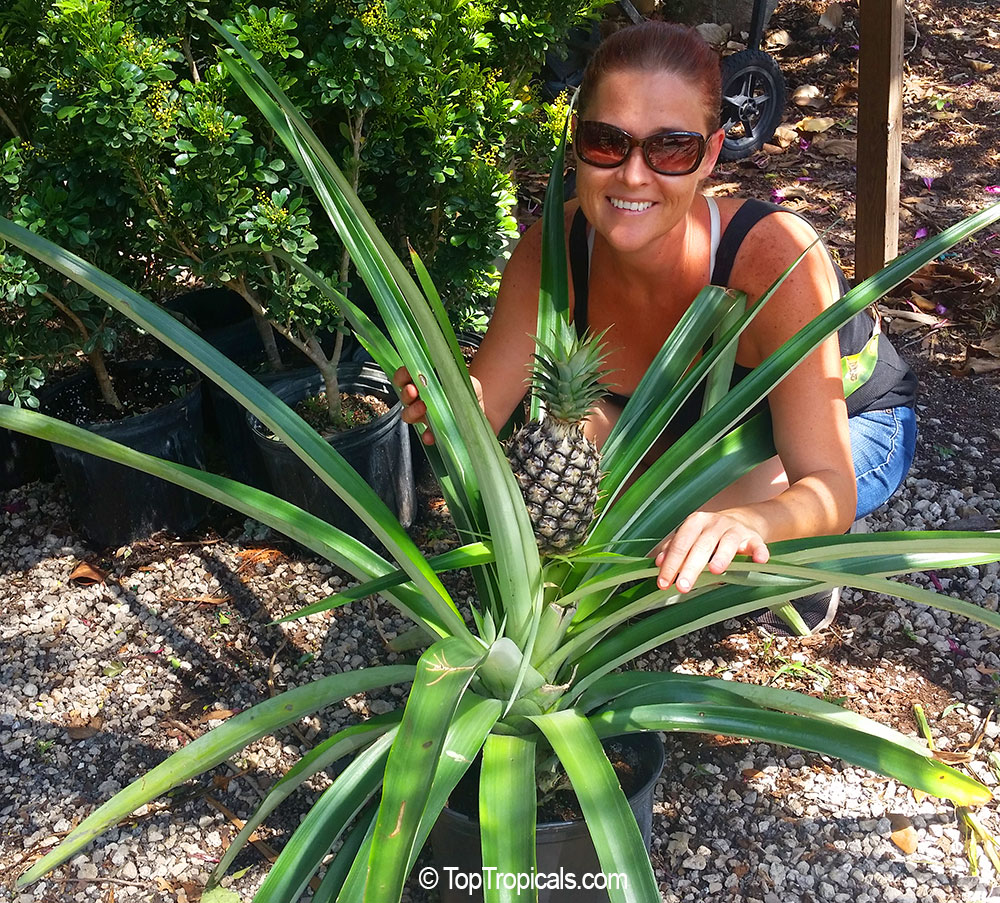
Pineapple  plant  with  a  fruit  and  a  beautiful  girl  Kristi

Q: Can I grow my own pineapple fruit?

A: Growing a Pineapple plant - Ananas comosus - is a fun and rewarding experience that offers both visual and practical benefits:

1. Fresh, homegrown fruit: One of the main benefits of growing a pineapple plant is that you can enjoy the fruits of your labor by harvesting fresh, delicious pineapples right from your own backyard.

2. Aesthetic appeal: Pineapple plants are visually appealing with their long, spiky green leaves and bright, vibrant fruits. They can add a tropical, exotic touch to any garden or indoor space.

3. Low maintenance: Pineapple plants are relatively easy to grow and require minimal maintenance. They can tolerate a variety of soil and light conditions and don't require frequent watering or fertilization.

4. Health benefits: Pineapple fruit is rich in vitamins, minerals, and antioxidants that can provide a range of health benefits, including improved digestion, boosted immunity, and reduced inflammation. It is recommended to eat a slice of a pineapple after every meal to keep healthy digestive system.

5. Collectable varieties: The pineapple plant can be easily propagated by cutting off the top of a pineapple fruit. However, for those seeking excellent quality, it is recommended to choose superior hybrids from professional growers. Become the proud owner of "The King of Fruits" collection! It takes up minimal space and provides fresh fruit throughout the year.

Read more about Pineapple: The most luscious Hospitality Fruit - Pineapple.

Remember to add Sunshine Ananas fertilizer to your purchase for a long lasting Pineapple crop season.

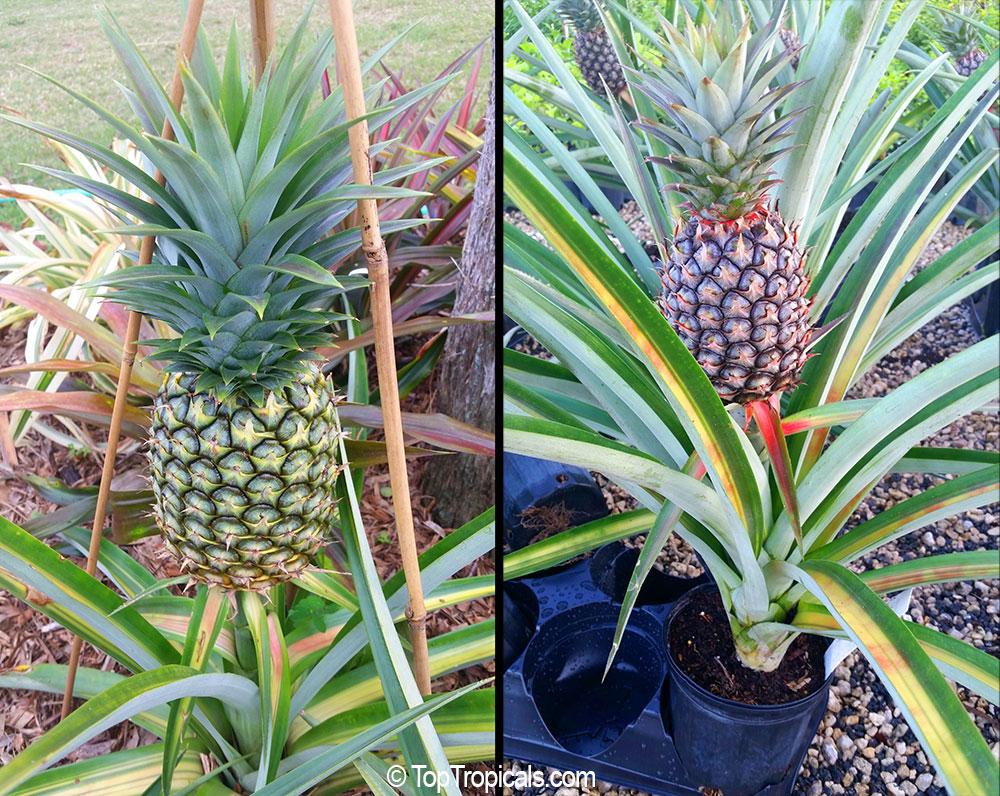
Pineapple  fruit  growing  on  plants

Date: 27 Jan 2023

The Robuster: smart and simple
Automatic care-free plant feeder!

The  Robuster,  Smart  Fertilizer 
 Injector

Affordable Smart Fertilizer Injector and Doser

Tired of mixing fertilizer in watering cans?
Struggling to keep up with the growth of your garden?
Need to adjust fertilizer schedules for different plants and weather conditions?
Professional injectors are expensive and complicated?
Look no further! Affordable and user-friendly solution for any gardener -

The Robuster.
Set up... Sit back...
...enjoy your garden!

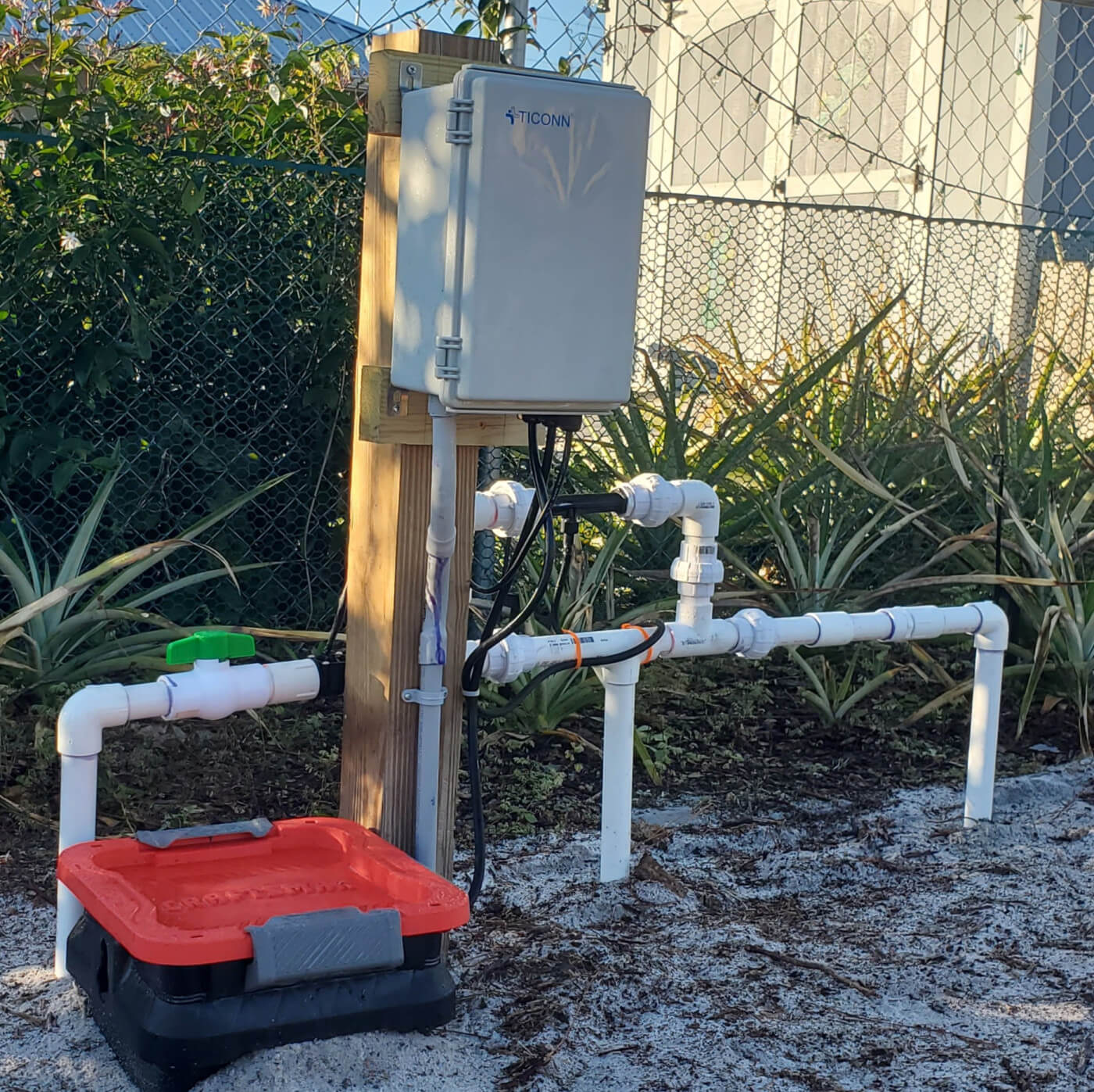
The Robuster is a unique smart device for irrigation systems and is designed to help make fertilizing your garden easier. Simple to install, The Robuster utilizes a computerized controller that injects liquid fertilizer into your irrigation system based on your preset dosage. The Robuster will work in your yard, garden or farm, small or large. Designed to be used with Sunshine Boosters amino acid based liquid fertilizers, it also works with any liquid plant food that requires a dosage from 5 - 25 ml per gallon of water.
Let The Robuster do the feeding so you have more time to enjoy your garden! Your first gallon of Sunshine Boosters is available to you at a 50% discount with the purchase of this unit! Sunshine Boosters are also available at deep discounts with our subscription program (coming soon). Contact us for more information.

Developed in Ukraine. Manufactured in the USA.
Introductory low price! Only 4 units available at this time.
Contact us for installation availability
Learn more:

Blog: About The Robuster with pictures
Amazing video:

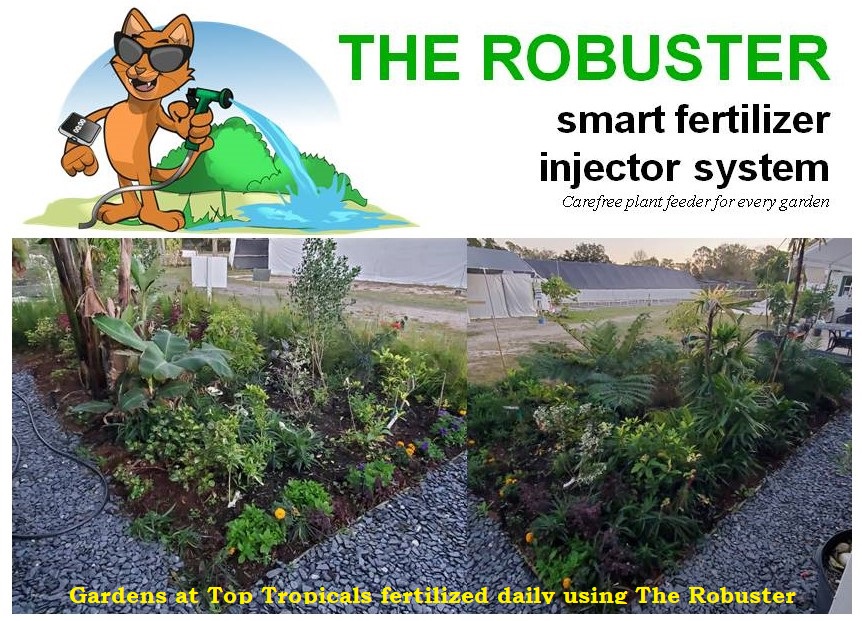
The  Robuster  in  the  gardens

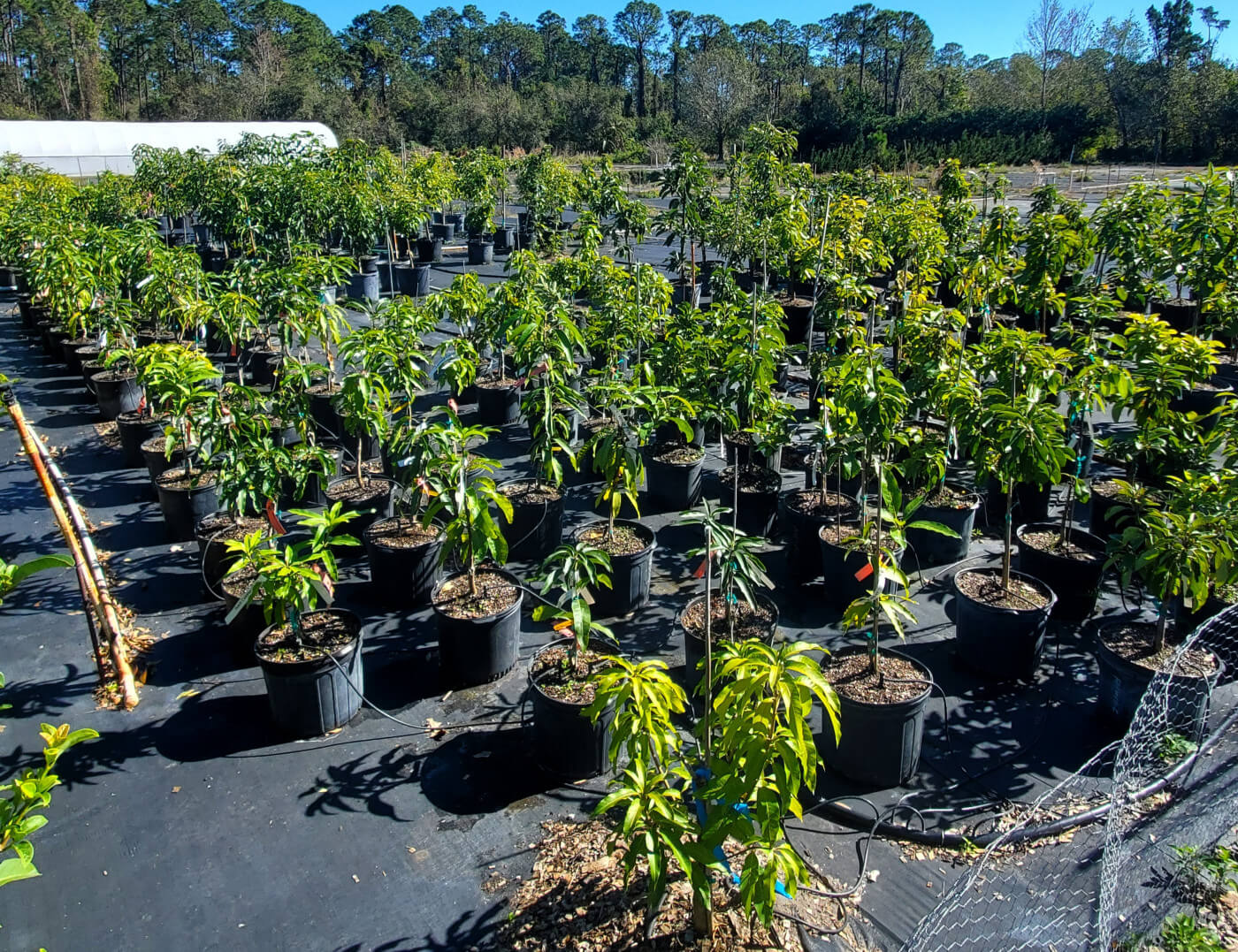
Starter gardens at TopTropicals as well as container plants, are fertilized with the Robuster with every watering

container  plants  fertilized  with  The  Robuster

Date: 13 Jan 2023

Secrets of Winter planting:
Tropical Planting Breaks the Rules

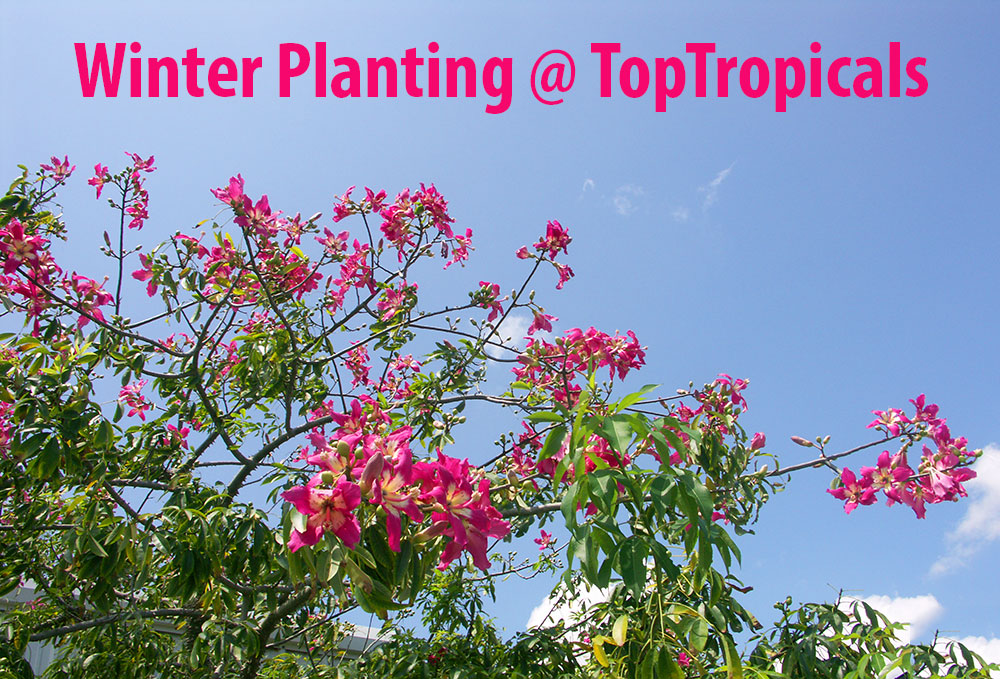
Winter  flowering  tree  -  Ceiba

by Murray Corman, Garden of Delights

Wintertime does not just mean hard work for tropical gardeners. It is also a time to enjoy the fruits of our labor. Winter-blooming plants and the visitors they attract - birds, bats and butterflies - make the garden as enjoyable in winter as any other time of year.
What a welcome relief: January daytime temperatures in the 70s, dropping to the 60s at night. This is why I came to live in the subtropics of southern Florida. The balmy climate of South Florida represents one of the few places on the mainland United States where tropical plants thrive unprotected outdoors.
But just as I had to leave behind so many of my favorite northern trees, so too did I have to put behind me many of the so-called "rules" of horticulture. These had worked well for me up north and I thought they would hold true anywhere in the world. Florida's subtropical climate posed new challenges and I soon realized that gardening in the Sunshine State would not be business as usual...
CONTINUE READING >>

See also: A Guide to Cold Hardy Tropical Fruit Trees and Avoicado Varieties (pdf download)

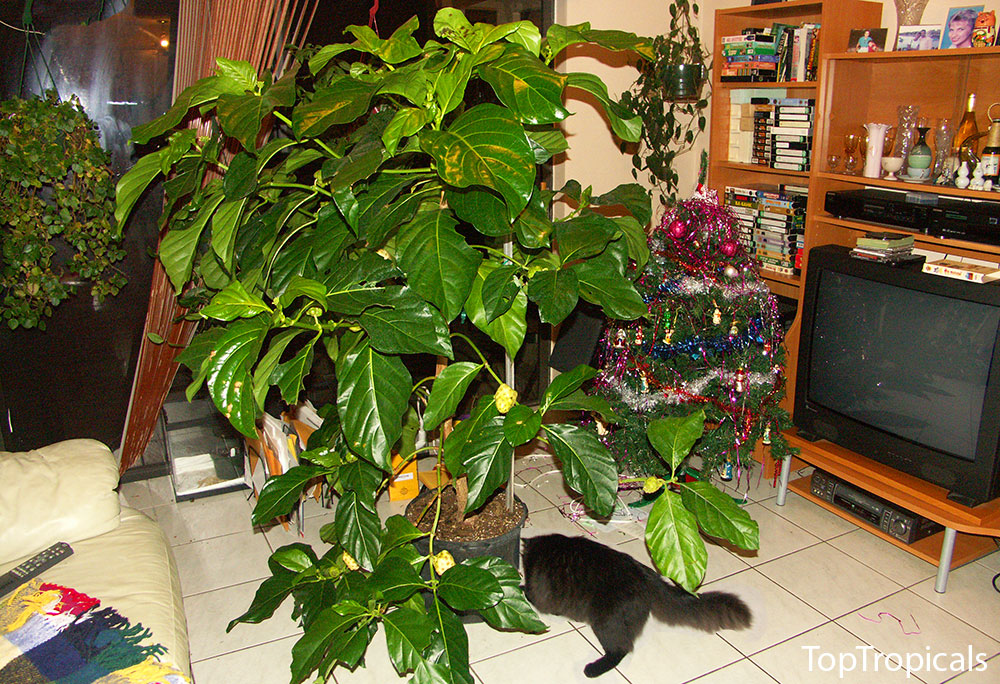
Noni  tree  with  Christmas  tree  indoors

Photo above: Noni is not just a useful fruit tree, but also a great ornamental for both sun or shade. It is also great for interior floral design or as an exotic addition to your room decorations in Winter! It fruits year round even indoors!
Order Noni online.

Date: 5 Aug 2022

Planting in August

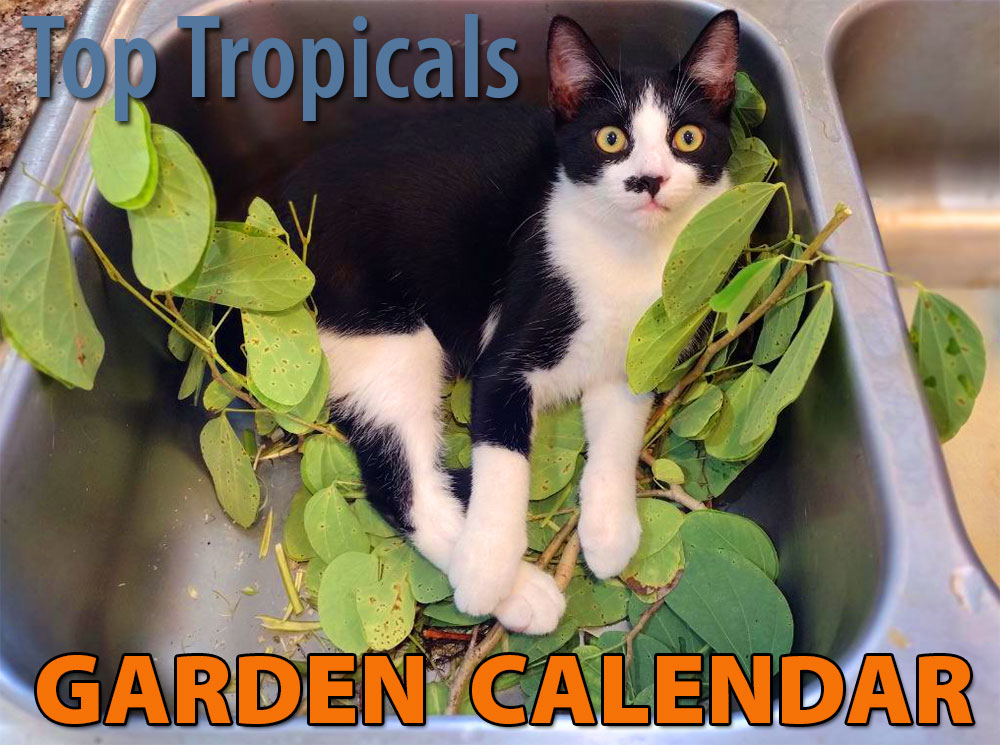
Top Tropicals Garden Calendar

Philly's  garden  calendar

August is the hottest month in most places, and tropical/subtropical areas are not the exception. In Florida we have some hot August days in upper 90's. Is it still OK to plant during hot weather? Yes, and here are some guidelines for you:

1. Hot metabolism.
Many tropical plants grow faster at high temperatures. Select heat-resistant species for August planting (below are just a few suggestions).

2. Water adequately.
Water thoroughly your newly planted tree. Water daily (lightly) with a hose for at least a week, don't rely on sprinklers. Then reduce watering to every other day and gradually switch to sprinkler system if you have it. Do not overwater: non-established plants don't like combination of heat+wet.

3. Mulch well.
Keep mulch 1"away from the trunk to avoid rot.

4. Shading.
Protect the young tree from hot sun with a shade cloth or a sheet if leaves get wilted, for 1-3 days, then remove it, let the plant adjust to bright light.

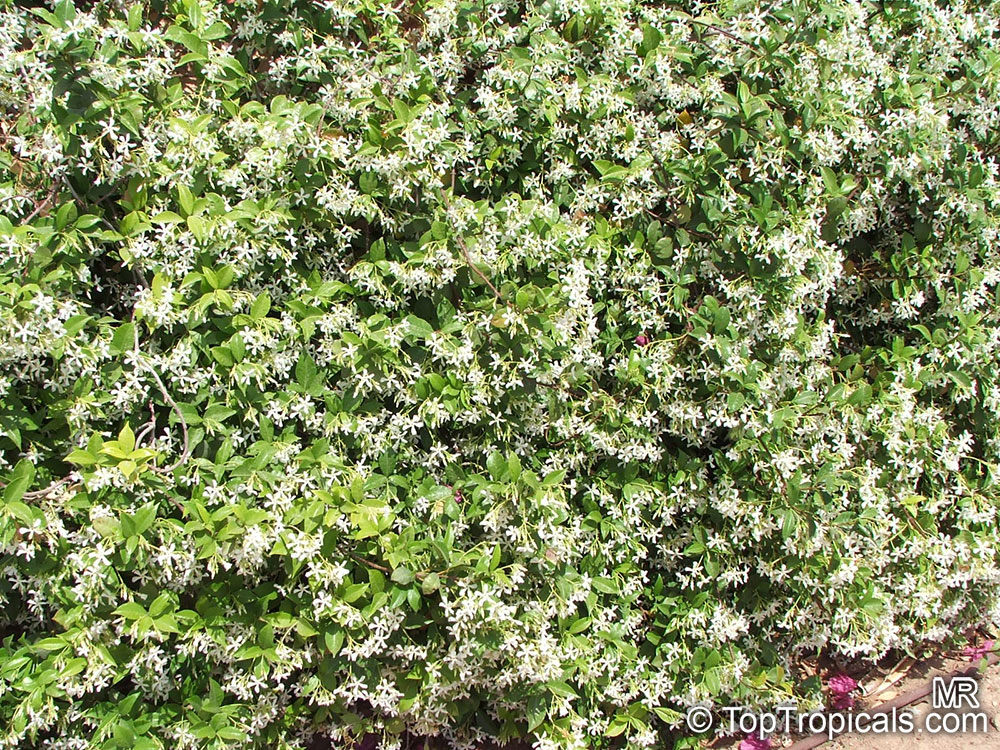
Trachelospermum  jasminoides  -  Confederate  Jasmine

Photo above: Trachelospermum jasminoides - Confederate Jasmine, the toughest jasmine that can take extreme heat and drought.