"A garden requires patient labor and attention. Plants do not grow merely to satisfy ambitions or to fulfill good intentions. They thrive because someone expended effort on them." - Liberty Hyde Bailey
Patchouli - Pogostemon cablin is easy to grow indoors if you give it what it likes. It is one of those plants that does double duty - it looks great and makes your home smell amazing. Those big, soft leaves release that deep, earthy scent just by being there.
☘️ Light and temperature
Patchouli loves bright shade. Think filtered light near a window, not harsh direct sun. Too much sun can burn the leaves, especially indoors. In lower light, it still grows well and keeps its fragrance. It is a tropical herb, so keep in warm - at room temperature.
☘️ Water and soil
This plant loves water. Use a well-draining soil mix and a pot with drainage holes, but do not let it dry out. Daily watering is usually fine in warm conditions. Good air circulation is important.
Growing patchouli is similar to growing herbs in containers - just be more generous with water than you would be with basil or oregano.
☘️ Containers and growth
Patchouli grows fast. Start in a 1-gallon pot, but plan to move it up to a 3-gallon container fairly quickly. More room means bigger leaves and a stronger scent.
☘️ Feeding
Feed regularly. You can use Sunshine Boosters Robusta with every watering, or apply Green Magic controlled-release fertilizer every 6 months and at each transplant. Patchouli responds quickly to feeding with lush growth.
☘️ Pruning and uses
Prune as the plant gets bigger to keep it full and bushy. Do not throw the leaves away - dry them for sachets or use fresh/dry leaves for tea.
☘️ Propagation
Patchouli roots very easily from cuttings. Snip a healthy stem, place it in water or moist soil, and it will root fast. It is one of the easiest plants to share with friends.
If you want a plant that grows fast, smells incredible, and actually does something useful indoors, patchouli is hard to beat.
Mango Tree for Zone 5: top 15 Condo Mango for growing in cold areas
Mango Tree for Zone 5
🥭 Mango Tree for Zone 5: top 15 Condo Mango for growing in cold areas
🥭 Can you grow a mango tree in Zone 5? Short answer - yes! The trick is - containers!
Mango trees are tropical plants but they do great in pots when you choose the right varieties.
🥭 Compact types stay short, respond well to pruning, and produce in containers.
You can grow them on a patio, balcony, even move them indoors in your condo for winter. That is why they are called condo mangoes!
During warm months, they live outside.
When cold weather hits, they come inside.
🥭 With good light, proper watering, fertilizing, and some patience, these trees can reward you with real mangoes. Not a farm harvest, but enough to enjoy and share.
Eugenias have earned a spot in many Southern gardens because they’re
easy, dependable, and surprisingly versatile. These small trees and shrubs
grow well in the ground or in containers, and they don’t waste time
before setting fruit.
15% Off
Eugenias – Limited Time
Use code EUGENIA15 at checkout.
Excluding S/H. Offer expires 08/28/2025
👍 Popular
Choices:
What Makes Eugenia Cherries
Stand Out
Start producing fruit in just a couple of years
Compact size — easy to keep 6–12 ft tall, smaller in
pots
Low-care — tolerant of most soils and resistant to common
pests
Strong in hot weather, yet can handle a light frost down to the mid-20s
°F
Plenty of fruit for people and birds alike
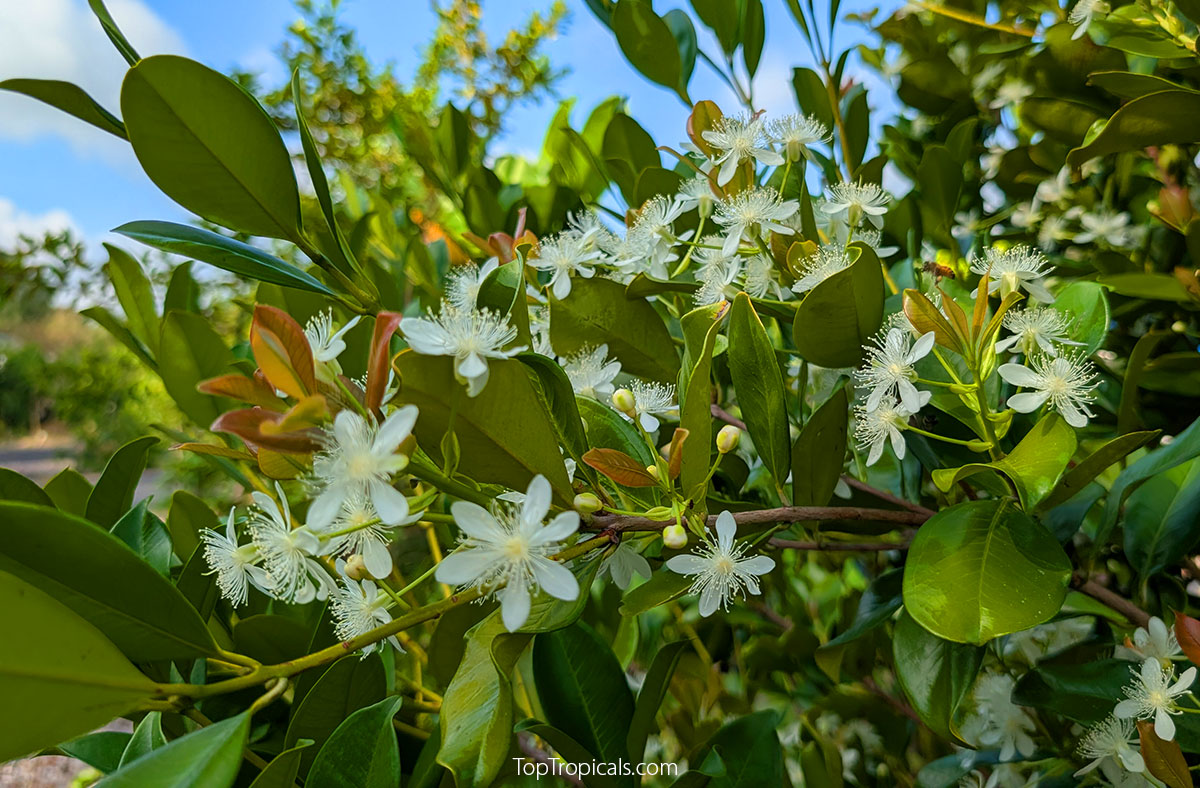
Grumichama Tree in Bloom – Eugenia brasiliensis
Growing & Care
Outdoors
Best in USDA Zones 9–11
Sun or partial shade; more sun usually means sweeter fruit
Plant in well-drained soil; avoid heavy, wet spots
Withstands summer heat and humidity, and can take a light freeze
Container / Indoor
Do well in 5–10 gallon pots on patios or balconies
Need bright light indoors — a sunny window or grow lights
Can flower and fruit in containers if kept warm and well lit
In cooler zones, bring plants indoors for winter and back out in
spring
General Care
Water: Keep soil evenly moist; drought-tolerant once established but
best yields with regular watering
Soil: Use good potting mix - LINK TO SOIL
Fertilizer: Balanced slow-release LINKL TO FERTILIZER Sunshine
Boosters
Pruning: Light trimming keeps plants bushy and productive
Pollination: Self-fertile; one plant will fruit on its own




 Growing & Care