Date: 14 Jul 2019
A Cup of Tea Plant
By Onika Amell, tropical plant specialist
A: I live in Ave Maria, Florida. I want to try my hand at growing my own tea. Which plant do I need?
A: Most people do not realize they are actually enjoying
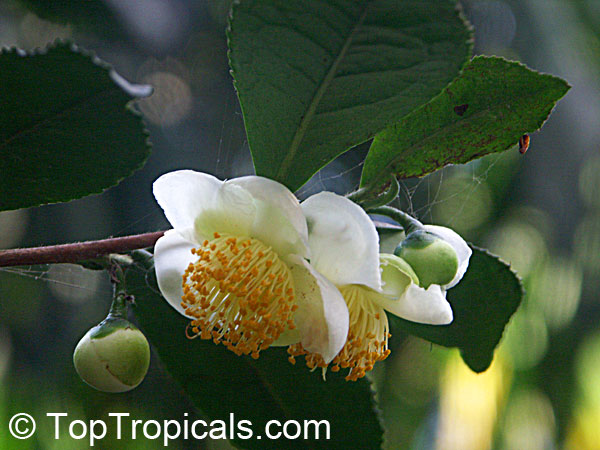
camellias when they sip their cup of tea. True tea comes from the Camellia sinensis
plant, an evergreen shrub or small tree.
In the fall and winter, the plant will produce small white flowers with
a lovely fragrance. The foliage is shiny and dark green with a very nice
informal and open look.
Camellia sinensis (or tea plant, as it is commonly known) prefers a
temperature between 65 and 86 degrees, which makes Florida an ideal area to grow
them. However, if you live in colder zones, you can certainly succeed
growing your own tea plants using a greenhouse. Alternatively, you can use
containers which can be brought inside when temperatures start falling. Tea plants
will usually survive a very slight freeze, though the leaves may be damaged or
killed. It will not tolerate a hard freeze. They prefer full sun or light
shade in the garden.
Tea plants will become small trees or large bushes if not pruned.
Hardcore tea growers trim back the shoots repeatedly to a height of around 4 feet
to encourage new growth and to contain the size.
Make sure to pick an area of your landscape where it does not flood or
remain wet during our rainy season. Camellia sinensis does not like wet feet
at all. They prefer well-drained, sandy and slightly acidic soil. If grown in
a container, add some sphagnum moss to the potting mix. They will benefit
from frequent applications of small amounts of fertilizer.
You will need some patience, too. Your plant should be around 3 years old
before you start harvesting leaves.
Recommended fertilizers:
Tropical Greenhouse Plus - Plant Booster
Tropical Allure - Smart-Release Booster
Harvesting recipes
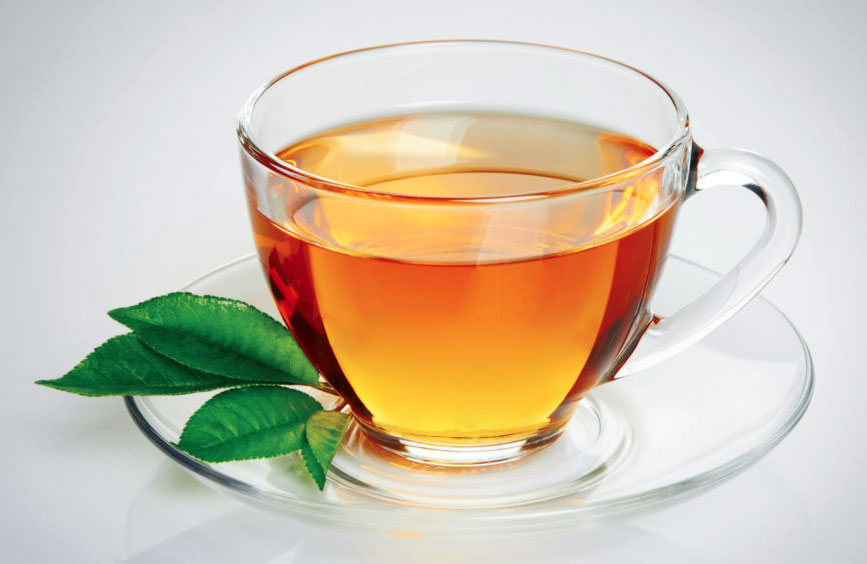
Now that you know how to grow the Tea, you need to check this out: the Harvesting recipes how to harvest and make different kinds of real tea: Green Tea, Japanese Style Green Tea, Oolong Tea, Black Tea, Orthodox Indian Tea... Continue reading...

Date: 9 Jul 2019
Erythrina vespertillio - Bat-Wing Coral Tree
by Mark Hooten, the Garden Doc
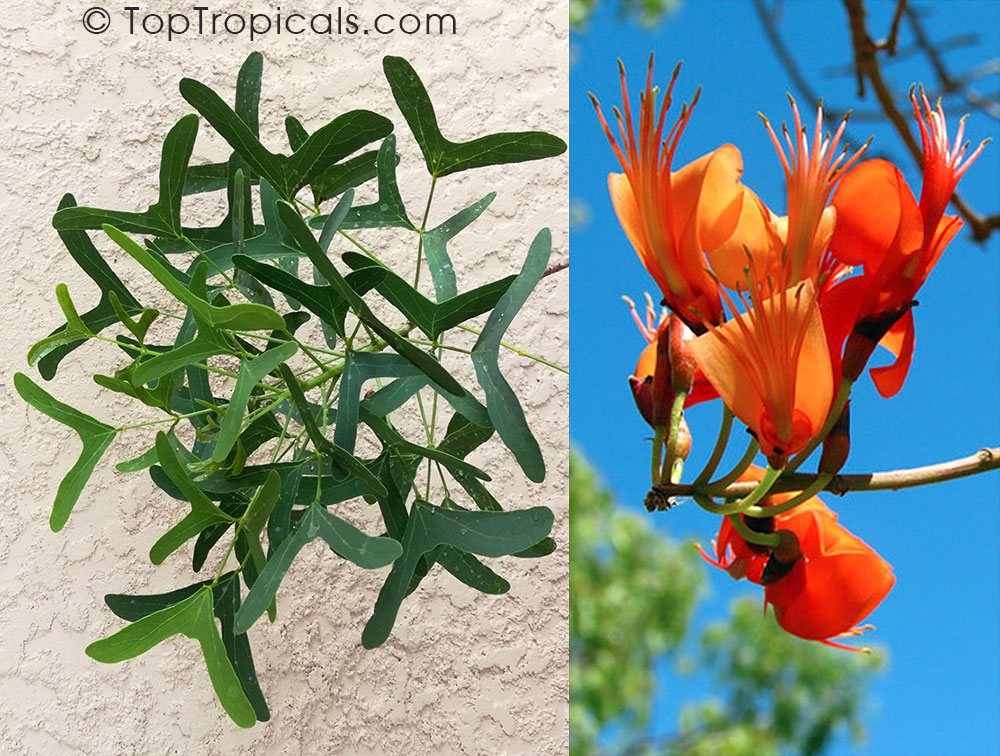
...Even in its native homeland, the species remains uncommon, and most Australians have never even heard of it!.. Now, the Bat-Wing Coral tree is likely my all-time favorite small growing flowering tree in existence. There are not enough superlative adjectives I know to properly and adequately describe it. Imagine closely packed long-lobed blue-green bat wings in groups of three on long thin stems which actually rather flutter in a breeze...
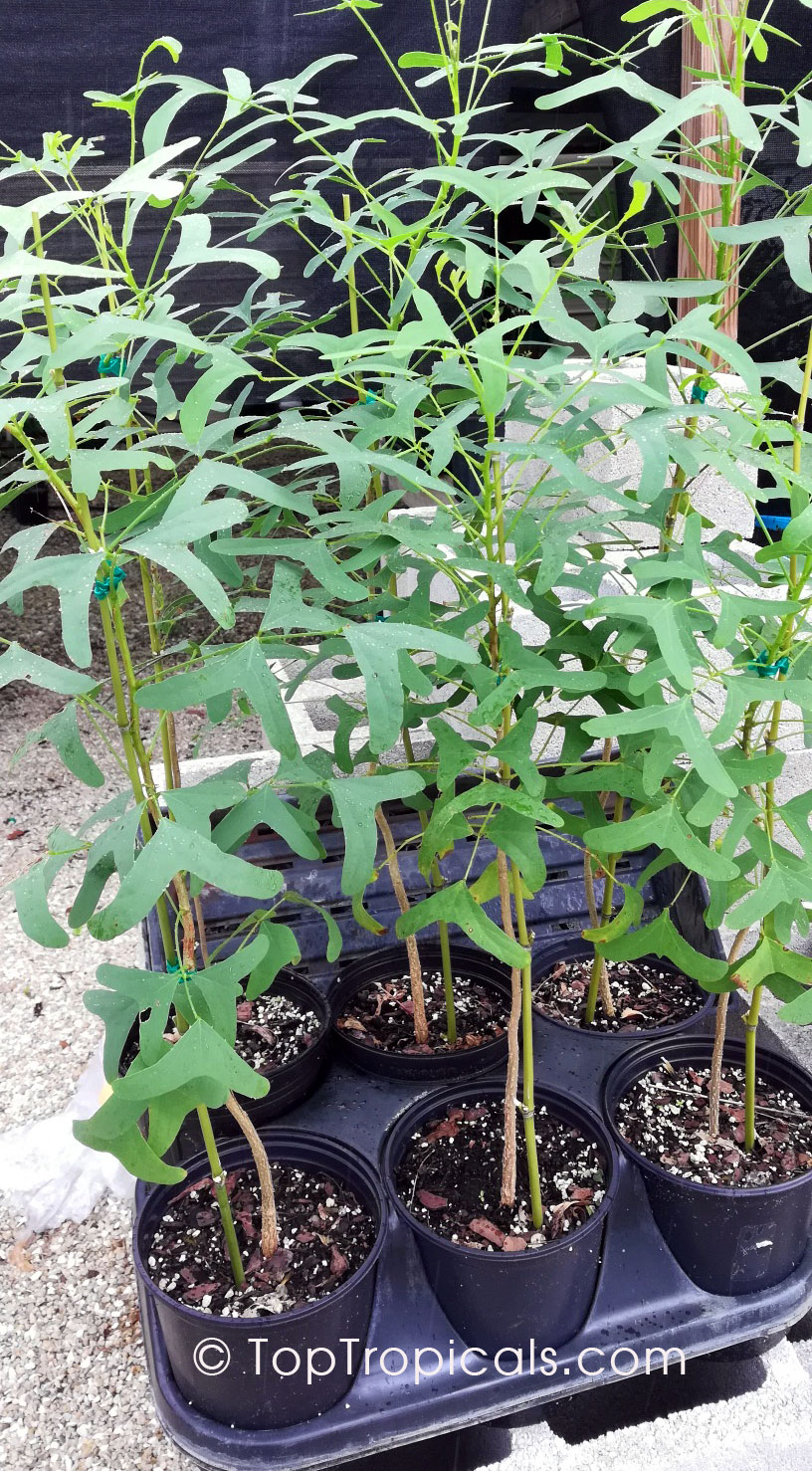
Picture of the actual plants for sale:
Date: 29 Jun 2019
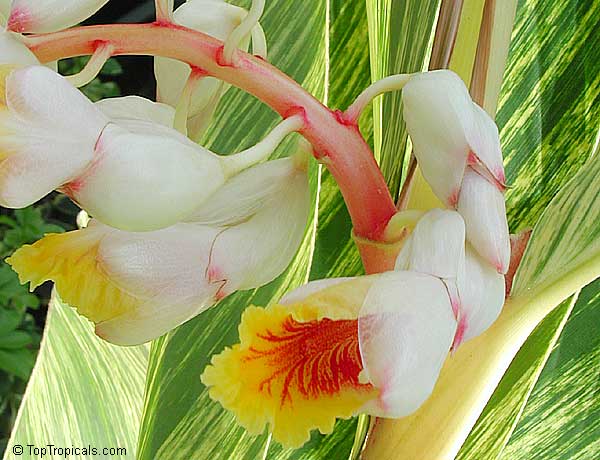
Variegated Shell Ginger - Alpinia zerumbet
By Onika Amell, tropical plant specialist
Q: I live in Deltona, Florida and hoping to find spreading ginger with interesting foliage to grow in a partially shaded area in my garden under a group of trees. Any suggestions?
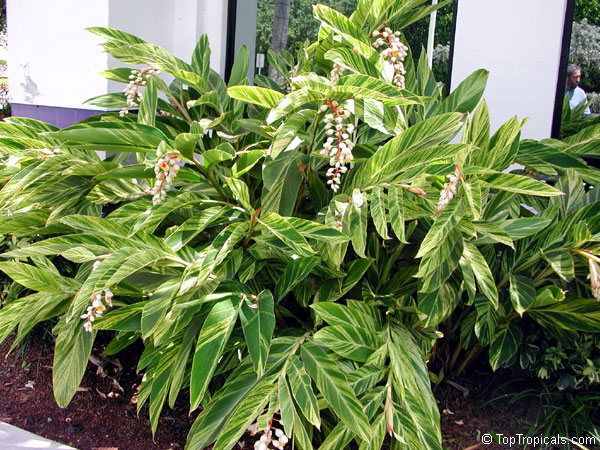
A: Variegated ginger Alpinia zerumbet variegata is a clumping ginger valued for its
beautiful variegated foliage. The dark, green leaves have striking yellow stripes.
This ginger is sought-after, not only for the stunning foliage but also for its
beautiful flowers. The flowers are different from other members of the
ginger family and appear in drooping racemes from the ends of leafy stems rather
than directly from the rhizomes. This ginger is also commonly known as Shell
Ginger because the flowers resemble seashells! They are pink-tinged, fragrant
and appear in summer.
This evergreen perennial grows in upright clumps 3-5 feet tall. You may
prune the plant to control size.
It does not tolerate drought or a hard freeze but can take a few hours
or light frost (goes dormant in such case). In colder areas, rhizomes should
be dug up and stored in a cool room during winter.
This ginger will love a shaded corner in your garden. Plant it in
organically rich, well-drained soil in full sun to part shade. Keep the soil moist
but not soggy, and spread a thick layer of organic mulch around the plant
for moisture retention. There are no serious insect or disease problems to
worry about!
This ginger can be also be grown as a house plant as long as it has
bright light and humid conditions. It will grow to around 3-4 feet tall as a
houseplant.
Recommended fertilizers:
Broad Leaf Plus - Ginger-Heliconia-Banana Booster
Tropical Allure - Smart-Release Booster
Limited time special offer:
Instant $5 off Variegated Ginger - Alpinia zerumbet
Date: 8 Jun 2019
Chosing a good avocado tree
Q: I'm in coastal Broward County. I'm putting together an order on your web site, and one thing that I would like is an avocado tree. I'd like to have something as close to true "Hass" as possible. Which cultivar does well here in SE Florida, and is most like Hass in texture, creaminess, and flavor? I'm not a big fan of the yellow watery Florida avocados.
A: Mexican type of Avocado have dark skin and buttery texture,
while Florida green fruit types (West Indian type, with smooth skin), have lots
of delicious melting pulp, so it is a matter of preference.
In coastal Broward county you can grow a wide range of varieties since
your climate is very mild, so you don't have select cold-hardy varieties like
Winter Mexican, Brazos Belle or Joey, etc. Yet there are many interesting varieties that rare and much
more exclusive than Hass, with the same, or even better, quality buttery
fruit.
One of the most popular varieties - Brogdon, with red-purple colored pear-shaped fruit, very thin skin, and yellow buttery flesh. It is also very cold hardy.
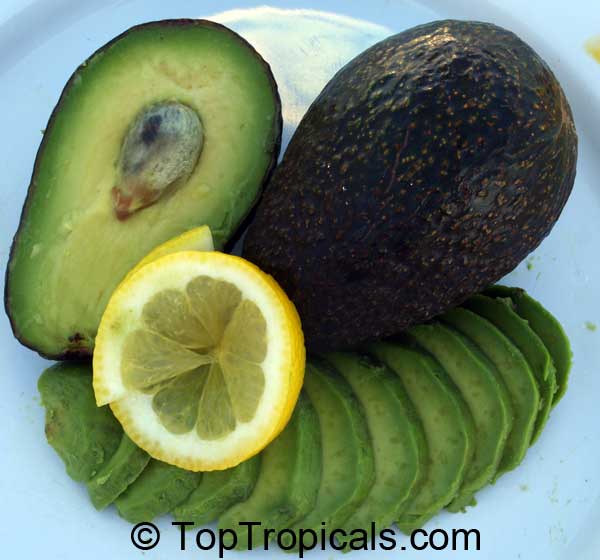
Very interesting exotic avocado is Kampong - Sushi Avocado - see photo above. The flavor of this fruit very nice, oily, creamy, nutty, reminds of almonds. At the same time, it has solid consistency and if you cut a square it remains a shape of the square. It is the best Sushi Avocado! It tastes great as an appetizer when cut in squares with some shrimp cocktail sauce.
Three collectible varieties:
Anise - leaves that smell like Anise, very rare, the fruit is of excellent
quality, creamy and buttery.
Bacon - a large Mexican variety with dark-skinned medium-sized fruits, and
a rich creamy flavor. It has exceptional fruit that ripen in late fall and
into spring, they are easy to peel and have a light, subtle flavor. Another
outstanding feature of the Bacon avocado tree is its angelic sweeping branches
which helps keep the tree shorter and easier to pick its fruit.
Nishikawa is a very hot seller! Oval fruit somewhat resembles Hass, but
larger, and has very high oil content.
See all Avocado trees from our store
Recommended fertilizers:
Fruit Festival Plant Food - Super Crop Booster
Mango-Food - Smart Release Fruit Tree Booster
Date: 4 Jun 2019
Pretty in Pink... and Purple Prince for her!
By Onika Amell, tropical plant specialist
Q: I have a bare spot in my front garden, behind a low wall, in part-sun. I'm hoping to find an evergreen, flowering ground cover that will cover it quickly. Any ideas on finding something with the ability to eventually also cascade over that wall? I live on Marco Island, Florida.
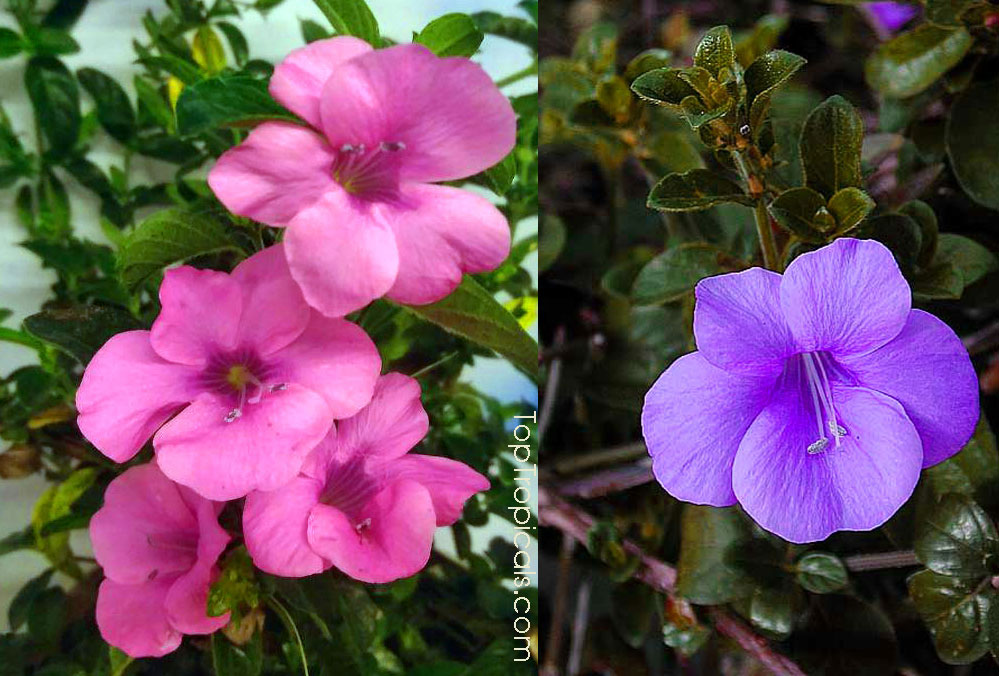
A: Barleria Repens - Small Bush Violet, is a tough, fast-growing evergreen
that blooms from late spring to autumn. Of the many Barleria we see in the
tropics, Pretty in Pink is one of the most striking! The name tells the whole
story: pretty and pink. A lot of gardeners enjoy using them as a ground
cover. They will quickly cover a large area - their stems root readily as the
plant crawls along. They are easily propagated by lifting the rooted runners or
using cuttings. They also reseed easily. Flowers are followed by seed pots
that explode open when dry, dispersing 4 seeds at a time! But perhaps best liked
by many gardeners, is their habit to cascade. It will be well suited for
covering the bare area in your garden and spilling over that wall beautifully.
When used as a ground cover, remember to pinch out young shoots to
encourage bushiness and prune the plant back hard after flowering to keep it
neat.
Barleria repens will also adapt to different situations in a garden if
you need them to. Although they usually form a rounded to spreading bushy
shrub, 2 ft high by 3 ft wide, they will climb when you give them support. They
are often allowed to lean into nearby trees and shrubs.
Hardy to 28F, Barleria repens is pest-free and fairly frost-tolerant.
They love sun and part shade, as well as well-drained soil and plenty of
organic material. Avoid planting it in deep shade as it will get leggy and
reluctant to flower.
They will thrive when fed with a slow release fertilizer at intervals
of 6-8 weeks, throughout the growing season.
There is another cultivar of this exact variety that has blue-purple flowers, it is called Purple Prince! It couples perfectly with Pretty in Pink! :)
See all Barlerias from our store
Recommended fertilizers:
Pink N Good Daily Plant Food Flower Booster
Tropical Allure Smart-Release Booster