Garden Blog - Top Tropicals

Date: 28 May 2025

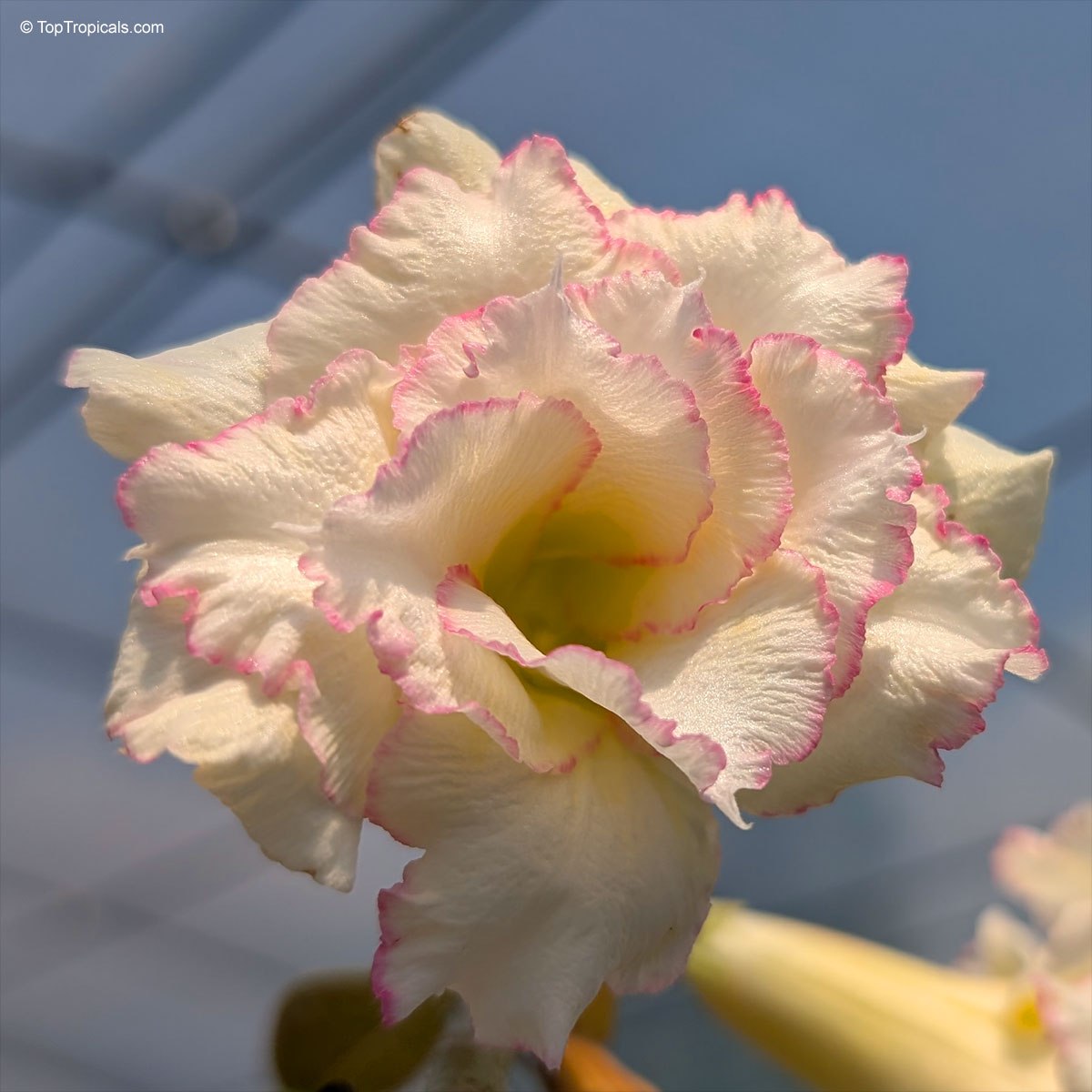
Adenium Candy - a pure sugar for the eyes

Adenium Candy

Adenium Candy

🍭 Adenium Candy - a pure sugar for the eyes


📸 Photo of Adenium Candy for the previous post 👆

🛒 Shop adeniums

#Nature_Wonders #Container_Garden #Adenium

🔴 Join 👉 TopTropicals

Date: 26 Jun 2025

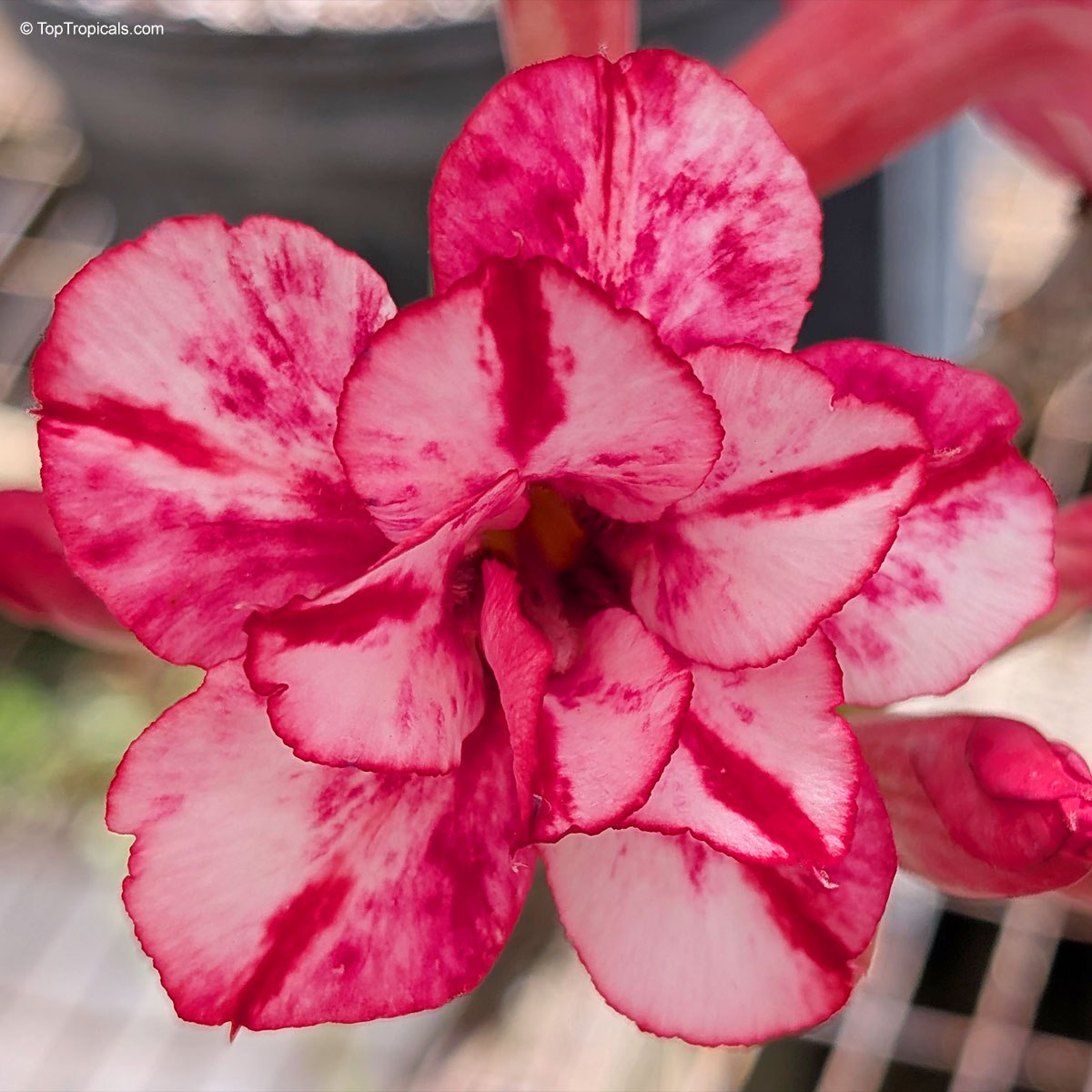
Heavenly Lotus in bloom - Bua Sawan Adenium

Adenium Bua Sawan pink double flower

Adenium Bua Sawan pink double flower

🌸 Heavenly Lotus in bloom - Bua Sawan Adenium


🌸 Adenium (Desert Rose) Bua Sawan features vibrant double blooms with crisp red edges on soft pink petals, creating a striking and elegant contrast. The name Bua Sawan translates from Thai as "Heavenly Lotus," perfectly capturing the flower's bright, uplifting presence and graceful beauty.

🛒 Add a touch of paradise to your garden with Adenium Bua Sawan

📚 More adeniums

#Nature_Wonders #Container_Garden #Fun_Facts #Adenium

🟢 Join 👉 TopTropicals

Date: 24 Aug 2025

Adenium care

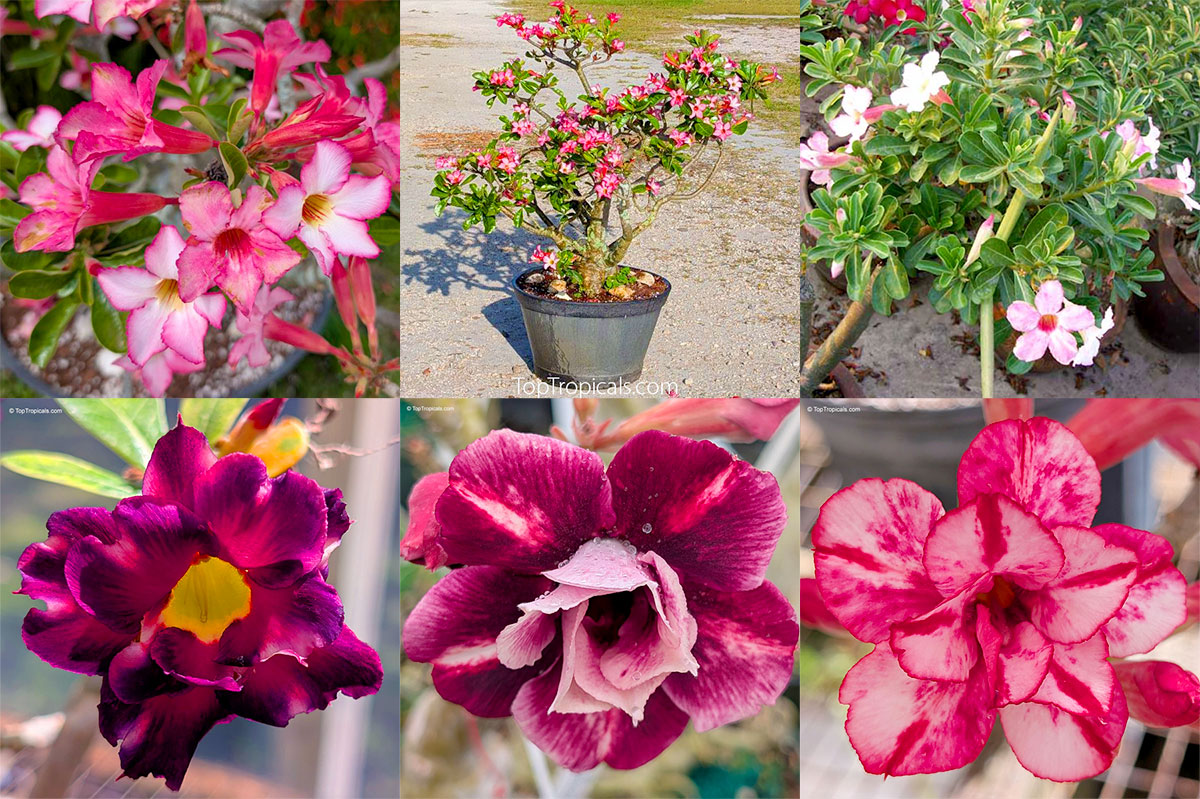
adenium  desert  rose  flowers  and  plants  in  pots  showing  pink,  red,  purple,  and  bicolor 


blooms.

Care for adeniums is simple once you understand what they like. Think of them as half succulent, half tropical shrub. Keep their roots dry but never bone-dry, give them sun, and feed them during the warm months. Do that, and they will reward you with fat trunks and nonstop flowers.

  • Soil and pot: Use a gritty, fast-draining Adenium Soilless Mix. Shallow wide pots work best — they let the caudex spread and show off its shape like a bonsai.
  • Watering: Water in the morning. Let the surface dry before watering again. Never let pots sit in saucers of water.
  • Foliage: Keep leaves dry. Wet leaves invite rot and fungus.
  • Fertilizer: During active growth, feed with Sunshine Megaflor liquid fertilizer (flower booster); it promotes swollen trunk and sets flower buds.
  • Light: Give them bright light year-round. Full sun in mild climates; filtered light if your summers are scorching.
  • Winter rest: Cut water back when days shorten and let the plant rest. Dormancy is normal.
  • Repotting trick: Each time you repot, lift the plant a bit so the crown roots peek above the soil. This encourages bigger caudex.

Desert roses are made for containers, easy enough for a beginner but rewarding enough for a collector.

Add Adenium to your container garden

Date: 24 Jun 2018

TopTropicals

What you need for successful growing Adeniums

1) Adenium plants - from TopTropicals Endless selection of Adeniums. We have double flower, red, purple, yellow and even black flowers!
2) A small pot with excellent drainage is a must. Position the plant in a pot, size of root system.
3) Adenium soil mix. TopTropicals Adenium Soilless Mix. Use only well-drained soil.
4) Lots of light. Adeniums need lots of light for heavy flowering. However from our own experience, in super hot climates, they look healthier in filtered bright light. After initial planting, once the plant is established and starts growing new leaves (may take a few weeks), gradually move it into brighter light.
5) Little water. Adeniums like a neutral to hard water. Acidic water tends to sour the soil too fast and may cause root rot. Water plants preferably in the early morning, and allow them to drink up throughout the day. Watering can be done daily to every few days. Do not water again until soil dries on surface. Never allow your plants to sit in a saucer of water, but don't let them to dry out too often - this causes adeniums to go into early dormancy. Adeniums do not like both over-watering or drying-out.
6) Fertilizer. To make your plant develop a large swollen base/trunk, you'll need a good quality fertilizer. Use slow-release granulated fertilizer for overall plant health, and liquid water soluble fertilizer for swelling up trunks that is also used to increase flowering. It shouldn't be too high in nitrogen, the middle number should be the highest (similar to 10-50-10). Never apply fertilizer directly on roots and do not liquid feed when a plant is thirsty: always water first slightly to avoid root burn and leaf drop. Do not wet leaves.
7) SuperFood micro-elements. Besides macro-nutrients provided by fertilizer, Adenium needs micro-elements for balanced development of root system and especially caudex: Sunshine-SuperFood.
8) SUNSHINE-BC. Spray leaves with SUNSHINE-BC once a month to encourage young growth, profuse flowering and large caudex.
9) Growing caudex. There is a secret how to create a large swollen caudex: raise the plant a bit every time you re-pot it, so that the upper part of roots will be a little exposed. The plant will form more roots that will go down.

See full list of Adeniums - plants and seeds.

Date: 24 Jun 2018

Plant Horoscope. Sagittarius Zodiac lucky plants: Fig and Baobab

TopTropicals

Sagittarius - 11/22 - 12/21. Sagittarius is a FIRE sign that is ruled by the large and optimistic planet Jupiter.
Archer's plants tend to be large in size and fairly conspicuous, with a pleasant odor. They may have large, or elongated leathery leaves and showy flowers.
The best plants for Sagittarius will support the body's largest glandular organ, the liver. The planet Jupiter also rules the hips, thighs, lower spine, and the autonomic nervous system, as well as the process of growth and preservation. Herbs related to Jupiter have traditionally been used to treat lower back problems (including sciatica and lumbago), arthritis, and rheumatism. Herbs with a high silica content are related to Sagittarius (they promote a positive frame of mind), as are plants with large taproots and trees that produce fruit and nuts. Illnesses of Jupiter are said to arise from immoderate consumption. Basil is an herb that's both expansive and cheerful - just like Sagittarius - and its reputation as a money attractor resonates with this sign's generous nature as well. Use this happy herb when you want to infuse your life with fun and prosperity!

Sagittarius Zodiac lucky plants: Mulberry, Ceiba, Chonemorpha, Beaumontia, Baobab, Grapefruit, Anise, Sage, Cinnamon, Blueberry, Thistles, Nut trees, Lemon, all Ficus trees, Peepal, Fig, Coleus, Basil, Banana, Mango, Ironwood Mesua ferrea, Clematis, Peony, Jasmine, Nutmeg, Mint, Tea, Date palm, Guava, Jambul, Maple, Magnolia, Teak, Bird of Paradise, Heliconia, Showy Gingers.

For other signs information, see full Plant Horoscope.