Garden Blog - Top Tropicals

Date: 29 Oct 2024

How to overwinter tropical plants indoors

Mandevillas  indoors

10 key tips for successful overwintering

Q: I have two Mandevillas that thrived on my balcony all summer. Now that cold weather is approaching, I've moved them indoors to bright spots, but they're dropping and wilting leaves. How can I keep them healthy until spring? Should I fertilize them? Can Mandevillas grow indoors year-round?

A: First, keep in mind that the plants we call "indoor plants" or "house plants" are all tropical. However, not all tropical plants are suitable for indoor living. Some, especially shade-loving ones, thrive in indoor conditions, which is why we refer to them as "house plants" (philodendrons, monsteras, calatheas, peperomias, and many others, including some succulents). Others are less adaptable to the lower light and humidity typical of indoor spaces, but with a little extra care, you can overwinter them inside and move them back outdoors in spring. Mandevillas are no exception! Even tropical trees, including fruit trees, can tolerate a few months indoors if given the right conditions for semi-dormancy. Below are the 10 key tips for successfully overwintering tropical plants indoors.

1. Maximize Light: The more light, the better. There's no such thing as too much indoor light. If windows aren't enough, use LED grow lights, which stay cool and won't dry the air. Rotate plants every few days to prevent uneven leaf loss.

2. Reduce Watering: Less light and cooler temperatures mean plants need less water. Allow the soil to dry between waterings, and avoid overwatering - combination of cold + wet is especially harmful.

3. Maintain Moderate Temperatures: Most tropicals are happy with daytime temperatures around 75F and nights at 50-60F. In sunrooms or greenhouses, some can handle 45F if watering is kept to a minimum.

4. Boost Humidity: Avoid placing plants near heaters or vents that dry the air. Misting daily helps, or place pots on trays filled with water and pebbles to raise humidity around them.

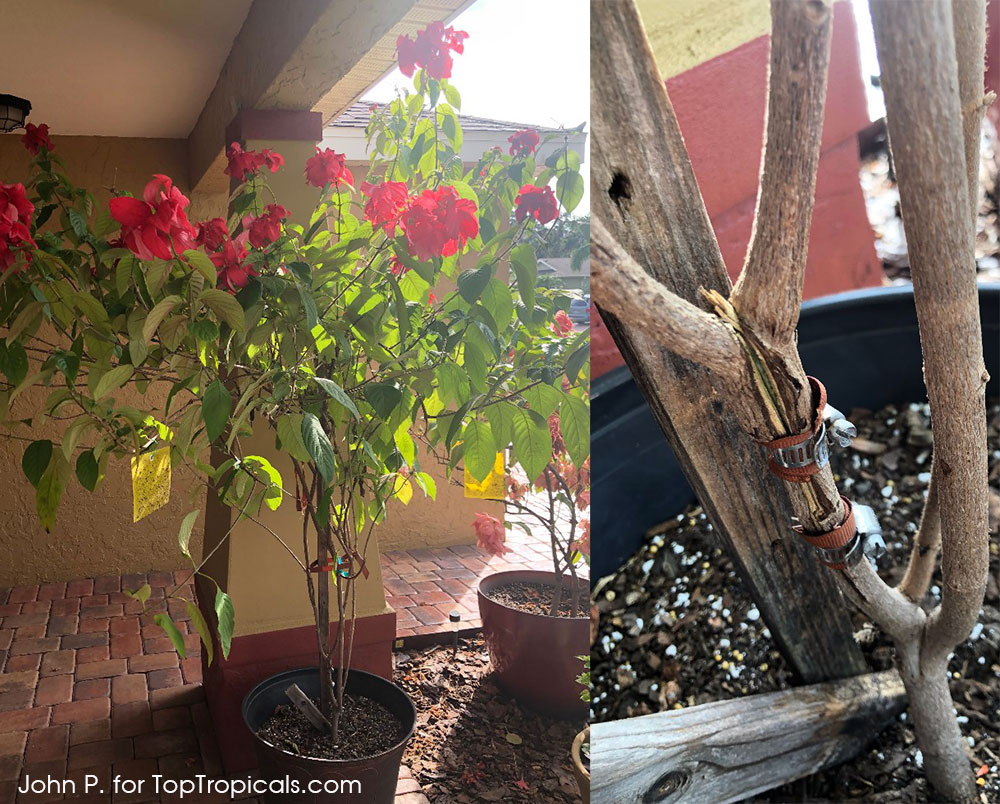
5. Monitor for Pests: Check leaves weekly to catch insect problems early, as pests can cause serious damage or even kill the plant indoors.

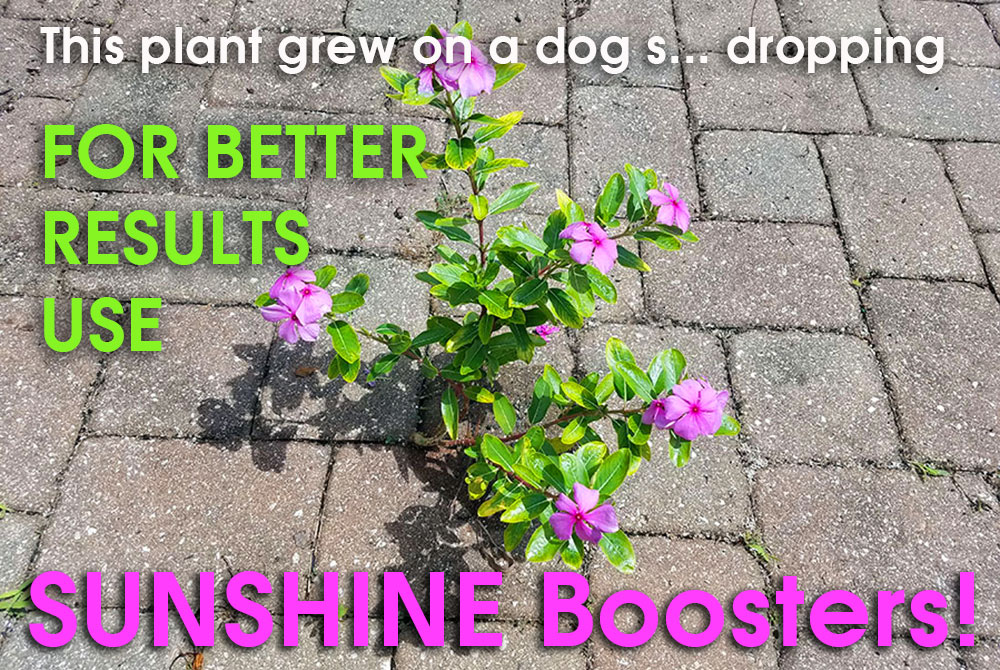
6. Fertilize Smart: Use ONLY liquid, amino-acid-based fertilizers like Sunshine Boosters throughout winter; they won't burn roots since their dosage adjusts with reduced watering. Avoid dry, granulated, and EDTA-based fertilizers during winter and dormancy.

7. Use Micro-Nutrients: Along with macro-elements (fertilizers), supplement with micro-elements like Sunshine Superfood and bio-stimulants such as Sunshine Epi to build strong plants with robust immune systems, better able to withstand unfavorable conditions and resist diseases.

8. Hold Off on Pruning: Leaf drop and leggy growth are normal responses to winter. Wait until spring to prune, when new growth starts, to encourage branching and healthy foliage.

9. Don't Repot Yet: During dormancy, roots slow their growth. Repotting too soon risks root rot. Wait until spring when new growth appears to transplant into a larger container. Typically, roots grow in proportion to the above-ground parts.

10. Let Them Rest: Winter is a natural resting period. Avoid forcing growth - your plants will reward your patience with vibrant leaves and flowers when spring returns.

Cat  Indoor  Garden

Date: 29 Dec 2024

Last Days of the Year
Tropical Fruit Tree Sale

Tropical  Fruit

Celebrate the season with a sweet deal! For the last few days of the year, we're offering an instant 10% discount on all fruit trees. It's the perfect time to add something special to your garden or gift a tree that will grow into a lasting memory. No minimum order required - just enjoy the holiday savings and bring home your favorite fruit tree today!

Instant 10% discount!

No min order. Exp. 1-1-25

Don't forget about FREE and DISCOUNTED SHIPPING
Limited time promotion ends soon!

Date: 2 Jan 2025

New Year with New Plants:
Choose from 17 Tropical Paradise Resolutions!

Indoor  garden  and 
 greenhouse

"A garden is never so good as it will be next year..." - Thomas Cooper.

Happy New Year, dear fellow gardeners! As we step into a fresh new year, it's the perfect time to think about what exciting, special, and life-changing plants we can add to our gardens. The days are getting longer, and spring is just around the corner, so now's the time to make a plan and prepare for the season ahead. Let's take small steps each year to create the garden of our dreams. This winter, consider these fun resolutions:

  1. Hang a bird feeder and install a rain barrel
  2. Order some tropical plant seeds for an early start
  3. Ask your grandparents about their favorite garden plants
  4. Build a raised bed for succulents
  5. Plant a fruit tree or two to have some crop this year
  6. Start a compost pile
  7. Switch to organic fertilizers and plant boosters
  8. Fill empty spaces with flowering trees, shrubs, and vines
  9. Add butterfly attractors to your garden
  10. Provide water for bees and butterflies to help them thrive and pollinate your fruit trees
  11. Get a bonsai starter to try bonsai art
  12. Enjoy meals outside as often as you can
  13. Teach a child how to plant a tree
  14. Plant berry-bearing shrubs like Tropical Cherries to feed the birds
  15. Rake up leaves for winter mulch
  16. Add a few exotic plants to your indoor collection or container garden
  17. Share plants as gifts all year long

Happy gardening in 2025!

Cat  with  tropical  plants

Date: 9 Jan 2025

NEW VIDEO:
How to get variegated vanilla bananas.
Discovering natural banana with seeds

with Fermin Garcia

We got a variegated banana from Thailand, planted it at our farm and started fertilizing with our famous Sunshine Rubusta (featured in our earlier blog: Sunshine Boosters Winter Use - The magic fertilizer in action.

In just a few months, it grew into a massive banana tree - one of the largest we've ever seen! Soon, a flower spike appeared, followed by variegated bananas. As they ripened, they turned yellow and developed a sweet vanilla flavor, with seeds! These are natural bananas, not modified. In today's video, we're showing how we harvested the fruit, tasted it, and discovered the seeds...

We've named this banana Fermin's Vanilla Delight Banana (Musa x paradisiaca). Fermin planted the seeds and we hope to have these plants soon. Add item 6379 to your wishlist and be the first to know when they're ready!

Variegated  Banana  video

Use Sunshine Robusta magic fertilizer to have your bananas (and everything else) grow like crazy! It is safe to use all Sunshine Boosters year around with every watering.

Sunshine  Rubusta  and  C-Cibus  with  bananas

Check out different banana varieties we have at TopTropicals - delivered to your door!

Subscribe to our Channel:

Subscribe to Top Tropicals YouTube Channel and get our latest video news of what is fruiting and blooming!

Cat  with  Papaya  fruit

Date: 13 Feb 2025

Tropical Seeds You Should Start Now for Spring Planting

Cat  planting  seeds

Eight fast-growing, rewarding tropical perennials
to start from seed

Q: What tropical seeds can I start now so the seedlings will be ready for spring planting and produce flowers or fruit this year?

A: Many tropical plants grow quickly from seed and can mature within the same year, rewarding you with flowers or even fruit. Some of these tropical perennials can even be grown as annuals in cooler climates! The key is to start them early indoors, then transplant them outdoors as soon as warm weather arrives. With just a little planning, you can enjoy vibrant blooms and a harvest in just weeks or a few months. Below are some of the fastest-growing tropicals to try for a lush, same-year garden.

1. Pigeon Pea

Cajanus  cajan  Bicolor  Fuerte  -  Pigeon  Pea

Cajanus cajan Bicolor Fuerte - Pigeon Pea - is an ancient superfood cultivated for over 4,800 years, with roots in India and Ancient Egypt. This hardy, drought-tolerant perennial shrub produces nutritious, protein-rich beans used in rice dishes, soups, and even tofu. Easy to grow, it thrives in poor soils, improves soil quality, and offers medicinal benefits, making it a valuable plant for both gardens and kitchens. Seed to crop in just one season!

2. Lipstick Tree - Annatto

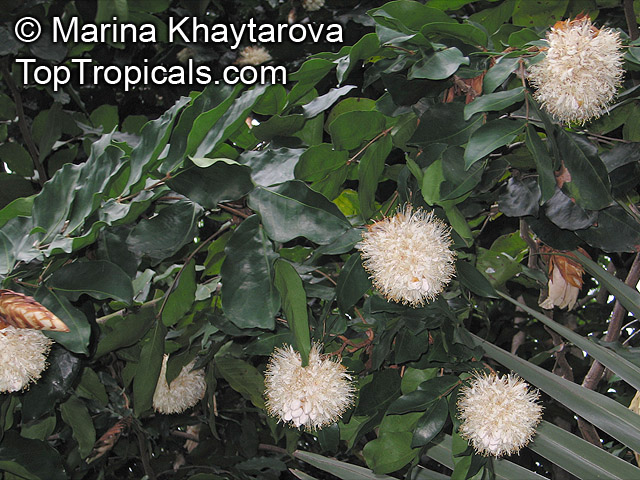
Bixa  orellana  -  The  Lipstick  Tree

Bixa orellana - The Lipstick Tree, native to South America, is a striking shrub with large leaves, pink flowers, and vibrant red seeds. Its seeds produce Annatto, a natural pigment used in cosmetics, especially lipstick, as well as in culinary applications for its color and mild, peppery flavor. Beyond its beauty and versatility, annatto offers antioxidant and anti-inflammatory benefits, while the plant itself makes an excellent hedge or ornamental feature.

3. Mexican Bird of Paradise

Caesalpinia  mexicana  -  Mexican  Bird  of  Paradise

Caesalpinia mexicana - Mexican Bird of Paradise - is a rare gem among tropical shrubs, offering fragrant butter-yellow blooms that stand out against its feathery green foliage. A heat-loving, drought-tolerant plant, it attracts hummingbirds and can be grown as a compact shrub or small tree. Native to northern Mexico, it thrives in full sun with minimal water, making it a low-maintenance yet striking addition to any garden or patio.

4. Tree Calliandra

Calliandra  houstoniana  -  Tree  Calliandra

Calliandra houstoniana - Tree Calliandra is the only tree-form Powderpuff, growing into a lush, bushy tree in just one season. Its fluffy pink blooms appear year-round, drawing in hummingbirds and butterflies for a nonstop display of color and life. Super fast-growing and beautiful, it's a must-have for wildlife-friendly gardens!

5. Butterfly Pea - Clitoria

Clitoria  ternatea  -  Butterfly  Pea

Clitoria ternatea - Butterfly Pea - is a stunning vine with vibrant blue, white, or purple flowers that captivate both gardeners and pollinators. Beyond its beauty, it's prized for its herbal benefits, with its flowers used in teas for stress relief and cognitive support. The famous Blue Tea, a caffeine-free infusion, turns purple with a splash of lemon, making it both a visual delight and a health-boosting drink. Fast-growing and easy to manage, this delicate yet vigorous vine is perfect for fences, trellises, and containers. Seed to crop in just one season!

6. Cas Guava

Guava  Cas,  Psidium  friedrichsthalianum

Psidium friedrichsthalianum - Costa Rican Guava, or Cas Guava, is a super sour fruit with four times more vitamin C than a lemon, making it a powerhouse for immune support. Popular in Costa Rica's "Agua de Cas", its tangy juice is perfect for refreshing drinks. Hardy and resilient, this low-maintenance tree thrives in poor soils while resisting pests and diseases. This is the fastest growing and the most productive guava tree with 2-3 crops per year! From seed to crop: 3 years.

7. Agua de Flor de Jamaica - Karkade Tea

Hibiscus  sabdariffa,  Roselle),  Karkade  Tea

The most health-beneficial hibiscus is Hibiscus sabdariffa (Roselle), known for its deep red calyces used in Agua de Flor de Jamaica and Karkade Tea. This tart, refreshing tea is packed with antioxidants and supports heart health, digestion, and immune function. A fast-growing plant, it goes from seed to a lush, flower-filled bush in just one season! From seed to crop: in just 3 months!

8. Dwarf Papaya TR Hovey

Guava  Cas,  Psidium  friedrichsthalianum

Papaya Dwarf TR Hovey, Carica papaya - is a dwarf marvel, reaching only 4-5 feet tall while producing giant, melon-sized sweet papayas! This compact variety is perfect for small gardens and container growing, offering big fruit on a tiny tree - a true space-saving tropical treasure! Only 2 years from seed to fruit.