Garden Blog - Top Tropicals

Date: 23 Nov 2018

Featured Plant. Dillenia philippinensis - Katmon, Philippines Elephant Apple
TopTropicals.com

Dillenia philippinensis - Katmon, Philippines Elephant Apple

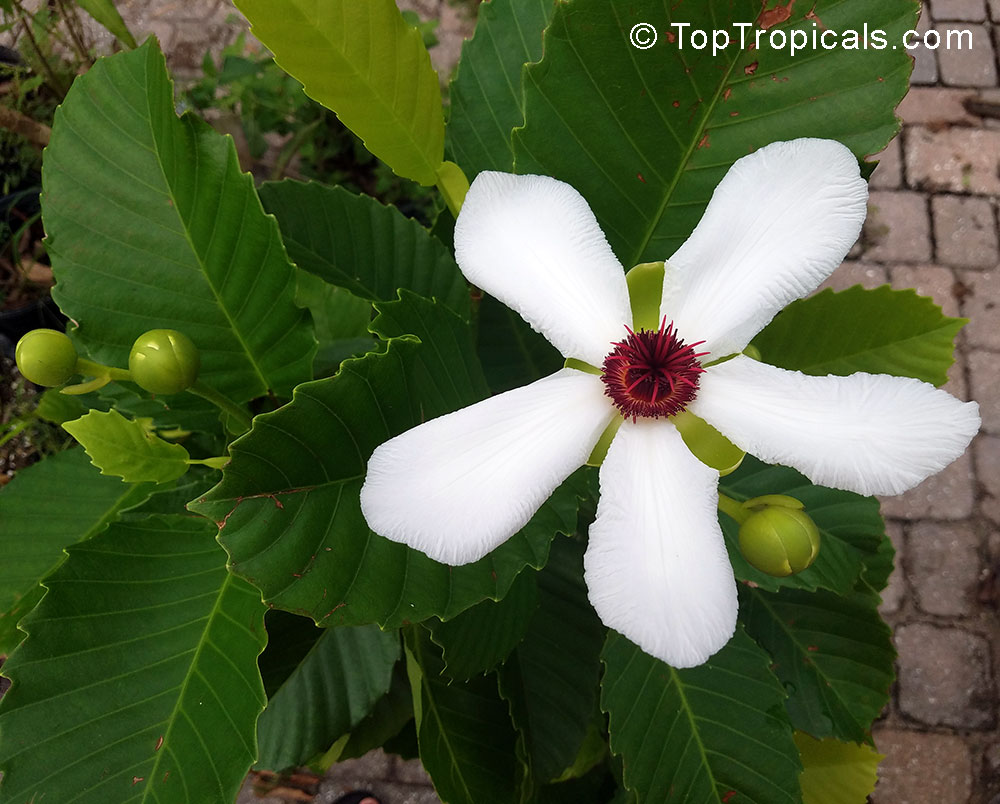
Philippines Elephant Apple has spectacular blooms and amazing large leaves that are toothed and unusually shaped. This super-tropical looking beauty is a favorite tree among Filipino garden enthusiasts. It is endemic to the Philippines. The tree is buttress-forming, evergreen, and shade tolerant, it is a great container and house plant. The leaves are large, 1-2 ft long, leathery, shining, and coarsely toothed at the margins. Its flowers are white, large, showy, and also very large, up to 1 ft wide, with showy reddish pistils and stamens. The edible fruits are rounded, 2-3"in diameter, with medicinal value. Flowers last only one day, but the plant stays in bloom all summer through fall, with multiple flowers and buds that keep opening every day. The plant is perfect for container and indoor culture, with showy tropical leaves, beautiful flowers, shade tolerance, and compact growth.

Check out this plant...

Date: 18 Nov 2018

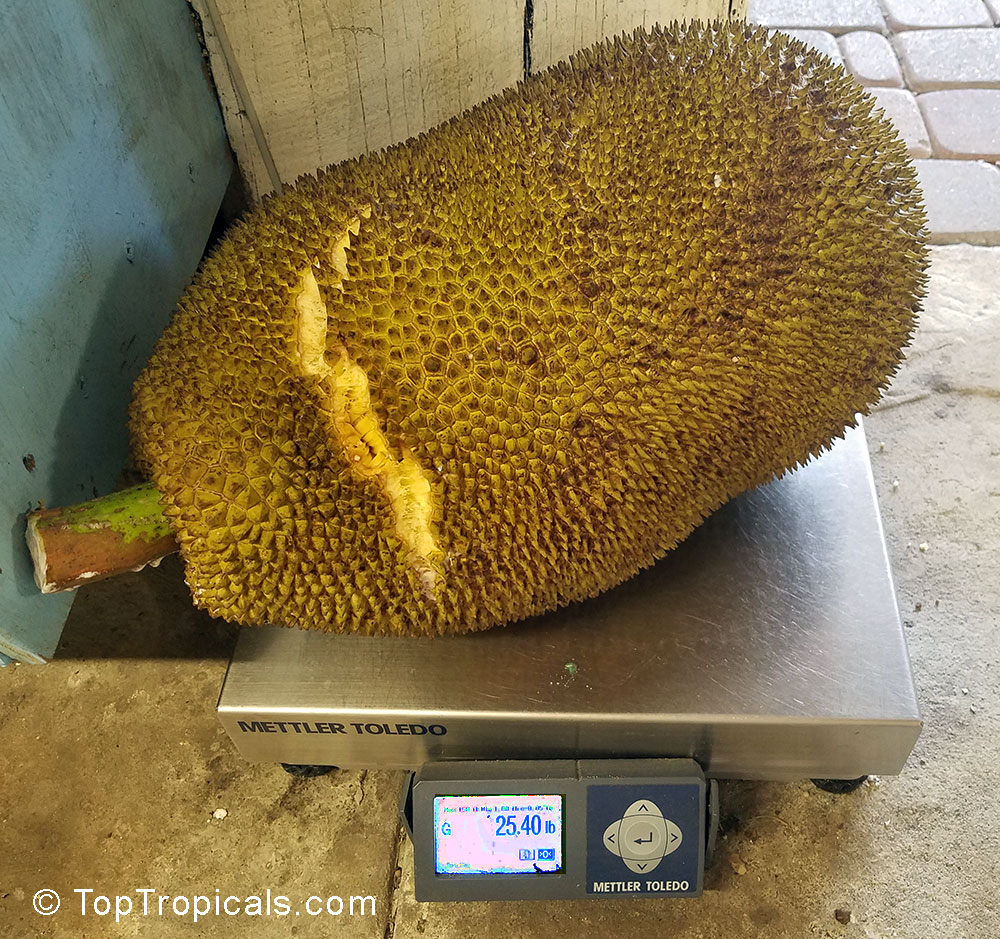
How to grow the biggest fruit on Earth...

TopTropicals.com

Q: When I visited Thailand I bought this huge fruit at the market and the taste was amazing and unique! Now I see you have this Jackfruit tree for sale. I am excited to grow it but not sure if it will survive our winters. I live in Huston, TX. Also are there any special conditions required for successful fruiting?

A: Jackfruit indeed is one of the most fascinating tropical fruit. In spite of reputation being ultra tropical, the tree is not as cold sensitive as everyone believes. Mature trees can withstand light frost for a few hours without significant damage. The only thing, after cold snaps it may be not as profuse producer as in frost-free climates. Keeping Jackfruit in a pot is also an option in colder areas. The tree is quite unique not only about fruit but also about growth habit. The fruit is so large and heavy that the tree has a smart feature to produce only at the base of the trunk. This makes it possible to keep Jackfruit tree at very short height - 6-7 ft tall. We have many varieties of Jackfruit, and all of them can be grown in containers considering regular topping/pruning.

5 secrets of Jackfruit successful production:
1) Frost free temperatures (occasional cold spells are not critical if SUNSHINE-T cold protection booster is used)
2) Soil rich of organic matter (compost, manure, peat moss)
3) Moist soil and regular watering
4) Constant pruning and keeping under 7-10 ft
5) Regular application of fertilizer, microelements and SUNSHINE-Honey for better quality fruit.

Read more about Jackfruit tree
See video of the fruit
See

Date: 14 Nov 2018

Recovering Soursop after shipping and cold

TopTropicals.com

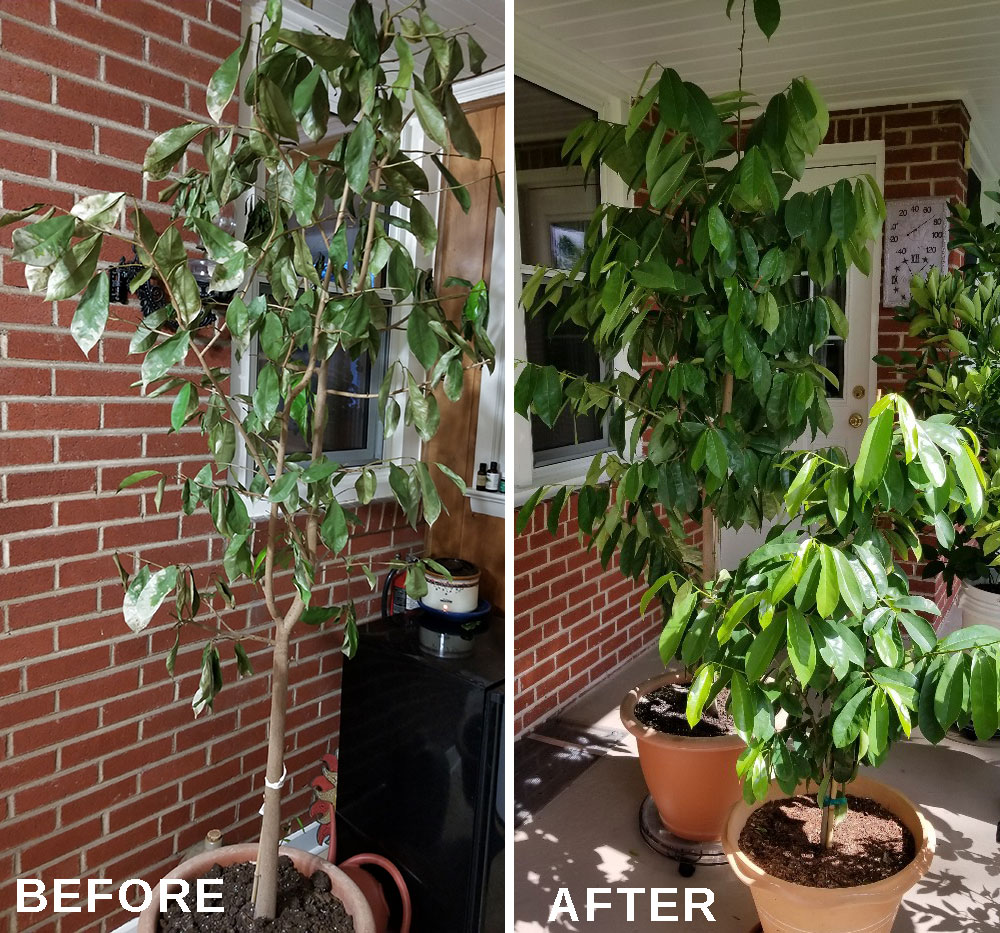
From Irene & Marjorie, PA: We wanted to share our pics with you (after Summer). I attached also the photo of the way the tree looked before your advice (back in April). The big is the one we almost lost and you gave us these instructions and it came back. These were your instructions:
"The soursop is one of my favorite fruits and I was so sad to hear yours may be dead. Good news - the tree looks great! Yes, it does have some cold damage but I'm surprised it still has leaves on it at all! In cooler weather, they typically drop all of their leaves and stay that way until spring. You can remove the damaged leaves and it will resprout new growth with the warmer temperatures."

Taking care of Soursop after shipping
Soursop - Annona muricata trees are very sensitive to temperature drops. This always causes leaf loss. After shipping, do not water until the soil gets slightly dry; keep it in bright shade. No fertilizer until the plant shows active new growth. Be patient with your plant, and it should recover soon.
Soursop is an ultra-tropical tree and doesn't take any freeze. If you live in a cooler climate, keep the plant in a pot (the good news is, Annonas, in general, have a compact nature and are perfect for container culture). Bring the tree indoors during the cold period, providing bright light.
We have a very interesting article about growing and fruiting Soursop in an apartment. Check out 4534 Tropical Treasures Magazine # 7.

Date: 31 Oct 2018

Featured Plant. Flacourtia indica - Governors plum

TopTropicals.com

Flacourtia indica - Governors plum

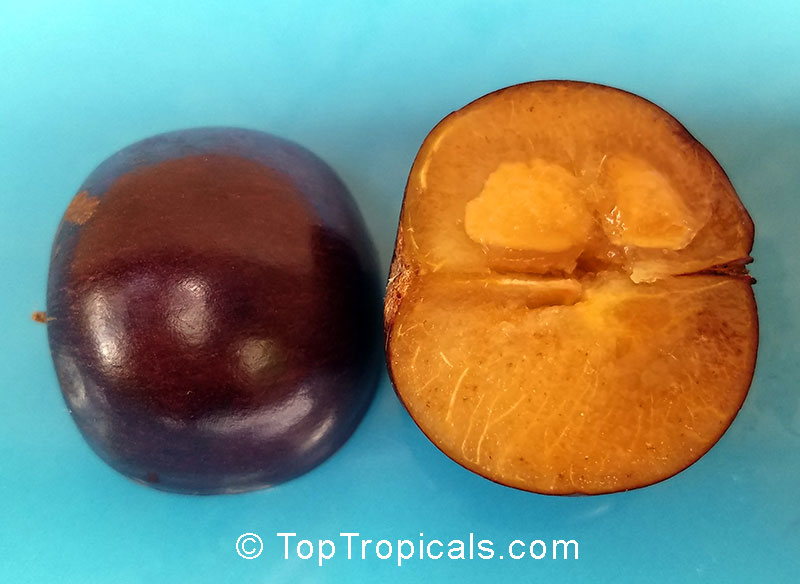
Governors plum, Madagascar Plum, Batoko palm - is a tropical or subtropical small shrubby tree. It is cultivated in tropical regions as a hedge plant and for its deep red acid fruits resembling small plums. The fruits are about one inch wide and can be eaten fresh or made into preserves. They are sweet and sour, with a texture and flavor similar to a plum. Fruits mature after one to two months from flowering.
The tree is easy to grow, self-fertile and doesn't require much care, not fussy about soil and very forgiving if you forget to water it.
Seeds germinate readily, but it takes a while until the seedling is ready to be transplanted into a big pot or in the ground. If you plant them now, by spring you have a chance to get the little tree ready to go!

We have fresh seeds!

Date: 17 Oct 2018

October Tropical Garden: to do list

TopTropicals.com

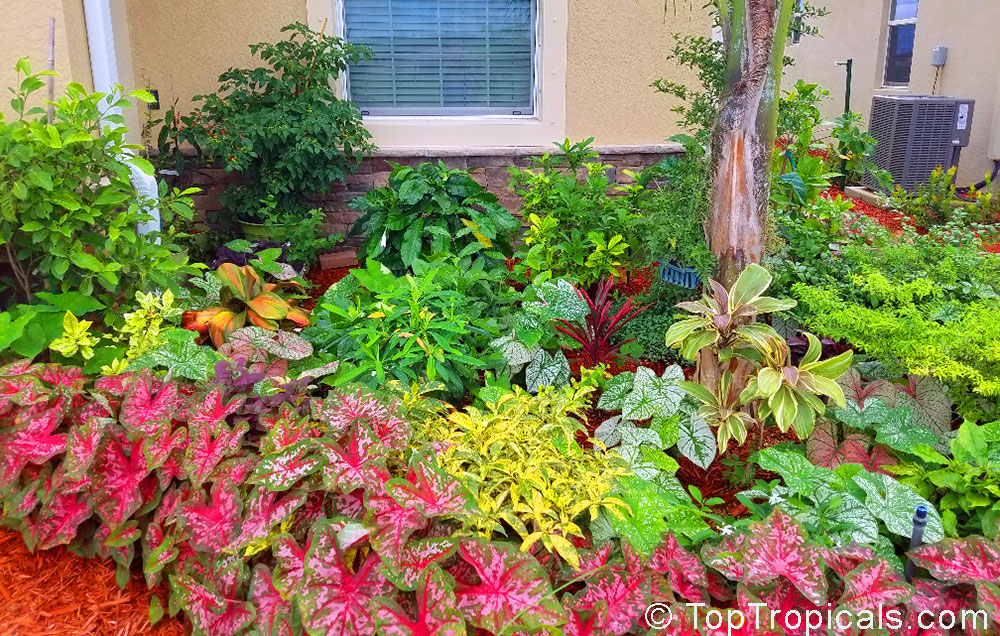
1. Prune. Last pruning before winter. Check the trees and shrubs one more time. Cut away dead wood and remove crossing limbs and branches.

2. Mulch. Continue to mulch to stop weeds and get ready for winter. Keep mulch 1-2 inches away from the stems. Evenings are starting to cool, so it is more comfortable working in the garden.

3. Pest control. Check for mealy bugs and scales. Remember that a garden with many kinds of plants has fewer pests than gardens with lots of mass plantings. So keep up with variety! Avoid pest magnets like Oleander, Oak, Hibiscus which require constant spraying.

4. Propagation. You still can take cuttings but do it as soon as possible. Days are getting shorter and less sunlight signals thу plants to slow down their growth. Cuttings will not root as quickly.

5. Seeds. Consider growing vegetables and perennials from seeds. In mild cooler conditions, seedlings have less stress and get a good start.