Date: 19 Jul 2025
☀️ When tropical plant takes a Summer break
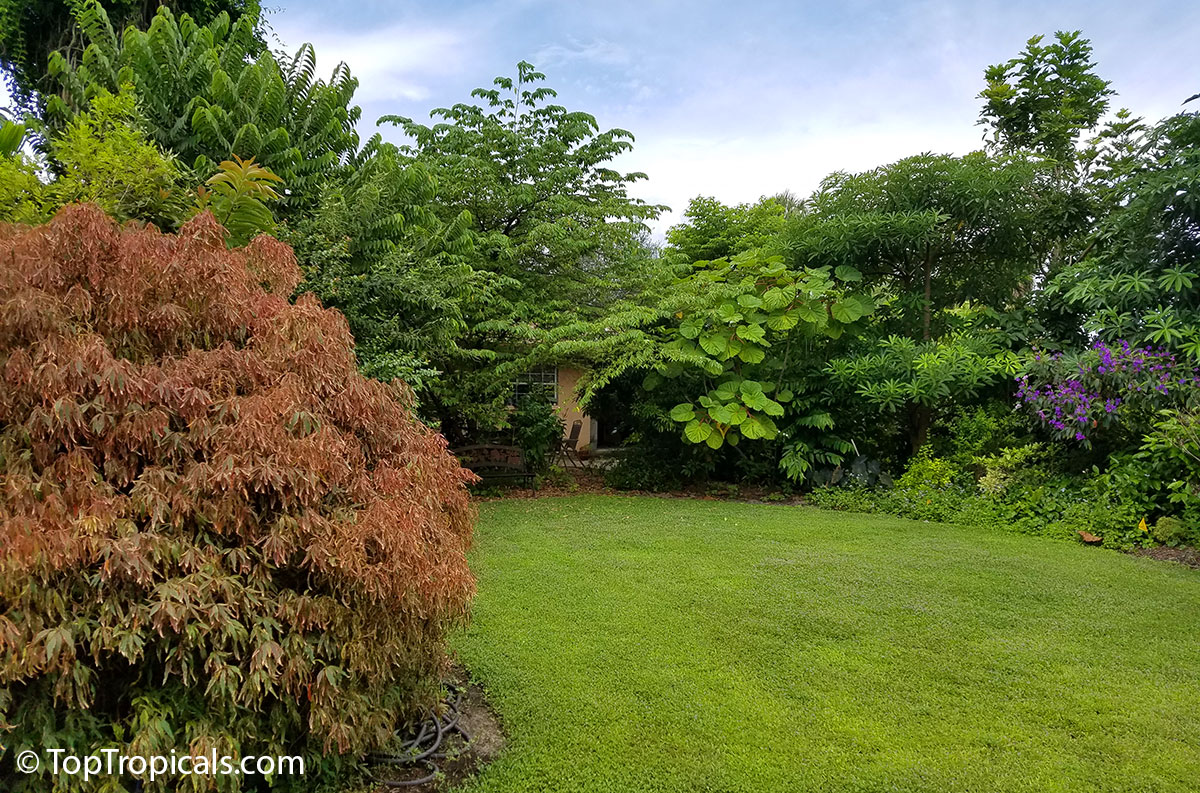
Why your plants might stop growing in mid-Summer
and what to do about it
You've been watching your tropical tree thrive all spring. New leaves, steady growth, maybe even a flower or two. Then July hits, and… nothing. The heat cranks up, and your once-busy plant just sits there. No new shoots, no blooms, not even a twitch. If it feels like your plant ghosted you - but don't worry! It's not dying. It's just hot!
When the heat hits, plants hit pause. In the peak of summer, especially with temperatures above 90F, many tropical and subtropical plants go into heat survival mode. Growth above ground may slow down or stop entirely. It's not because you forgot to water or skipped a fertilizer dose - it's just too hot. The plant's energy shifts underground, where roots may still be growing. Think of it like a tropical version of a siesta - less margarita, more mulch. This stage might last a few weeks or longer, depending on how intense the heat gets. But the important thing is: it's normal.
- Don't drown it in extra water. That leads to root rot.
- Don't dump dry fertilizer on it. That can burn the roots or just get flushed away. Use controlled release or liquid fertilizer dozed proportionaly to the plant's water usage.
- Don't prune aggressively, hoping to jolt it awake.
None of that helps - in fact, it can make things worse.
- Water deeply in the early morning, and let the soil dry a bit between waterings.
- Add mulch to help keep the root zone cool and reduce evaporation.
- Provide temporary shade for potted plants or young trees.
- Hold off on pruning or heavy feeding until you see new growth.
Just like you wouldn't run a marathon in a heatwave, your plant needs a break too.
Fertilizing seems like the obvious solution when a plant stalls, but in the heat of summer, it can backfire. When temperatures soar, roots slow down, and absorption becomes inefficient. You might pour in nutrients, but your plant can't use them - and what's worse, any tender new growth that does emerge can get scorched or sunburned before it has a chance to harden.
Feeding a plant with strong fertilizers during a heatwave is like telling someone to sprint in a sauna. It's not just unhelpful - it's risky. That's why you need a fertilizer that’s engineered for hot weather - not just any slow-release formula.
Liquid Sunshine Boosters mild formulas are safe to use year around. Controlled release fertilizer like Green Magic are safe as well, just make sure to follow directions and dosage.
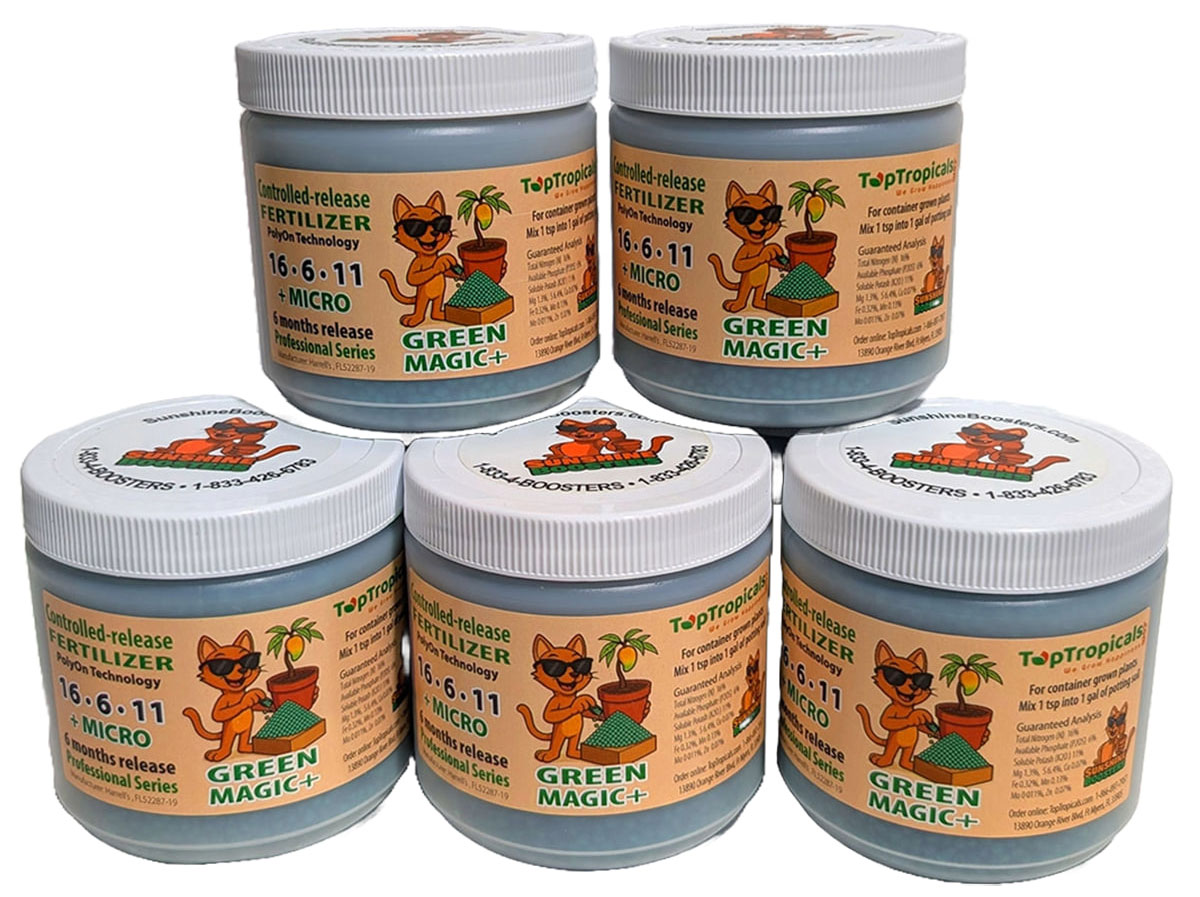
Not all slow-release fertilizers are built for hot summer. Some popular brands might seem like a good choice - but they’re optimized for soil temperatures around 70-75F. That's a mild Spring day in the South, but in real-world Florida or Arizona heat? Not even close.
Here's the problem: Osmocote releases nutrients based on moisture, not temperature. When it's hot and humid - or worse, when you water heavily - it can dump too many nutrients at once. That nutrient surge can:
- Burn your plant's roots
- Force tender new growth that gets fried in the heat
- Leach straight out of the pot, wasting both fertilizer and money
It's unpredictable, especially in containers that heat up faster than ground soil. What you think is "slow-release" can behave more like a fertilizer bomb.
Green-Magic, by contrast, uses a temperature-sensitive polyurethane coating that responds gradually and consistently as the soil warms. That means:
- No sudden nutrient spikes
- No wasted runoff
- And no risk of heat-triggered burn
It's designed to feed steadily and predictably - even when temps hit 90F and stay there. For potted tropical plants, that kind of control is the difference between stressed and thriving.
Once your plant begins to show signs of life again - maybe a new bud, or evening perkiness - it's safe to resume feeding. But skip the salts, and reach for something gentler: Sunshine Boosters.
These amino-acid based liquid fertilizers are designed for daily use, even in containers during the hottest days. They enhance nutrient uptake, even when roots are stressed or sluggish. Unlike synthetic chelators like EDTA, Sunshine Boosters won't bind nutrients or burn root system. They stay gentle, available, and effective. Learn more from this short video.
Use SUNSHINE Robusta for foliage support, or Ca-Support PRO for strong structure and recovery. It's like hydration and nutrition in one - perfect for tropical plants fighting through summer heat.
Don't fight the heat - work with it. If your tree looks stalled this summer, don't panic. It's following a rhythm older than all of us. Support it with smart watering, the right fertilizer combo, and a little patience. Before long, you'll see buds again - and know your plant made it through the heat.
Shop fertilizers and garden supplies
Read more plant care tips in Garden Blog
Date: 12 Apr 2025
How to Plant a Tree - A Fun Guide
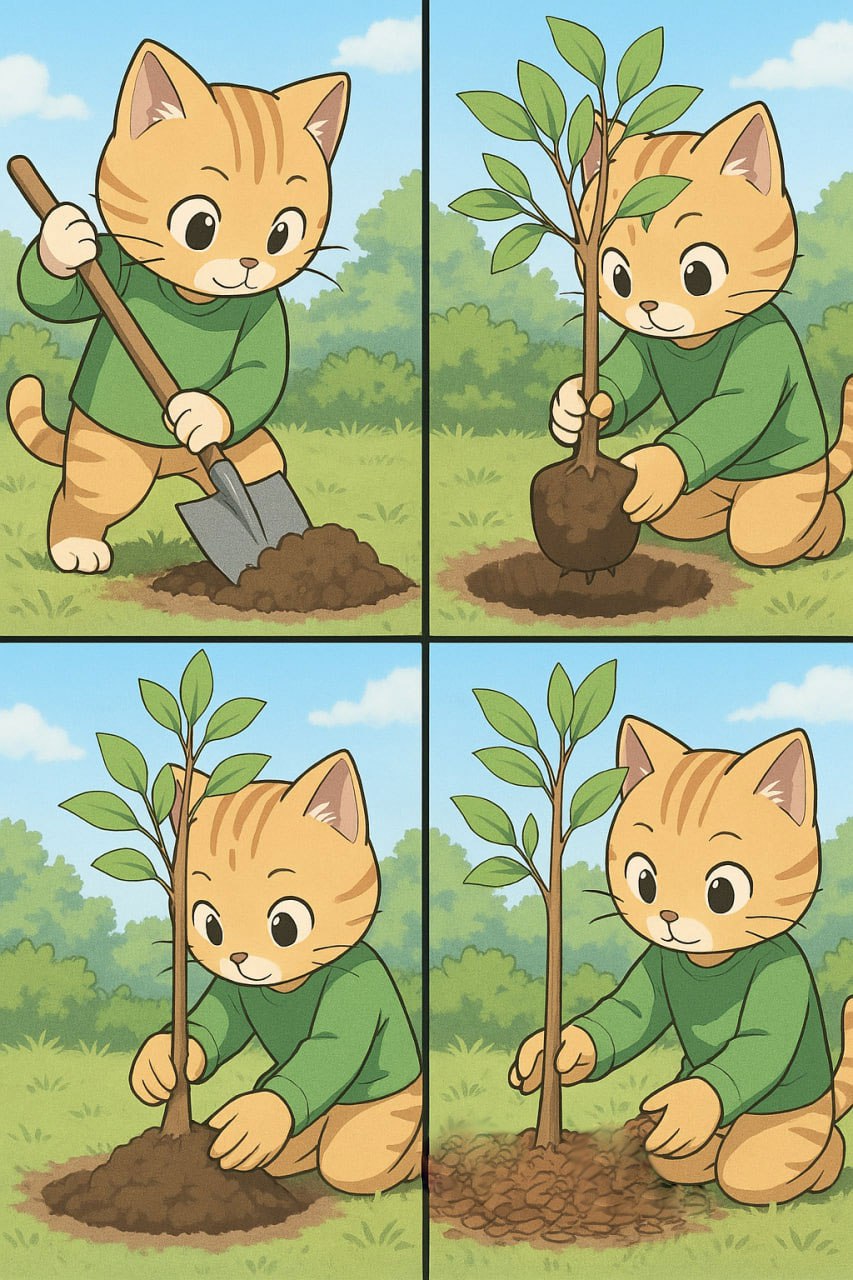
🌳 How to Plant a Tree - A Fun Guide
1
️⃣ Dig a Big Hole
Start by digging a hole 2-3 times the size of the pot. Make sure it's deep enough to give your tree's roots room to grow. Remove any sandy dirt or rocks—replace them with rich, nutrient-packed soil to help your tree establish.
2
️⃣ Place the Tree Just Right
Gently remove your tree from the pot and place it in the hole. The base of the tree (where the roots meet the trunk) should sit slightly above ground level (2-3"). Avoid covering the trunk with soil to allow for proper air circulation and to promote a healthy tree.
3
️⃣ Mound the Soil
Add nutrient-rich soil around the roots, then toss in a handful of granulated fertilizer. With the leftover soil, build a little mound around the tree to form a"bagel"shape. This will help water stay around the roots and give your tree a strong start.
4
️⃣ Add Mulch and Water
Spread mulch around the tree, but leave a small gap around the trunk. Water generously to settle the soil and give your tree a refreshing drink. Water by hand daily for the first couple of weeks or until you see new growth. After that, you can rely on sprinklers.
⭐️ With these simple steps, your tree will be off to a great start!
🛒 Go plant shopping to excersize your green thumb and make our planet better
📚 Learn more:
How to plant a tree: care of mail-order plants and detailed planting instructions (PDF)
#How_to #Trees #Discover
🔴 Join 👉 TopTropicals
Date: 16 Nov 2024
Charming black flowers of
#Trees #Nature_Wonders
🔴 Join 👉 TopTropicals
Date: 11 May 2023
The
Wonderful World of Tamarind:
from Planting to Plating
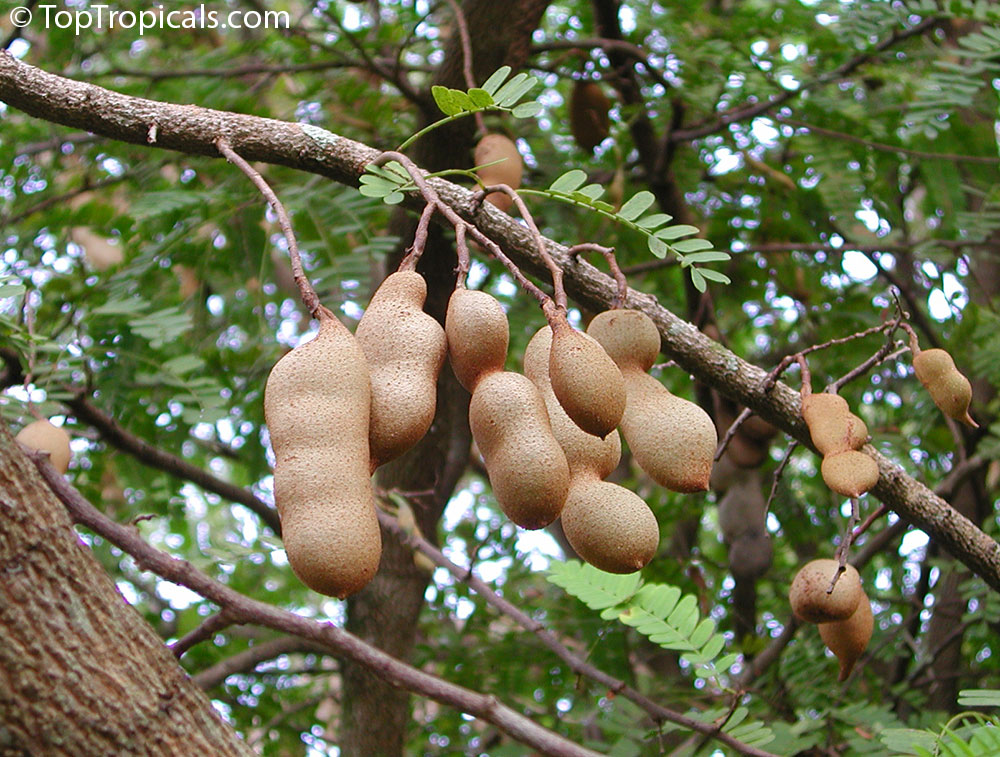
Q: I use a lot of tamarind in my cooking. Can I grow my own Tamarind fruit? Can Tamarind tree grow in North Florida? Will Tamarind grow well outside or should I keep it in a pot?
A: Originating from tropical Africa, the Tamarind - Tamarindus indica - is a tropical tree that is highly appreciated for its ornamental beauty, delightful shade, and soft texture.
Tamarind is a highly valued culinary ingredient, with its tangy and sweet-sour flavor profile making it a popular addition to many dishes. It is frequently used in South Asian, Latin American, Caribbean, and African cuisines to add a touch of acidity and sweetness. Tamarind paste, made from the fruit's pulp, is a key ingredient in Worcestershire sauce, tamarind chutney, and many curry dishes. The seeds, when roasted and ground, can be used as a coffee substitute or as a thickening agent in sauces and stews....
Tamarind tree is prized for its versatile fruits and numerous health
benefits. The tree can be grown outside in warm climates, as well as in pots and
indoors... even as bonsai!
CONTINUE READING >>

Date: 16 Jun 2023
10 tips how to care of tropical
garden
during hot Summer
Q: Do you have any special recommendations how to take care of plants during hot season, to reduce heat strees?
A: Tropical plants prefer temperatures of 70-90F, except for heat-adapted desert plants. High temperatures above 90F can cause slowed metabolism and signs of stress like wilting, yellowing, and leaf drop. Hot and humid conditions attract pests and fungal diseases. To keep your plants stress-free and healthy, during Summer:
1. Monitor temperature and signs of stress.
2. Provide shade to regulate heat exposure: use shade cloth or simply a sheet of fabric as needed to protect lush foliage from burns.
3. Choose heat-tolerant plant varieties.
4. Plant in groups and levels, with trees protecting smaller shade loving plants (see companion planting).
5. Water deeply in the morning or evening to prevent evaporation.
6. Mulch to conserve moisture and regulate soil temperature.
7. Air: ensure good air circulation.
8. Trim damaged foliage and crowded branches.
9. Fertilize: use appropriate fertilization to improve plant heat tolerance. Remember, plants need lots of food during active growth period.
10. Remove weeds, pests, and diseases promptly.
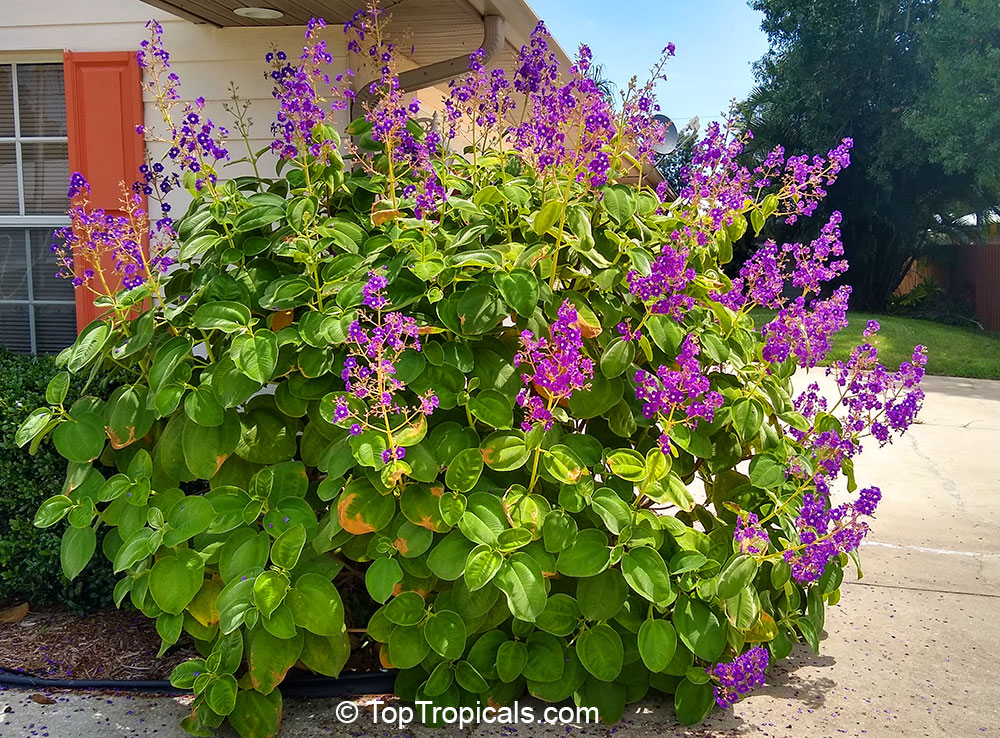
In the photo: Tibouchina multiflora