Date: 30 Oct 2019
Fragrant Gold Leaf Orchid Vine
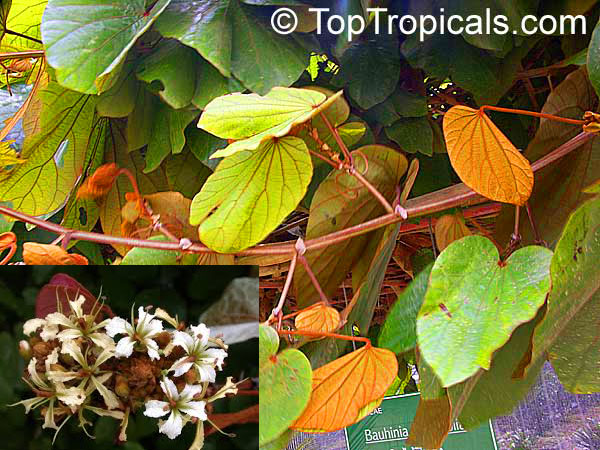
By Onika Amell, tropical plant specialist
Q: I am absolutely thrilled to see you have this vine. I've tried for years to get this plant! It is so, so rare. It just seemed impossible to find in this country. How do I make it thrive? I am ordering two.
A: We are happy to confirm that indeed we do have this rare vine!
Bauhinia aureifolia - Gold Leaf Orchid Vine - was discovered in Thailand in
1983. It is endemic to Pattani, Narathiwat, and Yala in Southern Thailand.
Danish botanist Kai Larsen named this plant and hailed it as one of the rarest
plant species of the world when it was discovered in the eighties.
The Thai people call this vine Bai Mai Si Thong. It is a beautiful
climber with large, bi-loped leaves (7 inches or more!) and good branching.
Young leaves are a stunning burnt orange to terracotta color for about
a week and as they reach full size, they turn green over a couple of days.
This is a very rare color for Bauhinia. It produces leaves all the time and
this means this vine is always full of beautiful color. With its golden leaves,
it sure is reminiscent of Autumn.
This vine blooms from May to November. It bears bunches of small
flowers that are delicately fragrant in the evenings. The cultivated plants range
flower color from pure white to purple and pink, while the wild ones have
often white petals with pinkish patches.
Bauhinia aureifolia needs well-drained soil, full light and good humidity
to thrive. It will tolerate a light freeze once established and it is very
important to protect young plants.
Gold Leaf Orchid Vine also makes a wonderful container plant with staking
or support. It is a must for every rare plant collection!
RECOMMENDED FERTILIZERS:
Pink N Good Daily Plant Food - Flower Booster
Tropical Allure - Smart-Release Booster

Date: 9 Sep 2019
How to make leaves green?
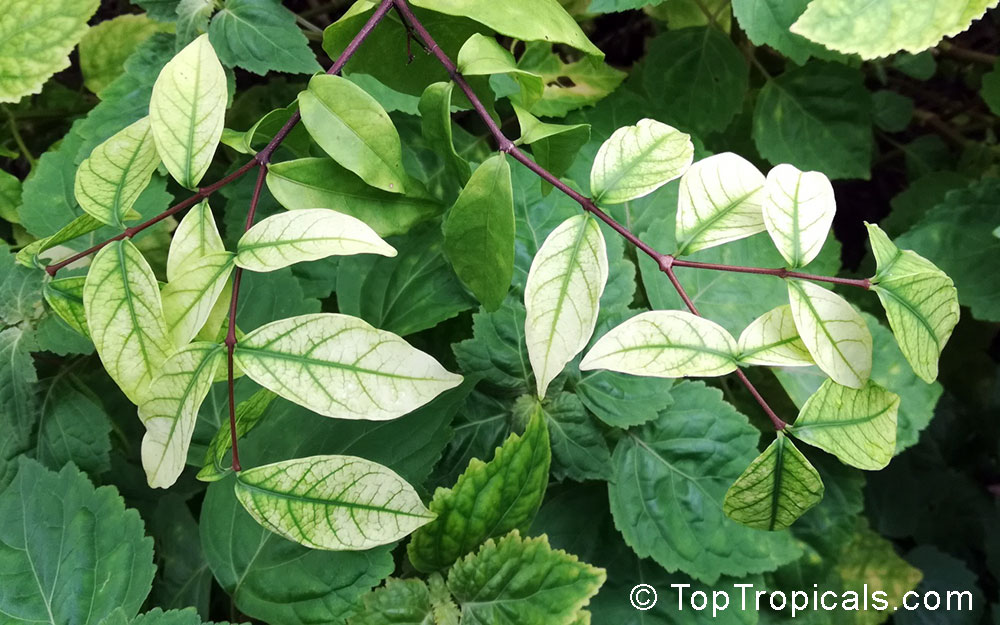
Q: I purchased several plants from you and they all arrived in great shape. The Wrightia is very large and vigorous but some leaves are yellowish. How can I improve that look? Any special fertilizer?
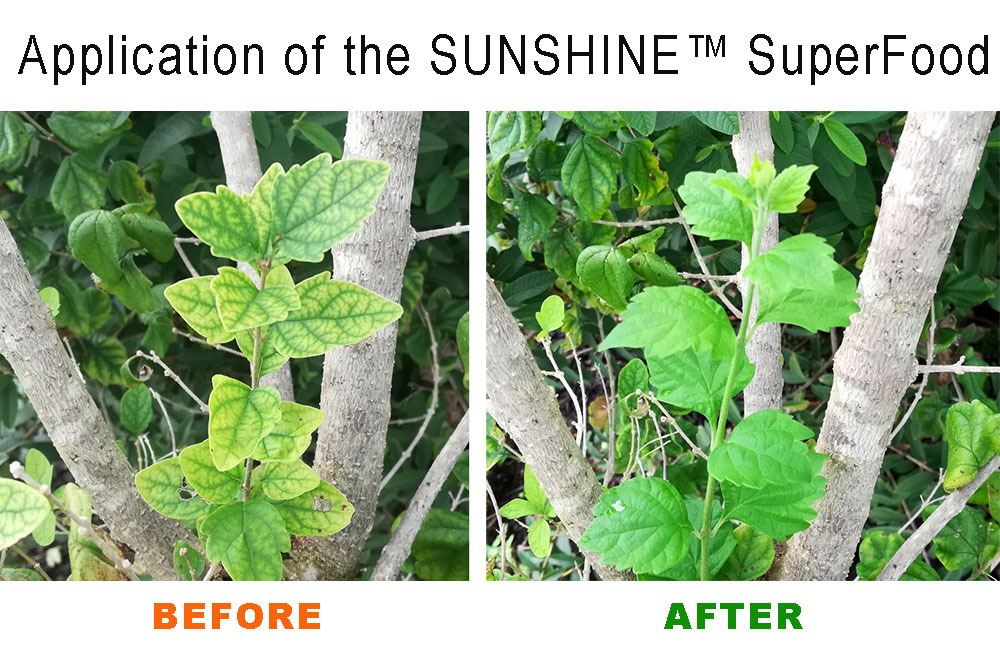
A: Wrightias are very showy and beautiful plants, although sometimes they are susceptible to leaf chlorosis which in other words is iron deficiency, especially during wet rainy weather. It is not harmful to the plant and can be corrected with microelement applications. Use Microelements once a week to correct the iron deficiency that usually goes away within a month. Then maintain plants health with monthly applications. It is beneficial to use microelements in combination with regular applications of health boosting fertilizer.
Recommended boosters and microelement supplements:
Pink N Good Daily Plant Food - Flower Booster
Tropical Allure - Smart-Release Booster
SUNSHINE SuperFood - plant booster
SUNSHINE-Greenleaf
See SUNSHINE Boosters page for the complete list of plant boosters.
Date: 30 Aug 2019
LadyBugs guarding your plants!
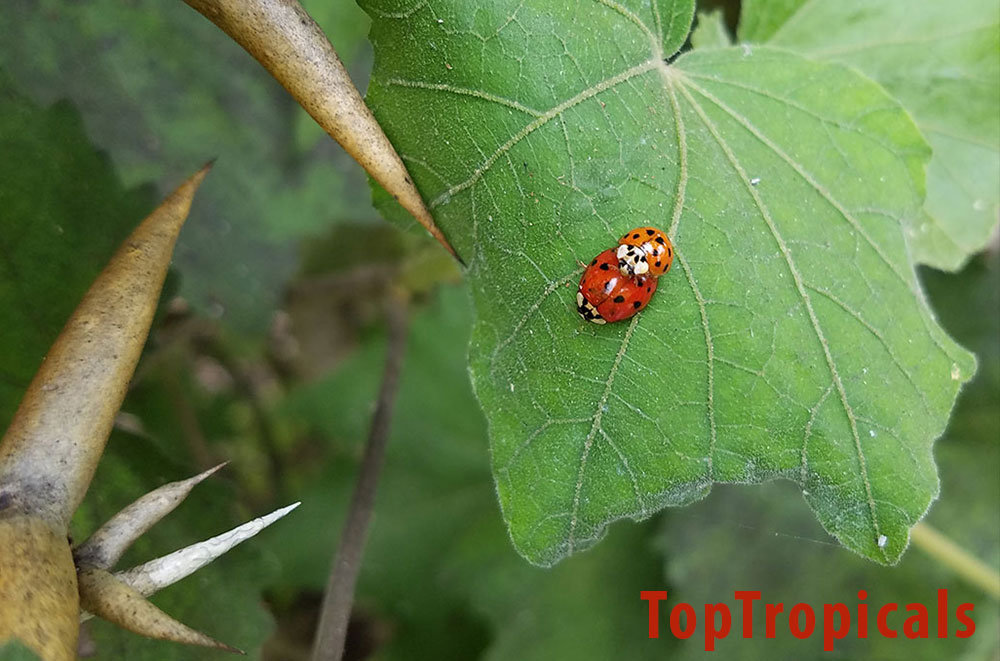
Q: I have a bunch of Ladybugs in my garden, I wonder if they eating my plants? Do I need to get rid of them?
A: Ladybug (Harmonia axyridis) is, in fact, one of the best insects you can find in your garden, it is a natural predator that takes care of many bad bugs, including aphids. Keep them happy and bring them to your garden. Ladybugs actually are cultivated as natural pest control, and you can even buy them for your yard, instead of chemicals!
Ladybug larvae eating aphids:
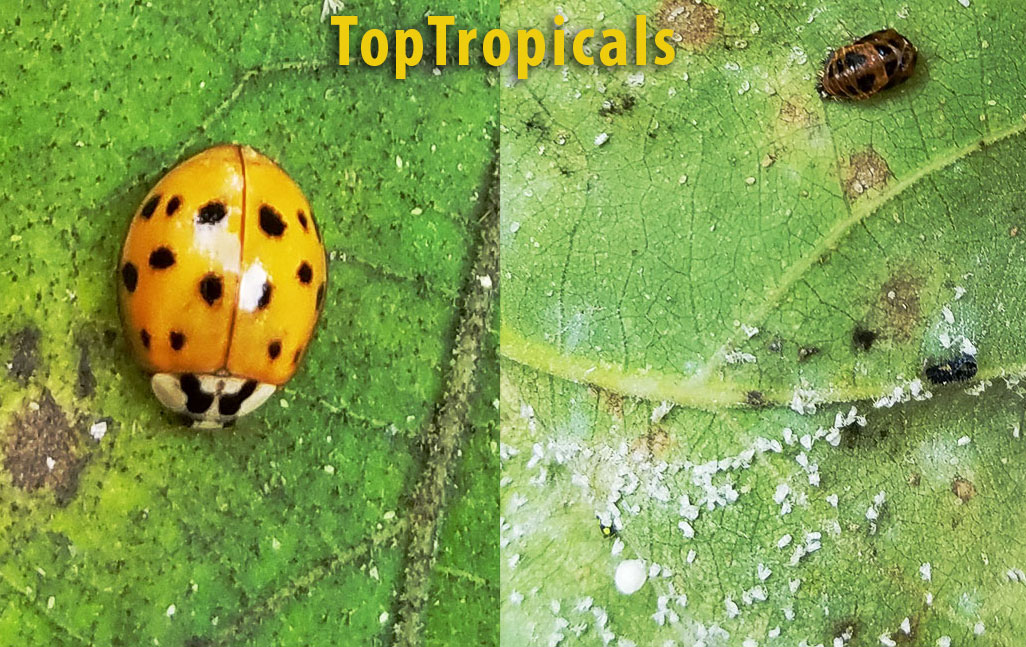
The wonderful insects that dine only on landscape pests and don't harm good bugs or plants are called 'beneficials', and ladybugs definitely fall into this category, but not the way many people think. It's the ladybug's larvae that are voracious predators of soft-bodied problem insects, especially aphids.
Photo below:
One of our PeopleCats, "Innocent" Ladybug (a.k.a. Bug) is wondering who else she can bug next...

Date: 19 Aug 2019
When is the time to repot?
Q: According to your instructions, I understand that plants need to be placed in bigger pots. But my question is, say I plant each plant in 18in x 18 in x 18 inch square pots, how many weeks, months or years can the soil be good for these plants? When will it be time to change soil? Any specific soil recommendations?
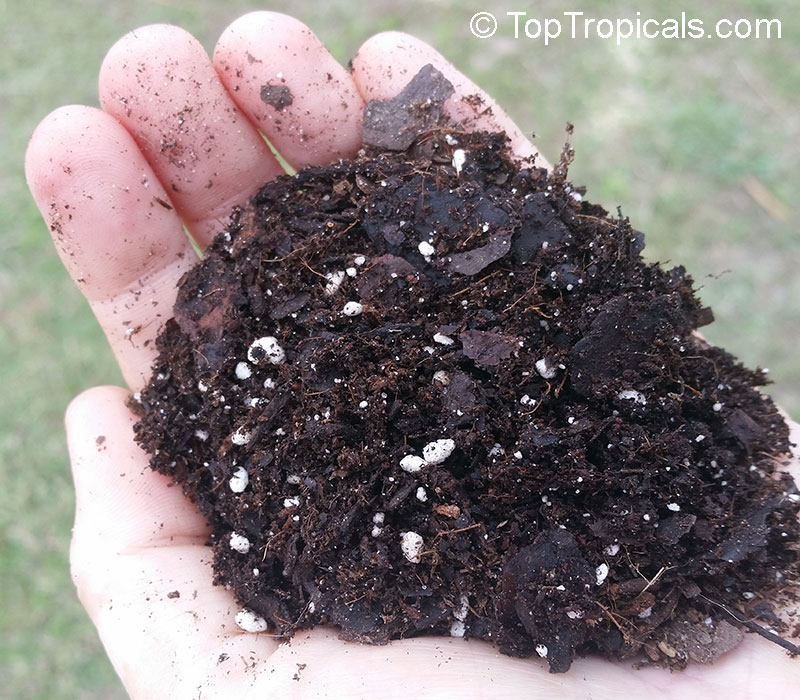
A: Repotting is required usually once a year. It depends on the plant and growth rate of course. The best way to check if a plant needs stepping up is to check its root system. Carefully turn the pot upside down and pull the pot off the roots (make sure to support the plant from the bottom). If a root system is very dense, it is time to repot. It is an easy check with smaller plants; if a plant is large and hard to turn "upside-down", check drainage holes: if roots start growing through the holes, it is definitely time to step up. Make sure to use pot size only a few inches bigger in diameter than the existing one: just enough for the root system plus 2-3 inches extra space; do not use oversized pots to avoid root rot. Use only new quality potting soil and make sure it has perfect drainage characteristics. We recommend Professional Soilless Mix
Date: 29 Jul 2019
When to fertilize and prune tropical fruit trees?
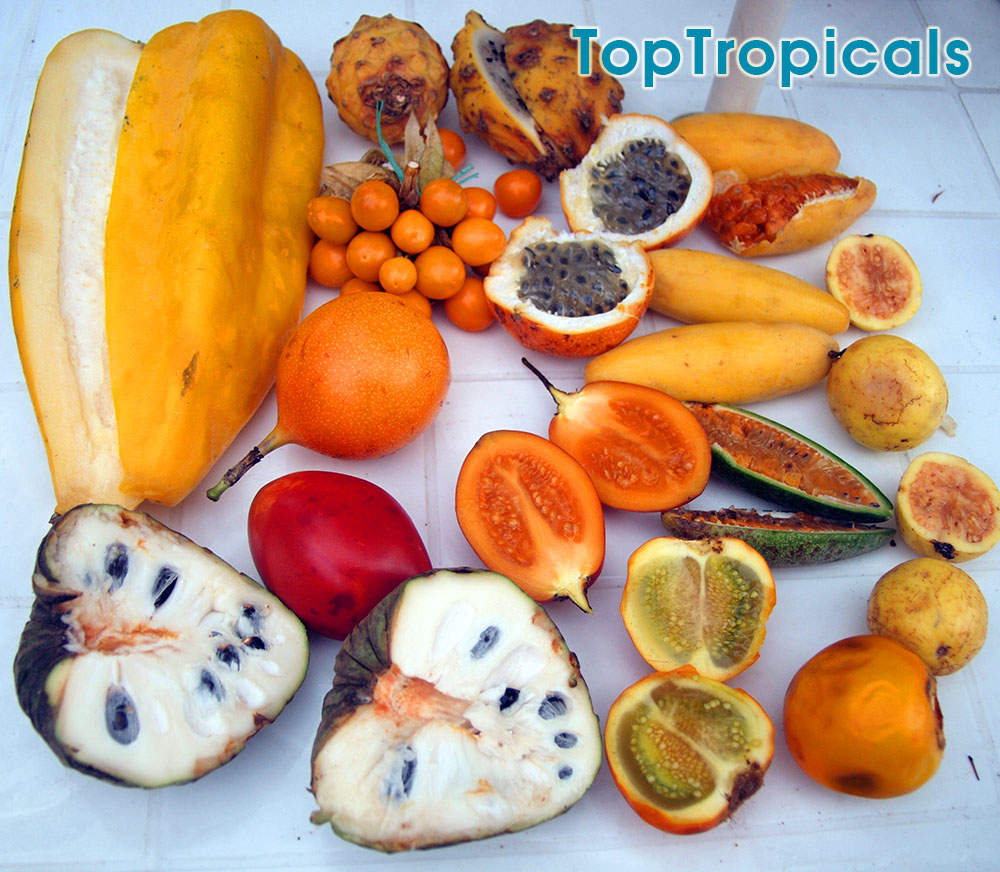
Q: Can tropical fruit trees (Soursop, Mango, Star fruit, etc) be given plant food any time of year? Also can they be trimmed this time of year/summer?
A: True tropical plants (including fruit trees) need plant food most of the year in real Tropics, where temperatures have very little fluctuations, and active growth season is close to 12 months a year. In subtropical areas when temperatures in winter drop below 65F, plant metabolism slows down, so it is recommended to fertilize only during the warmest period (March through November). So yes, Summer is the perfect time for fertilizing your trees; their metabolism is at the highest point and they can use more food!
Trim your fruit trees right after harvesting. Obviously, you don't want to prune branches before or during flowering or fruiting. The specific time of the year for pruning depends on the plant - every tree has its own flowering/fruiting season. However, avoid pruning right before winter: young shoots promoted by pruning are tender and can be cold damaged.
Recommended fertilizers for fruit trees:
Fruit Festival Plant Food - Super Crop Booster
Mango-Food - Smart Release Fruit Tree Booster
SUNSHINE-Honey - for sweeter fruit
SUNSHINE SuperFood - microelement supplement
