Garden Blog - Top Tropicals

Date: 13 May 2023

NEW VIDEO:
ABC7 Fort Myers News:
Butterfly plants at Top Tropicals

Butterfly plants... what can be more romantic and sweet in your garden!
Watch the news segment by Rachel Anderson for ABC-7: Butterfly plants at Top Tropicals.

"...Spring has sprung, and if you're looking to spruce up your garden, Top Tropicals in Fort Myers has you covered! They have hundreds of exotic plants, fruit trees, fragrant flowers and plants that will attract butterflies to your garden!
If you're looking for a Mother's Day gift, plants are gifts that keep on giving!.."
Top

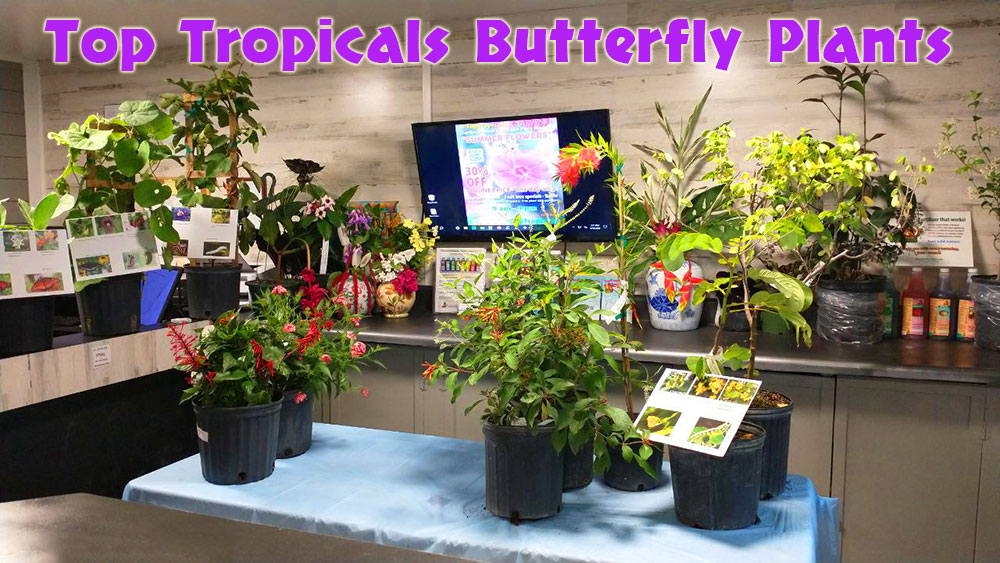
In the photo: Butterfly plants display in Top Tropicals office. Come and see our large selection of butterfly attractors in the nursery!

Subscribe to our Channel:

Stay updated with TopTropicals Videos by subscribing to our channel at YouTube.com/TopTropicals and get our latest video news of what is fruiting and blooming!
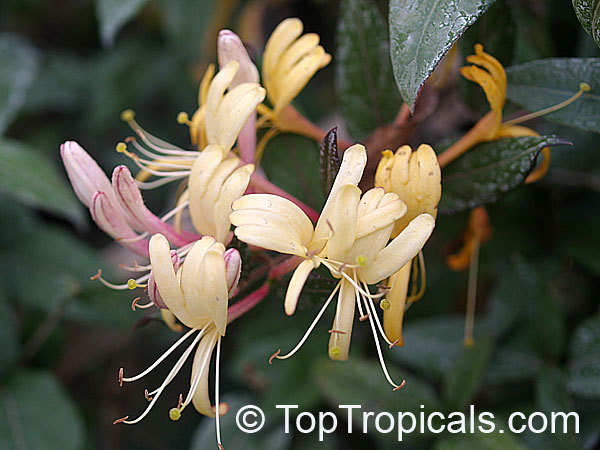
Lonicera  japonica  Purpurea  -  Japanese  Honeysuckle  flowers

In the photo: Lonicera japonica - Japanese Honeysuckle - a garden favorite, hardy, fast growing vine. Jasmine-sweet scented flowers attract butterflies, and hummingbirds, and berries attract birds!
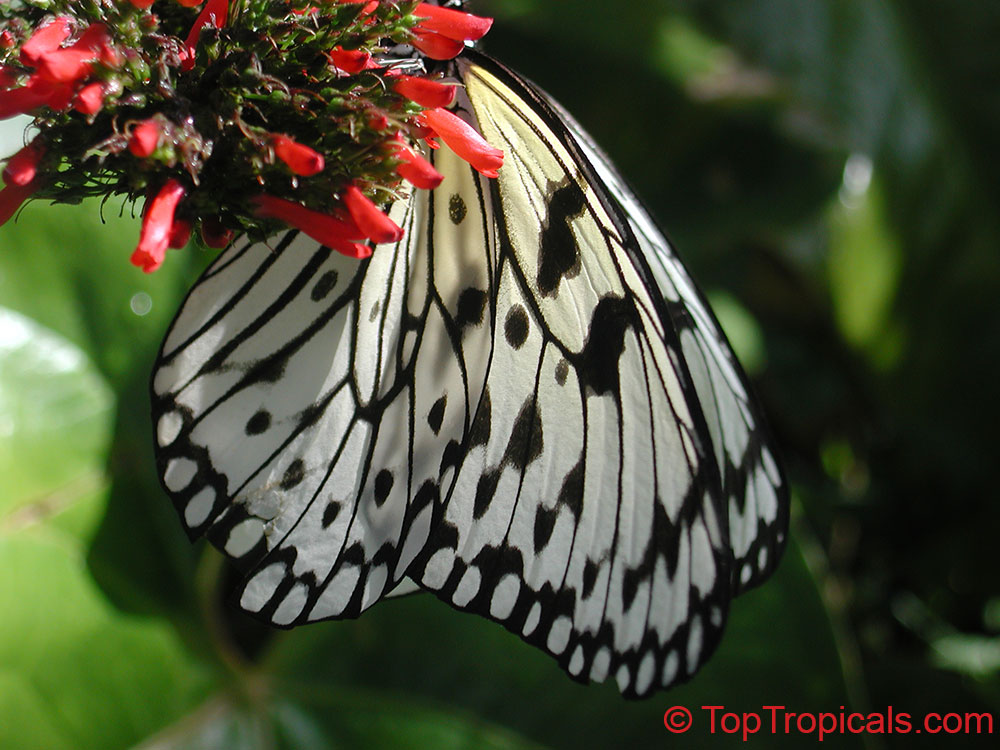
White  butterfly  on  Russelia  flower

Date: 30 Apr 2023

Attracting butterflies

Cat  with  butterflies

Q: How to attract more butterflies to my garden?

A: Attracting butterflies to your garden can be a fun and rewarding experience. Here are some tips to help you create a butterfly-friendly environment.

1. Choose the right plants: Butterflies are attracted to nectar-producing flowers such as milkweeds, butterfly bushes. Plant lots of bright flowers, especially of yellow and pink colors like some cassias which seem to be the pleasant to butterfly's eye. Use a variety of flowers to attract different species of butterflies. This is a full list of butterfly-attracting plants.

2. Provide food for caterpillars: Butterflies lay their eggs on specific host plants that caterpillars will eat. For example, monarch butterflies lay their eggs on milkweed. Passion flower is also a great butterfly host, but be prepared to sacrifice some leaves!

3. Provide a water source: Butterflies need a source of water to drink from. A shallow dish or birdbath with rocks in it will provide a place for butterflies to rest and drink.

4. Avoid using pesticides: Pesticides can harm butterflies and other beneficial insects. Try using natural methods to control pests in your garden, such as companion planting and hand-picking.

5. Create a sunny spot: Butterflies love warm, sunny spots. Plant your butterfly garden in an area that receives at least six hours of direct sunlight each day.

6. Add a butterfly house: A butterfly house can provide shelter for butterflies during bad weather and at night.

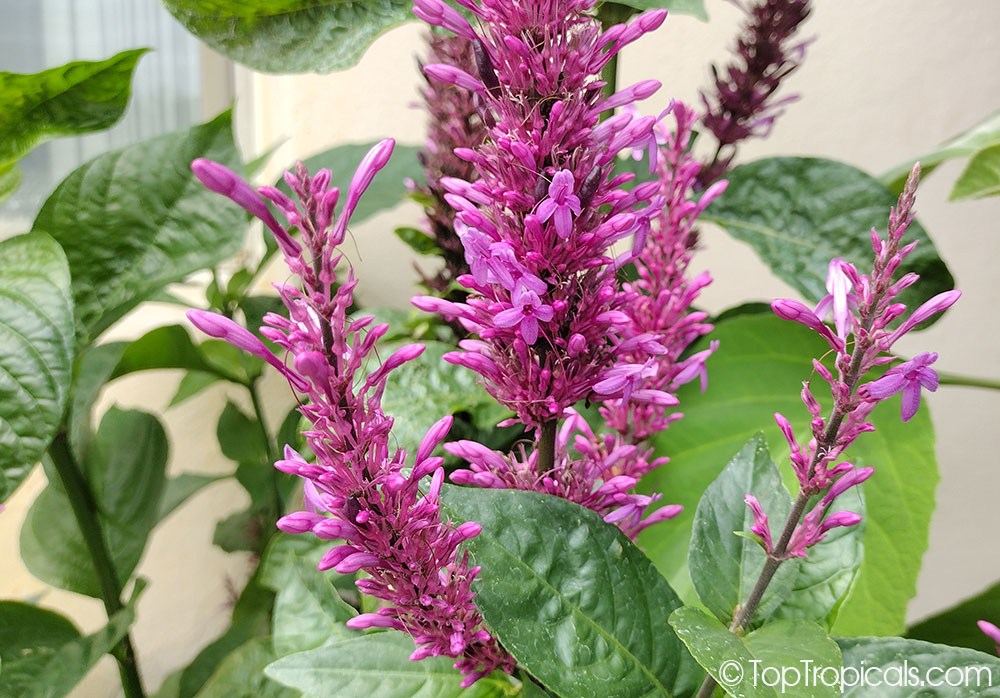
Odontonema  callistachyum  -  Lavender  Butterfly  Bush

In the photo: Odontonema callistachyum - Lavender Butterfly Bush. Showy bright lavender flowers, butterfly attractor. Blooms in both sun or shade.

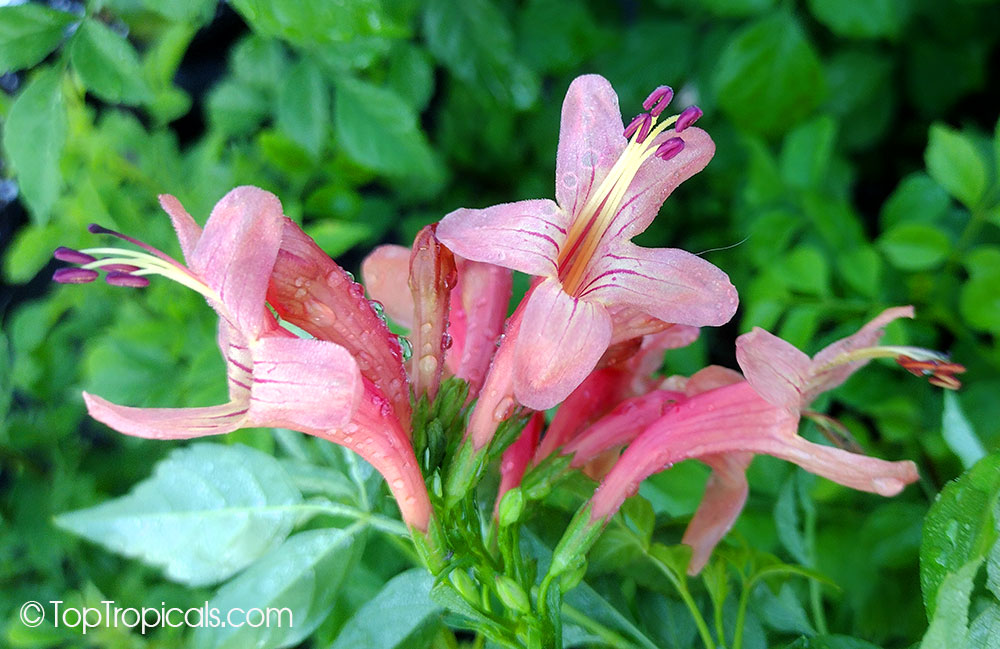
Tecomaria  capensis  Apricot  (Hammers 
 Rose)

In the photo: Tecomaria capensis Apricot - Hammers Rose, Apricot Tecoma, Cape Honeysuckle. Very fast growing, it has attractive, light green foliage and frequent displays of long, tubular flowers that may be apricot or orange at the ends of the stems. Great for a privacy hedge that attracts butterflies!

Date: 26 Apr 2023

The Benefits of Companion Planting

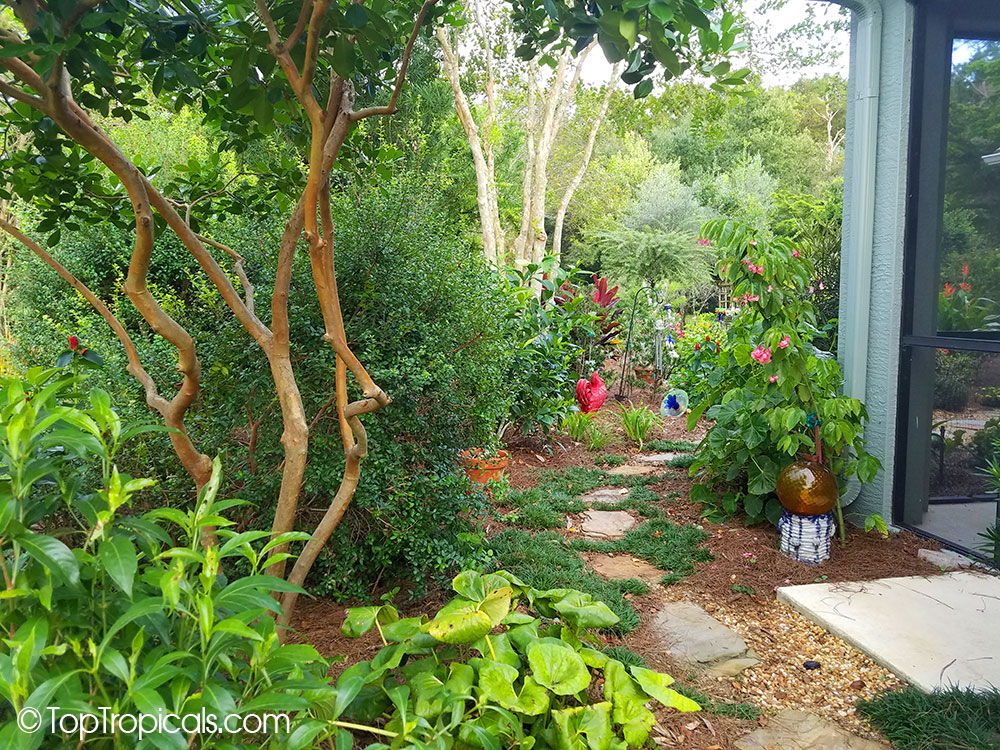
Landscaped  garden  with  companion  planting

Q: What is companion planting?

A: Companion planting is a gardening technique that involves planting different crops or types of plants together in a way that benefits all plants. This practice has been used for centuries, and it can be especially useful in tropical gardens where there is a diversity of plant life: trees, shrubs, vines and climbers, ground covers, fruit and edibles, and different flowering ornamentals. It is a great way to improve the health and yield of fruit tree crops while reducing the need for fertilizers and pesticides. By choosing the right companion plants and planning your garden layout carefully, you can create a vibrant and diverse ecosystem that will benefit both your plants and the environment.

Companion planting involves:

Planting different crops together to repel insects: adding such plants as Lemon grass, Patchouli leaf, or Moujean Tea near your vegetables can deter aphids and other pests.

Attracting pollinators - Butterfly plants. Many tropical crops, such as passion fruit, papaya, mango, and avocado, rely on pollinators to produce fruit. Companion planting can help to attract pollinators such as bees, butterflies, and hummingbirds to your garden.

Providing nutrients to the soil, adding mulch and low growing plants (ground covers) to preserve moisture.

Planting a variety of different types of plants together in order to create a more resilient ecosystem that is less susceptible to pests and diseases.

To get started, plan your garden layout and choose companion plants with similar water and light requirements.
For example, plant in the same group lush foliage plants, gingers, and flowering brunfelsias in shady areas; plant jasmines and gardenias in full sun and very well-drained spots.
Rotate annual crops regularly and experiment with combinations to find what works best. By doing this, you can create a thriving ecosystem that benefits both your plants and the environment, reducing the need for harmful chemicals.

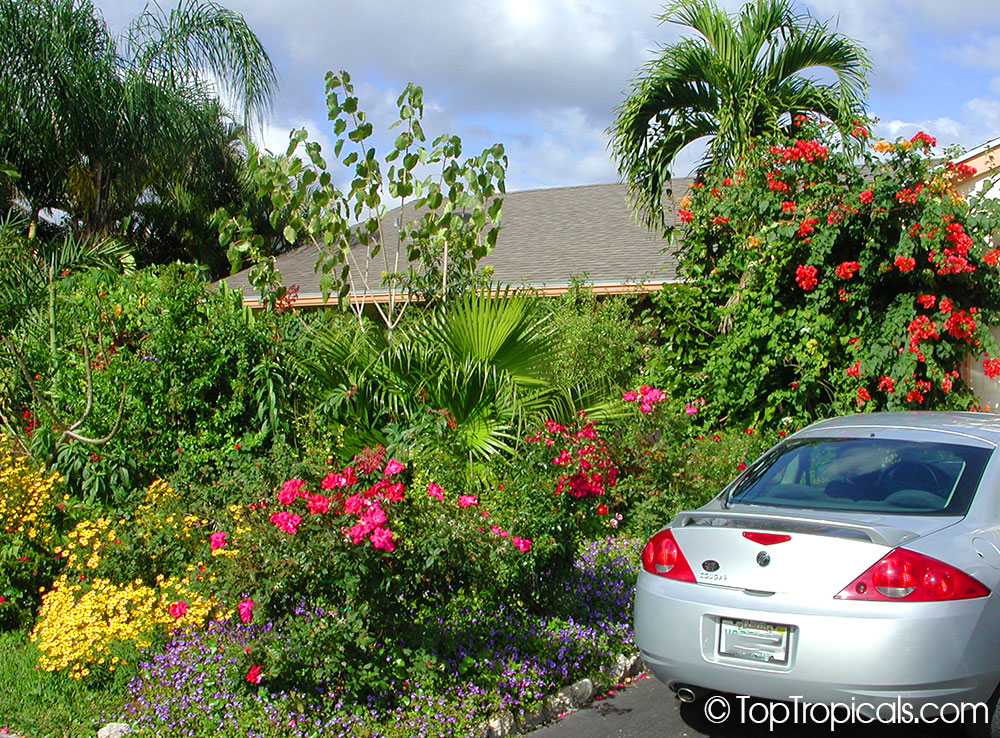
Landscaped  front  yard  with  companion  planting

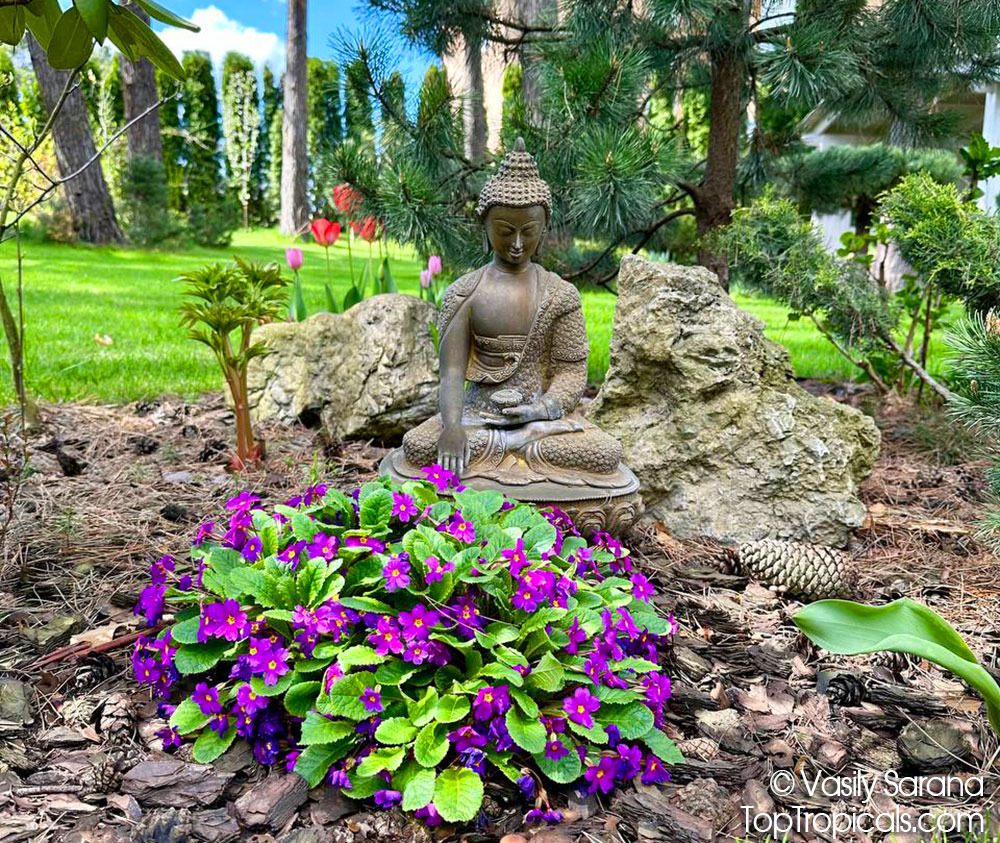
Buddah  and  flowers

Date: 19 Feb 2023

Top 5 butterfly attractors

"Just when the caterpillar thought the world was over, it became a butterfly"
Chuang Tzu (Taoist philosopher)

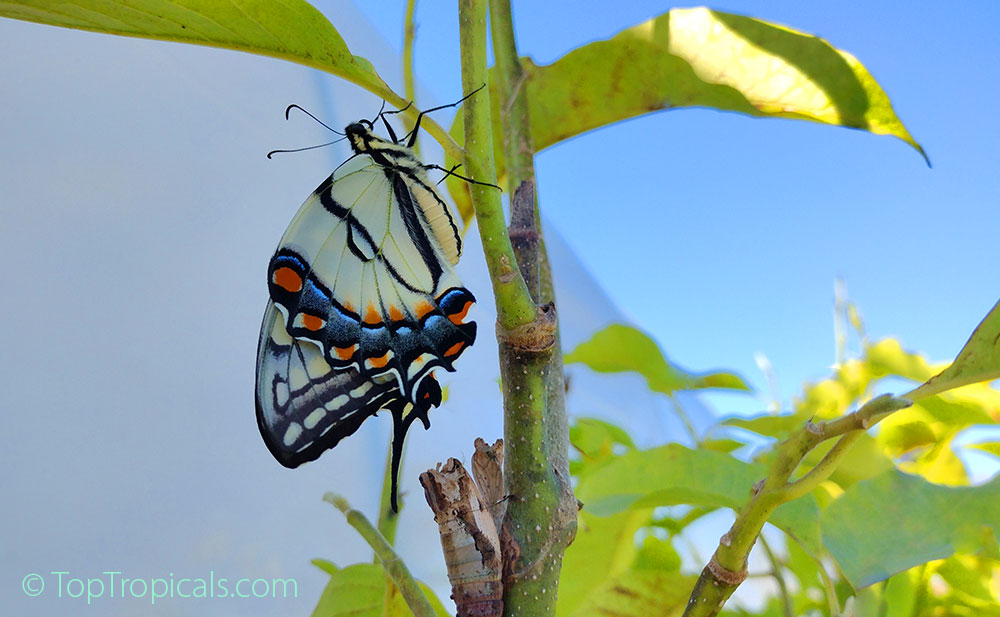
Newborn  Butterfly

In the photo: yesterday we watched a butterfly born on one of our Champaka trees!

Q: What are the best butterfly attracting plants for a Southern garden?

A: If you love butterflies and if you enjoy having nature around your home, then plant a butterfly garden. Florida is a perfect place to create a year round and fully functioning butterfly garden. Caterpillars, which transform into butterflies, require special kinds of plants to feed upon and these plants grow extremely well in the South Florida and other subtropical areas. Below are the top five winners that butterflies appreciate the most. Besides, remember That all yellow flowers are attractive to them, for example Cassias. Butterflies like the Sun and everything that looks like the Sun!
1. Calotropis gigantea - Giant milkweed, Arka
2. Odontonema cuspidatum - Firespike
3. Plumbago auriculata Imperial Blue
4. Rondeletia leucophylla - Panama Rose
5. Asclepias curassavica - Red Milkweed, Butterfly Weed

Read more about Butterfly garden:
The Milkweed and the Monarch, how to raise your own
Musings of a butterfly gardener about the milkweed bug
Plants that attract butterflies and hummingbirds

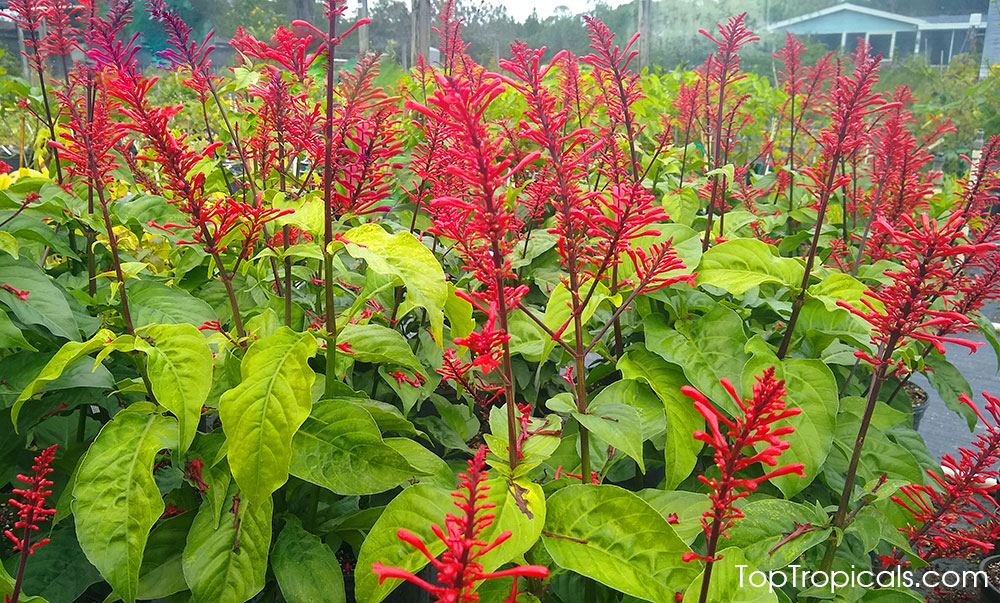
Odontonema  cuspidatum  -  Firespike

In the photo: Odontonema cuspidatum - Firespike

Date: 23 Oct 2022

What is Akee fruit?

One of the most bizarre looking, yet useful...

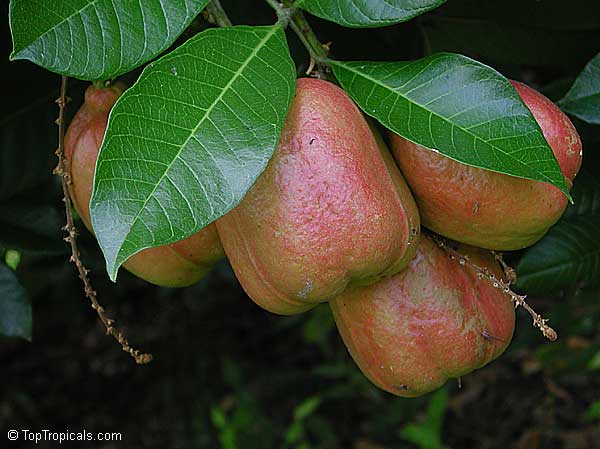
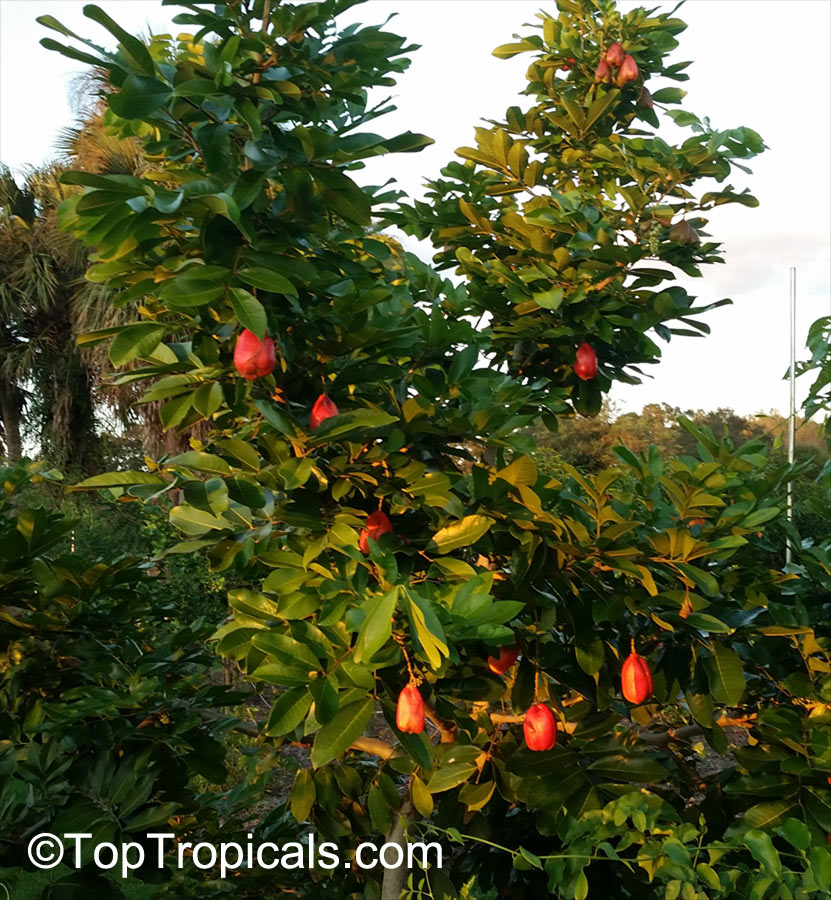
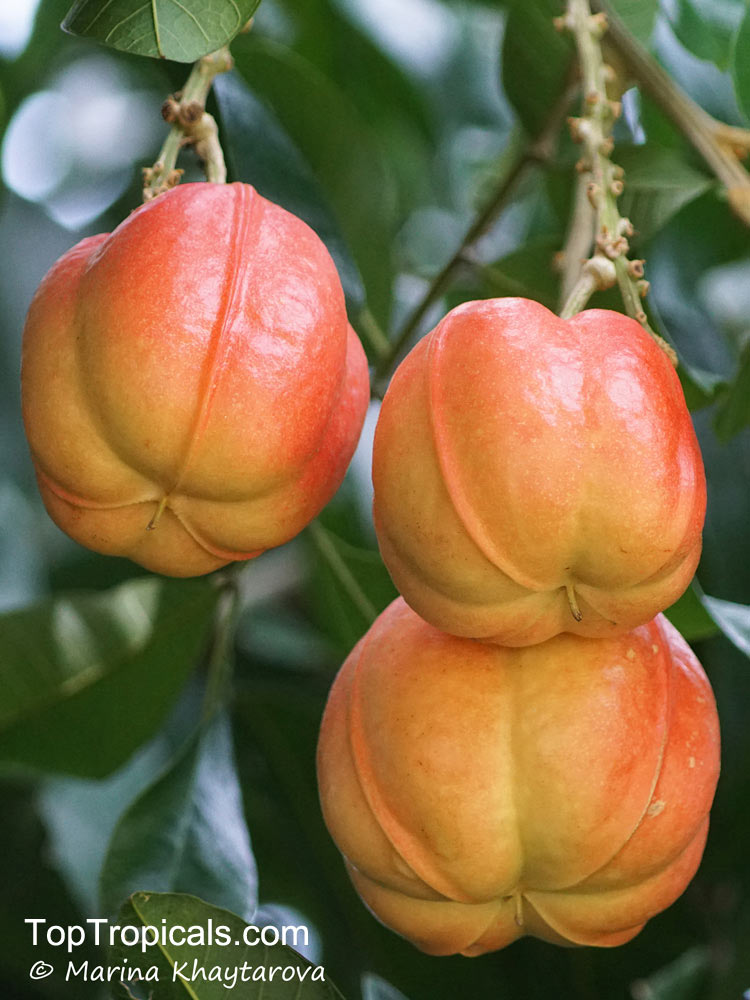
Akee  fruit  on  the  branch  with  leaves

Email from our Florida customer:

I got an Akee tree from you last year for my tropical fruit garden collection and honestly didn't know much about what it was. This year it started growing real fast and branched out. In spring it was flowering like crazy and now I have about 20 bright coral fruit hanging off the tree that look like Christmas decorations. They are extremely showy and can be seen from far away, I have neighbors stopping by asking what kind of tree it is. I finally did more research on it and found a recipe how to cook the fruit. Only a few had ripened and opened so far, but I already had a chance to try the meal. Cooked the arils and fried in a pan with some butter. What a delicious surprise! To my taste, it is like a mix of potatoes and eggs. Just through in some bacon and it will make a complete breakfast! One of the coolest fruit I've tasted. Just wanted to share this with you.

About Akee (Blighia sapida)

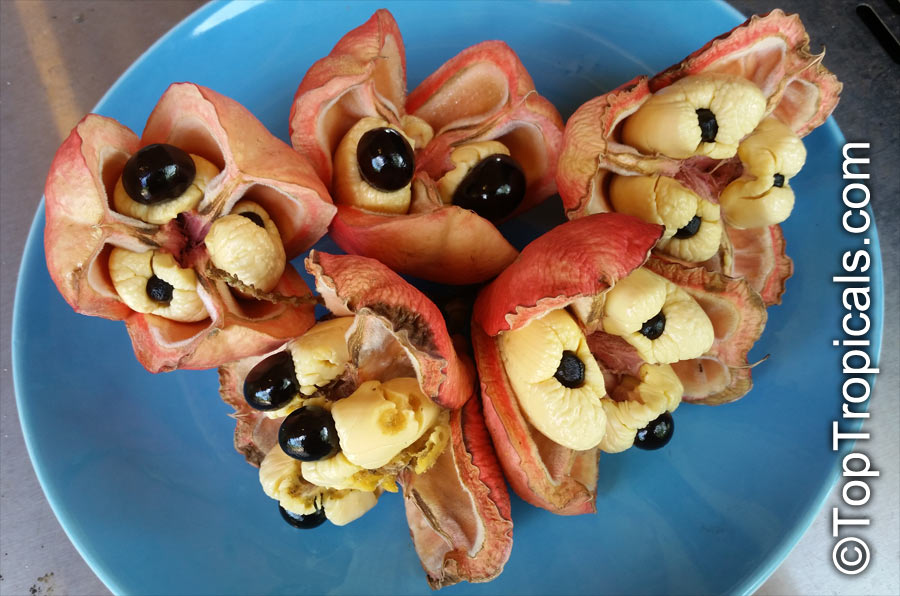
This showy fruit, a close relative of Lychee, Longan, and Rambutan, is a National fruit of Jamaica. It is indeed very exciting one, and what is also important, the tree is easy in cultivation, fast growing and can be maintained compact. I it is not bugsy or picky about soil/water conditions, and is relatively cold tolerant for being a tropical tree. You can find delicious akee meals only in Jamaican restaurants. But no need to search for it - grow your own tree, it can't be easier. It will start fruiting for you the next season, you don't have to wait long. Sometimes it fruits twice a year! However, remember, the fruit is used as a vegetable, and is not eaten raw. It must be picked after the fruit has opened naturally so the flesh is fully exposed to light. When the fruit has "yawned", discard the seeds (or better plant them to grow more trees - to share with your friends!). The arils, while still fresh and firm, are best parboiled in salted water or milk and then lightly fried in butter. Then they are really delicious!
Read more about this tree...

Akee  tree

Akee  fruit

Akee  fruit  with  pulp  and  seeds  on  a  plate